My name is Harper Lane.
I’m thirty-two years old, and trust me, earning $25 million a year doesn’t protect you from toxic parents.
Money can shield you from a lot of things—rent, fear, instability—but it can’t shield you from a family determined to believe the worst version of you.
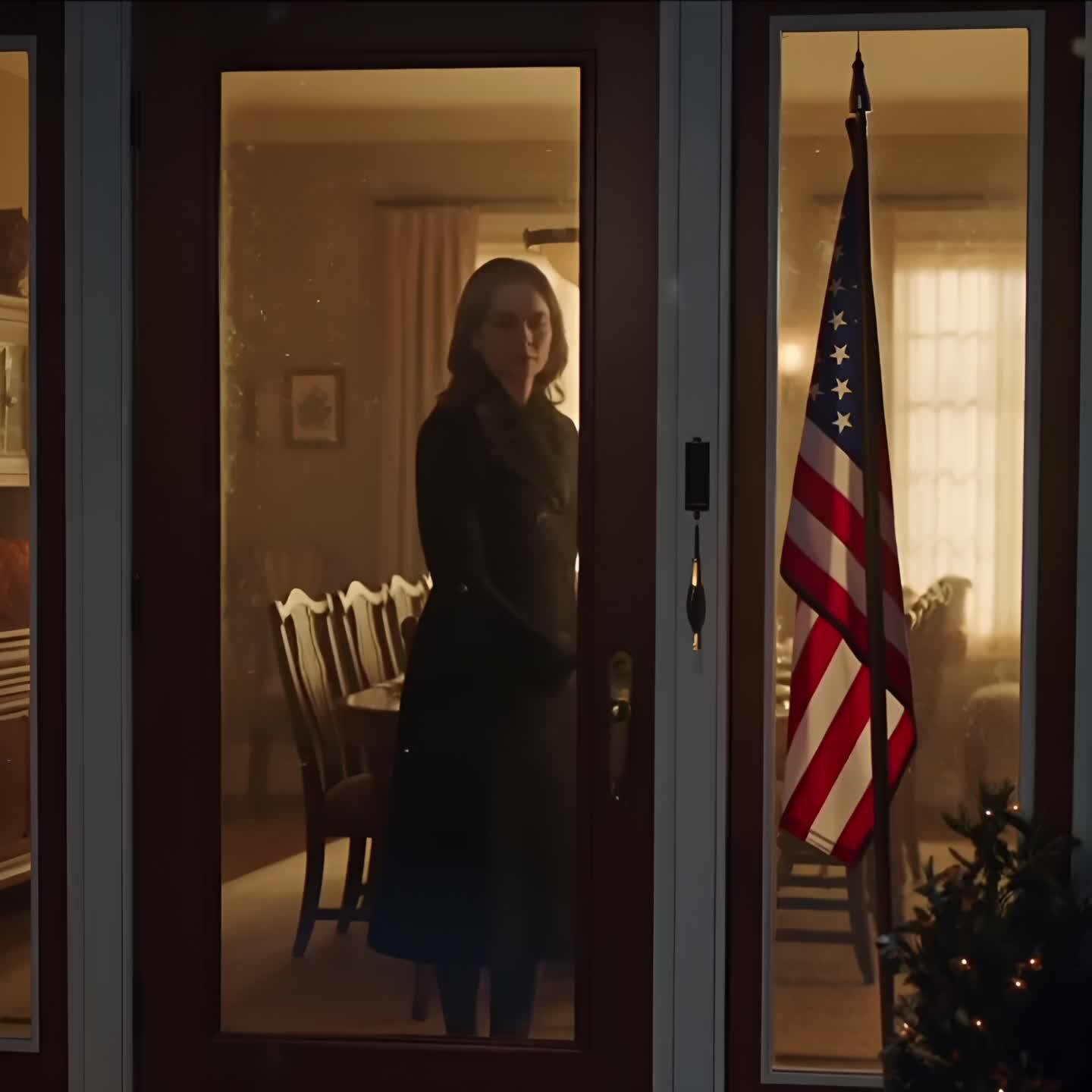
I learned that lesson on Thanksgiving night, standing in my parents’ dining room in suburban Portland, Oregon, surrounded by people who had already decided exactly who I was and who I wasn’t.
The house looked the same as it always had every holiday.
Warm lights, cinnamon candles from Target burning on every flat surface, the smell of roasted turkey drifting through the hallways while some Hallmark Christmas movie murmured from the living room.
But the atmosphere was so tight you could slice it with a knife.
The long mahogany table was crowded.
My grandparents sat at the far end, hard of hearing but still sharp enough to catch every insult.
My aunts whispered behind their wine glasses, their red lipstick leaving faint smears on the rims.
My cousins were half‑present, half‑glued to their phones, thumbs moving under the table.
Chloe, my younger sister, sat in the center like the sun everyone else orbited.
Her fiancé, Luke, perched beside her with the eager smile of a man who had already absorbed the Lane family hierarchy.
Chloe was the pride.
I was the problem.
Chloe was everything my parents worshipped.
A rising‑star attorney at a downtown Portland firm.
Wedding planned for next spring.
A closet full of expensive coats from Nordstrom.
A LinkedIn profile so polished it practically sparkled.
My mother couldn’t go ten minutes without slipping in another brag.
“Chloe just closed a massive case,” she told my Aunt Michelle.
“Chloe might get promoted to partner early.
Chloe and Luke are looking at investment properties.
My girl is so smart.”
Meanwhile, I sat near the end of the table in a chair that wobbled every time I shifted my weight.
No one ever seemed to notice the wobble.
Maybe that was fitting.
“Harper?” Aunt Michelle finally asked, after ignoring me for nearly an hour.
“Are you still doing that little online thing?”
She said “little online thing” the way someone might talk about a hobby involving glitter and glue.
I smiled politely.
It wasn’t worth explaining that that little online thing employed more than ninety people across three states.
Or that one of my companies had recently finalized a multimillion‑dollar licensing deal with a Fortune 500 brand based in Seattle.
It wouldn’t have mattered.
They had already decided my life was a phase I’d eventually grow out of.
I cut into my turkey and mashed potatoes, hoping the evening would pass quietly.
But peace never survives long in the Lane household, especially when Chloe feels like stirring the pot.
“It’s honestly sad,” she announced loudly to Luke, though the entire table could hear every word.
“Harper still refuses to finish college.
Can you imagine being thirty‑two and still not having your life together?”
Luke chuckled sympathetically, the way people do when they don’t know enough to question the script.
My mother sighed dramatically, as if I had disappointed her again simply by existing outside of her plan.
Then my father, always the judge and never the jury, decided it was time for this year’s performance review.
He set down his fork with a sharp clink and cleared his throat, speaking loud enough for the entire table to fall silent.
“Harper,” he began.
“Your mother and I have been talking.”
My stomach tightened.
Nothing good ever followed that sentence.
“You’re thirty‑two,” he continued, his voice growing louder with each word.
“And you’re still chasing those silly internet dreams.
You refuse to listen.
You refuse to follow the path we gave you.
It’s embarrassing.”
My mother nodded quickly, chiming in before I could speak.
“We’re tired of worrying about you,” she said.
“Tired of pretending you’re doing fine when you clearly aren’t.
You never take real advice.
You never act like a member of this family.”
Their words should have stung.
Once, when I was younger and still naïve enough to crave their approval, they would have.
Now they just washed over me like cold water.
Annoying.
Predictable.
Pointless.
Chloe folded her manicured hands on the table and added her own dagger, her tone sweet as pie.
“Honestly, Harper, if you had just finished college like a normal person, you wouldn’t be such a burden.
Some people have careers, not… whatever you do.”
A few relatives exchanged awkward glances.
Some looked down at their plates.
Not one person spoke up for me.
Not even the grandparents who used to slip me candy under the table when I was little.
That silence said everything.
And then the moment hit its breaking point.
My father slammed his palm onto the table so hard the cranberry sauce trembled.
“You’re thirty‑two and have nothing to show for it,” he barked.
“From now on, we’re done.
No more help, no more pity.
If you want to ruin your life, fine.
But don’t drag us into it anymore.”
He stood, pointed toward the front door, and delivered the sentence that would replay in my head for weeks to come.
“If you want to live, go out on the streets and fend for yourself.
Go live in the streets if you have to.”
A hush fell over the entire room.
Forks froze mid‑air.
Someone gasped softly.
And I, the highest‑earning person in that house, owner of a penthouse in Seattle, donor to three major nonprofits, employer of nearly a hundred people, just sat there watching the scene like I was floating above my own body.
I opened my mouth for one reckless second.
I nearly said it.
I make more than everyone at this table combined.
But I didn’t, because what would be the point?
They weren’t interested in the truth.
They were interested in the version of me that made them feel superior.
So instead, I took a slow breath, pushed back my wobbly chair, and stood.
“If that’s how you feel,” I said quietly, my voice steady.
“I won’t get in your way.”
My father looked shocked that I didn’t argue.
My mother blinked rapidly, clearly expecting tears.
Chloe wore a half‑smile like she’d just won something.
Without another word, I grabbed my coat from the back of the chair, walked past my family, and stepped out into the cold November air.
The wind cut through my sweater, but it felt cleaner than anything inside that house.
As I walked down the driveway toward my car, past the familiar maple trees we’d decorated with lights every December, I whispered the truth only to myself.
They have no idea I make $25 million a year.
I opened the door of my black Tesla, climbed inside, and started the engine.
If you grow up hearing the same story about yourself over and over again, eventually you start to wonder whether it’s really your story or just a script someone shoved into your hands before you even knew how to read it.
Driving away from my parents’ house that Thanksgiving night, the cold seeping through my coat, it hit me how deeply their script had been carved into my life.
Their outburst wasn’t new.
Their disappointment wasn’t new.
Their humiliation wasn’t new.
It had been building for years, layer by layer, comment by comment, expectation by expectation, until it became the only language my family knew how to speak to me.
So I guess we need to go back.
Back to where the Lane family image first started strangling the Lane family reality.
Back to when I was sixteen and still naïve enough to believe families were supposed to feel like safety, not performance.
My parents, Daniel and Rebecca Lane, came from modest, hardworking backgrounds.
By the time Chloe and I were teenagers, they had settled comfortably into what they considered the respectable middle class.
Dad was a supervisor at a construction management company, a job he carried like a badge.
To him, respectability came from hierarchy.
Someone above you, someone below you, and you sitting neatly in the middle, admired by neighbors for being reliable and stable.
He ironed his shirts obsessively.
He introduced himself formally, even at backyard barbecues and little league games.
He couldn’t stand the idea of being seen as less than in any social setting.
Mom was a school nurse at a public elementary school, the kind who was warm with kids but cold with other adults.
She had one guiding question in life, the same one she repeated like a prayer.
What will people think?
Not what do you want.
Not what makes you happy.
Only what will people think.
Her entire existence revolved around avoiding any potential stain on the family image.
Reputation wasn’t just important to her.
It was her oxygen.
And then there was Chloe.
Perfect, polished Chloe.
Two years younger than me, but always positioned miles ahead.
She had private violin lessons, a personal math tutor, dance classes at a studio in Lake Oswego, leadership camps, summer trips abroad to Europe.
Whatever she touched, my parents treated like destiny.
She attended an expensive private school for children with “potential,” with manicured lawns and banners that said things like cultivating tomorrow’s leaders.
Every dollar spent on her came with a breathless compliment from Mom.
“She’s so poised.
She’s so mature.
She’s going places.”
Dad loved bragging about her GPA to anyone who would listen, even strangers in line at Safeway.
Chloe was prom queen her junior year.
President of the debate team.
Her Instagram feed was a highlight reel of perfect lighting and perfect angles.
She never broke rules—not because she was inherently good, but because approval was her favorite currency.
She knew exactly how to play the part.
Smart.
Charming.
Compliant.
The golden daughter who made our parents glow.
Then there was me.
The other daughter.
I liked computers, coding, building little websites from scratch, taking apart cheap laptops just to see how they worked.
I stayed up late dissecting the back end of e‑commerce platforms, fascinated by how algorithms made strangers click “buy now.”
I could lose hours debugging a single line of code and feel nothing but thrilled when I finally solved it.
I wasn’t into dances or popularity contests.
I wasn’t graceful or poised or photogenic in the way my mother desperately wished.
I liked quiet.
I liked being alone.
To my parents, that meant I was odd, antisocial, not a “people person.”
They said it like a diagnosis.
When I started helping small businesses make money online at sixteen—building web pages, designing email automations, testing ad copy for local shops up and down 82nd Avenue—my parents didn’t see talent.
They saw a phase, a quirk, something I’d grow out of once I stopped being “difficult.”
Meanwhile, everything Chloe did was applauded as if she’d invented gravity.
I still remember the dinner when she got a ninety‑seven on a biology test.
My mother toasted her with sparkling cider like she’d been accepted to Harvard Medical School.
The same night, I tried to share that a client had paid me $200 for a website redesign.
My father didn’t even look up from his plate.
“Don’t brag,” Mom snapped.
“It’s tacky.”
Chloe laughed softly.
“That’s different,” she said.
Different.
Everything was always different for Chloe.
The turning point—the moment my family decided who I would be for the rest of my life—came during my second year of college.
I had gotten into a business program, mostly because my parents insisted college was the only path to respectability.
I tried.
I really did.
But lectures felt like cages.
The more I learned about theoretical business models, the more I wanted to build something real instead of just studying it under fluorescent lights in a lecture hall where the air always smelled like old coffee.
Sophomore year, one of my online projects suddenly took off.
I’d built an e‑commerce automation tool from scratch.
Within months, I was making more money than most of my professors.
For the first time in years, I felt alive.
So I made the decision that changed everything.
I dropped out.
I can still see my parents’ faces the night I told them.
My father went red first.
His anger always rose like a slow boil.
My mother went pale, her hands trembling the way they only did when she imagined herself being judged by other people.
“You’re throwing your life away for some silly dot‑com fad,” Dad snapped, pacing the kitchen like he needed room for his disappointment to stretch.
“Do you know how ridiculous this looks?
Do you know what people will say?”
Mom didn’t yell, but her voice was sharper than his.
“Harper, why can’t you just be normal?” she asked.
“Chloe follows the plan.
She works hard.
She respects her family.
Why can’t you be more like her?”
That was the night I became the family embarrassment.
From that day forward, every holiday dinner followed the same script.
Chloe’s achievements were recited like scripture.
The perfect GPA.
The impressive internships.
The glowing letters of recommendation.
The prestigious job offers.
And then, inevitably, someone would glance at me with that practiced look of concern and say something like, “Not everyone finds their path so quickly.
Maybe someday you’ll go back and finish school.
Success isn’t for everyone.
You’ll get there eventually.”
I became the cautionary tale, the living, breathing example of what happens when you don’t listen to your parents.
My role, assigned without my consent, was to make Chloe look better by comparison.
Every time I tried to explain what I actually did for a living, they reduced it to nothing with a single dismissive line.
“Just online stuff.”
When I was eighteen, standing at a bus stop with nothing but a laptop that overheated every two hours and a stubborn belief that the internet could change my life, my parents had already decided I was a failure.
After dropping out of college, I moved into a tiny studio apartment in a rundown building just off Burnside.
It was roughly the size of a storage closet.
The walls were so thin I could hear my neighbors sneeze.
My kitchen counter shook every time a city bus rolled by outside.
There was no safety net, no emergency fund, no family cushioning my fall, no one offering backup plans.
I spent mornings doing freelance design work for small businesses.
Afternoons fixing broken Shopify themes for boutiques in Portland and Seattle.
Nights teaching myself everything I could get my hands on.
Coding.
Funnels.
Paid ads.
Email automation.
Consumer psychology.
A/B testing.
SEO.
Analytics.
Dashboards.
I devoured it all like oxygen.
My twenties were a blur of glowing screens, cheap coffee from 7‑Eleven, and too many notebooks filled with messy flowcharts.
I worked two, sometimes three jobs at once.
Freelance in the morning.
Consulting for a struggling startup in the Pearl District in the afternoon.
Then staying up past 3:00 a.m. building software tools I wasn’t even sure anyone would want.
I lived on instant ramen, microwaved vegetables, and whatever leftovers clients handed me after late‑night meetings.
The hustle wasn’t glamorous.
It was survival.
But it was mine.
What mattered most was that I never, not once, asked my parents for a dollar.
I refused to give them the satisfaction of saying, “We told you so.”
If I failed, it would be on my own terms.
Not because I crawled back home begging for money.
So I worked, and worked, and worked.
The turning point came when a small, nearly unknown skincare brand reached out asking if I could help them fix their website.
Their revenue at the time barely covered expenses, but I saw potential.
A great founder.
A good product.
Terrible digital systems.
I optimized their backend, built a subscription retention engine, set up automated email flows, restructured their ads, and redesigned the entire website myself.
In six months, revenue quadrupled.
In a year, they crossed seven figures.
In eighteen months, they hit eight.
Instead of a flat fee, I had negotiated a tiny slice of equity and a revenue‑share contract everyone else thought was pointless.
That one decision changed everything.
The first time I saw the payout hit my account, I sat on my bedroom floor and cried because it felt unreal, like the first moment the universe whispered, You were right to believe in yourself.
That success rippled outward.
Other brands reached out.
Founders talked.
My inbox filled.
Suddenly, I had more work than one person could handle.
So I did the thing that terrified and thrilled me.
I started hiring.
First a designer.
Then a media buyer.
Then a data analyst.
Then a development assistant.
My one‑woman operation turned into a real agency—Lane Digital Systems—specializing in e‑commerce automation and performance growth.
But I didn’t stop there.
I created a SaaS tool that automated customer retention for Shopify stores, originally a passion project I built at 2:00 a.m. while eating cold pizza in a tiny apartment in Capitol Hill after I moved to Seattle.
I launched it quietly, expecting maybe a handful of clients.
It exploded.
Within six months, it had thousands of paying users.
Within a year, it became the backbone of half a dozen mid‑sized brands.
From there, everything scaled.
Three more companies branched out under my umbrella.
One specializing in AI‑driven ad optimization.
Another offering white‑label automation systems for agencies.
And a consulting firm for founders transitioning from six to seven figures.
With each year came new income streams—licensing deals, subscription revenue, retainer contracts, data partnerships.
I diversified as aggressively as I worked.
By the time I turned thirty, Lane Systems had grown into a quiet empire that almost no one outside my clients, partners, and employees knew existed.
I built it that way on purpose.
Under the radar.
Private.
Controlled.
Now, at thirty‑two, my life looked nothing like the failure narrative my parents clung to.
I lived in a penthouse overlooking the Seattle waterfront.
Paid in full.
Bought just before my thirtieth birthday.
Floor‑to‑ceiling windows wrapped around the living room, revealing the ferries gliding across Elliott Bay.
My home office held custom‑built screens and a private server rack.
The balcony looked out over the stadium lights and the flicker of the Great Wheel.
I had a real estate portfolio of rental homes in Washington, Oregon, and Texas.
I had an investment account my younger self wouldn’t have believed, even if she saw the numbers with her own eyes.
And each year, after expenses, investments, payroll, and taxes, my personal profits still hovered around $25 million.
But none of that—not one piece of it—was known to my parents.
They had absolutely no idea.
Part of it was practical.
The second they smelled money, they would have tried to control it, claim credit for it, or tap into it.
My parents loved two things above all else—Chloe and image.
If they knew I made millions, they would have twisted my success into something that made them look good.
We raised her right.
We always knew she was smart.
Then they’d use it to boost Chloe even further.
The bigger part was simpler.
They never asked.
They didn’t ask what I did.
Didn’t ask how my work evolved.
Didn’t ask about clients, projects, tools, teams, or anything else.
Every time I tried to explain in the early years, they shut me down with the same lines.
“It’s not a real career.”
“It’s unstable.”
“It’s not respectable.”
Eventually, I stopped trying.
So when they asked, I told them I did marketing freelance.
“Online stuff.
Website consulting.”
I kept it vague enough to avoid questions, boring enough to shut down further conversation.
Chloe didn’t care what I did.
She only cared that whatever it was, it kept her above me in the family hierarchy.
She never once, not once, asked, “How’s your business?
What are you building?
What are you excited about?”
My success had no place in the image they curated, so it simply didn’t exist.
Looking back, maybe that was my first mistake.
I thought if I kept my world separate from theirs, I could avoid the emotional fallout that exploded that Thanksgiving night.
But hiding didn’t save me from being misunderstood.
It only allowed them to cling to their outdated version of me.
Still, I wouldn’t change it.
Building everything on my own—without their praise, their help, their money, or their belief—made every victory sweeter.
Every milestone felt earned.
Every risk felt worthwhile.
And ironically, every single assumption my family made about me only pushed me harder.
Some part of me did work those late nights just to prove them wrong in the quietest, most powerful way possible.
Not with arguments.
Not with speeches.
With results.
Results they would one day see—not because I showed them, but because the truth would grow too big for their small opinions to contain.
They thought I was a cautionary tale.
They didn’t know I was becoming the person their future would depend on.
And in three weeks, they would learn exactly how wrong they’d been.
The drive back to Seattle that night felt longer than it ever had before.
Maybe it was the cold, the kind that seeps into your bones and sits there, refusing to leave.
Maybe it was the silence in the car.
Maybe it was the way my father’s voice—Go live in the streets if you have to—kept echoing in the back of my skull like a song stuck on repeat.
I’d heard harsh words from them before, but somehow hearing it on Thanksgiving, in front of an entire table of relatives, landed differently.
Not sharper.
Not more dramatic.
Just final.
By the time I pulled into the parking garage beneath my building in Belltown, my fingers were stiff from gripping the steering wheel.
I took the elevator up, my reflection blurry in the metal doors.
When I stepped into my penthouse, the scent of cedar and lemon cleaner hit me.
A smell that always meant home.
Real home.
Floor‑to‑ceiling windows wrapped around the living room, revealing the waterfront glittering under the city lights.
Ferries drifted across the dark water like slow‑moving lanterns.
The hardwood floors, the minimalist furniture, the soft hum of the heating system—everything felt warm, calm, intentional.
It was a stark, almost painful contrast to the words I’d left behind.
Go live in the streets.
I kicked my shoes off and let them land wherever they wanted, then walked to the balcony door and pressed my palm against the cool glass.
From three stories up, the world looked peaceful.
No judgment.
No disappointed sighs.
No Chloe smiling with that patronizing pity she’d perfected since we were teenagers.
My parents had no idea this place existed.
No idea what my life looked like outside their narrow lens.
If I had shown them this home, they would have found a way to ruin it, criticizing the view, the cost, the location, the choices.
That was the thing about toxic families.
Even your wins were treated like disappointments.
I showered, made chamomile tea, and tried to sleep, but my mind wouldn’t let me.
Their voices replayed again and again until the words blurred into noise.
Useless.
Embarrassing.
Still chasing silly internet dreams.
It was ridiculous.
I knew better.
I knew what I’d built.
I knew the lives I employed, the millions in revenue, the systems I’d created that kept entire companies running.
But even when you grow up and build an empire, something inside you always remembers being sixteen, sitting at the dinner table, getting compared to the golden child who could do no wrong.
I slept maybe three hours.
Then came week one.
No calls.
No text messages.
Not even a passive‑aggressive email disguised as concern.
You’d think, after throwing your daughter out of the house publicly and loudly, your parents would at least check whether she’d made it home safely.
Whether she had somewhere to stay.
Whether she was okay.
My phone stayed silent.
On Monday morning, I woke at 5:00 a.m. like always, forced myself into gym leggings, tied my hair back, and walked down to the building fitness center.
I ran five miles on the treadmill, sweat dripping down my neck, my brain rehashing conversations I wished I could unhear.
Then I showered, made a protein shake in my stainless‑steel blender, and joined my first call of the day with the Europe team.
After that came virtual meetings with two new partnerships, contract negotiations, a financial review with my CFO, and a strategy briefing for our SaaS development pipeline.
From the outside, it looked like a perfectly normal, perfectly productive week.
Inside, I felt hollow.
Not broken.
Not devastated.
Just blank.
I kept catching myself thinking the same thought over and over.
I could buy their house with last month’s profit, and yet somehow their words still sting.
Why did it still hurt?
Why did any of it matter?
I had left their version of success behind years ago.
I had built something extraordinary, something real, something mine.
Yet the emotional bruises from childhood didn’t fade just because my bank account grew.
Money didn’t erase the part of me that once begged to be understood.
On Thursday around lunchtime, I opened Instagram while waiting for my food to heat up and felt my stomach sink.
Chloe had posted a photo from Thanksgiving dinner.
A carefully staged shot of her, Luke, and my parents standing in front of the fireplace, smiling like an advertisement for familial bliss.
She looked radiant, glowing under the warm filter.
Luke’s arm was wrapped around her waist.
My mother’s hand rested on Chloe’s shoulder with pride.
My father stood tall, smug, content.
The caption read, “So grateful for family and new beginnings,” followed by a heart emoji.
My name wasn’t mentioned.
Not even a vague “Wish everyone could have been here tonight” or “Missing a few people, but still thankful.”
It was as if I had already been erased from the family tree.
They looked whole.
Complete.
Perfect without me.
The comments were full of compliments.
“Beautiful family.”
“Such a blessed Thanksgiving.”
“So much love here.”
“Congrats on the engagement.”
I turned off my phone.
That night, while brushing my teeth, memories pushed themselves to the front of my mind like unwelcome guests.
Other holidays.
Other dinners.
Other nights where the message had been the same, just delivered softer.
Like the Christmas when Chloe got the big guest room and I got the sofa because “You don’t mind, right, Harper?
Chloe needs good rest for her college interviews.”
Or the Easter when my aunt tried to set me up with her neighbor’s son because “You really need someone stable in your life.”
Or the Fourth of July barbecue when another cousin asked me, with the same gentle condescension I’d heard my entire life, “So… when will you get a real job?
Something, you know, respectable?”
Even the seating arrangements told a story.
Chloe always sat in the best spot in the center where the family could admire her.
I always ended up on the folding chair in the corner next to the pantry door.
I used to think it was a coincidence.
Now I wasn’t so sure.
Pattern.
It was all a pattern.
And now Thanksgiving had simply been the loudest repetition of what had already been whispered for years.
On Saturday afternoon, I found myself standing by the window, staring out at the water again.
Cargo ships moved slowly across Puget Sound, sunlight catching on their hulls.
I realized then that what I was feeling wasn’t heartbreak.
It wasn’t shock.
It was recognition.
They hadn’t changed.
They’d never change.
What happened at Thanksgiving wasn’t a break from the norm.
It was the norm.
Just sharpened and magnified.
The same dynamic.
The same script.
The same hierarchy.
Chloe shining at the center.
Me pushed to the edges, judged for refusing to follow their blueprint.
But for the first time, instead of trying to fit their mold, I understood something far more important.
Week two didn’t begin with anger.
It began with disbelief—the kind of stunned, quiet disbelief you feel when you realize that even after everything, your family isn’t done hurting you.
You think the worst moment was the night they told you to go live in the streets.
But somehow the real damage doesn’t come from the shouting.
It comes from the stories they tell about you afterward, when you’re not there to defend yourself.
It was early Monday morning when my phone buzzed while I was reviewing a proposal from one of our European partners.
The message came from Megan, my cousin on my mom’s side—one of the only people in the family who treated me like a real human being rather than a cautionary tale.
Megan was two years younger than me, a graphic designer living in Portland, and she had a habit of sending texts like tiny emotional temperature checks.
Her message read, “Hey, just checking.
Are you okay?
I heard something weird.”
I replied, “Define weird.”
Three dots pulsed.
Disappeared.
Came back again.
“Your mom told everyone at church you’re couch surfing with friends in Seattle because your little online project failed.”
I stared at the message for a long time, feeling a strange mix of amusement and pain twist in my chest.
Couch surfing.
Failed project.
Of course.
It wasn’t enough that they’d kicked me out.
They needed a story that made them look like the benevolent, heartbroken parents who had tried everything.
I typed back, “I have four bedrooms and no couch surfers, but good to know.”
Megan sent back a supportive curse word, then added, “I’m sorry.
They’re making you sound like some lost stray.
It’s gross.”
I thanked her, but the sting landed deeper than I expected.
Because it wasn’t new.
This was how my family operated when faced with something uncomfortable.
They rewrote reality until they became the heroes and I became the problem.
Over the next few days, more pieces of their narrative trickled in through people who cared enough to warn me.
Apparently, my mother had stood in the middle of her church group—one of those weekly circles filled with women who traded prayer requests and gossip in the same breath—and sighed heavily as she painted a portrait of her wayward, stubborn daughter.
“Harper refuses to accept help,” she’d said with a trembling voice, as if she were the victim of a daughter’s cruelty rather than the perpetrator of a lifetime of emotional erasure.
“She’s lost.
She keeps chasing these online schemes.
We had no choice but to let her fall so she can learn.”
Let her fall.
Let her fall.
As if they hadn’t shoved me first.
By Wednesday evening, Megan sent another update.
A photo snapped discreetly from behind a row of chairs.
In it, my mother stood in front of a small circle of women, clutching her sweater like a grieving widow.
The women around her leaned in, nodding sympathetically, comforting her, validating her pain.
The caption Megan added under the photo was, “I’m sorry.
This is the performance she’s giving.”
I stared at the picture for a long time, feeling something inside me go cold.
Not angry.
Not even sad.
Just cold.
Because I finally understood something I had never wanted to admit.
My parents didn’t just misunderstand me.
They needed me to fail.
They needed that narrative to keep their own image polished and uncracked.
They needed my supposed disaster to explain away every bad parenting choice.
They needed it to justify their obsession with Chloe.
Speaking of Chloe, she wasn’t just participating.
She was thriving in the aftermath.
One of her friends from law school, Lexi, posted an Instagram story—a brunch shot with mimosas and avocado toast and Chloe laughing with the confidence of someone who had never actually been challenged in her life.
The caption under it, tagging Chloe, read, “Talking about family stuff… Harper really spiraled, huh?”
Chloe replied in the comments, “Some people just don’t understand responsibility.”
Then, in another comment, she added, “We warned her MLMs weren’t a real career.”
MLMs.
She told people I was doing MLMs.
Not marketing.
Not tech.
Not SaaS.
Not automation labs.
Not the multimillion‑dollar empire I’d built from nothing.
MLMs.
That wasn’t ignorance.
That was malice.
I put my phone down and exhaled slowly—the kind of breath that feels like it’s leaving your soul, not your lungs.
They weren’t just letting me go.
They weren’t just cutting me out.
They were rewriting who I was into something that made sense to them.
Something beneath Chloe.
Beneath their ideals.
Beneath their expectations.
They needed the world to believe I was floundering so they wouldn’t have to question the story they’d spent years building.
The golden daughter and the failure.
And of course, what better way to elevate Chloe than to cast me as the disaster?
The warning sign.
The example of what happens when you don’t follow the plan.
The daughter who couldn’t measure up.
The one who justified every ounce of favoritism they’d poured into her.
I went through the motions that week—meetings, workouts, calls—but the weight of their narrative settled over me like fog.
Not because I believed them.
Not because any of it was true.
But because I had lived long enough in their world to know how powerful perception can be.
If they controlled the story long enough, people would believe them.
People already were.
But as that realization crystallized, something else rose quietly beneath it.
Something stronger.
Something steadier.
Cold determination.
I had spent years hiding my success, not to protect myself, but to protect them.
To avoid their meddling.
To avoid becoming their trophy.
To avoid their questions, their expectations, their greed.
Now they were using my silence, my distance, my privacy as an empty canvas where they could paint themselves as victims and saints.
That was the moment I made a quiet decision.
If they wanted a narrative war, I could give them one.
Not through pettiness.
Not through screaming.
Not through carefully worded Facebook posts.
Through truth.
And the truth, once revealed, would shatter every lie they’d built.
Week two wasn’t just painful.
It was clarifying.
Because once you realize your family would rather destroy your reputation than confront their own failures, there’s only one path left to take.
You stop trying to earn their love.
And you start preparing to earn your freedom.
Week three didn’t arrive gently.
It didn’t knock or whisper or announce itself the way emotional hurt usually does.
It crashed into my life like a quiet explosion.
Silent.
Contained.
Devastating in its precision.
In the first week, they erased me.
In the second, they rewrote me.
In the third, they stole from me.
Or worse—they used me.
It happened on a Tuesday morning around 6:40 a.m.
I had just finished a call with my London team when a new email slid into my inbox with the subject line: Urgent confirmation required regarding your guarantee on the Lane home renovation loan.
At first I thought it was spam.
Some phishing attempt that had slipped past filters.
But the sender wasn’t suspicious.
It was from a law firm in Portland.
One I recognized.
They handled mid‑sized real estate financing and family lending.
My stomach tightened.
I clicked it open.
“Dear Ms. Lane,
We are reaching out to confirm your continued willingness to act as co‑signer and guarantor for the Lane residence renovation and expansion loan originally filed July 12, two years ago.
Due to adjusted interest terms, we need your written approval within ten business days.”
I reread the paragraph five times, each slower than the last.
Co‑signer.
Guarantor.
No.
Absolutely not.
I had never co‑signed anything for my family.
I would have sooner set my own credit score on fire.
I grabbed my phone, dialed the number from the email, and waited.
A paralegal picked up, cheerful and oblivious to the implosion happening inside my chest.
I kept my voice level, professional.
“Hi, this is Harper Lane,” I said.
“I’m calling regarding an email about a renovation loan.
I think there’s been a mistake.”
She typed.
Papers rustled.
“Oh, yes, Ms. Lane,” she said.
“We have you listed as guarantor.
Let me pull up the original documents.”
I paced toward the window as she searched.
My pulse thudded in my throat.
When she returned, her tone was confident, prepared, final.
“Yes, here it is.
The loan was approved with three signatures—Daniel Lane, Rebecca Lane, and you as guarantor.
Amount: $380,000.”
My hand tightened around the phone.
“I never signed anything,” I said.
A pause.
More pages flipping.
“Well, the paperwork is here,” she replied.
“Your signature looks perfectly valid.”
I asked for a scan.
She emailed it.
I opened it instantly.
My heart dropped into my stomach.
It was my name.
My handwriting.
My signature.
Except it wasn’t.
It was an imitation.
Good enough to fool a bank.
Sloppy enough to enrage someone who actually knows her own pen strokes.
Someone had forged my signature.
My parents had forged my name on a $380,000 loan.
It felt like the room tilted sideways.
I sank into my office chair, staring at the document as my mind tried to make sense of it.
A renovation loan.
Two years ago.
Before their fancy kitchen update with quartz countertops and a farm sink.
Before the backyard redesign they bragged about on Facebook.
Before the new roof, the deck, the property expansion.
Then I noticed something else in the paperwork.
A section marked “Discretionary Project Allocation.”
A portion of the loan—$90,000—was earmarked for “supporting new business ventures within the Lane household.”
New business ventures.
My blood went cold.
Chloe.
I texted Megan immediately.
Me: “Hey, random question.
Did Chloe ever mention how she funded her boutique?”
Megan: “OMG.
Why?”
Me: “Just answer.”
Megan: “She told everyone it was smart family financing.
Said your parents believed in her vision.
Why?”
Me: “Did she say that at Thanksgiving?”
Megan: “Yep.
Your dad bragged about it.
‘Our Chloe is on track to open her own practice.
Family teamwork makes dreams work.’
Don’t tell me what I think you’re about to tell me.”
Me: “They used my name.
My credit.
Behind my back.
For her business.”
Another message came through a second later.
Megan: “Harper, I’m so sorry.
That’s unbelievable.”
It wasn’t unbelievable.
That was the worst part.
It was exactly believable.
This was the pattern, too.
Them investing in Chloe at all costs.
Them sacrificing anything and anyone for her success.
Them treating her dreams like destiny and mine like mistakes.
But forging my signature on a massive loan wasn’t favoritism.
It was fraud.
My phone buzzed with a text from an unknown number.
It was my mother.
Coincidence?
No.
Megan had probably messaged her.
Word traveled fast in our family.
Mom’s message read, “Harper, honey, I heard the bank reached out.
Don’t overreact.
It’s just paperwork.
You make good money online, you’ll be fine.
This was for the family.”
For the family.
I stared at the sentence until it blurred.
Then she sent another message.
“Chloe is our future.
You know that.
Supporting her is supporting all of us.”
No apology.
No explanation.
No shame.
Just entitlement.
Pure, unfiltered entitlement.
In her mind, my financial identity was theirs to use.
My credit score a tool for their convenience.
My success, however they imagined it, existed only to serve the golden child.
The anger hit me so fast it stole my breath.
Not loud anger.
Not the screaming kind.
Cold anger.
Precise.
Steady.
Focused.
Because in that moment, everything crystallized.
They didn’t just consider me useless.
They didn’t just erase me.
They didn’t just lie about me.
They used me.
Used my name.
Used my stability.
Used my financial credibility without my permission to secure a loan that benefited Chloe—not me.
They stole from my future to fuel hers.
And the worst part?
They genuinely believed they were entitled to do it.
That was the snap—the clean internal crack I could almost hear, the moment something in me stopped bending and turned to steel.
Not because of the loan.
Not because of the debt.
Not even because of the betrayal.
Because I finally saw them clearly.
Not as misguided parents.
Not as flawed humans just doing their best.
As people willing to exploit me while calling me a failure.
They didn’t see me as family.
They saw me as a resource.
And they thought they’d get away with it.
But they had no idea who they were dealing with.
Not the sixteen‑year‑old they used to shame.
Not the dropout they mocked at holidays.
Not the daughter they shoved out the door on Thanksgiving.
They had no idea what a woman earning $25 million a year could do when she was finally pushed too far.
Week three didn’t break me.
It forged me.
And what came next would break them.
The night I discovered the forged loan, Seattle felt different.
Colder.
Quieter.
The kind of quiet that makes you hear your own heartbeat in your ears.
I stood by the windows of my penthouse, staring out at the skyline.
Ferries drifted like glowing ghosts.
City lights flickered against the dark water.
The hum of the highway on I‑5 sounded distant, like a world away.
For a long time, I didn’t move.
I didn’t cry.
I didn’t scream.
I didn’t even curse.
I just stood there letting the weight of the betrayal settle in piece by piece until it felt almost physical, like something pressing against my ribs from the inside.
I had been humiliated, lied about, erased, used, and now financially compromised by the very people who insisted I was worthless.
And for the first time in my life, I didn’t feel like swallowing it.
I didn’t feel like being the bigger person.
I didn’t want to endure quietly the way I always had.
Something had shifted.
Something deep.
Something final.
I wasn’t just hurt.
I was done.
But being done didn’t mean destroying everything in a burst of emotion.
I wasn’t Chloe.
I wasn’t my parents.
I didn’t operate on impulse or performance or ego.
If they wanted to play with my identity, my credit, my name, I had to respond in a way that ensured they would never get another chance.
This wasn’t retaliation.
It was survival.
I grabbed my laptop, opened a blank document, and typed one word at the top.
Plan.
Then I poured myself a glass of water, sat at the dining table, and started listing every step I needed to take.
Not out of anger.
Out of cold, calculated clarity.
Step one: law.
Before anything else, I needed legal protection.
My signature had been forged on a massive loan.
That wasn’t just unethical.
It was a crime.
The next morning, I contacted a high‑profile attorney I’d worked with on corporate contracts.
She specialized in financial fraud, identity misuse, and high‑stakes disputes.
Once we were on Zoom, I sent her the scanned loan documents.
Her eyebrows lifted.
“Harper, this is blatant forgery,” she said.
“Whoever did this wasn’t even subtle.”
“I know,” I answered quietly.
“We’ll file a fraud affidavit with the bank immediately,” she continued, her eyes sharp.
“We’ll put the loan into dispute, freeze collections, and request a forensic handwriting analysis.
We can also request security footage from the branch from the date this was supposedly signed.”
I exhaled for the first time that day.
“And if it was my parents?” I asked.
She didn’t flinch.
“Then we build the evidence,” she said.
“And we separate you legally and financially as fast as possible.”
Step two: forensic accounting.
If they forged one loan, who was to say they hadn’t done more?
I hired a forensic accountant, an expert who handled messy divorces, embezzlement cases, and inheritance wars.
He was the opposite of dramatic.
Quiet.
Methodical.
Unsettlingly unbothered by the horrors people commit with other people’s money.
He sent over a list of things he’d start investigating.
All financial records tied to my name.
Credit lines I didn’t know existed.
Applications using my Social Security number.
Liens or co‑sign documents.
The renovation project.
Chloe’s boutique’s funding streams.
My parents’ debt‑to‑income ratio.
Any inheritance trusts my parents might be hiding.
Whether they’d opened additional loans “for the family.”
He asked for permission to comb through public and private databases.
I granted it.
Part of me felt sick.
Part of me felt relieved.
Step three: lockdown.
That same day, I spent hours securing every aspect of my financial and digital identity.
I froze my credit with all bureaus.
I locked every account with two‑factor authentication.
I changed every password.
I disabled all outdated credit lines.
I removed my parents’ home address from anything still linked to my name.
I notified my CPA to reroute all business tax documents to a secure digital vault.
I even requested a legal name‑variation alert to prevent anyone from using a misspelled version of my name.
By the time I finished, my entire financial existence was fortified.
No one could use me again—not even by accident.
Step four: information, not revenge.
Information.
Revenge is emotional.
Information is strategic.
I didn’t want to destroy my family.
I wasn’t plotting to ruin anyone’s life.
I wasn’t trying to hurt them the way they’d hurt me.
But I needed the truth.
And I needed to be prepared.
Because if they were willing to forge my name once, they’d do it again.
If they were willing to steal from me to lift Chloe up, there was no telling how far they’d go.
That night, sitting alone at my table, staring at the lights flickering across the water, I felt the ache of betrayal.
Not because I wanted revenge.
Because I finally understood.
I had spent years trying to keep the peace with people who were comfortable setting me on fire.
I was done burning for their comfort.
I wasn’t planning war.
I was planning escape.
A clean, permanent disentanglement from the people who saw me as a tool.
But if they forced a war, then I was going to win.
Not with rage.
With evidence.
With strategy.
With timing.
With the truth.
I closed my laptop, leaned back, and whispered to the empty room, “They already set the house on fire.
I’m just making sure I don’t burn with it.”
And that was the moment the long game began.
Week four didn’t feel like recovery.
It felt like ignition.
Like something inside me finally clicked into place—sharp and certain after years of being sanded down to fit a narrative that was never mine.
Once the legal work was in motion and the forensic accountant began peeling back layers of my family’s finances, something unexpected washed over me.
Focus.
Not the frantic, survival‑focused intensity of my early twenties.
Not the numb productivity of week one.
A deeper, cleaner, more powerful focus.
The kind you get when you stop apologizing for your existence.
I dove back into work with a clarity I hadn’t felt in months, maybe years.
I woke up at 4:55 a.m. instead of 5:00.
I beat the sunrise to the gym.
I hit my stride before my team even logged on Slack.
It felt like I’d shed a skin I didn’t realize I’d been trapped in.
The pain of the third week had sharpened something in me, honed it, stripped away the last pieces of hesitation.
Harper rebuilds her power, but quietly.
Within days, I was deep into expansion plans I had previously put on hold.
Not because I wasn’t ready.
Because I’d been distracted by the fantasy that one day my family would see me differently.
Not anymore.
I green‑lit the opening of a satellite office in New York to serve our East Coast clients.
At the same time, my operations lead in Austin finalized a lease for a second hub—an innovation studio focusing on AI integrations for retail automation.
It had been an idea sitting in my notebook for months, waiting for the right time.
Apparently, betrayal creates perfect timing.
Within two weeks, we secured a partnership with a major retail conglomerate—a deal worth eight figures over three years.
I flew out to their headquarters, walked into a glass boardroom overlooking midtown Manhattan, and sealed the agreement with a handshake and a nondisclosure clause that would make even seasoned founders nervous.
They didn’t know about my family drama.
They didn’t need to.
They saw competence.
Strategy.
Execution.
The version of me my parents refused to see.
Recognition—but on my terms.
Success attracts attention.
The same week the retail deal became official, I was invited to appear on a top‑tier podcast for women in tech and entrepreneurship.
The host, a well‑respected figure in Silicon Valley, asked questions no one in my family had ever asked me.
“How did you stay disciplined in your early twenties?”
“What would you tell younger women who are underestimated?”
“What’s the biggest misconception people have about your field?”
“Easy,” I said.
“That it’s not real until someone else deems it legitimate.”
She nodded with quiet understanding.
Then came a feature request from a major business magazine.
They wanted to spotlight under‑thirty‑five female founders who had built multimillion‑dollar companies quietly, without venture capital.
I accepted, but with one condition.
No mention of my family.
No names.
No backstory that tied me to them.
My achievements didn’t belong to them.
I wasn’t going to let them ride my newfound visibility.
Then the investigator’s report dropped.
It arrived on a Friday night.
A folder of PDFs, spreadsheets, asset breakdowns, and reconstructed financial histories.
I poured a cup of tea, sat on my couch, and opened the first file.
Then the next.
And the next.
With every page, my jaw tightened.
My parents were drowning.
Their renovation loan was months behind schedule.
The interest was snowballing.
Their house—the one they’d thrown me out of—was listed as collateral.
Dad’s business, Lane Home Remodeling, had been bleeding money for over a year.
Bookings were down.
Suppliers were unpaid.
Tools were aging.
Contracts were falling through.
They were three, maybe four months from default.
And then there was Chloe.
Her boutique.
Her practice.
Her pride.
Her statement to the world.
It was hemorrhaging cash.
The storefront she rented was in a high‑cost arts district.
Her branding was gorgeous.
Her marketing was flawless.
The business fundamentals were rotten.
Her expenses were double her revenue.
She’d hired too many people too soon.
She was behind on payroll.
Behind on taxes.
Behind on everything.
And worst of all, a massive portion of the renovation loan tied to my forged signature had been quietly funneled into Chloe’s failing business.
The investigator included screenshots and bank traces.
It wasn’t incompetence.
It wasn’t an accident.
It was deliberate.
They were using my name, my financial identity, to prop up the golden child’s collapsing dream.
I didn’t cry.
Didn’t shake.
Didn’t rage.
I felt nothing at first.
Then something else rose.
A sharp, clean, dangerous clarity.
The opportunity arrived in my inbox on Sunday morning.
An email from a private equity firm I had invested with the previous year—a group specializing in acquiring distressed properties and failing small businesses.
They wanted to offer me first look at a new acquisition list before it went to public bidding.
I opened the document.
My heart stopped.
There it was.
Lane Home Remodeling, listed as a high‑risk distressed asset likely to default within ninety days.
Collateral: the Lane family home plus the adjacent property lot.
Below that, under related holdings, sat a small commercial lease linked to a boutique spa‑slash‑practice owned by Chloe.
Chloe’s business.
Both drowning.
Both tied to the same forged loan.
Both about to collapse.
The firm planned to purchase the assets at a steep discount—pennies on the dollar—then sell or reallocate them to new investors.
I knew how this worked.
I’d invested in deals like this myself.
Quiet acquisitions.
Clean transitions.
No emotion.
Just numbers.
Suddenly, I saw the entire path unfold like a blueprint.
If the loan defaulted—and it would.
If the property went into distress—and it already was.
If the firm acquired it—highly likely.
I could step in as a silent investor and own the house my parents worshipped.
Own the business my father claimed was his legacy.
Own the commercial lease Chloe bragged about.
Own everything they had leveraged my identity for.
Not out of vengeance.
Not out of spite.
Out of consequence.
They had written me out of the family.
They had erased me.
They had stolen from me.
Now they were about to learn a brutally poetic truth.
When you live off someone you call useless, you should pray they never realize their worth.
I closed the email slowly.
For the first time in my life, I didn’t feel small.
I didn’t feel like the forgotten daughter or the black sheep or the disappointment.
I felt powerful.
Silent.
Strategic.
Focused.
This wasn’t about revenge anymore.
This was about reclaiming every piece of myself they’d tried to take and building something so undeniable that their entire world would shift the moment they learned who I really was.
And that moment was coming soon.
Three weeks after Thanksgiving, Seattle glittered with holiday lights.
The air smelled like cold pine and distant cinnamon from the Pike Place vendors.
The city felt softer around the edges.
But under all that warmth, something entirely different pulsed inside me.
Resolve.
Sharp.
Clear.
Unwavering.
Three weeks.
Just long enough for my parents to spin their stories.
Long enough for Chloe to post curated snapshots of her perfect life.
Long enough for them to believe the narrative they’d crafted about me had replaced the truth.
But also long enough for something else to happen.
Something that would change the entire landscape of our family dynamic in a single night.
The gala invitation arrived a week earlier.
A formal letter embossed with gold lettering from a Seattle‑based foundation I had quietly funded for almost four years.
My company contributed to their youth housing initiative every quarter.
I’d always insisted on remaining anonymous, preferring my money to speak louder than my name.
But that year, the foundation president wanted to honor one donor in particular.
Someone who had given enough to build two new housing complexes for homeless youth and fund a scholarship pipeline for teens interested in tech.
Me.
“Harper,” she’d said over the phone, her voice warm and determined.
“It’s time the community knows who’s behind this work.
Please let us honor you publicly.”
I hesitated.
Not because I needed the attention.
Because exposure had never been my goal.
But something in me whispered that the timing was right.
That maybe after everything, letting the world see me clearly wasn’t vanity.
It was reclamation.
So I said yes.
The night of the gala, the downtown hotel ballroom glowed with white lights cascading from crystal chandeliers.
Tables were draped in navy velvet.
Servers in black and white moved through the room with quiet efficiency.
The air was filled with the soft murmur of Seattle’s business elite—donors, volunteers, and city officials.
I arrived in a dark emerald gown, my hair swept back, my makeup subtle but intentional.
I looked like a version of myself my family had never bothered to imagine.
Put together.
Powerful.
Unapologetically present.
As I handed my coat to the attendant and stepped into the ballroom, I scanned the room.
That’s when I saw them.
My parents.
My mother in her pearl necklace and her best church dress.
My father stiff in a suit that didn’t quite fit his new, stressed‑out frame.
Chloe wrapped in a sequined dress, clinging to Luke’s arm like a designer handbag.
They stood near a table of people from their church group, laughing softly, drinking complimentary champagne, taking in the grandeur of an event they clearly felt honored to be invited to.
They hadn’t seen me yet.
They certainly had no idea why I was there.
An hour into the event, the lights dimmed slightly as the emcee stepped onto the stage.
The crowd quieted.
My heart thudded against my ribs—not from nerves.
From anticipation.
The emcee smiled, scanning the room.
“Tonight,” she began, “we want to honor someone extraordinary.”
A ripple of polite interest moved through the crowd.
“A donor who has quietly funded some of our most impactful programs.
Someone whose success in tech, automation, and e‑commerce has made it possible to house over 140 young people in the past two years.”
I watched my parents shift.
Chloe straightened.
None of them suspected a thing.
“And this year, after much persuasion,” the emcee continued, “she has agreed to let us recognize her publicly.”
Chloe leaned toward my mother, whispering something with a smug smile.
I nearly laughed.
The emcee raised her voice with emphasis.
“Please join me in applauding our top donor of the year, a woman whose companies generate over $25 million annually.”
My mother froze.
My father went still.
Chloe’s smile flickered.
“Ms. Harper Lane.”
The applause rose like a wave.
Hundreds of people clapped.
Spotlights swept the room and landed on me as I stood.
The moment the light hit my face, my parents’ expressions fell apart.
My father’s mouth dropped open.
My mother blinked rapidly, as if trying to reconcile the name with the reality.
Chloe went rigid, her fake smile cracking like old paint.
I walked toward the stage, each step echoing through the ballroom, each step rewriting years of their narrative in real time.
On the stage, I reached the microphone, the applause fading into an attentive hush.
I smiled warmly, lightly, with the kind of composure that comes only from surviving fire.
“Thank you,” I began.
“I’m honored.”
I let my eyes sweep the room, passing briefly over my parents but not stopping on them.
They didn’t deserve that acknowledgement.
Not here.
“I built my first business at nineteen,” I said.
“Back then, a lot of people told me it wasn’t real.
That online work was a phase.
That I would never make anything of myself.”
My mother flinched.
My father looked away.
Chloe swallowed hard.
“But I learned something important,” I continued, keeping my voice warm and steady.
“Some of us are told we’re useless.
That our work is silly.
That our dreams aren’t respectable.”
A murmur rippled through the audience.
“But dreams don’t need permission.
And success doesn’t need to be understood by everyone to be real.”
The room erupted in applause.
My parents stayed frozen.
Chloe smiled tightly, as if trying to pretend she wasn’t collapsing inside.
I stepped down from the stage as camera flashes lit the room.
Several attendees approached, shaking my hand, thanking me for the work I’d funded.
I accepted graciously.
Each compliment was another stitch in the narrative I was reclaiming for myself.
Across the ballroom, my mother finally broke out of her stupor.
She fumbled for her phone, tapping furiously.
My clutch buzzed a minute later.
Mom.
“Harper, why didn’t you tell us?
We’re so proud of you.”
I stared at the message.
Proud.
Now that they’d been publicly corrected.
Now that they realized their useless, failed daughter had been funding programs their social circle admired.
Now that their narrative no longer matched reality.
I closed the message, left it on read, and slipped my phone back into my clutch.
Because that night wasn’t about them.
It wasn’t about proving them wrong.
It wasn’t about validation.
The financial reckoning—the real consequence—was still on its way.
But this was the first strike.
A public truth so undeniable it shattered every lie they’d built.
For the first time in my life, I wasn’t invisible.
I was undeniable.
Three weeks after the gala, the storm finally broke.
Quietly.
Exactly as I knew it would.
Not with sirens or shouting or dramatic confrontations.
With a simple email from my attorney at 7:12 a.m.
“Harper, the Lane Home Remodeling loan has officially defaulted.
Foreclosure proceedings have been initiated.
The investment group is moving forward with acquisition.”
I sat back in my kitchen chair, coffee warming my hands, and let the truth settle over me.
It was happening.
All of it.
Exactly as the investigator had predicted.
Dad’s business couldn’t survive the debt load.
His suppliers had pulled contracts.
His remaining clients had backed out.
Payroll was overdue.
Because the renovation loan was tied to the family home, the default triggered foreclosure on the house as well.
The private equity firm I had quietly partnered with made their move immediately, sweeping in to acquire the distressed assets in a bundle.
A deal that looked like just another line item on a portfolio report.
Professional.
Clean.
Legal.
Nothing personal.
Except the majority investor behind that deal was me.
The warehouse that held my father’s tools.
The small office on Maple Drive he’d bragged about for twenty years.
The house where they’d told me to go live in the streets.
All of it was now under a company whose beneficial ownership listed one name.
Harper Elaine Lane.
Not through malice.
Not through sabotage.
Through consequence.
Through cause and effect.
Through their own decisions.
I didn’t want chaos.
I didn’t want screaming.
I didn’t want a showdown on their front lawn.
That was Chloe’s style.
Dramatic.
Emotional.
Designed for sympathy.
I wanted clarity.
Closure.
Boundaries.
So I had my assistant send a message.
Dinner invitation.
Business opportunity that could help the family.
A location was attached—the nicest restaurant in downtown Portland.
Neutral ground.
Public enough to keep everyone civil.
They agreed instantly.
When they walked in that night, it was like watching actors in a play.
My parents approached with smiles too wide, voices too sweet.
“Sweetheart,” my mother gushed, kissing my cheek like she hadn’t told people I was couch surfing.
“We’re so excited to see you.”
My father shook my hand like a man greeting a CEO he desperately wanted to impress.
“We’ve heard amazing things, Harper,” he said.
“Just amazing.”
Chloe leaned close, her voice syrupy.
“That speech at the gala?” she said.
“Incredible.
We should totally collaborate.
My boutique could help your brand clients create luxury experiences.”
I didn’t correct her misunderstanding of what I actually did.
It wasn’t worth the energy.
We sat.
Drinks were poured.
Polite conversation floated across the table like delicate bubbles too fragile to touch.
After appetizers arrived, I reached into my bag and placed a dark leather folder on the table.
“This,” I said calmly, “is why I asked you here.”
Chloe’s smile faltered.
My mother’s eyes flicked to the folder like it was a snake.
My father leaned back, crossing his arms.
I opened it.
Inside were printed documents—clean, organized, irrefutable.
I slid the first page toward my father.
He read.
His face drained of color.
“This… this is our shop,” he whispered.
“This is our house.
Our property deed.
This must be a mistake.”
“It was,” I corrected gently.
“But not the kind you think.”
My mother snatched one of the documents, scanning it so fast she didn’t finish sentences.
“No.
No, this can’t be right,” she said.
“How did… how did a private equity firm get the loan?
How—”
“The loan defaulted,” I said.
“Your business couldn’t cover the payments.
The bank sold the debt.
The firm bought it.”
I let the next sentence land slowly.
“I am the controlling investor in that acquisition.”
Silence thickened the air until it felt heavy enough to suffocate.
My father looked at me with a mixture of fear and disbelief.
“You… you bought us out?”
“No,” I said, shaking my head.
“You defaulted.
The firm acquired what was left.”
Chloe swallowed hard, her voice thin.
“But why would you do this to us?
We’re your family.”
I let out a breath that wasn’t quite a laugh.
“Why would I do this?” I repeated.
“I didn’t force you to take a loan.
I didn’t tell you to forge my signature.
I didn’t run your business into the ground.
I didn’t funnel the loan money into your boutique.”
Chloe’s eyes widened.
“You don’t know that,” she snapped.
“I do,” I said softly.
“I have the documentation.”
Her mouth snapped shut.
My mother’s eyes filled.
Not with remorse.
With anger.
“Harper, how could you embarrass us like this?” she demanded.
“How could you let strangers take everything we’ve built?
This is cruel.”
I met her gaze.
“You forged my name on a loan,” I reminded her, my voice steady.
“You used my credit to fund a business I had nothing to do with.
You told the world I was homeless.
A failure.
A burden.
You told me to go live in the streets.”
My father’s lips trembled.
“We were upset,” he said.
“We didn’t mean everything we said.”
“I know,” I replied.
“You meant worse.”
Silence cracked through the room again.
Then I slid two more documents across the table.
“These are your options,” I said.
They looked between me and the papers, confusion spreading.
I clarified.
“Option one,” I said.
“You sell the business and the assets back at fair market value.
The firm—and by extension, me—gets fully repaid.
You walk away clean.
We go our separate ways permanently.”
My mother stiffened.
My father blinked rapidly.
Chloe paled.
“Option two,” I continued.
“I lease the building and the house back to you for six months.
Full market‑rate contract.
Strict terms.
No favoritism.
No exceptions.
When the lease expires, we cut all ties.”
Chloe’s voice cracked.
“You’re kicking us out.”
“I’m giving you options,” I corrected.
“Something you never gave me.”
My father’s hand shook as he reached for the last page.
It wasn’t financial.
It was legal.
A declaration.
“You’ll sign this,” I told them.
“Acknowledging that you used my identity without consent.
I will not pursue criminal charges.
In exchange, you no longer interfere in my life.
No more lies.
No more stories at church.
No more rewriting who I am.”
My mother covered her mouth, her eyes wet.
“Harper, you would let our family fall apart over this?”
I finally let the truth sit on the table between us.
“You already let it fall apart,” I said softly.
“I’m just refusing to stay in the rubble.”
Chloe tried once more, reaching across the table as if she had any right to touch me.
“Harper, please,” she whispered.
“You can’t just walk away.
We’re family.”
I looked at her hand.
Then at her face.
“Family doesn’t forge your signature,” I said.
“Family doesn’t steal from you.
Family doesn’t call you useless and tell you to go live in the streets.”
I stood up, slipping the folder back into my bag.
“You didn’t treat me like family,” I finished.
“You treated me like collateral.”
My mother whispered my name like a prayer.
My father tried to stand.
Chloe reached for me again, desperate.
I stepped back.
And with calm, final clarity, I ended it.
“You told me to go live in the streets,” I said, my voice low but steady.
“So I chose to buy the streets instead.”
Then I turned and walked out of the restaurant.
I didn’t look back.
Because the moment I left that table, I finally left them.
Not in anger.
Not in revenge.
In freedom.
Six months later, Seattle felt different.
Not because the city had changed.
Because I finally had enough peace inside me to notice things again.
The scent of saltwater drifting up from the Sound.
The hum of ferries cutting across the horizon.
The soft glow of café windows during early‑morning walks.
For the first time in my adult life, the world didn’t feel like something I had to fight just to exist in.
It felt like something I could build within.
Breathe in.
Live in.
News about my parents traveled quietly, the way truth often does when there’s no ego left to broadcast it.
They sold everything.
Lane Home Remodeling went first.
After months of sinking deeper into debt, they took the buyout option.
Clean.
Simple.
Enough for them to close the door without scandal.
They moved into a smaller house two towns over.
A modest, aging two‑bedroom that barely resembled the place where I grew up.
Their church group still greeted them politely, but the spotlight they once clung to so desperately had dimmed.
People whispered less.
They attended fewer events.
Without the façade of a thriving business or a perfect daughter to parade, they kept to themselves.
I didn’t check on them, but people who cared about me did.
Megan.
Sometimes Jacob, another cousin.
They always delivered updates gently, like handling glass that once cut my hands.
“They’re quieter now,” Megan told me once.
“Life humbled them,” Jacob added.
“Maybe for the first time.”
Chloe’s fall was quieter, but heavier.
Her boutique closed once the funding pipeline from the renovation loan dried up.
She tried to salvage it by downsizing, moving into a smaller space.
But without a steady stream of borrowed money, the math didn’t work.
She tried to pivot.
Styling.
Consulting.
Personal branding workshops.
Clients stopped coming once the Lane name no longer signaled influence.
Last I heard, she moved into a small apartment and started working part‑time at a retail store while figuring out her next steps.
She wasn’t ruined.
Just forced into reality.
Forced to build on her own legs, not on the scaffolding of favoritism.
Honestly, that was the fairest thing that could have happened to her.
My life in Seattle settled into something new.
A new definition of home.
My townhouse overlooked the waterfront.
Warm.
Plant‑filled.
Lived‑in.
A kitchen that always smelled like coffee.
A reading nook by the big windows.
A workspace with huge screens and sketches of new product ideas pinned to the wall.
It didn’t feel like a reward.
It felt like something I’d earned long before I allowed myself to claim it.
But the best part was the people inside it.
My found family.
My closest friends.
The core members of my team.
My mentor—an older investor who had taken me under her wing not because of what I earned, but because she saw me.
And the neighbors.
The retired artist downstairs who brought homemade soup when she knew I was working late.
The couple next door who invited me to their Sunday brunches.
The barista at the corner coffee shop who knew my order without asking.
None of them cared who my family was.
None of them used me as a cautionary tale or a prop.
They just saw me.
I found myself drawn to young founders—especially the ones who had been dismissed by their families.
The ones who were underestimated and told their dreams weren’t “real careers.”
I became a mentor in a quiet, structured way.
Not to replace what I had lost.
To become who I needed when I was twenty.
I funded a scholarship program.
Small at first.
Designed for students cut off financially because they didn’t follow the traditional path.
Coding.
Entrepreneurship.
Design.
E‑commerce.
Fields where unconventional kids thrive.
Every time I signed a document for a new grant, I felt a piece of my younger self straighten her shoulders.
You’re not wrong, she whispered.
You were never wrong.
That November, I hosted Friendsgiving for the first time.
It wasn’t planned to be emotional.
I just wanted people I loved around a table with good food and warm lights.
But when everyone arrived—Jacob with his homemade pie, my mentor with a stack of handwritten cards, my team members with laughter and loud energy—I felt something shift in my chest.
A fullness I had never felt at the Lane family table.
Halfway through dessert, someone asked quietly, “Do you ever miss them?”
The room fell silent.
I thought about it honestly and took my time.
“Sometimes,” I admitted, swirling my glass gently.
“I miss the idea of them.”
A few nods moved around the table.
“But I don’t miss the version of myself I had to be around them,” I added.
“I don’t miss being told my life doesn’t count.”
The table seemed to exhale.
A shared understanding.
A shared release.
A few weeks later, I walked through the commercial block that had once held my father’s remodeling shop.
The building had new tenants now.
Small businesses run by people hungry to create something real.
A bakery that smelled like cinnamon and butter.
A design studio with mood boards taped to the walls.
A small fitness space where someone was blasting ’90s pop.
The economic life blooming there didn’t belong to the Lanes anymore.
But it didn’t belong to me either.
It belonged to people building something from scratch.
Honestly.
Ethically.
Passionately.
I smiled, letting the winter air brush against my face.
They wanted me to live in the streets, I thought.
Instead, I invested in them.
Healing didn’t come from revenge.
It didn’t come from buying businesses or turning tables or walking away victorious.
Healing came from finally standing in a life I built without apology.
A life not measured by their approval.
A life that didn’t rise or fall on their validation.
A life where I finally stepped out of the line they forced me into.
Because the truth is this.
I didn’t just survive being thrown out.
I stepped out and built a life where their opinion doesn’t pay the bills.
Doesn’t define my worth.
And definitely doesn’t decide where I get to call home.