Parents Hired A Lawyer To Wipe Me Out In Front Of Everyone—The Judge Asked One Question That…
PART 1
I sat in a federal courtroom packed with strangers, not because I was out of money, but because my parents wanted the entire city to believe I was finished.
My mother dabbed her eyes into a silk scarf like she was mourning. My brother smirked like he’d already won.
Then the judge paused, looked up, and asked one specific question that made their lawyer go white.
After eight years of silence, I knew my moment had finally arrived.
My name is Sydney Ross, and I’m thirty-six.
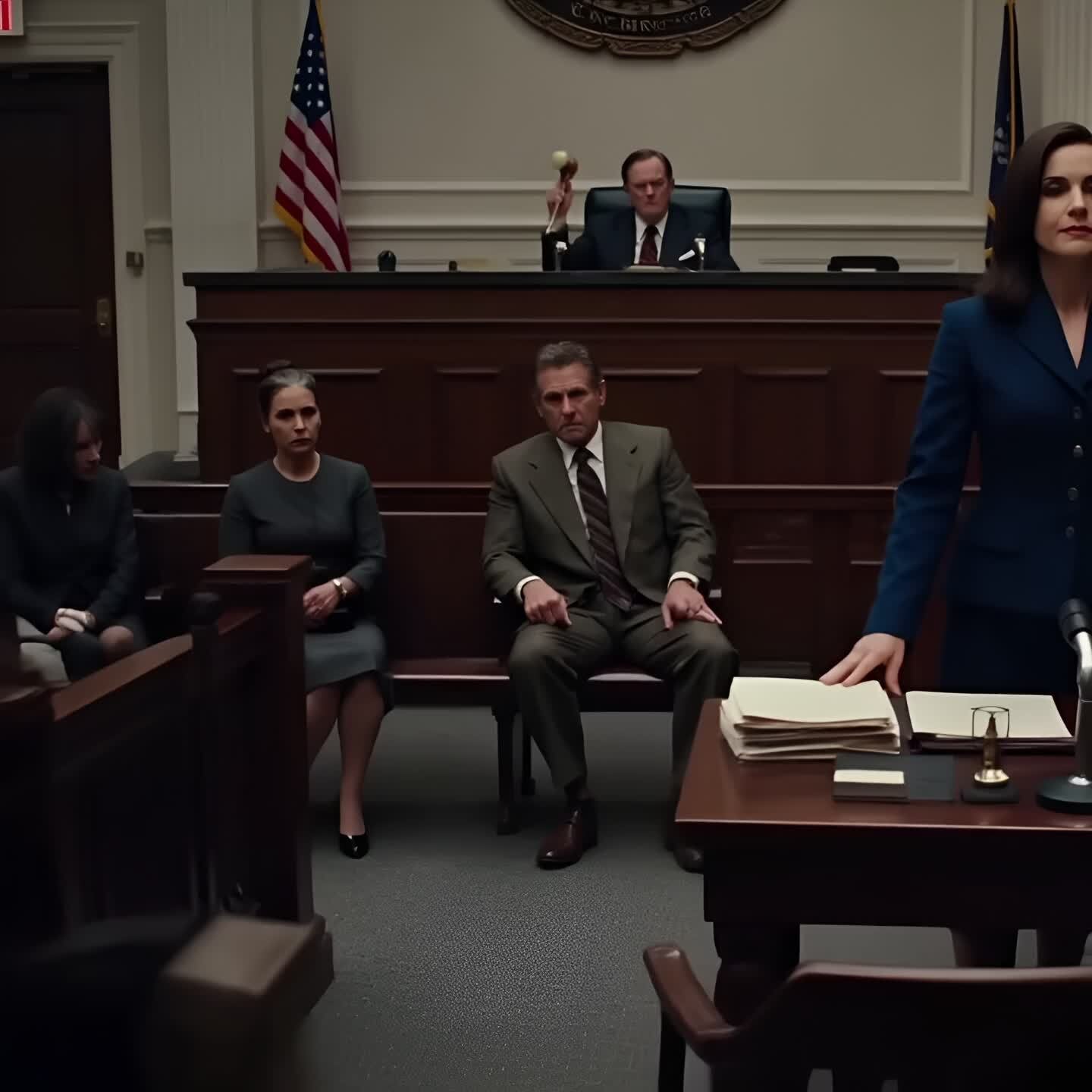
That morning, I sat at the defendant’s table in the federal courthouse in downtown Chicago, my hands folded on the cool mahogany, the air-conditioning humming with that low industrial drone that makes every room feel colder than it should. It was fighting a losing battle against the heat of bodies packed into Courtroom Seven.
This wasn’t a routine financial hearing. Usually, these matters were dry, administrative things attended by tired attorneys and the occasional desperate creditor.
Today, Courtroom Seven felt less like a hall of justice and more like a coliseum.
My parents had made sure of that.
Across the aisle, the plaintiff’s table was crowded.
My father, Graham Hawthorne, sat with the posture of a man posing for a statue—spine rigid, expression perfectly calibrated to sell “grieving father betrayed by wayward child.”
Beside him sat my mother, Vivien, dressed in severe black, as if she were attending the funeral of my reputation. She held a silk handkerchief to her face and dabbed at eyes that weren’t really wet, the motion rhythmic and practiced.
And then there was Bryce.
My brother, the golden boy of Lake Forest, sat slightly forward with his elbows on the table, exuding the easy confidence of a man who had never been told no without a checkbook coming after it. He caught my eye for a second and offered a small, sad smile.
It was a masterpiece of pretending.
Behind him, the gallery was full—three reporters from local papers, a scattering of Lake Forest socialites who treated gossip like oxygen, and enough curious strangers to make the room feel crowded even before the case began.
That smile said, to the room, I tried to save her.
To me, it said, I’m going to grind you into dust, little sister.
I looked away, forcing my focus to the seal of the United States mounted behind the judge’s bench. The room smelled like floor wax and expensive perfume, a nauseating mix that yanked me backward into memories of Sunday dinners I’d spent years trying to forget.
“Doing okay?”
The whisper came from my left.
Daniela Ruiz, my attorney, didn’t look at me when she spoke. She was busy arranging three heavy banker’s boxes on the table in front of us, stacking them with deliberate slowness, cardboard scraping against wood.
“I’m fine,” I whispered back.
“Good,” Daniela said, smoothing the lapel of her charcoal blazer. “Because they’re putting on quite a show. Look at the press. Your father must have called in every favor he’s owed since 1995.”
“They want a spectacle,” I murmured.
Daniela’s mouth twitched—not quite a smile, more like the hint of a blade being unsheathed.
“They don’t just want to ruin me,” I said, keeping my voice steady even as adrenaline tried to climb my throat. “They want to make sure I can never work in this town again. They want to paint me as the incompetent daughter who played business and lost my brother’s inheritance.”
Daniela finally looked at me. Her eyes were dark, sharp, and utterly fearless.
“Let them paint,” she said softly. “We brought the paint thinner.”
The bailiff called out.
The room shuffled to its feet as Judge Mallory Keane entered.
He was in his sixties with a face that looked like it had been carved out of granite and then left outside through a Chicago winter for a decade. He didn’t look happy. His docket was full, and a contested family case involving high-profile names was probably the last thing he wanted to referee.
We sat.
The air in the room grew heavy—like a physical weight pressing down on my chest.
Sterling Vance, the Hawthornes’ attorney, stood.
Vance charged six hundred dollars an hour to destroy people. He buttoned his suit jacket with a flourish like he was stepping onto a stage.
“Your Honor,” he began, voice rich and amplified even without a microphone. “We are here today with heavy hearts. This is not malicious litigation. This is a tragedy—a family trying to recoup a massive loss caused by mismanagement.”
He gestured toward me as if I were a stain on the carpet.
“The debtor, Ms. Ross, solicited a personal loan from her brother, Mr. Bryce Hawthorne, in the amount of two-point-four million dollars.”
A murmur rippled through the gallery.
To most people, that number was a fortune.
To my family, it was a weapon.
Vance paced before the bench, building the story I’d heard a thousand times across linen tablecloths and crystal glasses.
“This money was explicitly earmarked to save her failing technology startup, a company she calls Northbridge Shield Works,” he continued. “The agreement was clear. The funds were intended to cover payroll and essential operational costs to prevent immediate insolvency.”
I watched my mother.
On cue, she let out a soft, audible sob.
My father patted her hand, eyes lowered toward the floor in stoic disappointment.
The reckless daughter.
The noble brother.
The squandered fortune.
“Northbridge Shield Works has no viable product, Your Honor,” Vance concluded, leaning onto the lectern. “It is a shell. A hobby that got out of hand. Mr. Hawthorne simply wants to recover what he can from the wreckage.”
He sat.
Silence followed, thick with judgment.
I could feel the reporters behind me already writing headlines.
Daniela remained still until the judge looked toward us.
“Ms. Ruiz,” Judge Keane said, peering over his reading glasses. “Does the defense wish to make an opening statement?”
Daniela stood.
She didn’t pace. She didn’t gesture. She stood perfectly still, like a surgeon preparing an incision.
“We do, Your Honor,” she said.
Her voice wasn’t loud, but it cut through the room like a scalpel.
“The narrative presented by Mr. Vance is compelling. It has drama. It has emotion. It has a very large number attached to it.”
She paused—three seconds of silence, stretched tight.
“However, it lacks one critical element.”
Daniela’s eyes flicked toward the gallery.
“Truth.”
A few people shifted in their seats.
Daniela reached for the first box.
“We contest the validity of the debt. We contest the claim of insolvency. And we contest the characterization of my client’s business as a hobby.”
Vance’s jaw tightened.
Daniela continued, calm as a heartbeat.
“The plaintiff claims Ms. Ross borrowed two-point-four million dollars to save a failing company. We will demonstrate that no such transfer ever occurred. That the so-called loan documents submitted to this court are fabrications. And that Northbridge Shield Works is not only solvent, but currently one of the most secure financial entities in the state of Illinois.”
She patted the top of the box.
“We have prepared three thousand pages of discovery, Your Honor—independent accounting, system records, and sworn affidavits—that paint a very different picture of why the Hawthorne family is so desperate to force this company into receivership.”
Bryce laughed.
It was short, sharp, quickly stifled—but it landed.
He thought we were bluffing.
He thought I was still the girl who hid in her room while he charmed the country club.
Judge Keane didn’t even glance at him.
He pulled the case file toward him, opening the thick binder Vance had submitted. He flipped pages with a neutral expression.
“Two-point-four million,” he muttered. “Promissory note dated October fourteenth, twenty-twenty-two.”
“Yes, Your Honor,” Vance said, half rising. “Signed and officially witnessed.”
The judge turned another page.
Then another.
For a moment, it looked like he was going through the motions—the same routine he did with dozens of cases.
Then his hand stopped.
His fingers froze on a page near the back of the plaintiff’s exhibit, where the assets of Northbridge Shield Works were listed—the very assets Bryce wanted to seize.
Judge Keane’s brow furrowed.
He tilted his head slightly as if the fine print had stopped making sense.
He looked up at the ceiling for a brief second, searching his memory.
Then he looked back down.
The atmosphere in the room shifted.
The scratching of pens stopped.
Even my mother held her breath.
Judge Keane slowly removed his reading glasses. He folded them and placed them on the bench.
He looked at me.
Not like a judge looking at a defendant.
Like a man trying to solve a puzzle that had just changed shape.
He looked at the name on the file.
Then back at me.
“Counsel,” he said quietly, but the microphone caught it and carried the bass through the room. “Approach the bench.”
Daniela moved instantly.
Vance hesitated for one heartbeat, glancing at Bryce, then buttoned his jacket again and walked forward.
I couldn’t hear the words during the sidebar, but I saw the language.
Judge Keane leaned over the bench, tapping a finger against the document.
Daniela nodded once, face impassive.
And Sterling Vance…
I watched the color drain out of him like someone had pulled a plug. It started at his neck and moved upward until he looked like printer paper.
He gripped the edge of the bench.
He tried to speak, shaking his head, pointing back toward his client.
The judge cut him off with a sharp hand motion.
“Sit down,” Judge Keane ordered.
Vance practically stumbled back to his table and leaned in to whisper to Bryce for the first time all morning.
The smirk vanished from my brother’s face.
He looked confused.
Then annoyed.
My father sat up straighter, his grieving mask slipping for a second, revealing the shark underneath.
Judge Keane picked up his glasses but didn’t put them back on. He held them like a gavel.
He looked out over the courtroom—over the reporters, over my parents, and finally landed on me.
“Ms. Ross,” he said.
He wasn’t addressing my attorney.
He was addressing me.
I stood.
My legs wanted to shake, but I locked my knees.
“Yes, Your Honor.”
The judge’s tone turned conversational, but there was steel under it.
“I was reading a morning article with my coffee,” he said. “It discussed vulnerabilities in the national power grid and the safeguards being implemented by federal agencies.”
The room was dead silent.
I could hear the hum of a vending machine somewhere out in the hallway.
“The article mentioned a specific contractor,” the judge continued, eyes flicking to the file again. “A firm that has just secured a protected contract to strengthen security protocols for major interstate energy infrastructure.”
He looked up.
“The name of that company was Northbridge Shield Works.”
My mother’s hand froze mid-dab.
Judge Keane’s gaze sharpened.
“Mr. Vance,” he said, voice low and dangerous, “your filing states Northbridge Shield Works is a failed startup with no viable product and zero solvency.”
Vance stood, his voice cracking.
“Your Honor, my client believes the media reports are exaggerated. The financial reality is—”
“The financial reality,” Judge Keane interrupted, voice rising, “is that I am looking at a petition against a company that, according to what I read this morning, just signed a federal contract worth more than one hundred million dollars.”
A collective inhale swept through the room.
This time, the sound didn’t come from the gallery.
It came from my father.
Graham Hawthorne turned to stare at me.
The shock on his face was genuine.
He didn’t know.
He thought he was crushing a lemonade stand.
He didn’t realize he was trying to bulldoze a bunker.
“I have a question,” Judge Keane said, leaning forward. “And I want a very careful answer.”
He pointed toward the plaintiff’s table.
“Why is a company that safeguards federal infrastructure listed in my courtroom as a hobby?”
Bryce stared at the table, jaw clenched so hard I could see the muscle jumping.
He knew.
Of course he knew.
This was never about collecting a debt.
This was about hijacking what I’d built.
I looked back at the judge and kept my face neutral, masking the fierce satisfaction blooming in my chest.
“Because, Your Honor,” I said, voice steady and clear, “they didn’t think anyone would check.”
Judge Keane stared at me for a long moment.
Then he turned his gaze to Sterling Vance.
The look in the judge’s eyes wasn’t just anger.
It was the look of a man realizing his courtroom was being used as a weapon.
And he did not like being the trigger.
In that silence, as reporters began typing into their phones and my mother’s performance dissolved into real panic, I knew one thing for certain.
The script had flipped.
The curtain had been torn down.
And the eight years I’d spent building my fortress in the dark were about to come crashing down on them in the light.
To understand why my father looked at me with such genuine shock in that courtroom, you have to understand the ecosystem that created Graham Hawthorne.
We grew up in Lake Forest, Illinois, a place where wealth doesn’t shout—it whispers. And it usually whispers about who is falling behind.
In our world, success wasn’t measured by what you built, but by what you maintained.
My father ran Hawthorne Crest Advisers, a boutique wealth management firm that handled money for families who’d stopped working for a living three generations ago. His job was essentially to shake hands, drink single malt scotch, and make sure the numbers stayed on the right side of comfort.
Bryce was the crown prince of that kingdom.
From the time he was five, he was dressed in miniature blazers and taught how to order in French. He didn’t have to be brilliant. He just had to be presentable.
My sister Camille was the diplomat. She viewed the world through the lens of a gala invitation. To Camille, a global crisis was only relevant if it threatened the date of a botanical garden fundraiser.
And then there was me.
I was the glitch in the Hawthorne matrix.
I did everything I was supposed to do on paper. I went to the right prep schools. I learned which fork to use for salad. I earned an MBA from Northwestern.
But while my classmates were chasing internships on Wall Street, I was obsessing over the invisible grid that kept the lights on.
I fell in love with operational technology security.
To most people, it sounded like dry jargon.
To me, it was the nervous system of the modern world.
I wasn’t interested in protecting credit card numbers or email logins. I wanted to protect the industrial control systems that managed water treatment plants, electrical substations, and hospital oxygen supplies.
I saw the vulnerability in the jagged edge where old, rusting infrastructure met the modern internet, and it terrified me enough to make me want to fix it.
I still remember the day I tried to explain that to my family.
It was a Sunday in late November. The sky outside was the color of bruised plum.
We were in the library, a room that smelled like leather and lemon polish. I had prepared a pitch deck. I had market analysis. I had a roadmap for a company focused on securing legacy industrial hardware.
I laid it all out on the mahogany coffee table.
I spoke for twenty minutes about rising threats to domestic infrastructure.
I talked about the gap in the market.
I was passionate, precise, and completely blind to the temperature in the room.
When I finished, silence hung heavy.
My mother adjusted the pearls at her throat, looking at me with a mixture of pity and confusion, like I’d just announced I wanted to become a professional clown.
My father took a sip of his drink and set the glass down with a soft clink.
He didn’t look at my charts.
He looked at me.
“This is a hobby, Sydney,” he said, smooth and dismissive.
Heat rose up my neck.
“It’s not a hobby, Dad. This is a critical industry sector. The demand is projected to grow—”
He waved his hand, swatting away my statistics like a gnat.
“It’s toys for those kids who wear hoodies and live in basements,” he said. “It’s not a career for a Hawthorne. We manage capital. We do not crawl around in server rooms fixing wires.”
Bryce, lounging in a wingback chair, chuckled. He picked up one of my printouts, glanced at it, and tossed it back onto the table.
“Sounds like being a glorified mechanic, doesn’t it, Sid?”
I looked at them.
I looked at the three of them sitting there, safe in their bubble of inherited relevance, completely unaware of how fragile their world actually was.
“I’m asking for seed capital,” I said, keeping my voice steady. “I’m asking for an investment. I’ll pay it back with interest. Treat it like a business transaction.”
My father sighed—a long, weary sigh like he was burdened by an unreasonable child.
He leaned forward, elbows on his knees.
“Sydney, look at me,” he said. “You’re smart, but you’re confused. You do not have the temperament for business. You’re too emotional. You get too attached to details.”
He stood and walked to the window overlooking the manicured lawn.
“If I give you this money, you’ll burn through it in six months trying to save the world, and then you’ll come back here broke and embarrassed.”
He didn’t turn around when he delivered the final line.
“I will not fund your failure.”
Silence filled the library.
I packed up my papers.
I didn’t slam the door.
I walked out of that house with a cold, hard knot in my stomach that refused to dissolve.
And I didn’t dissolve with it.
That moment wasn’t a shouting match.
It was a trial.
My family had turned that library into a courtroom long before we ever stepped foot in front of Judge Keane.
My father was the judge.
My mother was the jury.
Bryce was the executioner.
And I was the defendant—guilty of the crime of wanting something they didn’t understand.
So I left.
Quietly.
And for the next three years, I educated myself the only way my family never could: in the real world.
I moved into a studio apartment in a neighborhood my mother wouldn’t drive through with the windows down. I stopped going to the country club. I stopped buying clothes that required dry cleaning. I got a job as a junior analyst at a mid-level IT firm.
And at night, I learned everything I could about industrial protocols.
I learned that the world doesn’t care about your last name.
I learned that when a server goes down at three in the morning, nobody cares where you went to school. They only care if you can get the system back online before the client loses fifty thousand dollars an hour.
I did grunt work.
I pulled cables through crawl spaces.
I sat in freezing data centers staring at lines of code until my eyes burned.
I sold security packages to small manufacturing plants where owners looked at me like I was selling them magic beans.
I learned to sell.
I learned to take rejection.
I learned that ninety percent of business is just showing up and doing what you said you would do.
But the hardest lesson came from my first partner.
His name was Greg.
We met at a hackathon, and he seemed to share my vision. He was brilliant, charming, and apparently dedicated. For eight months, we built a prototype together. I trusted him. I shared my code, my contacts, my strategy.
Then one morning I woke up to find our shared server empty.
Greg was gone.
He had taken the source code, rebranded it, and sold it to a competitor for sixty thousand dollars.
He blocked my number.
He vanished.
I sat on the floor of my apartment staring at the blank screen.
I had eighty dollars in my bank account.
I had just lost a year of work.
It was a crushing blow.
But in a strange way, it was liberating.
Greg didn’t pretend to love me while he did it.
He stole, and he left.
It was a clean cruelty.
My family’s cruelty was different.
They smiled at me while they eroded my confidence.
They invited me to dinner to remind me of my place.
They used affection like a leash.
After Greg, I made a decision.
I didn’t go back to Lake Forest crying.
I didn’t beg Bryce for a job.
I simply stopped engaging.
I stopped answering calls.
I stopped showing up for holiday brunches.
I didn’t write a dramatic letter of resignation from the family.
I just faded out.
My mother left voicemails with that tight, passive concern.
“Sydney, we’re just worried,” she’d say. “We heard you’re living in the city. Is everything all right? Do you need money?”
I never took the money.
Taking it meant accepting their narrative.
If I took even one dollar, I became the charity case they always said I would be.
So I ate instant noodles.
I walked miles to save bus fare.
And I rebuilt my work from scratch—line by painful line.
Every time I felt like quitting, every time fatigue threatened to pull me under, I heard my father’s voice in that library.
You will fail and come back.
That sentence became fuel.
I used it to burn through midnight.
I used it to push through the humiliation of cold calls.
I used it to build a shell around myself harder than diamond.
My family thought I was lost.
They told their friends at the club that Sydney was “finding herself,” a polite euphemism for being a disappointment.
They had no idea I wasn’t lost at all.
I was building.
I was doing it in the dark, where they couldn’t see me.
And more importantly—where they couldn’t stop me.
By the time I founded Northbridge Shield Works, I was not the soft, eager-to-please girl who presented charts in their library.
That version of me was gone.
In her place was a woman who understood the weight of a contract, the value of a promise, and the absolute necessity of keeping your enemies guessing.
I thought that if I stayed away, if I kept my head down and built my own life, they would eventually forget about me.
I was wrong.
You can leave a family like mine, but they don’t really let you go.
Not when they smell blood.
And certainly not when they smell money.
END OF PART 1
PART 2
Northbridge Shield Works didn’t begin in a gleaming glass tower with a view of Lake Michigan.
It began with twelve thousand dollars—the total sum of my life savings—and a refurbished laptop that sounded like a jet engine whenever I opened more than three spreadsheets.
I rented a space in a converted warehouse district on the far west side of Chicago. Not the trendy part of town with artisan coffee and exposed brick. The part where streetlights flickered and the wind smelled like diesel and wet concrete.
The office was six hundred square feet of drafty open space with a concrete floor that held a permanent chill. To my family, it would’ve looked like a squatter’s den.
To me, it looked like freedom.
I wasn’t building an app to share photos or a platform to sell artisanal soap. I was building a shield for the things people took for granted until they stopped working.
Operational technology—OT—was the language of the physical world. The valves in a water treatment plant. The breakers in an electrical substation. The systems that kept hospital oxygen flowing.
People worried about stolen credit cards.
I worried about someone remotely touching systems that could hurt real people.
The industry was terrifyingly vulnerable. Most of these systems ran on decades-old software, connected to the modern internet with the digital equivalent of duct tape and prayer.
My first team was five people.
Misfits who didn’t fit the corporate mold.
Marcus was a network engineer with a stubborn streak as wide as Lake Michigan.
Sarah was a code prodigy who’d walked away from an elite program because she was bored.
We didn’t have HR.
We didn’t have catered lunches.
We had folding tables from a liquidation sale and a coffee machine we treated like a sacred artifact.
When we bought our first rack of servers, we didn’t hire movers.
We rented a van, backed it up to the loading dock, and carried hardware up two flights of stairs ourselves. I remember sweating through my shirt, my muscles screaming, terrified I’d drop a piece of equipment I’d bought on credit.
I looked at Marcus, grunting under the weight of the other end, and we started laughing.
Not the happy kind.
The desperate kind.
The kind you make when you’ve burned every bridge and the only direction left is forward.
Our product was simple in concept and brutal in execution.
We built an intrusion detection system designed specifically for industrial protocols. It had to be invisible. It had to sit silently on the wire, watching for anomalies without ever touching operations.
Because in an industrial network, even a tiny delay can be a disaster.
We called it the Ghost Protocol.
The first year was a blur of eighty-hour weeks and constant anxiety.
Cold pizza at three in the morning.
Lines of code that refused to compile.
Plant managers who looked at us like we were selling magic beans.
But we were good.
We were very good.
Our first real break came from a midsized utility company in Ohio. They’d suffered a ransomware incident that nearly shut down their water pumps. They were desperate, and the big firms were quoting them six months just to deploy.
We told them we could do it in two weeks.
We did it in ten days.
When the check cleared, I stared at the balance on my screen for twenty minutes.
It wasn’t a fortune.
But it was three months of payroll.
It was the first time I let myself breathe.
As Northbridge started to gain traction, I made a calculated decision that later became a critical piece of the puzzle.
I knew my family.
If the name Sydney Hawthorne started appearing in business pages or industry panels, my father would hear it. He would investigate.
And if he saw I was succeeding, he would find a way to intervene.
So I erased myself.
Legally, I remained Sydney Ross, keeping the last name from a brief early marriage my parents had never accepted.
But in public-facing press releases and conference bios, I used a professional alias.
I became Paige Sterling.
Paige was my middle name.
Sterling was the street where I rented my first apartment.
It worked.
When a Chicago business publication ran a feature on rising cyber defenders, they interviewed Paige Sterling. They published a photo of me in thick-rimmed glasses, looking away from the camera, focused on a monitor.
I cut the article out and almost framed it.
Almost.
Instead, I slid it into a manila envelope and locked it in the bottom drawer of my desk.
I told no one.
Not even my own team knew the full reason I was so obsessive about privacy. They thought I was eccentric.
We grew.
We moved out of the warehouse and into a real office park.
I hired more engineers.
I hired sales.
But I never let go of the feeling that I was waiting to be discovered.
I drove a five-year-old sedan.
I rented a modest condo.
Every dollar of profit went back into the company.
Then came the contract that changed everything.
It arrived as a request for proposal from a consortium of federal contractors working under the Department of Energy.
They wanted a unified security architecture for critical energy substations across the Midwest.
The contract was worth more than one hundred million dollars over five years.
We were the underdogs.
We were up against defense giants with lobbyists and legacy pedigrees.
But we had something they didn’t.
We had a system that was lighter, faster, and already proven in the field.
The vetting process was grueling.
They audited our code.
They combed through my finances.
They interviewed people who’d known me before I even knew what OT stood for.
I was terrified they’d trace the Hawthorne connection and decide I was a risk.
They didn’t care about my family.
They cared about competence.
When we won the bid, I didn’t pop champagne.
I closed my office door and sat on the floor with my back against the wall.
I shook.
Not from fear.
From the adrenaline dump.
We’d done it.
We’d secured the future of the company.
But the contract came with clauses for everything.
One of the most unforgiving clauses involved financial stability.
If a contractor enters bankruptcy proceedings—voluntary or forced—it triggers an automatic review.
It can lead to an immediate suspension.
The logic is simple.
If you can’t manage your own stability, you can’t be trusted with sensitive work.
I knew this.
It was written in bold on page forty-two.
I thought I was safe.
Northbridge was profitable.
We had millions in cash reserves.
We had zero debt.
I had built a fortress that could withstand any outside threat.
I just hadn’t built a fortress that could withstand a family like mine.
I still don’t know exactly how it happened.
Maybe a distant cousin saw a photo of Paige Sterling and recognized the chin.
Maybe my father’s firm was sniffing around the energy sector and stumbled onto filings.
Or maybe I had simply let my guard down.
I’d hired a compliance consultant to help with government paperwork—efficient, chatty, friendly.
I found out too late her husband played golf with my brother.
Maybe it was one casual comment.
A mention of a local firm landing a massive contract.
A woman who looked vaguely familiar.
However it happened, the information traveled from a golf course to the Hawthorne dinner table.
They didn’t see the work.
They didn’t see the sleepless nights.
They saw one hundred million dollars.
They saw a pie they hadn’t been offered a slice of.
And in Hawthorne logic, my success wasn’t mine.
It was theft.
I was sitting in my office late one Tuesday reviewing the deployment schedule for the first substation when my phone buzzed.
A notification from my bank.
Then another.
Then an email from a process server.
A cold shiver ran down my spine—the kind of instinct that tells you the lion is in the grass.
I opened the attachment.
It was a petition.
A petition for involuntary bankruptcy filed by Bryce Hawthorne.
I stared at the screen until the white light burned my eyes.
They had found the one loose thread.
They knew that a bankruptcy hearing—even a false one—could freeze everything.
They knew it could pause the contract, trigger reviews, and put my entire operation under a harsh, bureaucratic microscope.
They knew that if they created enough chaos, I might be forced to settle.
To pay.
To surrender equity.
To hand them a piece of the fortress.
I lowered the phone.
The office that was usually my sanctuary suddenly felt like a tomb.
I’d spent eight years running, hiding, building, thinking I’d escaped the gravity of my family.
But staring at the legal seal on that document, I realized I hadn’t escaped anything.
I had just fattened myself up for the slaughter.
I picked up the phone and dialed Daniela Ruiz.
I didn’t cry.
I didn’t scream.
The time for emotion had passed.
“Daniela,” I said when she answered, “they found me. And they’re coming for the company.”
That night, I didn’t go home.
I stayed in the office watching the lights of the city grid I was sworn to protect, realizing the real danger wasn’t some faceless criminal in a basement across the ocean.
It was my own blood, armed with a lawyer and a lie.
The envelope that arrived at my desk was thick and stamped with the seal of the United States Bankruptcy Court.
When I tore it open, it didn’t just hurt.
It burned.
Bryce claimed he had loaned me two-point-four million dollars eighteen months ago.
He claimed Northbridge was hemorrhaging cash.
He claimed we were missing vendor payments.
He claimed the company would collapse within thirty days without the court stepping in.
But the worst part wasn’t the story.
It was the attachment.
A photocopy titled Strategic Investment Agreement.
It looked official.
Right font.
Dates in the right places.
And on the last page—right next to Bryce’s flamboyant scrawl—was my signature.
I ran my finger over the copied ink.
It was my name.
The way I looped the S.
The sharp cross on the T.
But it was wrong.
The pressure was too even.
It lacked the slight jagged edge my hand had carried since I broke my wrist in college.
It wasn’t written.
It was traced.
Lifted from some old card or note I’d sent years ago, then grafted onto a contract like a cutout on a collage.
I flipped to the clauses and felt my blood go cold.
In the event of financial instability, the lender—Bryce—reserved the right to assume temporary operational control and appoint an interim board.
They didn’t just want to embarrass me.
They wanted the keys.
I drove straight to Daniela’s office.
When I threw the file onto her glass desk, the sound cracked through the room.
“They fabricated it,” I said, voice tight. “That isn’t my signature. And that money never existed. Check the ledgers. Two-point-four million never entered Northbridge.”
Daniela put on her glasses and read.
She didn’t gasp.
She didn’t look shocked.
She looked like a surgeon discovering a tumor bigger than expected.
After ten minutes, she closed the folder.
“They know,” she said.
“Know what?”
“That the federal timeline is tight,” she replied, tapping the filing date. “Look. They filed yesterday.”
My stomach sank.
“The vetting review,” I whispered.
Daniela nodded.
“The final review for the next phase. If you’re in active bankruptcy proceedings during that review, the protocol is automatic. They pause the contract. They freeze approvals. They don’t care if the accusations are true. They care about risk.”
She tapped the clause about operational control.
“They don’t just want you embarrassed,” she said. “They want you restrained at the exact moment the government is watching. They want to force a crisis.”
“And then who shows up with the generous offer to ‘save’ me?” I asked.
“Bryce,” Daniela said, without hesitation.
She leaned in.
“They want to injure you and then charge you for the bandage.”
I walked to the window and stared at the Chicago skyline, feeling the cruelty settle into my bones.
They were willing to risk a critical project just to drag me back under their thumb.
“How did they get close?” I asked. “This filing references liquidity ratios. It references a pending government receivable.”
Daniela’s eyes narrowed.
“Someone talked,” she said.
My mind jumped to the compliance consultant—Linda—the one who’d smiled too easily and talked too much.
I remembered her mentioning she’d run into my mother at a charity event.
“Your mother is lovely,” she’d said. “We chatted about how well you’re doing.”
I’d frozen.
She’d waved it off.
“Oh, honey, I didn’t give details. I just told her you were landing big fish.”
“It was Linda,” I said now, nausea rising.
Daniela nodded.
“It fits. But…”
I had been rereading the forged document, and something snagged.
A line that didn’t belong.
A date.
A location.
Gary, Indiana—November fourteenth.
My hands went cold.
Linda didn’t know about Gary.
And she absolutely didn’t know that date.
That date had been internal.
A soft target.
Not in the public contract.
Only on our internal project chart.
I looked at Daniela.
The realization hit like a physical blow.
“Linda gave them the idea,” I said, voice trembling. “But she couldn’t have given them this.”
Daniela’s face didn’t change.
“You have a leak,” she said flatly.
“A rat,” I whispered.
“Someone inside Northbridge.”
Panic tried to rise in my throat.
“We have to fire everyone,” I blurted.
“No,” Daniela snapped. “You do absolutely nothing. If you start firing people, you spook the leak. And right now, that leak is our only window into their strategy.”
She pulled a fresh legal pad toward her.
“We fight this on two fronts,” she said. “In court, we attack the forged document. We subpoena accounts. We bring in forensic experts. That’s the shield.”
“And the sword?” I asked.
“The leak,” she replied. “We prove this isn’t just a family dispute. We prove it’s coordinated corporate spying. We catch them using information they shouldn’t have.”
“How?”
Daniela’s gaze sharpened.
“You said November fourteenth was a soft date,” she said.
I nodded.
“Change it,” she said.
My breath caught.
“A trap,” I whispered.
Daniela’s mouth curved into a small, dangerous smile.
“You go back to your office,” she said. “You act stressed. You act like you’re crumbling. And you issue a new confidential internal memo—verbal and limited. You tell your management team you’re moving critical assets to an off-site facility.”
“There is no off-site facility,” I said.
“I know,” she replied. “But Bryce doesn’t.”
She tapped her pen.
“Pick a city. Milwaukee. Pick a date. Next Friday. Make it detailed enough to look real.”
“And if Milwaukee shows up in their next filing…”
“We have them,” Daniela said.
It was risky.
It meant walking back into my office, looking into the faces of people I’d trusted, knowing one of them was holding a knife behind their back.
It meant playing the victim when all I wanted was to roar.
But I thought of my father’s voice.
You will fail and come back.
Okay, I told Daniela.
“I’ll write it tonight.”
“Good,” she said. “And tell no one outside your inner circle. If you want to know who sold you for a paycheck, you treat everyone like a stranger until the trap is sprung.”
I drove back to Northbridge.
The office was humming with activity.
My team was there—Marcus, Sarah, Jason, and the others—faces full of concern.
They’d seen the news.
They knew something was wrong.
“Is everything okay, boss?” Marcus asked.
I looked at him.
I looked at Sarah.
I looked at Jason, the project manager who lived by timelines and calendars.
One of them was talking to Bryce.
One of them was feeding my brother the map.
I let my shoulders slump.
I rubbed my eyes.
I let my voice crack just enough.
“It’s bad,” I said. “My family is trying to freeze everything. We might have to move hardware to keep it safe.”
I watched their expressions.
Concern—or calculation.
“I’m sending out a plan later tonight,” I said. “It stays in this room. If this gets out… we’re done.”
Then I went into my office, closed the door, and opened a blank document.
CONFIDENTIAL ASSET RELOCATION STRATEGY
MILWAUKEE
I wasn’t just writing a memo.
I was loading a weapon.
And I was going to wait for my brother to pull the trigger on himself.
Two days passed.
Then Daniela called me.
“Check your email,” she said.
I opened the new filing.
Emergency motion.
Temporary restraining order.
And there it was—right in black and white.
Milwaukee.
Bryce Hawthorne claimed he had “credible intelligence” that I was transporting critical assets to Milwaukee, Wisconsin, to avoid the jurisdiction of the court.
I exhaled.
“They took the bait,” I said to my empty office.
“They swallowed it,” Daniela replied. “He put Milwaukee in a sworn statement. He just proved he’s getting fed internal information.”
We had the leak.
We had proof.
Bring that motion to court tomorrow, Daniela told me.
“It’s the nail.”
The sun set over the Chicago skyline, turning buildings into silhouettes of gold and steel.
Tomorrow morning, I would walk into that courtroom and face the people who had raised me.
I thought about the traced signature.
I thought about my mother’s notary seal.
I thought about the routing number that led nowhere.
They wanted a spectacle.
They wanted a public execution of my dignity.
I stood up and smoothed my blazer.
“Okay,” I said aloud to the empty office. “You want a show?”
I looked at my reflection in the dark window.
“I’ll give you a show.”
END OF PART 2
PART 3
The morning of the hearing, the sky over Chicago was a flat, oppressive gray—the kind of weather that didn’t feel like a forecast so much as a warning.
I stepped out of the cab a block away from the courthouse, needing a breath of air before walking into the arena. I wore a navy suit I’d bought specifically for this day and carried a single slim briefcase that looked intentionally light.
Daniela Ruiz met me at the corner.
She looked immaculate, her expression tuned to a frequency of professional lethality.
But as we turned toward the courthouse steps, she stopped and grabbed my elbow.
“Don’t look left,” she warned, voice low. “And keep walking.”
I looked left anyway.
A van sat near the entrance with a satellite dish on the roof. Three camera crews clustered on the concrete steps, and a gaggle of reporters held microphones with bright station logos.
My stomach tightened.
“Why are they here?” I whispered. “These hearings are usually boring.”
“Not when the name Hawthorne is attached,” Daniela said, steering me forward. “Someone tipped them off. The narrative is already out there.”
We climbed the stairs, and the flashbulbs started popping.
A tabloid reporter pushed a microphone toward my face.
“Ms. Ross—did you take two-point-four million dollars from your brother?”
“Ms. Ross—are you hiding company assets?”
“Ms. Ross—are you running a fake startup?”
I kept my eyes forward, fixed on the revolving brass doors.
Everything in me wanted to snap back.
I wanted to tell them about the years of instant noodles and midnight code.
About the warehouse.
About the servers carried up the stairs.
But I knew what the cameras wanted.
A shaken woman.
An emotional outburst.
A clip they could loop.
Daniela leaned closer.
“Silence is better,” she murmured. “Anger gets labeled. Quiet stays mysterious.”
We pushed through the doors into the lobby, and the noise of the street cut off instantly as the glass sealed behind us.
Inside was worse.
The federal courthouse lobby was usually quiet—lawyers checking watches, defendants staring at their shoes.
Today it looked like a cocktail hour at the Lake Forest Country Club.
My father stood near the security checkpoint.
He wasn’t reading documents.
He wasn’t tense.
He was shaking hands with a city councilman who just happened to be passing by.
He laughed—rich and booming—echoing off marble walls.
He looked relaxed.
Powerful.
Like he was networking at an event.
Not trying to dismantle his daughter’s life.
My mother sat on a wooden bench nearby, flanked by two friends from her charity circles.
She wore heavy black—not sleek business black, but mournful black.
A thin veil of netting covered her face, sheer enough to show the red-rimmed eyes she’d practiced in the mirror.
It wasn’t grief.
It was costume.
“Look at them,” I whispered. “They’re enjoying this.”
“Of course,” Daniela said, scanning the room with the calm of someone who had walked into worse storms. “This is their stage. You’re the prop.”
We cleared security, gathered our bags, and started toward the corridor.
That’s when Bryce detached himself from his attorney and walked toward us.
He wore a suit that probably cost more than my first car.
He stopped five feet away, perfectly positioned where anyone in the lobby could see.
He lowered his voice just enough to sound intimate, and raised it just enough to be overheard.
“Sydney,” he said, performing sadness like a trained actor. “It didn’t have to end like this. I tried to help you. I really did.”
Heat rushed into my cheeks.
The audacity was suffocating.
“You fabricated paperwork, Bryce,” I said, keeping my tone controlled. “You know you did.”
His eyes went flat.
Cold.
Dead.
He stepped closer, the smile never reaching his eyes.
“It’s finally time for you to pay,” he said softly. “By noon, you’ll be nothing.”
I opened my mouth.
Daniela’s hand clamped onto my shoulder hard.
“Don’t,” she hissed. “He’s fishing for a reaction. If you blow up in the lobby, you look unstable. If you look unstable, the judge wonders if you can run a company. Walk away.”
She was right.
I swallowed the bile and turned my back on him.
We walked toward the elevators, leaving Bryce standing there like a man posing for an audience that didn’t know the play was about to change genres.
We were halfway down the corridor toward Courtroom Seven when my phone buzzed.
I ignored it.
It buzzed again.
Then a third time—long, sustained.
I pulled it out.
The caller ID made me stop.
It was the chief information officer of a regional hospital network—one of our oldest and most critical clients.
“I have to take this,” I said.
“Five minutes,” Daniela warned. “We’re about to be called.”
I answered.
“Hello, this is Sydney.”
“Sydney—what in the world is going on?” The voice on the other end was high, urgent, hovering on the edge of panic. “We just got an alert. Someone is trying to push into a high-level system area tied to our oxygen regulation servers.”
My grip tightened.
“What?”
“We received a message ten minutes ago,” the CIO said, breathless. “It claims to be from a court-appointed officer connected to Bryce Hawthorne. It says Northbridge is under court action, and we’re required to hand over top-level system clearance codes immediately for ‘asset verification.’ They attached a court document.”
Cold ran through me.
“Do not send anything,” I said, voice dropping into the command tone I used during incident response. “Do not reply. Route everything through verification channels only. If anyone asks, you say you’re awaiting confirmation from our legal counsel.”
“I already stalled,” the CIO said. “But Sydney—this message is specific. It references a server migration. It says he needs access to verify the Milwaukee transfer before the assets go offline.”
My pulse slowed, not from calm, but from focus.
“Say that again,” I whispered.
“Milwaukee,” the CIO repeated. “He wrote Milwaukee.”
I looked at Daniela.
She read the shift in my face before I spoke.
“Forward me that message,” I told the CIO. “Include the headers. Everything you have.”
“Done,” he said.
I hung up.
My phone pinged instantly.
There it was—black and white.
A message stamped with urgency, signed as if it carried authority it did not have, demanding sensitive access details from a hospital system.
And right in the middle of it:
Milwaukee.
Daniela took the phone from my hand.
Her eyes widened as she read.
“He didn’t just take the bait,” she said. “He escalated. He’s impersonating a court officer. He’s trying to pressure a hospital client into giving him entry codes. That’s not ‘family litigation.’ That’s reckless.”
I didn’t feel shaky.
I felt steady as stone.
“He fell for it,” I said. “The Milwaukee memo. He believes it.”
Daniela’s mind was already racing.
“This does three things,” she said, counting on her fingers. “It proves he has insider information. It proves he’s willing to cross a line to get what he wants. And it proves his ‘concerned brother’ act is a performance.”
She looked down the corridor.
“We need hard copies. Now.”
We found a small business center down the hall.
The printer churned.
Five copies.
Hot paper.
Fresh ink.
The kind of physical evidence you could hold up in a courtroom and make a story turn.
As the pages slid into the tray, I stared at the timestamp.
Twenty minutes ago.
“He sent this from his phone,” I murmured.
Daniela snapped her gaze up.
“He’s in the building,” she said.
“Of course he is,” I replied. “He’s that confident.”
We grabbed the printouts and moved fast.
Back toward Courtroom Seven.
The bailiff was opening the doors.
The gallery was filling.
My parents were already in the front row, their faces arranged into solemn dignity.
Bryce sat at the plaintiff’s table, checking his watch like a man waiting for his prize to arrive.
I walked to the defendant’s table and didn’t sit down right away.
I turned and scanned the room.
Reporters.
Clerks.
Curious onlookers.
And in the back row, near the exit sign, huddled like he hoped the shadows would swallow him—someone in a Northbridge jacket.
A baseball cap pulled low.
But I recognized the jacket.
I recognized the shoulders.
Jason.
My project manager.
The one who had studied the Milwaukee address too carefully.
The one I’d seen pacing outside by his car with a phone at his ear.
He wasn’t sitting behind me.
He wasn’t sitting like support.
He was sitting like a spectator.
Like a man who wanted a clear line of sight to the plaintiff’s table.
Our eyes met.
For a second, he looked terrified.
Then he saw the fresh printouts in Daniela’s hand.
Color drained from his face.
He started to rise—maybe to slip out.
The bailiff’s voice boomed.
“All rise.”
The doors closed.
Jason sank back into his seat.
Trapped.
Judge Keane entered.
We sat.
Bryce glanced at his phone under the table, annoyance tightening his jaw—probably wondering why the hospital hadn’t complied.
Daniela slid the Milwaukee message onto the top of our evidence pile.
“Ready?” she whispered.
I looked at my mother’s costume.
I looked at my father’s posture.
I looked at the brother who had tried to use a hospital client as leverage.
“I’ve never been more ready,” I whispered back.
Judge Keane took his seat.
The hearing began.
Sterling Vance was on his feet before his chair even stopped scraping.
He buttoned his jacket with that rehearsed flourish.
“Your Honor,” he began, voice booming. “We are here today on a matter of urgent financial necessity. This is a family tragedy.”
He let the word tragedy hang like perfume sprayed too heavy.
“My client, Mr. Bryce Hawthorne, extended a lifeline to the debtor, Ms. Sydney Ross, in the form of a personal loan totaling two-point-four million dollars—”
My mother dabbed her eyes in perfect rhythm.
My father shook his head like a man burdened by disappointment.
Vance paced.
He painted me as chaotic.
He painted Bryce as patient.
He painted Northbridge as a shell.
He talked about “protecting value” and “preventing disappearance of assets.”
He pointed at me like I was the risk.
“We are asking the court to appoint oversight immediately,” Vance thundered. “We are asking for the keys before Ms. Ross destroys what little remains.”
The gallery murmured.
Reporters scribbled.
I stared straight ahead and didn’t give them the reaction they wanted.
Judge Keane adjusted his glasses and flipped open the binder.
“Counsel,” he said dryly, “you are alleging total insolvency.”
“Yes, Your Honor,” Vance said, leaning on the lectern. “The company is a sinking ship.”
Judge Keane nodded once.
He turned a page.
Then another.
The courtroom fell into a heavy silence.
Paper turning.
My mother’s theatrical sniffles.
The steady hum of air-conditioning.
Then the judge’s hand stopped.
He stared at the company name on the exhibit cover sheet.
Northbridge Shield Works.
His brow furrowed.
He blinked.
He looked up at the ceiling as if pulling a memory from a crowded cabinet.
Then he slowly set his glasses down.
The boredom vanished from his face, replaced by something sharp and alert.
He looked directly at me.
“Ms. Ross,” he said, voice carrying weight.
I stood.
“Yes, Your Honor.”
“I want you to answer a question,” Judge Keane said. “And I want you to be precise.”
“I will.”
He enunciated every syllable.
“Is Northbridge Shield Works currently a prime contractor for a critical infrastructure project under the jurisdiction of the federal government?”
The silence that followed was absolute.
A vacuum.
Pens stopped.
My mother froze mid-dab.
Bryce lifted his head.
“Yes, Your Honor,” I said.
The judge leaned forward.
“Specifically,” he continued, “does your company manage security protocols connected to the Department of Energy?”
“We do,” I replied. “We are currently under contract to secure operational technology for regional power substations.”
Judge Keane stared at me, confirming the pieces.
Then he turned slowly toward the plaintiff’s table.
Sterling Vance held a confused smile that looked stuck to his face.
Like a man who had walked onto a tennis court and realized his opponent wasn’t holding a racket.
“Mr. Vance,” Judge Keane said, voice dangerously soft, “are you aware of the entity you are asking this court to seize?”
Vance stammered.
“Your Honor, we believe it is a software startup—”
“A family dispute,” the judge repeated. “You have filed a petition to force bankruptcy proceedings on a government contractor. You are asking me to interfere with an operation connected to federal infrastructure.”
He dropped the file back onto the bench with a flat thud.
“Do you understand what happens when a contractor enters bankruptcy proceedings?”
Vance opened his mouth.
No sound came out.
“It freezes,” Judge Keane snapped. “It triggers review. It can pause the work. And that is not a toy problem.”
Vance tried to pivot.
“Your Honor, we simply want to resolve a debt—”
“The nature of this business matters,” the judge cut him off. “You do not get to use this court as a blunt instrument in a personal dispute when the consequences extend beyond your family.”
He motioned sharply.
“Counsel. Both of you. Approach the bench.”
Daniela rose smoothly.
Vance practically tripped on the way forward.
While they spoke at the bench, I sat alone, feeling the eyes of the room on my back.
The narrative of incompetent daughter had just crashed into two words no one expected to hear in a family hearing.
National infrastructure.
Judge Keane’s voice wasn’t polite during the sidebar.
Even from my seat, I could hear the hiss of his anger.
Vance’s face went pale.
Daniela returned with the stride of a gladiator.
Vance returned wiping sweat like a man whose script had been set on fire.
Judge Keane looked out over the courtroom.
“I want this on the record,” he said. “This court takes its role in the administration of debts seriously. It also takes a very dim view of being used as a weapon in personal disputes—particularly when those disputes threaten to disrupt federal operations.”
He looked at Bryce.
“Mr. Hawthorne,” the judge said.
Bryce stood, buttoning his jacket, attempting composure.
“Yes, Your Honor.”
“Your counsel has informed me you are the sole source of information regarding the alleged collapse of this company,” Judge Keane continued. “You claim Northbridge is failing.”
“It is,” Bryce said smoothly. “My sister is hiding the truth.”
“We will see about truth,” Judge Keane said.
His gaze hardened.
“Because let me be very clear. We are no longer just looking at a petition. We are looking at the provenance of the documents you have brought into this court. If it is determined that this court has been misled—or that paperwork has been fabricated to trigger a default on a federal contract—the consequences will not be limited to civil remedies.”
The air tightened.
Bryce’s expression faltered.
“I don’t understand,” he said.
Judge Keane leaned forward.
“The consequences,” he repeated, “could be criminal.”
The word landed like a blade dropping.
Bryce stopped breathing for a second.
His smirk vanished.
For the first time in his life, he looked at a person in authority and realized his last name was not armor.
Daniela leaned toward me.
“He opened the door,” she whispered.
I stared at Bryce.
Now we walk through it.
“Ms. Ruiz,” Judge Keane said, turning to Daniela, “you may proceed. And I suggest you start by explaining why a solvent contractor is sitting in my courtroom.”
Daniela stood.
She lifted the first binder.
Then the second.
Then she picked up the fresh printout—the Milwaukee message.
“Thank you, Your Honor,” she said evenly. “We intend to do exactly that. And we intend to show that this petition was not filed to resolve a debt.”
She paused.
“It was filed to force a takeover using stolen and ultimately false information.”
The room went still again.
Not the bored stillness of bureaucracy.
The alert stillness of a crowd realizing it might be watching a reckoning.
I didn’t look at my father.
I didn’t look at my mother.
I looked at the back row.
Jason sat there shaking.
And for the first time since this began, I felt something close to calm.
Because the truth was no longer hidden in my office.
It was sitting under fluorescent lights, on federal record.
And my family could not talk their way out of it.
END OF PART 3
PART 4
Daniela Ruiz didn’t raise her voice.
She didn’t slam a binder.
She didn’t do anything that looked like theater.
She simply walked to the center of the room, adjusted the projector screen so the gallery could see, and began to dismantle the Hawthorne myth—piece by agonizing piece.
“Your Honor,” she said, cool and measured, “the plaintiff’s entire case rests on a single document. The so-called strategic investment agreement.”
She clicked the remote.
A blown-up image of the signature page filled the screen. On one side was Bryce’s version of my name. On the other side were multiple verified samples of my signature—tax filings, IDs, legitimate contracts—spanning the last decade.
“If you look at the verified samples,” Daniela said, using a laser pointer, “you will see Ms. Ross writes with a heavy downstroke on the capital S and a fluid loop through the double S in Ross. It’s rapid. Muscle memory.”
The red dot shifted to the signature on Bryce’s document.
“Now look at the plaintiff’s exhibit.”
She paused long enough for the room to lean in.
“The ink density is uniform. There are microscopic hesitation marks—tiny pauses where the pen lifted. This wasn’t written. It was drawn.”
A ripple moved through the back of the room.
Daniela didn’t look at them.
She kept her focus on the judge.
“This is a tracing,” she continued. “Lifted from an older signature sample and grafted onto a contract. We have the original card in our possession. When overlaid, the signatures match. Identical.”
She let the word hang.
“No one signs their name identically twice,” Daniela said. “Only a copier does that.”
Bryce shifted in his chair.
Sterling Vance started scribbling notes like he could rewrite reality with a pen.
Daniela clicked again.
The screen changed to the banking details section.
“Mr. Hawthorne claims he transferred two-point-four million dollars,” she said. “The routing number listed is nine digits, yes. But the validation check fails. It does not correspond to a real institution.”
She turned toward Judge Keane.
“In plain language, Your Honor: that number does not exist.”
The room was so quiet I could hear someone in the gallery swallow.
“And even if it did,” Daniela continued, “the money wasn’t sent.”
She pulled a binder open.
“We subpoenaed Mr. Hawthorne’s personal and business accounts for the relevant period.”
She paused.
“At the exact moment he claims to have wired two-point-four million dollars… his primary checking account was overdrawn.”
A stunned sound ran through the gallery.
Not laughter—at least not at first.
More like shock trying to become anything other than shock.
Daniela’s voice stayed even.
“Overdrawn,” she repeated. “By four hundred dollars and fifty cents.”
That did it.
A nervous, disbelieving laugh bubbled from the back rows.
The golden boy of Lake Forest—cash poor, at least on paper.
Bryce’s face turned a violent shade of red.
He stared at the table like he could burn a hole through it.
Daniela clicked again.
Northbridge’s actual financials appeared on the screen.
“Northbridge Shield Works has been profitable for three consecutive years,” she said. “We have substantial cash reserves. We have no debt. The claim of insolvency is not merely incorrect. It is mathematically impossible.”
Judge Keane wasn’t taking notes now.
He was staring at the plaintiff’s table with the expression of a man deciding whether he was looking at incompetence… or something far worse.
“Mr. Vance,” the judge said, voice hard, “do you have a rebuttal for the fact that your client appears to have had negative funds at the time of this alleged transfer?”
Vance rose too quickly.
“Your Honor, funds are often moved through complex structures—trusts and holding entities—”
“Sit down,” Judge Keane ordered.
Vance sat.
Daniela didn’t flinch.
She reached to the table and lifted a sealed evidence bag.
“We have addressed the signature,” she said. “Now we must address the seal.”
She clicked.
A close-up of the notary stamp filled the screen.
The raised letters were sharp in the harsh scanner light.
Vivien E. Hawthorne, Notary Public, State of Illinois.
Daniela’s voice sharpened by a fraction.
“This agreement bears the notary seal of Mrs. Vivien Hawthorne—the debtor’s mother.”
My mother sat up straighter, clutching her purse.
Her face no longer looked theatrical.
Now it looked hunted.
“We contacted the Illinois Secretary of State’s office,” Daniela said. “Mrs. Hawthorne’s notary commission expired on June thirtieth, two thousand fourteen.”
Eight years before the date on Bryce’s document.
The room went dead.
Using an expired seal was a violation.
Using it to validate a forged signature on a fabricated agreement?
That was something else.
My mother couldn’t stop herself.
She shot up from her bench.
“I didn’t know!” she blurted, voice shrill under the high ceiling. “I haven’t used that stamp in years. It was in my drawer. Someone must have taken it. I don’t remember stamping anything—”
“Mrs. Hawthorne,” the bailiff barked, stepping forward, “sit down.”
But the damage was done.
Judge Keane looked at my mother.
His expression wasn’t anger.
It was that devastating blend of disbelief and pity.
Because by trying to distance herself, she had admitted the seal was real.
It was hers.
And it had been used.
If she didn’t stamp it, then someone in her household used her seal.
If she did stamp it, she was part of it.
There was no clean third option.
My father grabbed her arm and pulled her down, whispering something harsh against her ear.
For the first time, Graham Hawthorne looked old.
The networking glow was gone.
Daniela didn’t waste the opening.
“Your Honor,” she said, pressing forward, “the plaintiff claims they want to protect the company. But their actions show reckless disregard for the very asset they claim to value.”
She picked up the fresh printout.
“Thirty minutes ago,” Daniela said, “while sitting in this building, Mr. Bryce Hawthorne sent a message to the chief information officer of a hospital network.”
She walked the paper to the bench. The bailiff took it and placed it in front of the judge.
“He signed it as though he had court authority,” Daniela continued. “He demanded top-level system access credentials. He attached an official-looking document. He attempted to pressure a hospital system into providing entry codes.”
Vance shot up.
“No,” he blurted. “Your Honor, absolutely not. I had no knowledge of this.”
Judge Keane’s knuckles went white on the paper.
“Then your client is acting on his own,” the judge said.
Daniela’s eyes flicked to the gallery.
“And here is the part that proves coordination,” she said.
She turned toward me.
“Ms. Ross,” Daniela asked, “is there a facility in Milwaukee?”
I stood.
“No, Your Honor. We have no operations in Wisconsin.”
Judge Keane’s face tightened.
“Then why does Milwaukee appear in this message?”
I kept my voice steady.
“Because two days ago, Your Honor, I suspected there was a leak inside my company. I fabricated a confidential memo and told a limited group that we were relocating assets to Milwaukee. That location does not exist. It was bait.”
I pointed gently toward the printout in the judge’s hand.
“That lie is the only reason the word Milwaukee exists in this matter.”
A wave rolled through the room.
The kind of wave that changes the oxygen in a space.
“The fact that it appears in my brother’s message proves he received internal information he should not have had,” I continued. “And he acted on it.”
I turned.
Slowly.
And looked toward the back row.
Jason Meyers sat there in a Northbridge jacket, cap pulled low.
He was shaking.
I didn’t raise my voice.
I didn’t need to.
“The person who sold that information,” I said, never taking my eyes off him, “is sitting in this room.”
Heads turned.
Reporters.
Clerks.
My parents.
The entire courtroom followed my gaze to the man in the back.
Jason looked up.
His face was pure terror.
Daniela stepped forward, voice calm and lethal.
“We set a trap, Your Honor,” she said. “We have the bait, and now we have the leak.”
Judge Keane stared at Jason.
Then at Bryce.
Then at the Milwaukee printout.
“Bailiff,” he said, voice level and terrifying, “secure the doors. No one leaves.”
A pulse of panic ran through the plaintiff’s table.
Bryce’s head snapped up.
“Your Honor, this is a misunderstanding—”
“A misunderstanding that involves falsified documents and compromised internal information,” Judge Keane cut in.
He didn’t bang the gavel.
He held it.
Like a warning.
“This hearing is no longer solely about bankruptcy,” he announced. “We are now conducting an evidentiary proceeding regarding falsification, misrepresentation to the court, and the compromise of a contractor engaged in critical infrastructure work.”
My mother made a low sound and collapsed against my father.
My father didn’t catch her.
He was too busy staring at me like I’d become something he didn’t recognize.
The courtroom—once their stage—had turned into an operating room.
And Judge Keane was holding the scalpel.
The air went so tight it felt like breathing was an act of defiance.
The bailiff stood by the locked doors, hand resting near his belt, posture suddenly more official than ceremonial.
Judge Keane turned his gaze back to Sterling Vance.
“Counsel,” he said, stripping varnish off mahogany with his tone, “I asked you a question earlier, and I am still waiting for a straight answer.”
He tapped the plaintiff’s binder.
“You claim Mr. Hawthorne invested two-point-four million dollars. You have presented a document with a traced signature and banking details that do not align with a legitimate transfer.”
He leaned forward.
“Now I want you to show me the money.”
Vance stood, shuffling papers he knew wouldn’t save him.
“Your Honor, the Hawthorne finances are… complex,” he stammered. “Liquidity is often moved through holding entities—”
“Name the entity,” Judge Keane demanded.
“I would need to consult—”
“You filed a petition based on a specific debt,” the judge snapped. “You do not get to consult after the fact. Either you can show proof of transfer, or you have brought a fiction into my courtroom.”
Daniela stepped forward.
She didn’t look at Vance.
She looked at my father.
“Your Honor,” Daniela said, “the plaintiff cannot show a legitimate source of funds because those funds do not appear in Mr. Bryce Hawthorne’s accounts.”
She placed a single sheet onto the overhead projector.
“But our forensic team found something else. A digital footprint embedded in the document itself.”
She pointed to an alphanumeric code printed in the footer.
“This string is not random,” Daniela said. “It is a transaction coding format. A format used by the internal ledger system of Hawthorne Crest Advisers.”
My father flinched.
It was a tiny movement—just the twitch of an eye—but in that silence it screamed.
“Hawthorne Crest Advisers,” Judge Keane repeated slowly. “Mr. Hawthorne’s firm.”
“Yes, Your Honor,” Daniela said. “And here is where this becomes more than a family spectacle.”
She lifted another sheet.
“We conducted a public record search. Hawthorne Crest Advisers is currently the subject of multiple complaints by clients raising questions about missing funds and unauthorized allocation of assets.”
My stomach dropped.
Daniela hadn’t told me that part.
“The amount referenced in one of those complaints,” she continued, eyes never leaving my father, “is two-point-four million dollars.”
The room seemed to tilt.
I looked at my father.
I looked at Bryce.
And suddenly the pieces slammed together with a force that stole my breath.
This wasn’t just jealousy.
This wasn’t just Bryce wanting a bigger slice.
This was a cover.
Daniela’s voice didn’t soften.
“Your Honor,” she said, “the defense submits a new theory. This petition was not filed to resolve a legitimate debt. It was filed to create a paper trail.”
She let that sink in.
“They wanted to force Northbridge Shield Works into a public proceeding so they could claim the missing two-point-four million from Hawthorne Crest had been ‘loaned’ to the debtor’s company. They wanted to frame a private family investment gone bad.”
A reporter’s fingers started flying.
I could almost hear headlines forming.
Daniela turned slightly, as if addressing the room itself.
“They needed Sydney Ross to be a fraudster so Graham Hawthorne could be the victim,” she said. “If she is the reckless daughter who ‘lost family money,’ then he is not the advisor who misplaced client funds. He is the grieving parent who trusted the wrong child.”
Judge Keane stared at my father.
The look on the judge’s face was ice.
The look of a man realizing his courtroom had nearly become a laundering machine for a larger lie.
“Mr. Hawthorne,” the judge said.
My father didn’t move.
“Stand up,” Judge Keane ordered.
Graham Hawthorne rose slowly, bracing his hands on the railing.
His knuckles were white.
The confident smile was gone.
In its place was the hollow look of someone watching a life collapse.
“Mr. Hawthorne,” Judge Keane said, voice cold, “you are a licensed fiduciary. You have heard what has been presented. Did you knowingly approve or participate in the use of this document to create a false debt?”
My father licked his lips.
He looked at Bryce.
Bryce stared at the table.
No help.
No eye contact.
“My son handled specifics with counsel,” Graham said, voice cracking. “I had no direct hand in drafting—”
“Do not play games,” Judge Keane snapped. “The notary seal belongs to your wife. The transaction code belongs to your firm. The beneficiary of this narrative is your balance sheet. Are you telling me your son did this without your knowledge?”
My father’s eyes flicked to my mother.
Vivien’s hands were shaking.
She wasn’t built for this.
She was built for luncheons and silent auctions.
Then my father’s composure snapped.
“We just needed time,” he blurted.
The room froze.
He heard himself too late.
“We—” he started again, then swallowed.
Judge Keane leaned forward.
“Time for what, Mr. Hawthorne?”
My father’s voice rose, raw now.
“The firm is… we were going through a transition. We needed to balance the books for the quarter.”
“And you decided to ruin your daughter publicly to balance your books,” Judge Keane said.
Graham’s face flushed.
“She wasn’t using it,” he snapped, panic turning to anger. “She was playing with computers. She didn’t need that reputation. We just wanted her to stop that project so we could settle accounts.”
The air left the room.
Daniela’s head snapped up.
Judge Keane’s eyes widened.
I felt my pulse in my throat.
Daniela lifted a finger as if it were a blade.
“Your Honor,” she said, voice tight with victory, “the plaintiff’s side has just admitted intent. He said, on the record, they wanted her to stop the project.”
Judge Keane turned to the court reporter.
“I want that statement captured verbatim,” he said. “Mark it.”
Then he looked to the bailiff.
“Maintain the secured doors.”
My mother made a sound—no longer performance, just terror.
“Graham,” she whispered, voice breaking. “What did you say? Fix this.”
“Quiet,” Judge Keane barked.
Then his gaze slid to the back of the room.
“To understand mechanics,” he said, voice dropping low, “we address the leak.”
He pointed.
“You in the Northbridge jacket. Stand up.”
Jason didn’t move.
He looked paralyzed.
The bailiff took two steps toward him.
That was enough.
Jason scrambled to his feet.
He looked young.
Terrified.
Pathetic.
“State your name,” Judge Keane ordered.
“Jason… Jason Meyers,” he whispered.
“Speak up.”
“Jason Meyers,” he said louder, voice cracking.
Judge Keane’s gaze didn’t blink.
“Mr. Meyers, are you an employee of Northbridge Shield Works?”
“Yes, Your Honor.”
“Did you communicate with the plaintiff, Bryce Hawthorne, regarding internal operations of your employer?”
Jason looked at me.
I didn’t look away.
I didn’t give him the satisfaction of seeing me hurt.
I looked at him like a stranger.
Jason’s shoulders shook.
He looked at Bryce.
Bryce stared down.
He wasn’t even pretending anymore.
Jason’s voice burst out.
“He promised me a job,” he blurted. “He said Northbridge was going down anyway. He said Sydney was running it into the ground. He told me if I helped—if I gave them the dates, the timing, the details—he’d give me a vice president position at Hawthorne Crest.”
A gasp cut across the gallery.
Judge Keane stared at him.
“You traded confidential information for a title,” the judge said, disbelief hardening into disgust.
Jason wiped his face with a shaking hand.
“I—I have student loans,” he said. “He offered me a salary. I thought—”
“You accepted a bribe to facilitate a coordinated sabotage effort,” Judge Keane corrected, voice flat. “You are not the victim here, Mr. Meyers.”
Jason’s face collapsed.
He started to cry—ugly and hopeless.
The irony was brutal.
He’d betrayed me to jump onto a ship that was already sinking.
Judge Keane turned back to the front.
He looked over the wreckage of the Hawthorne family.
My mother was shaking.
My father stared into the middle distance like his mind had left his body.
Bryce had shrunk into his suit, no longer a prince—just a boy in expensive fabric.
And I stood there.
Not triumphant.
Not gloating.
Just clear.
They weren’t giants.
They were desperate people who had underestimated the one person they should have feared.
Judge Keane lifted his gavel.
This time he didn’t slam it.
He spoke.
“I have heard enough,” he said. “In decades on this bench, I have seen greed. I have seen malice. I have rarely seen a family so willing to devour its own child to cover its own problems.”
He looked at me.
“Ms. Ross,” he said, softer, “I am sorry this court became a stage for this.”
Then his face hardened again.
“But the performance is over.”
The courtroom went silent—heavy and suffocating.
Judge Keane’s voice turned cold and absolute.
“This petition is dismissed,” he said. “It is dismissed with prejudice.”
Vance exhaled like he’d been holding his breath for an hour.
Then he realized the judge wasn’t finished.
“This court will retain the exhibits presented today,” Judge Keane continued. “And the clerk will forward the transcript and evidence to the appropriate authorities for further review.”
My mother’s head snapped up.
“Review?” she whispered.
Graham didn’t answer.
He couldn’t.
He knew what review meant.
Vance stood again, instinctively trying to salvage.
“Your Honor, my client was under severe emotional stress—”
“Sit down,” Judge Keane cut him off. “You brought a spectacle into my courtroom and expected me to call it law. Consider yourself fortunate I am not sanctioning you personally for bringing a case without basic diligence.”
Vance sat so hard his chair skidded.
Bryce couldn’t hold it.
The pressure inside him finally broke through the polished veneer.
He shot to his feet, slamming his hands on the table.
“It’s not fair,” he shouted, face twisted with ugly entitlement. “She ruined everything. It’s my family’s money. She was supposed to fail.”
The words rang through the room.
Not money.
Not debt.
Intent.
Pure, petty intent.
Judge Keane’s expression turned to something like disgust.
“Let the record reflect,” he said, voice low, “that the plaintiff has openly admitted malicious intent toward the defendant.”
He looked toward the bailiff.
“Please escort Mr. Hawthorne and counsel out,” he said. “And ensure Mr. Meyers remains available for immediate questioning.”
Jason dropped his head into his hands and sobbed.
I watched as court security moved in.
Bryce glanced at me one last time.
The arrogance was gone.
The performance was gone.
There was only fear.
He looked like someone who had lit a fire and suddenly realized he was standing inside the building.
Then he was guided toward the side exit.
My mother collapsed onto the bench, shaking.
My father stood motionless, staring at the empty space where his son had been.
The dynasty built on appearances and handshakes had cracked in less than two hours.
Judge Keane turned back to me.
“Ms. Ross,” he said, “you are free to go.”
He paused.
“And I wish you luck with your contract. It appears the country is in capable hands.”
I didn’t smile.
I didn’t lift my chin for the cameras.
I simply stood.
I buttoned my blazer.
I gathered the binders.
I moved with the slow calm of someone who had walked through a storm and learned how to breathe in thunder.
The gallery parted as Daniela and I walked out.
Reporters who had been hungry for a humiliation were suddenly silent.
They knew they’d witnessed something rarer than scandal.
A reckoning.
We stepped into the marble hallway.
The air out there felt lighter.
“Sydney.”
The voice was ragged.
I stopped.
I didn’t turn immediately.
I knew that voice.
The voice that told me I would fail.
The voice that called my life’s work a hobby.
I turned.
Graham Hawthorne stood by the courtroom doors.
My mother hovered behind him, dabbing at her face with a trembling hand.
My father took one step toward me.
He looked smaller than I had ever seen him.
The suit didn’t fit the same.
The confidence had leaked out.
“Sydney,” he said, voice shaking. “Please. We need to talk. We can fix this. We can call the lawyers off. We are family. You can’t let them take Bryce. You can’t let them look into the firm.”
He reached a hand out.
“Daughter, please.”
I looked at his hand.
The same hand that signed checks for Bryce’s cars while I ate instant noodles.
The same hand that patted my head and told me to go work in compliance.
I looked him in the eye.
“I’m not your daughter today, Graham,” I said.
His face twitched.
I didn’t soften.
“I am the CEO of Northbridge Shield Works.”
“Sydney—don’t do this,” my mother wailed. “We are your parents.”
“If you were my parents,” I said, voice steady and clean, “you would have been proud of me.”
I took a step back.
“And just so we’re clear,” I added, the words rising from a place I’d locked away for eight years, “families argue at dinner. Families fight over holidays. But families do not hire strangers to ruin each other in front of an entire city.”
My father’s eyes flashed with something that wasn’t apology.
Anger.
The anger of a man who expected me to take the fall.
I didn’t give him anything else.
I turned away.
“Sydney,” he called again, voice breaking.
I didn’t stop.
I didn’t slow down.
I walked toward the revolving doors where the gray Chicago light waited.
Outside, cameras flashed.
They caught the image of my parents standing alone in the hallway, staring at the back of the child they had decided to sacrifice.
The wind hit my face.
For the first time in my life, it didn’t feel like cold punishment.
It felt like air.
It felt like the future.
I had walked into that building as a defendant.
I walked out as a victor.
And as I hailed a cab to go back to my office, back to my team, back to the work that mattered, I knew one thing for sure.
I would never have to sit at their table again.
I had built my own.
If you made it to the end of this, I’d love to know where you’re reading from today—your car, your office, or your couch at home. Drop it in the comments.
END OF PART 4