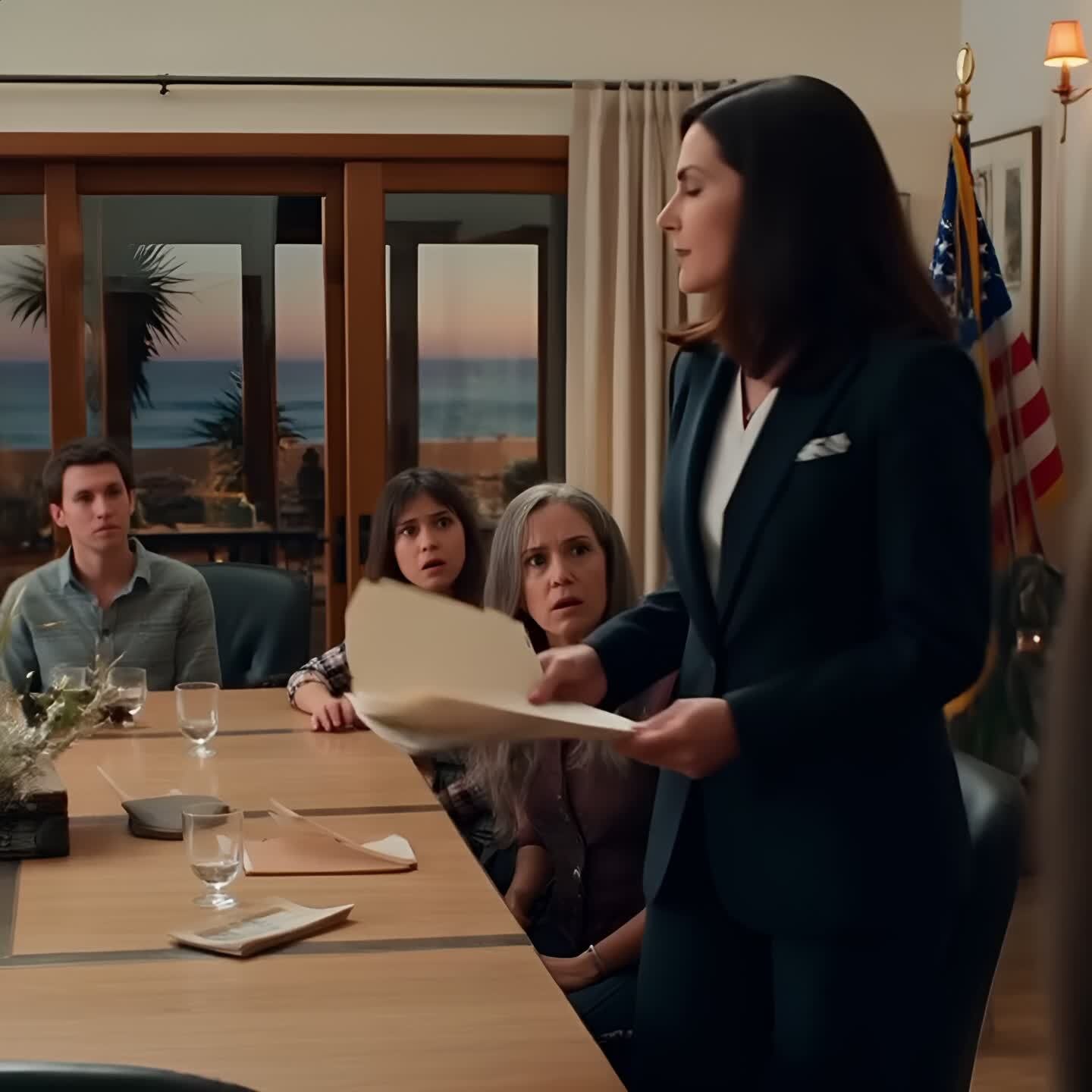
She Kicked Us Out. So I Cancelled Her Party Instantly
“Get out of the pool,” my mother shouted at my children, her voice slicing through the music and chatter. “This party is for respectable family only, not divorced failures.”
Fifty guests turned toward us.
Laya stood in the shallow end, water clinging to her lashes. Olly froze beside me, towels slipping from his hands. No one defended us. Not my siblings, not a single so-called family friend. Just silence thick enough to choke on.
I gathered our towels, each drip echoing the kind of humiliation you don’t forget. I didn’t argue, didn’t cry. We walked out wet, shaking, holding on to each other.
But the real story didn’t start at that pool. It started the next morning when her realtor called.
My name is Satie. And somewhere along the way, I became the person who keeps her voice low so others don’t raise theirs. Not because I’m weak—just because I learned early that quiet is sometimes the only space left for someone like me.
Growing up with my mother, Evelyn, meant living under a spotlight I never asked for and could never escape. She didn’t nag, she performed. Every gathering, every holiday, every small moment was a stage where she needed to shine. And the rest of us learned to dim ourselves to make room.
My children, Laya and Olly, are the opposite of dim. Laya is eight and sees the world like pages of a storybook—bright, emotional, impossible to ignore. Olly is six, soft-hearted, and shy, holding on to me as if I’m the anchor he trusts in every room. They deserve a childhood without fear of becoming someone’s punchline, especially not their grandmother’s.
I work as a software engineer, the kind of job people underestimate because it doesn’t come with luxury handbags or fancy business cards. It’s stable, quiet work that pays for our life, our routines, our safety. And for years, I let my family believe it was mediocre because correcting them felt pointless. Let them think I was barely getting by. Let them think simplicity was failure. Peace mattered more to me than proving anything.
My sister Monica sits comfortably in Evelyn’s approval. Always polished, always agreeable. The golden child who learned to nod instead of push back. My brother Darren built a different survival strategy: he avoids conflict with Olympic-level skill, drifting to the edges of any argument until no one remembers he’s there. It’s not that they’re cruel. They just know Evelyn storms and choose not to stand in the rain.
And then there’s the beach house, the one place my children loved without hesitation. To them it meant waves brushing the shore, sandy feet on the patio, and sunset walks with snacks in hand. And to Evelyn, it was something else entirely—a symbol she wielded like proof that her life, her family, her choices were superior to anyone looking in from the outside.
What she never knew—what none of them knew—was that I owned the place. I had bought it years ago and let her rent it at a fraction of its worth. Not because she deserved it, but because I thought giving her something beautiful might soften the hard edges between us.
It didn’t.
In my own home, the one I chose deliberately for its warmth rather than its size, life is slower. I fold laundry while my kids tell me stories. We cook simple meals. We make space for each other’s feelings. There is no competition there. No measuring of worth. No whispered rankings of who is doing better in life.
But as much as I tried to shield my children from my family’s hierarchy, the pool party proved something I had ignored for too long.
Evelyn never saw us as family. She saw us as an inconvenience. She tolerated us until she didn’t.
The morning of the pool party started with the kind of excitement only children can generate. Laya woke me up by climbing onto my bed, already wearing her swimsuit under her clothes. Olly dragged his bucket of beach toys to the front door, insisting we might need them just in case the pool gets boring.
I packed sunscreen, snacks, towels—the normal things a mother carries when she wants her kids to feel included, even if she herself is bracing for something else.
The drive to the beach house took a little over half an hour, winding through coastal roads where the ocean appeared and disappeared between houses. Laya hummed along with a song on the radio. Olly kicked his feet against the seat, staring out the window. I tried to enjoy their joy, to let it soften the knot in my stomach.
But years of being around my mother had taught me to expect a shift in the weather, even on the sunniest days.
When we arrived, the place was buzzing—more crowded than I expected. People in sunglasses lounged by the pool. Kids splashed at the far end. My mother stood near the patio with a cluster of women from her book club, the ones who always spoke just a notch too loudly when they were trying to sound impressive.
Laya spotted two cousins she recognized. She grabbed Olly’s hand and they ran ahead, their towels bouncing behind them. I followed, carrying the bag, doing my best to disappear into the flow of the party without needing Evelyn’s approval.
I didn’t even make it to the shaded part of the patio before it happened.
“Get out of the pool.”
Her voice cut through the air like a blade. Conversation stopped mid-sentence. Water splashing slowed. I turned toward the shallow end and saw Laya climbing down the ladder, her smile fading the second she realized the shout was meant for her.
My mother stepped forward, voice louder, clearer, as if she wanted to make sure every last person heard her judgment.
“This party is for respectable family only, not divorced failures.”
The words floated above the water, sharp and unmistakable.
My children froze. Laya’s hands gripped the cold metal ladder, her face pinking with confusion. Olly pressed into my legs so tightly it almost hurt.
Fifty guests stared at us, some pretending not to. Some openly watching. No one said a word. Not Monica, who stood by the snack table pretending to adjust her bracelet. Not Darren, who lowered his eyes to his phone. Not any of the people who had eaten meals at my table, who had smiled at my children, who claimed they were like family.
I walked to the edge of the pool and held out a towel. Laya stepped out slowly, water cascading down her arms. I wrapped her up, pulled Olly close, and gathered our things.
Every drip from our clothes felt like a clock ticking inside my chest. No yelling, no arguing—just silence.
We reached the car before either child spoke. Then Laya’s voice came small and cracked.
“Why does Grandma hate us?”
I didn’t answer right away because the truth was simple and devastating. I had allowed this to go on too long. I had allowed my mother’s cruelty to shape the room we all stood inside.
And in that moment, I knew something had broken. Not in me, but in whatever was left of the fragile peace I had tried so hard to maintain.
That night, after the kids fell asleep curled against each other on the couch, I sat at my small dining table in the dim light and listened to the quiet of our house.
Not the tense, suffocating quiet of earlier—this was different. It felt like a pause between heartbeats, the moment before a decision hardens into certainty.
I pulled out the drawer where I kept a folder of documents I never planned to use in any dramatic way. Property records, rental agreements, payment summaries, notes from the years I’d managed the beach house through a local property company. Nothing flashy, nothing complicated—just the practical truths of a woman who built her life quietly and refused to perform it for anyone.
I spread everything across the table. The beach house address. The purchase date from years ago. Evelyn’s monthly rental payments, reduced to less than a third of the going rate because I thought making life easier for my mother would make our relationship easier, too.
That illusion shattered the second she told my children they didn’t belong in a pool I paid to maintain.
My hands didn’t shake. My breath didn’t quicken. The anger wasn’t loud. It was focused, clean, almost cold. Revenge wasn’t the point. Boundaries were.
I emailed the property management company, copying the exact clause in her lease outlining the 60-day termination policy for month-to-month tenants. Then I asked them to issue formal notice first thing in the morning.
I closed the laptop, turned off the kitchen light, and went to bed with a clarity I hadn’t felt in years.
The next morning, the call came right on schedule.
“Hi, this is Coastal Property Management,” a calm voice said. “We’ve notified your tenant that the beach house lease is being terminated by the owner.”
I thanked them and ended the call just as my phone lit up again.
Mom.
I let it ring once before answering.
“What is this?” Evelyn’s voice was already raised, sharp and indignant. “I got a message saying the beach house owner isn’t renewing my lease. Is this some mistake?”
“No,” I said, just that.
“Well, who do I talk to? I’ve been a loyal tenant. I have rights. Someone must have complained about me. Was it you?”
“You’ll need to follow the instructions in the notice.”
“You’re not answering my question, Satie.” Her voice vibrated with disbelief, the same tone she used when a cashier dared tell her a coupon expired. “Are you behind this?”
Instead of explaining, I said, “I have to take the kids to school,” and hung up.
Ten minutes later, Monica texted: Mom is panicking. What did you do? She was harsh yesterday, but you didn’t have to go nuclear.
Darren left a voicemail. This is petty, Sadie. Just let it go. She didn’t mean it.
But I wasn’t interested in defending my pain to people who couldn’t even defend my children when it mattered.
By noon, Evelyn called again. This time, her voice wasn’t angry. It was frightened.
“Please call me back. Where am I supposed to go for the summer? Everything near the coast is booked.”
I didn’t respond, not because I wanted her to suffer, but because silence was the only language she had ever ignored until now. And suddenly, it was the only one I was willing to speak.
The official notice from the rental board arrived nine days after the pool incident, an email confirming the date and time of the hearing Evelyn had requested. I read it once, twice, then closed my laptop.
Of course she filed a complaint. Evelyn had spent her entire life believing consequences were optional for people like her. She must have thought the hearing would end with someone apologizing to her for the inconvenience.
For a while, I didn’t think about the hearing. Life kept moving. Breakfast had to be made, lunches packed, bedtime stories read.
But every few days, another message arrived. Long voicemails from Evelyn—begging, bargaining, occasionally threatening to cut ties entirely if I didn’t intervene with the landlord. Monica sent guilt-laced texts about family harmony and not traumatizing Mom. Darren sent a link to a random article about eviction laws as if that somehow proved I was being unreasonable.
But none of them ever mentioned what happened at the pool. Not once.
The morning of the hearing, I dropped Laya and Olly at school and drove to the municipal building in the center of town. It sat between a bank and an ice cream shop, a simple place with glass doors and beige walls, hardly the dramatic courtroom my mother probably imagined.
I checked in at the front desk, was given a badge, and walked into hearing room B.
The room held one long table for respondents, one for complainants, and a small raised platform where the hearing officer would sit. When I arrived, only two other people were there: the assistant clerk and the officer herself, a woman in her fifties with glasses and a calm, measured presence.
I took a seat at the respondent’s table, setting down the folder I had prepared. I kept everything neatly arranged—statements from the property management company, screenshots of messages from guests who had reached out after the pool incident, records of Evelyn’s rental history, and the original purchase documents for the beach house.
I didn’t plan to wield any of it like a weapon. I just didn’t plan to hide anymore.
The door opened sharply.
Evelyn walked in dressed in a crisp navy blazer and holding a leather portfolio she must have bought for occasions where she needed to look important. Her lawyer followed behind—a man in an expensive suit who looked like he’d been briefed only with Evelyn’s version of events.
She froze when she saw me sitting at the respondent’s table.
“What are you doing over there?” she demanded, voice shrill enough that the clerk flinched.
I didn’t answer. The hearing officer stepped in before I had to.
“Miss Wilson,” she said, addressing my mother. “Please take your seat. We’ll begin shortly.”
“Why is she sitting on that side?” Evelyn hissed, pointing at me. “She’s not the landlord. She’s the one who caused all this trouble.”
The officer looked down at her file.
“According to the document submitted, Satie Wilson is listed as the property owner. She is the respondent.”
My mother blinked as if trying to force her brain to rewrite the sentence.
“That’s impossible,” she said, laughing stiffly. “She doesn’t own property. She can barely afford her rent.”
The officer raised an eyebrow.
“The deed record on file is clear.”
I opened my folder and slid a copy of the purchase document forward. Not dramatically, not triumphantly—just factually. The paper’s edge made a soft sound against the table, quiet but definitive.
Evelyn’s lawyer leaned toward her, whispering urgently. Her jaw tightened. Her gaze flicked from the paper to my face, her expression collapsing into something I wasn’t sure I’d ever seen on her: fear.
The hearing began.
Her lawyer spoke first, claiming the lease termination was retaliatory, that Evelyn had been unfairly targeted after enforcing reasonable boundaries at a private gathering. He used the phrase elder discrimination, which almost made me laugh. My mother had never positioned herself as vulnerable in her entire life.
When it was my turn to speak, I kept my voice calm, steady.
“The gathering she references,” I said, “took place at my property. My mother invited over fifty guests without informing me. She then publicly expelled my minor children from the pool, calling them children from a broken home and calling me a divorced failure.”
“I have statements from witnesses and messages sent to me afterward.”
I slid the printed screenshots forward. The officer read them silently.
Evelyn’s lawyer protested. “Hearsay.”
The officer held up a hand. “These statements aren’t being used to determine guilt. They establish context.”
I continued. “I gave my mother a deeply discounted rental rate for years, far below what the property is worth. Ending a month-to-month lease after a violation of trust is within my rights as the property owner.”
Evelyn slammed her palm on the table.
“This is humiliating,” she said through clenched teeth. “You’re doing this to punish me for one bad moment. You’re making a spectacle out of your own mother.”
The officer’s gaze sharpened.
“We are here to decide whether your landlord violated housing laws. Personal conflicts are not grounds for intervention.”
“It’s not personal,” Evelyn snapped. “She’s retaliating because I asked her children to leave the pool.”
The officer looked at her evenly.
“From what I understand, the pool is on the respondent’s property.”
“She didn’t tell anyone she owned it,” Evelyn cried. “How was I supposed to know?”
I answered softly. “You didn’t ask.”
For a moment, the room was silent. So silent I could hear the hum of the fluorescent lights overhead.
There it was. The truth laid bare.
Evelyn had spent years treating me like someone beneath her—someone incapable, someone small. And now, confronted with undeniable evidence that she had been wrong, she didn’t know how to stand in a world where I didn’t fit the role she assigned me.
The officer closed her folder.
“The complaint is dismissed. The lease termination stands.”
The gavel didn’t slam. There was no dramatic sound. Just a final sentence that settled like a stone in the air.
As people began filing out, Evelyn hurried to catch up with me in the hallway.
“You made a fool out of me,” she spat, though her voice trembled. “In front of everyone.”
“No,” I said quietly. “You did that on your own. You could have warned me. You could have told me you owned the house. You could have treated my children with compassion.”
Her mouth opened, closed. For once, she had no script.
“I didn’t know,” she whispered finally.
“I didn’t think,” I said, was always the problem, and I walked past her—calm, steady, unhurried—leaving her to sit with the truth she had spent a lifetime refusing to look at.
Evelyn moved out of the beach house two weeks before her notice expired. I didn’t watch the moving trucks. I didn’t drive by. I didn’t need to.
The silence that followed was enough.
For the first time in years, my phone stopped buzzing with demands, corrections, reminders of who she believed I should be.
I listed the beach house at its real market value. Within three days, it booked out for the entire summer. Every payment that came in went straight into two separate savings accounts, one labeled for Laya, one for Olly.
I didn’t tell them where the money came from. I just told them their future was safe.
On weekends when the house was empty, I took the kids down to the coast. We swam in the same pool they’d once been chased out of.
Laya dipped her hand across the surface of the water and said, “It feels different now.”
And she was right. It wasn’t a place of humiliation anymore. It belonged to them as much as it belonged to me.
Six months later, on a cold December afternoon, Evelyn knocked on my door. Her voice was small when she asked to see the kids. She bent down, apologized to them first, then to me.
I accepted the apology, but the boundaries stayed exactly where I put them.
I’ve learned that dignity isn’t something anyone can grant or take away. It’s what you protect, even when the people who should love you decide to test it.
My children and I built a life where kindness is the rule, not the exception, where we choose peace without surrendering our worth.
If you’ve ever had to draw a line with your own family, share your story below.
I used to tell the story like it ended in hearing room B, with beige walls and a woman in glasses saying one sentence that finally made my mother stop talking. People like clean endings. They like to believe that once you draw a line, everyone simply respects it.
My mother didn’t.
I walked out of that municipal building with my folder pressed to my ribs like a shield I no longer needed. The air outside had the sharp, salty bite that always makes a coastal town feel honest, even when the people in it aren’t. A couple walked past holding cones from the ice cream shop next door, laughing about which flavor was better. A little boy in a red baseball cap dragged his dad toward the bank’s revolving door, impatient for reasons only kids understand.
I stood by my car for a moment, breathing, letting the quiet inside me settle into something sturdier than adrenaline.
Evelyn came out behind me, heels clicking too fast for the image she wanted to project. Her lawyer hovered a step back, murmuring something about paperwork and next steps, but she wasn’t listening. She never listened when the world didn’t match the script in her head.
“Satie,” she called, like she was summoning a waitress.
I opened my door and set my folder on the passenger seat, slow on purpose.
“You can’t do this,” she said. “Not to me.”
I looked at her, really looked. Her navy blazer was still crisp, but her lipstick had smeared at the corner of her mouth. Her hand kept reaching for her portfolio strap, adjusting it, re-adjusting it, as if the leather could hold her together.
“I already did,” I said.
Her eyes flashed. “You embarrassed me.”
“You embarrassed yourself at the pool,” I replied, and I heard my own voice—steady, almost gentle. It was the gentleness of someone who has stopped trying to be understood and started trying to be clear.
Her jaw trembled like she was biting back a word too ugly to say in public. For a second, I thought she might reach for it anyway. Then she glanced around and seemed to remember there were strangers close enough to witness her losing control.
“You have always been dramatic,” she said, lowering her voice. “This is what you do. You create scenes. You make people choose sides.”
I shut my car door. “I didn’t make anyone choose sides. I chose my kids.”
That landed somewhere she didn’t like. She blinked hard, and for the first time that day, she looked older than her makeup.
“You’re turning them against me,” she whispered.
“I’m teaching them what it looks like when someone protects you,” I said. “Because they didn’t see that at your party.”
Her lawyer stepped forward, clearing his throat. “Ms. Wilson, it would be best if you—”
Evelyn swung a hand, dismissing him. “Not now.”
Then she looked at me again, and her eyes went watery in a way that could have been real or could have been another performance. With Evelyn, it was always hard to tell.
“I am your mother,” she said, like it was a legal title that came with automatic access.
“And I am their mother,” I answered. “That’s the only title that matters to me.”
I got into my car and started the engine while she stood there, frozen, her mouth opening and closing like she was searching for the right line and finding none.
On the drive back to town, I didn’t feel triumphant. I felt tired in a deep, cellular way, the kind of tired you carry after a lifetime of shrinking yourself. The hearing was over, but I knew the real work was just beginning.
At a red light, my phone buzzed. Monica. Then Darren. I didn’t answer either. I watched the crosswalk signal count down and thought about the way Laya’s hands had gripped that pool ladder, knuckles pale, and how Olly had pressed into my legs like he was trying to disappear inside me.
I turned the phone face down in the cup holder.
When I picked the kids up from school, they ran toward me like they always did—Laya with her backpack bouncing, Olly with his shoelaces half untied because he never seems to notice them. For a few seconds, it felt normal. Then Laya looked up at my face, reading me with that quiet emotional intelligence kids have when they’ve been hurt.
“Did you talk to Grandma?” she asked.
I crouched and adjusted Olly’s collar, buying myself a second. “Not today.”
“Is she still mad?” Olly whispered.
I held his cheek in my hand. “She might be. But you know what? People can be mad and it still doesn’t mean they get to be mean.”
Laya’s eyes narrowed the way they do when she’s building a story inside her head. “Like the villain who thinks they’re the hero.”
“Something like that,” I said, and she almost smiled.
At home, we ate grilled cheese and apple slices. The kids sprawled on the living room rug with crayons, drawing a picture of the beach house. In their drawing, the pool was bright blue and the sun was enormous and smiling. Laya added two little stick figures in the shallow end, and then, after a pause, she drew me standing at the edge with a towel.
She didn’t draw Evelyn at all.
That night, after bath time and two chapters of the book Laya insisted we re-read because she liked the part where the girl finds a hidden door, I tucked them in and sat on the edge of the couch with my laptop open and my folder spread out again.
Not because I wanted to relive the hearing.
Because I knew my mother.
And because Evelyn never accepted consequences quietly. She collected allies. She built narratives. She made phone calls with just enough panic and just enough charm to make other people feel responsible for fixing her mess.
I was still staring at the deed copy when my phone rang again.
Unknown number.
I almost didn’t answer. Then I did, because something in my gut said this wasn’t family.
“Hello?”
“Hi—yes—um, is this Satie Wilson?” a woman’s voice asked, breathless and brisk, like she was walking fast in heels.
“This is she.”
“Oh, thank goodness.” She exhaled. “My name is Candace Merritt. I’m a realtor with Shoreline Coastal Realty. I’m so sorry to bother you, but I… I’ve never had this happen before.”
I sat up. “Okay. What’s going on?”
There was a rustle, like papers shuffling. “I have a listing file open for 17 Seagrass Lane. The beach house.”
My stomach tightened. “Why do you have a listing file open for my house?”
A beat of silence.
Then, cautiously: “So you are the owner.”
“Yes,” I said. “I am.”
Candace’s voice dropped as if she was afraid someone could hear her through the phone. “Your mother—Evelyn Wilson—came into our office this morning. She said she wanted to list her summer property. She spoke very confidently. She brought photos. She talked about renovation plans. She… she said she’d been considering selling because she was ‘tired of managing two homes.’”
I closed my eyes.
Candace continued, rushing now. “I did what we always do. I pulled public records before we drafted anything. And your name came up. Not hers. I double-checked. I called the county site. It’s you, Ms. Wilson. The deed is in your name.”
I felt heat spread in my chest—not the hot fury from the pool, but something more exhausted, more familiar. Of course she did this. Of course she tried.
Candace cleared her throat. “I told her there must be an error. She got… upset. She insisted it was her property. She said she’d ‘handled it years ago’ and that you were ‘just on paper for convenience.’”
My jaw clenched so hard it hurt. Convenience. Like my life was a filing cabinet she could rearrange.
Candace hesitated. “She demanded I call you. She wanted… she wanted you to come in and ‘clear it up.’ I didn’t feel comfortable calling without verifying you were aware, but she was… very persuasive.”
“She tends to be,” I said.
“I’m truly sorry,” Candace added quickly. “I just—my broker said we should flag this with our records team immediately. But I wanted to speak to you first because I didn’t know if this was a family arrangement or—”
“It’s not,” I said, calm in a way that surprised even me. “And thank you for calling. You did the right thing.”
Candace sounded relieved. “Okay. Good. So you don’t want the property listed.”
“No,” I said. “I don’t.”
“And you’re not having anyone else list it,” she confirmed.
I paused, hearing the careful phrasing. I knew what she meant—she was covering herself, covering her office. I chose my words carefully.
“My mother is not allowed to represent the home as hers,” I said. “If she tells anyone she’s selling it, that’s not true.”
“I understand.” Candace’s voice softened. “I’ll make a note in the file. And I will not speak to her further about it. Again, I’m sorry.”
“It’s not your fault,” I said. “It’s hers.”
After I hung up, I sat very still, listening to the refrigerator hum and the distant sounds of my kids breathing in their rooms. This—this was why I’d kept quiet for so long. Not because I didn’t know my own worth. Because I knew how much noise my mother could make when she didn’t get her way.
A text popped up immediately.
Monica: Mom is freaking out. She says you’re ruining her life.
Then another.
Darren: She’s saying you’re trying to take her house. Can you just talk to her?
I stared at the messages until the words blurred.
My mother wasn’t “freaking out” because she lost a lease.
She was freaking out because her illusion was cracking in front of people she cared about more than she ever cared about me.
In Evelyn’s world, reality was optional as long as the audience stayed convinced.
And now her audience was finding out she’d been performing on a stage she didn’t own.
The next day, Monica showed up at my door without calling. She always did that when she wanted to feel like she had the right. Like showing up unannounced made her part of my life instead of a visitor at its edges.
I opened the door and saw her standing on my porch in a cream-colored sweater and sunglasses, hair curled like she’d planned to take photos later.
She lifted her chin. “We need to talk.”
I didn’t move aside.
“About what?” I asked.
Her lips pressed together. Monica’s face has always been beautiful in a way that looked effortless—symmetrical, polished, the kind of beauty that makes people assume you have an easy life. But I could see strain in the tightness around her eyes.
“You know what,” she said. “Mom called me crying last night. Like, actually crying. She said you’re… you’re trying to kick her out and humiliate her.”
I leaned against the doorframe. “She humiliated my children. Publicly.”
Monica made a small, irritated sound. “I’m not saying what she did was okay. It was… it was bad. But she didn’t mean it like that.”
I let out a slow breath. “How did she mean it, Monica?”
Monica glanced down at her nails. “She was stressed. She had guests. She thought… she thought the pool would get too chaotic.”
“She called us divorced failures,” I said.
Monica’s eyes flickered. “She was angry.”
“She called my kids ‘children from a broken home’ in that hearing,” I added. “In front of strangers.”
Monica flinched. “Okay. That was… she shouldn’t have said that.”
I waited. The silence stretched, and I could feel the old family dynamic trying to slide back into place—the part where I softened first to keep the peace.
Monica shifted her purse strap. “Look, Satie. I’m here because this is getting out of control. She tried to list the house. People are talking. The book club is… it’s a mess. Candace Merritt apparently called half her office saying there was some ‘ownership confusion.’”
I didn’t correct her. There wasn’t confusion. There was entitlement.
Monica lowered her voice, leaning in. “Mom’s reputation matters. You know it does.”
“And mine doesn’t?” I asked.
Monica blinked, like she hadn’t expected me to say that out loud.
“I’m not trying to ruin her,” I continued. “I’m trying to protect my kids.”
Monica’s face tightened. “By throwing her out?”
“By ending a discounted lease,” I said. “On my property. After she made it clear she thinks my children don’t belong.”
Monica exhaled sharply. “You could have warned her.”
I laughed once, short and humorless. “She could have asked me. She could have treated us like family. She could have apologized the day it happened. She didn’t. She doubled down.”
Monica’s eyes flashed. “You’re acting like you’re better than all of us.”
“No,” I said softly. “I’m acting like I’m done letting you all watch her hurt my kids and call it ‘stress.’”
Monica looked past me into my living room, where Olly’s little sneakers sat by the couch and Laya’s backpack leaned against the wall. For a second, her expression softened.
“I didn’t know it was that bad,” she said, quieter.
“You were there,” I replied.
Her cheeks reddened. “I froze. Okay? I froze. I didn’t know what to do.”
“You could have said, ‘Mom, stop,’” I said.
Monica swallowed. “You know what happens when you challenge her.”
“Yes,” I said. “I do. But that’s not an excuse anymore.”
Monica’s eyes shined suddenly, and for a moment, I saw the little girl inside her—the one who learned early that Evelyn’s love came with terms and conditions.
“I can’t be the bad daughter,” Monica whispered.
I tilted my head. “You’re thirty-five.”
Her jaw tightened. “That’s not fair.”
I softened, but I didn’t step aside. “I’m not asking you to fight her battles. I’m asking you not to ask me to sacrifice my kids so you can keep your spot.”
Monica’s eyes narrowed again, the softness closing like a door. “So that’s it?”
“That’s it,” I said.
She stood there a second longer, like she wanted to say something that might land, something that might make me flinch. Then she turned and walked down my steps, heels clicking against the concrete like a punctuation mark.
As she drove away, my phone buzzed.
A voicemail from Darren.
I listened anyway.
“This is getting insane,” Darren said, his voice low and tired. “Mom’s spiraling. She says you’re… she says you’re punishing her for being honest. And now she’s telling people she owns the beach house and you’re trying to steal it. I don’t know what’s true anymore, Satie. I just want this to stop.”
I stared at my wall, at the framed photo of Laya and Olly at the aquarium, grinning in front of a tank of glowing jellyfish.
“I want it to stop too,” I whispered, though he couldn’t hear me.
But stopping had never been my mother’s specialty. Evelyn didn’t stop. She rewrote.
Over the next week, I heard pieces of her rewritten story from different corners of town.
A neighbor who attended Evelyn’s book club texted me: Heard Evelyn is being “pushed out” of her summer place. Is she okay?
A mom from Olly’s class caught me after pickup and said, carefully, “If you ever need help… I’m around.” Her eyes were kind, but there was curiosity tucked beneath it.
Even my manager at work, a calm man named Jordan who usually kept conversations strictly about code and timelines, asked me during our one-on-one, “Everything okay at home? You seem… stretched.”
I wanted to laugh. I was stretched. I felt like a rubber band held taut for years, finally snapping and realizing it could still function in a new shape.
“I’m okay,” I told him. “Just dealing with family stuff.”
Jordan nodded like he understood, which was both comforting and strange. My family had always acted like our dysfunction was normal, like it was the price of belonging.
At work, my world made sense. There were problems and solutions. You wrote something. It either ran or it didn’t. You fixed it. You moved forward. There was no performance, no shifting goalposts.
That afternoon, while my kids were at school and my house was quiet, I took a lunch break and opened the file on my computer that held photos from the beach house purchase—the ones I’d never shown anyone.
The closing day photo was unglamorous: a key ring, a handshake, a sunny day outside the real estate office. I wasn’t smiling big. I looked tired, like someone who had cried the night before and then gone to work anyway.
Because that’s what that time was.
People think you buy property because you’re confident, because you’re ready, because you have a solid plan.
I bought the beach house because I needed something that was mine.
The year I bought it, my marriage was still technically intact, but it was already dying the slow death of two people pretending everything was fine. My ex-husband, Ethan, wasn’t cruel. He wasn’t a villain. He was just… absent. Emotionally, mostly. He loved our kids in the way a person loves sunshine—he enjoyed it when it was there, but he didn’t know how to build a life around it.
Ethan’s family adored Evelyn. They called her “Eve” like she was a character in a movie. They laughed at her stories. They complimented her dinner parties. They treated her like she was the fun, glamorous mother-in-law instead of the woman who measured everyone’s worth like a scoreboard.
Evelyn loved them back because they gave her what she craved: an audience.
When Ethan started drifting—working later, coming home quieter, forgetting small things like dentist appointments and bedtime routines—I told myself it was normal. Stress. Work. Life.
Then I found the texts. Not a dramatic discovery. Not a screaming fight. Just a glance at his screen when he handed me his phone to show me a photo and a name I didn’t recognize popping up with a heart emoji.
My stomach dropped, not because I didn’t suspect, but because seeing it made it real.
When I confronted him, he looked relieved.
“I didn’t know how to tell you,” he said, like the truth was a gift he’d been burdened with.
He moved out two weeks later. He promised we’d co-parent “amicably.” He promised he still respected me. He promised he’d never put the kids in the middle.
Then Evelyn hosted a dinner and told everyone, with a sad shake of her head, that “some marriages just don’t survive strong women.”
I laughed when I heard that because it was such an Evelyn line—half compliment, half insult, delivered like wisdom.
But I cried later that night, in my bathroom, sitting on the floor while my kids slept.
That was the night I opened my laptop and looked at the number I’d been saving quietly for years. Not enough for a fantasy. Enough for a down payment on something small, if I was smart and lucky.
I called a lender the next morning.
I told myself I was being ridiculous. A single mom with two little kids. A software engineer with a steady salary, yes, but not the kind of money Evelyn thought counted. Who was I to buy a beach house?
But then I thought of my children’s laughter, the kind that filled a room without asking permission. And I thought of Evelyn’s voice at family gatherings, loud and cutting, turning every moment into a performance.
I wanted a place where my kids could run without being corrected for taking up space.
So I bought it.
I didn’t tell anyone because the purchase wasn’t about showing off. It was about survival. It was about building something that could not be taken by someone else’s opinion.
When Evelyn started talking about how she “needed a place by the water,” I offered to rent it to her. I told myself I was being kind. I told myself it might soften her.
It didn’t soften her. It fed her.
Evelyn decorated the beach house like it was a magazine spread. She invited people. She hosted “summer soirées.” She told stories about “my place on Seagrass Lane” as if the words could make it true.
And I let her.
Because part of me still wanted her to be proud of me. Part of me still wanted to believe that if I gave her something beautiful, she would stop sharpening herself against me.
That part of me died at the pool.
Two weeks after the hearing, I drove down to the beach house alone for the first time in years.
Not as a guest.
Not as someone slipping in quietly between Evelyn’s weekends and her book club retreats.
As the owner.
The drive felt different when I wasn’t doing it for her. The coastal road still curved between hydrangea bushes and weathered fences, but the knot in my stomach wasn’t there. The ocean still flashed between houses like a secret, but it didn’t feel like something I had to earn.
When I pulled into the driveway, the house looked the way it always did—white siding, blue shutters, a porch swing that creaked when the wind picked up. The pool in the backyard glinted under the sun, calm and empty.
Evelyn’s key was already turned in. The property management company had changed the keypad code. There was a note on the kitchen counter, written in Evelyn’s looping script.
Satie,
I didn’t take anything that isn’t mine.
I’ll come back for the last box later.
Evelyn.
It was classic Evelyn—defensive without apology, claiming righteousness in the same breath as an accusation.
I walked through the house slowly, noticing things I’d stopped seeing because I’d spent so long trying not to look.
The framed photos on the hallway wall were still Evelyn’s—Monica’s graduation, Darren’s wedding, Evelyn smiling between them like she was the centerpiece.
There were no photos of me. No photos of Laya or Olly. Not even a candid shot from one of the summers we’d all been there.
In the living room, a throw blanket lay folded over the arm of the couch. On the coffee table sat a seashell candle Evelyn used to light when guests arrived. The faint scent of vanilla and something floral still clung to the air.
I went into the kitchen and opened cabinets. Most were empty now, except for one shelf where Evelyn had left behind a jar of fancy olives and a tin of imported cookies. Like she was leaving breadcrumbs of her taste.
I didn’t feel angry. I felt… clear.
I walked upstairs to the primary bedroom. The closet was mostly bare, hangers lined up like ribs. On the floor in the corner sat a cardboard box with “EVELYN—IMPORTANT” written in thick marker.
I should have left it alone.
But my mother’s idea of “important” was usually code for “valuable” or “embarrassing,” and I needed to know which one I was dealing with.
I lifted the box lid.
Inside were photo albums—physical ones, not the digital kind. And tucked beneath them, wrapped in tissue paper, was a small velvet pouch.
My heart beat once, hard.
I pulled out the pouch and opened it.
A set of pearl earrings glittered in the light. Not costume jewelry. Real pearls, the kind Evelyn wore to church on Easter and to charity lunches where she wanted to look effortlessly affluent.
I stared at them a long moment, then set them back in the pouch.
I didn’t want them. I didn’t want any piece of her.
But beneath the pouch was something that made my throat tighten.
A letter.
Not an envelope with my name. Not a formal document. Just a folded piece of stationery with Evelyn’s handwriting.
Curiosity pulled harder than caution.
I unfolded it.
Satie,
If you ever read this, it means I’m already angry, or you’re already angry, or both. I’m writing it because I don’t say the right things when I’m cornered.
You always think I don’t see you. That isn’t true. I see you. I just don’t know what to do with you.
You make me feel like the world is changing and I don’t get to decide the rules anymore. You make me feel old. You make me feel like I can’t control the story.
I didn’t raise you to be small. I raised you to be careful. There’s a difference.
You are careful in a way I never was. You wait. You watch. You build quietly. And it scares me because I don’t understand it.
When your father left, I promised myself I would never be the woman begging again. Never. I promised I would have something no one could take.
Maybe that’s why I hold on so tight.
I don’t know.
If I’ve hurt you, I don’t know how to fix it without feeling like I’m losing.
And I don’t know how to lose.
—Evelyn
I read it twice, three times.
My mother never mentioned my father. Not really. Not in a way that felt human. In my childhood, he was a shadow. A topic she changed quickly. A story she edited into something tidy.
Seeing his name on paper—seeing her admit she’d been afraid—made my chest ache in a way I wasn’t prepared for.
But the letter wasn’t an apology. It was an explanation wrapped in self-protection. It was Evelyn doing what she always did: giving context while refusing accountability.
I folded it and put it back in the box.
Then I did something I’d never done in that house.
I opened the windows.
The ocean air rushed in, salt and sun, and it moved through the rooms like a cleansing breath. It lifted the edges of the curtains. It carried away the stale floral scent of Evelyn’s candles.
I stood there and let it wash over me.
The next day, I met with Coastal Property Management at their office, a small building near the marina with sun-faded posters of boats in the lobby. The manager, a woman named Teresa, greeted me with a handshake that felt solid.
“We’ve worked with your mother for years,” she said carefully, like she was testing the ground. “She’s… persuasive.”
“She is,” I agreed.
Teresa opened a folder. “We’ve updated all owner information. The summer calendar is wide open now.”
I nodded. “I want to list it at market value.”
Teresa’s eyes widened slightly. “That’s… a significant increase.”
“I know,” I said. “That’s the point.”
We went through scheduling, cleaning, pool maintenance, small repairs. It felt oddly soothing, making decisions that were mine without negotiating someone else’s ego.
Before I left, Teresa paused. “One thing,” she said. “Your mother has been calling… a lot.”
I arched an eyebrow.
“She keeps asking for the owner’s phone number,” Teresa said. “We haven’t given it, of course. But she’s been telling us she’ll be back on the property to ‘retrieve items’ and to ‘host one last gathering.’”
“She is not hosting anything,” I said.
Teresa nodded quickly. “Understood. We’ll handle it. We have security on call if needed.”
“Thank you,” I said, and I meant it.
On the drive home, I stopped at a small boutique store and bought a new beach towel for each of my kids—bright colors, soft cotton. A ridiculous little purchase, maybe, but it felt like planting a flag.
This belongs to us now.
Two days later, the first booking came through.
A week-long rental for mid-June.
The guest name on the reservation made me pause.
Beatrice Lane.
And listed beneath her, as the second guest: Fern Lane.
I stared at the screen, distracted by the coincidence—Lane, like Seagrass Lane. The same last name as the street. A little universe joke.
Teresa called me that afternoon. “The Lanes booked,” she said. “Retired teacher and her daughter, I think. They asked for quiet. No parties. They sound lovely.”
“Good,” I said.
Then my phone buzzed again.
Evelyn.
I didn’t answer.
She left a voicemail.
“Satie,” she began, breathless and controlled, like she was trying very hard not to sound hysterical. “We need to talk about the house. You can’t just… you can’t just take it away like this. I have commitments. I have people coming. I have plans. Call me back.”
Another voicemail an hour later, this one sharper.
“I know you’re enjoying this. I know you think you’ve won. But you’re humiliating me. You’re humiliating the whole family. Call me.”
A third voicemail that night.
Softer. Almost pleading.
“I don’t know where I’m supposed to go. I don’t know where I’m supposed to… I can’t start over, Satie. Please.”
I listened to all three without deleting them. Not because I wanted to savor her panic, but because I needed to remind myself: this is what manipulation sounds like when it loses its power.
Two weeks later, Beatrice and Fern arrived.
I wasn’t there. I didn’t want to hover, didn’t want to turn my property into another stage. Teresa handled check-in, gave them the keypad code, showed them where pool supplies were stored, where extra linens sat in the hall closet.
Teresa called me afterward. “They’re sweet,” she said. “Beatrice walks with a cane, but she’s tough. Fern looks tired. Like she needed this getaway.”
I pictured them—an older woman with quiet strength, a younger one carrying something heavy.
“Good,” I said again, and meant it.
That evening, as I was helping Laya with her spelling words, my phone rang.
Teresa.
Her voice was tight. “Satie, I’m sorry to call after hours, but—your mother is at the beach house.”
My stomach dropped. “What?”
“She showed up at the gate,” Teresa said. “She’s insisting she has a right to be there. She says she left something ‘valuable’ inside.”
I closed my eyes. Of course.
“Are Beatrice and Fern okay?” I asked.
“They’re inside,” Teresa said. “Fern called us. She was polite, but you can hear the fear. They don’t want conflict. They just want their vacation.”
I exhaled slowly, forcing calm. “I’m coming.”
Laya looked up. “Mom?”
I knelt beside her. “I have to make a quick drive,” I said. “I’ll be back soon. Aunt Tessa is going to come sit with you and Olly, okay?”
Laya’s eyes narrowed. “Is it Grandma?”
I didn’t lie. “Yes.”
Her face hardened in a way that shouldn’t belong to an eight-year-old. “Tell her to go away.”
I kissed her forehead. “I will.”
I called my neighbor, Tessa—just a kind woman with a golden retriever and a heart bigger than her house—and asked if she could come over. She didn’t ask questions. She just said, “I’m on my way.”
Then I drove.
The sky had turned the deep purple of late evening by the time I reached Seagrass Lane. The street was quiet, the kind of quiet that makes you feel like you’re trespassing even when you belong.
Evelyn’s car was parked crooked in the driveway.
Teresa’s company vehicle was parked neatly behind it.
I pulled up and stepped out, my sandals hitting the gravel with a crunch. The ocean air was cooler at night, sharp against my skin.
Evelyn stood near the porch, arms crossed, posture stiff. Teresa stood a few feet away, holding a clipboard like it was a shield.
When Evelyn saw me, her face transformed into something triumphant and wounded all at once.
“There you are,” she said.
I walked up, stopping at the bottom step. “You need to leave.”
Evelyn’s eyes widened as if I’d slapped her. “How dare you speak to me like that. I’m your mother.”
“I’m the owner,” I said simply. “And there are guests inside who paid for their stay. You’re frightening them.”
Evelyn scoffed. “Guests. Don’t make me laugh. That’s my house.”
Teresa cleared her throat. “Ma’am, we’ve explained—”
Evelyn spun toward her. “I’m not talking to you.”
Then she turned back to me. “I left my pearls here. The ones from my mother. They’re valuable. I’m not leaving without them.”
My stomach tightened, remembering the velvet pouch in the box upstairs.
I held her gaze. “They’re in the bedroom. I’ll bring them to you.”
Evelyn’s chin lifted. “No. I’ll go get them.”
“No,” I said again. “You are not going inside.”
Her voice rose. “You can’t keep me out of my own house!”
“It’s not your house,” I said, and the words were calmer than the situation deserved. “And if you don’t leave, Teresa will call security.”
Evelyn’s eyes flashed. “Security? Are you threatening me?”
“I’m protecting my guests,” I said. “And my property.”
The porch light clicked on. The front door opened a crack.
Fern stood there, her face half in shadow. She looked to be in her thirties, hair pulled into a messy bun, eyes wary. Behind her, I saw a glimpse of Beatrice—an older woman, silver hair, standing upright despite a cane.
Fern’s voice was polite, careful. “Is everything okay?”
Evelyn’s face snapped into a smile so quick it looked painful. “Oh, sweetheart, I’m so sorry. Just a misunderstanding. This is my daughter.”
Fern’s gaze moved to me. “Hi.”
“Hi,” I said gently. “I’m so sorry about this. You’re fine. You’re safe. She’s leaving.”
Evelyn’s smile faltered. “Satie, don’t speak for me.”
I turned to Evelyn. “Wait here.”
I walked past her, up the steps, and into the house.
Inside, the air smelled like someone had just made tea. A soft lamp glowed in the living room. Beatrice sat in an armchair, cane propped beside her, her eyes sharp and assessing.
“You must be Satie,” she said.
“I am,” I replied, swallowing the embarrassment. “I’m truly sorry.”
Beatrice waved a hand. “People show up where they aren’t welcome all the time. Doesn’t mean they get to stay.”
Her voice had that teacher steadiness—calm, firm, not interested in drama.
Fern hovered near the doorway, arms wrapped around herself. “We didn’t want to call anyone,” she said. “But she was… she was shouting.”
“You did the right thing,” I told her.
I went upstairs, retrieved the velvet pouch from the box, and came back down. As I walked, I saw Evelyn’s letter again and felt a pang I didn’t have time to name.
I stepped outside and held out the pouch.
Evelyn snatched it like it was proof of something. She opened it, checked the earrings as if she suspected I’d switched them. Then she closed it and looked at me with a mixture of fury and humiliation.
“You’re letting strangers dictate what I can do,” she hissed.
“I’m letting boundaries dictate it,” I said.
Beatrice appeared behind me in the doorway, cane tapping softly. She stood straight, shoulders back, eyes on Evelyn like she’d seen this kind of woman a hundred times.
Evelyn’s gaze flicked to her and hardened. “Who are you?”
Beatrice smiled politely, not warmly. “A paying guest. A grandmother. And a person who knows the difference between love and control.”
Evelyn’s cheeks reddened.
Fern stepped beside Beatrice, her voice trembling but steady. “We came here to rest. Please leave.”
Evelyn looked around as if she expected the house itself to support her argument. Then she looked back at me.
“You’re enjoying this,” she said.
I shook my head. “No. I’m ending it.”
Evelyn’s mouth opened again, but then Teresa stepped forward.
“Ma’am,” Teresa said firmly, “you need to go.”
Evelyn’s eyes flashed one last time, then she grabbed her purse and marched toward her car. She backed out too fast, tires spitting gravel, and disappeared down the street.
The silence after was enormous.
Fern exhaled shakily. “I’m sorry,” she whispered to me. “I didn’t mean to—”
“Don’t apologize,” I said. “None of this is on you.”
Beatrice leaned on her cane and looked at me. “You’re doing the right thing,” she said. “But it won’t feel right for a while. Not when you were trained to be small.”
My throat tightened. “Were you a teacher?”
Beatrice’s eyes softened. “Thirty-seven years. Fourth grade. I’ve watched little girls learn to quiet themselves before they even know why.”
Fern glanced down. “My mom used to make me apologize for everything,” she said, almost to herself.
Beatrice patted her hand. “We’re unlearning,” she told her.
Then Beatrice looked back at me. “Go home to your babies,” she said. “We’ll be fine.”
I drove home under a sky scattered with stars, my hands steady on the wheel. I expected my chest to feel heavy, but instead it felt lighter. Like each boundary I enforced made room for oxygen.
When I walked into my house, Tessa was on my couch with Olly asleep against her shoulder and Laya curled beside him, pretending not to be tired.
Laya sat up when she saw me. “Did she leave?”
“Yes,” I said.
Laya nodded once, like she’d filed it away. Then she whispered, “Good.”
That night, after Tessa left and I tucked my kids back into bed, I sat at my dining table and opened my laptop.
I wrote an email to Teresa.
If Evelyn shows up again, do not engage. Call me, and if needed, call security immediately. The guests come first.
Then I wrote a second email—to Candace Merritt.
Thank you for your professionalism. If my mother contacts your office again, please direct her to me.
I stared at the cursor blinking at the bottom of the screen. Then I did something that felt like stepping off a cliff.
I wrote an email to my mother.
Mom,
Do not show up at the beach house again. It is not yours, and you are not welcome there. If you need to communicate, you can text me. Do not involve other people. Do not involve Monica or Darren.
If you want to be in my children’s lives, it starts with an apology to them. Not to me. To them.
Satie.
I didn’t add a smiley face. I didn’t soften it with “love.” I didn’t write a paragraph explaining my feelings, the way I used to, hoping she’d finally understand.
I pressed send.
Then I turned off the light and went to bed.
For three days, Evelyn was silent.
The silence felt eerie, like the stillness before a storm. My phone stayed quiet. Monica didn’t text. Darren didn’t call. It was as if my family had been pulled into Evelyn’s orbit and then suddenly cut off from communication.
On the fourth day, my phone rang.
Ethan.
I hadn’t heard from him in weeks, not since his last weekend with the kids when he’d brought them back late and shrugged like time was flexible when it wasn’t his responsibility.
I hesitated, then answered.
“Hey,” I said.
“Hey,” he replied. He sounded… cautious. “Your mom called me.”
I closed my eyes. Of course she did.
“What did she say?” I asked.
“That you’re… that you’re losing it,” Ethan said. “That you’re trying to throw her out of her beach house. That you’re making the kids hate her.”
I laughed softly. “Did you ask her why?”
Ethan was quiet.
“She told me you’re ‘punishing her for a comment,’” he said. “And she said… she said you’re using the kids as leverage.”
My chest tightened. “You know that’s not true.”
Ethan sighed. “I don’t know what to think. She was crying.”
“She cries when she wants something,” I said.
“That’s not fair,” Ethan replied automatically, defensive in the way he always got when Evelyn was involved.
I felt my patience thin. “Do you remember the pool party?”
Ethan paused. “They told me about it.”
“Did you call your mother-in-law and tell her she was wrong?” I asked.
Silence.
“No,” Ethan admitted.
I swallowed the frustration. “Then you don’t get to call me and ask me to smooth it over.”
Ethan exhaled. “I’m not asking you to smooth it over. I’m asking you to… I don’t know. Make it less ugly.”
“It was ugly when she called our kids failures,” I said, voice low. “It was ugly when you stayed quiet.”
Ethan’s voice softened. “Satie, I’m trying.”
“Try harder,” I said.
He was quiet again. Then, smaller: “Can I take the kids to the beach house next weekend? They keep asking. I thought… I thought it might be nice. For them.”
My stomach clenched. Ethan didn’t want the kids to go for them. He wanted to go because beach houses were fun when you didn’t carry the emotional labor.
“The house is rented,” I said. “It’s booked most weekends.”
“You’re renting it?” Ethan sounded surprised.
“Yes,” I said. “At market value.”
Another pause. “So you… you’re making money off it now.”
“I’m making stability,” I replied. “For our kids.”
Ethan sighed. “I didn’t know you owned it.”
“No one did,” I said. “That was the point.”
He hesitated. “Why didn’t you tell me?”
Because you would have told Evelyn, I thought.
Instead, I said, “Because it wasn’t about you.”
Ethan went quiet. Then he said, “Okay. I get it.”
I wasn’t sure he did, but it was the closest thing to understanding I’d heard from him in a long time.
“Listen,” he added, voice careful. “If she shows up at the school or something… tell me. I can talk to her.”
The offer was belated, but it was something.
“I will,” I said.
And then, because I couldn’t help myself, I added, “The kids need you to be brave, Ethan. Not polite. Brave.”
He didn’t respond right away.
“Okay,” he said finally. “I’ll try.”
In July, the beach house stayed booked.
Beatrice and Fern left a note in the guestbook on the last day of their stay. Teresa snapped a photo and sent it to me.
Thank you for a safe, peaceful week.
This place has a softness to it that you can’t fake.
Fern slept through the night for the first time in months.
Whatever you’re doing—keep doing it.
—Beatrice & Fern
I stared at the message for a long time.
Softness. Safety. Sleep.
Those words mattered more than any compliment Evelyn had ever given me.
I printed the note and taped it inside my kitchen cabinet where I kept the kids’ art. Not as a trophy, but as a reminder: the boundaries weren’t just about punishment. They were about creating a life where my children could breathe.
Evelyn didn’t stop trying.
She shifted strategies.
She started calling Monica’s friends, fishing for sympathy. She started telling people she was “temporarily displaced” because of “family conflict.” She started hinting that I was unstable without ever saying it directly.
One afternoon, I got a call from the school office.
“Ms. Wilson,” the receptionist said, voice polite but cautious, “there’s a woman here asking to pick up Laya and Olly.”
My blood went cold. “What’s her name?”
“Evelyn Wilson,” the receptionist said. “She says she’s their grandmother.”
I gripped my phone so hard my hand ached. “She is not on the pickup list.”
“Yes, ma’am,” the receptionist said quickly. “We told her that. She’s… she’s insisting there’s been a mistake.”
“There’s no mistake,” I said. “Please tell her she needs to leave. If she won’t, call the resource officer.”
“I understand,” the receptionist said.
I drove to the school anyway, heart pounding. When I arrived, Evelyn was standing in the lobby, hands on her hips, wearing a white linen dress like she was on her way to brunch.
When she saw me, she smiled like this was a social call.
“There you are,” she said. “I was worried. They said I’m not allowed to pick up my own grandchildren.”
“They’re my children,” I said, voice low.
Evelyn’s smile tightened. “I’m their family.”
“You’re not safe right now,” I replied.
Her eyes widened. “Not safe? Satie, don’t be ridiculous.”
I leaned closer. “You showed up at a property you no longer rent and scared paying guests. You tried to list my house. You’ve been calling people and lying. You do not get to walk into my children’s school and act like you’re entitled to them.”
Evelyn’s cheeks flushed. “I am entitled to them. I am their grandmother.”
“No,” I said. “You are a person who hurt them. That’s what you are right now.”
Her breath caught. For a second, I thought the words might crack her.
Then her face hardened. “You are poison,” she whispered. “You’ve always been poison. You ruin everything you touch.”
The receptionist shifted behind the desk, pretending not to listen.
I felt the old urge to shrink, to apologize, to make her softer.
Instead, I said, “Leave.”
Evelyn’s eyes flashed. “Or what? You’ll call security on your own mother? You’ll make me look crazy?”
“You’re doing that yourself,” I said.
Evelyn stared at me, then spun on her heel and walked out, the hem of her dress snapping in the air like a flag.
When I walked into the classroom to pick up my kids, Laya saw my face and immediately knew something happened.
“She came, didn’t she?” Laya asked.
I knelt beside her desk and nodded. “Yes. But she didn’t see you. You’re okay.”
Olly’s eyes filled. “Is she mad at us?”
My chest squeezed. “No, baby,” I said. “She’s mad because she doesn’t like being told ‘no.’ But that’s not your job to fix.”
Laya’s mouth tightened. “I don’t like her anymore.”
I swallowed. Every part of me wanted to correct her, to teach her politeness, to remind her “she’s family.”
But another part of me—the part learning to stop being small—knew honesty mattered more than etiquette.
“You don’t have to like someone who hurts you,” I told her. “Even if they’re related.”
Laya nodded, serious.
Olly grabbed my hand. “Can we go get ice cream?”
I blinked, surprised by the normalcy of his request. Then I smiled.
“Yes,” I said. “We can.”
We sat outside the ice cream shop near the municipal building—the same one where I’d walked out weeks earlier—and ate cones that dripped down our fingers. Olly got sprinkles. Laya got mint chocolate chip. I got something salted caramel because it felt fitting: sweet and sharp at the same time.
As the kids licked their cones, Laya said, quietly, “Mom?”
“Yeah?”
“Are we poor?” she asked.
I blinked. “Why would you ask that?”
Laya looked down. “Grandma said you can barely afford your rent.”
The words hit me like a slap, not because they were new, but because they’d reached my child.
I set my cone down and wiped Laya’s chin gently with a napkin. “No,” I said. “We’re not poor.”
“But we don’t have fancy stuff,” she said.
“We have what we need,” I replied. “We have safety. We have food. We have a home that feels good to live in. We have each other. That matters more than fancy stuff.”
Laya’s eyes searched mine. “So she lied?”
I hesitated, thinking about how to explain Evelyn without handing my child a burden.
“Grandma believes that money is the same thing as worth,” I said carefully. “And she thinks if you don’t show it, you don’t have it. But that’s not true.”
Olly licked sprinkles off his thumb. “I think we’re rich,” he said seriously.
Laya looked at him. “Why?”
Olly shrugged. “Because we have you.”
My throat tightened. I kissed the top of his head.
“Yeah,” I whispered. “We’re rich.”
In August, Darren finally showed up at my house.
He stood on my porch like he didn’t know if I’d slam the door or hug him. Darren has always looked like someone trying to disappear—tall, thin, shoulders slightly hunched, eyes scanning for exits. The kind of man who learned early that blending in was safer than standing out.
“I brought coffee,” he said, holding up a cardboard carrier like an offering.
I took it. “Come in.”
He followed me into the kitchen, glancing around like he was looking for Evelyn’s approval out of habit.
He sat at my table and stared at the grain of the wood.
“I’m sorry,” he said finally.
I waited.
He rubbed his palms on his jeans. “I should have said something at the pool.”
“Yes,” I replied.
He flinched at my bluntness. “I know. I froze. Like Monica. Like always. And I hate that about myself.”
I watched him, feeling something shift. Darren wasn’t here to defend Evelyn. He was here because he’d finally felt the cost of silence.
“She’s been calling me nonstop,” he said. “She wants me to talk you into… into giving her the house back. Like it’s a toy she lost.”
I didn’t respond.
Darren swallowed. “She told me you’ve always been jealous of her. That you’re doing this to punish her for being successful.”
I laughed softly. “Does that sound like me?”
Darren shook his head. “No. It doesn’t.”
He looked up, eyes glossy. “I’m tired, Satie. I’m tired of being the peacekeeper. It’s not peace. It’s fear.”
I sat across from him and took a sip of coffee. “What do you want?”
He hesitated. “I want… I want my niece and nephew to be okay. I want them to not grow up thinking this is normal.”
My chest softened a little. “Then start with saying it out loud.”
Darren nodded. “Mom was wrong.”
The words hung in the air.
I let myself breathe. “Yes,” I said. “She was.”
Darren stared at his hands. “She’s still our mother.”
“I know,” I replied. “And that’s complicated.”
He looked up, searching my face. “Do you hate her?”
I thought of the letter in the box. I thought of the pearls. I thought of her at the school, white dress fluttering like she’d walked out of a lifestyle catalog, calling me poison in a lobby full of children.
“I don’t hate her,” I said slowly. “But I don’t trust her. And I won’t let her near my kids until she earns it.”
Darren nodded, relief and sadness mixing in his expression. “Okay,” he whispered. “I can do that.”
He stayed for an hour, talking in a way we never had as adults—about our childhood, about the ways Evelyn pitted us against each other without ever saying it directly, about the way Monica learned to win by agreeing, and Darren learned to survive by disappearing.
When he left, he hugged me awkwardly at the door like he wasn’t used to touching family without it being part of a photo.
“I’m proud of you,” he said, voice quiet.
The words landed heavy, not because I craved Darren’s approval, but because it was the first time anyone in my family had said it without a condition.
In September, Monica finally cracked.
She called me at midnight, sobbing so hard I could barely understand her.
“Satie,” she choked. “I can’t do it anymore.”
I sat up in bed, heart racing. “What happened?”
Monica sniffed, trying to catch her breath. “She… she screamed at me. In public. At the country club.”
I blinked. “The club she loves?”
“Yes,” Monica cried. “She made a scene, Satie. A full scene. She said I was ungrateful. She said I was siding with you. She said I’m weak. She said… she said I’m just like Dad.”
The word Dad landed like a match on dry grass. Evelyn used it when she wanted to wound.
I closed my eyes. “What did you say?”
Monica laughed through tears, bitter. “Nothing. I just stood there. Like a child. Everyone stared. And then—then she turned and walked away like I wasn’t even there.”
I sat quietly, letting her feel the silence that wasn’t judgment.
Monica’s voice broke. “Is this how you felt? All these years?”
“Yes,” I said softly. “It is.”
Monica sniffed. “I didn’t think she would ever do it to me.”
Instead of letting vindication take the wheel, I said, “I’m sorry.”
Monica cried harder. “I don’t know how to be without her approval,” she whispered.
I stared into the dark, listening to my sister’s grief.
“Come over tomorrow,” I said. “We’ll talk.”
Monica hesitated. “Will you let me see the kids?”
“Yes,” I said. “But you’re not going to guilt them into forgiving her. You’re just going to be their aunt.”
Monica let out a shaky breath. “Okay.”
The next day, Monica sat on my couch while Laya braided her hair and Olly built a tower of blocks at her feet. Monica looked exhausted, her usual polished face stripped of its shine.
Laya glanced up at her. “Aunt Monica?”
“Yes, honey?”
“Why didn’t you say something when Grandma yelled?” Laya asked.
Monica’s face crumpled. She opened her mouth, closed it, then finally whispered, “Because I was scared.”
Laya stared at her. “Scared of what?”
Monica swallowed. “Scared she would stop loving me.”
Laya’s brow furrowed. Then she said, “That’s not love.”
Monica burst into tears.
I sat beside her and put a hand on her shoulder. “Laya’s right,” I said softly. “But you can still learn.”
Monica nodded, wiping her cheeks. “I want to,” she whispered.
In October, Evelyn stopped calling.
Not because she’d accepted anything.
Because she’d found a new stage.
A friend of hers owned a condo a few towns over, and Evelyn started spending weekends there, posting curated photos of sunsets and cocktails with captions about “fresh starts” and “letting go of toxic people.”
Monica showed me one of the posts, face pale. “She’s talking about you.”
I shrugged. “Let her.”
The thing about boundaries is that once you hold them long enough, the noise stops sounding like a threat. It starts sounding like background.
My life filled with other things.
Laya joined a fall soccer team. Olly started piano lessons and learned “Twinkle, Twinkle” with the kind of solemn concentration that made me want to laugh and cry at the same time.
On weekends, we drove down to the coast when the beach house happened to be empty between bookings. We swam. We ate sandwiches on the patio. We watched the sky turn pink over the water and counted boats in the distance.
One afternoon, as Laya floated on her back in the pool, she said, “Mom?”
“Yeah?”
“Do you think Grandma is happy?”
I paused. “I don’t know,” I admitted.
Laya’s voice was thoughtful. “She seems… loud.”
I smiled softly. “That’s one word for it.”
Laya nodded. “Sometimes loud people are lonely.”
The observation hit me in the chest.
“Maybe,” I said.
Laya splashed water gently with her fingertips. “I don’t want to be lonely.”
“You won’t be,” I promised.
In November, Ethan surprised me.
He showed up at my door early one Saturday, hands in his pockets, looking nervous. He’d started dating someone new—someone named Kelsey who liked hiking and had a laugh that sounded like wind chimes, according to Olly.
“I brought the kids something,” he said.
Inside were two swim goggles, bright and new.
“For the pool,” Ethan said, glancing at me.
“I’m still taking them,” I said.
Ethan shifted. “Listen. Your mom called me again.”
I felt my shoulders tense. “What now?”
Ethan exhaled. “She wanted me to tell the kids she misses them. She wanted me to convince you to let her see them for Thanksgiving.”
I studied his face. “And?”
Ethan swallowed. “And I told her no.”
My eyebrows lifted.
“I told her she needed to apologize,” Ethan said. “To the kids. Not to you. To the kids. And I told her she couldn’t just show up at their school. I told her that was wrong.”
I stared at him.
“I should have said it sooner,” Ethan added.
“Yes,” I replied.
He nodded. “I know.”
Then he looked at me, eyes tired. “You were right,” he said quietly. “About being brave.”
Something softened in my chest.
“Thank you,” I said.
Thanksgiving came and went quietly, just the three of us and my neighbor Tessa, who brought a pie and insisted we call it “found family Thanksgiving.”
We put up Christmas lights the weekend after. Laya insisted on colorful ones. Olly wanted white lights because he said they looked like snow. We compromised and did both.
On a cold December afternoon, there was a knock at my door.
I looked through the peephole and saw Evelyn standing on my porch.
No blazer. No portfolio. No curated outfit.
Just a simple coat and a scarf wrapped too tight, like she was bracing for impact.
I opened the door, keeping the chain latched.
Evelyn’s eyes met mine. She looked… smaller.
“Can we talk?” she asked.
My heart beat once, hard.
“About what?” I replied.
Evelyn swallowed. “About the kids.”
I stared at her a moment, then unlatched the chain and opened the door wider.
“Come in,” I said.
Evelyn stepped into my entryway and glanced around. She saw a Christmas tree with mismatched ornaments and popcorn garland. She saw stockings on the mantle. She saw a stack of library books and a half-finished gingerbread house.
She looked… confused.
“You made this yourself?” she asked quietly.
“Laya and Olly did,” I said. “With help.”
Evelyn’s throat moved like she swallowed a stone. “It’s… nice.”
“It’s ours,” I replied.
She nodded, hands clasped together. “I want to see them.”
I held her gaze. “Not yet.”
Evelyn flinched. “Satie—”
“You’re here,” I said. “So talk.”
Evelyn’s eyes filled, and this time, it looked less like performance.
“I’m tired,” she whispered.
Evelyn’s shoulders sagged. “I thought… I thought if I held on tight enough, nothing could change. I thought if I kept control, I wouldn’t have to feel… useless.”
“I don’t know how to be without everyone looking at me,” she said, voice cracking. “And when you took the beach house away, it felt like you took the last proof that I mattered.”
I stared at her.
“You tried to sell it,” I said quietly.
Evelyn’s face reddened. “I didn’t… I didn’t think you’d let it go.”
“That wasn’t yours to let go,” I replied.
Evelyn’s eyes dropped. “I know.”
“I was wrong,” she whispered.
“I said cruel things at the pool.”
“Yes,” I said.
“I hurt them,” she whispered.
“Yes,” I repeated.
Evelyn took a shaky breath. “I want to apologize,” she said. “To them.”
My chest tightened. “Why now?”
Evelyn wiped her cheeks with the back of her hand. “Because Monica hasn’t answered my calls in weeks. Because Darren told me to stop. Because people stopped inviting me places.” She swallowed. “Because the condo isn’t mine and I hate it. Because I sat at a dinner last week and realized no one was listening when I spoke.” Her voice broke. “Because it was quiet, Satie. And I couldn’t fill it.”
I held her gaze. “An apology doesn’t erase what you did.”
“I know,” Evelyn whispered.
“And you don’t get access to them just because you’re sorry.”
Evelyn nodded. “I know.”
I didn’t soften. “You will apologize to them in my living room, with me present. You will not ask them to comfort you. You will not make them responsible for your feelings. And if you ever speak to them the way you did at the pool again, you will not see them.”
Evelyn’s lips trembled. “Okay.”
I exhaled slowly. “They’re at the library with Tessa right now. They’ll be home soon.”
Evelyn’s eyes widened, fear and hope tangled. “You’ll… you’ll let me?”
“I’ll let you try,” I said.
Evelyn sank onto the edge of my couch, quiet.
When the front door opened twenty minutes later, cold air rushed in, and Laya and Olly tumbled inside.
Then they saw Evelyn.
Olly stopped dead. Laya’s face hardened instantly.
Evelyn stood slowly, hands clasped in front of her.
“Hi,” she whispered.
Laya didn’t respond.
Olly’s eyes widened. He took a step back.
I moved between them slightly.
Evelyn swallowed. “I… I came to say I’m sorry.”
Laya’s chin lifted. “For what?”
Evelyn’s voice shook. “For what I said at the pool. For making you feel like you didn’t belong. For calling your mom names. For hurting you.”
Olly’s voice came out small. “Do you hate us?”
Evelyn’s face crumpled. “No,” she whispered. “No, sweetheart. I don’t hate you. I was wrong. I was being mean. And it wasn’t your fault.”
Laya stared at her. “Why did you do it?”
Evelyn’s mouth opened, the old instinct rising.
Then she swallowed it.
“Because I cared more about what people thought than about how you felt,” she said quietly. “And that was wrong.”
The honesty made the room go still.
Laya’s eyes flickered.
Olly stepped slightly closer.
Evelyn took a shaky breath. “You didn’t deserve that,” she continued. “You deserve to feel safe. You deserve to feel loved.” Her voice broke. “I want to do better. But I know I have to earn it.”
Olly’s eyes filled. “Are you going to yell again?”
Evelyn shook her head. “No. I won’t.”
Laya’s voice was firm. “If you do, we won’t come back.”
Evelyn blinked, surprised. Then she nodded. “Okay,” she whispered. “That’s fair.”
I watched my mother accept terms she would have laughed at months earlier.
Laya looked at me.
I nodded gently.
Olly held out his hand halfway.
Evelyn reached out and touched it lightly.
“I’m sorry,” she whispered again.
Olly nodded once, then ran toward his room, overwhelmed.
Laya stayed, watching Evelyn.
“Can you stay for hot chocolate?” Laya asked suddenly.
Evelyn’s eyes filled again. “Yes,” she whispered. “If your mom says it’s okay.”
“One cup,” I said. “Then you go home.”
Evelyn nodded. “Of course.”
We sat at my kitchen table, steam rising from mugs, the scent of cocoa and peppermint filling the room. Evelyn held her mug with both hands.
She didn’t criticize my décor. She didn’t comment on the size of my house. She didn’t make a joke about my “simple” life.
She just sat.
When it was time for her to leave, Evelyn stood in the doorway and looked at me.
“I know you don’t trust me,” she said quietly.
Evelyn nodded, accepting. “I’ll keep the boundaries,” she whispered. “I’ll do what you said.”
“Good,” I replied.
She hesitated. “And the house…”
“It stays mine,” I said.
Evelyn’s eyes flickered, pain flashing. Then she nodded. “Okay,” she whispered.
She stepped out into the cold and walked down my steps slowly.
As she reached her car, she turned back.
“I’m proud of you,” she said.
For a second, the words hit me like warmth.
Then the realism settled.
Pride wasn’t enough.
But it was a start.
When the door shut and my house was quiet again, Laya looked up at me.
“Are we going to see her again?” she asked.
I wrapped an arm around her shoulders. “Maybe,” I said. “If she keeps doing better.”
Olly climbed into my lap and whispered, “I’m still scared.”
I kissed his hair. “That’s okay,” I said. “You don’t have to stop being scared all at once.”
Outside, Christmas lights blinked along our porch rail, soft and imperfect. Inside, my children leaned into me.
I thought of the pool, the humiliation, the silence of fifty people watching us drip and shake.
Then I thought of this moment—my small living room, our mismatched ornaments, a mug of cocoa on the table.
Dignity, I realized, wasn’t a grand speech or a dramatic victory.
It was choosing the life that lets your children breathe.
And protecting it, even when the people who should love you try to test it.