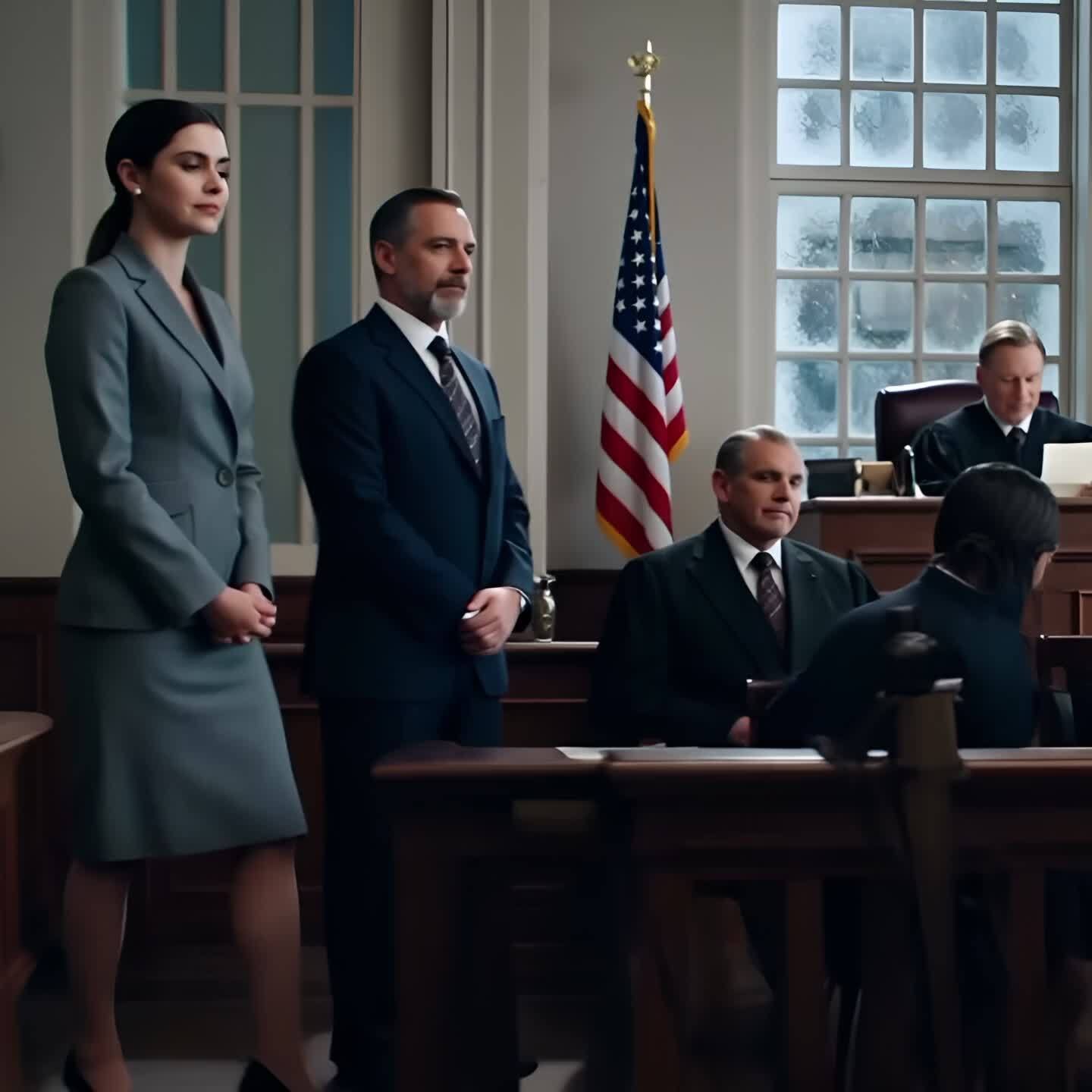
IN THE COURTROOM, MY DAD LOOKED PROUD. “THE 3 VACATION HOMES IN THE FLORIDA KEYS ARE OURS,”
My father, Walter Caldwell, said it like he was reading a line he’d practiced in the mirror. He was in a navy suit that still held the sharp crease of the department store hanger, the cuffs peeking out just enough to show a gold watch he’d worn since the nineties.
My mother, Fern Caldwell, sat beside him as if she were an accessory he’d placed carefully on the table for effect. Her pearls were too bright for a Tuesday morning, and her hands rested on a leather portfolio like the portfolio was a weapon.
Across the aisle, my attorney’s chair was empty on purpose. I’d asked him to let me sit alone. I didn’t want a shield between me and the truth. I wanted my parents to look at me without having someone else to glare at.
My name is Beatrice Caldwell, Bea when I’m tired and trying to be kind, and I’d spent the last six months learning what my family really meant when they said “for your own good.”
The courtroom itself was Florida-cold, the kind of air-conditioning that makes you forget there’s a sun outside. The seal of the state hung behind the bench, and the flags—American on one side, Florida on the other—stood so still they looked painted.
Somewhere behind me, a bailiff shifted his weight. Wooden benches creaked. Somebody coughed into their sleeve like it was a sin to make noise here.
My father leaned forward, chin lifted, eyes glittering with certainty.
“Three properties,” he continued, as if we were in a boardroom. “Key Largo, Marathon, and Islamorada. All managed under our LLC. The trust has been updated. Cleaned up. And the income—”
He smiled, satisfied, already spending it in his head.
He didn’t say my name.
He didn’t have to.
The laugh cut through the courtroom like broken glass. Not loud, not cruel—amused.
It wasn’t my father laughing. He would have died before he laughed in a courtroom. It came from the bench, a short sound the judge didn’t bother to hide.
The judge’s eyes flicked up from my letter to my parents’ faces, and in that half second, I felt the floor tilt beneath them.
My mother’s smile stalled mid-curve. My father’s proud posture stiffened like a statue bracing for a crack.
I didn’t move. I breathed. I counted the seconds between heartbeats and waited for the damage to land.
A moment earlier, their voices had filled the room with certainty. Ownership, victory, erasure.
I watched my mother mouth the word ours as if she were tasting it.
Three vacation homes in the Florida Keys. Sunbleached decks. Rental income.
A future they’d already spent in their heads.
And me.
I was a footnote they’d crossed out with a pen that never ran dry.
The judge turned a page. That sound—paper sliding—was the loudest thing I’d heard all day.
The paper in his hands wasn’t thick, just a few pages, but it had weight in this room. I’d written the letter the way you write something you know might be read aloud. No dramatics. No accusations that sounded like a tantrum. Only facts, exhibits, signatures.
My parents hated facts. Facts were the one thing they couldn’t charm.
The judge glanced down again, his lips pressed together in a line that almost looked like a smile, and I realized he’d already decided the direction of this hearing. He wasn’t still reading to learn. He was reading to confirm.
I could feel Fern’s perfume drift toward me whenever she breathed—something powdery and expensive, like department-store samples. I remembered the same scent on her coat collar when I was a kid and she’d leaned down to tell me to stop crying in public.
“Bea,” she’d hissed back then. “Do you want everyone to think you’re unstable?”
She hadn’t changed. Only the room had.
Weeks earlier, I’d sat at the same table, hands folded, listening to my father explain why betrayal was necessary.
He used words like practical and clean. He didn’t look at me when he said my name.
My mother nodded along, eyes sharp, already calculating the division.
The air smelled like coffee and inevitability.
That meeting had taken place in their kitchen in Palm Harbor, the one with the granite countertops Fern was always wiping even when nothing was on them. The ceiling fan hummed above us like it was trying to keep the peace.
My father poured coffee into three mugs and slid mine toward me with the old reflex of being my dad.
Then he sat across from me like my banker.
Fern stayed standing, leaning against the counter with her arms crossed, watching me as if I were an issue she’d be relieved to resolve.
Walter cleared his throat.
“This isn’t personal,” he began.
I laughed once, because I didn’t know what else to do.
“Of course it’s personal,” I said. “You’re talking about taking things from me.”
“It’s not taking,” Fern corrected, quick and sharp. “It’s restructuring.”
My father’s eyes flicked to her, and then back to the table.
“Your mother and I have been handling the properties for years,” he said. “We’ve kept them maintained. Paid the taxes. Managed the renters. All the headaches you didn’t want.”
“That I didn’t know about,” I said.
Fern’s mouth tightened.
“You always knew. You just didn’t pay attention.”
I stared at her, at the way she could rewrite history without blinking.
I had paid attention. I had been paying attention my whole life. I’d paid attention when Fern told relatives I was “sensitive.” I’d paid attention when Walter called my college years “a phase,” like my degree was a hairstyle.
I’d paid attention when my grandfather, Frank Doyle, put his hand on my shoulder at my graduation party and said, “Don’t let them scare you out of what’s yours, Beatrice.”
He’d said it quietly, like a warning.
Back in the kitchen, Walter tapped the folder he’d placed on the table.
“There’s an updated operating agreement,” he said. “For the LLC. It simplifies things. Keeps everything under one management unit. It protects the rentals.”
“From me?” I asked.
“From chaos,” Fern said, and her eyes were so hard, so certain, I realized she believed what she was saying.
Walter sighed like he was tired of my emotions already.
“You’re emotional,” he told me. “You make decisions out of spite. You get… sentimental.”
He said sentimental like it was a disease.
“And you,” Fern added, “you’d squander it. You’d let tenants walk all over you. You’d turn it into some kind of—”
She waved a hand.
“I don’t know. A charity.”
“What’s wrong with charity?” I asked.
Fern’s smile was thin.
“Nothing. When it’s your money.”
They said I was emotional. They said I’d squander it. They said I didn’t deserve a cent.
I felt myself go very still, like my body was trying to protect the part of me that wanted to scream.
“You’re cutting me out,” I said, quiet.
Walter looked at the coffee in his mug.
“We’re minimizing risk.”
Fern finally sat, her chair scraping the tile.
“You should be grateful,” she said. “Most daughters would be grateful their parents are handling this.”
“Most parents,” I said, “don’t lie.”
Walter’s head snapped up.
“We are not lying.”
“You’re hiding,” I said. “You’re moving documents around without telling me.”
Fern leaned forward.
“Beatrice, you live in Atlanta. You have your job. You’re not here. You don’t show up when something breaks. You don’t answer when the property manager calls.”
“What property manager?” I demanded.
Her silence was an answer.
That was the first time it occurred to me there might be more happening with those houses than I’d ever been told. I’d always thought of them as places we visited. Places we loved. Places that smelled like sunscreen and salt.
Not assets. Not income streams. Not leverage.
When I was ten, the Keys were a different world. My grandfather’s truck would rattle along the Overseas Highway, and I’d press my forehead to the window and watch the water flash between the mangroves like a secret.
We’d stop at a roadside stand for Key lime pie, and Frank would let me choose the slice.
“Always pick the one with the most lime,” he’d tell me, winking. “Life’s too short for bland.”
In Marathon, we’d fish off the dock until my hands smelled like bait and my hair dried into a stiff, salty mess.
At night, the Keys sounded like a different planet. The mainland had sirens and traffic and neighbors arguing through thin apartment walls. The Keys had wind, palm fronds brushing each other like whispers, and the soft slap of water against pilings.
Frank would sit on the back steps with a cold beer, his feet bare on the deck boards, watching the sky turn purple. He’d point out constellations like they were old friends.
“That one’s Orion,” he’d tell me. “And that one’s trouble.”
“Which one?” I’d ask.
He’d grin. “Whichever one your grandma would throw a shoe at if she were here.”
My grandma had passed before I was old enough to remember her clearly, but Frank kept her alive in stories. In those stories, she was fierce and funny and not afraid to tell a man when he was being an idiot.
Fern never liked those stories. She didn’t like anything that suggested women could be loud without being punished for it.
Fern liked control, like other people like comfort.
In the mornings, she’d scrub the counters even though we were on vacation.
“Salt gets everywhere,” she’d say, as if the ocean was a moral failing.
She’d complain about the humidity making her hair frizz, about the mosquitoes, about the way the locals drove too slow.
Then she’d post photos on Facebook later with captions about “island life” and “blessed,” like she’d been enjoying every second.
Walter used to laugh at her, gently.
“Fern, honey,” he’d say. “Nobody’s judging your hair.”
She’d snap back, “That’s because you don’t notice anything.”
And he would shrug, because shrugging was his way of staying out of the storm.
I didn’t understand then that Fern didn’t just want things to be nice.
She wanted things to look a certain way so nobody could question her.
Even in the Keys, where everyone wore flip-flops and nobody cared, Fern dressed like she was headed to a country club luncheon.
Frank would shake his head and mouth to me, behind her back, She’s exhausting, and I’d bite my lip to keep from laughing.
On the dock, my father was different. He didn’t talk about bills or work or whether I was being “dramatic.” He talked about bait and tides and how to watch the water for movement.
“Don’t yank,” he’d tell me when I got impatient. “You’ll lose it. You’ve got to let the line work.”
It was the closest thing he ever gave me to advice about life, and I took it like a treasure.
When I was older, when I started to notice how Fern’s compliments always came with a hook—pretty, but don’t gain weight; smart, but don’t get cocky—I’d think back to those dock mornings and try to remember the version of my father who wanted me to learn.
Sometimes, for years, I convinced myself that version would come back.
But you can’t make someone return to a place they’ve already decided to leave.
My father would sit behind me, steadying the rod, and explain knots like they mattered.
“If you do it right,” he said, “it holds under pressure.”
He’d smiled then, a real one.
That father—sunburned and laughing, teaching me patience—was the man I’d spent years trying to find again.
I held on to that memory longer than I should have.
After the kitchen meeting, I drove home on autopilot. My tires hummed on the highway. The sky was the washed-out blue of Florida winter.
At a red light, I stared at my hands on the steering wheel and realized they were shaking.
Not from fear.
From something colder.
From recognition.
By the time the lawyers started circling, the house had gone quiet.
Not peaceful.
Quiet like a held breath.
It happened in small ways at first. A missing email thread. A signature page sent without the attachments. A calendar invite labeled “property review” that I received two minutes before it started, like an afterthought.
Then the bigger things started.
I watched documents move without my name on them.
I watched signatures bloom where mine should have been.
I watched my parents become adversaries who slept just fine.
One afternoon, I called the rental website for the Islamorada house—the one we called the Coral House because the deck railings had always been painted that faded coral color.
The woman on the phone was cheerful, professional.
“Yes, ma’am,” she said. “The booking is confirmed. Check-in Friday. The primary contact is Walter Caldwell.”
Primary contact.
I felt my mouth go dry.
“What about Beatrice Caldwell?” I asked.
There was a pause, keys clacking in the background.
“I’m not seeing that name listed.”
I hung up and stared at my phone until the screen went dark.
My father had made himself primary contact on a property I was supposed to inherit.
Fern had always been good at running things from behind the curtain. Walter had always been good at being the face.
Together, they could make a world that looked legitimate.
The pressure ramped up fast.
A voicemail from my mother, clipped and surgical.
“Beatrice,” she said. “Your father and I need your cooperation. We don’t have time for this. Call me when you’ve calmed down.”
A text from my father reminding me to be reasonable.
BEA. LET’S NOT TURN THIS INTO A WAR. WE CAN SETTLE THIS LIKE ADULTS.
Like adults.
As if my hurt made me childish. As if their paperwork made them mature.
I told myself I wouldn’t respond until I knew what was real.
So I did what they’d never expected me to do.
I went looking.
I started with my grandfather.
Frank Doyle had been the kind of man who wore the same baseball cap for ten years and didn’t see the point of replacing something that still did its job. He owned a small construction company on the mainland and treated money like a tool, not a god.
When I was little, he smelled like sawdust and aftershave. When he hugged me, his hands were rough, and it made me feel safe.
He’d bought the first Keys house in the late eighties, back when you could still find a weathered cottage near the water without having to sell your soul. He’d told everyone it was for family.
“I’m buying memories,” he’d say. “Not square footage.”
The second house came after his business had a good decade. A modest place on Marathon with a dock long enough for a small boat.
The third was almost an accident—an Islamorada property he’d taken as part of a deal when a client couldn’t pay him after storm repairs.
“Somebody’s got to make sure the roof doesn’t fly off,” he’d joked, and Fern had rolled her eyes like the whole thing was inconvenient.
I hadn’t understood then how much Fern disliked anything she couldn’t control.
Frank died when I was twenty-seven, and it had split the world into before and after. At the funeral, Fern had cried loudly, theatrically, like grief was a performance. Walter had stood beside her like a loyal supporting actor.
When it was my turn at the podium, my voice had shaken.
“I loved him,” I’d said, and it felt pathetic compared to Fern’s wailing.
After the service, Fern pulled me aside and whispered, “You were too emotional up there.”
Too emotional at a funeral.
That was Fern.
Frank had left a trust. I’d known that. I’d signed something, I thought, years ago. I’d assumed my parents were handling it, because I’d been busy building my own life.
I had moved to Atlanta for work, gotten a job in corporate compliance—ironically, spending my days untangling other people’s fraud. I’d rented apartments, bought a small townhouse, paid my bills, done what you do when you’re trying not to need anyone.
I told myself I was independent.
The truth was I’d been avoiding my family.
Avoiding the feeling of being too much and not enough at the same time.
So when the first documents started disappearing, I went back into the boxes I’d stored in my closet and pulled out the envelope from the trust attorney.
The letterhead was old. The paper had gone slightly yellow around the edges.
It listed a law firm in Tampa. It listed a case number. It listed a file name that meant nothing to me.
It listed an address for the trust.
And beneath it, a name.
Beneficiary: Beatrice Caldwell.
Not my father.
Not my mother.
Me.
My stomach flipped like a car taking a sharp turn.
I called the law firm and learned they’d merged years ago. The receptionist was polite and useless.
“Those records would be archived,” she said. “You may need to go through the county.”
The county.
I took a day off work and drove to the clerk’s office in Tampa, because Tampa was where the trust had been filed. Florida law loves paperwork the way Fern loves control.
The clerk’s office smelled like stale air and toner. The floor tiles were a color no one would choose on purpose. There was a line of people clutching folders and looking exhausted.
I waited my turn, then slid my grandfather’s name across the counter.
“I need anything related to the Doyle family trust,” I said.
The clerk—a man with a mustache and a weary expression—typed slowly.
He frowned. He typed again.
“Which amendment?” he asked.
“Amendment?” I repeated.
He looked up at me, and there was a flicker of sympathy in his eyes.
“You didn’t know,” he said.
My throat tightened.
“No,” I admitted. “I didn’t.”
He nodded as if he’d heard that story before. In Florida, people probably lost family to paper cuts every day.
He printed a receipt and handed me a number.
“Records are downstairs,” he said. “You’ll need to request copies. Some things might be sealed.”
“Who can unseal them?” I asked.
He shrugged.
“Judge. Or trustee.”
Trustee.
Walter and Fern were listed as co-trustees.
Of course they were.
I sat at a plastic table in the basement records room, surrounded by strangers and dust. When the clerk brought out a box, it wasn’t dramatic. It was just cardboard, labeled in black marker.
But when I opened it, it felt like opening a coffin.
Inside were copies of documents I’d never seen. Agreements I’d never signed. Letters with Fern’s handwriting in the margins.
And there—stapled to the back of a binder—was the thing that made my skin go cold.
A notarized amendment.
Filed years ago.
Activated only under specific conditions.
I read it once, fast.
Then I read it again, slower.
Then I read it a third time, because I couldn’t believe my eyes.
The amendment was blunt. It was Frank Doyle, in legal language, anticipating betrayal like he’d been expecting it.
If any trustee attempted to remove, reduce, or otherwise diminish the beneficiary’s interest, the trust assets would revert immediately to the beneficiary, and the trustees would be removed.
Revert.
Immediately.
Removed.
It wasn’t a punishment clause. It was a safeguard.
And it had my name all over it like a spotlight.
I remembered Frank’s voice in my ear at my graduation party.
Don’t let them scare you out of what’s yours.
I sat there in the basement and felt something shift inside me.
Not hope.
Not anger.
A kind of clarity that was almost calm.
The trust my grandfather had set up after the hurricane season that nearly wiped one house out.
I remembered that hurricane season like a bruise. I was fifteen, old enough to understand fear, young enough to think adults were supposed to be invincible.
We’d been in the Islamorada house when the news started showing the cone, the swirling red and orange lines, the meteorologists pointing at maps like they were trying to reason with a monster.
Frank boarded the windows with plywood he’d cut himself.
Walter helped, holding the ladder, sweating through his T-shirt.
Fern paced inside, furious and frightened, snapping at everyone for breathing wrong.
“This is ridiculous,” she kept saying. “We should have left days ago. Why do you always wait until the last minute?”
Frank didn’t take the bait.
He just hammered nails, steady, as if he could hold the storm back through force of will.
When the wind came, it sounded like an animal. The house shook. The power went out, and we sat in the hallway with flashlights and a battery radio that crackled with warnings.
Fern held my arm too tightly.
Walter tried to make jokes that didn’t land.
Frank sat with his back against the wall, his eyes closed, listening.
At one point, when the roof groaned, I started to cry. Quietly, because Fern hated crying.
Frank opened his eyes and reached over, placing his rough hand on my knee.
“It’s okay, Bea,” he said. “The house has held before. It’ll hold again.”
“How do you know?” I whispered.
He looked at me, and in the flashlight beam his face looked carved out of shadow.
“Because I built it to,” he said. “And because we’re going to do what we can.”
That storm didn’t take the house completely, but it wounded it. The next day, when the sky cleared and the heat returned like nothing had happened, we walked outside and saw the deck boards torn up, shingles missing, palm trees snapped like toothpicks.
The dock—my dock—was half gone.
Fern cried then, loudly, because her grief was always about what she could see.
Walter stared at the damage with a hollow look.
Frank didn’t cry. He just started making lists.
“I’ll need new pilings,” he muttered. “New decking. We’ll have to check the foundation.”
He turned to Walter.
“Go get supplies,” he said. “And when you’re done, we’re talking.”
Later, when the work crews came and the insurance calls started, Frank sat at the kitchen table with a thick folder and a pen. He asked me to bring him coffee, black the way he liked it.
Fern was upstairs on the phone with an aunt, complaining about the “nightmare.”
Walter stood in the doorway, shoulders slumped.
Frank didn’t look up when he spoke.
“You two are going to run these houses after I’m gone,” he said, voice flat.
Walter nodded quickly, like he was grateful for the responsibility.
Fern appeared in the doorway at the word gone.
“Frank,” she snapped. “Don’t be morbid.”
Frank finally looked up.
“I’m not being morbid,” he said. “I’m being realistic. Storms happen. People happen. And I’m not leaving my granddaughter exposed because you two think you know better than everyone.”
Fern’s eyes narrowed. “What does that mean?”
“It means,” Frank said, and the calm in his voice was the most frightening part, “that I’m putting a clause in the trust. A reversion clause.”
Walter frowned. “Dad—”
“Frank,” Fern corrected, and Frank ignored her.
Walter tried again. “That’s not necessary. We’d never—”
“You don’t know what you’d do,” Frank cut in. “Not until pressure hits.”
His gaze moved to me.
“Beatrice,” he said. “You listen to me. People will tell you you’re too emotional because it’s easier than admitting they’re wrong. People will tell you you don’t deserve things because they want them for themselves. Don’t let them.”
I nodded, throat tight.
Fern scoffed. “This is absurd. We’re family.”
Frank stared at her.
“Family is exactly why I’m doing it,” he said.
He slid the folder toward Walter.
“If you try to cut her out,” he said, “you lose it all. Automatically.”
Walter’s face went pale.
Fern’s lips tightened, and for a second her mask slipped.
I saw it then—something greedy, something calculating.
Then she smoothed it away and said, “Frank, you’re being dramatic.”
Frank picked up his pen.
“No,” he said. “I’m being careful.”
The clause no one read because it was buried beneath goodwill and assumptions.
I read it twice, then again.
I hired no one at first. I didn’t need noise. I needed proof.
I took photos. I requested certified copies. I asked for timestamps. I asked for filings. I asked for anything that would show when and how my parents had moved things.
When I got home, I spread the papers out on my dining table like I was building a map.
I highlighted clauses. I circled dates. I compared signatures.
I pulled up my own email history and searched for the firm name. Nothing.
I searched for “trust.” Nothing.
I searched for “Keys.” Only vacation photos from years ago.
Fern and Walter had been careful.
They’d kept everything off my record.
But paper has a way of remembering even when people pretend not to.
I started finding small cracks.
A county tax document listing an LLC address that matched my parents’ home.
An online rental listing that credited the owner as “Caldwell Holdings.”
A bank statement I found in an old folder from the year Frank died, showing a transfer from the trust to an account I didn’t recognize.
I called the bank and was told I wasn’t authorized.
Of course I wasn’t.
I spent nights at my laptop, my eyes burning, my brain buzzing. I drank too much coffee. I stopped answering my friends’ texts.
When my boyfriend asked what was wrong, I said, “Family stuff,” and watched his face soften with relief that it wasn’t about us.
Family stuff is always complicated.
Family stuff is always expected to be endured.
I wasn’t going to endure this.
The first time I spoke to Fern after the records search, it was on the phone. I waited until my hands stopped shaking.
She answered on the second ring.
“Beatrice,” she said, as if she’d been expecting me. “Are you ready to stop this nonsense?”
“I saw the trust documents,” I said.
Silence.
Not the kind of silence where someone is thinking.
The kind of silence where someone is measuring risk.
“What documents?” she asked finally, voice too casual.
“The amendment,” I said. “The one you never told me about.”
Another beat.
Then Fern laughed, a small laugh that sounded like ice clinking in a glass.
“You’re reading things you don’t understand,” she said. “That’s dangerous.”
“I understand enough,” I said. “I understand you tried to cut me out.”
“Language,” she snapped. “Don’t accuse your mother like that.”
“You weren’t my mother when you did it,” I said, and my voice surprised me. It didn’t shake. It didn’t crack. It sounded like someone else.
Fern inhaled sharply.
“You’re being emotional,” she said, like a reflex.
I smiled, alone in my kitchen.
“No,” I said. “I’m being practical.”
I could almost hear Walter in the background, asking what was happening, and Fern covering the receiver with her hand, whispering like I wasn’t real.
She came back on the line.
“We’re trying to protect you,” she said, and her voice softened into something almost maternal.
That softness was more frightening than her anger. Fern’s softness was always a tool.
“I’m not a child,” I said.
“You’re acting like one,” she replied, and then, in the same clipped tone she used when she talked to customer service representatives, she added, “We’ll handle this through counsel.”
She hung up.
The next day, I got an email from a lawyer. A cease-and-desist. A demand that I stop “interfering with property operations.”
Interfering.
With my own inheritance.
I stared at the email until my vision blurred.
Then I printed it.
Then I added it to my pile.
Then I opened a fresh document and started writing a letter.
Not emotional.
Not accusatory.
Clean. Attached.
Exhibits, dates, signatures.
I wrote the way I wrote compliance reports at work: methodical, cold, impossible to dismiss as “feelings.”
I referenced specific filings.
I included certified copies.
I included the cease-and-desist itself, because it proved their intent better than any diary entry ever could.
I included a timeline.
Frank’s death date.
The trust creation date.
The amendment filing date.
The date my parents formed the LLC.
The date they updated its operating agreement without me.
The date they booked rentals under Walter’s name.
The date Fern told me to calm down.
When I finished, the letter was only a few pages long, but it felt like a blade.
I didn’t send it to my parents.
I sent it to the court.
I asked for a hearing.
I asked for review.
I asked the judge to look at Exhibit C.
I didn’t tell my parents what I was doing.
They never asked.
They didn’t think I was capable.
In court, my mother leaned over and whispered, “Don’t embarrass yourself.”
I didn’t answer.
I stared at the grain of the table and felt something cold settle behind my ribs.
Anger wanted to scream. Grief wanted to beg.
I fed neither.
I let them sit. I let them sharpen.
The hearing was scheduled for a Monday in Key West, because Florida loves irony. The Keys—the place my parents thought they’d claimed—was also the place the law would unclaim it.
I flew down the night before and stayed in a small hotel off Roosevelt Boulevard. The kind with thin walls and a pool that looked tired.
I didn’t go out. I didn’t drink. I ordered a sandwich from the lobby café and ate it in bed with my papers spread around me.
At midnight, I re-read the amendment again, tracing the words with my finger like they might disappear if I blinked.
Revert to the beneficiary.
Remove the trustees.
It was so simple it felt brutal.
And yet my parents had never bothered to read it.
Or they had read it and assumed they could outmaneuver it.
That arrogance had been my opening.
The next morning, I walked into the courthouse with my letter in a folder and my hair pinned back the way Fern always liked it, neat and controlled.
I didn’t do it for her.
I did it because I wanted to feel steady.
The courtroom was smaller than I expected. Less grand, more functional. But the benches were still wood, the air still cold, the flags still.
Walter and Fern were already there, sitting close together like a united front. When Walter saw me, he smiled like a man who thinks he’s about to win.
Fern didn’t smile. She watched me with a look that felt like a slap.
“You look tired,” she whispered as I passed.
I sat down without responding.
Walter’s attorney—tall, confident, the kind of man who calls everyone by their last name—stood and started talking about management, about stability, about the beneficiary being “out of state” and “disengaged.”
Disengaged.
I listened, jaw tight, and thought about every vacation I’d taken to the Keys, every Christmas card with the Coral House in the background, every time I’d believed “family” meant something solid.
Walter’s attorney held up a copy of their updated operating agreement like it was evidence of responsibility.
Fern watched the judge’s face, searching for approval.
Walter sat with his hands clasped, looking proud.
And then, because Fern can never resist the performance, she leaned in and whispered to Walter loud enough for me to hear.
“Just wait,” she murmured. “After this, it’s done.”
The trigger came when my mother laughed, not at a joke, at a number.
The projected income from the rentals.
She laughed like the world had finally corrected itself.
That laugh was small, almost inaudible, but it was filled with something uglier than greed.
It was filled with relief.
Relief that I was finally being erased the way she’d wanted.
That was when I decided to stop hoping they’d remember who I was.
I became careful, quiet, precise.
I revisited the past with a different lens.
Old emails, old agreements.
The clause no one read because it was buried beneath goodwill and assumptions.
I read it twice, then again.
I hired no one at first. I didn’t need noise. I needed proof.
I wrote a letter. Not emotional. Not accusatory—clean, attached.
Exhibits, dates, signatures.
A copy of a notarized amendment filed years ago, activated only under specific conditions—conditions my parents had met the moment they tried to cut me out.
They never asked what I was doing. They didn’t think I was capable.
Back in the courtroom, the judge cleared his throat.
My father’s jaw tightened. My mother leaned forward, confusion creasing her face.
The judge looked at me then just once, like he was confirming a hunch.
“Counsel,” he said, still smiling. “You may want to review Exhibit C.”
My mother shook her head. “That’s not relevant.”
The judge’s smile faded. “It’s decisive.”
Silence.
A clerk passed papers.
My father read fast, then slower, then not at all.
My mother’s face drained of color as if someone had pulled a plug.
“That’s impossible,” she said. Her voice cracked on the last word.
The judge spoke gently.
“According to this, the properties revert to the beneficiary you attempted to exclude.”
He tapped my letter.
“All three.”
I met my parents’ eyes.
I didn’t smile. I didn’t gloat.
I let the truth do its work.
The fallout was surgical.
Ownership transferred. Claims dismissed. Costs assigned.
Walter’s attorney tried to argue—something about intent, about the beneficiary’s “consent,” about the amendment being “outdated.”
The judge cut him off with a look.
“Counsel,” he said again, and there was no smile left now, “your clients signed an operating agreement that directly contradicts the trust’s controlling document. They did so without the beneficiary’s consent. The amendment is clear.”
Fern’s lips parted like she wanted to protest, but no sound came out.
Walter stared at the papers like they’d betrayed him.
For a second, I saw the father I’d loved—the one on the dock, the one who’d taught me knots—flicker behind his eyes.
Then it disappeared under pride.
Outside, my father tried to speak. I walked past him.
“Bea,” he called, and his voice sounded older than I remembered. “Beatrice. Listen. We can—”
I didn’t slow down.
My mother stood frozen, staring at the courthouse steps like they’d betrayed her, too.
The Keys would see me again.
Not as a guest.
As the holder.
I walked out into the Florida sunlight and squinted, the heat hitting my skin like a slap after the courtroom’s cold.
My hands were steady now.
Not because it didn’t hurt.
Because the hurt had finally turned into something I could carry.
Relationships don’t always explode.
Sometimes they just collapse inward.
Neat and final.
I rented a car and drove straight to the first house on Key Largo.
The road was familiar—US-1 stretching over water, mangroves pressing in, pelicans gliding low. Tourists in convertibles slowed to take pictures at every pull-off.
I’d been one of them once.
Now I drove like someone who owned the view.
When I pulled up to the Key Largo house, it looked smaller than it did in memory. The paint was peeling at the edges. The porch steps sagged slightly, like a tired spine.
A lockbox hung on the railing.
I stood there for a moment, staring at it, the absurdity of it making my throat tighten.
A lockbox on my grandfather’s porch.
A lockbox Fern had probably installed.
I called the locksmith I’d already researched. He arrived within an hour, a young guy with sun-bleached hair and a tool belt.
He glanced at my paperwork—certified copies, court order—and nodded.
“No problem,” he said. “We’ll get you in.”
When the old lock clicked and gave way, a memory hit me so hard I almost stepped back.
The smell inside was the same.
Salt, wood, old sunscreen.
I walked through the rooms slowly, touching the walls like they were real again.
In the living room, the couch was different. Fern had replaced it with something beige and stiff. The colorful throw pillows from my childhood were gone.
In the kitchen, the cabinets had been painted white, the kind of update Fern loved because it looked “clean.”
Clean.
Practical.
Those words again.
I opened the drawer by the sink and found the old knot-tying book my father used to keep there, the pages warped from humidity.
My fingers hovered over it.
Then I closed the drawer gently.
At the Marathon house, the dock was still there, but the boards had been replaced. The old ones—dark and weathered—were gone.
The water below was clear enough to see the shadows of fish drifting like ghosts.
I sat at the edge of the dock and let my feet dangle, shoes still on, because I wasn’t a child anymore and I didn’t trust the splinters.
I remembered my father’s hands on mine, guiding the rope.
I remembered Frank laughing when I’d tied it wrong.
“You’ll learn,” he’d said. “Pressure teaches.”
The Islamorada house—my favorite—was the one that nearly got wiped out in the hurricane season Frank had feared.
It stood on slightly higher ground, with a view that made tourists stop their bikes on the road and point.
When I walked in, the bedroom window still framed the ocean like a painting.
I stood there and felt tears sting my eyes for the first time since this whole thing started.
Not because I was weak.
Because grief finally had somewhere to go.
I thought about Frank, about how he’d set this up like a trap for betrayal. How he’d protected me even after he was gone.
And I thought about Walter and Fern, how they’d assumed they could control everything, including me.
In the days that followed, I did what my parents had always done—only I did it without lies.
I called the property manager Fern had hired and informed her the trustees were removed.
The woman was nervous at first, then relieved when she realized this meant she wouldn’t have to answer Fern’s midnight emails anymore.
“Honestly,” she admitted, “your mom was… intense.”
“Was,” I said.
I restructured the rentals.
I hired a new accountant.
I set up a separate account for maintenance, because I’d learned what happens when money is hidden instead of tracked.
I met with an attorney in Key West and changed the trust administration address.
I changed the locks.
I changed the access codes.
I changed the emergency contacts.
I changed everything that had my parents’ fingerprints on it.
And then, on the first of the month, when the rental income hit the new account, I transferred the first month’s income to hurricane relief.
Frank would have liked that.
Fern would have hated it.
I kept the dock.
Not the new boards.
The idea of it.
The place where a ten-year-old girl had learned that pressure reveals what’s real.
I kept the knot.
The donation wasn’t a dramatic gesture. It was a transfer on a screen, numbers moving from one account to another. But when I hit confirm, my chest loosened in a way I hadn’t expected.
I drove to a small relief office on the mainland the next day, because I wanted to look someone in the eye when I said this money is meant to help.
The office was in a strip mall with a faded sign. Inside, the air smelled like cardboard and coffee, and there were boxes stacked in the corner—water, diapers, cleaning supplies.
A woman behind the desk looked up and smiled like she’d been doing this too long to be surprised by anything.
“How can we help you?” she asked.
“I’m here to donate,” I said, and my voice sounded steadier than I felt.
She handed me a form, and when I wrote my name, it hit me again.
Beatrice Caldwell.
Not on a court document this time.
On something simple.
On something that actually mattered.
The woman glanced at the amount and blinked.
“Wow,” she said. “This is… generous.”
“It’s not mine,” I said automatically.
Then I stopped.
It was mine.
That was the point.
“It’s from my grandfather,” I corrected, and my throat tightened. “He loved the Keys. He loved people who did the work after storms.”
The woman nodded, her expression softening. “We see a lot of families come together after a hurricane,” she said quietly. “And we see a lot of families fall apart.”
I swallowed.
“Yeah,” I managed.
When I left, the sun was bright and cruel. Florida sunlight doesn’t comfort you. It exposes you.
I drove back down to Islamorada that evening, because something in me needed to end the day where the story had started.
The sky was turning orange by the time I reached the house. I walked out to the dock—new boards, clean edges, fresh screws—and I carried a coil of rope I’d bought at a hardware store.
It wasn’t the same rope from my childhood. That rope was long gone, frayed and forgotten, probably thrown out by someone who didn’t know it held a piece of my life.
But rope is rope. Pressure is pressure.
I sat on the edge of the dock and stared at the cleat, at my hands, at the way the rope curled like a question.
I tried to remember the knot.
Over. Under. Loop. Pull.
My fingers fumbled, impatient, like they belonged to a different person now. I tied something that looked wrong and yanked it, and it slipped immediately.
I laughed once, under my breath.
Not because it was funny.
Because it was perfect.
The first time I’d learned, I’d needed guidance.
Now I needed repetition.
Now I needed to be willing to fail without Fern calling it embarrassment.
I tried again.
This time I slowed down. I watched the rope. I felt the texture under my skin.
Over. Under. Loop. Pull.
I tugged.
It held.
Not perfectly. Not elegantly. But it held.
I sat there, breathing in salt air, listening to the water, and for the first time in months the quiet didn’t feel like a held breath.
It felt like space.
My phone buzzed in my pocket.
WALTER.
I stared at the screen until it went dark.
It buzzed again.
FERN.
Then a voicemail notification.
I didn’t listen right away. I watched the horizon instead, the sun sliding into the ocean like a slow surrender.
When I finally pressed play, my father’s voice filled the dock, tinny through the speaker.
“Beatrice,” he said, and it sounded like he was trying to find the right tone, the right version of himself. “We need to talk. Your mother is… she’s upset. I’m upset. This isn’t how it was supposed to go. We were trying to keep things together.”
He paused, and I could hear Fern in the background, murmuring something sharp.
Walter continued.
“You always loved the Keys,” he said. “You remember that. You remember me teaching you—”
He stopped, like the memory had turned into a knife.
“We can fix this,” he said finally. “Call me.”
The message ended.
I sat on the dock with the rope in my hands and felt a strange, distant pity.
Not for Fern.
For Walter.
For the man who’d once smiled at me in the sun and who’d later chosen paperwork over his daughter because it was easier than choosing me.
I didn’t call back.
I didn’t send a text.
I didn’t need the last word.
The court had given me the only word that mattered.
I stood up, looped the rope neatly, and walked back into the house.
In the kitchen, I found a drawer Fern hadn’t emptied yet. Inside were old photos, curled at the corners. Polaroids of us on the dock, my hair wild, my father laughing, Frank squinting into the sun.
Fern must have kept them because they proved she’d once been part of something real.
I held the photos for a long moment.
Then I slid them into my bag.
Not to punish her.
To preserve what was true.
Because in the end, that was all I wanted.
Truth.
Not the literal knot—I’d long since forgotten the exact way my father had shown me.
But the lesson.
Now, when I think about that laugh, I understand it.
It wasn’t mockery.
It was appreciation for preparation, for restraint, for a story that ended exactly where it should have.
Betrayal teaches you what pressure reveals.
Do it right and nothing slips.