He Gave Her Eight Years, Then Left Earth Without Saying Goodbye—And She Only Understood When The World Put Him On Live TV
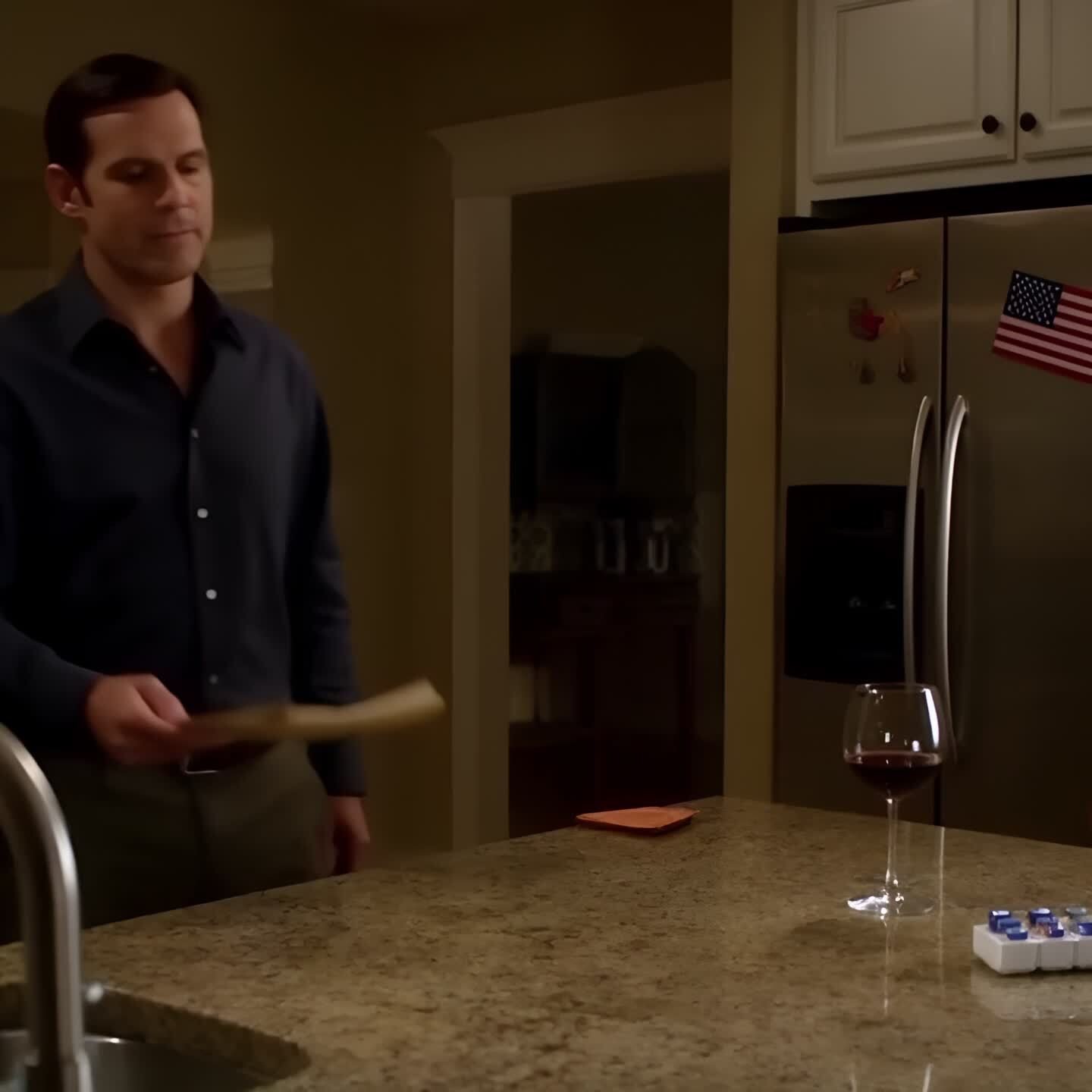
The anniversary card was still standing on the kitchen counter when Kira slid a stack of papers toward me like she was handing me a receipt, not a marriage.
She didn’t even look up from her phone.
The card read, in my careful handwriting, Happy anniversary, Kira. Eight years loving you. Five years calling you my wife. I’d drawn a tiny pair of stars in the corner the way I always did when I didn’t know what else to give her—something small and quiet that said, I’m still here.
Kira’s nails clicked against the marble as she pushed the papers closer. Her voice was bright and clean, the kind she used when there were witnesses. “There,” she said. “Sign those.”
I picked up the top sheet and felt my chest go tight. Divorce. My name. Her name. A date line that made my stomach flip as if the house itself tilted.
For a moment, I honestly thought I’d misread it. Like maybe the word divorce was some other word my brain couldn’t take in.
Kira’s eyes stayed on the screen. A little smile touched her mouth—barely there, like she’d just won something. “It’s what you’ve been wanting,” she said. “Freedom. Sealed in ink.”
Then she laughed softly at her own line, as if she’d rehearsed it.
I heard it the way people hear a car horn right before impact: too late to move, too late to stop.
Behind her, the windows showed the last blue light of a winter evening in Denver, Colorado. Snow sat in thin ridges along the fence. A neighbor’s porch light blinked on. The neighborhood was quiet in that suburban way, the kind of quiet that makes you feel like you’re safe. Like the biggest thing that can happen is a garbage bin tipping over.
Kira sat there in her cashmere sweater, wearing the wedding ring I’d slipped onto her finger five years earlier, and offered me a divorce like it was a gift.
I should’ve been angry. I should’ve shouted or slammed my hand down or demanded an explanation. But something in me—some worn-down part that had learned to survive in her orbit—did what it always did.
It went still.
My eyes drifted to the open cabinet over the sink where I kept her medication organizer. The little plastic boxes lined up like a calendar of our life. Monday morning. Monday night. Tuesday morning. Tuesday night. I’d filled those boxes every Sunday for years, while Kira slept late, while her phone buzzed with messages from people who thought she was charming because they never had to clean up after her.
She looked up then, finally, her gaze sliding over me like I was part of the decor. “Well?” she asked. “Are you going to sign or not?”
I set the papers down.
“Kira,” I said quietly, and my voice surprised even me with how calm it sounded, “I already signed mine.”
Her eyebrows lifted. “What are you talking about?”
“I’m saying…” I swallowed once. The words felt too big for my mouth. “…I’m not doing this on your schedule anymore.”
For the first time all day, the air in the kitchen changed. It sharpened.
Kira’s smile thinned. “Neil,” she said, like she was warning a child not to touch a hot stove, “don’t start. Not tonight. It’s our anniversary.”
I stared at her face and felt a strange distance open up between us, like the years had folded in half and slid away. I could see her clearly—beautiful, restless, always hungry for more attention than any one person could provide—and I could see myself, too: the man who had once believed love meant endurance.
Outside, a car door slammed down the street. Somewhere a dog barked. Normal life kept going while my marriage quietly cracked.
Kira reached for her glass, took a sip of wine, and then—like she remembered something—she made a little show of setting it down.
“You know you can’t drink,” I said before I could stop myself. “You have a condition.”
She rolled her eyes, exasperated. “It’s one glass.”
“It’s one glass until it’s not,” I said. “And you know it.”
That’s when she leaned back in her chair and looked at me the way she always did when she wanted to remind me who she thought I was.
“God,” she muttered. “You’re exhausting. You know that? Always hovering. Always monitoring. Always acting like you’re the one in charge.”
I didn’t answer. My gaze drifted to the coat rack by the door.
A navy jacket hung there—one I didn’t recognize.
My stomach tightened again.
Kira saw my eyes and sighed like I’d just ruined her evening. “Before you start interrogating me,” she said, “yes, I borrowed Simon’s jacket. I spilled wine on myself. I changed. It’s not a big deal.”
Simon.
Even saying his name in my kitchen felt like dragging mud across a clean floor.
“Simon’s jacket,” I repeated, because I needed to hear the words out loud to understand they were real.
Kira’s face flashed with irritation. “We were in his hotel room,” she said, as if the detail itself was proof I was overreacting. “We were talking. We had drinks. It’s not like I did anything.”
The way she said anything was almost daring.
I stood there with my hands resting on the counter, and I realized something that made my throat sting.
She never explained anything unless it was about protecting someone else.
For five years, I had been the person who kept her safe: from seizures, from missed pills, from the way her own body could turn on her without warning. I’d learned the patterns, the triggers, the little signs that came before her eyes unfocused and her hands started to shake.
I’d tucked medication into every coat pocket she owned. I’d taped little reminder notes inside her makeup bag. I’d set alarms that chimed softly so she wouldn’t feel embarrassed if guests were around.
And still, she treated me like a nuisance.
Kira’s phone buzzed. She glanced down, and something softened in her expression—something I’d never seen directed at me, not even in the early days when we still pretended the marriage was built on romance and not on obligation.
That smile.
It wasn’t a big smile. It was just a small shift of her mouth, a quiet warmth.
But it was enough to make my chest ache.
She typed quickly, then held the phone to her ear and turned slightly away from me like she was shielding the conversation.
“Hey,” she said, and her voice changed—lighter, sweeter. “Yeah, I just got home.”
I didn’t need to hear the name again. I knew who was on the other end.
As she spoke, my mind drifted backward to the version of myself I used to be—the man who lived for the stars, who stayed late in labs, who argued over equations like other people argued over sports. The man who got accepted into a program most kids like me didn’t even know existed.
Before Kira, I’d been Dr. James Neil Wade, rising fast in my field, the kind of young astrophysicist people at conferences actually listened to. I had a path. I had momentum.
Then I married into the Thorne family.
The Thornes were the kind of wealthy people who didn’t say they were wealthy. Their money sat quietly, like a foundation under everything. Private schools. Summer homes. Personal assistants. A father who spoke in calm commands and expected the world to obey.
When David Thorne paid for my full tuition at MIT, I didn’t just feel grateful. I felt indebted in a way that sank into my bones.
And when he came to me years later—after Kira’s first love had left her shattered—and asked me, softly, to marry his daughter, I told myself I was doing the right thing.
I told myself she needed stability.
I told myself I could be that.
What I didn’t tell myself—because I didn’t want to look too closely—was that the arrangement came with strings, even if nobody called it a contract out loud.
Kira hung up and glanced at me. “Norway next week,” she said, almost casually. “Simon found a ski resort. It’s gorgeous.”
My mouth went dry. “We’re going to Norway?”
Kira shrugged. “If you want to come, you can. But it’ll be mostly us. You know… catching up.”
Catching up. Like the last five years of marriage were a waiting room and Simon was the appointment she’d been hoping for.
Something in me finally moved.
Not anger. Not rage.
Just clarity.
“I’m not going to Norway,” I said.
Kira blinked. “Excuse me?”
“I’m not going,” I repeated. “And I’m not signing your papers.”
Her lips tightened. “Then what are you doing, Neil?”
I took a breath that felt like it scraped my ribs on the way in. “I’m leaving.”
That got her attention. Not because she cared about my feelings, but because the idea of me not being available didn’t fit her reality.
Her chair scraped the floor as she stood. “Don’t be dramatic,” she snapped. “Where would you even go?”
I looked at her—really looked—and saw the truth so clearly it almost made me dizzy.
She had never wondered where I’d go because she had never imagined I would.
I didn’t answer her. I walked past the coat rack, past Simon’s navy jacket hanging there like a flag planted in my home, and went down the hall to the small office I’d turned into a workspace.
On the desk, under a neat stack of mail, sat an envelope I’d already prepared. It was thick, official, and sealed.
Kira followed me, her footsteps sharp. “Neil,” she called, like she was calling a dog back to heel. “Get back here.”
I picked up the envelope and turned to her.
“Do you have any idea what you just signed yesterday?” I asked.
She scoffed. “Some form about my medical treatment. I don’t know. You always shove paperwork at me like I’m your secretary.”
“It wasn’t medical paperwork,” I said.
Kira’s eyes narrowed. “What are you talking about?”
I held the envelope out. “It was a divorce agreement.”
For a full second, she didn’t move. Then she let out a laugh—short, disbelieving. “No. That’s not funny.”
“It wasn’t a joke,” I said.
Her face flushed. “You wouldn’t divorce me without telling me.”
“I did tell you,” I said quietly. “You just didn’t listen. Like you never listen.”
The hallway went so still I could hear the faint hum of the refrigerator in the kitchen. I could hear her phone buzzing again, ignored for once.
Kira’s voice changed—sharper now, a little panicked under the anger. “When did I sign anything?”
“Yesterday morning,” I said. “You were rushing. You were late. You were on your phone. You signed the last page without reading it.”
Her mouth opened, then closed. Her eyes flicked downward like she was replaying the moment in her head. I watched her try to put it together, watched her mind reach for blame the way it always did.
“You tricked me,” she hissed.
I nodded once. “Yes.”
The admission landed between us like a dropped plate.
And for the first time in five years, I saw her speechless.
“You—” She shook her head. “You can’t do that.”
“I already did,” I said.
Her hands balled at her sides. “So that’s it? After everything I’ve done for you?”
I almost laughed, but it came out like a breath.
After everything she’d done for me.
The meals I cooked. The laundry. The medication. The constant vigilance.
The nights I stayed awake just to make sure she kept breathing evenly after a seizure episode.
The mornings I held her hair back when nausea hit from her prescriptions.
The way I’d stopped going to conferences because she said she felt abandoned when I traveled.
The way I’d turned down a job offer years earlier because it required relocating and she refused to leave her city, her social circle, her father’s reach.
Kira stepped closer, her eyes flashing. “You’re going to regret this,” she said. “You know that, right? You’re nothing without me.”
The words should have crushed me.
Instead, they slid off, because I finally understood: she meant them.
Kira truly believed my value came from my usefulness to her.
I held up the envelope again. “It’s done,” I said. “We’re divorced.”
She stared at the seal, then at my face. Her expression shifted again, suddenly mocking. “You think you’re going to go back to being some big important scientist?” she sneered. “You think the world is still waiting for you?”
I looked at her and felt something settle in my chest like a locked door finally clicking shut.
“Yes,” I said. “I do.”
Kira’s eyes widened just a fraction at the certainty in my voice.
Then she scoffed, turning away like she couldn’t bear to watch me act confident. “Whatever,” she snapped. “Go ahead. Run off. You’ll come crawling back when you realize you can’t survive without my money.”
I didn’t correct her. I didn’t defend myself. I didn’t remind her that I’d survived far worse than her insults.
I walked into our bedroom and opened the closet.
There, on the top shelf, sat the suitcase I hadn’t used in years.
The last time I’d packed it was for a conference in California—a conference I left early because Kira called crying, insisting she felt “unsafe” alone.
I pulled it down and set it on the bed.
Kira stood in the doorway, watching, her arms crossed tightly. “You’re actually doing this,” she said, like she was trying to convince herself I was bluffing.
“Yes,” I said again.
She rolled her eyes and turned away. “Fine,” she tossed over her shoulder as she walked back toward the kitchen. “Do whatever you want. And don’t expect me to beg you.”
I paused for a moment with my hand on the suitcase zipper and let myself feel the quiet absurdity.
Kira honestly believed she was the prize.
Maybe she had always been treated like one.
In the Thorne family, Kira was the fragile center of everything: the daughter with a medical condition, the one everyone catered to, the one who could lash out and be forgiven because she was “going through so much.”
Her seizures weren’t her fault.
But the way she used them as an excuse to hurt people?
That was.
I packed quickly. Not because I had a lot to take, but because I didn’t have much left of myself in that house.
A few shirts. Two pairs of shoes. A worn notebook full of calculations I’d scribbled late at night when I couldn’t sleep. A framed photo of my mother, the only picture of her I had. I hesitated over that one, then tucked it carefully between sweaters so it wouldn’t crack.
When I carried the suitcase down the hall, Kira was back in the kitchen, scrolling again, the divorce papers still on the counter like she’d forgotten they existed.
I stopped in the doorway.
“Kira,” I said.
She didn’t look up. “What now?”
“I filled your pill organizer,” I said. “It’s set for the week.”
Her finger paused briefly on the screen. “Okay.”
“And there’s emergency medication in your winter coat pockets,” I added. “In case you have an episode when you’re out.”
She huffed. “Yeah, yeah. I know.”
But I knew she didn’t.
She never noticed those things because she never had to.
I stood there for a beat longer than I should have, waiting for her to look up, waiting for some sign that she understood what was happening.
Nothing.
So I walked out.
The cold Denver air hit my face like a slap. My breath came out white. The driveway lights cast a soft glow over the snow patches, and the street was still, lined with neat houses and holiday decorations.
I loaded my suitcase into my car and sat behind the wheel with my hands resting on the steering wheel.
For a moment, I didn’t start the engine.
I just sat there and felt the quiet.
Then my phone buzzed.
A number I hadn’t seen in years flashed on the screen.
I answered before I could second-guess myself.
“Dr. Wade?” a man’s voice said, crisp and official. “This is Dr. James Harper with the National Space Research Directorate.”
My heart slammed against my ribs.
“We’ve reviewed your proposal,” he continued. “And the team is… impressed. If the latest data holds, we believe it has the potential to change what we thought was possible.”
My throat tightened. “Yes, sir.”
There was a pause. “We would feel much more confident if you could lead the mission. How do you feel about going to Mars?”
The words hung in the air like a dream.
Mars.
It had been my dream before I learned what it felt like to live someone else’s.
I looked back at the house—our house, the one I’d cleaned and maintained and kept running while she lived inside it like a queen.
The porch light glowed warm. In the kitchen window, I could see Kira’s silhouette—head bowed over her phone, oblivious.
The director spoke again. “Dr. Wade? Are you there?”
I swallowed hard.
“Yes,” I said. “I’m here.”
“So?” he asked. “Can you commit to training? The timeline is tight.”
I thought about the years I’d given away. The research I’d shelved. The conferences I’d skipped. The dream I’d folded up like an old map and stored in the back of my mind.
Then I thought about Kira’s voice that evening, telling me I was nothing without her.
I breathed out slowly.
“Count me in,” I said.
“Good,” he replied, and I could hear a smile in his voice. “Full transparency: once you launch, there will be no direct contact for a prolonged period. Off-planet operations. Some people crack under that.”
I glanced at the house one last time.
“It won’t be an issue for me,” I said.
I started the car and drove away.
The next week moved like a blur.
Training paperwork. Medical evaluations. Security clearance. Physical tests that pushed my body in ways it hadn’t been pushed in years, because caretaking had a way of making you forget you had muscles and ambitions separate from someone else’s needs.
I didn’t tell Kira. Not at first.
Part of me thought I should. Part of me thought it was cruel to disappear into something that big without warning.
But every time I pictured trying to explain it to her, I saw her blank stare, her dismissive shrug, her impatience.
I remembered how she’d responded when I said I wanted to leave: not fear, not sadness, just irritation.
So I didn’t tell her.
I moved into a temporary housing unit near the training facility and let my life become a schedule again—one built around my own body, my own mind.
Some nights, when exhaustion hit, I’d still find myself reflexively checking my phone, expecting an alert from Kira’s medical app, expecting to have to rush somewhere.
But nothing came.
And slowly, that constant tension in my chest began to loosen.
One evening, about a week before I was scheduled to leave for the space center in Florida, I got a call from David Thorne.
His voice was calm in the way rich men’s voices always are—like nothing in the world can truly surprise them.
“Neil,” he said, “I heard you and Kira are… having issues.”
“We’re divorced,” I replied.
A pause. “Kira says you tricked her.”
“I did,” I said.
Another pause, longer this time.
Then David sighed, low and heavy. “I suspected this day might come.”
“You suspected?” I asked.
“Yes,” he said, and there was a tiredness there I hadn’t expected. “Kira… has always had trouble seeing beyond herself.”
I gripped the phone tighter. “Then why did you ask me to marry her?”
He didn’t answer immediately, and when he did, his words were careful.
“I didn’t ask,” he corrected softly. “I… offered.”
My jaw tightened.
There it was. The shape of it.
The debt.
David’s voice lowered, almost gentle. “When Simon left her, she spiraled. Drinking. Reckless behavior. Her seizures worsened. She was… not safe.”
I stared at the wall of my small apartment. “So you hired me,” I said flatly.
He didn’t deny it. “I believed you could stabilize her. You were kind. You were brilliant. You knew how to stay calm.”
“And you knew I owed you,” I said.
Silence.
Then, quietly, “Yes.”
The truth made my stomach churn, not because it was new, but because hearing it said out loud stripped away the last illusion I’d been clinging to.
David cleared his throat. “Neil… I want you to know something. Regardless of how this began, you did far more than what any arrangement could have demanded.”
I didn’t know what to do with that.
“You loved her,” he said, and his voice held a strange sadness. “Anyone could see it.”
I swallowed hard. “It doesn’t matter now.”
David sighed again. “It does, in a way. Because one day she’s going to understand what she lost. And it will be too late.”
I ended the call with a simple goodbye and sat in the quiet for a long time afterward, feeling a mix of anger and relief.
Anger at the manipulation.
Relief that I’d stepped out of it.
The night before I was scheduled to fly to Florida, I drove back to Denver.
Not because I wanted closure with Kira.
Because there was one thing I needed to do.
I parked a few streets away and walked through the cold, my hands in my pockets, my breath turning to fog.
The Thorne house looked the same as always. Lights glowing. Curtains drawn. Perfect.
Inside, through a small gap in the curtains, I saw movement—a figure pacing.
Kira.
I didn’t knock.
I didn’t go in.
I walked around to the side gate and reached through the slats to place a small envelope on the stone ledge near the back door.
Inside that envelope were extra medication doses, written instructions, and the phone number of a neurologist I trusted—someone who didn’t care about the Thornes’ money and wouldn’t let Kira bully her way into unsafe choices.
It wasn’t love anymore. Not the kind that sacrificed itself.
It was basic human decency.
And maybe it was also habit, the kind that doesn’t die quickly.
I left without being seen.
Three days later, Kira finally noticed I was gone for real.
It happened, I later learned, because she ran out of patience with the staff.
She’d hired a maid. Then fired her. Hired another. Fired her. Complained about chefs not understanding her dietary restrictions. Complained about assistants who “took too long” to respond.
The Thornes could buy people, but they couldn’t buy devotion the way I’d given it.
And Kira didn’t understand the difference.
She left voicemails.
Angry ones first.
Then confused ones.
Then, when her anger didn’t summon me back, softer ones, laced with a desperation she’d never allowed herself to show while I was there.
I didn’t listen.
Not because I didn’t care.
Because I finally cared about myself more.
At the training facility, I learned how to become the man I used to be again—only stronger, older, and finally aware of what it cost to keep giving pieces of yourself away.
The days were brutal. The nights were short. But every time my body screamed, I felt something else in me rise: pride.
Not the pride of proving Kira wrong.
The pride of reclaiming my own life.
Then came the launch.
Bright Florida sun. White buildings. The smell of fuel and metal and ocean salt.
I stood in my suit and listened to the director’s final briefing, the words familiar now: integrity, research, history, responsibility.
When the time came, I climbed into the capsule, strapped in, and stared at the small window that framed a slice of sky.
For a moment, right before ignition, I thought of Kira.
Not in anger.
In sorrow.
Sorrow for the version of her that might have been different if she’d been willing to look beyond herself.
Sorrow for the life we could’ve had if she’d loved me like a partner and not like an appliance.
Then the countdown hit zero.
And the world fell away.
Out there, time didn’t feel the way it did on Earth. Days blurred into shifts. The stars weren’t pretty decorations anymore; they were landmarks. Distances weren’t romantic metaphors; they were reality.
I didn’t think about Kira much.
When I did, it was like remembering a room you used to live in that had no windows.
You could survive there.
But you couldn’t breathe.
Back on Earth, Kira’s life apparently unraveled in small, humiliating ways.
She tried to call my number until she got the automated message: not in service.
She called David. She demanded answers. She accused him of hiding me.
She showed up at my old university lab and begged my former mentor to tell her where I was.
And when my mentor—Professor Westfield, a blunt man with tired eyes—refused, she tried another tactic: grief.
She talked about her mother.
About how her mother had once told her she’d come back as a star to watch over her.
And then she said the thing that cracked the story open.
She told him Simon had once found an asteroid and named it after her mother as a gift.
Professor Westfield didn’t respond the way she expected. He didn’t nod. He didn’t praise Simon.
He pulled up a file.
He showed her the submission.
My name.
My signature.
My work.
Kira stared at the screen and, for the first time, confronted the possibility that her reality wasn’t accurate—not because I’d lied, but because she’d never listened.
That truth was a kind of grief all its own.
Months passed.
Then a year.
Our mission returned with samples, data, discoveries that made headlines and shook rooms full of powerful people who suddenly wanted to shake my hand.
When I stepped back on Earth, cameras flashed. Voices shouted questions. The air felt heavier, thick with human noise.
A banquet was held in New York by one of the biggest private backers of our research—an old-money family with enough influence to make a government agency politely clear its throat before speaking.
The Nash family.
Their daughter, Daisy Nash, was younger than most people expected—sharp-eyed, calm, and not impressed by ceremony.
She met me at the edge of the ballroom while everyone else swarmed the directors and executives, and she spoke to me like I was a person, not a headline.
“You look like you’d rather be anywhere else,” she observed.
I exhaled. “You have no idea.”
Daisy smiled, just a little. “I do, actually. My whole life has been rooms like this.”
It was the first conversation I’d had in years that didn’t require me to manage someone else’s emotions.
It felt… clean.
The banquet was meant to be a celebration of the mission and a signing of investment contracts for future research.
I didn’t know Kira would be there.
I didn’t know Simon would be there either.
But of course they were.
People like Kira collected events like trophies, and Simon collected opportunities the way some men collected watches: flashy, stolen, and meant to impress people who didn’t look too closely.
I spotted them across the room before they spotted me.
Kira stood in a black dress that fit her like it had been poured on. Her hair was glossy. Her makeup was perfect.
But her eyes—her eyes looked restless, scanning.
Looking.
Searching.
Simon hovered near her, dressed sharp, smiling too wide, his hand landing on her back like he owned the space.
Beth—Kira’s sister—laughed loudly at something he said, her posture confident, her chin lifted like she was already judging everyone else in the room.
It was like watching a scene from an old life projected onto a wall.
Kira’s gaze finally landed on me.
For a second, she didn’t move. Her face went blank, as if her brain couldn’t compute what she was seeing.
Then she surged forward, weaving through the crowd with a determination that made people step back instinctively.
“Neil,” she said when she reached me, her voice trembling with something that wasn’t quite anger this time. “It’s you.”
I looked at her calmly. “Hello, Kira.”
Her eyes flicked to Daisy standing beside me. “Who is she?”
Daisy didn’t flinch. She just watched Kira with a quiet kind of interest, the way you watch someone who’s used to getting their way.
Kira’s gaze snapped back to me. “Where have you been?” she demanded. “Do you have any idea what I’ve been through?”
I almost laughed, but again it came out as a breath. “I’ve been working,” I said simply.
“You disappeared,” she said, her voice rising. Heads began to turn. “You left me. And you—” Her eyes darted down to the medal pinned neatly on my jacket. Her mouth fell open.
For the first time, she truly saw it.
Not the man who cooked her meals.
Not the man who cleaned up after her.
The man the world had decided mattered.
“Oh my God,” she whispered, and it didn’t sound like awe. It sounded like panic.
Simon and Beth pushed through the crowd behind her.
Simon’s eyes landed on me, and his face twisted into something bitter. “Well, look who’s here,” he said, loud enough for nearby people to hear. “You really do have some nerve showing up.”
Kira half-turned to him. “Simon, not now.”
Beth stepped forward, her voice sharp. “This is ridiculous,” she snapped. “He’s probably faking that medal. He’s always been desperate for attention.”
Daisy’s eyebrows lifted slightly at that, but she didn’t speak yet.
Kira grabbed my sleeve. “Neil,” she said, pleading now, like she’d switched scripts mid-scene. “Please. Listen to me. I didn’t understand before. But I do now. I’m sorry. I want us to start over.”
The words hit me like cold water.
Not because I wanted them.
Because I recognized them.
Kira wasn’t sorry because she’d hurt me.
She was sorry because she’d lost access.
And now the world had proven what she couldn’t dismiss: I had value outside her house.
I stepped back gently, freeing my sleeve. “No,” I said.
Kira blinked fast. “What?”
“I said no,” I repeated, my voice steady. “We’re divorced.”
She shook her head hard, like she could shake the truth loose. “That doesn’t count,” she snapped. “You tricked me. We’ll fix it. We’ll remarry. We—”
“Kira,” I interrupted, my voice low but firm. “Stop.”
Her chest rose and fell quickly. “I can change,” she insisted. “I will change. I’ll do whatever you want.”
“I don’t want you to do what I want,” I said. “I wanted you to care when it mattered.”
Simon scoffed. “This is pathetic,” he muttered, but his eyes were calculating. He could feel the room shifting.
Beth stepped closer, her voice getting harsher. “You think you’re better than us now?” she snapped at me. “You think because you got some fancy title—”
Daisy finally spoke. Her tone was calm, almost bored. “Security,” she said softly to a man near the edge of the room, “please escort them away from Dr. Wade.”
Beth froze. “Who do you think you are?”
Daisy met her gaze without blinking. “The host,” she said.
And that’s when the man beside Daisy—an older executive with a rigid posture—leaned in and said, loud enough for the nearest circle to hear, “Miss Nash.”
Beth’s face drained of color.
Kira’s eyes widened, then darted between Daisy and me, and something in her expression fractured.
All at once, she understood the worst part.
Not that I’d left.
Not even that I’d succeeded.
That someone else stood beside me now, someone who didn’t look at me like a servant.
Kira’s voice dropped to a raw whisper. “So that’s it,” she said. “You replaced me.”
I looked at her and felt—surprisingly—no triumph. No satisfaction.
Just a deep, quiet exhaustion.
“No,” I said. “I didn’t replace you. I returned to myself.”
Kira’s eyes filled. “Neil,” she whispered again, and for a moment—just a moment—I saw a flicker of something real. Fear, maybe. Regret, maybe. The awful realization that money and beauty couldn’t buy back something she’d broken with casual cruelty.
Then she reached for my hand.
I didn’t take it.
“I need you,” she said, her voice cracking.
I held her gaze. “You needed me,” I corrected gently, “and you treated that need like ownership.”
Her lips trembled. “I loved you.”
The room around us felt far away. I could hear the faint clink of glasses, the low murmur of conversations pausing and resuming.
“Kira,” I said quietly, “you loved what I did for you.”
Her face twisted as if the words physically hurt.
Simon grabbed her elbow. “Come on,” he snapped, trying to pull her back into motion. “This is humiliating.”
Kira yanked her arm away from him, suddenly furious in a way that startled even Beth. “Don’t touch me,” she hissed.
Beth’s eyes flashed. “Kira, stop making a scene.”
Kira turned on her sister, her voice shaking. “You made his life miserable,” she said, her words pouring out like she’d been holding them in for years. “You laughed. You mocked him. And I let you. I let all of you.”
Beth sputtered. “Oh, please. Don’t blame me for your marriage issues.”
Kira’s eyes snapped back to me, and her voice softened again. “Neil,” she whispered, “just give me one chance. One.”
I felt something in my chest tighten—an old reflex, the part of me trained to soothe her, to rescue her from consequences.
But I didn’t move.
I thought about the nights I’d stayed awake listening for the sound of her breathing changing.
I thought about the way she’d looked at Simon’s texts with that soft smile.
I thought about the anniversary card on the counter, my little drawn stars, the quiet hope packed into paper.
And I thought about the moment I took my first breath of truly free air after I drove away.
“I can’t,” I said simply.
Kira stared at me, stunned, like she’d never heard a man tell her no and mean it.
Then her face crumpled.
It wasn’t dramatic. It wasn’t staged.
It was just… human.
For the first time, she looked less like a queen and more like a woman who’d built her life on other people’s labor and suddenly realized the foundation could walk away.
Daisy stepped a little closer—not in a possessive way, but in a protective one. Not shielding me from Kira, but reminding the room that I wasn’t alone anymore.
Kira’s eyes flicked to her, then back to me.
“You really won’t come back,” she whispered.
I shook my head.
Kira’s shoulders slumped. She looked around at the ballroom, at the people watching, and for once she didn’t look powerful. She looked exposed.
Simon tried to speak again—some slick defense, some attempt to regain control—but Daisy’s security staff had already stepped in, guiding him and Beth away with firm politeness.
Kira didn’t fight them.
She just stood there for a moment longer, staring at me as if she could memorize my face for when she was alone.
Then she turned and walked out.
The doors closed softly behind her.
No dramatic music. No shouting. Just the quiet reality of loss.
Later that night, after the speeches and signatures and cameras, after Daisy and I slipped away from the noise and stepped out into the cold city air, I found myself staring up at the sky.
New York’s lights dulled the stars, but a few still punched through—small and stubborn.
Daisy stood beside me, hands tucked into her coat pockets. “Are you okay?” she asked.
I took a slow breath. “I will be,” I said.
She nodded, like she understood that wasn’t a promise, just a direction.
I thought of Kira again—not with bitterness this time, but with a strange tenderness I didn’t expect.
Because I knew what it was like to be trapped in a story you didn’t know how to rewrite.
I hoped she would get help. Real help. The kind you can’t buy. The kind that requires humility.
And I hoped she would learn the truth I’d learned the hard way: love isn’t someone staying because they’re indebted, or afraid, or trained to say yes.
Love is someone staying because they choose you—because they see you—and because they’re willing to be accountable when they don’t.
That night, I didn’t go back to any old house.
I didn’t return to any old role.
I went forward.
And for the first time in years, the future felt like it belonged to me.