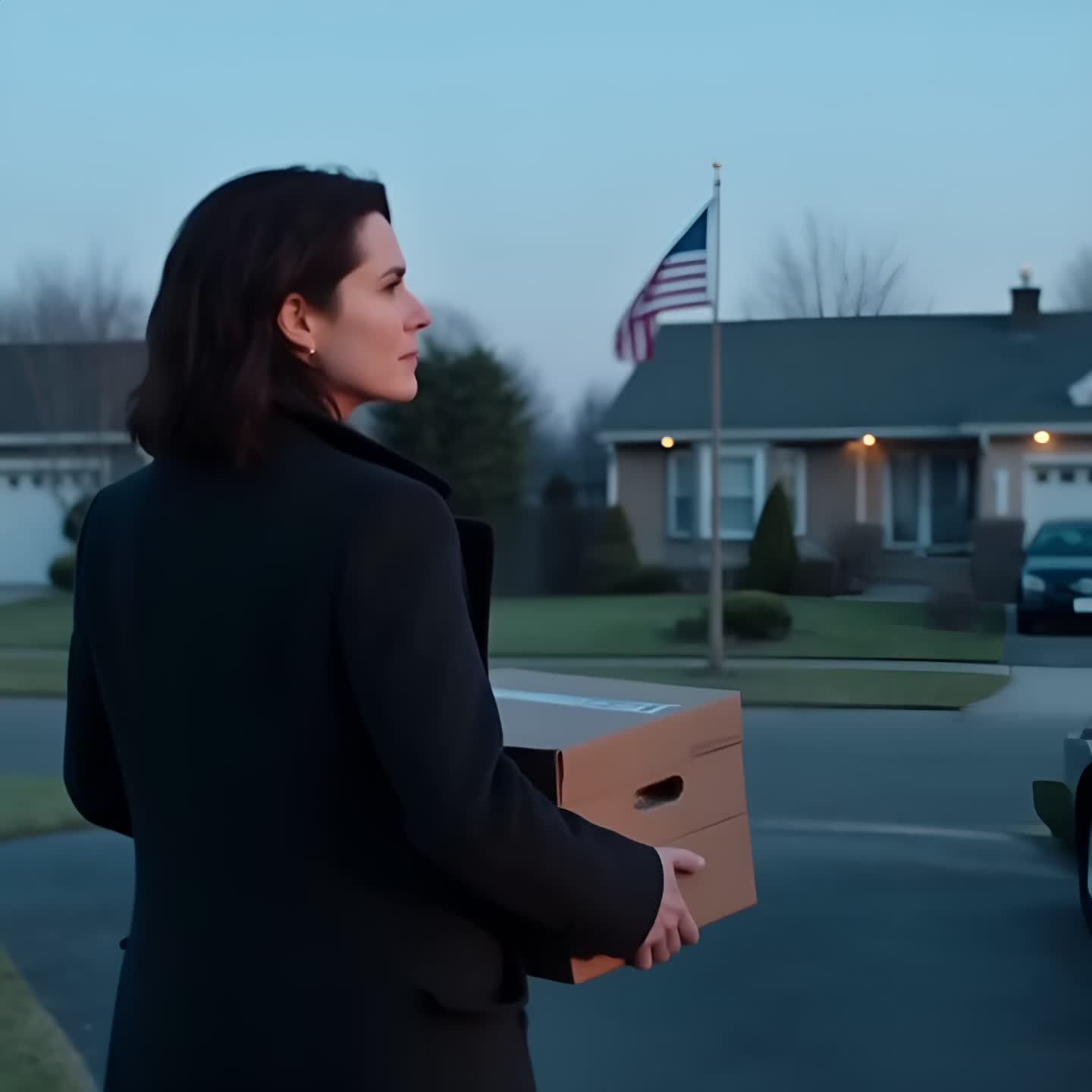
My Mom Said They Couldn’t Afford Two Tickets. So My Sister Got the Room—And I Got a Moving Truck
My mom looked at me with those wide, innocent eyes and said they could only afford one seat on the cruise. My sister was going.
I was expected to be mature about it. They had no idea that while they were packing swimsuits and sunscreen, I was quietly packing up the entire house, receipt by receipt. Sunlight filtered into the dining room of my parents’ house, casting long shadows across the table where I sat across from my mother, father, and younger sister, Lydia.
The Saturday morning air smelled like coffee and the cinnamon rolls my mother had warmed up—comfort food she only brought out when she wanted something or needed to deliver bad news. I should have known right then. My mother announced the 10-day Caribbean cruise with a theatrical flair that would have made a Broadway actress jealous. Her hands moved through the air as she described the Oceanview cabin, the all-you-can-eat breakfast buffet, and the spa credits that came with the premium package. She painted such a vivid picture that I could practically smell the salt air and feel the tropical sun on my skin.
“It sounds amazing,” I said, genuinely happy for them. After the year they’d had—Dad’s health scare in March, Mom’s anxiety about his recovery—they deserved a break.
“When do we leave?”
The atmosphere shifted so abruptly I felt the temperature drop.
My mother’s animated hands froze mid-gesture. My father suddenly became fascinated with his coffee mug. Lydia, my 29-year-old sister who still hadn’t figured out what she wanted to do with her life, looked anywhere but at me.
“Am I going too?” I asked, that simple question hanging in the air like smoke.
The silence didn’t just hang there, it suffocated the room, pressing down on my chest until I had to remind myself to breathe. Instead of a flat rejection, which would have been honest at least, my mother reached across the table and grabbed my hand. Her fingers were warm, her grip tight, and her face arranged itself into an expression of perfectly practiced guilt.
“Hinsley, honey,” she began, her voice dropping to a conspiratorial whisper, dripping with that sweetness she reserved for manipulation disguised as maternal concern. “You know how hard this year has been. The Robinsons next door just got back from Italy. And your father, honestly, he feels like he’s failing us.”
With the cut hours, he feels small. This cruise isn’t just a vacation, it’s about dignity. It’s about showing everyone, showing himself, that he can still provide a premium life for his family.”
She squeezed my hand, looking at me with wet eyes. “The doctor said stress is his worst enemy right now. He needs space to breathe and relax, or I’m afraid he’ll collapse. And the cabin we booked, it’s the deluxe suite. It’s designed for three people, max. Buying a fourth ticket would have tilted the budget from tight to impossible.”
“You understand, don’t you? You’ve always been the sacrifice hitter for this team, Hinsley. We need you to take one for the team so your father can feel like a king for 10 days.”
I wanted to point out that Dad’s need for dignity had never stopped him from inviting his poker buddies over to crowd around the dining table I’d bought. But I stayed quiet. And Lydia, Mom continued, her eyes getting misty on cue.
“She’s so fragile right now. The situation with Trevor really shattered her. She needs this trip to find herself, to heal, to remember who she is without a man defining her.”
Lydia nodded solemnly, playing her role to perfection. Never mind that she’d been the one who cheated on Trevor, or that she’d bounced back within a week by going out clubbing every night. My mother’s phrasing, “the situation,” was a masterclass in rewriting history to make Lydia the victim.
Then came the killing blow, delivered with surgical precision. “You’ve always been the rock, Hinsley, the strong one, the responsible one.”
My mother squeezed my hand tighter. “We knew you’d be the only one mature enough to understand why we couldn’t make it work for four people. You’ll be fine holding down the fort, won’t you? Someone needs to stay here, water the plants, collect the mail, you understand, don’t you, sweetheart?”
It wasn’t a question, it was a command wrapped in flattery, a weaponized compliment designed to silence any protest before I could form one. My father finally looked up from his coffee mug, clearing his throat.
“It’s been a tough year financially, Hinsley, we had to make some hard choices to keep up appearances. But you know we’d bring you if we could afford it.”
The lie sat between us like a third presence at the table. I knew the truth they weren’t saying. I’d seen the credit card statement on the counter last week when I’d been organizing their mail—another one of my unofficial responsibilities. The cruise was charged to a card with an 18% interest rate.
They hadn’t saved for this trip, they’d financed it to impress the neighbors. And when the bills came due in a few months, when Dad’s cut hours and medical expenses made it impossible to pay the minimum, they’d come to me, just like they always did.
I thought about the $300 I’d quietly transferred to their account last November when the heating bill was overdue. The $500 I’d loaned them in February that was never mentioned again. The countless times I’d picked up groceries and never been reimbursed because “you were already at the store anyway.”
But I didn’t argue. I didn’t scream. I didn’t flip the table or throw the cinnamon rolls against the wall, even though every cell in my body wanted to. I simply nodded.
“Of course,” I heard myself say, “I understand. You guys deserve this.”
My mother’s face flooded with relief. “Oh, honey, I knew you’d get it. You’re such a good daughter.”
To understand why I didn’t fight back in that moment, I need to explain the last eight years of my life. At 26, fresh off a layoff from my first real job, I moved back home. It was supposed to be temporary—three months, maybe six. There was no lease, no rental agreement, just a verbal understanding that I’d help where I could while I got back on my feet.
I got back on my feet within four months. I landed my current job as an operations coordinator for a logistics company. It’s not glamorous, and I’m not wealthy, but I make decent money and I’m good with budgets. Really good, but I never left. The “help where I can” evolved like a slow-growing tumor.
First, it was contributing to groceries. Then the internet bill, because you use it the most for your work-from-home days. Then the electricity, because you leave your laptop charging overnight.
Within a year, I was covering three utilities and buying household necessities whenever I noticed we were running low. Then came the furniture. The old sofa collapsed one Saturday morning, springs bursting through the cushions. I bought a replacement—$1,200 for a decent sectional that would last.
The television died during the Super Bowl. I bought a new one—$800 for a smart TV with all the streaming capabilities my parents suddenly couldn’t live without. The washer and dryer gave out two years ago. I replaced them both—$1,000, $500, because my mother said she’d never trust a used appliance again after our old one flooded the laundry room.
Kitchenware, because our old pots were practically antiques. Dining table, because the old one was an embarrassment when we had guests. Small appliances, a new microwave, a coffee maker, a stand mixer.
My mother insisted she needed and used exactly twice—over $15,000 in total.
I’d never added it up until recently, but the number lived in my mind now, a constant reminder. I wasn’t wealthy. I was careful. I saved. I planned. Every purchase was a small sacrifice I told myself was temporary, an investment in family harmony.
Meanwhile, Lydia lived like a bird, floating from one experience to another. She traveled to Mexico, to Colorado, to New York City. She went to concerts and music festivals. She changed jobs the way normal people change socks, never staying anywhere long enough to build savings or stability.
And she was never asked to contribute a single penny, because she needed experiences, and she’s still finding herself. I was 34. Apparently, I’d found myself years ago, and myself was a doormat.
Saturday morning arrived with painful normalcy. The driveway bustled with activity—suitcases being loaded, last-minute items being remembered, my mother’s frantic energy as she triple-checked passports and boarding passes. I stood on the porch, watching the organized chaos like a spectator at someone else’s life.
“Now remember,” my mother said, turning to me with her travel purse already slung over her shoulder. “Water the plants twice a week, the fern is fussy, so check the soil before you water it.”
“Collect the mail daily, I don’t want the box overflowing, and keep the house tidy, please. We’ll be exhausted when we get back, and I’d hate to come home to a mess.”
“Got it,” I said. My father gave me an awkward side hug, the kind that said, I feel vaguely guilty but not enough to change anything. Lydia waved from the passenger seat, already scrolling through her phone. My mother paused at the car door, turning back with that same practiced expression of gratitude and sympathy.
“You’re such a good daughter, Hinsley. You always understand. We’re so lucky to have you.”
The words should have felt like a hug, instead, they felt like chains.
I watched the car back out of the driveway, my mother waving enthusiastically through the window. I stood there until they turned the corner and disappeared, the sound of the engine fading into the quiet Saturday morning sounds of the neighborhood lawnmowers, dogs barking, children playing.
In logistics, we have a term—catastrophic failure point. It’s when a system has been running over capacity for so long that a single minor stressor causes the entire infrastructure to collapse. It’s not about the last straw, it’s about the years of ignored maintenance warnings.
My love for them had been the maintenance crew, patching cracks, ignoring the alarms, keeping the facility running at my own expense. But as I looked at the fern on the windowsill, the fussy, demanding fern, I realized the crew had just quit.
My emotional machinery didn’t break, it simply switched modes. Manual override, engaged. Emotional centers, offline. Operational efficiency, maximum.
I didn’t feel rage. Rage is messy. Rage is inefficient. What I felt was the cold, clarifying calm of a chaotic warehouse finally being organized.
I walked back inside, closed the door, and locked it behind me. The house felt different already. Emptier. Not because they were gone, but because something in me had shifted the moment that car pulled away.
I looked at the fern again. I was not going to water that fern. I was not going to collect the mail, tidy the house, or hold down any fort. I was done understanding.
The silence in the house wasn’t peaceful, it was revealing. For the first time in eight years, I stood in the living room, without the background noise of the television my father always kept on, without my mother’s running commentary about neighborhood gossip or what needed fixing or cleaning, without Lydia’s music bleeding through her bedroom door. Just silence. And in that silence, I could finally hear my own thoughts, without interruption.
I walked through the room slowly, deliberately, like an inspector surveying a property. But I wasn’t seeing a home anymore. I was seeing a ledger, a balance sheet of labor and money I’d never be repaid.
The living room. The sectional sofa I’d bought with last year’s Christmas bonus. $1,200. I remembered the sales associate promising it would last 15 years.
I’d picked a neutral gray because mom said it would go with everything. I ran my hand over the cushions, thinking about the 15 years I was supposed to have with this piece of furniture. The years I’d apparently gifted to people who couldn’t even afford to take me on a cruise.
The entertainment center. The television. $800, purchased over six months of monthly payments because dropping that much cash at once would have destroyed my emergency fund. I’d set up all the streaming services, taught dad how to use the remote, and watched my recommendations fill up with shows I never picked.
The dining room. The table I’d saved three months to buy. Another $600 that somehow never got discussed as my table, but became the family table within a week. I traced my finger along the edge, remembering how proud I’d been when it was delivered. How stupid.
The kitchen. The stand mixer. $300. The new coffee maker. $150. The set of pots and pans. $400, that replaced the embarrassing antiques, my mother complained about.
All of it top quality, because when I buy something, I buy it right. That was my philosophy—invest in good things that last. How ironic that I’d never applied that philosophy to relationships.
The laundry room. The washer and dryer set. $1,500 total, purchased after our old machine flooded the floor, and my mother had a complete breakdown about mold and water damage.
I’d researched models for two weeks, read hundreds of reviews, and picked the most reliable consumer-rated set I could afford. These weren’t just objects anymore, they were evidence.
Evidence of a pattern I’d been too close to see. I climbed the stairs to my bedroom, the smallest of the three, because Lydia needed the bigger one for her creative space, which mostly meant piles of clothes and abandoned hobbies.
I sat at my desk and pulled open the bottom drawer, extracting a navy blue folder I’d kept since college. It was a habit from my work as an operations coordinator. I documented everything. Order numbers, tracking confirmations, delivery dates, warranties.
I filed receipts not because I suspected anything, but because losing documentation drove me crazy. If something broke under warranty, I needed proof of purchase. If a company overcharged me, I needed evidence. It was professional habit, nothing more.
Until now. I opened the folder. Bank statements going back six years, email confirmations from every major purchase, photos of receipts I’d snapped on my phone and forgotten about. Even a few handwritten notes I’d made during particularly expensive months, tracking where my money had gone.
I spread them across my desk, like pieces of a puzzle. Only this puzzle, when assembled, showed a picture I’d been avoiding for years. My exploitation.
Sofa, $1,200. Check.
Television, $800. Check. Washer and dryer, $1,500. Check.
Dining table, $600. Check. Kitchen appliances, $850. Check.
Kitchenware, $650. Check. Monthly utilities I’d been covering.
Internet, $80. Electricity averaged $150. Water during summer months, $60. Over 8 years.
I opened my laptop and created a new Excel spreadsheet.
Column A, item. Column B, cost. Column C, purchase date. Column D, current estimated value.
My fingers moved across the keyboard automatically, that same efficiency I brought to logistics problems at work. This wasn’t emotional anymore. This was data. Data I could quantify, organize, and weaponize.
Total spent, $15,340. The number glowed on my screen like an accusation.
$15,340. That was a decent used car.
That was a year of rent. That was 6 months of savings I didn’t have because I’d been furnishing someone else’s life.
This wasn’t about the cruise. The cruise was just the final insult, the moment the pattern became impossible to ignore. This was about 8 years of being the responsible one, the rock, the daughter who always understands while being systematically drained.
I closed the spreadsheet and sat back in my chair, staring at the ceiling. A water stain shaped like a cloud marked the corner, something I’d noticed 2 years ago and offered to have fixed.
“Don’t worry about it,” Dad had said. “We’ll get to it eventually.”
Eventually never came, but my contributions always did.
The realization didn’t crash over me like a wave. It crystallized, sharp and clear. I needed to leave, not eventually, not after the cruise. Not after having a family meeting where I’d be gaslit into staying for just a little longer. Now, while they were gone. While I had 10 days to execute without interference.
I opened my laptop again, but I didn’t waste time browsing apartment listings or waiting for credit checks that take weeks. I’d learned long ago that residential moves are slow, bogged down by applications, reference checks, security deposit negotiations, and landlords who take forever to respond.
Instead, I pulled up my corporate contacts from work. Our logistics company partners with corporate housing providers, furnished executive suites, designed for relocated employees, traveling consultants, people in transition, who need move-in ready solutions immediately.
I scrolled through my saved emails until I found it. Coastal Executive Suites. I’d booked accommodations there for visiting regional managers at least a dozen times. I knew their process.
I knew their turnaround time. And I knew they valued corporate relationships, which meant minimal paperwork and fast approval.
I called the direct line, bypassing the website entirely. Coastal Executive Suites, this is Marcus.
“Hi Marcus, this is Hensley Graham with Davidson Logistics. I need an emergency 30-day booking for myself, personal situation. What do you have available for immediate occupancy?”
“Let me check. We have a one-bedroom ocean view suite available now. It’s $2,500 for the month, all utilities included, fully furnished, kitchen stocked with basics. Would need a credit card hold and your corporate employee ID for verification.”
$2,500.
It was expensive, almost double what I’d pay for a regular apartment. But I had a secret weapon, an emergency fund I’d been quietly rebuilding since the washer and dryer disaster two years ago, specifically for a catastrophic event.
I just didn’t realize until now that the catastrophic event would be my own liberation.
“Perfect. I’ll take it. How quickly can you have the paperwork ready?”
“Give me two hours, I’ll email everything over.”
I hung up and stared at my phone. Two hours. In two hours, I’d have a place to go.
A place that was mine, where I didn’t owe anyone anything, where the furniture belonged to the rental company and I could walk away when the lease ended without leaving thousands of dollars behind.
My hands weren’t shaking. They should have been, this was the biggest decision I’d made in years, but they were steady. This was how I operated under pressure at work. Identify the problem, find the most efficient solution, execute without emotion.
Hesitation was the enemy of logistics.
I spent those two hours not panicking, but planning.
I pulled up a mental inventory of what I actually needed to take. My clothes, my laptop, my documents, my personal items, everything else in this house—the furniture, the appliances, the kitchenware—belonged to me by purchase, but they could stay.
Let them keep it. Let them realize exactly what I’d provided the moment it was gone.
No, wait, not everything would stay. I walked back downstairs, through each room, taking mental notes.
The sofa stays. The TV stays. The washer and dryer stay. But I’d take the coffee maker, the good one, the one I bought because I actually like good coffee. I’d take the stand mixer my mother used twice. I’d take half the kitchenware, the pieces I actually used when I cooked for myself.
No, wrong approach. That was thinking like someone who still cared about being fair.
New strategy. I’d take everything I bought. Everything with a receipt. Everything I could prove was mine. And I’d leave behind only what I felt generous enough to leave.
My email pinged. The rental agreement from Coastal Executive Suites, ready for digital signature.
I read through it carefully—occupational hazard—before signing. Move-in date: Tuesday.
That gave me three days to execute the move during normal business hours, when none of the neighbors would question a moving truck.
I set up mail forwarding online, effective Tuesday. My bank, my insurance company, my credit cards—everything routed to the new address. On Sunday afternoon, sitting in my bedroom with signed contracts and a moving date secured, I felt something I hadn’t felt in years. Control.
I wasn’t the daughter helping out anymore. I wasn’t the rock, the responsible one, the mature person who always understands. I was Hinsley Graham, operations coordinator, and I was executing the most important logistics operation of my life. Extracting myself from people who’d mistaken my competence for compliance.
The plants could die. The mail could pile up. The house could sit empty and waiting. I had a beach-view suite to move into, and ten days to disappear before they ever knew I was gone.
Two days later, on a Tuesday morning that felt suspiciously ordinary, the quiet of the neighborhood was shattered by the low rumble of a professional moving truck backing into my parents’ driveway. I had scheduled the movers for 8 a.m. sharp—early enough that most of the neighbors would already be at work, but late enough that I wouldn’t look like I was sneaking around in the dark.
The physical dismantling of my parents’ house began with surprising efficiency. The crew chief, a stocky man with weathered hands and a clipboard, approached me at the front door.
“Everything marked goes?” he asked, scanning the interior with professional indifference.
I nodded, my throat tight but my resolve iron-clad.
“Everything with a yellow tag. Nothing else.”
And… I had spent Sunday afternoon walking through the house with a roll of bright yellow stickers, methodically marking every single item I had purchased over the past 8 years. The sofa, where my mother held court during her phone marathons, yellow tag. The flat-screen television my father watched for hours while I cooked dinner after work, yellow tag. The dining table where Lydia never helped clear dishes, yellow tag. The matching chairs, the washer, the dryer, the stand mixer in the kitchen, the coffee maker, the microwave, the bookshelf in the hallway, even the shower curtain in the main bathroom.
Yellow tags everywhere, like a bizarre treasure hunt in reverse. The movers worked with the kind of practiced rhythm that comes from years of breaking down lives and reassembling them elsewhere. They wrapped the $1,200 sofa in thick blankets, securing it with industrial-strength tape. The $800 television was carefully nestled into a custom box. The washer and dryer, $1,500 as a set, were dolled out on reinforced hand trucks, their white surfaces gleaming in the morning light as they rolled down the front walk.
I stood in the doorway, arms crossed, watching the systematic erasure of 8 years of financial servitude. Each item that disappeared into the truck was a weight lifted from my chest.
The dining table. The chairs. The area rug from the living room. The kitchen appliances. The bedding from the guest room I had occupied before moving out years ago. The towels. The cookware.
All of it. Gone.
I had intentionally left behind the items I didn’t pay for—the things that existed in the house before I became the family ATM. My father’s old, worn-out recliner sat in the corner, its brown fabric faded and pilling at the arms. A cheap brass lamp my mother had owned since the ’80s stood on the floor beside it, its shade yellowed with age. Some dusty decorative pieces, ceramic figurines, and fake plants remained on the mantle, untouched by yellow tags. Those things weren’t mine to take. I wasn’t a thief. I was simply reclaiming what belonged to me.
As the movers cleared the living room, the space transformed before my eyes. What had once been cluttered and suffocating became vast and hollow. The hardwood floors, usually hidden beneath furniture and rugs, stretched out bare and scuffed. Dust bunnies cowered in the corners where the sofa had stood. The walls looked naked without the television mounted on the center wall.
And there, in the midst of all that emptiness, sat my father’s recliner. I stared at it for a long moment, feeling something sharp and complicated twist in my chest. That chair, that pathetic, threadbare chair, was the only real furniture left in the entire living room. It looked absurd sitting there alone, a monument to dysfunction.
An idea struck me with the force of poetry. I walked across the empty room, my footsteps echoing in the hollow space. Bending down, I gripped the sides of the recliner and began to drag it toward the center of the room. The old chair protested, its legs scraping against the floor with an awful screech, but I persisted.
When I reached what I estimated to be the exact center of the living room, I stopped. With precise, deliberate movements, I straightened the chair. I adjusted it left, then right, eyeing the angles from different positions in the room until it was perfectly centered.
I stepped back, studying my work with the critical eye of an artist evaluating a gallery installation. There. Perfect. The recliner sat alone in the vast, empty void like a throne in an abandoned kingdom. It was a visual representation of the irony that had defined my life for nearly a decade.
I had just treated that worthless chair with more care, more respect, and more consideration than my parents had ever shown me.
The room didn’t feel sad. It felt honest.
“That’s the last of it,” the crew chief called from the front door. “We’re heading to the executive suite now.”
“You following us there?”
“Yes,” I said, taking one last look around.
“I’ll be right behind you.”
My friend Paige Holloway met me at the executive suite to help me settle in. She arrived carrying two iced coffees and wearing her trademark leather jacket, her auburn hair pulled back in a messy bun. Paige had been the first outsider to validate my reality when I finally confessed the extent of my family’s financial exploitation months ago.
“Holy hell, Sadie,” she breathed, stepping into the furnished apartment. “This place is gorgeous.”
It really was. Floor-to-ceiling windows overlooked a slice of ocean in the distance. The kitchen had granite countertops and stainless steel appliances. The bedroom was spacious enough for a queen bed and a proper dresser. The furniture I’d brought from my parents’ house—my furniture—fit perfectly in the living room.
As we unpacked boxes in the new space, arranging throw pillows and hanging artwork, my phone buzzed on the kitchen counter. I glanced at the screen. Mom. Mobile.
My stomach clenched. They were calling from the cruise, probably checking if I had watered their ridiculous plants like the obedient daughter they assumed I’d always be. I stared at the screen, watching it light up and vibrate with each ring.
Paige looked over, saw the name, and raised her eyebrows in silent question. I shook my head. The phone rang and rang until it finally went to voicemail. Seconds later, it buzzed again.
A voicemail notification. I didn’t listen to it. I turned the phone face down on the counter and went back to unpacking.
“You okay?” Paige asked quietly.
“I’m perfect,” I said, and I meant it.
I spent the rest of the week settling into my new life. The executive suite became my sanctuary, a place where nobody demanded anything from me, where I could eat cereal for dinner if I wanted, where the only person I had to answer to was myself.
The peace was terrifying at first. I kept expecting my mother to call with some emergency, some crisis that required my immediate financial intervention. I kept anticipating my father’s guilt-tripping texts about his health. But my phone stayed quiet. They were on a cruise ship somewhere in the Caribbean, blissfully unaware that their safety net had vanished.
Every morning, I woke up in my own space. I made coffee in my own coffee maker. I sat on my own sofa and looked out at the ocean. At work, I focused on logistics reports and shipping schedules with a clarity I hadn’t felt in years. Mark Feldman, my manager, commented that I seemed different, lighter, somehow.
“Big changes,” I said vaguely, and he didn’t press.
But despite the peace, despite the rightness of what I had done, I couldn’t fully relax. The clock was ticking. As Sunday evening approached, I found myself standing at my apartment window, watching the sky turn a bruised purple. Somewhere out there, a plane was landing, a cruise ship was docking.
My parents and Lydia were returning to reality. I was safe in my new apartment, surrounded by my own belongings and my own choices. But I knew with the absolute certainty of someone who had spent 34 years learning the patterns of dysfunction that the storm was about to make landfall.