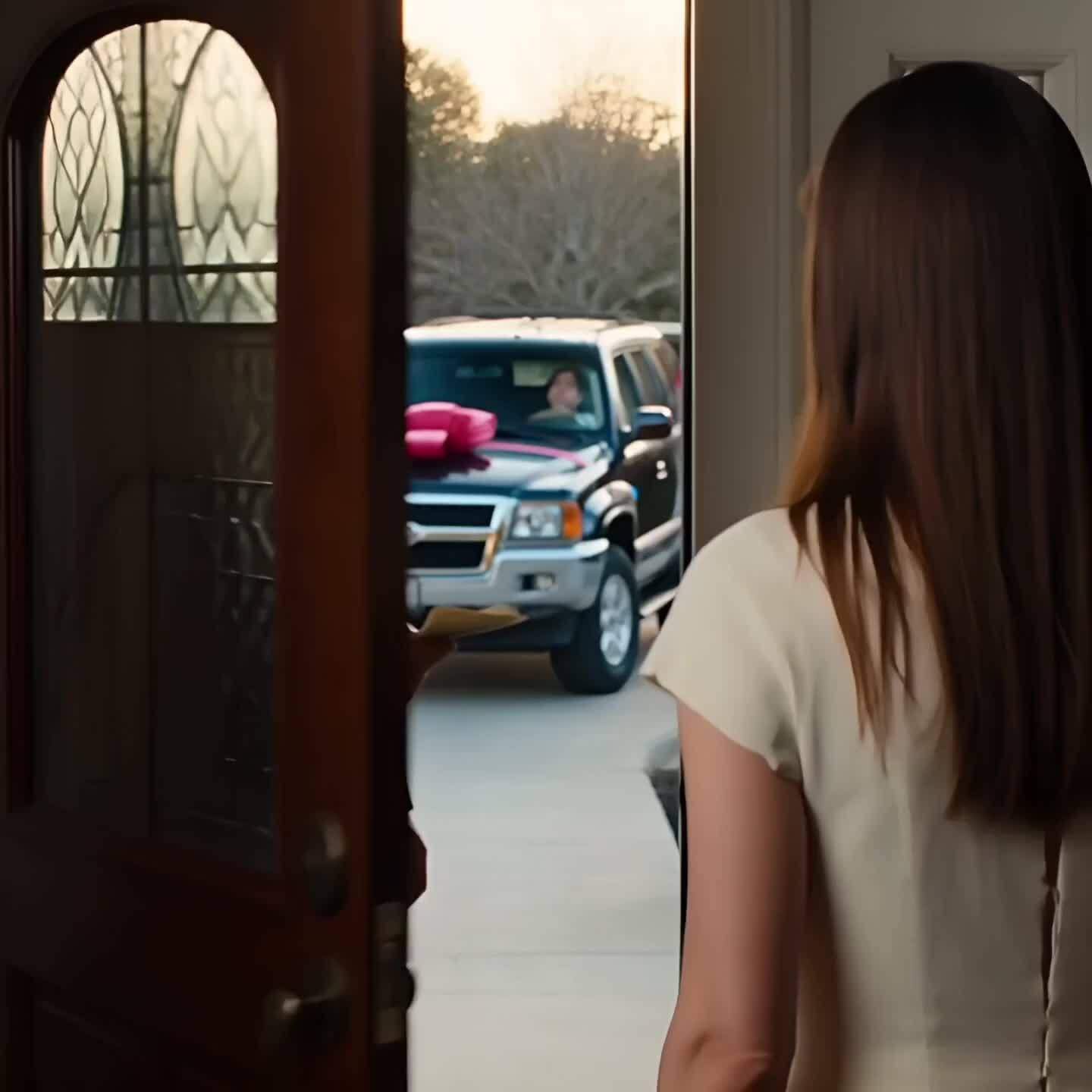
That night, my father handed my brother keys to a brand new car while the whole family cheered. Then he turned to me and quietly pressed a bill into my hand for $900 in back rent. I did not cry or argue. I just smiled, but something slammed shut inside me. I walked out, leaving only a single note behind. That piece of paper would eventually crack our family’s foundation in ways none of them ever expected.
My name is Kylie Foster. I am thirty-four years old, and my official title at the Northgate Family Advocacy Center is Lead Coordinator. In plain English, that means I spend forty hours a week sitting across from people whose lives have just detonated. I help them navigate the wreckage of domestic disputes, sudden evictions, and the kind of quiet, suffocating financial crises that happen behind closed doors in nice neighborhoods. I am the person who hands them a tissue, looks them in the eye, and says, “We have a plan.” I am professional. I am steady. I am the one who fixes things. But on a humid Saturday evening in Raleigh, North Carolina, standing in the living room I had grown up in, I realized that I had absolutely no plan for myself.
The house was vibrating with noise. My parents had invited what felt like half of Wake County to celebrate my younger brother Evan’s college graduation. The air conditioning was fighting a losing battle against the body heat of thirty relatives, and the air was thick with the smell of slow-cooked pulled pork, cheap cologne, and sweet tea. My Aunt Linda was laughing her shrill, piercing laugh in the corner, clutching a glass of white wine while my cousins chased each other around the dining table, narrowly missing the deviled eggs my mother had spent three hours piping perfectly. I was standing near the sliding glass door, nursing a lukewarm soda, watching Evan. He looked good. He had that fresh, unburdened look of someone who had never really been told no. He was wearing a crisp button-down shirt that my mother had ironed for him, and he was holding court near the television, recounting a story about his final exam week. Everyone was listening. Everyone was smiling.
“Attention, everyone. Attention, please.” My father’s voice cut through the din. Frank Foster did not ask for silence; he commanded it. He stood by the fireplace, a glass of bourbon in his hand, his face flushed with the kind of pride that always seemed to stop just short of including me. The room went quiet. The cousins stopped running. Aunt Linda stifled her laugh.
“We are here today,” my father boomed, his chest puffing out, “to celebrate a milestone. Four years of hard work. Four years of grit.” He looked at Evan, and his expression softened into something genuinely adoring. “Evan, son, come over here.” Evan walked over, grinning, playing the part of the humble hero perfectly. He stood next to Dad, looking young and capable. “Your mother and I know it hasn’t been easy,” Dad continued, raising his glass. “We know the late nights. We know the pressure. And we believe that hard work deserves a reward. Real effort deserves real recognition.”
My stomach gave a small, involuntary lurch. I clapped my hands together, locking my knees to keep standing straight. I knew this speech. I knew the cadence of it. “We wanted to get you something to start your next chapter right,” Dad said. He reached into his pocket. The room held its breath. He pulled out a key fob. It was heavy, black, and shiny. “It’s in the driveway, son,” Dad said, his voice thick with emotion. “2024 SUV. Zero miles. It’s yours.”
The room absolutely erupted. My mother, Janine, let out a squeal of delight and clapped her hands to her cheeks. Evan looked stunned, his jaw actually dropping before he let out a whoop of joy and hugged Dad. It was a bear hug, a violent embrace of male bonding and triumph. “No way!” Evan shouted. “No way, Dad. Are you serious?”
“Go look!” Dad laughed, slapping him on the back. The entire party surged toward the front door like a tide. They spilled out onto the lawn, oohing and ahhing. Through the bay window, I could see it: a charcoal gray SUV wrapped in a giant red bow that must have cost fifty dollars on its own. It was a beast of a machine—leather seats, sunroof, the works. It was the kind of car you buy for a man with a career, not a boy with a fresh bachelor’s degree in General Studies.
I stood by the window, clapping. I forced the corners of my mouth up, but inside I felt that familiar sharp sting. It was an old pain, like a piece of shrapnel left in the bone. I remembered my own graduation from UNC Chapel Hill. I had graduated with honors. I had paid for half my tuition by working nights at a diner. At my ceremony, Dad had been there physically, but I remembered looking into the crowd as I walked across the stage, desperate to catch his eye. He had been looking down at his BlackBerry, scrolling through emails. Afterward, we had gone to a chain restaurant for dinner. Dad had complained about the service, and when the check came, he made a joke about how expensive smart kids were. There was no speech. There was no gift. Just a pat on the shoulder and a suggestion that I start looking for a job immediately so I wouldn’t lose momentum.
I shook the memory off. This isn’t about you, Kylie, I told myself. Be happy for Evan. I turned to follow the crowd outside, thinking I should at least touch the car, offer my congratulations, and play the role of the supportive big sister.
“Kylie.” My father’s voice stopped me. He hadn’t gone outside. He was standing in the archway between the living room and the kitchen. The smile was gone from his face. The warmth he had radiated toward Evan ten seconds ago had evaporated, replaced by the flat, transactional look he usually reserved for telemarketers. “Come here a second,” he said. It wasn’t a request.
I walked over. “Yeah, Dad. The car is amazing. Evan is going to flip when he sees the interior.”
Dad didn’t acknowledge my comment. He walked into the kitchen and leaned against the granite island. The noise from the front yard was muffled here—distant cheers and the honk of a car horn. “I have something for you, too,” he said. For a split second—a foolish, microscopic second—hope flared in my chest. Had he remembered? Did he realize the disparity? Was he going to hand me a check, or maybe just a card telling me he was proud of how hard I worked at the advocacy center? He reached into his back pocket and pulled out a folded piece of paper. It wasn’t an envelope. It was a piece of lined notebook paper torn from a spiral pad. He held it out to me. I took it. I unfolded it. My brain took a moment to process the handwriting. It was Dad’s scrawl, messy and jagged.
Rent $900. Due Sunday.
I stared at the number 900 written out in blue ink. “I don’t understand,” I said, my voice barely a whisper. I looked up at him. “Is this a joke?”
Dad crossed his arms over his chest. He looked calm, righteous even. “You have been staying here for six months, Kylie, since you moved back from your apartment to save for your master’s program. You are thirty-four years old.”
“I know how old I am,” I said. “But we talked about this. You said I could stay rent-free for a year so I could bank my salary for tuition. That was the agreement. That’s why I’m sleeping in the guest room and handling all the groceries.”
“Plans change,” Dad said, shrugging. He picked up a grape from a fruit platter and popped it into his mouth. “Nine hundred is fair market value for a room in this neighborhood. Honestly, I’m giving you a family discount. But you’re an adult. Adults pay their share. You can’t just ride for free forever.”
“Ride for free?” I repeated. The words tasted like ash. “Dad, I paid to fix the water heater last month. I pay for the internet. I do the grocery shopping every Tuesday.”
“That’s chipping in,” he said dismissively. “That’s not rent. I need the cash by Sunday. Tomorrow.”
I looked past him through the kitchen window that overlooked the driveway. I could see Evan sitting in the driver’s seat of the new SUV. He was gripping the steering wheel, laughing, his face illuminated by the dashboard lights. Mom was leaning in the passenger window, beaming at him. It was a picture-perfect scene of American success and parental love. And here I was, standing in the kitchen, holding a handwritten invoice like a delinquent tenant. The contrast was so violent it made me dizzy. Evan got a $40,000 machine because he managed to pass his classes. I got a bill for existing.
“You just bought him a car,” I said softly. I didn’t shout. I didn’t want to give him the satisfaction of seeing me lose control. “You just handed him a luxury vehicle free and clear, and you’re charging me rent retroactively.”
Dad’s eyes narrowed. “Don’t count your brother’s money. That’s ugly, Kylie. Evan needs a leg up. He’s starting out. You—you’re established. You have a job. It’s time you stepped up.”
Stepped up. The phrase hung in the air. I looked at the paper again. Due Sunday. I could have fought. I could have screamed that it was unfair. I could have listed every single thing I had done for this family, every form I filled out for them, every appointment I scheduled, every dollar I quietly contributed. I could have cried. But something inside me went cold. It was a distinct physical sensation, like a shutter slamming down over a window. If I argued, I would be the jealous sister. If I cried, I would be the emotional daughter. If I refused, he would make a scene, and I would look ungrateful in front of the whole family. He was waiting for it. He was braced for the argument. He wanted me to beg so he could be the benevolent dictator who might grant an extension.
I looked him dead in the eye. I folded the paper neatly along the crease. I put it in my pocket. “Okay,” I said.
Dad blinked. He uncrossed his arms. This wasn’t the script. “Okay? You want $900 by Sunday?”
“I said okay.” My voice was steady. Terrifyingly steady.
“Well,” Dad stammered slightly, thrown off balance. “Good. I’m glad you’re being sensible about this. It’s for your own good, Kylie. Teaches responsibility.”
“Sure,” I said. I turned around and walked out of the kitchen.
I didn’t go outside to congratulate Evan. I didn’t go back to the living room. I walked straight down the hallway, past the photos of Evan playing varsity football, past the photos of Evan at prom, to the small guest room at the back of the house. I closed the door and locked it. The sounds of the party were muffled now, a dull roar in the distance. I sat down on the edge of the twin bed. I didn’t turn on the light. I just sat there in the gray twilight, listening to my own breathing. The money wasn’t the problem. I had $900. I had been saving aggressively, just like I promised. I could write him the check right now. But it wasn’t about the money. It was the message. It was the absolute clarity of where I stood. I wasn’t a member of the family to be celebrated. I was a resource to be harvested. I was a tenant. Evan was the investment; I was the overhead cost.
I took a deep breath, and the smile I had forced onto my face earlier finally dropped. I felt hollowed out. I reached for my laptop bag. I needed to look at my finances. If I was going to pay him, I needed to move money from my high-yield savings account to my checking account. I opened the laptop, the screen glowing bright blue in the dark room, and logged into my bank portal. My eyes scanned the familiar numbers: the savings for grad school, the emergency fund.
Then I saw it. There was a notification icon in the top right corner of the banking dashboard. A small red bell. I frowned. I rarely got notifications unless a statement was ready. I clicked it. A message dropped down.
New Inquiry Alert. A credit inquiry was made on your file today by Allied Auto Finance.
My hand froze on the trackpad. Allied Auto Finance. I hadn’t applied for a car loan. I drove a ten-year-old sedan that was fully paid off. I hadn’t applied for credit in three years. I clicked for more details. The blood drained from my face, leaving my hands ice cold. The inquiry wasn’t just a check. It was a hard pull, and it was linked to a joint application. I looked up at the window. Outside, I could hear the engine of the new SUV revving. I heard my father’s booming laugh as he slapped the hood of the car. “Hard work deserves a reward,” he had said. I looked back at the screen, at the words Joint Applicant, and the coldness in my chest spread until I couldn’t feel my fingers.
The bill for $900 wasn’t the insult. It was the distraction. The notification on my screen was a glowing red pixel, but it felt like a burning ember sitting on top of my financial stability. I stared at it. Allied Auto Finance. The name meant nothing to me yesterday. But tonight, in the dim light of my bedroom, it looked like a threat. I closed my eyes for a moment, trying to regulate my breathing. This is what I did at work. When a client came in hyperventilating because their landlord had changed the locks, I was the one who told them to breathe. I was the one who de-escalated. But there was no one to de-escalate me.
To understand why I did not immediately storm out of the room and scream at my father, you have to understand the architecture of the Foster family. It was not built on malice; it was built on a very specific, silent classification system that had been in place since I was five years old. In our house, there were two distinct categories for children. There was Evan, who was allowed to be human, and there was Kylie, who was required to be functional.
I remember when I was twelve and Evan was eight. He had thrown a baseball through the neighbor’s greenhouse window. It was a complete accident, a wild pitch from a boy who just wanted to play catch. My father had gone over, apologized, paid for the glass, and then taken Evan out for ice cream because the poor kid was traumatized by the neighbor yelling at him. Dad had held Evan’s shoulder and told him that mistakes were how we learned. Two years later, I brought home a report card with an A-minus in AP History. It was the only grade below a solid A. My father did not yell. He did not withhold dinner. He just looked at the paper, then looked at me, and set it down on the table without a word. The silence lasted for three days. It was a heavy, suffocating silence that told me I had failed to maintain the standard. I wasn’t just a child learning. I was an investment that was underperforming.
That dynamic never shifted. It only calcified. By the time we reached college age, the gap was a canyon. I applied for scholarships like it was a full-time job. I spent my high school weekends writing essays about community service and leadership, terrified that if I did not secure my own funding, I would not go. When I got a partial scholarship to UNC, I took a job waiting tables at a 24-hour diner to cover the rest. I remember coming home on breaks, smelling like grease and maple syrup, counting my tips on my bedspread. Evan, on the other hand, did not worry about tuition. When he failed two classes his sophomore year, it was treated as a family emergency. Dad called a strategy meeting at the dining room table. Mom made Evan’s favorite lasagna. They discussed tutors. They discussed academic burnout. They discussed how hard it was for young men these days. They wrote a check for a private academic coach. I was sitting at the same table reading a textbook for a class I had paid for myself, and no one asked me how my semester was going. They assumed I was fine because I was always fine. Being fine was my curse.
When I moved back home six months ago, it was supposed to be a strategic retreat. I wanted to get my master’s degree in Social Work. The plan was simple: live in the guest room, save every penny from my salary at the advocacy center, and move out in a year with enough cash to pay for grad school without drowning in loans. But nature abhors a vacuum, and my parents abhorred administrative tasks. Because I was there, and because I was good at details, I became the household manager by default. It started small. Mom asked me to look over the cable bill because she thought it was too high. I called the company, negotiated a lower rate, and set up autopay. “Oh, Kylie, you are a lifesaver,” Mom had said, beaming. “Dad just gets so frustrated with those automated menus.” Then it was the car insurance. Then it was scheduling the contractor to fix the deck. Then it was figuring out why the printer wasn’t connecting to the Wi-Fi.
I remember one afternoon clearly: the water heater had blown a gasket. Water was leaking into the garage. Dad was at work, and Mom was in a panic. I left work early, losing three hours of hourly pay, to meet the plumber. The bill was $350. The plumber needed payment immediately. Mom didn’t have her purse; she was out at lunch with her friends. I paid it. I swiped my debit card. When I told Dad about it later, he clapped me on the shoulder. “Good lookout, kiddo. That could have been a disaster.” He never paid me back, and I never asked. It felt petty to ask for $350 when I was living there rent-free. That was how I rationalized it. I told myself I was contributing. I told myself this was my way of saying thank you. But looking back now, sitting in the dark, I realized it wasn’t a contribution. It was a tax.
Mom had a favorite phrase she used whenever she dumped a responsibility on me that should have been Evan’s or Dad’s. She would lower her voice, lean in conspiratorially, and say, “You know, Dad just trusts you more with this stuff. He knows you’ll get it right.” It sounded like a compliment. It tasted like praise, but it was actually a shackle. It was a way to make my servitude feel like an honor. Dad trusts you more meant Dad doesn’t want to deal with this, and he knows you won’t say no.
In the weeks leading up to this graduation party, the disparity had become almost comical. The house was in chaos. Mom was obsessed with the guest list, fretting over whether Aunt Linda would be offended if we invited the neighbors. She spent hours on the phone debating tablecloth colors. Dad was different. He was secretive. I would come home from work and find him in the garage, the door closed. If I tried to go in, he would crack the door and tell me to go inside, saying he was organizing. I thought he was building something—maybe a bookshelf for Evan’s new apartment, maybe fixing up an old piece of furniture. Meanwhile, I was the labor force. “Kylie, can you pick up the ice? We need ten bags.” “Kylie, the guest bathroom grout looks dingy. Can you scrub it?” “Kylie, can you design the invitations? You’re so good with computers.”
I did it all. I scrubbed the grout until my knuckles were raw. I designed the invitations. I drove across town in rush-hour traffic to get the specific brand of craft beer Dad wanted for the toast. I did it because I wanted Evan to have a good day. I loved my brother. He was sweet in an oblivious, golden retriever sort of way. He wasn’t malicious. He was just the beneficiary of a system he didn’t realize existed. But tonight, the veil had been ripped away. The request for $900 in rent was not about money. My father had just spent $40,000 on a car. He did not need my $900 to keep the lights on. He charged me because he could. He charged me because, in his mind, my presence in the house was a transaction, whereas Evan’s presence was a joy. I was a tenant who had overstayed her welcome. Evan was the heir apparent.
I tried to play a game with myself to stop the tears from stinging my eyes. I tried to remember the last time my father gave me a gift that was chosen specifically for me. Not a gift card to Amazon. Not a generic sweater that Mom bought and he just signed the tag on. A gift from him. I thought back to Christmas. He gave me a roadside emergency kit. “Because you drive that old clunker,” he had said, practical and cold. I thought back to my birthday: a handshake and a dinner at a steakhouse where he spent the whole meal talking about his golf handicap. I could not remember a single object, a single gesture, that carried even ten percent of the emotion he had just poured into that SUV key.
It wasn’t that they had forgotten me. That would have been less painful. Being forgotten implies an accident. This was deliberate. They remembered me exactly when they needed something fixed or paid for or organized. They had become so accustomed to my competence that they had stopped seeing it as labor. They saw it as my natural state. I was the utility company. You don’t send a thank you card to the electricity provider. You just expect the lights to turn on. And now, the utility company was being billed.
I turned my attention back to the laptop screen. The Allied Auto Finance alert was still there, pulsing like a heartbeat. I clicked on the details again. I needed to be sure. I needed to be absolutely certain before I let the monster in my chest loose. The inquiry date was three days ago. That was Tuesday.
Tuesday. I froze. On Tuesday, Dad had called me at work. He sounded rushed. He said he was updating the family’s umbrella insurance policy and needed to verify some of my information since I was currently living at the address. He asked for my social security number to confirm the beneficiary status. I had given it to him. I was in the middle of a meeting with a sobbing mother who had just lost custody of her kids. I was distracted. I trusted him. He was my father. He said it was for insurance.
I looked at the screen. The application wasn’t for insurance. It was a credit application for a vehicle loan. Primary Applicant: Evan Foster. Co-signer: Kylie Foster.
The room seemed to tilt sideways. It wasn’t a gift. The car wasn’t a gift. It was a loan. A massive loan. And because Evan had no credit history and a part-time job at a gym, he couldn’t qualify for a $40,000 vehicle on his own. Dad hadn’t bought the car. He had financed it. And he hadn’t used his own credit. He had used mine.
I sat back, the breath leaving my lungs in a rush. The $900 rent bill was a slap in the face. It was insulting, sure, it was hurtful, but this—this was different. Using my identity to secure a loan for a car that was then presented as a gift to my brother… that wasn’t just favoritism. That was fraud. That was a financial bear trap set in my own home, baited with my own trust. I looked out the window again. The party was winding down. I could see the silhouette of the new SUV in the moonlight. It didn’t look like a prize anymore. It looked like a weapon. My father thought he was clever. He thought he could bully me with a rent bill to keep me submissive while secretly leveraging my financial future to prop up his golden boy. He thought I would just say “Okay” to this, too. He thought I would be the good daughter who fixed things.
I closed the laptop slowly. The click of the lid latching sounded like the cocking of a gun. If the $900 was the price of admission to this family, I was done paying. But I wasn’t just going to leave. Not with my name on a $40,000 debt I never signed for. I reached for my phone. I didn’t call the police. Not yet. I needed evidence. I needed a paper trail that was undeniable. I opened a new browser tab and typed in the URL for the credit bureaus. I was going to freeze everything. I was going to lock my identity down so tight that my father wouldn’t be able to buy a pack of gum in my name. My hands were shaking, but not from sadness. The sadness was gone, replaced by a cold, crystalline rage. He wanted me to pay rent? Fine, I would pay. But he was going to pay for that car in a way he never imagined. I looked at the “Rent Due” note still sitting on my bedside table. I picked it up and crumpled it in my fist. That note was about to become the least of his problems.
The morning sun hit the driveway at 9:00 AM, illuminating the scene of the crime. From behind the slats of my blinds, I watched the performance begin. My father was already outside wearing his best polo shirt, walking around the charcoal gray SUV with a microfiber cloth in his hand. He was wiping invisible specks of dust from the hood, treating the metal like it was holy. Evan came out a moment later, sunglasses on, looking every inch the golden boy ready to claim his inheritance. They were going on a victory lap. The plan, which I had overheard through the thin walls of the hallway, was to drive over to Uncle Mike’s house, then to the country club to show off the new wheels to Dad’s golf buddies. My mother was fluttering around them, handing them travel mugs of coffee. She was smiling, but it was that tight, brittle smile she wore when she was trying to manifest happiness through sheer force of will. She looked toward my window once, her expression faltering for a fraction of a second, before she turned back to wave at her men.
I stood perfectly still in the shadows of my room. I was not hiding. I was waiting. I needed them gone. If I walked out while they were there, it would turn into a scene. Mom would cry and ask why I was being dramatic. Dad would cross his arms and talk about how I was ruining Evan’s moment. Evan would look confused and guilty, which would make me soften, and I could not afford to soften. Not today.
The SUV engine roared to life. It was a deep, throaty sound, aggressive and expensive. I watched them back out of the driveway—Dad in the passenger seat pointing out features on the dashboard, Evan nodding enthusiastically. Mom stood on the porch waving until they turned the corner. Then she went back inside to start her garden club preparation.
I gave it ten minutes. I wanted to be sure they were on the highway. Then I began to move. I did not pack with anger. Anger is messy. Anger makes you throw things and forget toothbrushes. I packed with the cold precision of a crime scene cleaner. I pulled my two large suitcases from the top shelf of the closet. I unzipped them, the sound tearing through the silence of the room like a rip in fabric. I started with the closet. I only took what I had purchased: the blazers I bought for interviews, the jeans I bought with my first paycheck from the advocacy center, the shoes I had ordered online. I left the dress Mom had bought me for Easter three years ago. I left the scarf Aunt Linda gave me. I left anything that felt like it had strings attached.
I moved to the desk. This was the most important part. I gathered my birth certificate, my passport, and my social security card from the small lockbox I kept in the bottom drawer. I took my external hard drive. I took my laptop. I swept my charging cables into a pouch. Then I stopped and looked at the bookshelf. There was a framed photograph of the four of us from a vacation to the Outer Banks five years ago. We were all tanned and smiling. In the photo, Dad’s arm was around Evan. Mom was leaning into Dad. I was standing slightly to the side, half a step away from the core unit, holding the beach bag that contained everyone’s towels and sunscreen. I reached out and touched the frame. For a moment, the old instinct kicked in. Take it. It’s a memory. But then I looked at my reflection in the glass. I looked tired. I looked like a ghost haunting her own life. Memories do not keep you warm. Memories do not pay the bills. And memories certainly do not justify identity theft. If the love in a family only flows in one direction, it is not a bond. It is a drainage system.
I left the photo. I left the little ceramic trinkets I had collected since high school. I left the graduation teddy bear on the shelf. I stripped the bed sheets I had bought, folded them, and put them in the bag. I wanted to leave the room as bare as a prison cell. I wanted them to walk in here and feel the vacuum of my absence.
When the bags were zipped and standing by the door, I took out my phone. My hands were steady. I dialed Tasha Monroe. Tasha picked up on the second ring.
“Hey girl, you okay? You sound quiet.”
“I need a place to sleep,” I said. “Tonight. Maybe for a few nights.”
There was no pause. There were no questions. Tasha did not ask what happened, or did you get in a fight, or is this about the guy. That is the difference between family by blood and family by choice.
“Key is under the mat,” Tasha said. “I am at the clinic until six. Take the guest room. There is wine in the fridge and leftover pizza on the counter. Don’t explain anything until you are ready.”
“Thank you,” I said.
“Just get here safe,” she said and hung up.
I put the phone in my pocket. Now came the final step. I walked out of the bedroom and down the hall to the kitchen. The house was silent, save for the hum of the refrigerator. It smelled of coffee and cleaning spray. It was a smell I had known my entire life, a smell that used to mean safety. Now it just smelled like a trap. I went to the counter where we kept the notepad and pens. This was the command center of the house. This was where Mom wrote her grocery lists, where Dad left reminders for me to call the cable company, where the family calendar hung with everyone’s birthdays circled in red ink. I tore off a single sheet of paper. I uncapped a black ballpoint pen. I stood there for a moment, the tip of the pen hovering over the paper. I thought about writing a letter. I thought about pouring it all out—the hurt, the betrayal, the years of feeling second best, the shock of the credit notification. I thought about screaming on the page, but they would not read a scream. They would dismiss a scream as hysteria. They would read it and say, “Oh, Kylie is just having a moment. She will calm down.”
I needed to write something they could not dismiss. I needed to write a boundary so hard it would chip their teeth if they tried to bite through it. I wrote three sentences.
I am moving out effective immediately. Do not look for me until I contact you.
Then I added the last line. The line that was not for my parents, but for the ghost of the financial ruin they were trying to attach to me. The line that would stop my father’s heart when he read it, if he had any conscience left at all.
From today forward, I assume no responsibility for any financial obligations, loans, or contracts standing in my name that do not bear my physical, wet ink signature.
It was cold. It was legalistic. It was a declaration of war disguised as a departure notice. I walked over to the refrigerator. I found the magnet shaped like a slice of watermelon. I slid my note under it, right next to Mom’s list that read Milk, Eggs, Paper Towels. The juxtaposition was perfect. Here was the mundane maintenance of their lives, and right next to it was the bomb that would blow it apart.
I did not linger. I did not look around the kitchen for one last sentimental gaze. I grabbed the handles of my suitcases and wheeled them to the front door. The wheels made a rhythmic thump-thump over the threshold, the sound of finality. I wrestled the bags into the trunk of my ten-year-old sedan. It was a beat-up car with a dent in the rear bumper and over 150,000 miles on the odometer, but it was mine. I had paid for every bolt, every oil change, every gallon of gas. It was the only thing in this driveway that was honest.
I got into the driver’s seat and closed the door. The silence inside the car was instant and heavy. I put the key in the ignition, but I didn’t turn it yet. I looked at the house one last time. It was a beautiful house. Two stories, brick front, manicured lawn. It was the American dream. From the outside, it looked perfect. Inside, it was rotting.
My phone buzzed on the passenger seat. I glanced at the screen. Mom calling. She must have come back inside from the garden. She must have seen the car loaded up. Or maybe she just sensed a disturbance in the force field of her denial. I let it ring. It stopped. Then it buzzed again. A text message from Evan.
Evan: Yo, where are you going with all those bags? Mom says you are loading up the car. Are you joking?
I stared at the message. Are you joking? That was Evan’s worldview. Everything was a joke, a prank, a lighthearted misunderstanding that could be fixed with a smile and a hug. He had no idea that he was driving a stolen future. I flipped the phone face down. I turned the key. The engine sputtered once, then caught. It wasn’t a roar like the new SUV. It was a cough, a wheeze, and then a steady, reliable hum. I backed out of the driveway. I shifted into drive. As I rolled down the street, passing the neighbors’ houses, passing the park where I used to push Evan on the swings, I felt a physical sensation in my chest. It felt like a band of iron was snapping. I took a deep breath. It was the first breath I had taken in years that belonged entirely to me. I was not Kylie the Fixer. I was not Kylie the Bank. I was not Kylie the Co-signer. I was just Kylie. And for the first time in my life, I wasn’t asking anyone for permission to exist.
I turned onto the main road and accelerated. I did not look in the rearview mirror. There was nothing back there I could afford to keep.
I slept for twelve hours straight. It was not the peaceful, restorative sleep of someone on vacation; it was the heavy, black unconsciousness of a system that had finally overheated and shut down. My body, relieved of the burden of holding up the emotional roof of the Foster household, simply collapsed into Tasha’s guest bed.
When I finally opened my eyes, the room was filled with the sharp white light of midday. For a confused second, I stared at the unfamiliar abstract painting on the wall and panicked, thinking I was late for work. Then, the events of yesterday hit me like a physical blow to the chest: the graduation party, the key, the bill, the note. I sat up, my head throbbing with a dehydration headache. The apartment was quiet. Tasha had gone to the clinic hours ago. On the bedside table, a glass of water and a bottle of ibuprofen sat on a napkin with a smiley face drawn on it. It was a small gesture, but it made my throat tight. This was how people who actually cared about you behaved. They anticipated your needs; they didn’t create them.
I drank the water and reached for my phone. I had turned it on silent mode, and the screen was a graveyard of missed notifications. Forty-three text messages, twelve missed calls, seven voicemails. But before I could even begin to parse the family drama, a notification from my email app caught my eye. It wasn’t from Mom or Evan. It was from a sender identified only as AutoConfirm No-Reply. The subject line read: Welcome to your new loan account. Setup complete.
My stomach turned over. I tapped the notification with a trembling finger.
Dear Kylie Foster, Thank you for choosing Allied Financial for your automotive financing needs. We are pleased to welcome you as a co-signer on the loan for the 2024 SUV. This email confirms that your electronic signature has been processed and your account is now active. Primary Borrower: Evan Foster. Co-signer: Kylie Foster. Monthly Payment: $742. First Payment Due: July 1st.
I stared at the screen until the letters blurred. It wasn’t a mistake. It wasn’t just an inquiry. It was a done deal. I was legally tethered to a $40,000 debt for a car I would never drive, for a brother who probably didn’t even know what an interest rate was. I scrambled out of bed and grabbed my laptop. I needed to see the full picture. I logged into my credit monitoring service. The dashboard loaded slowly, the little spinning wheel mocking my racing heart. When the score popped up, I gasped. My credit score, which I had painstakingly built up to an 800 over ten years of disciplined spending, had dropped. It was a significant dip, the kind that happens when a large liability suddenly appears on your balance sheet. I clicked on the New Accounts tab. There it was. Open Date: Two days ago.
I sat back in the chair, pulling my knees to my chest. How? How had they done this?
Then the memories started to click into place, sharp and sickening. Two months ago, I was in the kitchen making dinner. Dad had come in holding a clipboard. He looked stressed. He told me he was switching our home insurance bundle to save money, but he needed to list all licensed drivers in the household to get the quote. “I just need your license for a second to get the ID number,” he had said, casually opening the fridge to grab a beer. “And your social, just to verify you are not a high-risk driver.” I had given it to him. I had recited the numbers while stirring pasta sauce. I didn’t think twice. Why would I? He was my father. He was the man who taught me how to ride a bike. You do not assume your father is harvesting your data for identity theft while you are cooking him spaghetti.
And then three weeks ago, Mom had come into my room while I was working late on a grant proposal. She had a stack of papers in her hand. “Honey, Dad needs you to sign this for the household registry.” She had said something about the Homeowners Association updating the resident list. “Just sign here, here, and here.” She had held the pages down, flipping them quickly. I was tired. I was focused on my work. I saw a generic-looking form. I signed. I had signed my own financial death warrant because I was too busy being the good daughter to read the fine print.
I looked back at the phone. The wall of texts from Evan was growing.
Evan (9:14 AM): Dad is freaking out. He says you took the Wi-Fi password with you.
Evan (10:02 AM): Seriously, Kylie, the internet is down and Mom is crying because she can’t access her recipe blog. Where is the router reset code?
Evan (11:30 AM): Stop being dramatic. Come home. Dad is talking about calling the police if you don’t answer.
I laughed. A harsh, dry sound in the empty room. They weren’t worried about me. They weren’t asking if I was safe. They were worried because the infrastructure of their lives had walked out the door. I wasn’t a person to them. I was the tech support, the maid, and the bank, rolled into one human-shaped convenience.
I clicked on the voicemail from Mom. Her voice filled the room, trembling and wet with tears. “Kylie, please pick up. This is ridiculous. Mrs. Higgins next door saw you leave with suitcases. She asked me if everything is okay. What am I supposed to tell people? That my daughter ran away like a teenager? You are humiliating us. Just come back and we can talk about the rent. Dad is willing to negotiate. Please.”
Negotiate. As if my freedom was a used car he could haggle over. And the concern about Mrs. Higgins—that was the dagger. She didn’t care that I was hurt. She cared that the neighbors might notice the cracks in the perfect Foster facade.
I didn’t reply to Evan. I didn’t call Mom back. Instead, I found the customer service number for Allied Financial at the bottom of the email. I dialed. The hold music was an upbeat jazz loop that made me want to scream. I paced the small guest room, my fingernails digging into my palms.
“Thank you for calling Allied Financial,” a cheerful female voice finally answered. “My name is Sarah. How can I help you today?”
“Hi,” I said. My voice was rock steady. I went into professional mode. This was just another crisis intervention, except the victim was me. “I am calling about a new auto loan account. The account number is ending in 452.”
“Okay, let me pull that up,” Sarah said. “Can I have your name and the last four digits of your social security number for verification?”
I gave her the information.
“Thank you, Ms. Foster. I see here you are the co-signer on a loan for a 2024 SUV. How can I assist you?”
“I need to know how this loan was originated,” I said. “I did not sign these documents in person at a dealership.”
“That is correct,” Sarah said, typing in the background. “This was an online application. We offer a streamlined digital process. The documents were signed via DocuSign.”
“Can you tell me,” I asked, “what email address was used to verify the co-signer’s signature?”
One moment. There was a pause. “It looks like the verification email was sent to FrankFoster1965@gmail.com.”
The blood drained from my face. That was my father’s email.
“And,” I continued, “was there an IP address recorded for the signature?”
“Yes, ma’am. For security purposes, we log the location. The signature was timestamped three days ago at 7:45 PM from an IP address in Raleigh, North Carolina.”
I closed my eyes. Three days ago. 7:45 PM. I was at the grocery store buying ingredients for the party. Dad was home. He had logged in, used his own email as the contact for me, and clicked “Sign” using my name.
“Ms. Foster?” the agent asked. “Is everything okay?”
“No,” I said. “Sarah, I need you to note on this account that I am disputing this debt. I did not sign that document. My identity was used without my consent.”
The line went quiet. The cheerfulness vanished from Sarah’s voice. “I see. In that case, ma’am, you will need to file a formal fraud report. We will need a police report number to freeze the account and begin an investigation.”
“I understand,” I said. “Thank you.”
I hung up. I sat on the edge of the bed and stared at the wall. This changed everything. This wasn’t just about a $900 rent bill. The rent bill was a distraction. It was a smokescreen. Dad knew the loan payment notice would be coming to me eventually. He knew I would see the money leaving my account or the credit hit. The $900 wasn’t rent. It was a preemptive strike. He wanted to drain my cash reserves so that when the car payments started hitting, I would be too broke and too beaten down to fight back. Or maybe he planned to use the rent money to make the first payment on the car, keeping the ruse going for another month. He was robbing Peter to pay Paul, and I was both Peter and Paul.
I looked at the phone again. Evan had sent another text.
Evan (11:45 AM): Dad is going to the bank to stop payment on the check he gave you for your birthday last year. I don’t know what that means, but he is mad.
I frowned. Dad hadn’t given me a check for my birthday. He gave me dinner. Wait. I scrolled back through my memories. The only check Dad had given me recently was for $50 for gas money when I drove him to the airport three months ago. He was that petty. He was going to cancel a $50 check from months ago. No, that wasn’t it. Evan didn’t know the whole story. Evan was repeating fragments of what he heard Dad yelling in the kitchen. If Dad was going to the bank, he wasn’t going there to stop a $50 check. He was going there to secure the perimeter. He was trying to make sure I couldn’t access anything else.
And Evan… poor, oblivious Evan. He was driving around in a stolen car, thinking he was the king of the world, completely unaware that he was the primary name on a fraudulent loan. I realized then that I couldn’t just go to the police yet. If I went to the police now, Dad would spin a story. He would say I agreed to it verbally. He would say I was a vindictive daughter trying to ruin her brother’s graduation. He was charming. He was a pillar of the community. I was the single, emotional daughter.
I needed a witness. I needed someone on the inside who could confirm that I was never part of this deal. I needed Evan. Evan was spoiled. Evan was entitled. But Evan was not a liar. He was bad at lying because he had never needed to lie to survive. I picked up the phone and typed a message to my brother. I kept it simple. I didn’t accuse. I didn’t rage.
Kylie: Meet me at The Grind Coffee House on Elm Street. One hour. Come alone. If you bring Dad, I leave.
Evan: Why, Kylie?
Kylie: Because I know about the car loan.
Evan: …
Kylie: And unless you want the police towing your new SUV out of the driveway by tonight, you need to talk to me.
Three dots appeared, then disappeared, then appeared again.
Evan: I’ll be there.
I stood up and walked to the mirror. I looked terrible. My eyes were puffy and my hair was a mess. But there was a set to my jaw that I hadn’t seen before. I splashed cold water on my face. I put on a clean blazer. I brushed my hair. I was going to meet my brother. But I wasn’t going as his sister. I was going as the Lead Coordinator of the Northgate Family Advocacy Center. I was going to conduct an interview, and I was going to get the truth, even if it meant tearing the rest of the family apart to find it.
The Grind Coffee House was a neutral zone. It sat exactly three miles from my parents’ house and three miles from Tasha’s apartment, a geographic compromise for a civil war. It was the kind of place that played loud indie folk music and served coffee in cups the size of soup bowls, populated by students with headphones who wouldn’t care if a family imploded at the table next to them. I arrived five minutes late on purpose. In my line of work, controlling the timing of an entry is a power move. It establishes that you are not the one desperate for the meeting.
Evan was already there. He was sitting at a small round table in the back corner, his leg bouncing up and down so violently that the surface of his iced latte was trembling. He was wearing the North Face vest Mom had bought him for Christmas, looking every bit the suburban prince, but his face was pale. He looked like a kid waiting outside the principal’s office. When he saw me approach, he half-rose from his chair, then sat back down, unsure of the protocol.
“Hey,” he said. His voice was tight.
I didn’t smile. I pulled out the metal chair opposite him and sat down. I placed my phone on the table, screen down. “Evan,” I said.
“You look…” he trailed off, gesturing vaguely at my blazer. “You look intense.”
“I am intense,” I said. “I am currently dealing with a credit fraud investigation. That tends to sharpen one’s focus.”
Evan flinched. He wrapped both hands around his plastic cup, the condensation wetting his palms. “Look, Kylie, about the house… about you leaving. Dad is saying you just snapped. He said you threw a fit because I got the car and you were jealous. He’s telling everyone you’re having a midlife crisis at thirty-four.”
“Is that what he said?” I asked calmly.
“Yeah, and Mom is just… she’s a wreck. She keeps walking into your room and crying.” Evan leaned forward, his brow furrowed. “But then you sent that text about the police. So, what is actually going on? Why did you leave that note about the money?”
I studied him. I looked for the deceit in his eyes, the flicker that would tell me he was in on the con, but I only saw confusion. Evan had spent his entire life being protected from reality. It made sense he wouldn’t recognize it when it hit him.
“Did you know?” I asked, keeping my voice low. “That five minutes before Dad gave you those keys, he handed me a bill for $900 in back rent?”
Evan’s mouth opened slightly. He blinked. “What? No. No way.”
“He told me that adults pay their share. He told me that since I’ve been living there for six months, I owe him.”
I watched his reaction closely. “Did they discuss that with you? Was that part of the family meeting I wasn’t invited to?”
“No,” Evan said, shaking his head rapidly. “I swear, Kylie. I thought—I mean, I thought you were saving for grad school. That was the whole plan. Why would he charge you rent all of a sudden?”
“Because he needed the cash,” I said. “And because he needed to put me in my place.”
Evan looked down at the table. “That’s messed up. I’m sorry. I didn’t know.”
“I believe you,” I said. “But the rent isn’t the reason we are here. We are here because of the car.”
Evan’s defensive walls went up immediately. “The car is a gift, Kylie. Dad said he’s been saving for it. He traded in his old truck.”
“Show me the papers,” I said.
“What?”
“The papers, Evan. The sales contract, the registration. The stuff that was in the glove box when you drove it off the lot.” I held out my hand. “You brought the folder, right? Like I asked.”
Evan hesitated. He reached into his backpack and pulled out a thick manila envelope stamped with the logo of the dealership. He slid it across the table like it was contraband. “I don’t see why this matters,” he muttered. “It’s just standard stuff.”
I opened the envelope. The smell of fresh paper and toner wafted out. I pulled out the long, goldenrod-colored carbon copy of the Retail Installment Contract. My eyes scanned the lines. I knew exactly where to look. I had reviewed enough financial documents for clients at the advocacy center to spot the trap in seconds.
“Okay,” I said, running my finger down the column. “Here is the borrower: Evan Michael Foster. Primary. See?”
“See,” Evan said. “It’s my car.”
“Keep looking,” I said. I moved my finger down two inches. There, in the section labeled Co-signer/Guarantor/Joint Applicant, was a name printed in block letters: Kylie Marie Foster. And next to it, in the address field, was my parents’ address. I spun the paper around so he could read it. “Read that name, Evan,” I commanded.
Evan looked. He squinted. Then his eyes went wide. He pulled the paper closer, staring at it as if it were written in an alien language. “Kylie,” he whispered. “Why is your name on my car note?”
“That is the $40,000 question,” I said. “Did you sign this at the dealership?”
“No,” Evan said, his voice rising in panic. “I mean, I signed a bunch of stuff at the dealership when we picked it up, but Dad said most of it was just acknowledging receipt of the vehicle. He said he handled the financing online beforehand to save time. He said he got a great rate.”
“He handled it online,” I repeated, confirming what the bank representative had told me. “And when you were signing the physical papers at the dealership, did you read them?”
Evan looked ashamed. “There were like thirty pages, Kylie. The finance guy was rushing us. Dad was tapping his watch. He just kept pointing and saying, ‘Sign here, initial here.’ I just wanted to drive the car.”
“So, you signed a contract binding me to a seven-year loan without even checking who the other party was.”
“I didn’t know!” Evan slammed his hand on the table, causing a few people to turn and look. He lowered his voice, his face flushing red. “I swear to God, Kylie, I didn’t know. I thought Dad signed it, or that he paid cash. He told me, ‘I’m taking care of it.’ I never asked him to use you.”
I looked at him. Really looked at him. He was twenty-two, but in that moment, he looked twelve. He was terrified. Not just because of the debt, but because the pedestal he had placed our father on was cracking right in front of his eyes.
“Why?” Evan asked, his voice cracking. “Why would he do that? He has money. He’s the VP of Sales.”
“Does he have money, Evan?” I asked. “Or does he just have a nice house and a job title?”
Evan went silent. He started shredding the paper napkin in his hand. “He’s been weird lately. The last few months.”
“Weird how?”
“Just… intense. He’s up late. I hear him in the study at 2:00 in the morning. He’s always on the phone, but when I walk in, he hangs up. And he’s been drinking more. Not like drunk-drunk, but just… steady. And the calls…”
I pressed. “Who is he talking to?”
“I don’t know, but one time I heard him shouting. He said, ‘I need more time. The liquidity is coming.’ I didn’t know what that meant.”
Liquidity. My blood ran cold. Liquidity meant cash. Liquidity meant he was insolvent. The request for the $900 rent wasn’t just meanness. It was desperation. He needed liquid cash immediately, probably to cover a minimum payment on something else that was about to default.
“He used me,” I said, more to myself than to Evan. “He maxed out his credit. He probably maxed out Mom’s. And I was the only pristine asset left, so he harvested me.”
Evan looked sick. “He told me…” Evan hesitated, biting his lip.
“What did he tell you?”
“In the car on the way to the dealership, I asked him if we could really afford this. It seemed like a lot. And he said, ‘Don’t worry about the details, son. The family takes care of its own.’” Evan looked up at me, his eyes wet. “And then he said, ‘Kylie is the strongest one in the house. She’s the rock. She understands sacrifice better than anyone. She’d want you to have this start.’”
I felt like I had been punched in the throat. It was a compliment wrapped in barbed wire. He had praised my strength to justify exploiting it. He had framed my financial abuse as an act of sisterly love that I hadn’t even consented to. He had turned me into a martyr without my permission.
“He didn’t think I would check,” I said quietly. “He thought I was so desperate for his approval that even if I found out, I would just eat the cost. He thought I would pay the loan silently to keep the peace because that’s what Kylie does. Kylie fixes it.”
“I can’t drive this car,” Evan said. He pushed the keys across the table. They clattered against the wood. “Take them. Return it. I don’t want it.”
“It is not that simple, Evan. You can’t just return a car three days later like a pair of jeans. The value dropped twenty percent the second you drove it off the lot. If we return it now, we still owe the difference. That is thousands of dollars.”
Evan put his head in his hands. “I am so sorry, Kylie. I am so sorry.”
I watched him crumble. Part of me wanted to comfort him. Part of me wanted to reach out and say, “It’s okay. Big sister is here.” But I didn’t. I couldn’t. That dynamic was exactly what had gotten us here.
“Evan,” I said sharply. “Sit up.” He sat up, wiping his eyes. “If you want to be an adult, if you want to be the man that car is supposed to represent, you need to stop crying and start thinking. You are the primary borrower. If I report this as fraud—which it is—the car gets repossessed and Dad goes to jail. Or at least faces criminal charges.”
Evan paled. “Jail? No. We can’t… we can’t do that.”
“Then you need to tell me everything. Is there anything else? Any other paper he made you sign?”
Evan hesitated again. He looked down at the backpack.
“Evan,” I warned.
“There was one other thing.” He reached into the bag again. “Yesterday, after you left, he came into my room. He was really agitated. He said that with you gone, we needed to solidify our internal agreements. He gave me this.”
He pulled out a single sheet of plain printer paper. It wasn’t a bank form. It was typed on our home computer. I took it.
FAMILY ASSET PROTECTION AGREEMENT. The title was bold and centered. I read the text. It was a hodgepodge of pseudo-legal jargon that Dad must have Googled, but the intent was clear. I, Evan Foster, acknowledge that the vehicle is a family asset. Any financial liability arising from the vehicle or associated insurance that cannot be met by the primary holder shall be transferred to the guarantor immediately upon demand. The guarantor agrees to hold the primary holder harmless…
I stared at the paper. “He tried to make you sign a waiver,” I said, my voice shaking with rage. “He tried to make you sign a document that specifically shifts all the risk to me if you default. He knew I might find out. He was trying to cover his tracks with a piece of paper he printed in the den.”
“I didn’t sign it,” Evan said quickly. “I told him I wanted to read it first. That’s why I have it.”
I looked at the bottom of the page. It was blank. Thank God.
“Good,” I said. “Do not sign this. Do not sign anything. Do not even sign for a pizza delivery until I see it.” I folded the fake agreement and put it in my pocket. This was evidence. This proved intent. This proved it wasn’t an accidental oversight. It was a calculated entrapment.
“They are sinking, Evan,” I said, looking him in the eye. “The house, the lifestyle, the country club memberships… it’s all built on debt, and they just used us as the final sandbags to keep the water out.”
Evan looked out the window at the parking lot where the shiny gray SUV was parked, looking incongruous among the beat-up sedans of the college students. “It’s not just a car, is it?” he asked softly.
“No,” I said. “It’s an anchor, and Dad just tied it to my ankle and pushed me overboard.”
I stood up. I picked up my phone.
“What are you going to do?” Evan asked, looking up at me with wide, fearful eyes.
“I am going to verify the rest of the damage,” I said. “And then I am going to have a conversation with Dad. But this time, it won’t be in the kitchen.”
“Can I come with you?” Evan asked.
“No,” I said. “You go home. You park that car in the garage. You act normal. If Dad asks where you were, tell him you were with a girl. He’ll like that. He’ll believe that.”
“Kylie, please,” Evan whispered.
“Grow up, Evan,” I said, not unkindly, but firmly. “You got the keys. Now you have to learn how to drive on the road he actually built for you.”
I turned and walked out of the coffee shop. The bell above the door chimed cheerfully, a stark contrast to the cold, heavy dread that had settled in my stomach. I had the confirmation I needed. Now I needed to see how deep the rot really went.
It was 8:00 in the evening when the knock came. I was alone in Tasha’s apartment. Tasha was working a double shift at the clinic, and the silence in the unit was thick and settling. I was sitting on the beige microfiber sofa, a book open on my lap that I hadn’t read a single word of in an hour.
The knock wasn’t a tentative tap. It was three hard, authoritative raps, the kind of knock that assumes the person on the other side has an obligation to answer. I knew who it was before I even looked through the peephole. I didn’t rush. I marked my page. I walked to the door and checked the viewer. My father, Frank Foster, was standing in the hallway. He was still wearing his work suit, the navy blue one he wore for closing big deals, but his tie was loosened, and there was a sheen of sweat on his forehead. He looked out of place in the fluorescent-lit hallway of the apartment complex, like a shark swimming in a community pool.
I unlocked the deadbolt. I didn’t open the door wide. I stood in the frame, blocking the entrance. “Hello, Dad,” I said.
He didn’t say hello. He pushed past me. It was a physical intrusion, a shoulder checking mine as he forced his way into the small living room. “So,” he said, looking around. He wrinkled his nose as if he smelled something rotting. Tasha’s apartment was clean, but it was modest. The furniture was mixed and matched, and the carpet was worn. “This is where you are sulking? In this place?”
“It is a place where I don’t get billed for breathing,” I said, closing the door. “What do you want?”
Dad turned to face me. His face was a mask of controlled fury. The charm he used on clients was gone. This was the face he wore when a subordinate missed a quota. “You are making this family look ridiculous,” he said. His voice was low, a dangerous rumble. “Mrs. Higgins asked your mother why you weren’t at Sunday brunch. Do you know how humiliating that is? Having to invent lies because my daughter decided to throw a tantrum.”
“I didn’t throw a tantrum,” I said. I stayed near the door. I wanted to keep the exit route clear—not for me, but for him. “I left a note. I packed my bags while you were out. I didn’t scream. I didn’t break anything. If there is a scene, Dad, you are the one painting it.”
“You left a note,” he scoffed. “A note about not paying bills, like a child running away from home.”
“I am thirty-four,” I said. “And you handed me an invoice for $900 in the middle of a celebration.”
“We were in the kitchen,” he snapped. “It was private.”
“But the car wasn’t private, was it?” I countered. “The car was a spectacle. You wanted an audience for the reward, but you wanted silence for the punishment.”
Dad paced the small rug. He looked agitated, his movements jerky. “I told you Evan is starting out. He needs help.”
“And I don’t?”
He stopped and looked at me. His expression softened, but it wasn’t with kindness. It was with a patronizing pity that made my skin crawl. “Kylie,” he said, spreading his hands. “Look at you. You have a career. You have savings. You have always been steady. Evan… Evan needs a push. He needs momentum. If he doesn’t have a good car, he won’t feel confident going to interviews. He won’t project success.”
“So, you bought him confidence,” I said.
“I invested in his future.”
“And what about my future?” I asked. “Or does my future not matter because I’m already serving my purpose?”
Dad sighed, pinching the bridge of his nose. “You are twisting this. You are always fine, Kylie. You are the one we don’t have to worry about. Can’t you see that is a compliment? We lean on you because you are strong.”
There it was. The sentence that had been the soundtrack of my life. You are strong. I realized then that it wasn’t a compliment. It was a handcuff. It was a justification for neglect. Because I was strong, I didn’t need support. Because I was strong, I could carry the load. Because I was strong, they could carve pieces out of me to feed Evan, and I was expected to regenerate them without complaint.
I walked over to the coffee table. My phone was lying there. I picked it up and set it down again deliberately, face up. I wanted him to look at it. I wanted him to wonder who I had been talking to. “I spoke to Evan today,” I lied. I hadn’t told him about the coffee shop meeting yet. I wanted to see if he would volunteer the truth.
Dad froze just for a microsecond. His eyes darted to the phone. “You shouldn’t bother your brother,” he said quickly. “He is stressed enough with the new car and job hunting.”
“He seems very stressed about the loan,” I said.
Dad’s jaw tightened. “It is a standard loan. I am handling it.”
“Is it?” I asked. I leaned back against the wall, crossing my arms. “Because $900 seems like a very specific amount for rent. It is almost exactly enough to cover a premium car payment and full coverage insurance for a high-risk driver.”
“I don’t know what you’re talking about,” he said. He started to button his jacket, a signal that he wanted to leave the conversation. “You are being paranoid. This is exactly why you need to come home. You are sitting here alone, spiraling, making up conspiracy theories.”
I looked him dead in the eye. “Dad, did you open any accounts in my name?”
The air in the room seemed to vanish. He didn’t answer immediately. He adjusted his cufflink. He looked at the window. He looked at the floor. “Don’t be ridiculous,” he muttered.
“It is a yes or no question,” I said. “Did you use my social security number to open a line of credit, a loan, or a credit card without my permission?”
He exploded. “I am your father! I have clothed you, fed you, and put a roof over your head for three decades. How dare you interrogate me like I am some criminal off the street!”
“You didn’t answer the question,” I said.
“I did what I had to do for this family!” he shouted. The veneer was gone. He was red in the face, his veins bulging. “I move money around. That is what heads of households do. I manage assets. You are an asset of this family, Kylie. Your credit is part of this family’s resources.”
I felt a cold chill wash over me. You are an asset, not a daughter. An asset.
“I am not a resource,” I said, my voice dangerously calm. “I am a person, and my credit score is mine.” I took a step forward. “I want you to know something, Dad. This morning, I placed a freeze on all three of my credit bureau files. Experian, TransUnion, Equifax. Locked tight.”
He went still. His mouth opened slightly, but no sound came out.
“And,” I continued, “I set up a fraud alert. So if anyone tries to use my social security number to, say, refinance a mortgage or open a credit card to pay off a gambling debt, my phone will scream like a fire alarm and the police will be notified automatically.”
I watched the color drain from his face. It was fascinating in a morbid way. He wasn’t angry anymore. He was terrified. The bluster evaporated. He looked suddenly smaller inside his expensive suit. He slumped, his shoulders rounding.
“Kylie,” he said. His voice was different now—wheedling, desperate. “Baby, you don’t know what you’ve done. You have to unfreeze it. Just for a few weeks.”
“Why?” I asked.
“Because we have some things in the pipeline,” he stammered. “I need to restructure some things. Just bridge loans. Short-term. I can pay it all back in two months. I promise. I just need your profile to anchor the rates.”
“No,” I said.
“You are going to sink us,” he whispered. “Do you want that? Do you want your mother to lose the house? Do you want Evan to lose his start? If I can’t move this money around, the whole thing collapses.”
“The house isn’t collapsing because of me, Dad,” I said. “It is collapsing because you hollowed out the foundation.”
He took a step toward me, reaching out a hand. “Please. Come home. We can fix this. I’ll tear up the rent bill. No rent. You can stay as long as you want. Just come home and sign a few papers. Help me save us.”
It was a tempting offer, in a sick way. The old Kylie, the Kylie who craved his approval, might have caved. He was begging. He was needing me. For the first time, he was admitting he couldn’t do it without me. But I looked at his hand. It was the same hand that had handed Evan the keys. It was the same hand that had handed me the bill.
“I am not the column that holds up this roof anymore,” I said. “I am done being the structural support for a house I am not allowed to own.”
“You don’t understand,” he yelled, his voice cracking. “You don’t understand the pressure. The market is down. My commission checks are half what they used to be. And your mother… she spends like we are still in 2015. I am drowning. Kylie, I am drowning.”
He stopped. He realized what he had said. He covered his mouth with his hand, his eyes wide with horror. He had admitted it. He had admitted that the successful executive was a fraud. He had admitted that the new car, the graduation party, the country club life—it was all a lie.
I looked at him, and I didn’t feel triumph. I felt a deep, profound sadness. He wasn’t a monster. He was a pathetic, frightened man who would rather cannibalize his own children than admit he had failed.
“If you are drowning,” I said softly, “you should have asked for a life raft. Instead, you tried to use my body as a flotation device.” I opened the door. “Get out, Dad.”
He stared at me. For a moment, I thought he might hit me. I thought he might cry. But his pride, that stubborn, toxic pride, kicked back in. He straightened his jacket. He smoothed his tie. He tried to reassemble the mask, but it was cracked down the middle.
“You will regret this,” he said. “When the notices start coming, don’t come crying to me.”
“I won’t,” I said. “Because the notices won’t be in my name.”
He walked out. He didn’t look back. I closed the door and locked the deadbolt. I threw the latch. Then I dragged a heavy wooden chair from the dining table and propped it under the handle. I leaned my forehead against the cool wood of the door. My heart was hammering against my ribs like a trapped bird. He was desperate. He wasn’t just managing assets; he was insolvent. And a desperate man is a dangerous man.
I went back to the table and picked up my phone. I had the confirmation. He had admitted to using my credit. He had admitted to the financial house of cards. But I knew something else. A man like Frank Foster doesn’t just have one backup plan. If he couldn’t use my credit, he would find another way to liquidate me. I needed to see the rest of the paperwork. I needed to see exactly how deep the hole was before he tried to throw Evan or Mom into it to save himself. I opened my laptop. I wasn’t going to sleep tonight. I was going to war.