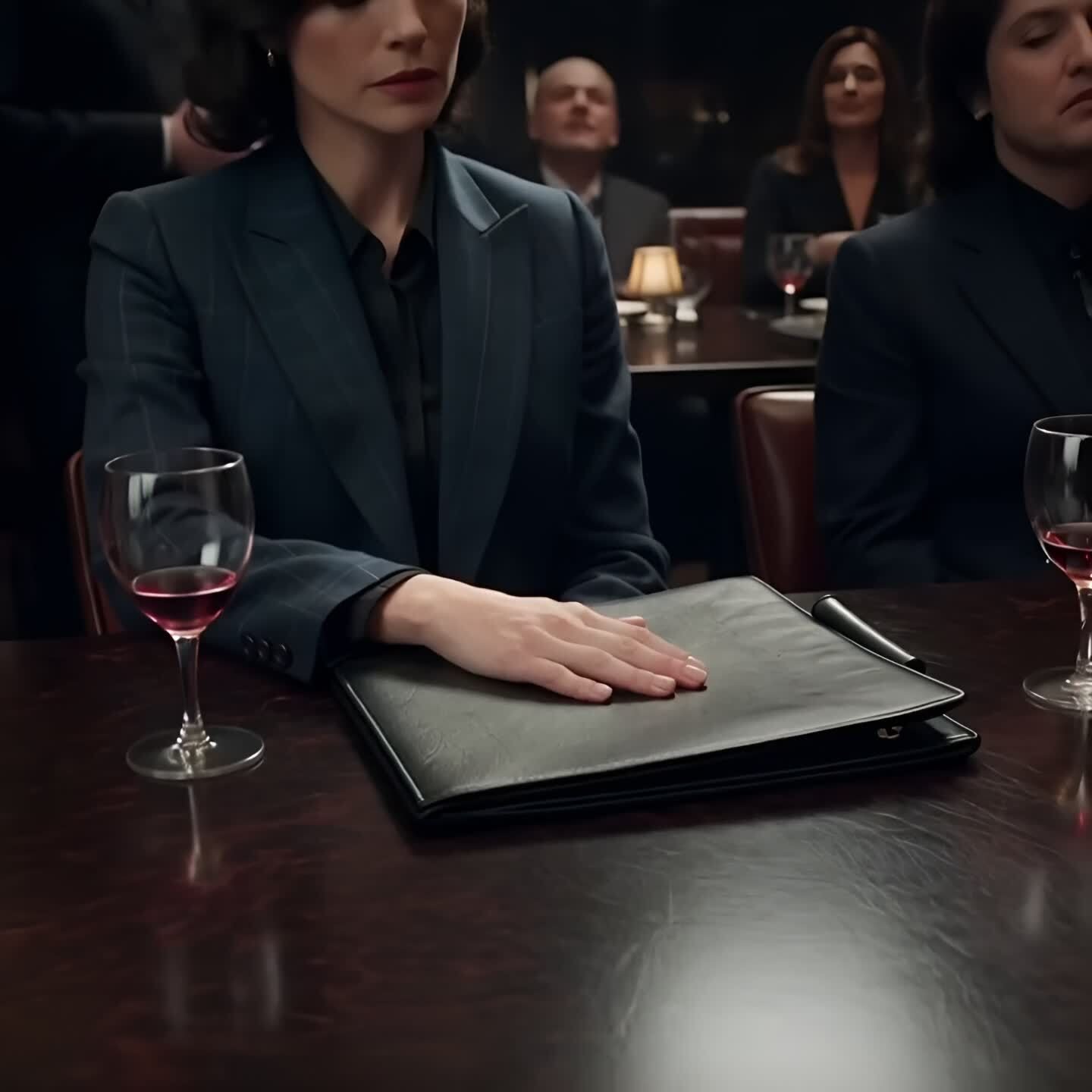
I walked into the steakhouse knowing I was late. The plates were already cleared. My parents were not celebrating; they were waiting for their solution to arrive. Mom gave that sweet, demanding smile, and my sister did not look up from her phone. Then the server dropped the check at my empty seat. My father told me to take care of it. I realized this was not a dinner; it was a test. And tonight, I was going to fail it on purpose.
My name is Natalie Bennett, and usually, when I walk into a room, I assess the risks. It is a habit I picked up from my job at Brightwell Dynamics, where a single overlooked variable can collapse a security network. But tonight, walking into the Argent Room in downtown Dallas, I did not need a risk assessment algorithm to know I was walking into a trap. I was the variable, and the collapse had already been scheduled. The air in the restaurant smelled of aged beef, truffle oil, and old money. It was the kind of place where the lighting was kept intentionally low, likely to hide the prices on the menu or the cosmetic work on the patrons. I navigated through the maze of mahogany tables, my heels sinking slightly into the plush carpet. I checked my watch. I was twenty minutes late. I had done that on purpose, driving three laps around the block, hoping that by the time I arrived, they might have at least looked at the bill themselves.
I was wrong. I spotted them in a semi-private booth near the back. The scene was almost artistic in its composition. My father, Raymond, was leaning back against the leather banquette, his hands folded over his stomach, looking satisfied. My mother, Lorie, was swirling the last half-inch of a dark red wine in her glass, her eyes scanning the room with a relaxed, benevolent gaze. Madison, my younger sister, was bathed in the artificial glow of her smartphone, completely detached from the physical world. But the detail that stopped me cold, the data point that mattered, was the table surface itself. It was clear. The dinner plates were gone. The bread baskets were empty. Even the dessert spoons had been cleared away. They had not just finished eating; they had been finished long enough for the staff to reset the stage. They were not celebrating their thirty-fifth anniversary anymore. They were waiting for their solution to arrive.
I reached the table and the performance began. “Natalie!” Lorie exclaimed, her voice pitching up into that theatrical register she used when an audience was nearby. She did not stand up to hug me. Instead, she offered me that gentle, terrifying smile she saves for requests she thinks I cannot refuse. It is a weaponized expression, one that implies that if I do not smile back, I am the one making a scene. “We were worried you got lost, honey.”
“Traffic was a nightmare on the tollway,” I lied, sliding into the only empty chair. It was the only chair without a coat draped over it: my seat. It felt less like a spot at a family dinner and more like the defendant’s chair in a courtroom.
“You work too hard,” Raymond said. He did not look at me. He was looking at a point somewhere over my left shoulder, perhaps admiring the architecture or just avoiding the reality of his daughter. “Family time is important, Natalie. You have to make time for the people who matter.”
“I am here now, Dad,” I said, keeping my voice neutral.
Madison did not look up. She was holding her phone high, tilting it at precise angles to catch the ambient light. I could see the screen reflecting in her glasses. She was editing a video clip of the empty table, the candle flickering, the expensive wine bottle. She was curating the aesthetic of wealth without having to deal with the mechanics of acquiring it. “Hey, Nat,” Madison murmured, her thumbs swiping furiously. “You blocked my view of the chandelier.”
“Happy anniversary,” I said, ignoring her. I looked at my parents. “Did you enjoy the meal?”
“Oh, it was spectacular,” Lorie sighed, reaching out to pat my hand. Her skin was cool, her rings heavy and cold against my knuckles. “The filet was to die for, and your father finally tried that Wagyu beef he has been reading about in his magazines. We just thought, well, we thought it would be such a nice treat.”
Then the server appeared. He was a young man, professional, dressed in a vest that fit him too well. He held a black leather folder in his hand. He did not ask who the check belonged to. He did not hover uncertainly between my father and me. He moved with the confidence of someone who had been instructed beforehand. He set the check folder down right in front of me. The silence that followed was heavy, louder than the clinking of silverware from the surrounding tables. It was a practiced silence. My family was good at this. They were masters of the pause, experts in creating a vacuum that I was compelled to fill just to relieve the tension. I stared at the black leather. I did not open it yet.
“We figured since you missed the toast,” Lorie said, her voice dropping to a conspiratorial whisper, “and since you are doing so well at that computer firm, you wouldn’t mind covering it, right? As a gift.”
“It is the least you could do,” Madison chimed in, finally lowering her phone. She smirked, a small, tight expression that vanished as quickly as it appeared. “I mean, I bought them a card.”
Raymond cleared his throat. “It is not about the money, Natalie. It is about the gesture. It is about taking care of family. That is what we do. We support each other.”
Support. That was the word he used. He used it the way people talk about the weather, as if it were an inevitable, unchangeable force of nature rather than a series of choices. I looked at the folder. I knew what was inside. I could estimate the cost within a ten percent margin of error. Three people, upscale steakhouse, Wagyu beef, likely two bottles of wine given the flush on my mother’s cheeks, appetizers, desserts, coffee. I reached out and flipped the folder open.
$642.50.
They had tipped twenty percent automatically on the machine, or at least they had told the server to add it, knowing I would be the one signing. My father was studying the ceiling. Madison was checking her reflection in her spoon. Lorie was watching me, her head tilted, her eyes wide and wet, mimicking gratitude before she had even received it. In the past, my stomach would have twisted. I would have felt that familiar hot shame, the shame of being used, mixed with the desperate need to prove I was a good daughter. I would have argued weakly, or I would have paid with a forced smile, buying their affection for another month. But tonight, looking at that number, $642.50, I felt nothing. No anger, no shame, no guilt. I felt like a scientist looking at a petri dish.
“Go ahead and take care of that,” Raymond said, calm as a man ordering a second round of coffee.
I pulled out my card. It was a heavy metal card, cool to the touch. I placed it in the folder. I was paying, yes, but I wasn’t submitting. I was buying a receipt. I was collecting one final irrefutable data point. This wasn’t a dinner; it was a transaction fee for the freedom I was about to engineer.
“Thank you, sweetie!” Lorie beamed. She clapped her hands together softly. “I knew we could count on you. You are always so reliable.”
“Yeah, thanks, Nat,” Madison said, standing up and grabbing her purse. “I’m going to wait in the valet line. It is freezing in here.”
I signed the slip. I did not check the total. I handed the folder back to the server, who looked at me with something resembling pity. I held his gaze until he looked away. “Happy anniversary,” I said again to my parents. My voice sounded strange to my own ears—flat, metallic.
“It really was lovely,” Lorie said, gathering her coat. “We should do this more often. Maybe next month for Madison’s birthday. She has been eyeing that fusion place in Uptown.”
“We will see,” I said.
I did not walk them to their car. I told them I had a work call and headed in the opposite direction toward the parking garage where my sedan was waiting. The moment I stepped out into the cool Dallas night air, I took a deep breath, filling my lungs with oxygen that didn’t smell of roasted meat and manipulation. I drove home in silence. No radio, no podcasts, just the hum of the tires on the pavement and the rhythmic flash of streetlights passing overhead. My phone buzzed on the passenger seat. I waited until I was stopped at a red light to glance at it. A text from Lorie: Thank you for handling that. We knew we could count on you. Dad says drive safe. There were no emojis. No “love mom.” No warmth. Just the confirmation of a completed transaction. They were relieved, not grateful. The text was a receipt of their expectation.
I arrived at my house, a modest two-bedroom bungalow in a quiet neighborhood. It was the house they hated because it was too small for someone with my salary, but it was the house I loved because it was mine. I walked inside, kicked off my heels, and didn’t even turn on the main lights. I went straight to my home office. The blue glow of my monitors was the only illumination in the room. I sat down and opened a folder on my desktop that I had hidden within a maze of subdirectories. I never named the file out loud. On the screen, it was just labeled Archive NB. I opened the spreadsheet. It was vast—columns and rows stretching back seven years. Every time they had asked, every time I had said yes.
October 14th: Emergency car repair for dad, $800. November 2nd: Madison’s rent gap, $450. December 25th: Flight upgrades for their vacation, $1,200. February 10th: Groceries because times are tight, $300.
I scrolled down. The numbers blurred, but the memories were sharp. I remembered the panic in Lorie’s voice when she needed that car repair money. I remembered the tears Madison cried when she said she would be evicted. I remembered feeling like a hero every time I clicked transfer. But looking at the data now purely as a set of figures, the pattern was undeniable. The frequency was increasing. The amounts were growing. The panic and tears were just the user interface for a system designed to extract resources. I entered the new row at the bottom: August 12th, Anniversary Dinner, The Argent Room, $642.50.
I stared at the total sum at the bottom of the column. It was enough for a down payment on a house. It was enough to start a business. It was enough to travel the world for a year. But more than the money, it was the time, the emotional energy, the years of trying to buy a version of love that was actually just a subscription service.
I heard the front door open. Footsteps, heavy but gentle, moved down the hallway. Jonah appeared in the doorway of the office. He was wearing his running gear, a sheen of sweat on his forehead, his breathing steady. He looked at me. He looked at the screen, then back at my face. He didn’t ask how the dinner was. He didn’t ask if they were nice. He knew. He had seen this look on my face a dozen times before—the exhaustion, the hollow resignation. But tonight, he saw something else. He saw the coldness in my eyes. He leaned against the doorframe, crossing his arms. The room was silent save for the hum of the computer fan.
“You paid,” he stated. It wasn’t a question.
“I paid,” I confirmed.
“And they didn’t say thank you. Not really.”
“No, they didn’t.”
Jonah nodded slowly. He walked over and placed a hand on the back of my chair. He didn’t look at the spreadsheet; he respected my privacy too much for that. He just looked at me, seeing the woman beneath the daughter. “You have been bleeding out for years, Nat,” he said softly. “Drop by drop. You think if you give them enough blood, eventually they will ask if you are okay. But vampires don’t care if the donor is anemic.”
I looked up at him. “I know.”
“So,” Jonah said, his voice dropping an octave, landing in the room like a lit match thrown onto gasoline. “Do you want to end it clean, or do you want to end it correctly?”
I looked back at the spreadsheet, at the row I had just added. $642.50—the price of clarity. “Correctly,” I whispered.
Jonah smiled, a grim, sharp expression that mirrored the feeling rising in my chest. “Good. Then let’s get to work.”
If you looked at the Bennett family mantelpiece, you would see a shrine to American normality. There are framed photographs arranged by year, documenting a timeline of color-coordinated sweaters and bleached smiles. We look like a brochure for a gated community. In the center, there is a large portrait from three years ago: Raymond and Lorie seated on a velvet bench, Madison leaning affectionately on Dad’s shoulder, and me standing slightly behind Mom, my hand resting on the back of the seat. To a stranger, it looks like a close-knit family. To me, it looks like a solar system. Madison is the sun, burning bright and demanding gravity. My parents are the planets locked in her orbit. And I am the dark matter—invisible, essential for holding the structure together, but never actually seen.
The truth is, nobody ever asked me what I needed because I made the mistake of never needing anything. I was not born the easy daughter; I was built, layer by layer, through a thousand small reinforcements. It started when I was seven. Madison, then four, had thrown a tantrum in a grocery store because she wanted a specific brand of cereal. She screamed until her face turned purple. My mother looked on the verge of tears, overwhelmed by the noise and the stares of other shoppers. I remember quietly putting my own chosen treat, a small box of animal crackers, back on the shelf and taking my mother’s hand. I told her I did not want them anymore. The relief on Lorie’s face was narcotic. She squeezed my hand and whispered, “Thank you, Natalie. You understand, don’t you? You are such a good helper.”
That was the seed. Natalie understands. By the time I was twelve, understanding had become my job description. If money was tight, Madison still got new dance shoes because she “has potential,” while I wore my sneakers until the soles talked. If we were late for a movie, it was because Madison couldn’t find her scarf, but I was the one scolded for not helping her look. I learned that being low-maintenance was the only currency I had to buy their affection. If I was quiet, if I made no demands, if I solved problems instead of creating them, I was rewarded with a distracted smile and a pat on the head. I became addicted to the praise of being the responsible one. It felt like love, even though it was just convenience.
Raymond, my father, framed this neglect as character building. He would sit me down after I had cleaned the kitchen without being asked, or after I had tutored Madison through a math class she was failing, and he would nod solemnly. “This is what responsible people do, Natalie,” he would say, his voice heavy with self-importance. “The world is full of people who take. You are one of the rare ones who gives. That is a virtue.” He made my exploitation sound like a moral high ground. He made me feel like a martyr instead of a victim. I wore that identity like armor, not realizing it was actually a target painted on my back.
The financial grooming began the summer I turned twenty. I was in college, working two jobs—one at the library, one waiting tables—to pay my own tuition because my parents needed to focus their resources on Madison’s private high school. I came home for a weekend visit to find the house sweltering. The air conditioning unit had died. My mother was fanning herself with a magazine, looking tragic. My father was pacing, talking about credit limits and high interest rates. Madison was complaining that she couldn’t sleep in the heat.
“I have some savings,” I heard myself say. It was a reflex. I wrote a check for $250. It was everything I had saved for my next semester’s textbooks. I told myself it was a loan. I told myself it was an emergency.
“We will pay you back as soon as Dad’s bonus comes in,” Lorie promised, hugging me tight. “You are a lifesaver, Nat.”
They never paid me back. The bonus came, but it went to a much-needed weekend getaway for them to decompress from the stress of the broken AC. When I gently asked about the money a month later, Raymond looked at me with genuine disappointment. “We are family, Natalie,” he said, his tone suggesting I had just asked to charge them interest. “We don’t keep score. Besides, you are doing so well with your little jobs.” I didn’t ask again. I absorbed the loss because asking for my money back made me feel petty, and feeling petty clashed with my identity as the good daughter.
The requests evolved slowly, insidious and creeping like water rising in a basement. It wasn’t a sudden demand for thousands. It was ten dollars here, fifty dollars there. It was groceries. It was the cable bill. “Can you just grab the electric bill this month?” Lorie would ask over the phone, her voice breezy. “I tried to log in, but the website is acting up and I don’t want a late fee. I will Venmo you.” She never Venmoed me. And the website wasn’t acting up; the account was just empty. By the time I was twenty-five, the dynamic had shifted from emergency help to structural support. I was no longer a safety net; I was part of the foundation. They stopped asking if I could help. They just presented the problem and waited for me to produce the solution.
The worst phrase in our family lexicon became, “We already booked it.” I remember the first time they used it as a weapon. I was twenty-seven. I had just started a junior role in cyber security, finally making a decent salary, though I kept the exact number vague. Lorie called me, her voice bubbling with excitement. “We are going to Key West for Dad’s fiftieth!” she squealed. “We found this amazing resort. Madison is bringing a friend. We got a suite.”
“That sounds great, Mom,” I said, genuinely happy for them. “I hope you have fun.”
“Oh, you are coming too,” she said. “We need you to drive us to the airport, and since the suite is so expensive, we figured you could chip in for the deposit. It is only $800.”
“Mom, I can’t,” I said. “I have rent. I have student loans.”
“But we already booked it,” she said, her voice dropping, instantly wounded. “It is non-refundable, Natalie. If you don’t pay the deposit, we lose the reservation. You wouldn’t ruin your father’s fiftieth birthday, would you?”
I paid the $800. I drove them to the airport. I didn’t go on the trip because I had to work. But I paid for their fun. I paid for the peace. That was the realization I came to far too late. I wasn’t paying for their lifestyle; I was paying the noise away. I was paying to avoid the guilt trips, the heavy sighs, the “I guess we just won’t go” remarks that were designed to crush me. I was paying to keep the version of my parents that loved me—the smiling, grateful version—alive. If I stopped paying, that version died, and I was left with the cold, judgmental strangers I saw at the steakhouse.
I facilitated this by lying about my life. They knew I worked in computers, but they had no idea what I actually did at Brightwell Dynamics. They pictured me resetting passwords or fixing jammed printers. I never corrected them. I never told them that I was the senior operations lead, that I managed risk controls for multinational defense contracts, or that my signature could authorize spending that dwarfed their mortgage. I kept my title small so their requests would stay manageable. I dressed in simple clothes from Target when I visited. I drove a reliable sedan, not the luxury car I could easily afford. I thought I was being clever. I thought that by looking just “okay,” I was protecting myself from their greed. But I was wrong. My modesty didn’t stop them. It just made them feel entitled to whatever little they thought I had. They looked at my simple life and assumed I had no expenses, no ambitions, and therefore plenty of surplus for them.
The most painful part of scrolling through that spreadsheet wasn’t the total dollar amount. It was the pattern of the dates. Every payment I made coincided with a moment where I sought connection. I paid for their anniversary dinner two years ago because I wanted to be included in the celebration. I paid for Madison’s car insurance last year because she called me crying, and for twenty minutes, we talked like sisters. I paid for the new patio furniture because Dad invited me over for a barbecue and I wanted to sit there and feel like a daughter. I was buying tickets to a show where I was the only audience member. Jonah was right. It wasn’t a family dynamic; it was a parasitic infection.
But parasites don’t hate their hosts. They need them. My parents didn’t hate me, in their own twisted, narcissistic way. They probably thought they loved me, but they loved me the way a carpenter loves a reliable hammer. They loved me the way a driver loves a car that always starts in the cold. They loved my function. They loved that when they pushed the button marked “Guilt,” I dispensed cash. They loved that when they created chaos, I arrived with a broom. They loved that I never, ever made them look in the mirror and see their own failures.
As I sat in the dark office staring at the glow of the monitor, a bitter taste filled my mouth. It tasted like ash. All those years, I thought I was earning their love by being the easy daughter. I thought if I was just low-maintenance enough, just helpful enough, they would finally see me. But you don’t see the floorboards you walk on; you only notice them when they creak. And I had made sure never to creak—until tonight. Tonight I had paid the bill, but the silence I offered in return wasn’t the silence of submission. It was the silence of a machine powering down. It was the silence of a bank vault locking shut. I closed the spreadsheet. The cursor blinked one last time before the screen went black. They didn’t love my generosity. They didn’t even respect it. They loved my predictability. They had bet their entire financial future on the statistical certainty that Natalie would always say yes.
I swiveled my chair around to face the darkness of the hallway where Jonah had stood. It was time to introduce a new variable into their equation. It was time to become unpredictable.
At Brightwell Dynamics, my official title is Senior Operations Lead. To the outside world, that sounds like a generic corporate label, the kind of job where you attend endless meetings and circulate memos about refrigerator etiquette. In reality, my role is about containment. I design risk protocols for private defense contractors and high-net-worth entities. My days are spent looking for cracks in digital walls, analyzing breach vectors, and ensuring that when a system fails, it fails safely. I am paid a significant amount of money to be paranoid, to assume that everyone is lying until the data proves otherwise, and to spot the anomaly in a sea of standard code. It is a profound irony that for over a decade, I left those skills at the door the moment I entered my parents’ house.
I sat at my desk, the dual monitors casting a pale, clinical light over my hands. I had opened a new tab in the spreadsheet, one dedicated purely to analysis. I was no longer the daughter trying to help; I was the auditor. For years, I had maintained a specific camouflage around my family. I drove a four-year-old sedan when I visited them, even though I could have bought a showroom model with cash. I wore jeans and plain cotton shirts from department store clearance racks. I never wore my watch, a vintage timepiece I had bought for myself after my first major promotion, because I knew it would draw Madison’s eye like a magpie to foil. I had curated an image of stable but struggling, a deliberate underselling of my success. I thought that if they believed I was just getting by, they would not ask for too much. I thought my mediocrity was a shield. I was wrong. My camouflage had not protected me. It had only lowered the threshold for their entitlement because they thought I had less. They felt justified in taking the little they assumed I had, believing that “we are all in this together.” If I had shown up in a Porsche, they might have hesitated, intimidated by the wealth. But because I showed up in a Honda, they felt comfortable picking my pockets.
I started sorting the data in the spreadsheet. I categorized the expenses not by date, but by trigger event. The pattern emerged within seconds. It was so obvious that I felt a flush of professional embarrassment. Every single dinner invitation for my parents had occurred after the reservation was already made. February 14th: “We managed to get a table at The Palm. Meet us there in an hour.” May 10th: “Your dad is craving seafood. We are already seated at Ocean Prime.” August 12th: The Argent Room. They never asked if I was free. They never asked if I wanted to go. They secured the asset—the table—and then called the financier. It was a procurement strategy. I was not a guest; I was the payment method.
I moved to the vacations category. July 4th weekend: Madison found this cute Airbnb in Austin. We booked it for the family. Cost to me: $450 for the remainder of the deposit. December 23rd: The flight prices were jumping, so we grabbed seats for you to come home. Just transfer us the cost. Cost to me: $600. The phrasing was always identical: “We already booked it.” They used urgency as a weapon. They created a sunk cost fallacy, knowing that I, the responsible daughter, would not let the money they had allegedly already spent go to waste. They leveraged my own prudence against me.
Then I looked at the emergencies. This was the hardest column to read. These were the moments where they had weaponized my empathy. October 3rd, 2 years ago: Mom’s dental surgery. Insurance is fighting us. $1,200. March 15th last year: Madison’s laptop died. She has finals next week. She will fail without it. $800. I highlighted the dental surgery entry. I remembered that week I had rushed the money over, terrified my mother was in pain. Two weeks later, I saw photos on Facebook of her smiling at a garden party, her teeth looking exactly the same, but she was wearing a new designer silk scarf and my father was holding a new set of golf clubs.
I did a text search in the document for the word Repaid. The result came back: 0 matches found. I searched for Returned, Sent back, Reimbursed. 0 matches found. I sat back, the leather of my chair creaking in the silent room. Over seven years of documented transactions comprising dozens of loans and advances, not a single cent had ever traveled back in my direction. Not once. Even when they had promised “next week” or “when the tax refund hits.” The money only flowed one way. I wasn’t a bank. A bank collects interest. A bank has collateral. I was a leaky faucet they had learned how to turn on.
“This is impressive,” Jonah said. I hadn’t heard him walk back in. He was standing behind me, looking at the screen over my shoulder. He placed a mug of black coffee on the coaster near my mouse.
“It is not impressive,” I said, my voice steady but cold. “It is negligence on my part.”
“No,” Jonah corrected me. “It is fraud on theirs.” He pointed to a cluster of entries from three years ago. “Look at this. Utilities, groceries, car repair, utilities again. That was the year your dad supposedly started his consulting business, right?”
“Yes,” I said. “He said cash flow was tight during the startup phase.”
“Natalie,” Jonah said, leaning down so his face was level with mine. “He didn’t start a business. He retired. He just didn’t tell you. You have been paying his salary.”
The realization hit me like a physical blow to the chest. The consulting gigs that never materialized, the days he spent at the club networking—he hadn’t been working. He had been living off the Natalie subsidy.
“This isn’t helping family,” Jonah said, straightening up. “You are not buying groceries. You are subsidizing a lifestyle they cannot afford and refuse to earn. You are the reason they feel rich.”
I picked up my phone. I didn’t open Instagram. I didn’t open my contacts to call my mother and scream. I opened my secure work email and found a contact I had saved for professional crises: Maryanne Cole. Maryanne was not a family lawyer. She was a contract attorney who specialized in corporate severance and hostile asset disputes. She was expensive. She was unsentimental, and she terrified most men she met. She was exactly what I needed. It was late, but Maryanne answered on the second ring. She billed by the quarter-hour and she never slept.
“Bennett,” she said. Her voice was crisp, like dry paper. “It is 10:00 PM. This better be about the Henderson contract or a subpoena.”
“It is personal,” I said. “I need to stop a hemorrhage.”
“Financial or reputational?”
“Financial. Family.”
There was a brief pause on the line. I could hear the click of a keyboard. “Go on.”
I gave her the summary. I did not use emotional language. I did not say “my feelings are hurt” or “I feel betrayed.” I spoke in the language we both understood. I gave her the timeline, the estimated total aggregate—which was hovering near $45,000 over seven years—and the lack of repayment terms.
“Stop,” Maryanne said. “I get the picture. You are the cash cow. You want to close the barn.”
“I want to burn the barn down,” I said.
“Don’t get dramatic. Drama costs money. We want effectiveness,” she countered. “Here is the triage. First, you stop the flow. Tonight. Not tomorrow. Tonight.”
“I am going to,” I said.
“Second,” she continued, her voice taking on the rhythm of a checklist. “We need to sever all authorized user ties. Do they have cards in their name that draw from your credit?”
“I think Madison is an authorized user on my travel rewards card. I added her when she went to Europe for a study abroad program four years ago. I never took her off.”
“Kill it,” Maryanne commanded. “Report it lost or stolen if you have to, but get a new number issued immediately. Second, autopays. Do you pay their cell phones?”
“Yes, it is a family plan. It was cheaper to bundle.”
“Cheaper for them, expensive for you. Cancel the line or transfer billing responsibility. Give them thirty days’ notice if you want to be nice. Give them zero if you want to be smart.”
“I want to be smart.”
“Good. Now the big one: credit exposure. You need to freeze your credit with all three bureaus—Experian, TransUnion, Equifax. Right now. If they have your Social Security number, and they are your parents so they definitely do, they might try to open something new when the cash stops coming. Desperate people do stupid things, Natalie. Entitled people do criminal things and call it borrowing.”
I was typing as she spoke, opening the browser tabs for the credit bureaus. “I am doing it now.”
“One last thing,” Maryanne said. “The dinner tonight. How did you pay?”
“I gave the server my card.”
“Did you?” she asked. I paused. I replayed the scene in my head. The server had brought the folder. I had opened it. I had seen the total. Then Raymond had said, “Go ahead and take care of that.” But I hadn’t handed the card to the server immediately. I had put it in the folder.
“Wait, no,” I whispered. My memory sharpened. The server hadn’t taken the folder away to run the card. He had opened the folder at the table, glanced at the card I put inside, nodded, and then handed me the receipt to sign immediately. “He didn’t run it,” I whispered. “He brought the slip ready to sign.”
“Which means,” Maryanne said, her voice dropping into a dangerous register, “that the restaurant already had your card information stored in their Point of Sale system. You didn’t pay for dinner, Natalie. You authorized a charge they had already set up.”
My blood ran cold. “How?” I asked. “I haven’t been to the Argent Room in six months.”
“Think,” Maryanne said. “Who made the reservation?”
“My mother.”
“She made the reservation,” Maryanne deduced. “And when they asked for a card to hold the table, or perhaps when they asked if she wanted to use the card on file from a previous visit, she said yes. She authorized a charge on a card that is not hers.”
“That is theft,” I said.
“It is unauthorized use of a payment instrument,” Maryanne corrected. “But yes, in the eyes of the law, if you didn’t hand over that card or give verbal consent prior to the charge being run, it is a gray area that leans heavily toward fraud. Your mother didn’t just expect you to pay; she ensured you had no choice.”
I looked at the spreadsheet again. The row for tonight’s dinner seemed to glow red. $642.50. It wasn’t a test. It was a heist. “What do I do?” I asked.
“You execute the freeze,” Maryanne said. “You cut the authorized users, and then you send a very clear written notification to the restaurant revoking all stored payment methods. And Natalie? Yes. Don’t tell your parents you are doing any of this. Do not give them a warning. Do not give them a chance to guilt you or negotiate. You don’t warn the parasite that you are taking the medicine.”
“Understood,” I said.
“I will draft a cease and desist template for you to keep in your back pocket,” Maryanne said. “I have a feeling you are going to need it. Good night, Bennett.”
The line went dead. I put the phone down. I looked at the credit bureau tabs open on my screen. My hands were shaking, not from fear, but from the adrenaline of finally seeing the battlefield clearly. For thirty-three years, I thought I was fighting for their love. I thought I was paying dues to belong to a club, but I wasn’t a member. I was the sponsor.
I clicked the button on the Equifax screen. Freeze. I clicked the button on TransUnion. Freeze. I clicked the button on Experian. Freeze.
Then I logged into my credit card portal. I found the authorized user section. I saw Madison’s name. I hovered over the trash can icon. I didn’t hesitate. I clicked. User Removed. The screen refreshed. The name was gone. I sat in the silence of my office, surrounded by the invisible walls I was finally building. The air in the room felt lighter, cleaner. Jonah was watching me from the doorway. He raised his coffee mug in a silent toast. I picked up my own mug and took a sip. It was cold, but it tasted better than the sixty-dollar wine my mother had drunk tonight. I had unplugged the machine. Now I just had to wait and see what would happen when the lights went out.
The following Saturday morning did not begin with a confrontation. It began with a cup of Earl Grey tea and a silence so profound it felt like a physical presence in my home office. There was no screaming, no tearful phone calls, and absolutely no dramatic declaration of independence. Confrontation is messy. Confrontation implies that the other party has a right to debate the terms of your existence. I was done debating. I was simply changing the administrative permissions of my life.
I sat at my desk, the same place where I had analyzed the damage the night before. But the spreadsheet was closed now. In its place was a simple checklist. I treated this not as a family dispute, but as a system migration. When a server is compromised at Brightwell Dynamics, we do not argue with the hackers. We isolate the node. We revoke access tokens. We patch the vulnerability.
I started with the digital tethers. First, the family share plans. It is amazing how modern technology disguises dependency as convenience. I logged into my Apple account. There they were—Raymond, Lorie, and Madison—listed under my primary ID. This allowed them to share my paid apps, my cloud storage, and crucially, my payment method for media purchases. I clicked on Madison’s profile first. Her avatar was a selfie with a heavy filter. I navigated to the “Remove from Family” button. A warning popped up: Madison will lose access to shared subscriptions and iCloud storage. I clicked confirm. I watched the spinning wheel for three seconds. Then she was gone. I repeated the process for Lorie, then for Raymond.
Next, I tackled the streaming services. This was where the “death by a thousand cuts” theory was most visible. I had the login for the master account, but when I checked the device history, I saw logins from zip codes I didn’t recognize—friends of Madison, perhaps, or neighbors my parents had casually shared the password with to seem generous. I didn’t just change the password; I canceled the premium tier that allowed for four simultaneous screens and downgraded it to the single-user plan. Then I went into the settings and hit “Sign Out of All Devices.” Somewhere in Dallas, Madison’s TV screen was about to go black in the middle of her reality show marathon. The thought gave me a cold, quiet satisfaction.
I moved on to the cell phone carrier. This was the heaviest chain. Years ago, my father had convinced me that a family plan was “economically superior,” and it was—for him. I paid the base rate of $240 a month plus the installment plans for their device upgrades. I called the carrier. The hold music was a looped saxophone solo that usually drove me crazy, but today, I just hummed along. I had patience today.
“I need to separate my line from this account,” I told the representative when she finally answered.
“Oh, are you moving out?” she asked cheerfully.
“Something like that,” I replied. “I want to transfer billing responsibility for the other three lines to the account holder’s name, Raymond Bennett. I will retain my number on a separate individual account.”
“I can do that,” she said. “But just so you know, without the multi-line discount, the price for the remaining three lines will go up by about forty dollars per month.”
“That is fine,” I said. “I accept that change.”
It wasn’t my change to accept. Really, it was theirs. But they wouldn’t know that until the next billing cycle. I spent the next three hours systematically scrubbing my financial DNA from their lives. I found an old roadside assistance add-on I had been paying for since I was twenty-two, covering my parents’ vehicles. Cancelled. I found a recurring donation to a charity my mother liked to support publicly, which was charged to my card so she could get the tax write-off receipt. Cancelled. I found a gym membership for Madison that had not been swiped at the turnstile in eleven months. Cancelled. By noon, I had reduced my monthly outgoing cash flow by nearly $900. That was $900 a month that I had been setting on fire to keep them warm while they complained about the smoke.
Then came the hardest call: The Argent Room. Maryanne had been right about the card on file; it was a security risk and I needed to close it. I dialed the restaurant’s number, waiting until 2:00 in the afternoon when I knew the lunch rush would be over but the dinner service hadn’t started.
“Argent Room, this is David,” a voice answered.
“Hi, David. This is Natalie Bennett. I dined there recently.”
“Yes, Ms. Bennett. How can I help you?”
“I need to update my privacy settings with you,” I said, my voice projecting the kind of boredom that suggests this is a routine administrative task. “I need you to remove all stored payment methods linked to my name or phone number from your Point of Sale system immediately.”
“Oh,” David sounded surprised. “We keep those on file for VIP convenience. It makes booking easier for your family.”
“I understand,” I said. “But my accountant is restructuring my expenses. I need a hard delete on that data. And David? Yes. Please add a note to my profile: No charges are to be authorized without the physical card present. If a reservation is made in my name or by my family using my name, no charges go to me unless I am there to sign for them. Is that clear?”
“Yes, of course. I will take care of that right now.”
“Thank you, David.”
I hung up. I didn’t feel guilty. I felt lighter. Finally, I executed the nuclear option Maryanne had urged me to take. I opened the browser tabs for the three major credit bureaus. I initiated a security freeze on my Social Security number. This meant that if my father tried to open a loan in my name to cover his consulting losses, he would be blocked. If Madison tried to finance a car using my credit score as a co-signer without me present to unlock it, she would be rejected. I set up fraud alerts that would text my phone instantly if any inquiry was made. When I was done, I sat back and looked at the clean desktop of my computer. The machine was unplugged. The fuel line was cut. I expected to feel fear. I expected to worry about their reaction. But the silence in the house was not empty; it was full of possibility.
Later that afternoon, an email arrived from Maryanne. The subject line was simply Script. Inside was a short paragraph: Natalie, here is the text you use. Do not deviate. Do not add ‘I’m sorry.’ Do not offer reasons they can argue with. A reason is a handle they can grab to pull you back in.
The text read: I am currently restructuring my financial goals and will no longer be able to cover these expenses. You will need to make your own arrangements moving forward.
It was brutal in its brevity. I saved it to my Notes app. Then I waited. The most difficult part of the next two weeks was the silence. I kept waiting for the explosion. I kept checking my phone, expecting a text asking why Netflix wasn’t working or why the Amazon Prime delivery was stalled, but nothing came. This, I realized, was because they hadn’t noticed yet. They didn’t check bank statements. They didn’t look at billing cycles. They lived in a world where things just worked, where services were like air—invisible and infinite. They wouldn’t know the air was gone until they tried to take a deep breath and found a vacuum.
I went to work. I focused on a complex breach simulation for a defense client. I ate lunch with colleagues and actually listened to their stories instead of worrying about a crisis text from Mom. I slept seven hours a night. I didn’t tell them what I had done. Telling them would be an invitation to negotiate. It would give them two weeks to guilt trip me, to manufacture emergencies, to cry about how I was abandoning them. Systems do not adapt to speeches; they adapt to a lack of fuel. When the engine stalls, the driver is forced to get out and look under the hood.
I was waiting for the stall. It happened on a Tuesday, exactly fourteen days after the first dinner. I was in my kitchen chopping vegetables for a stir-fry. Jonah was pouring wine, a bottle we had bought for ourselves with our own money. The domestic peace was so normal it felt fragile. My phone buzzed on the counter. I wiped my hands on a towel and picked it up. It was a group text from Lorie. Included were Raymond and Madison.
Anniversary Redo Dinner. We decided the last one didn’t count since you were so rushed. We are already here at The Argent Room. They squeezed us in. Come when you can.
I stared at the screen. We are already here. The trap was identical. They had gone back to the scene of the crime. They had deployed the same strategy: create the debt first, then invite the payer. They assumed that because I had paid the first time, the behavior was validated. They thought the first dinner was a fluke of timing, not a failure of their morality. They were sitting there right now, maybe ordering the Wagyu again, maybe laughing about how they had “fixed” the anniversary. Madison was probably filming the bread basket. Lorie was probably telling the waiter that her daughter would be along shortly to handle everything. They had no idea that the card on file was gone. They had no idea that when the check came, they would be the ones holding the folder.
Jonah walked over, sensing the shift in my energy. He looked at the text. He didn’t look angry. He looked at me with a question in his eyes. “Are you ready?”
I looked at the text again. Come when you can. If I didn’t go, the restaurant would eventually ask them to pay. They would try their cards. The cards would decline. They would call me in a panic. I could solve it over the phone. I could give them my card number. I could save them from the consequences one last time. But Maryanne’s voice echoed in my head: You don’t warn the parasite. I needed to be there. I needed to see it. I needed to ensure that when the bill arrived, there was no ambiguity. I needed to look my father in the eye when the waiter told him the card on file had been deleted. I needed to close the loop.
I typed my reply. I didn’t use Maryanne’s script yet. That was for the aftermath. This was for the trap. I typed one word: Sure. I hit send.
“Are we going?” Jonah asked, his voice low.
I turned off the stove. The vegetables could wait. “We are going,” I said, grabbing my purse. “But we are not going to dinner. We are going to a performance.”
I walked out to the car, my heart beating with a steady, cold rhythm. The machine was unplugged. Now I was going to watch it stop.
I arrived at The Argent Room seven minutes early. This was a calculated deviation from my usual pattern. Typically, I arrived late, flustered, and apologetic, immediately putting myself in a position of social debt before the financial debt was even incurred. Tonight, I moved with the precision of a predator entering a clearing. I did not check my coat; I kept it draped over my arm, a subtle signal that I was not settling in, though none of them were observant enough to notice. I spotted them across the dining room. They were seated at a round table near the center, a more conspicuous location than our last visit. They wanted to be seen. From my vantage point near the hostess stand, I watched them for a full minute before approaching. It was like watching a silent film of a happy, wealthy family. My father, Raymond, was laughing, his head thrown back, his hand gesturing expansively as if he were holding court. My mother, Lorie, was leaning in, her face arranged in a mask of rapt attention, though her eyes were darting around the room, scanning for anyone more important than the people currently at her table.
Madison was there, but she wasn’t alone. Next to her sat a young man with slicked-back hair and a suit that fit him a little too tightly across the shoulders. Chase. They looked confident. They looked secure. They looked like people who believe the laws of physics or finance did not apply to them because they had me. I walked toward the table. I didn’t rush. I let my heels click rhythmically against the floor. A steady countdown they couldn’t hear.
“Natalie!” Lorie spotted me first. Her voice was a little too loud, performing delight for the benefit of the neighboring tables. “You made it! We thought you might get stuck in that awful traffic again.”
“Traffic was light,” I said, my voice flat.
“Well, sit down, sit down,” Raymond said, waving his hand regally. “We have a full house tonight.”
I took the empty seat. The geography of the table was telling. I was placed between my father and Chase, directly across from Madison. It was the position of a mediator, or perhaps a buffer.
“This is Chase,” Madison said, barely looking up from her phone. She was adjusting the lighting on a candle, trying to get the perfect glow for her Instagram story. “Chase, this is my sister, Natalie. She works in IT.”
“Nice to meet you,” Chase said, extending a hand that felt slightly damp. He flashed a bright, practiced smile. “Maddie has told me so much about you. She says you are the brains of the operation.”
“Did she?” I replied, pulling my hand back quickly.
“We already ordered for you, honey,” Lorie interjected smoothly. She reached out and patted my arm, a gesture that looked affectionate but felt like a restraint. “The waiter was pushing us to get the orders in before the rush, and we know you always hesitate with the menu, so we just got the seafood tower and the Porterhouse for the table to save time.”
To save time. It was such a graceful erasure of my autonomy. They hadn’t ordered for me to save time; they had ordered for me to ensure the bill reached a certain threshold. If I had ordered for myself, I would have chosen a soup or a salad. By ordering “for the table,” they ensured I was on the hook for the premium items they wanted to consume.
“That is fine,” I said.
“See?” Lorie beamed at Chase. “She is so easygoing. We are very lucky.”
The waiter arrived with a bottle of wine, a Cabernet. I knew the price without looking at the list; it was roughly $200 a bottle. He poured for Raymond, then Lorie, then Chase. When he came to me, I covered my glass. “Just water, please,” I said. “Sparkling.”
“Oh, come on, Nat,” Madison groaned. “Don’t be boring. It is a celebration.”
“What are we celebrating?” I asked.
The table went quiet for a fraction of a second. They hadn’t thought about that. The “Anniversary Redo” was a flimsy cover story, and they all knew it.
“Family,” Raymond declared, recovering his fumble with a toast. He raised his glass. “To family, and to the future.”
“To family,” Chase echoed, clinking his glass a little too hard against Raymond’s. He laughed, a loud, barking sound that made a woman at the next table glance over. Chase was desperate. I could see it in the way he watched my father, mimicking his posture, laughing at jokes he clearly didn’t understand. He thought he was marrying into a dynasty. He had no idea he was auditioning for a spot on the Titanic.
I unfolded my napkin and placed it on my lap. I watched them drink my money. I watched them eat the appetizers that I was expected to finance.
“I ran into Susan Miller at the club yesterday,” Lorie said, her voice dropping to a confidential whisper that was meant to be overheard. “She was saying they come here every Tuesday. I told her, ‘Oh, we love The Argent Room. It is practically our second kitchen.’ She looked so jealous.” Lorie took a sip of wine, her eyes glittering with the victory of a status battle that existed entirely in her own head. She wasn’t dining here because she loved the food. She was dining here so she could tell Susan Miller that she had. I was not paying for nutrition; I was paying for ammunition in her social warfare.
“The Millers are good people,” Raymond nodded sagely. “Old money. Unlike us.”
“I thought we were new money,” Chase joked, missing the cues.
“I am thinking of joining the club,” Chase announced, puffing out his chest. “Maddie says the golf course is world-class.”
“It is the best in Texas,” Raymond lied. He hadn’t paid his dues in three months. I knew this because I had seen the delinquency notice on his desk the last time I visited, buried under a stack of golf magazines. He was playing on a grace period that was about to expire.
“You absolutely should, Chase,” Madison said. She was holding her phone up again. “Hold that glass up, babe. The light is perfect.” She snapped a photo of Chase, then one of the seafood tower, then a selfie of her and Lorie. She moved the camera in a slow pan around the table, capturing the crystal glasses, the plush leather of the booth, the expensive ambiance. When the lens swept past me, she lowered the phone. I wasn’t in the shot. I wasn’t part of the aesthetic. I was the backstage crew. I was the lighting rig. I was necessary for the production, but I was not to be seen in the final cut. If she posted a photo of me, someone might ask who I was, and the illusion of their independent wealth might crack.
“Excuse me,” I said quietly.
“Everything okay?” Lorie asked, her mouth full of lobster.
“I just need to use the ladies’ room.” I stood up and walked away from the table. I did not go to the restroom. I walked straight to the Maître d’ stand near the entrance. David was there reviewing a seating chart. He looked up and smiled professionally.
“Ms. Bennett. Is everything to your liking?”
“The food is fine, David,” I said, keeping my voice low. “I just wanted to double-check our conversation from two weeks ago.”
David’s expression shifted from hospitality to alert efficiency. He tapped the screen of his terminal. “Regarding the billing profile? Yes. The hard delete. It is done, Ms. Bennett,” he confirmed, turning the screen slightly so I could see the blank field next to my name. “No card on file, and the note is right here in red: Physical card required for all transactions. Authorization strictly in person.“
“And there are no other cards saved? Perhaps under my father’s name?”
David checked. “No, ma’am. Mr. Bennett’s profile has an expired Visa ending in 4022. It was removed by the system six months ago.”
“Excellent,” I said. “Thank you.”
“Will you be taking care of the check tonight?” he asked, a standard question that suddenly felt loaded with weight.
I looked back at the table. Raymond was waving the empty wine bottle in the air, signaling the waiter for a second one. Chase was laughing at something Madison had whispered. They looked like a painting of excess.
“We will see when the bill comes,” I said.
I returned to the table just as the main courses were arriving. The waiter placed a massive Porterhouse steak in front of my father. The steam rose up, smelling of butter and rosemary.
“Finally,” Raymond grunted. “I was about to starve.”
“This looks incredible,” Chase said, eyeing his own filet mignon. “You guys really know how to do it right.”
“We believe in quality,” Lorie said, smoothing her napkin. “Life is too short for bad food.”
I ate my small side salad slowly. I watched them consume. There was a violence to it tonight. Maybe it was because I knew the truth, but they seemed to be eating with a desperation I hadn’t noticed before. They ordered more sides—truffle fries, creamed spinach, roasted mushrooms. They ordered a round of desserts before they had even finished the steak. Raymond signaled the waiter again.
“Bring me a whiskey,” he commanded. “Macallan 25.”
My internal calculator clicked. That was a $250 pour.
“Make it two,” Chase said, emboldened by my father’s confidence.
“Dad,” I said, speaking for the first time in twenty minutes. “That is a very expensive drink.”
Raymond looked at me, his eyes narrowing slightly. It was the look he gave me when I was a child and asked why I couldn’t have the same toys as Madison. It was a look of disappointment that I was dragging the mood down with reality. “I am celebrating, Natalie,” he said, his voice dropping to a warning tone. “Don’t count pennies at the dinner table. It is vulgar.”
“Right,” I said. “Vulgar.” I folded my hands and waited.
The meal stretched on for another forty-five minutes. The conversation looped around vacations they wanted to take, cars Chase was thinking of buying, and the general incompetence of the service staff—a favorite topic of people who have never worked a service job in their lives. Finally, the plates were cleared, the table was wiped down, and the heavy silence of satiation settled over the group. The waiter approached. He held the black leather folder. The air in the restaurant seemed to thin. This was the moment. This was the ritual. Usually, the waiter would hesitate, but tonight, he knew the drill—or he thought he did. He placed the folder in the center of the table, slightly closer to Raymond, respecting the outdated gender norms of the establishment. Raymond didn’t even look at it. He continued his story about a golf swing he had fixed in 1998. The folder sat there, a black hole on the white tablecloth.
Lorie reached out. She didn’t open it. She didn’t check the total. With a practiced, fluid motion of her manicured hand, she slid the folder across the tablecloth. It stopped exactly two inches from my water glass. She didn’t look at me when she did it. She looked at Chase, smiling as she finished her sentence. “So we told him, ‘If you want the membership, you just have to know who to ask.’”
It was a masterful gesture. It was the physical embodiment of my entire life with them. The sliding of the check was casual, automatic, and dismissive. It said, You are here to facilitate us. You are the remote control we use to change the channel from payment to exit.
Chase watched the folder slide. He looked at me, then at the folder, then back at Lorie. He seemed confused for a microsecond, perhaps wondering why the IT girl was paying for the business tycoon, but he quickly buried the thought. I looked at the black leather. I looked at my father, who was leaning back, picking his teeth. I looked at my mother, who was reapplying her lipstick. I looked at Madison, who was typing a caption for her post.
“Go ahead and take care of that, sweetie,” Lorie said, her voice light and airy, the way one speaks to a servant who has lingered too long.
I didn’t move. The seconds ticked by. One. Two. Three.
“Natalie,” Raymond said, glancing at the folder. “Don’t keep the man waiting.”
I placed my hands on the table, palms down. The surface was cool. “No,” I said. It wasn’t a shout. It was barely a whisper. But in the vacuum they had created, it sounded like a gunshot.
The silence that followed my refusal was not empty. It was heavy, pressurized, and vibrating with a frequency only my family could generate. It was the sound of a script going off the rails. Lorie blinked, her smile didn’t vanish immediately; it froze, twitching at the corners as her brain tried to reconcile the input. The daughter pays. That was the law of gravity in our universe. For the daughter to say no was as disorienting as watching rain fall upward.
“Natalie,” Lorie said, her voice dropping to a harsh whisper. She leaned over the table, her eyes darting to the nearby booths to ensure no one of importance was witnessing the glitch. “Don’t do this here. You are being dramatic.”
“I am not being dramatic,” I said, keeping my voice at a conversational volume. “I am being accurate. I am not paying for this dinner. I am not paying for the wine. I am not paying for the whiskey.”
Raymond shifted in his seat. The leather creaked loudly. “This is not the time for one of your moods, Natalie. We have a guest.” He gestured vaguely toward Chase, who was looking between us with the confused anxiety of a dog that senses a thunderstorm.
“I don’t have a mood,” I corrected him. “I have a budget.”
Madison let out a short, sharp laugh. She picked up her fork and pointed it at me. “Okay, very funny. Is this a bit? Are you filming this for something? Because if you are, you need to tell me so I can react better.” She looked around, genuinely searching for a hidden camera. She couldn’t conceive of a reality where I denied her something unless it was for an audience.
“It is not a prank, Madison,” I said. I looked up at the waiter. He was standing there, the folder still resting on the tablecloth, his posture stiffening as he realized he had walked into a domestic demolition zone. “Excuse me,” I said to him.
“Yes, ma’am?”
“We need separate checks.”
“Please,” Lorie hissed. It was a sharp intake of breath through her teeth. “Natalie Bennett, stop this immediately.”
I ignored her. I spoke clearly to the waiter. “I will be paying for the side salad and the sparkling water. That is my check. The second check will be for the three appetizers, the seafood tower, the Porterhouse, the filets, the sides, the two bottles of Cab, and the two Macallan 25s. That belongs to the rest of the party.”
The waiter hesitated. He looked at Raymond. In the hierarchy of fine dining, the patriarch is usually the final authority. But Raymond looked like he had swallowed a stone.
“Go ahead,” Raymond snapped, his face flushing a dark, mottled red. “Split the check. If my daughter wants to be petty on our anniversary, let her be petty. I will handle the rest.”
“Very good, sir,” the waiter said. He withdrew the folder and stepped back to the digital terminal station near the wall.
“I hope you are happy,” Lorie whispered, her eyes narrowing into slits. “Humiliating your father like this over a few dollars.”
“It is not a few dollars, Mom,” I said calmly. “It is nearly $1,200. And I am not humiliating him. I am treating him like the head of the household he claims to be.”
Chase cleared his throat. “So, uh, Natalie. You work in computers, right? That must be lucrative.” He was fishing. He was trying to calculate if this was a temporary lover’s quarrel or a structural collapse of the family bank.
“I do okay,” I said. “But I don’t support four adults.”
The waiter returned. He had two folders this time. One was thin and light. The other was thick. He placed the thin one in front of me. He placed the thick one in front of Raymond. Raymond snatched it up with an aggressive motion. He didn’t even open it to check the itemized list. He reached into his jacket pocket and pulled out a card. It was a sleek silver-colored card that I recognized. It was a vanity card issued by a fintech startup that had gone under last year, but the card itself still worked on the Visa network—or at least it used to.
“Here,” Raymond said, slapping the card onto the leather. “Add twenty percent. I don’t want you to suffer because of her behavior.”
“Thank you, sir,” the waiter said.
This was the part of the horror movie where the audience screams at the screen, knowing the monster is behind the door. But I wasn’t screaming. I was watching. The waiter did not walk away. At The Argent Room, for large parties, they often used handheld terminals at the table to process payments securely. The waiter produced the device from his apron. He took Raymond’s card. He inserted the chip. We all watched the small screen. Processing. The seconds stretched out. The hum of the restaurant seemed to fade away, leaving only the sound of my own heartbeat, steady and slow.
Beep.
The sound was sharp, dissonant. It wasn’t the happy chime of approval. It was the flat tone of rejection. The waiter frowned. He pulled the card out and wiped the chip on his sleeve, a polite fiction that the machine was at fault. He inserted it again. Processing.
Beep.
“I am sorry, sir,” the waiter said, his voice lowering to a professional murmur. “The card has been declined.”
Raymond’s laugh was forced and loud. “Ridiculous. That is a platinum account. The chip must be demagnetized. I keep it next to my phone. Do you have another form of payment?” the waiter asked.
“Of course I do.” Raymond scoffed. He opened his wallet. I saw the interior. It was a graveyard of receipts and business cards. He pulled out a blue card, a standard bank debit card. This was the account I used to transfer money into. The “feedbag,” as Jonah called it. I hadn’t transferred a cent in fourteen days. Raymond handed it over with slightly less flourish. The waiter inserted it. Processing.
Beep.
“Declined,” the waiter said. “Insufficient funds.”
The silence at the table fractured. Raymond’s face went from red to a pale, sickly gray. He looked at the card as if it had betrayed him personally. He knew the account was empty. He had just hoped that maybe, somehow, I had put money in without telling him. He had gambled his dignity on my lack of boundaries, and he had lost.
“This is absurd,” Lorie said, her voice high and pitchy. “Their system is down. It has to be.”
“My system is working perfectly, ma’am,” the waiter said, his patience thinning. “We just processed three other tables.”
“Madison,” Raymond barked, abandoning the pretense of control. “Give him your card. I will transfer the money to you in the morning. My bank has clearly flagged my accounts for fraud because of the large amount.”
“Ugh, fine,” Madison sighed. She dug into her designer purse, a purse I had bought her for her twenty-fourth birthday. She pulled out the gold travel rewards card. My travel rewards card. The one with her name printed on the front, but my credit score backing it up. She held it out between two fingers, not looking at the waiter, still scrolling on her phone with the other hand. “Here. Just put it on this.”
The waiter took it. I took a sip of my sparkling water. The bubbles tasted sharp. He inserted the card. Processing.
Beep.
“Authorization failed,” the waiter read. “Card not active.”
Madison stopped scrolling. She looked up, her mouth open. “What? That is impossible. I used it for an Uber this morning.”
“It is showing as invalid, miss,” the waiter said. “Like it has been cancelled.”
She turned her eyes to me. The realization hit her slowly. Then, all at once, her eyes went wide. “You cut me off,” she whispered. “You actually cut me off.”
“I removed unauthorized users from my account,” I said. “Two weeks ago.”
“But how are we supposed to pay?” Madison’s voice rose, cracking with genuine panic.
“I don’t know,” I said. “How do adults usually pay for things?”
Lorie turned to Chase. The pivot was desperate. The charm was gone, replaced by a naked, grasping need. “Chase, honey,” she said, reaching for his hand. “This is so embarrassing. It is just a banking glitch, a terrible mix-up. Could you cover it just for tonight? Raymond will write you a check the moment we get home.”
Chase looked at the bill folder. He looked at the two bottles of Macallan 25 that were mostly empty. He looked at the half-eaten seafood tower. He did the math. This bill was likely more than his rent. He looked at Madison, who was staring at him with expectant eyes. Then he looked at his phone. It wasn’t ringing. It wasn’t vibrating. The screen was black.
“Oh, shoot,” Chase said, tapping the blank screen. “I have to take this. It is my boss. He said it is an emergency.” He stood up so fast his chair scraped loudly against the floor.
“Chase?” Madison asked, her voice small.
“I will be right back,” Chase said. He didn’t look at her. “I just need to take this outside where it is quiet.” He walked away. He didn’t walk toward the patio. He walked toward the front door. He walked fast. We all watched him go. We all knew he wasn’t coming back. The loyalty of a hanger-on lasts exactly as long as the free drinks do.
The table was now an island of wreckage. Lorie turned back to me. The transformation was complete. The sweet, helpless mother was gone. In her place was a woman with eyes like flint. “Are you satisfied?” she hissed. “You drove him away. You humiliated your father. You ruined the anniversary. Is this what you wanted? To punish us?”
The waiter was still standing there holding the terminal, looking uncomfortable but determined to get paid. I opened my thin folder. I looked at my bill: $32. I pulled out my card, my real card, the black one made of anodized metal.
“I am not punishing you,” I said. My voice was steady, but I felt a vibration in my chest, the release of a pressure that had been building for ten years. “Punishment implies I’m trying to teach you a lesson. I am not.” I placed my card in my folder.
“Then what is this?” Lorie demanded, sweeping her hand over the declined cards and the massive bill. “What do you call this?”
“I am letting you meet yourselves,” I said. The words landed in the center of the table. Raymond looked away, unable to hold my gaze. Madison was staring at the door where Chase had vanished, tears welling up in her eyes—not for the bill, but for the loss of her audience. “You meet the version of yourselves that exists when I don’t pay for the costumes,” I continued. “This is who you are. You are people who order $200 whiskey without a dollar in the bank. You are people who invite a guest to dinner and expect your daughter to foot the bill without asking. You are strangers to reality.”
I handed my folder to the waiter. “Please run this one.”
He took it with relief. Beep. Approved. I signed the slip. I added a generous tip because he was the only innocent person in this radius. I stood up. I picked up my coat.
“Natalie,” Raymond said. His voice was a husk. It wasn’t angry anymore; it was frightened. “Natalie, you can’t leave us here. We can’t pay this. They will call the police.”
“That sounds like a problem,” I said, looking down at him. “Responsible people usually have a solution for that.”
“Please,” Lorie begged. It was a whisper, stripped of all manipulation, leaving only the raw fear of consequences. “Nat, please.”
I looked at her. I searched for the guilt. I waited for that familiar tug in my gut that said, Fix it. Fix it. Fix it. It wasn’t there. The cord had been cut.
“Happy anniversary,” I said.
I turned and walked away. I didn’t rush. I walked past the Maître d’ stand. I walked out the heavy glass doors. I walked into the night. And for the first time in my life, I didn’t look back to see if they were following. I knew they weren’t. They were stuck in the booth, held captive by a piece of paper they had printed themselves.
The drive away from The Argent Room was the longest ten minutes of my life. Not because of the distance, but because of the silence. It was a vacuum. I had just detonated a nuclear device in the middle of my family dynamic, and for the first few miles, the shock wave had not yet hit. Then the fallout began. My phone, resting in the cup holder, lit up. Then again. Then again. It began to vibrate against the plastic with the persistence of a trapped insect. I did not look at it. I kept my eyes on the road, my hands at ten and two, driving with the careful precision of someone transporting something fragile. That fragile thing was my own newfound resolve.
By the time I pulled into my driveway, the notifications were stacked like layers of sediment. I walked inside, locked the door, and sat on the couch next to Jonah. He was reading a book, but he closed it immediately. He didn’t ask what happened. He just poured me a glass of water and waited.
“It is done,” I said.
“They paid?” he asked.
“I don’t know,” I replied. “I left them with the bill.”
Jonah let out a low whistle. “Okay. Brace for impact.”
I picked up my phone. The messages were coming in waves, following the classic grief cycle of the narcissist losing their supply. First came the confusion. Where did you go? – Lorie, 8:42 PM Are you in the bathroom? The waiter is waiting. – Madison, 8:43 PM Natalie, this isn’t funny. Come back to the table. – Raymond, 8:45 PM
Then the panic. They are threatening to call the police. Natalie, pick up the phone. – Lorie, 8:55 PM My cards aren’t working. I don’t know why. You need to fix this. – Raymond, 8:57 PM
Then the rage. You selfish b—-. – Madison, 9:15 PM I cannot believe you would do this to your father on his anniversary after everything we have done for you. You are sick. – Lorie, 9:20 PM Do not bother coming home for Christmas. You have humiliated this family. – Raymond, 9:30 PM
I read them all with a strange detachment, as if I were reading a case study for a psychology class. I didn’t feel the familiar spike of cortisol. I didn’t feel the urge to call and apologize, to smooth it over, to pay the “peace tax.”
“They are rewriting it already,” I told Jonah, handing him the phone. He scrolled through the barrage.
“Look at this one from your mom,” he said. “Over one dinner. She’s already shrinking the timeline.”
I looked at the text he pointed to: I don’t know what is going on with you lately, but ruining a family celebration over one dinner is a new low. We are family. We don’t count pennies.
“One dinner,” I repeated. “She has erased seven years of subsidies. She has erased $45,000. In her mind, tonight was an isolated incident of insanity on my part.”
“That is how they survive,” Jonah said, handing the phone back. “If they admitted it was a pattern, they would have to admit they are predators. If it is just one dinner, then you are just petty.”
The next morning, the narrative had solidified. They weren’t just angry; they were victims. Raymond sent me a long email at 6:00 in the morning. It was titled Regarding Respect and Duty. I opened it while drinking my coffee. It was three paragraphs of high-minded rhetoric. He spoke about the sacrifices of parenthood, the biblical imperative to honor one’s father and mother, and the modern tragedy of children who forget their roots. He used the word “disappointment” four times. He used the word “money” zero times. He didn’t mention that they had to call Lorie’s brother, my Uncle Steve, to give his credit card number over the phone to the restaurant manager to bail them out. I knew this only because Uncle Steve called me at 9:00 AM, confused and worried.
“Natalie?” Steve’s voice was tentative. “I just got off the phone with your mother. She sounds… well, she sounds hysterical. She said you had some kind of breakdown at a restaurant last night. She said you stormed out and left them stranded because you were angry about not being the center of attention.”
I closed my eyes and took a breath. “Is that what she said?”
“She said you have been working too hard, that the stress is getting to you. She told me you screamed at the waiter.”
“I didn’t scream at anyone, Uncle Steve,” I said calmly.
“Well, look, I covered the bill for them. It was quite a bill. Natalie, I don’t mind helping out in a pinch, but I am worried about you. Lorie says you have become very cold lately. Successful, sure, but cold.”
Successful, but cold. That was the brand. That was the sticker they were slapping on my forehead to explain why the ATM had stopped dispensing cash. It couldn’t be that they were using me; it had to be that I had lost my humanity.
“I appreciate you calling, Steve,” I said. “But there are two sides to every ledger. I am fine. I am just finished.”
“Finished with what?”
“Finished paying,” I said. “I have to go. I have a meeting.”
I hung up. I didn’t explain. I didn’t send him the spreadsheet. I didn’t send him the screenshots of the text messages where they demanded I pay for their vacations.
“Why didn’t you defend yourself?” Jonah asked me later.
“Because defense implies there is a trial,” I said, “and I am not on trial. I am the judge.”
I opened a folder on my cloud drive. I took screenshots of every text, every email, every Venmo request from the past, and the photos of the restaurant bill I had taken before I left. I saved them all. I wasn’t building a defense for the family court of opinion. I was building a documentation trail for Maryanne.
By noon, the social media campaign had begun. Madison posted a story on her Instagram. It was a black screen with small white typewriter font text. No names, of course. That would be too direct. It is sad when toxic people forget who raised them. Money changes people. Remember who was there when you had nothing? Family First. Fake. She posted it while wearing the diamond earrings I had bought her for graduation. I watched the view count tick up. I saw mutual friends heart the story—people I had known since high school, people who had eaten at my table were buying the narrative that I was the villain. It should have hurt. A year ago, it would have crushed me. I would have texted Madison begging her to take it down, offering to transfer the money just to stop the public shaming. But today, I felt nothing but a cool, distant pity.
“She is posting that because she is scared,” I realized aloud. “She doesn’t have a car payment for next month. She doesn’t have rent. She is trying to shame me back into submission because the alternative is getting a job.”
“Correct,” Jonah said. “When you stop funding someone, they don’t miss you first. They miss your function. They are mourning the death of their lifestyle, not the loss of their sister.”
The days that followed were eerie. The silence in my house was absolute. No ringtones, no frantic demands. But the most surprising change was internal. For years, I had lived with a low-level hum of anxiety. It was a physical sensation, a tightness in my jaw, a shallowness in my breath. I was always waiting for the other shoe to drop. I was always anticipating the next crisis I would have to solve. Now, the shoe had dropped. The crisis had happened, and I was still standing. My sleep improved. I stopped grinding my teeth. I woke up without the dread that usually accompanied checking my phone. The silence didn’t feel like punishment, which was what Lorie intended it to be. It felt like oxygen.
I went to work at Brightwell Dynamics. I handled a complex server migration for a logistics firm. I was sharp, focused, and efficient.
“You look different,” my boss Sarah remarked during our Wednesday briefing. “Did you change your hair?”
“No,” I said smiling. “I just dropped about 400 pounds of dead weight.”
“Well, it suits you.”
I went home that evening feeling a sense of quiet triumph. I had won. I had escaped. I thought the worst was over. I thought the embarrassment of the restaurant and the blocking of the cards was the climax. I thought they would sulk for a few months and then eventually come back with their tails between their legs, ready to accept my new boundaries. I was naive. I forgot the first rule of cyber security: The threat you see is rarely the one that kills you.
It was Thursday night, eight days since the dinner. I was sitting on the patio drinking tea, watching the fireflies in the backyard. The air was warm and smelled of jasmine. My phone buzzed. It wasn’t a text. It wasn’t an email. It was a push notification from the identity protection app I had installed on Maryanne’s advice.
ALERT. New Credit Inquiry Detected.
I frowned. I hadn’t applied for anything. I hadn’t authorized a check. I unlocked the phone and opened the app. The screen refreshed, pulling the data from the bureau. Inquiry Type: Hard Pull. Creditor: Lone Star Automotive Finance. Date: Today. Status: BLOCKED BY USER FREEZE.
I stared at the screen. A car loan. Someone had tried to take out a car loan in my name. My heart didn’t race; it slowed down. It was the cold, heavy beat of realization. This wasn’t an accident. You don’t accidentally apply for a car loan with someone else’s Social Security number. You have to type it in. You have to sign a document claiming you are that person. I tapped for more details. The application had been submitted online. The address used on the application was not my address. It was 104 Maple Drive—my parents’ house.
I felt a chill that had nothing to do with the night air. The “Anniversary Redo” hadn’t just been a dinner trap. It was a distraction. While they were playing the emotional game, or perhaps immediately after realizing the cash flow was truly dead, someone had decided to escalate from manipulation to felony. They hadn’t just tried to guilt me; they had tried to become me.
I stood up. The tea in my mug rippled. “Jonah,” I called out. My voice was calm, but it was the calm of a surgeon stepping up to the table.
He came to the door. “What is it?”
I turned the phone screen toward him. “They tried to buy a car,” I said. “Using my name. Today.”
Jonah looked at the alert, his face hardened. “Blocked?”
“Blocked,” I confirmed. “Because I froze it. If I hadn’t… I would be the owner of a new vehicle I never saw, driven by people who hate me.”
I walked back inside. I didn’t go to the kitchen. I went straight to my office.
“What are you doing?” Jonah asked, following me.
“I’m calling Maryanne,” I said. “And I’m printing everything.”
“This changes things, Nat,” Jonah said, his voice serious. “This isn’t family drama anymore. This is criminal.”
“I know,” I said, sitting down at the desk. The blue light of the monitors washed over my face, stripping away the daughter and leaving only the investigator. I opened the spreadsheet. I opened a new tab. I named it Evidence. “They wanted a reaction,” I whispered to the empty room. “They are going to get a lawsuit.”
I dialed Maryanne’s number. It was late, but I knew she would answer. This was the moment she had warned me about. The entitlement had turned into desperation, and desperation had just crossed the line into fraud. The glow of the monitor was the only light in the room, painting my face in a pale, ghostly blue. I was not looking at a spreadsheet of family expenses anymore. I was looking at a credit report from Equifax, specifically a section labeled Inquiries and New Accounts. The alert had not been a glitch. There it was, stamped with today’s date: an application for an auto loan through a lender called Lone Star Automotive Finance. The status read Denied due to Security Freeze, but the attempt itself was the smoking gun. It was a hard inquiry, the kind that dents your score just by existing.
I picked up my phone and dialed the customer service number for the lender. It was 8:15 at night, but their fraud department had a 24-hour line.
“Lone Star Finance, this is Kevin,” a tired voice answered.
“Hello, Kevin. My name is Natalie Bennett. I received an alert regarding an application made in my name today. I did not make that application.”
The shift in Kevin’s tone was immediate. The boredom vanished, replaced by a scripted caution. “I see. I can look into that for you. Ms. Bennett, can you verify your Social Security number?”
I gave him the number.
“And your current address?”
“214 Elm Street,” I said.
There was a pause. The clicking of a keyboard came through the line. “That is not the address we have on the application, ma’am,” Kevin said.
I closed my eyes. “Let me guess. Is it 104 Maple Drive?”
“Yes, it is,” he confirmed. “And the email address listed is nataliebennettfinance@gmail.com.”
“I do not own that email address,” I said. My voice was steady, shockingly so. “Kevin, can you tell me what income was stated on the application?”
“$180,000 a year,” he read. They had overestimated. Or maybe they just picked a number that sounded like success to them.
“And the employment?”
“Brightwell Dynamics, Senior Operations Lead.”
A cold knot tightened in my stomach. They knew my title. They didn’t know what I did, but they knew the label. They had listened to me enough to steal my credibility, but not enough to respect my boundaries.
“Thank you, Kevin. Please flag this as fraudulent. I will be filing a police report.”
“Already flagged, ma’am. Since the credit bureau freeze was active, the system auto-rejected it. But you should know… the applicant provided a driver’s license number.”
My hand gripped the phone tighter. “My driver’s license number?”
“Yes.”
I hung up. I stared at the wall. They had gone through my purse. At some point—maybe during the Christmas party last year, or perhaps when I left my bag in the kitchen to help with dishes—someone had taken my license out and photographed it. I called Maryanne. She answered on the first ring, as if she were sitting by the phone waiting for the other shoe to drop.
“They crossed the line,” I said.
“Tell me,” she commanded.
I gave her the details: the lender, the address, the fake email, the income declaration.
“Okay,” Maryanne said. Her voice was devoid of sympathy, which was exactly what I needed. She sounded like a surgeon assessing a trauma. “This is not a family dispute anymore, Natalie. This is identity theft. It is a federal crime. We are done playing defense.”
“I know.”
“I need you to pull your physical files,” Maryanne instructed. “If they tried this today, it is because they are desperate. And if they are desperate today, they have probably been desperate before. I want you to audit everything. Every lease, every co-signed document, every insurance policy from the last five years. Look for the cracks.”
“I will,” I said.
“And Natalie? Yes. Do not call them. Do not text them. If they reach out, you do not answer. You are building a case for a prosecutor, not a therapist. Any communication from this point forward is evidence.”
I spent the next three hours turning my home office upside down. I pulled boxes from the closet. I opened old tax files. I found a folder labeled Family Medical that I hadn’t touched in three years. Inside, buried beneath old vaccination records and a copy of my birth certificate, I found a document from four years ago. It was a lease agreement for an apartment Madison had rented in Austin during her brief attempt at “finding herself.” I remembered this. Lorie had called me frantic, saying the leasing office needed a “character reference” and a proof of income just to verify she had a stable family. They had faxed me a sheet. I had signed the bottom of a page that looked like a standard guarantor form, assuming it was a formality.
I unfolded the document. I looked at the signature page. There was my signature, Natalie Bennett, but it wasn’t my signature. The ‘N’ was too looped. The ‘T’s were crossed with a flourish I never used. I looked closer. The ink pressure was uneven, hesitant, as if someone had practiced it a dozen times on a scrap piece of paper before committing to the line. I compared it to my actual signature on a check on my desk. The difference was subtle to a layman, perhaps, but to me, it was screaming. I flipped to the first page. It wasn’t a character reference. It was a co-signer agreement with full liability. They hadn’t just used me to get the apartment; they had forged my consent to ensure I was on the hook if Madison bailed. And she had bailed, six months early. I remembered helping with the lease break fee, thinking I was being a generous sister. In reality, I was legally obligated to pay it because of a signature I hadn’t written.
The pattern shifted in my mind. The data points rearranged themselves into a terrifying new picture. The dinners at The Argent Room, the vacations, the emergency repairs—it wasn’t just entitlement. It was cash flow management. My parents weren’t just living beyond their means; they were insolvent. They were juggling debts, moving money from one credit card to pay the minimum on another, using my “gifts” to plug the leaks in a sinking ship. The expectation that I would pay for dinner wasn’t just bad manners; it was a necessity. They literally did not have the liquidity to cover a $600 meal, but they needed to be seen eating it to maintain the illusion that they could. They were running a Ponzi scheme, and I was the investor.
The next morning, I did not go to work. I took a personal day. I put on a charcoal gray suit—my armor. I drove to the local branch of the bank that Lone Star Automotive Finance used for their local underwriting. It wasn’t my bank, but Maryanne had advised me to go to the source of the inquiry if possible, or at least to my own bank to flag the cross-contamination. I went to my bank first, a large glass-walled building in downtown Dallas. The air inside was conditioned to a crisp 68 degrees. It smelled of carpet cleaner and money. I sat across from a fraud specialist named Mrs. Higgins. She was a woman in her fifties with glasses on a chain and a demeanor that suggested she had seen every variety of human deceit.
“I need to place a pervasive fraud alert,” I told her. “And I need to review a specific inquiry.”
She typed on her keyboard. The sound was rhythmic, soothing. “I see the alert from Equifax,” she said. “The auto loan application. It was blocked, but the data packet is here.”
“Can you see the asset?” I asked. “What were they trying to buy?”
Mrs. Higgins squinted at the screen. “It looks like a financing request for a Land Rover Defender. The 110 model. Black exterior. Price: $84,900 plus taxes and fees.”
I sat back in the chair. The room felt very still. A Land Rover. Madison had been talking about that car for months. She called it her “dream aesthetic.” She posted pictures of them on her Pinterest board. They weren’t trying to buy a used sedan to get to work. They were trying to finance an $85,000 luxury tank using my credit, likely to drive it to the club and show off to people they hated.
“And the co-applicant?” I asked, though I knew the answer.
“There is no co-applicant,” Mrs. Higgins said. “You were listed as the primary borrower. Madison Bennett was listed as the authorized driver.”
“I see.”
“Ms. Bennett,” Mrs. Higgins said, taking off her glasses. She looked at me with a kind of professional pity that was far more devastating than any hug. “This was not a mistake. The application included your social, your previous address, and your driver’s license number. Whoever did this had access to your physical documents.”
“I know who did it,” I said.
“If you want to pursue this, we need to file a formal affidavit of identity theft. It goes to the Federal Trade Commission. It is not something you can undo once it is filed. It triggers a criminal investigation.”
“I understand.”
“It often involves family members,” she added gently.
“I understand,” I repeated. I looked at the pen on the desk. It was a cheap ballpoint with the bank’s logo. It was the only weapon I had left. “Give me the forms,” I said.
I spent the next hour filling out paperwork. I listed the unauthorized inquiry. I listed the forged lease agreement I had found, attaching a copy I had made. I listed the credit card account Madison had been an authorized user on, noting the charges I hadn’t approved but had paid to avoid conflict. I was systematizing their destruction. When I walked out of the bank, the sun was blindingly bright. The world looked exactly the same as it had two hours ago, but the landscape of my life had been scorched earth.
I got into my car. My hands were not shaking. I felt a strange, icy clarity. I realized then that I wasn’t angry anymore. Anger is a hot emotion. It requires connection. It requires you to care about the person who hurt you. This was different. This was the cold calculation of a risk manager neutralizing a threat. They had risked my future. They had risked my security clearance at Brightwell Dynamics because a federal fraud investigation or a bankruptcy on my record could cost me my license to handle sensitive data. They had almost cost me my career so Madison could drive a Land Rover.
My phone rang. The sound cut through the silence of the car. I looked at the screen. Mom. I stared at the name. Maryanne had said not to answer. Do not negotiate. But then I remembered the advice about evidence. I swiped the screen to answer, but I didn’t say hello. I pressed the record button on the interface, a feature I had installed on my phone specifically for work calls. Legal in Texas, as long as one party consents. I consented.
“Natalie,” Lorie’s voice came through the speakers. She sounded breathless, casual, a little too high-pitched. “Hi, honey. I know things have been weird this week.”
I didn’t speak. I just listened.
“Listen, we are at the dealership,” she continued, rushing past my silence. “Madison is looking at a car. Her old one is just… it is unsafe. Nat, you know how those brakes were.”
They weren’t at the dealership. The loan had been denied yesterday. They were scrambling.
“Anyway,” Lorie laughed, a nervous, tinkling sound. “There was a little hiccup with the paperwork. The finance guy says there is some kind of lock on your file. It is probably just a mistake because you traveled recently.”
She paused. She was waiting for me to jump in, to offer to fix it, to apologize for the inconvenience.
“We just need you to sign something,” she said, her voice dropping to that gentle, persuasive tone she used to ask for money. “They can fax it to you, or we can drive it over. It is not a big deal, just a formality so Madison can drive off the lot today. It is really urgent, honey. They have another buyer looking at it.”
It was a lie. There was no other buyer. There was only the desperation of people who had already spent the social capital of a car they didn’t own.
“It is not a big deal,” she repeated. “Just a signature.”
I looked at the bank affidavit on the passenger seat. The ink was still fresh.
“Natalie? Are you there?”
“I am here,” I said.
“Oh, good. So, can we bring the paper over? We can be there in twenty minutes.”
“No,” I said.
“What do you mean, no? Natalie, don’t be difficult. Madison needs this car for work.”
Madison didn’t have a job.
“I am not signing anything, Mom,” I said. “And the lock isn’t a mistake.”
There was a silence on the line. A long, heavy silence where the pretense finally evaporated.
“What did you do?” Lorie asked. Her voice was unrecognizable. It was low, guttural.
“I did what responsible people do,” I said. “I protected my assets.”
“You are going to fix this,” she hissed. “Right now. Or so help me God, Natalie…”
“Or what?” I asked softly. “You will punish me? You have nothing left to take.”
I hung up. I sat there for a moment, watching the traffic pass by on the main road. They weren’t going to stop. Lorie’s call confirmed it. They weren’t ashamed of getting caught; they were angry that the lock worked. They planned to escalate. They would come to my house. They would try to force the signature. But they didn’t know I had already filed the report. I put the car in gear. I wasn’t going home to hide. I was going to Maryanne’s office to hand over the recording. The procedural thriller wasn’t over. We were just moving to the third act.
The dining table in my house is a reclaimed wood piece I bought three years ago. It is sturdy, simple, and unpretentious. Tonight, however, it looked less like a place for a meal and more like a deposition table. There were no placemats. There were no wine glasses. There was only a pitcher of ice water, four clear tumblers, and four neatly stacked binders. At the head of the table, facing the empty chairs, was my laptop. On the screen, magnified via a high-definition webcam, was Maryanne Cole. She was sitting in her office against a backdrop of law books, wearing a blazer that looked sharp enough to cut glass. She was mute for now, observing the room like a sentinel.
I had texted them an invitation that morning: Come over for dinner. We need to reset. They interpreted “reset” as capitulation. They thought the silence of the last few days was my resolve breaking. They thought I was inviting them over to open my checkbook again. When the doorbell rang at 7:00, I took a deep breath. I checked my pulse on my wrist. It was steady—70 beats per minute. I wasn’t the defendant tonight. I was the prosecutor.
I opened the door. Lorie was the first one in, carrying a store-bought apple pie. It was a prop, a peace offering that cost five dollars to smooth over a five-figure betrayal. Raymond followed, looking stiff but relieved, wearing a polo shirt that was tucked in a little too tight. Madison trailed behind, wearing oversized sunglasses even though it was dusk, looking bored and irritated.
“Oh, honey,” Lorie said, moving to hug me. “I am so glad you came to your senses. We were just sick about this whole misunderstanding.”
I stepped back, avoiding the hug. “Come in. Have a seat.”
They walked into the dining room. They stopped when they saw the table. They stopped when they saw the binders. They stopped when they saw Maryanne’s unsmiling face on the monitor.
“What is this?” Raymond asked, his voice hardening. “I thought we were having dinner.”
“We are having a meeting,” I said, closing the door behind them. “The food comes after the terms are agreed upon. Sit down.”
“Who is she?” Madison asked, pointing a manicured nail at the screen.
“My name is Maryanne Cole,” Maryanne’s voice projected clearly from the speakers. “I am Natalie’s legal counsel. I am present tonight as a neutral financial mediator to witness this conversation. This meeting is being recorded for documentation purposes.”
“Legal counsel?” Lorie laughed, a nervous, high-pitched sound. “Natalie, this is ridiculous. We are family. You don’t bring a lawyer to a family dinner.”
“You do when the family commits identity theft,” I said.
The room went dead silent. The air conditioner hummed, sounding like a jet engine in the quiet. I walked to the head of the table and stood next to the laptop. “Sit down,” I repeated. “Or you can leave, and Maryanne will file the police report she has drafted on her desk right now.”
They sat. Raymond took the chair opposite me. Lorie sat to his right, clutching her purse. Madison slumped into the chair on the left, crossing her arms.
“Open the binders,” I instructed.
“I am not reading this,” Raymond spat, pushing the binder away. “I am your father, Natalie. I demand respect.”
“And I demand security,” I countered. “Open it to page one.”
I didn’t wait for them to comply. I opened my own master copy. “Page one,” I began, my voice devoid of inflection. “A timeline of financial transfers from Natalie Bennett to Raymond and Lorie Bennett, spanning seven years. Total aggregate value: $45,320.”
“That number is inflated!” Raymond stammered. “You are counting birthday gifts. You are counting shared meals.”
“I am counting bills I paid that were in your name,” I corrected. “I am counting the loans for the business that never launched. I am counting the vacations I subsidized but didn’t attend.”
Lorie’s eyes welled up with tears. It was a reflex, a defense mechanism she had perfected over decades. “We raised you, Natalie. We sacrificed everything for you. And now you are tallying up every penny? It is so cold. It is so heartless.”
“Page four,” I continued, ignoring her tears completely. I didn’t hand her a tissue. I didn’t soften my stance. “The credit inquiry dated two days ago. Lone Star Automotive Finance. Applicant: Natalie Bennett. Income stated: $180,000.” I looked at Madison. She was staring at the ceiling, chewing gum. “Madison,” I said. She didn’t look down. “Madison!” I said, sharper this time.
“What?” she snapped. “I don’t know what you are talking about.”
“You tried to buy a Land Rover Defender,” I said. “You used my Social Security number. You used my driver’s license number.”
“I didn’t,” she lied. Her voice was flat, practiced. “It was probably a glitch. Or maybe Mom did it. Why do you always blame me?”
“Because the email address used on the application was mattybstar@gmail.com,” I said. “And the IP address traces back to your iPhone.”
Madison’s face flushed pink. “So? I was just checking rates. I wasn’t actually going to buy it without asking.”
“You submitted a hard credit pull,” Maryanne interjected from the screen. “That is an intent to purchase. That is wire fraud.”
“Stop bullying her!” Lorie cried out, slamming her hand on the table. “She is just a child, Natalie. She doesn’t understand these things.”
“She is twenty-four years old,” I said. “She is not a child. She is a felon in training.”
“Don’t you dare call your sister a felon,” Raymond stood up, his face purple. “You think you are so high and mighty with your corporate job and your lawyer. You think you are better than us?”
“I think I am solvent,” I said quietly. “And I think you are drowning.” I flipped to the next section of the binder. “Page ten. The co-signed lease for the Austin apartment. The signature is a forgery.”
Raymond sat back down slowly. The fight drained out of him as he realized the depth of the investigation. I hadn’t just looked at the surface; I had excavated the foundation.
“We were going to tell you,” Raymond muttered. “It was a chaotic time. We needed to get her settled.”
“So you stole my name?” I said.
“We borrowed your credibility!” he shouted. “Because we gave you that credibility! We paid for your college! We supported you when you were starting out!”
“I paid for my college,” I reminded him. “I worked two jobs. You paid for Madison’s private high school.”
The doorbell rang again. Everyone froze. Lorie looked at the door, then at me. “Did you call the police?”
“No,” I said. I was confused. I hadn’t invited anyone else. I walked to the door and checked the peephole. It was Chase. He looked sheepish, holding a bottle of wine. I opened the door.
“Chase.”
“Hey, Natalie,” he said, looking past me into the tension-filled dining room. “Sorry I’m late. Madison texted me. She said you guys were having a ‘forgive and forget’ dinner and that you wanted to apologize for the restaurant thing. I thought, well, I thought I should come support her.”
I turned slowly to look at Madison. Her face had gone pale. She had set up a backup plan for the backup plan. She had brought an audience, thinking that if Chase was here, I wouldn’t dare bring up the fraud. She thought I would be too embarrassed to air the dirty laundry in front of her boyfriend. She had miscalculated. I had no shame left to exploit.
“Come in, Chase,” I said, stepping aside. “You are just in time for the exhibit.”
Chase walked in. He saw the binders. He saw the lawyer on the screen. He saw Lorie crying and Raymond looking at the floor. “What is going on?” Chase asked, the wine bottle dangling uselessly in his hand.
“Madison told you I wanted to apologize?” I asked him.
“Yeah,” Chase said, looking at Madison. “She said you were, you know, having a breakdown and wanted to make it right.”
“Madison,” I said, pointing to the binder in front of her. “Tell Chase what we are discussing.”
“Shut up, Natalie,” Madison hissed.
“We are discussing the Land Rover she tried to buy in my name two days ago,” I said to Chase. “Because she doesn’t have the credit to buy it herself, or the income.”
Chase looked at Madison. “You told me you bought that car. You showed me the order form.”
“I did!” Madison cried, standing up. “I just needed a co-signer! Okay? It is standard.”
“Without the co-signer knowing?” Chase asked. He wasn’t the sharpest tool in the shed, but he knew self-preservation. He took a step back.
“Sit down, Chase,” I said. “Or leave. But don’t stand there.”
He sat in the corner away from the table, clutching his wine bottle like a shield. I returned to my spot. The energy in the room had shifted. The denial was gone. The audience had turned against them. Now there was only the verdict.
“Here are the options,” I said. “There are two. There is no Option C. There is no negotiation.” I looked at Maryanne. She nodded. “Option One. You sign the document on the last page of the binder. It is a confession of debt and a repayment plan. You will repay the $45,000 over the next five years, interest-free because I am generous. Furthermore, you will attend financial counseling once a month and you will provide proof of attendance to Maryanne’s office. Madison will get a job—a real job—within thirty days.”
“A job?” Madison scoffed. “Doing what?”
“I don’t care,” I said. “Starbucks, retail, data entry. Anything that generates a W-2 form.”
“And Option Two?” Raymond asked, his voice low.
“Option Two,” I said. “I accept that you are unwilling to change, in which case Maryanne files the identity theft report with the Federal Trade Commission and the Dallas Police Department tomorrow morning. I will press charges for the fraudulent credit application and the forged lease. I will sue for damages, and I will cut off all contact with you permanently. No holidays, no calls, no photos.”
Lorie let out a sob that sounded like a wounded animal. “You would send your sister to jail over a car?”
“I would send a criminal to jail for a crime,” I said. “The choice is yours. Pen or police?”
The silence stretched for a minute. Two minutes. Raymond picked up the pen. His hand was shaking. He looked at the document. He looked at his wife, who was weeping into her hands. He looked at Madison, who was staring at Chase, willing him to save her. But Chase was looking at his shoes.
“Why?” Raymond whispered. I thought he was asking why I was doing this.
“Because I have to protect myself,” I answered.
“No,” Raymond said. He looked up at me and his eyes were red-rimmed with an exhaustion I had never seen before. “Why did we do it?” He wasn’t asking me. He was asking the room. He was asking the universe. “We just wanted…” He trailed off. He gestured to the air as if trying to grab smoke. “We wanted to be the people we were supposed to be. The club, the dinners, the trips. Everyone else has it, Natalie. The Millers, the Hendersons, they all have it. They have money.”
“Dad,” I said.
“We couldn’t stand it,” he admitted. The confession poured out of him like bile. “Being ordinary. Driving a six-year-old car. Ordering the chicken instead of the steak. It felt like we were disappearing, like we didn’t matter.”
“So you decided to matter at my expense,” I said.
“We thought you could handle it,” he said. “You are so strong. You are the rock. We thought it wouldn’t break you.”
“Rocks erode,” I said, “if you pour enough acid on them.”
Raymond looked down at the paper. “I can’t pay this back, Natalie. I don’t have the cash flow.”
“Then you sell the house,” I said.
Lorie’s head snapped up. “What?”
“You downsize,” I said. “You sell the house with the pool you don’t use. You move into a condo. You sell the golf clubs. You live the life you can actually afford.”
“I can’t leave that neighborhood,” Lorie whispered. “What would people say?”
“They would say you are retired,” I said. “Or you can tell them your daughter is a monster who kicked you out. I don’t care what the story is, Mom. I only care about the math.”
Raymond signed the paper. He pushed it across the table. He looked defeated. He looked smaller than I had ever seen him.
“Madison,” I said.
Madison looked at the paper. She looked at me with pure, unadulterated hatred. “I hate you,” she said.
“Sign it,” I said.
She grabbed the pen and scribbled her name. It was an angry, jagged scrawl.
“Lorie,” I said.
My mother stopped crying. She dried her eyes with a napkin. She looked at me and her expression shifted. It wasn’t sadness anymore; it was the cold, sharp disappointment of a manager whose star employee had quit. “You know,” she said, her voice steady and venomous, “we did everything for you. We gave you a home. We gave you confidence. We pushed you to be successful. And this is how you repay us? By treating us like employees?”
She picked up the pen. But before she signed, she looked me dead in the eye. “After all we did for you, Natalie.” The words hung in the air. The ultimate guilt trip. The final card in the deck.
I looked at her. I looked at the woman who had smiled when I paid the bills, who had used my silence as consent, who had tried to steal my future to buy a façade for herself.
“You didn’t raise a daughter,” I said softly. I leaned in, ensuring she heard every syllable. “You raised a backup plan.”
Lorie flinched as if I had slapped her. She looked down and signed the paper.
“Get out,” I said.
They stood up. They didn’t say goodbye. Chase scrambled up and followed them out, muttering a quick “sorry” to me as he passed. I watched them leave. I watched the door close. I heard the lock click.
“Did you get all that?” I asked the laptop.
“Every word,” Maryanne said. “The document is legally binding now. I will file the lien on their property tomorrow to secure the debt.”
“Do it.”
I sat down at my table. The water in my glass was still cold. The binders were closed. The room was quiet. It wasn’t a happy ending, but it was a truthful one. And for the first time in my life, the truth was the only thing on the menu.
Three days after the signing of the repayment agreement, Brightwell Dynamics hosted its annual Client Open House. It is a prestigious event, a night where we showcase our capabilities to defense contractors and corporate partners. The lobby is transformed from a sterile security checkpoint into a gallery of innovation with servers humming behind glass walls and hors d’oeuvres circulating on silver trays. I was standing near the encryption demonstration, holding a glass of sparkling water, speaking with a prospective client from a logistics firm in Houston. I felt confident. I felt secure. I felt like the person I was supposed to be when I wasn’t carrying the weight of three other adults on my back.
Then I heard the voice. It was not loud at first, but it was the specific, sharp frequency that had conditioned me since childhood to straighten my spine and hold my breath. “Well, I am sure she is here somewhere. She is the Senior Operations Lead, after all. Unless she is hiding from her own mother.”
I froze. I turned slowly toward the entrance. Lorie and Raymond were standing at the check-in desk. They were dressed for a gala. Raymond was wearing his tuxedo, which was slightly yellowed with age, and Lorie was in a sequined gown that was far too aggressive for a corporate mixer. They looked like they were attending a wedding on a cruise ship. They had not been invited. The guest list was strictly controlled, but narcissists view “No Trespassing” signs as suggestions for other people.
“Ma’am, if your name is not on the list, I cannot admit you,” the security guard at the desk said politely.
“I am her mother!” Lorie announced, her voice rising to that theatrical pitch she used when she wanted an audience. She turned to the room, scanning the crowd. “Natalie! Natalie, darling! Why are you making the security guard harass us?”
The conversation in the lobby faltered. Heads turned. This was exactly what they wanted. They were deploying the nuclear weapon of social embarrassment. They knew that in my world, professionalism was currency, and they were threatening to devalue it by making a scene. They expected me to rush over, apologize, and usher them inside to silence them, thereby granting them access and control. It was the oldest play in their book: make a mess and watch Natalie clean it up. But they had forgotten where we were. This was not a steakhouse. This was Brightwell Dynamics. Control is what we sell.
I did not rush. I did not look flushed. I tapped the small earpiece I wore for the event. “Control. This is Bennett. We have two unauthorized entries at the front desk. Disruptive behavior. Isolate and escort to Conference Room B. Do not engage physically unless they escalate.”
“Copy that, Ms. Bennett,” the voice of the head of security crackled in my ear.
I excused myself from the client with a calm smile. “My apologies. A minor administrative error. I will be right back.”
I walked toward the entrance, not with the panic of a daughter, but with the stride of an executive. I saw two uniformed officers flank my parents. Raymond looked offended. Lorie looked ready to scream.
“Natalie!” Lorie shouted when she saw me, pointing a finger. “Tell these thugs who we are! Tell them you can’t treat family like this! After we came all this way to support you!”
Support me? I thought. You came to ambush me.
I signaled to the guards. They guided my parents not into the party, but away from it, down the side corridor toward the soundproof conference rooms we used for sensitive negotiations. I followed them in and closed the heavy glass door. The silence was instant. The hum of the party disappeared.
“How dare you,” Raymond hissed, adjusting his tuxedo jacket. “Escorting us like criminals in front of your colleagues.”
“You are trespassing,” I said. “And you are violating the terms of the agreement you signed seventy-two hours ago. That document stated specifically that you would respect my boundaries.”
“We tore that up,” Lorie said, crossing her arms. “It was insulting. We spoke to Uncle Steve and he agrees. You forced us to sign that under duress. It won’t hold up.”
“It wasn’t duress,” I said. “It was reality. And Uncle Steve does not have a law degree.”
“We are here because we are not going to be bullied by our own child,” Raymond declared, puffing out his chest. “I am going to go out there and tell everyone what kind of person you really are. I will tell them how you abandoned us, how you leave your parents to rot while you drink champagne with the elite. Let us see how your boss likes that story.” He reached for the door handle.
“Go ahead,” I said.
Raymond stopped. He looked back at me, confused. He expected me to block the door. He expected me to beg.
“Open the door, Dad,” I said, gesturing to the lobby. “Go tell them. But if you tell the story, you have to tell the whole story.”
I pulled my phone from my pocket and tapped the screen. I projected a file onto the smart glass wall of the conference room. It was the police report draft. It was the affidavit of identity theft. It was the forensic timeline of the credit fraud.
“If you go out there,” I said, “I will email this PDF to every single person on the guest list, including the CEO. I will explain that the ‘abandonment’ you speak of is actually a fraud investigation regarding a felony committed against a senior employee. I have the receipts, Dad. I have the IP addresses. I have the forged lease.”
Raymond’s hand hovered over the handle. He looked at the projection on the wall. He saw the words Federal Trade Commission and Wire Fraud.
“You wouldn’t,” he whispered.
“I am done protecting your reputation at the expense of my own,” I said. “Try me.”
He took his hand off the handle.
“This is sick,” Lorie spat. “You are sick. You are trying to destroy us.”
“I am trying to stop you from destroying me,” I corrected.
Then my phone buzzed. It was a text from Maryanne: Filing initiated. The credit inquiry flagged a secondary hit. Check the co-applicant details on the SUV loan again.
I frowned. I tapped into the secure file on the screen. I drilled down into the metadata of the rejected loan application. I saw something I had missed in the initial panic. The application for the Land Rover didn’t just list me as the primary and Madison as the driver. It listed a third-party contact for delivery coordination: Lorie Bennett.
I looked at my mother. She was standing there radiating righteous indignation, clutching her purse. “It wasn’t Madison,” I said. The realization hit me with the force of a physical blow. It wasn’t just that Madison was spoiled; it was that she was a puppet. “Madison didn’t apply for that car,” I said, my voice dropping to a whisper. “She doesn’t know how to fill out a credit application. She doesn’t know my Social Security number by heart. But you do, Mom. You have it in your old files from when you set up my savings account when I was ten.”
Lorie’s face went pale. Her eyes darted to Raymond, then to the floor.
“Madison wants the car,” I continued, piecing it together. “But you needed her to have it because if Madison drives a Land Rover, it looks like the Bennett family is succeeding. It looks like you raised a winner. You were using my credit to buy a costume for her so you could get the applause.”
“She needs a safe car!” Lorie shrieked, her composure finally shattering. “She is beautiful, Natalie. She deserves to be seen in something nice. Not that junker she drives. You don’t understand because you don’t care about image. You walk around in your boring suits and your boring car and you embarrass us. Madison is the only one who tries to make this family look good!”
“By stealing?” I asked.
“By doing what is necessary!” Lorie screamed.
Suddenly, the door to the conference room opened. Madison walked in. She was wearing a security badge labeled VISITOR – ESCORT REQUIRED. She had been detained at the back entrance trying to sneak in. A guard was right behind her.
“What is going on?” Madison asked, looking at Lorie’s red face and the projection on the wall. “Why is everyone yelling?”
“Your mother just admitted to filling out the loan application,” I said, looking at Madison. “Using my name.”
Madison looked at Lorie. “Mom? You said… you said you talked to Natalie. You said she agreed to co-sign.”
“I was handling it!” Lorie snapped at her. “I was fixing it for you!”
“You told me she signed it!” Madison yelled. “I told Chase we were getting the car on Monday! I posted a countdown on my story!”
“She lied to you, Madison,” I said calmly. “Just like she lied to me. She tried to frame me for the loan. And when that failed, she tried to frame you for the attempt.”
“I didn’t frame anyone!” Lorie sobbed. “I was just trying to help!”
“You were trying to commit fraud,” I said. “And now it is official.” I tapped my phone. I sent a confirmation code to Maryanne. File it.
“What did you do?” Raymond asked, seeing the movement.
“I just authorized the formal identity theft report,” I said. “The police will be contacting you within forty-eight hours to discuss the forged lease and the credit application. Since Lorie is the one who filled it out, she will be the primary person of interest. But since the IP address was in your house, Raymond, you will be investigated as an accessory.”
“No,” Lorie whimpered. She grabbed Raymond’s arm. “Ray, do something. She’s calling the police on me.”
“I can’t do anything!” Raymond shouted, pushing her away. “You told me she agreed! You told me the lock was a mistake! You lied to me, too!”
The alliance crumbled. The united front that had terrorized me for decades disintegrated the moment real consequences entered the room. Raymond turned on Lorie to save his own skin. Madison backed away from both of them, looking at them with disgust—not moral disgust, but the disgust of realizing her sponsors were bankrupt.
“I am leaving,” Madison announced. “I am not getting arrested because you guys are crazy.”
“Madison, wait!” Lorie cried, reaching for her.
“Don’t touch me,” Madison hissed. “You made me look like an idiot.” She turned and walked out the door, past the security guard. She didn’t look at me. She just ran.
I looked at my parents. They stood on opposite sides of the small room, separated by the wreckage of their own lies. The luxury certainty they had lived in, the belief that they could always talk or spend their way out of trouble, was gone. In its place was the cold, hard reality of legal exposure.
“Your cards are going to be closed,” I told them. “The banks review accounts when a fraud alert is filed against a family member. They will see the risk. The loans will be called in. The house of cards is coming down.”
“Natalie,” Raymond said, his voice broken. He looked old. “Please. We are your parents.”
“Then act like it,” I said. “But you will do it from a distance.” I walked to the door. I held it open. “I am offering you a final boundary. If you cooperate with the repayment plan, which is now non-negotiable, and if you attend the counseling, I will ask the District Attorney not to pursue jail time. I will ask for probation and restitution. But if you come to my work again, if you try to shame me in public again, or if you ask me for a single dollar, I will let the system eat you alive.”
“We understand,” Raymond whispered.
Lorie couldn’t speak. She was just weeping, mourning the loss of the image she loved more than her daughter.
“Security will escort you out,” I said.
I watched them walk down the hallway. They didn’t walk with their heads high. They walked like people who had nowhere left to go. I returned to the party. I picked up my sparkling water. The bubbles were still rising. The client from Houston was still waiting near the encryption display.
“Everything all right?” he asked. “You look intense.”
“Just handling a breach,” I said, taking a sip. “It is contained now.”
I finished the event. I shook hands. I smiled. I did my job.
When I drove home that night, the city of Dallas was a grid of light spread out before me. Usually, looking at the city made me feel small, anxious about all the things I needed to do to keep my place in it. Tonight, the city just looked like lights. I pulled into my driveway. The house was dark, save for the warm yellow glow of the kitchen window. I walked inside. Jonah was at the stove. He was boiling pasta. There was a jar of marinara sauce open on the counter and a bag of salad mix. It was a dinner that cost maybe twelve dollars.
He looked up when I entered. He saw my face. He didn’t see the stress lines that usually defined my evenings. He saw the calm.
“Did they show up?” he asked.
“They did,” I said, putting my keys in the bowl. “And they left. For good.”
“For good?”
I nodded. “The machine is broken. They can’t fix it.”
I walked over to him. I wrapped my arms around his waist and rested my head on his shoulder. I smelled the basil and the garlic. I heard the water boiling.
“I filed the report,” I said into his shirt. “It is over.”
Jonah turned down the heat. He turned around and held me. “How do you feel?”
I closed my eyes. I searched for the guilt. I searched for the fear. I searched for the need to fix them. There was nothing. Just a vast but quiet space where the noise used to be.
“I feel rich,” I whispered.
“We have pasta,” Jonah laughed softly. “We are not rich.”
“No,” I said, looking up at him. “I have peace, and it didn’t cost me a thing.”
We sat down at the reclaimed wood table. We ate the pasta. We drank water. We talked about his day. We talked about a movie we wanted to see. We didn’t talk about money. We didn’t talk about my parents. For the first time in thirty-three years, the dinner table was just a table. And the only thing I had to pay was attention.