When my grandson Leo arrived at my house that night, something in his face broke my heart before he even said a single word. His eyes were swollen, his cheeks were stained with dried tears, and he was shivering as if he had been cold for hours. He clung to me with a desperation I had never seen in his nine years of life. It was not the hug of a child seeking comfort; it was the hug of someone who had been abandoned. He whispered against my shoulder, his voice cracking, “Grandma, they ate at an expensive restaurant while I waited in the car, hungry, for three hours.” I did not ask questions. I did not need explanations. I took my keys, grabbed my jacket, and walked out of my house with a fury I had not felt in decades.
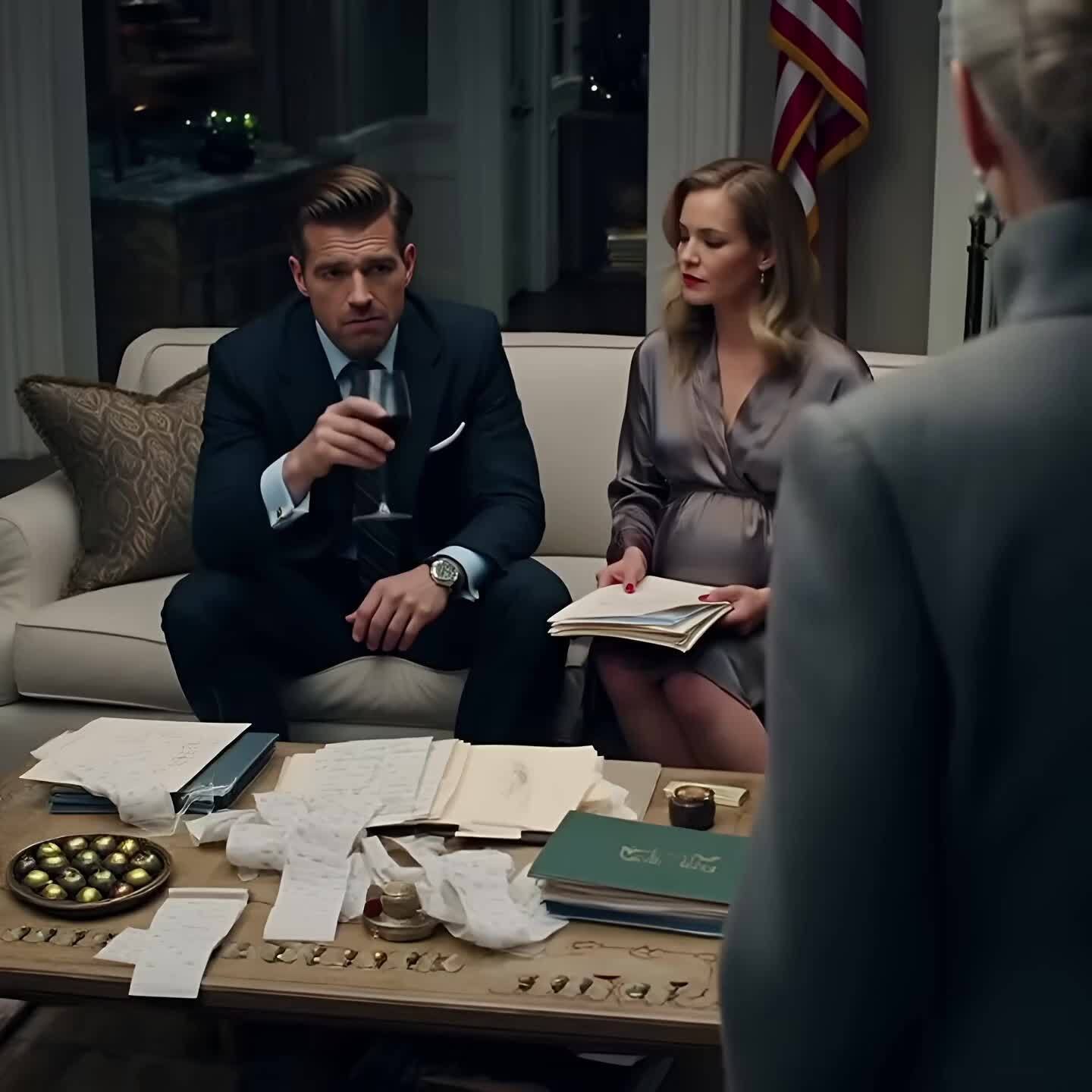
I drove the twenty minutes to my son David’s house with my hands gripping the steering wheel, feeling my blood boiling in my veins. When I arrived, I did not knock on the door. I walked straight in using the key I still had—the same one they had given me years ago, telling me I would always be welcome. What irony. I found them in the living room, relaxed on the sofa, watching television as if nothing had happened. David had a glass of wine in his hand. Caroline, my daughter-in-law, was eating chocolates from an expensive box that I recognized immediately; they were from that exclusive shop downtown where each piece costs fifteen dollars.
My son looked at me with surprise, but before he could open his mouth, I exploded. I screamed at him, asking how he dared to leave his nine-year-old son locked in a car while they enjoyed a dinner that probably cost more than two hundred dollars. Caroline put down the chocolates and looked at me with a coldness that froze my blood. There was no guilt in her eyes; there was annoyance. David stood up trying to calm me down, telling me I was exaggerating, that Leo was fine, that it was only a couple of hours. A couple of hours—as if that made it better, as if leaving a hungry and lonely child was acceptable because it was not four or five hours. I asked him if he had lost his mind, if he had forgotten what it meant to be a father.
Caroline intervened with that sweet and venomous voice she had perfected over the years. “Eleanor, I understand your concern, but this is between us and our son. We do not need you coming into our house to judge us.” Something inside me snapped at that moment. It was not just the coldness of her words; it was the way she said it, as if I were a meddler, as if protecting my grandson were a crime. I told her I had every right in the world to judge them when they treated Leo as if he were a nuisance. David turned red with rage. He shouted at me that it was his son, not mine, and that whatever decisions they made were none of my business. Caroline nodded beside him, arms crossed, with that expression of smugness she had always had.
It was then that I understood that this had not been a mistake. It had been intentional. I demanded they explain to me what the hell was going on. David hesitated, but Caroline did not. With a chilling calm, she told me, “Leo needs to learn that soon he will no longer be the center of attention. I am three months pregnant, and we want him to get used to the fact that things are going to change.” I ran out of air. Pregnant. And her solution to prepare a nine-year-old boy was to leave him alone in a car while they celebrated without him. I asked them if they had lost all humanity, if they really believed that making Leo feel invisible would prepare him to be a good big brother. Caroline shrugged. “It worked with me when my sister was born. My parents taught me that the world does not revolve around me. And now I am a strong and independent person.”
Strong and independent. Those words made me nauseous. What I saw in front of me was not strength; it was cruelty disguised as discipline. It was a woman repeating the same damage that was done to her. Convinced that this was love, David tried to soften the situation. He told me that maybe they had gone a little too far, that they had planned to bring food to the car for him, but they forgot because they were so excited talking about the baby. They forgot—as if their son were something that can be forgotten between the main course and dessert. I told David that I had raised him better than this. I told him to remember what it was like growing up in our house, where love and attention were never lacking. He looked at me with something that looked like shame for a second, but Caroline pulled him by the arm, and that spark went out. She told me that I had spoiled David, that that was why he was now so soft with Leo, and that she was not going to make the same mistake with her children. Her children—as if Leo no longer counted, as if the boy she had carried in her arms, the one she had taught to walk, was no longer part of the equation.
I warned them that if they did something like that to Leo again, I would take him to live with me. David laughed bitterly and told me I had no legal right. Caroline smiled. It was that smile that convinced me that this was much worse than I imagined. I left that house knowing that the battle was just beginning. I returned to my home where Leo was waiting for me on the sofa, hugging a cushion with his eyes fixed on the door. When he saw me, he ran to me and asked if Dad was angry. I stroked his hair and promised him that no one would ever hurt him again. But inside, I felt a terrible fear because I knew my son, and I knew that Caroline had more control over him than I had wanted to admit.
The following days were a silent torture. Leo stayed with me without David protesting too much, which seemed suspicious to me. It was as if they were relieved to have him out of the house. Every morning I took him to school, and every afternoon I picked him up, watching how other children ran to their parents while he walked toward me with a smile that did not reach his eyes. One afternoon, while we were doing homework together at the kitchen table, I asked him carefully if this thing about staying in the car had happened before. Leo stopped writing. His fingers tensed around the pencil, and I saw him swallow with difficulty. He did not look at me when he finally spoke.
He told me that three weeks ago his parents had gone to the movies without him. They left him at home with the excuse that the movie was for adults, but he saw later on his dad’s computer that they had bought tickets for an animated movie, one of those he loves. They bought popcorn, candy, sodas, and probably spent about eighty dollars on a family outing from which he was deliberately excluded. I felt something twisting in my stomach. I asked him if there was more. Leo nodded, and the words began to flow like a river that had been held back too long. He told me that a month ago, when it was David and Caroline’s wedding anniversary, they went to a luxury hotel for the weekend. Up to there, normal. The strange thing was that they took Leo but left him in the hotel room watching television while they had dinner at the restaurant downstairs, went to the spa, and swam in the pool. The boy spent two whole days locked in a hotel room, eating what they brought up from room service, watching the same channels as always. His parents came up only to sleep late at night and left early in the morning. When Leo asked if he could go to the pool with them, Caroline told him they needed couple time, that he was big enough to understand that.
My hands were shaking while I listened. I asked him why he hadn’t called me, why he didn’t tell me anything. Leo lowered his gaze and whispered that “Mom Caroline” had told him that if he complained to me, he would no longer be able to come visit me, that I was old and didn’t need worries, and that children who accuse their parents ended up in places where nobody wanted them. A thirty-two-year-old woman threatening a nine-year-old boy with total abandonment. I felt a rage so deep that I had to get up from the table and walk to the window so Leo wouldn’t see me shaking. I took several deep breaths before turning around. I told him that none of that was his fault, that he had not done anything wrong, and that he could always, always count on me. Leo began to cry, not with loud sobs, but with those silent tears that are worse because they mean the child has already learned to suffer in silence.
That afternoon, I called my daughter Sarah. I needed to tell her what was happening; I needed someone else in the family to see the madness I was seeing. Sarah listened to me in silence for the first few minutes, but then began to defend David. She told me that maybe I was being too harsh, that raising children was complicated, that Caroline came from a different family with different methods. I reminded her that leaving a child alone for hours was not a method; it was neglect. Sarah sighed with that condescension that drove me crazy and said to me, “Mom, David is my brother. I know his flaws, but I know he loves Leo. They are probably just going through a difficult time with the pregnancy.”
The pregnancy. Everything went back to the damn pregnancy. As if expecting another child were justification for emotionally destroying the first one. I asked Sarah if she remembered when David was born, if I had ever made her feel less important, less loved. She stayed silent. She knew the answer, but she didn’t want to admit that what David was doing had no excuse. Before hanging up, Sarah warned me not to turn this into a bigger family conflict—that David was already upset with me for confronting him in his house and that if I kept pushing, I could lose access to Leo completely. Those words haunted me for days.
I decided to investigate on my own. I called Leo’s teacher, Mrs. Miller, with whom I had spoken many times at school meetings. I asked her if she had noticed anything strange in my grandson’s behavior lately. There was a long pause before she answered. She told me that Leo had changed a lot in the last two months. Before, he was participative, cheerful, always the first to raise his hand. Now he stayed quiet, drew during recess instead of playing with his friends, and on two occasions he had fallen asleep in class. When they asked him if he was okay, he only said he was tired. Mrs. Miller also told me something that broke my heart. Last week during an activity where the children had to draw their family, Leo drew himself, me, and his dog. He did not include his parents. When the teacher asked him why, Leo replied, “They are busy with more important things.”
I hung up the phone and sat in the living room, feeling the full weight of the situation falling on my shoulders. It was not just an isolated incident. It was a systematic pattern of exclusion, of making a child feel invisible in his own family. And the worst part was that I had been so blind, so confident that my son would never be capable of something like that. I decided it was time to talk to David face-to-face. But this time, without shouting, without accusations he could use against me. I met him at a neutral coffee shop far from his house and Caroline. I needed him to listen to me without his wife whispering in his ear what to say, what to think, what to feel.
He arrived fifteen minutes late with his tie loose and dark circles under his eyes. He sat across from me and ordered a coffee without looking me in the eye. There was something different about him, something I hadn’t noticed before because I always saw him through my memories of the boy he had been, not the man he had become. I started calmly. I told him we needed to talk about Leo, about what was really happening. David sighed as if I were an exhausting burden and snapped at me, “Mom, I already know what you’re going to say. I already talked to Caroline and we agree that you exaggerated everything. Leo is fine. He is just a dramatic child who manipulated you.”
A dramatic child. Those words hit me like a slap in the face. I asked him if he really believed his nine-year-old son was capable of inventing real tears, of faking that level of pain. David shrugged and drank his coffee. “Kids exaggerate. Mom, you know that. Leo probably misunderstood the situation.” Misunderstood. I took out my phone and showed him the messages Mrs. Miller had sent me that morning, describing Leo’s increasingly withdrawn behavior. I showed him the drawing she had photographed for me, where my grandson had drawn himself alone with me and the dog, without his parents. David looked at the image for long seconds and something crossed his face, something like guilt. But he crushed it quickly. He told me that kids draw weird things all the time, that it meant nothing, that Leo was probably angry that day because they hadn’t bought him something he wanted. Each excuse was weaker than the last, but David clung to them as if they were life jackets.
I reminded him about the restaurant, the three hours in the car. David shook his head. “It wasn’t three hours, Mom. It was like an hour and a half, maximum two. And we left him the iPad with unlimited data. He wasn’t suffering. He was watching videos.” I felt like I was drowning. I asked him if he really didn’t see the problem, if he really thought leaving a hungry child in a car was acceptable as long as his justification was that he had digital entertainment. David rubbed his face with both hands and finally looked at me. “Mom, you’re going to be a grandmother again. You should be happy for us. Instead, you’re turning everything into a drama. Caroline is stressed with the pregnancy. She has constant nausea. She is sensitive. The last thing she needs is for you to attack her.”
There it was. The real reason. It wasn’t about Leo at all. It was about protecting Caroline, keeping her happy, ensuring nothing disturbed her perfect pregnancy. I asked him when he had stopped being Leo’s father to become only Caroline’s husband. David stiffened. He told me I had no right to question his marriage, that Caroline was an excellent mother, and that if I couldn’t see it, the problem was mine. I asked him then why an excellent mother would threaten her son with taking away his grandmother if he complained. The color left his face. “Caroline would never do that,” he said. But his voice was shaking. I explained exactly what Leo had told me, word for word. David shook his head repeatedly, as if he could erase the truth with that movement. “Leo is making things up. Caroline is strict, yes, but she would never threaten him like that.”
I asked him if he had ever considered that perhaps he didn’t know his wife as well as he thought, that perhaps the woman she was with him was not the same one she was with Leo when no one else was watching. David stood up abruptly. The chair screeched against the floor. “Enough, Mom. This is over. Leo can stay with you this week, but next weekend he comes back home. And if you keep interfering in our decisions as parents, I’m going to have to limit your visits.” Limit my visits. The threat hung in the air between us. I stayed seated, looking at him. And for the first time in my life, I didn’t recognize the man in front of me. This wasn’t the boy I had raised—the one who cried when he saw sad movies, the one who rescued bugs to take them out of the house instead of killing them. This was someone who had learned to turn off his empathy to please someone else. He left without saying goodbye.
I stayed there with the cold coffee in front of me, feeling my throat close up. I paid and went out to the street where the noise of traffic hit me like a wave. I walked to my car and sat at the steering wheel without turning it on, trying to process what had just happened. My son had chosen, and he hadn’t chosen me. Worse yet, he hadn’t chosen Leo. That afternoon, when I picked my grandson up from school, he hugged me tighter than ever. He asked me if Dad was still angry. I lied to him. I told him everything was going to be fine, that Dad just needed time to think. But Leo looked at me with those eyes far too wise for his age and whispered, “You don’t have to lie to me, Grandma. I know Dad is always going to choose Mom Caroline.” The clarity with which he said it destroyed me. A nine-year-old child shouldn’t know that truth about his own father. He shouldn’t have already learned that in the hierarchy of his family, he occupied the last place.
When we got home, Leo went straight to the guest room he had turned into his temporary space. I heard him close the door with a soft click. He didn’t cry. He made no noise. That silence was worse than any crying. I sat in the kitchen and called Sarah again. I needed to make her understand the gravity of all this. But when I told her about my conversation with David, her response left me frozen. “Mom, I think you’re blowing everything out of proportion because you have a hard time accepting that David doesn’t need you anymore. He has his own family now.” His own family. As if Leo weren’t part of that family. As if I were jealous instead of worried. I told Sarah she was as blind as her brother and hung up before saying something I would regret.
I stayed alone in that kitchen with the weight of helplessness crushing my chest. I had raised two children. I had loved them, protected them, taught them to distinguish right from wrong. And now one of them was destroying his own son while the other defended him. That night I reviewed my finances. If David carried out his threat, if he tried to take Leo from me, I would need a lawyer. Family lawyers charged between two hundred and four hundred dollars an hour. I had some savings, my pension, the house paid off. I could fight legally if necessary. But the darkest part of my mind whispered something terrible: What if I lost? What if a judge decided that parental rights were absolute even when those parents were causing harm? What if Leo ended up trapped in that house, feeling invisible with no one to protect him?
I poured myself a glass of water and drank it standing by the window, looking at the empty street. The streetlights created yellow puddles on the pavement. There was a storm approaching; I could smell it in the air. I went up to check on Leo. I opened the door carefully and found him asleep, hugging the pillow as if it were the only solid thing in his world. I went over and adjusted the blanket. On his nightstand, I saw a folded piece of paper. I took it and opened it. It was a letter he had never sent. It said: “Dear Dad, I promise to be better so you love me more than the new baby. I’m going to get better grades, and I won’t ask you for things anymore. Just don’t forget me, your son, Leo.” The tears I had held back all day finally came out. I sat on the floor next to his bed with that letter in my hands and cried in silence for the boy who believed he had to earn the love of his own father.
Friday arrived too quickly. David appeared at my door at six in the evening, punctual as he had always been for things that suited him. He came alone without Caroline, which seemed cowardly to me. Leo was in his room packing his suitcase with a painful slowness, as if every garment he folded were a farewell. I opened the door and David entered without greeting me. He shouted Leo’s name and my grandson appeared in the hallway with his backpack hanging from one shoulder, dragging his feet. He didn’t run to hug his father as he used to do before. He stood there waiting for instructions like a resigned soldier. David ruffled his hair with fake joy. “Ready to go back home, champ? Mom made your favorite food.” Leo nodded without saying anything. I saw how he squeezed the straps of his backpack until his knuckles turned white.
Before they could leave, I planted myself in front of David. I told him we needed to establish clear rules: that Leo would call me every day, that I would pick him up on Wednesdays after school to spend the afternoon together, and that at the first sign that something was not right, I would come for him without warning. David looked at me with that mixture of irritation and exhaustion that had become his permanent expression. “Mom, you are not going to dictate how we raise our son. Leo can call you whenever he wants, but not every day. And about Wednesdays, we will decide that according to our schedule.” I held his gaze without blinking. I told him that if he didn’t accept those minimal terms, Leo wasn’t going anywhere. David let out a dry, bitter laugh. “You have no legal authority to keep him. If you don’t hand him over right now, I’m going to call the police.”
I felt the ground move beneath my feet. My own son threatening me with the police for protecting my grandson. I looked at Leo, whose eyes were full of held-back tears, and I knew I couldn’t turn him into the battlefield of a legal war. Not yet. I crouched down in front of Leo and hugged him tight. I whispered in his ear to call me whenever he needed at any time and that I would come for him no matter what. Leo nodded against my shoulder and clung to me for a few more seconds before letting go. I watched them leave from the door. Leo turned back three times before getting into the car. David didn’t look back at me a single time. When the car disappeared around the corner, I closed the door and leaned against it, feeling an immense emptiness in my chest.
The next two weeks were agony. Leo called me exactly four times. Always short and tense conversations where I could hear Caroline in the background asking who he was talking to. My grandson had learned to use a code. When he said everything was fine and that he had had a normal day, it meant things were bad, but he couldn’t speak freely. I tried to coordinate the Wednesday afternoons, but Caroline always had an excuse: Leo had a test the next day and needed to study; they had a doctor’s appointment; they had planned a “family activity.” A family activity that, according to what Leo told me later in a quick call from the school bathroom, consisted of them going to the doctor for the baby’s ultrasound while he stayed in the waiting room for two hours.
One night at eleven-thirty, my phone rang. It was Leo crying so hard I could barely understand what he was saying. Between sobs, he told me that Caroline had turned his bedroom into the baby’s room. They had moved all his things to a smaller room at the end of the hall without asking him, without telling him. He arrived from school and his space no longer existed. When he protested, Caroline told him the baby needed the big room because she was going to have more things and that he was big enough to have a small room. David was present, but he said nothing. He just looked away while his wife destroyed the last refuge his son had in that house. I asked Leo if he wanted me to come for him right then. There was a long silence where I only heard his jagged breathing. Finally, he whispered no, that Dad would get very angry and things would get worse. He promised me he would hold on until the weekend when he was supposedly coming to visit me. I hung up and sat in the dark of my bedroom, feeling a helplessness that ate me up inside. My grandson was suffering and my hands were tied, paralyzed by legal threats and the fear of making things worse.
On Saturday, I waited for them to arrive at ten in the morning as they had promised. Ten, eleven, noon. At one in the afternoon, I called David. He sent me straight to voicemail. I wrote him messages. Nothing. I called Sarah begging her to contact her brother. She told me she had seen him that morning at the supermarket with Caroline buying things for the baby and that they looked happy. At three in the afternoon, David finally replied with a brief message: “Something came up. Leo can’t go today. Maybe next week, maybe.” As if seeing his grandmother were a privilege they could grant or deny at their convenience. I dialed him immediately, furious. This time he did answer.
I demanded to speak to Leo. David sighed with exasperation and told me that Leo was grounded because he had thrown a tantrum when they told him he couldn’t come to see me, that he had screamed and cried like a baby, and that he needed to learn that that behavior was not acceptable. I asked him what he expected a nine-year-old boy to do when they canceled something he had been waiting for all week. David cut me off before I could finish. “There is the problem, Mom. You spoil him too much. Caroline is right. You’ve spoiled him and now we have to deal with the consequences.” Caroline is right. Those three words summarized everything. Caroline was always right. Caroline was the wise one. Caroline knew better than anyone how to raise Leo, despite the fact that the boy was increasingly withdrawn, sadder, more broken. I told David that he was making the worst mistake of his life, that someday Leo was going to grow up and realize that he chose Caroline over him again and again. David laughed—a cold laugh I didn’t recognize. “Leo will understand when he’s a father. He will understand that sometimes you have to make difficult decisions and set boundaries.”
Boundaries. What a convenient word to justify cruelty. That afternoon I drove to his house anyway. I rang the doorbell for five minutes until finally Caroline opened the door. She was wearing a pale pink silk robe that probably cost more than three hundred dollars and her hair was perfectly done despite it being Saturday. She looked at me with that disdain she had perfected. “Eleanor. David told me you would come. Leo is grounded and cannot receive visitors. Please respect our decisions as parents.” I asked her since when seeing Grandma was considered a visit that could be prohibited as punishment. Caroline smiled, and that smile had pure poison. “Since Grandma decided to turn against us and teach the child that he can manipulate us by crying.” I tried to walk past but she blocked the entrance with her body. Behind her, I could see David on the stairs watching the scene but without moving. I shouted at him to come down to talk to me like a man. He stood there like a spectator of his own life.
Caroline slammed the door in my face. Literally, the bang resonated in my ears while I stood there on the porch like a fool. I knocked again. No one opened. I shouted Leo’s name. Nothing. I pounded on the door with my fists until my hands hurt. A neighbor came out of the house next door and asked me if everything was okay. I had to swallow the humiliation and tell her yes, that it was just a family misunderstanding. She looked at me with pity before going back inside. I returned to my car and sat there looking at that house where my grandson was trapped with people who were destroying him piece by piece. I saw a curtain move on the second floor. It was the window of what had been Leo’s room. Now it was the room of the baby who hadn’t even been born. While my grandson had been relegated to a forgotten space, I started the car feeling something new growing inside me. It was no longer just worry or fear. It was determination, a cold and clear certainty that this was not going to stay like this. If David and Caroline wanted war, they were going to get it. But this time, I was going to fight with the right weapons.
I drove straight to the law firm I had researched the week before. It was Saturday, but the lawyer, a woman named Kate Bennett, had agreed to meet with me in her office. When I told her the whole story—every detail, every incident, every desperate call from Leo—she took notes without interrupting me. When I finished, she looked at me over her glasses. “Eleanor, what you are describing to me is emotional neglect and possibly psychological abuse. But I need you to understand something. Fighting for custody of a grandchild when the parents are alive and haven’t been declared unfit is extremely difficult.” I asked her what she needed then. Kate leaned back in her chair and began to explain. We would need to document everything: calls, messages, testimony from the teacher, medical records if Leo showed signs of anxiety or depression, any evidence that demonstrated a pattern of neglect. She told me the process could take months, cost between eight thousand and fifteen thousand dollars, and that even then there were no guarantees. But she also told me something else: if the situation worsened, if there was any serious incident, we could request temporary emergency custody. Those words stayed etched in my mind while I signed the representation contract and handed her a check for three thousand dollars as a retainer.
I left that office with a plan, but also with a knot in my stomach. I was suing my own son. The woman who had brought him into the world, who had spent nights awake taking care of him when he was sick, who had worked two jobs to give him a good education, was now taking him to court. The following days were a hell of silence. David didn’t answer my messages. Leo stopped calling completely. Sarah left me a voicemail where she told me with a trembling voice that David had told her about the lawyer and that he was devastated. How could I do that to my own son? That I was “destroying the family.” Destroying the family. As if the family weren’t already destroyed. As if Leo didn’t matter in that equation.
Tuesday afternoon, I received a call from the school. It was Mrs. Miller, and her voice sounded worried. She told me that Leo had had a breakdown during physical education class. He had started crying for no apparent reason and couldn’t calm down. The school nurse had to call his parents, but neither answered. I was the secondary emergency contact. I arrived at the school in fifteen minutes. I found Leo in the nurse’s office sitting on a cot with red and swollen eyes, hugging his knees. When he saw me, something inside him broke completely. He threw himself into my arms, crying with a desperation that broke my heart. Between sobs, he told me what had happened. That morning before going to school, he had heard Caroline and David talking in the kitchen. Caroline was saying that when the baby was born, they would need the help of a full-time nanny, someone who would stay in the house. For that, they were going to need Leo’s room, too. So, they were considering sending him to a boarding school.
A boarding school. My nine-year-old grandson sent away from his home because there was no space for him in his parents’ life. David had said that maybe it was too drastic, but Caroline insisted. She said she knew an excellent boarding school two hours away where they accepted children from third grade, that Leo could come home one weekend a month, and that would teach him independence and discipline. Leo had stood frozen on the stairs, listening to how his parents planned his exile. He had gone to school carrying that weight on his child’s shoulders, and when in PE the teacher asked them to run, something in him simply gave way. He stopped in the middle of the field and began to cry, unable to contain all the accumulated pain anymore. The nurse, Mrs. Patricia, looked at me with eyes full of compassion. She told me in a low voice that this was not normal, that a child of that age shouldn’t be under so much emotional stress. She suggested I take Leo to a child psychologist as soon as possible.
I asked Leo if he wanted to go back home with his parents or come with me. The answer came without hesitation. “With you, Grandma, please don’t make me go back there.” I signed the papers to take him out of school and took him to my house. On the way, Leo didn’t say a word. He just looked out the window with lost eyes, as if he were in shock. When we arrived, I took him straight to the room he considered his, made him hot chocolate, and sat beside him. I promised him I wasn’t going to leave him alone, that we were going to solve this together. Leo looked at me with those tired eyes and asked me something I will never forget. “Grandma, why doesn’t Dad love me anymore? What did I do wrong?” My throat closed up. I told him he hadn’t done anything wrong. That sometimes adults get lost and make wrong decisions, but that had nothing to do with him. That he was perfect just as he was. Leo nodded, but I could see in his face that he didn’t quite believe me.
That night after Leo fell asleep exhausted from so much crying, I called Kate. I told her what had happened and she told me to document everything—the call from the school, the nurse’s testimony, Leo’s emotional state. She told me this could be enough to request temporary emergency custody. At ten at night, David appeared at my door. He didn’t knock. He used his old key and entered like a hurricane, shouting my name. I found him in the living room, his face red with fury. He demanded I return his son immediately. I told him calmly that Leo was asleep and I didn’t intend to wake him. David advanced toward the stairs, but I stood in his way. I warned him that if he went up and scared that boy, I would call the police. David stopped, shaking with rage. He shouted at me that he was going to sue me for kidnapping, that he was going to have me arrested, that I would never see Leo again. I replied to go ahead, to call whoever he wanted, but that Leo was not going back to that house until he and Caroline learned to treat him like a son and not like a nuisance.
It was then that David said something that froze my blood. “This is your fault. You are poisoning him against us. You put ideas in his head. Leo was fine until you started filling him with your poison.” I asked him if he really believed that. If he truly thought a nine-year-old boy needed someone to tell him he was being hurt to realize it. David hesitated, but his pride didn’t let him back down. Caroline entered at that moment. She must have been waiting in the car. She came with that expression of moral superiority I detested so much. She told me they had spoken with a lawyer, too, that they had all the legal rights on their side and that I had none. I smiled at her. It was a sad but firm smile. I told her that maybe they had the law on their side, but that I had something more important. I had the truth. And the truth was that they were destroying their son out of pure selfishness.
Caroline went pale. David tried to speak, but I interrupted him. I told them that Leo had heard their conversation about the boarding school. I saw the color leave David’s face. Caroline, on the other hand, stood firm. She raised her chin and said, “It was just an exploratory conversation. We hadn’t decided anything.” I asked her how a nine-year-old boy was supposed to understand that difference, how he was supposed to sleep peacefully knowing that his parents were even considering sending him away. The silence that followed was deafening. David finally spoke with a broken voice. “We need space, Mom. With the baby coming, things are going to be difficult. We thought maybe Leo would be better in a structured environment with other children. Far from all this conflict.”
Far from all this conflict. It was their way of saying far from us. I told them that if they wanted space, perfect. Leo would stay with me and they would have all the space in the world to prepare for their new baby. When they were ready to be parents to both children, we could talk. Caroline exploded. She screamed at me that I was a manipulator, that I was using Leo as a weapon, that I only wanted to separate them because I couldn’t stand that David had his own family. I replied with a calm I didn’t know I had. “Caroline, if you call what you are building on the suffering of a child a family, then indeed I cannot stand that kind of family.”
David took Caroline by the arm before she could respond. He looked at me with something that could have been pain or could have been hatred. I was no longer sure I could distinguish between both in my own son. He told me I was going to regret this, that I was making a terrible mistake. I told him the only terrible mistake was the one he was committing every day he chose the easy path over his son. That someday when it was too late, he would realize what he had lost. And that day I would be there for Leo, picking up the pieces of a broken boy they had discarded. They left without saying more. I heard the car drive away in the night and let myself fall onto the sofa, trembling. I had crossed a point of no return. The relationship with my son was shattered. Sarah would probably hate me, too, for dividing the family. But when I went up and saw Leo sleeping peacefully for the first time in weeks, I knew I had made the right decision.
The next morning, Kate filed the request for temporary emergency custody. We included the testimony from the school, the messages, the calls, everything. The judge gave us a hearing for the following week. The week before the hearing was the longest of my life. David hired an expensive lawyer, one of those who charge five hundred dollars an hour and wear suits that cost more than the monthly rent of an apartment. Kate warned me they were going to try to paint me as the interfering grandmother who manipulated the child while they would present themselves as loving parents being unfairly attacked. Sarah finally came to see me on Thursday. She arrived with a tense face and tired eyes. She sat in front of me in the kitchen and for long minutes said nothing. She just looked at her coffee cup without touching it. Finally, she spoke. “Mom, David is shattered. He says you took his son. Caroline cries all the time from the stress and they are worried this will affect the baby.”
I asked her if she had spoken to Leo, if she had asked him how he felt in all this. Sarah looked away. “I talked to him on the phone. He says he’s fine here with you, but he’s just a child. Mom, children don’t always know what’s best for them.” I felt something break inside me. I told Sarah to go up and see her nephew, to look him in the eye, and tell me if she saw a manipulated child or a child who could finally breathe. Sarah stayed silent, toying with the cup. I told her then everything I hadn’t told her before, every detail, every incident, every desperate call. I told her about the letter Leo had written, promising to be better, to earn his father’s love. I told her about the three hours in the car, the stolen room, the conversation about boarding school.
Sarah listened with her face growing paler. When I finished, she had tears in her eyes. She whispered, “I didn’t know it was that serious. David told me you were exaggerating everything, that Leo was just being dramatic because he was jealous of the baby.” I asked her if she really believed her brother was incapable of lying to her, of minimizing his own mistakes to look good. Sarah covered her face with her hands. “He’s my brother, Mom. It’s hard to believe he’s capable of hurting his own son like that.” I told her I didn’t want to believe it either. That I had spent weeks denying it, but that the evidence was there, screaming in my face. That she could choose to believe David’s smooth words or Leo’s scared eyes.
Sarah got up and went up the stairs without saying anything else. I found her ten minutes later in Leo’s room. My grandson was showing her some drawings he had made at school. Sarah looked at them in silence, and I could see the exact moment she understood everything. One of the drawings showed a house with two large figures inside and a small figure outside in the rain. Leo had written at the bottom: “Me waiting.” Sarah came out of the room with red eyes. She hugged me in the hallway and whispered, “I’m sorry, Mom. I should have listened to you from the beginning.” I told her she didn’t need apologies. I needed her to testify at the hearing. She nodded without hesitation.
The day of the hearing arrived like an inevitable storm. Kate had prepared me for everything—the difficult questions, the accusations, the attempts to make me look like the villain. But nothing prepared me to see David enter that room with Caroline on his arm, both dressed as if for a wedding. Her belly of five months was perfectly accentuated by a cream-colored dress that must have cost more than four hundred dollars. Their lawyer, a man named Mr. Sterling, began painting a perfect picture: hard-working, loving parents looking forward to the arrival of their second child while trying to handle the natural jealousy of the first. According to his version, I had taken advantage of the situation to alienate Leo from his parents, filling him with lies and resentment.
When it was my turn to testify, my hands were shaking, but my voice remained firm. I told everything: the late-night calls, the three hours in the car, the stolen room, the conversation about boarding school. Mr. Sterling tried to interrupt me several times, but the judge, a serious woman named Judge Stevens, ordered him to be quiet and let me speak. When I finished my testimony, they brought Mrs. Miller. She described the radical change in Leo’s behavior, the breakdown in PE, the drawing where he had excluded himself from his family. Mr. Sterling tried to discredit her testimony, saying teachers were not qualified psychologists to evaluate family situations. Then Sarah walked in. They didn’t expect her. David went pale when he saw his sister walk toward the stand. Mr. Sterling protested, saying she wasn’t on the witness list, but Kate explained she was a last-minute witness with relevant information.
Sarah looked David in the eye before starting to speak. Her voice trembled, but she didn’t stop. She told how she had defended her brother initially, how she had believed his version. But then she spoke of her visit to my house, of Leo’s drawings, of the conversation she had had with her nephew where the boy confessed he had nightmares where his parents forgot to pick him up from school and he stayed alone in an empty building forever. David shouted from his seat that she was a traitor. The judge banged the gavel and warned him that another outburst like that and he would be removed from the room. Caroline was crying, but there was something calculated in those tears, something performative that the judge seemed to notice, too.
Mr. Sterling called David to testify. My son took the stand with that posture of an offended man, of a misunderstood victim. He spoke of how difficult it had been for them to handle the pregnancy while I sabotaged him. He said Leo was confused by my influence, that before I intervened, everything was fine in his family. Kate stood up for the cross-examination. She asked David about the night at the restaurant. He minimized everything. It wasn’t three hours, but two. Leo had the iPad. He wasn’t cold because it was summer. Kate asked him if he had given him food. David hesitated. “I was going to bring him something, but we lost track of time.” Kate asked how they could lose track of time when their son was waiting for them hungry. David had no answer. Then she pulled the ace from her sleeve: the restaurant receipts. They had spent two hundred and thirty-eight dollars on that dinner. Wine at one hundred and twenty dollars a bottle, appetizers, main course, dessert—a lavish celebration while his son chewed on hunger in the parking lot.
Caroline was next. She took the stand with her prominent belly and her calculated tears. She spoke of how difficult the pregnancy was, of the constant nausea, of the stress of having a mother-in-law who hated her and blamed her for everything. She said she loved Leo as if he were her own son, that everything they did was for his own good. Kate asked her about Leo’s room. Caroline explained they needed the big room for the baby because it was more spacious and had better natural light, that Leo had “agreed” to the change. Kate asked her if they had consulted him before or after moving his things. Caroline stammered. “We wanted to give him a surprise.” Then Kate asked about the boarding school. Caroline stiffened. “It was just a hypothetical conversation. We never decided anything.” Kate pulled out a paper—a brochure for the boarding school they had found in David’s car during discovery. It was marked with notes, prices underlined, enrollment dates circled. Caroline tried to explain, but every word sank her deeper.
The judge called a twenty-minute recess. In that time, I saw David arguing heatedly with his lawyer. Caroline was crying in the bathroom, surrounded by her mother and sisters who had come to support her. Sarah sat next to me in silence, holding my hand. When we returned, Judge Stevens had a grave expression. She said she had reviewed all the evidence presented and that while parents had rights, those rights were not absolute when there was evidence of emotional harm to the minor. She ordered a complete psychological evaluation of Leo by a neutral specialist. Until that evaluation was complete and another hearing was held, she granted temporary custody to me with supervised visitation for the parents twice a week at a neutral center. David collapsed. He literally let himself fall into his chair with his head in his hands. Caroline screamed that this was unfair, that they were taking her son because of the testimony of a bitter woman. The judge warned her to moderate her language or face contempt charges.
We left that court with a temporary victory, but the weight of what had happened crushed my chest. I had won the legal battle, but I had lost my son. The way David looked at me when we left the room, with that mixture of hate and pain, would haunt me forever. The first supervised visits were heartbreaking. Leo sat on a chair in the family mediation center, looking at his parents as if they were dangerous strangers. David tried to act normal, asking him about school, about his drawings, but there was a stiffness in his movements that Leo detected immediately. Caroline barely spoke. She sat with her hands on her belly, looking at my grandson with a mixture of resentment and something that could have been shame. The supervisor, a woman named Holly, took notes on every interaction. After the third visit, she pulled me aside and told me something that froze me. “Eleanor, in my fifteen years doing this, I have never seen a child so clearly terrified of disappointing his parents. Every word he says, every movement he makes is calibrated not to provoke rejection.”
Leo’s psychological evaluation took three weeks. Dr. Evans, a child psychologist with thirty years of experience, saw Leo six times. Afterward, he called me to a private meeting before submitting his official report. His face was tense when I sat across from him. He told me that Leo showed clear signs of complex emotional trauma, abandonment, anxiety, hypervigilance, and extreme people-pleasing behaviors. In the play therapy sessions, all the scenarios Leo created ended with the child character being forgotten or left behind. He drew his family repeatedly, and in every drawing, he appeared smaller, further away, more invisible. Dr. Evans looked at me with those tired eyes of someone who has seen too much childhood suffering. “Eleanor, this child is convinced he doesn’t deserve to be loved. At nine years old, he has already internalized that his existence is a problem his parents need to solve.”
I left that office and had to sit in my car for twenty minutes before I could drive. I cried until I had no tears left. And then I cried some more. My grandson, that bright and sweet boy, had been reduced to a set of emotional survival mechanisms. Dr. Evans’s report was devastating for David and Caroline. He recommended intensive family therapy, continuing custody with the grandmother, and expanding visits only gradually according to progress in therapy. The next hearing was scheduled for two months later, but then everything changed.
One night, three weeks after the first hearing, I received a call from Sarah at two in the morning. She was crying so hard I could barely understand her. Between sobs, she managed to tell me, “Mom, Caroline is in the hospital. She lost the baby.” The world stopped. Despite everything, despite the pain that woman had caused, I felt a pang of genuine compassion. Losing a child in whatever way is a pain I don’t wish on anyone. I asked Sarah what had happened. She told me Caroline had started having premature contractions that afternoon. They took her to the ER, but they couldn’t save the baby. It was a girl. They were going to call her Sophia. David was destroyed, Sarah told me, completely broken. He was asking to see Leo, screaming his name between tears. The doctors had given him sedatives, but he kept repeating that he needed his son, that he had made a terrible mistake, that he had understood too late.
I hung up the phone and sat in the dark of my room. Part of me, the part that had been David’s mother for thirty-eight years, wanted to run to the hospital and hug him. But another part, the part that had seen Leo break little by little, remained cautious. Pain does not erase cruelty. Regret does not undo damage. The next morning, after taking Leo to school without telling him anything yet, I drove to the hospital. I found David in the waiting room on the third floor, his clothes wrinkled and his eyes so swollen they were barely visible. When he saw me, something inside him collapsed completely. He stood up and fell into my arms, crying like he hadn’t cried since he was a small boy. I said nothing. I just held him while he fell apart, murmuring between sobs that he was sorry, that he had been a monster, that he had lost his daughter and was losing his son because of his own stupidity. He wept until he had nothing left, until he was left trembling in my arms like a scared child.
Caroline was in the room, sedated. Her mother looked at me with pure hate when I entered but said nothing. I approached the bed and looked at that woman who had caused so much damage. She looked small, fragile, broken. I touched her hand gently and told her I was very sorry for her loss. Caroline opened her eyes, glassy from the medication. She looked at me for long seconds before whispering, “This is my punishment, right? For what I did to Leo. God took my daughter because I didn’t know how to value the son I already had.” I didn’t know what to answer. I don’t believe in a God who punishes by taking babies. But there was something in her eyes, a terrible clarity that comes from the deepest pain, that made me see a woman facing for the first time the consequences of her own actions.
The following days were strange and painful. David called me constantly, asking about Leo, begging me to let him see him. I told him he had to wait, that we needed to prepare Leo first, explain what had happened in a way that wouldn’t hurt him more. When I finally told my grandson about the loss of the baby, his reaction surprised me. He didn’t look relieved, as some might expect. He looked devastated. He began to cry and told me it was his fault, that he had secretly wished the baby wouldn’t be born so his parents would love him again, and that now his wish had come true, and he was a monster. I spent two hours explaining to him that none of this was his fault, that babies are lost for medical reasons no one can control, that his thoughts do not have that power. But I saw in his eyes that a new layer of guilt had been added to all the weight he already carried.
That night I called Dr. Evans. I explained the situation and he advised me to bring Leo in for an emergency session. During that session, which the doctor allowed me to witness, Leo confessed something that broke me. “If I hadn’t been bad, if I had been a better son, maybe Dad and Mom Caroline wouldn’t have been so stressed. Maybe the baby would still be alive.” Dr. Evans worked with him for an hour, explaining with infinite patience how the body really worked, how babies are lost, how nothing he thought, felt, or did had any effect on what happened. But even when we left there, I could see Leo wasn’t completely convinced.
A week after the loss, Sarah came to see me with a proposal from David. He wanted to talk to me and Leo together in my house—without lawyers, without supervisors, just family. Sarah begged me to accept, told me David was truly changed, that he had hit rock bottom, and finally opened his eyes. I told her I would think about it. I talked to Kate, who warned me that anything said in that meeting could be used in court later. I talked to Holly, the supervisor, who said it could be beneficial if handled correctly. And finally, I talked to Leo. My grandson was afraid, but also something else. Hope. That dangerous hope children have that their parents will finally see them, love them, choose them. I asked him if he wanted to see his dad here at home where he felt safe. Leo nodded.
David arrived on a Tuesday afternoon. He came alone as we had agreed. Caroline was still in bed, physically recovering but emotionally destroyed. According to Sarah, my son looked ten years older than the last time I had seen him. He had gray hair at his temples, deep wrinkles around his eyes, and a stooped posture as if he carried the weight of the world. Leo was waiting for him in the living room, sitting on the edge of the sofa with his hands squeezed between his knees. When David entered, there was a moment of absolute silence where father and son looked at each other across an abyss that seemed unbridgeable. David knelt in front of Leo. Tears were already running down his face before he said a single word.
“Son,” he began with a broken voice. “I have been the worst father in the world. I failed you in every way possible. I made you feel invisible when you are the most important thing that has happened to me in life.” Leo looked at him with wide eyes, unblinking, as if fearing any movement would break the moment. David continued, “I lost your little sister, and that pain is terrible. But I realized something. For months, I was losing you, too. I was pushing you away, making you feel there was no space for you in our life. And that, son, that is worse than any other loss because it was my choice. It was my mistake.” Leo began to tremble. His whole little body shook with suppressed sobs that finally came out like a torrent. David hugged him, and they both cried together for what seemed like hours, but were only minutes. I stayed in the doorframe with my own face bathed in tears, watching my son finally wake up from the nightmare he himself had created.
When they finally calmed down, David sat on the floor in front of Leo and took his hands. “I want to tell you something I never told you. When you were born, I was so afraid. Afraid of not being a good father. Afraid of not knowing how to take care of you. Afraid of failing you. And your grandma was there to teach me, to help me. You were the most beautiful baby I had ever seen, and I loved you from the first second.” Leo listened with absolute attention to those words, feeding an emotional hunger that had been growing for months. David continued, “But at some point, I stopped listening to my own heart and started listening to wrong voices. I let someone convince me that loving you meant hardening you, preparing you for pain, and that was a terrible lie.”
I asked from my spot if he wanted to say anything else about Caroline. David turned to look at me and nodded slowly. He addressed Leo again. “Your Mom Caroline is sick, son. Not sick in the body, although she is also suffering physically; she is sick in the heart. She repeated with us the same pain caused to her when she was a child because she believed it was the right way to raise. But she was wrong. We were wrong.” Leo asked with a small voice, “She hates me?” David shook his head firmly. “No, son. She is afraid. Afraid of not being enough. Afraid of losing you. And that fear made her make horrible decisions. But hate? No, never hate.”
My grandson processed every word with that seriousness a nine-year-old child should never have. Finally, he asked what had been tormenting him. “Did the baby die because of me? Because I didn’t want her to be born?” David pulled him toward him urgently. “No, no, no. Listen to me well, Leo. Babies are lost for medical reasons that doctors can’t even explain completely. Your thoughts, your feelings do not have the power to make those things happen. What happened to your little sister has absolutely nothing to do with you.” I explained then with simple but honest words what the doctors had said—that Caroline had had complications with the placenta, something that can happen in any pregnancy, regardless of stress or emotions. That even if everything had been perfect at home, the baby could have been lost anyway. Leo listened, and although I saw there were still doubts in his eyes, something of that terrible weight seemed to lift.
David stayed with us that afternoon. We had dinner together—something simple I prepared while they talked in the living room. I heard fragments of their conversation: David telling Leo about his own fears, about how he had failed, about how he wanted to be better; Leo asking careful questions, still afraid of saying something wrong, but slowly beginning to open up. When David left that night, he hugged Leo for a long time. He promised him he would come again, that they would talk more, that they would work together to fix what had been broken. Leo nodded, and for the first time in months, I saw something resembling genuine hope in his eyes. After David left, Leo asked me if he could believe his dad, if the promises this time were real. I told him the truth: that I didn’t know for sure, that we would have to wait and see. But that people can sometimes change when they finally understand the damage they have caused. That his dad seemed truly different. But that time would show us if that change was permanent.
The following weeks brought more surprises. Caroline asked to see me. Sarah called me to convey the message, telling me her sister-in-law wanted to talk to me alone, without David, without lawyers. I hesitated for days. Part of me didn’t want to be in the same room as that woman. But another part, the part that had seen her pain in the hospital, felt I needed to hear what she had to say. I went to her house on a Friday morning. I found her in the living room, still looking fragile, dressed in loose gray clothes. She had cut her hair short, as if she had wanted to shed something. When she saw me, she didn’t try to smile or act. She just indicated for me to sit. There was a long silence before she spoke. When she finally did, her voice was different, stripped of that hardness she had always had.
“Eleanor, I am not going to ask for your forgiveness because I know I don’t deserve it. Not after what I did to Leo. But I need you to understand something.” She told me her story, something she had never shared completely. She grew up being the eldest daughter in a family where love was conditional and scarce. When her younger sister was born, her parents treated her exactly as she had treated Leo. They made her invisible, took away her room, told her she was big and didn’t need attention. They taught her that love was a limited resource that had to be earned constantly. “I grew up believing that was normal,” she said with a broken voice. “I grew up thinking that being strong meant not needing love, that asking for attention was weakness. And when I got pregnant with Sophia, all that poison I carried inside came out. I projected onto Leo everything my parents did to me, convinced I was preparing him for life.”
I asked her if she realized what she had done. Caroline nodded with tears running down her face. “Every day. Every damn day since I lost Sophia. I see Leo’s face when I took his room. I hear him crying alone in the car. I see his fear every time he tried to talk to me. And I realize I became my mother, the very person I swore never to be.” She told me she was in therapy twice a week, that her therapist had diagnosed her with unresolved childhood traumas and inherited dysfunctional parenting patterns. That she had a long road ahead, but wanted to walk it if Leo could ever forgive her. I asked her what she expected from me. Caroline looked me directly in the eye. “Nothing. I expect nothing. I just wanted you to know you were right about everything, that I was cruel to your grandson, and that if you decide I never come near him again, I will understand. But if there is any possibility, some distant day, to be able to try again, I promise I will be different.”
I left that house with mixed feelings. I had seen genuine pain in Caroline, real regret, but I also knew that regret does not erase damage. That Leo still woke up with nightmares, that he still trembled when someone raised their voice, that he still apologized compulsively for things that were not his fault. I told Kate about both conversations. She warned me the second hearing was scheduled for three weeks from now, and I needed to decide what I wanted to ask for: permanent custody, gradual joint custody, or to give David and Caroline a chance to prove their change. I spoke with Dr. Evans, who had continued seeing Leo weekly. He told me my grandson was improving slowly, that the nightmares had decreased, that he was beginning to speak more openly in therapy, but he also warned me that Leo was extremely vulnerable—that another rejection could destroy the progress we had made.
The night before the second hearing, I couldn’t sleep. I stayed awake reviewing every decision, every moment that had brought us here. I thought about Leo sleeping peacefully in the next room, something he hadn’t been able to do in his parents’ house for months. I thought about David, shattered but seemingly awake for the first time in years. I thought about Caroline facing her own demons with a pain she was just beginning to process. I entered the hearing with a decision made. Kate had prepared me for various scenarios, but in the end, only I could know what was right.
Judge Stevens entered and we all stood up. David and Caroline were seated together, but with a notable distance between them, as if they no longer knew how to be close to each other. Dr. Evans presented his follow-up evaluation. He spoke of Leo’s progress but also of his continued fragility. He described how my grandson still constantly monitored adults’ facial expressions, looking for signs of rejection, how he apologized excessively, how his self-esteem remained dangerously low. When it was my turn to speak, I took a deep breath and looked directly at the judge. I told her I didn’t want permanent custody. That despite everything, David was Leo’s father and deserved a chance to prove his change was real. But I established clear conditions: mandatory family therapy twice a week, visits starting supervised and expanding gradually according to progress, and that Leo live with me at least for the next six months while they rebuilt their relationship. I also asked for something else. I looked at Caroline and told her she needed to continue her own individual therapy before being able to be alone with Leo, that she needed to demonstrate with actions, not just words, that she had done the necessary work not to repeat the patterns that had caused so much harm.
Caroline stood up, something no one expected. She asked the judge for permission to speak, and when she got it, she turned to me. “Eleanor, I accept everything you ask. More than that, I thank you for not closing the door on me completely. I know I don’t deserve it, but I promise I will work every day to become someone Leo can trust again.” David also spoke. He told the judge he agreed with all my conditions, that he understood he had lost the right to demand anything, and that the only thing he asked for was the opportunity to really know his son—not the scared boy he had created with his mistakes, but the real human being who had been trying desperately to earn love that should have been unconditional from the start.
The judge took a recess to deliberate. Those thirty minutes were eternal. Sarah sat next to me, squeezing my hand. I could see David and Caroline on the other side of the room, him with his head in his hands, her looking into the void with a lost expression. When the judge returned, her verdict was clear and firm. She granted temporary primary custody to me for six months with a mandatory review at the end of that period. David and Caroline would have supervised visits twice a week during the first month, expanding gradually. According to the family therapist’s report, Caroline could not be alone with Leo until her individual therapist certified in writing that she had sufficiently worked through her own traumas. She also ordered something I didn’t expect: that David take positive parenting classes and that both parents participate in a support group for parents who had made serious mistakes with their children. The judge said something that stuck with me: “Love is not enough when it is mixed with harm. These parents need to learn that loving also means protecting, nurturing, and putting the emotional needs of the child above their own comfort.”
We left that court with something none of us really expected: a chance. It wasn’t a happy ending. It was barely the beginning of a long and painful road toward healing, but it was something. The following months were complicated, but hopeful. The first supervised visits were tense with Leo still cautious, still measuring every word. But slowly, very slowly, I began to see changes. David learned to listen instead of talking. Caroline learned to sit in silence with the discomfort of having caused harm without trying to justify herself immediately. In family therapy, which I also attended sometimes, Leo began to express his pain in ways he had never been able to. He shouted at his father that he had made him feel invisible. He told Caroline he had been afraid of her for months. And both of them, instead of defending themselves, listened to him. They cried with him. They asked for forgiveness without “buts” or excuses.
There were setbacks, of course. Moments where Leo closed up again, where old wounds opened anew. One afternoon, David arrived ten minutes late to a visit, and Leo had a panic attack, thinking they had forgotten him again. It took hours to calm him down. But David didn’t give up. He arrived early to every subsequent visit. He called Leo every night at the same time to say goodnight. Small, consistent actions that slowly rebuilt broken trust. Caroline worked harder than I expected. Her therapist contacted me after three months to tell me she had seen genuine progress, that Caroline had begun to process the traumas of her own childhood and understand how she had perpetuated them. When she finally had her first visit alone with Leo, four months after the hearing, I was terrified. But when I picked Leo up two hours later, he surprised me. Caroline hadn’t tried to act as if nothing had happened. Instead, she sat with him and said, “I don’t know how to be a good stepmother yet, but I want to learn. Will you teach me what you need from me?” And Leo, with that bravery children have when they finally feel safe, told her the truth. “I need you not to leave me out. I need you not to make me feel like I’m in the way.”
The time for the six-month review arrived. Dr. Evans presented a positive but cautious report. Leo had improved significantly. Fewer nightmares, better school performance, more confidence, but he still needed the stability of my house as a secure base. The judge made a Solomonic decision. She would maintain primary custody with me, but Leo would start spending full weekends with his parents, eventually expanding to alternating weeks if everything continued well. David and Caroline accepted without protest.
Now, almost a year after that horrible day where Leo arrived crying at my house, things are different. Not perfect. They will never be perfect. Scars don’t disappear completely. But Leo smiles more. He plays with his friends without that constant shadow of anxiety. And most importantly, when he is with his parents, he no longer walks on eggshells. David asked for my forgiveness two months ago. One night after dropping Leo off with me, he told me, “Mom, I became everything you taught me not to be, and you had to save my son from me. I will never be able to thank you enough for not giving up on any of us.” Sarah and I rebuilt our relationship, too. She admitted it had been easier to believe the comfortable version of the story than to face that her brother was hurting her nephew. Now she comes to visit us often and is a present and loving aunt. Caroline is still working on herself. There are days where I see she struggles against her own patterns, against that internal voice that tells her love must be earned. But the difference is that now she recognizes that voice and chooses not to obey it. She has thanked me several times for not having completely taken away the opportunity to be part of Leo’s life.
The other night, Leo was doing his homework at my kitchen table when suddenly he looked up and asked me, “Grandma, do you think Dad really changed or is he just pretending?” I told him the truth: “I think your dad woke up from a nightmare he created himself. That he is working hard to be better, but that it’s okay for you to still have doubts. That trust is rebuilt slowly, step by step.” Leo nodded and went back to his homework. But a few minutes later, he said something that filled me with hope. “I think someday I’m going to be able to live with them again. But I like living here with you, too. We can stay like this a while longer.” I promised him that as long as he needed, my house would be his house. That never again would he have to wonder if there was space for him because there always, always would be.
This story doesn’t have a perfect ending because real life doesn’t have them. It has an imperfect present where a ten-year-old boy is learning to trust again. Where a father is learning to really be a father. Where a stepmother is facing her own demons. And where a sixty-six-year-old grandmother learned that sometimes loving means fighting, means standing firm even when they call you meddlesome, means risking everything to protect the one who cannot protect himself alone. Leo still has bad days. There are still moments where the fear returns. But now he has something he didn’t have before. He has the certainty that there is at least one place in the world where he is loved without conditions. Where his existence is not a problem to be solved, but a gift to be celebrated. And that certainty, more than any court ruling or therapy session, is what will eventually heal him. I don’t know what the future will bring, but I know we will face whatever comes together with honesty, with patience, and with the kind of love that doesn’t break because it should never have had conditions from the start.