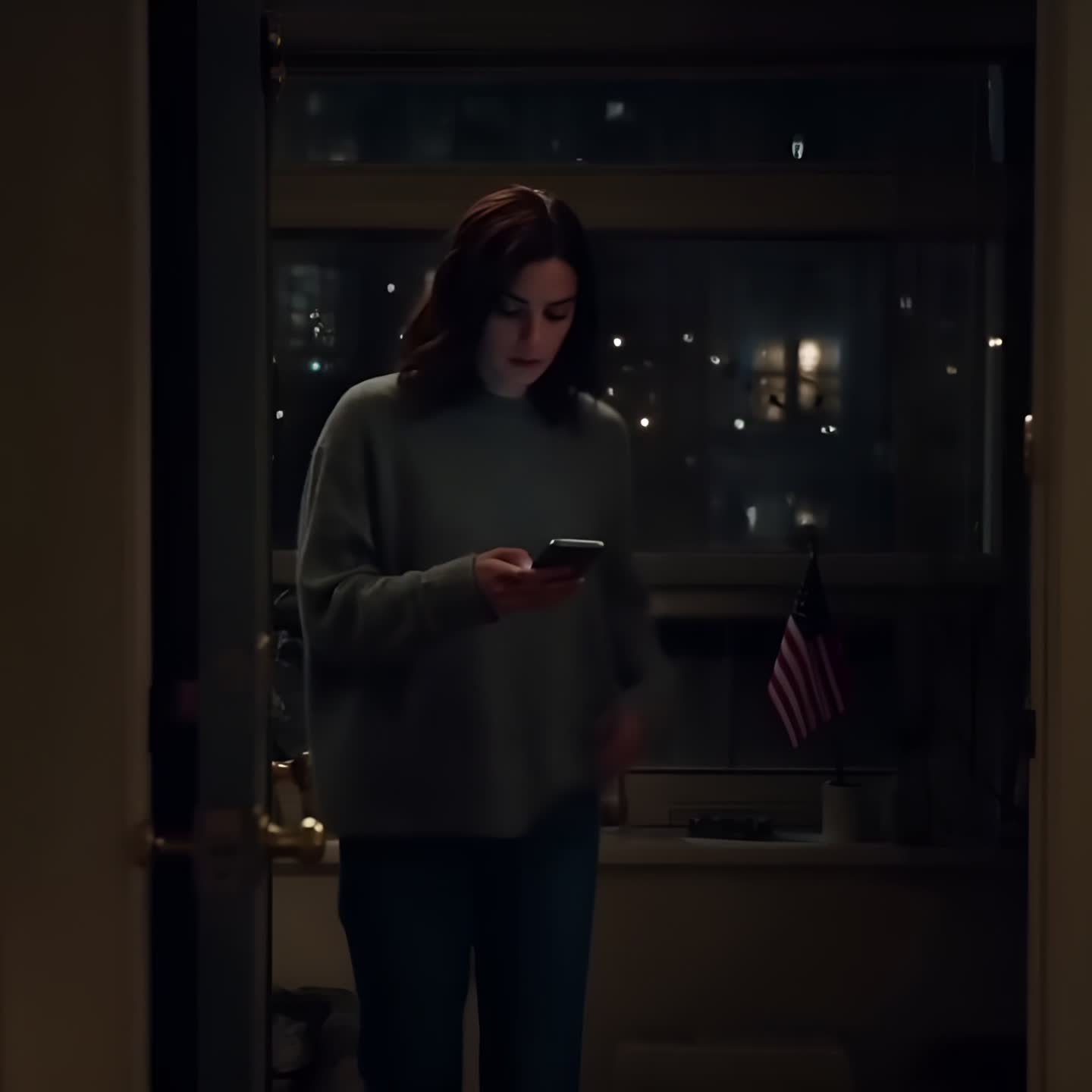
My name is Lauren. I’m twenty-eight, and I live alone in a tiny apartment in Chicago, Illinois.
Three weeks ago, I drove four hours back to my parents’ house for what my mom proudly calls our “early Christmas family dinner”—even though it actually happens on Thanksgiving. She said it was more convenient that way. Everyone was off work. Everyone could be together.
I almost turned the car around twice on that drive, but guilt is a powerful fuel. So I showed up with a homemade pumpkin pie and a smile that didn’t reach my eyes.
Dinner was loud and chaotic—football on the TV, everyone talking over everyone else, acting like this was some Hallmark special. Then, when the plates were cleared, my mom stood up and clapped her hands for attention like she was hosting an award show.
She pulled out a bag full of wrapped gifts and started handing them out one by one, going around the table.
My dad got a new golf shirt.
My uncle got his favorite expensive wine.
My sisters got cute personalized things—little bracelets and a spa certificate.
People laughed, said thank you, hugged her.
I waited because, of course, there had to be something for me too.
When the bag was empty and she still hadn’t looked in my direction, I finally asked, as casually as I could:
“Is there one for me?”
She didn’t even hesitate.
“Be grateful you can sit here,” she said, like she was reminding me I should be thankful just to be allowed in the room.
My uncle snorted and added, “Be glad we still remember your name.”
And the whole table exploded in laughter.
My face went hot, but I just nodded.
“Good to know,” I said.
No yelling. No tears. Just that.
I left early, drove back to Chicago in the dark, and decided something was going to change.
Because two weeks later, those same people who laughed at me were at my door, pounding on it and begging me to talk.
And that’s when the real story started.
When I got back to Chicago that night, I dropped my keys on the counter, put the pumpkin pie in the trash, and sat on the kitchen floor staring at my phone.
Part of me wanted to send a long message in the family group chat telling them exactly how they’d humiliated me.
But I knew how that would go.
They would say I was being dramatic.
That it was just a joke.
That I should be grateful they even invited me.
So instead, I texted Mia, my best friend.
She called me within thirty seconds.
I told her everything—from the fake smiles to my mom’s line about being grateful I could sit there, to my uncle’s little “still remember your name” jab.
There was a long silence on the line.
Then Mia said, very calmly, “Len… that’s not normal. That’s not just rude. That’s mean. They don’t respect you at all.”
Hearing someone else say it out loud made something click in my chest.
While we were still talking, I opened my banking app and started scrolling.
Gym membership charged every month.
Streaming services under my name that I barely used because I was always working.
Amazon Prime family plan.
Random tickets, food orders, Ubers—those little can you put it on your card, I’ll pay you back later moments that never actually turned into anything.
It hit me that for years I’d quietly been the invisible financial backbone of that “close family” they were so proud of posting online.
They could sit there and make jokes about me, but they had no problem letting my card stay on file like I was their personal sponsor.
Mia said, “What if you just stopped paying? What if you let them feel what it’s like to actually lose you?”
The idea scared me and thrilled me at the same time.
That weekend, I sat down with my laptop and a notebook and made a list.
Mom’s yoga and gym membership.
Dad’s streaming subscriptions and Prime.
My little sister’s last-minute theme park tickets, concerts, gas money.
Every autopay that had my name on it and their comfort attached to it.
Then I started canceling.
Click: cancel membership.
Click: turn off auto-renewal.
Click: remove card.
With every confirmation email that hit my inbox, I felt a little lighter.
I didn’t write some big dramatic announcement in the group chat.
I just let the systems they depended on quietly stop.
A few days later, my mom called me while I was on my lunch break.
No hello.
No how are you?
Just, “Lauren, my gym card got declined this morning. Did something happen with the payment?”
I swallowed my nerves.
“Yeah,” I said. “I canceled it. You’ll need to set it up in your own name.”
She sounded offended.
“You know I go to those classes for my health. You know I count on that.”
I answered, “You also know what you said to me at dinner. I’m done paying for people who can laugh at me like that.”
She gasped like I’d slapped her.
My dad called later that night because the streaming wasn’t working.
“It says we need to update the payment,” he complained. “You must have messed something up.”
“I didn’t mess anything up,” I said. “I just stopped paying. You’re adults. You can handle your own bills.”
He got quiet, then snapped, “Family takes care of each other, Lauren.”
“Exactly,” I said. “That goes both ways.”
After that, the group chat started blowing up—little passive-aggressive messages about how some people forget where they came from, and money isn’t everything, but some folks think it is.
I muted the chat.
I decided I wasn’t going home for Christmas, no matter how many guilt trips they tried.
For the first time in my life, I chose not to play the role they had written for me.
I thought they would sulk, maybe talk trash about me at the country club, and eventually move on.
I underestimated how much they depended on me—not just for money, but for control.
Because the more their subscriptions and comforts started falling apart, the more desperate they became.
And that is how I ended up with my entire family on the other side of my apartment door, pounding and screaming to be let in.
Part 2 of 4 — The Quiet Collapse
The first real wave hit a few days after I canceled everything.
I was at my desk trying to focus on a campaign brief, half-reading the same sentence over and over, when my phone started buzzing nonstop.
At first it was just the family group chat lighting up like a fire alarm.
My mom sent a long paragraph about how some people forget who raised them, and how she was deeply hurt that I would “attack her health” by canceling the gym.
She made it sound like I had taken away prescription medication—not turned off a membership that had been billed to my card.
She wrote that yoga was the only thing keeping her sane, like I was personally responsible for her mental stability.
My dad followed with his usual lines about sacrifice and family duty.
He threw in the classic: “You wouldn’t have your fancy job in Chicago if it weren’t for us.”
Like my degree and career were items on a bill I hadn’t finished paying.
Then my sisters jumped in with emojis and side comments.
One of them wrote, “Imagine choosing Netflix over your own mom,” which was ironic considering I’d canceled Netflix too—and they were the ones using it far more than I ever did.
Another sent, “You’ve changed so much. You used to be nice.”
Followed by a crying emoji and a broken heart.
Same script as always—just louder and in a group thread.
I stared at the chat for a minute, feeling my chest tighten, then hit mute again and put my phone face down on my desk.
I could feel the notifications still rolling in, vibrating every few seconds, like the phone itself was anxious.
Ten minutes later, Mia sent me screenshots from Instagram.
“You seeing this?” she wrote.
My younger sister had posted a black background with white text:
“Some people will cut off their own blood over money. Remember who was there before your paycheck.”
A broken heart emoji. Praying hands.
She didn’t tag me, but she didn’t have to.
Half our extended family follows both of us.
My mom commented underneath:
“So sad but true. Love you, baby. Some people lose their way.”
Then cousins chimed in:
“Family over everything.”
“Money can’t buy loyalty.”
“People change when they move to the city.”
Someone even wrote, “You guys are the strongest family I know,” which would have been funny if it didn’t sting so much.
My stomach twisted as I scrolled.
They were rewriting the story in real time—turning themselves into victims and me into some cold-hearted villain who’d abandoned them for cash and skyline views.
None of them mentioned the part where my mom told me to be grateful I was allowed to sit there.
Or the part where my uncle made my name into a punchline.
None of them talked about the years of can you just put it on your card moments that were apparently invisible.
I locked my phone, set it aside, and sat there listening to the hum of the office and the tap of other people’s keyboards.
I realized I’d spent my whole life terrified of being called ungrateful.
So I kept overgiving to prove I wasn’t.
And here I was, finally saying no.
And they were slapping that exact label on me.
That night, instead of crying like I normally would have, I opened my laptop at my kitchen table and went back to my banking app.
If they wanted to talk about sacrifice and responsibility, fine.
We could talk about numbers—the one language that doesn’t care about guilt or manipulation.
I pulled up five full years of transactions and started filtering.
Gym.
Yoga studio.
Streaming services.
Amazon Prime family plan.
Theme park tickets with notes like for Harper and friends.
Concerts where the charge hit my account at 11:59 p.m. after a frantic I’ll PayPal you, swear.
Emergency car repairs my uncle couldn’t afford that somehow landed on my card with I’ll get you back when my bonus hits.
That bonus never came.
Restaurant bills where I picked up the check because “you make more than us—it’s no big deal,” said half-jokingly, but accepted very seriously.
It was painful and strangely satisfying at the same time.
With every line item I highlighted, I remembered the exact conversation that went with it, the exact moment I’d swallowed my resentment and smiled instead.
I copied everything into a spreadsheet.
I added dates and short descriptions.
I color-coded the categories just to keep myself sane.
And I watched the total climb higher and higher until I had to sit back and just stare at it.
This was not a few generous moments.
This was a pattern.
This was years of me being the safety net whenever someone forgot their wallet, or couldn’t pay till Friday, or just needed “help.”
In that moment I realized that to them, my money was an extension of their own—something they felt entitled to because of biology and history.
I drafted an email and addressed it to my parents and both sisters.
The subject line said, “Since we are talking about who owes what…”
I sat with that subject for a moment, my finger hovering over the keyboard.
Then I started typing.
In the body, I wrote plainly that I was aware of the things they had done for me growing up.
That I was grateful for a roof and food and school.
That I wasn’t pretending I raised myself.
But I also wrote that the idea I somehow owed them endless financial support and blind tolerance for the rest of my life was not accurate—and not healthy.
Then I pasted the spreadsheet total and a short breakdown underneath, listing out the categories.
I didn’t call them thieves.
I didn’t demand they pay it all back on the spot like a debt collector.
I simply wrote:
“If you want to keep insisting I am ungrateful and selfish because I stopped paying, please look at this and ask yourself who has actually been taking care of whom.”
My hands were shaking when I hit send.
My heart pounded like I’d just jumped into cold water.
But it also felt like dropping a load I’d been carrying for years—a bag I didn’t realize had gotten that heavy.
My mom’s reply came fast, all caps in the subject line:
“HOW DARE YOU?”
The body was a wall of text.
She called my list manipulative and cruel.
She said only a heartless person would throw money in her parents’ faces.
She accused me of trying to put a price on her love and sacrifices.
She turned every example into a story about how hard things had been for them and how ungrateful I was for making them feel small.
She ended with:
“I am so ashamed of who you have become.”
Then she blocked me on Facebook.
I know she blocked me because Mia texted me another screenshot not even an hour later.
My mom had posted one of those generic family quote images—something like, Family is forever even when some members forget—with a long caption about staying strong during these trying times and being thankful for the children who still honor their parents and understand “true loyalty.”
The likes and supportive comments rolled in.
“You’re such a good mom.”
“Your kids are lucky to have you.”
“Don’t let anyone tear your family apart.”
They didn’t know they were cheering for someone who had weaponized the word grateful against her own child at the dinner table.
None of those people knew that every one of her comforting little Netflix nights and yoga mornings had been quietly paid for by the daughter she’d humiliated in front of everyone.
I lay in bed that night staring at the ceiling, angry and shaking.
But under the anger, there was a strange clarity—sharp and clean.
They were not going to wake up one day and suddenly see me differently on their own.
They were invested in this version of me: the difficult, ungrateful city daughter who owed them everything and gave them endless reasons to complain.
The only thing I could control was what I gave them access to.
My money.
My time.
My energy.
My silence.
As Christmas crept closer and more of their comforts shut off or demanded new payment methods, the tone of their messages changed.
The passive-aggressive posts became fewer.
The calls became more frantic.
The guilt trips turned into actual panic.
They stopped just sniping at me online and started scrambling in real life, trying to patch the holes where my support used to be.
And that was when their entitlement boiled over into something much louder, much uglier, and much harder to ignore.
The kind of desperation that doesn’t stay on screens.
The kind that shows up right outside your front door.
Part 3 of 4 — The Door
Two weeks after that Thanksgiving dinner, I was in my apartment on a Saturday afternoon, half-watching some random YouTube video and trying not to think about my family at all, when the buzzer rang.
At first I thought it was a delivery, but I hadn’t ordered anything.
Then my phone lit up with my dad’s name.
I let it go to voicemail.
A second later, my mom started calling.
Then the buzzer went off again—longer this time, like someone had leaned on it.
My stomach dropped.
I walked to the intercom and pressed the button just enough to hear the noise from the lobby.
That’s when I heard my mom’s voice echoing up through the stairwell—loud and shrill.
“Lauren, we know you’re home. Buzz us in.”
There was a fake cheerfulness to it, like she was trying to sound normal for whoever might be listening.
Underneath, it was pure anger.
I froze for a second, then quietly checked the hallway through my peephole.
A couple minutes later, I saw them.
My mom and dad stood outside my apartment door—clearly having sweet-talked some other tenant into letting them into the building.
My mom was holding a shiny red gift bag with tissue paper bursting out of it like she was in a commercial.
My dad had a couple of smaller bags hooked around his wrist.
My phone started ringing again on the table behind me.
I let it ring.
My mom knocked politely at first.
Three light taps.
“Lauren, honey, open up,” she called. “We brought you something. We just want to talk before Christmas.”
She said it loud enough that anyone on the floor could hear.
I took a breath, walked closer, but didn’t unlock the door.
“I don’t want to talk right now,” I said through the wood. “You need to leave.”
The switch in her voice was instant.
The sweetness cracked.
She knocked harder, the bags rustling.
“We drove four hours to be here, Lauren. Four hours. The least you can do is open the door and speak to your own parents.”
My dad chimed in, already annoyed.
“This is ridiculous. We’re not doing this through a door. Open it.”
“No,” I said, steadying my voice. “You don’t get to humiliate me, mock me, and then show up with gift bags like that fixes anything. You need to go.”
There was a pause.
Then the knocking turned into full-on pounding.
My mom’s voice rose, shaky and dramatic.
“Do you hear yourself? This is what that city has done to you. You think you’re better than us now? You cancel things without warning. You send that disgusting email and now you can’t even look at us.”
She started to sniffle loudly.
“Our family is falling apart and you don’t even care.”
My dad lowered his voice, but I could still hear the anger in it.
“This is about respect, Lauren. You owe us a chance to talk in person. Stop hiding and open the door.”
I almost laughed at the way he tried to make it sound like I was the problem.
What started all of this was them making fun of me in front of everyone like I was a child.
Instead, I said, “Respect goes both ways. Standing outside my home trying to force your way into a conversation I said no to is not respect.”
My phone buzzed in my hand.
My younger sister.
When I didn’t pick up, she immediately followed with a text:
“They’re outside your door. Just open it. Don’t make this worse. Mom’s freaking out.”
I typed back:
“They showed up uninvited. That’s on them.”
A second later, she replied:
“You’re being cruel. They brought you Christmas gifts to make it right.”
Through the door, my mom must have decided to lean into that angle.
She raised her voice again.
“We brought you presents, Lauren. We didn’t forget you. We’re trying. This is what you wanted, right? Attention.”
It was almost funny how she twisted it.
I pictured what was in those bags.
Maybe some basic sweater from a sale rack.
Maybe a candle.
Something they could point to later and say, We tried, but she threw it in our faces.
“I didn’t want any of it,” I said. “You’re not fixing anything with gifts. You never even apologized for what you said to me—what you said and how you laughed at me in front of everyone.”
There was a beat of silence.
Then my mom snapped.
“Oh my God, are you still on about that? It was a joke, Lauren. A joke. Normal people can take a joke at dinner.”
My dad added, “You’re blowing one comment out of proportion and punishing the whole family over it.”
That was the moment I knew there was nothing for me on the other side of that door.
Not yet.
Not like this.
I pulled my phone back out and texted my mom:
“You have ten minutes to leave or I’m calling building security.”
Out loud, I said, “You need to go. I’m serious.”
The pounding stopped for a second, then came back even louder.
My mom’s voice cracked.
“We need to talk. Open up. Please don’t do this to us. Don’t do this to your mother.”
My heart was racing so hard I could hear it in my ears, but I didn’t move toward the lock.
I stood there staring at the doorknob, repeating in my head:
You’re allowed to say no. You’re allowed to say no.
After about twenty minutes of knocking, crying, pleading, and my dad muttering that I was being ridiculous, they finally left.
A neighbor from down the hall sent me a message later that evening through the building portal, politely asking if everything was okay and mentioning the very loud scene that had happened outside my door.
Afterward, I sat on my couch shaking and opened a blank note on my phone.
I typed out exactly what happened—every word they said, every feeling in my chest.
I didn’t want them to gaslight me later into thinking I imagined it.
The more I wrote, the clearer it became.
This wasn’t just about one dinner or a few subscriptions.
This was about control.
They were not used to me having boundaries.
And they were not handling the word no very well.
I thought the worst was over after they drove away that day.
I told myself they’d cool off, complain about me to their friends, and then back off.
I was wrong.
That visit was just them warming up.
The next time they came back, they would bring more than gift bags and guilt—and they would show me just how far they were willing to go to drag me back into the role they needed me to play.
After the scene with the gift bags outside my door, I really thought they’d back off.
For a few days, it was almost peaceful.
The family group chat slowed down to vague quotes about forgiveness and praying for people who lose their way.
I muted it.
I focused on work.
I grabbed coffee with Mia.
I tried to sleep without hearing my mom’s be grateful you can sit here in my head.
I told myself the worst was over.
It wasn’t.
The calls started again.
First from my parents’ numbers, which I let go to voicemail.
My mom cried about not sleeping, her blood pressure, how the doctor said stress like this could kill her—and asked if that was what I wanted.
My dad’s messages were colder.
I was breaking the family.
I owed them a conversation because they raised me.
When I stopped answering, they switched to random local numbers.
I picked up one, thinking it was work, and my mom said, “So, you do still know how to answer a phone?” like she’d caught me in a lie.
I hung up.
Then my uncle Chuck joined in, leaving voicemails about how I couldn’t cancel my family like a subscription and how one day I’d need them.
Online, my sister posted another sad TikTok about being abandoned by your own sibling who chooses money and strangers over the people who were there from day one.
No name.
But the caption—“Sometimes blood hurts more than strangers”—made it obvious.
Strangers filled her comments with support, telling her to cut off toxic people.
Meanwhile, the fallout from my canceled payments hit.
My mom left a panicked voicemail about the gym wanting a new card and a sign-up fee.
She said yoga was the only thing keeping her calm.
She asked how I could do that to her.
A cousin told me my dad was complaining at the golf club about ungrateful kids who treat parents like banks.
One night, I opened my spreadsheet again and added a column for behavior.
Calls.
Guilt trips.
TikToks.
Surprise visits.
Seeing it all lined up made it impossible to pretend this was a phase.
It was a system.
And I’d stopped playing.
A few days before Christmas, it went from digital back to physical.
I came home with groceries, saw my parents’ car outside, and felt my stomach drop.
When I turned onto my floor, my mom, my dad, and my uncle Chuck were standing in front of my apartment like a blockade.
“There she is,” my mom said loudly.
“Do you feel proud calling security on your own parents?”
I set the bag down and kept my keys in my hand.
“You’re not supposed to be here,” I said. “You need to leave.”
My dad said they weren’t leaving.
They had driven all that way.
They needed to talk in person.
I “owed” them that.
My mom went on about how they were trying to save the family while I hid in my little box and treated them like burdens.
My uncle leaned on the wall, smirking, asking if I really thought my neighbors cared about me more than my own blood.
“You don’t just cut off blood,” he said.
I told them blood didn’t give them the right to show up after I’d told them to stop.
My mom scoffed.
Said no one had grabbed me.
Accused me of twisting everything and calling them abusive so I could feel justified.
My dad stepped in closer until my door was at my back.
“Here’s what’s going to happen,” he said. “You’re coming home with us for Christmas. This ends now.”
My voice shook, but I said, “No. I’ve told you to leave. You’re harassing me.”
My mom slammed her palm into the door next to my head so hard I jumped.
She yelled about everything they’d given me and how I owed them.
My uncle saw me flinch, smiled, and put his hand on my shoulder, trying to push me away from the lock.
Something in me went very still.
I shrugged off his hand.
“Do not touch me again,” I said, loud and clear.
I pulled out my phone, called building security, and said, “My family is here again. I told them to leave. They won’t. One of them put hands on me. I need someone up here.”
They stared at me like I’d set the building on fire.
The guard came up, listened to both sides, then turned to them and said, “She lives here. She’s asked you to leave. You can’t keep coming here and causing scenes. If you come back, we’ll have to involve the police.”
He walked them to the elevator while my mom cried and my dad muttered about ungrateful kids.
My uncle threw one last look at me and said under his breath, “You’re going to regret this.”
Later, management slid a notice under my door documenting the incident and stating they weren’t allowed back without permission.
That repeated visits could mean a no-trespass order and police.
For the first time, there was something on paper saying this wasn’t just family drama.
Other people saw it.
Other people were willing to call it what it was.
I wanted to believe that warning would be enough to make them stop.
But people who are used to control don’t usually give it up because of one piece of paper.
And the next time they came, it wouldn’t just be security getting involved.
A few days before Christmas, I finally started to relax.
Security had filed their report.
My parents and my uncle had been escorted out once already.
My phone was quiet for the first time in weeks.
I blocked a few numbers, muted the family chat, threw myself into year-end projects, and clung to the plan of spending Christmas Eve with Mia—eating takeout and watching dumb movies.
I told myself they were done.
I was wrong.
One afternoon, I was coming up the stairs with groceries when I heard it.
My last name echoing in the stairwell—my mother’s voice sharp and too loud.
“She’s on this floor. I know she is. Lauren, get out here right now.”
My stomach dropped.
When I turned the corner onto my floor, there they were again.
My mom.
My dad.
My uncle Chuck.
Standing in the middle of the hallway outside my door like they owned it.
My mom spun toward me.
“There you are,” she snapped. “Do you feel powerful now calling security on your own parents?”
My dad stood stiff, jaw clenched.
My uncle leaned against the wall like this was entertainment.
I set my grocery bag down and kept my keys in my hand.
“You’re not supposed to be here,” I said. “You need to leave.”
“We’re not leaving,” my dad said. “Not until you stop acting like a stranger and talk to us like an adult. We drove all this way before Christmas to try and fix this.”
My mom jumped in, voice rising so every door could hear.
“We’re still fighting for this family. You cut us off. You humiliate us with that email. You call security on us, and you can’t even look us in the eye. We gave you everything.”
Doors cracked open along the hall.
My uncle pushed off the wall and stepped closer.
“You think these people care about you more than we do?” he asked, nodding toward the other apartments. “When your big city life falls apart, you think they’ll take you in? Blood is blood. You don’t just cancel that.”
Something inside me hardened.
“Blood isn’t a free pass,” I said. “It doesn’t give you the right to show up at my home after I told you to stop. It doesn’t give you permission to yell at me, corner me, or put your hands on me.”
My mom scoffed.
“No one put their hands on you,” she snapped. “You twist everything to make us look like monsters. Security said there was nothing on camera last time. You’ve decided we’re abusive so you can feel justified.”
Out of the corner of my eye, I saw my older neighbor down the hall standing in her doorway with her phone up, recording.
Our eyes met.
She gave me a tiny nod that said, I see this, and I’m not pretending I don’t.
My dad stepped in closer until my back hit my own door.
His voice dropped.
“Here’s what’s going to happen,” he said. “You’re going to pack a bag. You’re coming home with us for Christmas, and we’re going to sit down and work this out. This stunt with the cancellations and getting security involved ends now.”
My hands were shaking, but my answer came out clear.
“No. I’m not going anywhere with you. I’ve told you to leave me alone. You keep coming back. You are harassing me.”
My mom slapped her hand against the door next to my head with a loud crack that made me flinch.
“Harassing?” she hissed. “We gave you life. You wouldn’t have this apartment, this job—anything—without us. You owe us respect.”
My uncle saw me flinch and smiled.
“You call this harassment?” he said, then put his hand on my shoulder and shoved just enough to move me away from the lock.
It wasn’t a punch.
But it was a message.
We still control you.
Something in me went very still.
I knocked his hand away.
“Do not touch me again,” I said.
Before he could fire back, my neighbor’s voice cut through the hallway.
“I’m calling the police,” she said clearly. “This is the second time you’ve done this. She asked you to leave. I’m recording all of it.”
For a second, everyone froze.
My mom whipped around and yelled, “This is none of your business. This is family.”
My neighbor didn’t flinch.
“You made it our business,” she said. “When you started yelling in the hallway.”
I could hear sirens faintly in the distance, getting closer.
My mom turned back to me, switching into that broken, manipulative tone I knew too well.
“Lauren, stop this,” she pleaded. “Tell them it’s fine. Tell her not to call. You want your uncle arrested? You want your mother to have a heart issue right here on the floor? Is that what you want for Christmas?”
My chest tightened.
For a heartbeat, I felt that old reflex to fix everything—to fold and apologize just to make it stop.
Then I remembered the spreadsheet.
The dinner table.
The way they laughed while I sat there burning.
I took a breath.
“I want you to leave,” I said. “If you didn’t want the police involved, you shouldn’t have come back.”
A few minutes later, two officers walked down the hall, taking in the scene.
My parents and uncle.
My neighbor with her phone.
Me pressed against my door with my keys clenched in my fist.
One officer looked at me.
“Do you live here?”
“Yes,” I said. “They’re my family. I’ve asked them to leave multiple times. Security already escorted them out once. They keep coming back. They’ve put hands on me. I don’t feel safe.”
My voice shook, but I got it out.
The other officer checked with my neighbor, who showed them a clip of my uncle grabbing my shoulder and my mom slamming her hand into the door next to my head.
That was enough.
The first officer turned to my family, his tone hard.
“You need to leave the property now,” he said. “You’ve been warned before. This is harassment. You don’t get to come here and corner her because you’re related. If you come back or contact her like this again, she can pursue a restraining order and charges.”
My mom started sobbing about “concerned parents.”
My dad argued about his rights as my father.
My uncle muttered about disrespect.
The officers didn’t care.
They pulled my uncle aside, took his ID, and wrote him a citation, explaining exactly what it meant.
He stood there red-faced while an officer told him he was officially on record for harassing his niece.
Watching that man—the one who had laughed at me my entire life—stare at the ground while someone in authority told him he was the problem did something to me.
For once, I wasn’t the one being shamed in front of everyone.
As they walked them toward the elevator, my mom clutched her chest and said she felt dizzy, that the stress was too much.
The officer offered an ambulance.
My dad said he’d take her to the hospital himself.
Later, I heard her blood pressure had spiked and she spent the night in the ER.
That my dad was furious about the hospital bills and the citation.
That my uncle was suddenly a lot quieter at the bar where he used to brag about our perfect family.
After they left, management slipped a notice under my door confirming the incident, stating that my parents and uncle were not allowed back on the property without prior permission and reminding me I could pursue a restraining order if I chose.
A cousin texted me:
“People are talking. I saw a video of your mom and uncle yelling in your hallway. You okay?”
I stared at it for a second, then replied:
“I’m okay. Better than before.”
For the first time, the consequences of their behavior were landing on them instead of me.
And as Christmas passed in total silence between us, that silence felt less like punishment and more like space.
Space where I could finally start imagining a life that wasn’t built around managing their chaos.
Part 4 of 4 — Aftermath
In the weeks after Christmas, the silence from my family felt unreal.
I kept waiting for another explosion.
Another surprise visit.
Another wall of guilt-soaked texts.
But nothing came.
No Merry Christmas.
No Happy New Year.
Not even a passive-aggressive quote with my name implied between the lines.
At first, it felt like standing in a room right after a fire alarm shuts off.
My body still braced for noise that wasn’t there.
Slowly, it started to feel like something else.
Space.
Through cousins and mutual friends, I heard what was happening back home.
My mom had to follow up after that ER visit.
Her doctor told her straight that if she didn’t manage her stress, she was asking for serious problems.
Without my money quietly covering extras, she had to cut back on her gym and some of the social stuff she used to brag about.
She asked a younger coworker to help her download budgeting and finance apps and figure out how autopay actually worked.
My dad had to call the streaming and subscription companies himself, sit on hold, reset passwords, and for once figure things out without just saying, “Ask Lauren.”
He complained loudly about the hospital bill from my mom’s ER night and my uncle’s citation.
But this time, he had no one to dump those costs onto.
My uncle Chuck’s “funny guy” image took a hit too.
People at his bar and golf club had seen—or at least heard about—the video of him grabbing my shoulder in my hallway.
Cops writing his name down on a citation.
He didn’t go to jail, but the damage was done.
It’s hard to play the charming uncle when everyone knows you’re the guy who got the police called on you by your own niece.
My sisters went quieter online.
Fewer concert selfies and impulse trips.
More posts about extra shifts and grinding for goals.
When I stepped back as their invisible safety net, they had to stand on their own two feet.
That was the thing that clicked for me.
My boundary didn’t just make me grow up.
It forced all of us to.
Once the adrenaline faded, I crashed a little.
With no new drama to distract me, all the old stuff floated up.
The jokes that weren’t really jokes.
The times I’d paid the bill and swallowed my resentment.
The years I believed keeping the peace was my job.
I finally booked a therapist instead of just talking about it.
In our first session, she asked, “When did you learn that your role in the family was to fix everything?”
I didn’t have a neat answer, but the question sat with me.
I also found an online support group and a subreddit full of people with stories that sounded uncomfortably familiar.
Parents who weaponized guilt.
Relatives who used family as a leash.
Siblings who only reached out when they needed something.
Reading their comments, I saw words I’d never let myself use for my own situation.
Manipulation.
Emotional abuse.
Financial exploitation.
It didn’t change what happened, but it changed the way I judged myself for finally walking away.
Months later, my mom sent a short email.
No subject.
Just:
“I’m sorry things got so bad between us. I don’t agree with how you’ve handled everything, but I miss you. I hope you’re okay.”
It wasn’t the apology I wanted.
But it was something.
I didn’t respond right away.
When I did, I kept it simple.
I told her I was okay.
That I hoped she was taking her health seriously.
And that if we ever talked again, it would have to be different.
No yelling.
No guilt.
No pretending Thanksgiving was “just a joke.”
I said I was open to a conversation someday—preferably with a therapist present—but I would not go back to paying for everything and being grateful just to be allowed to sit there.
Hitting send didn’t feel like reopening the door.
It felt like locking it to the old version of us and leaving only a small, guarded window.
I don’t know exactly what will happen with my family in the long run.
Maybe we’ll build something smaller and healthier.
Maybe we’ll stay low-contact forever.
What I do know is this:
For the first time, my peace doesn’t depend on their moods.
I pay my own bills for me.
I spend holidays with people who don’t turn me into a punchline and call it love.
I no longer measure my worth by how useful I am to the people who raised me.
If there’s any lesson in all this, it’s that family is not a free pass to disrespect you.
Love without respect is just control dressed up as concern.
Boundaries are not betrayal.
They’re self-respect in action.
And sometimes the most satisfying revenge isn’t slamming a door.
It’s walking away.
Letting people finally feel the consequences of their own behavior.
Building a life where you’re not grateful just to be allowed in the room—
but genuinely glad to stand on your own.
Have you ever had to choose your sanity over your family’s approval?
And if you haven’t yet… what line would they have to cross for you to finally say:
Enough.