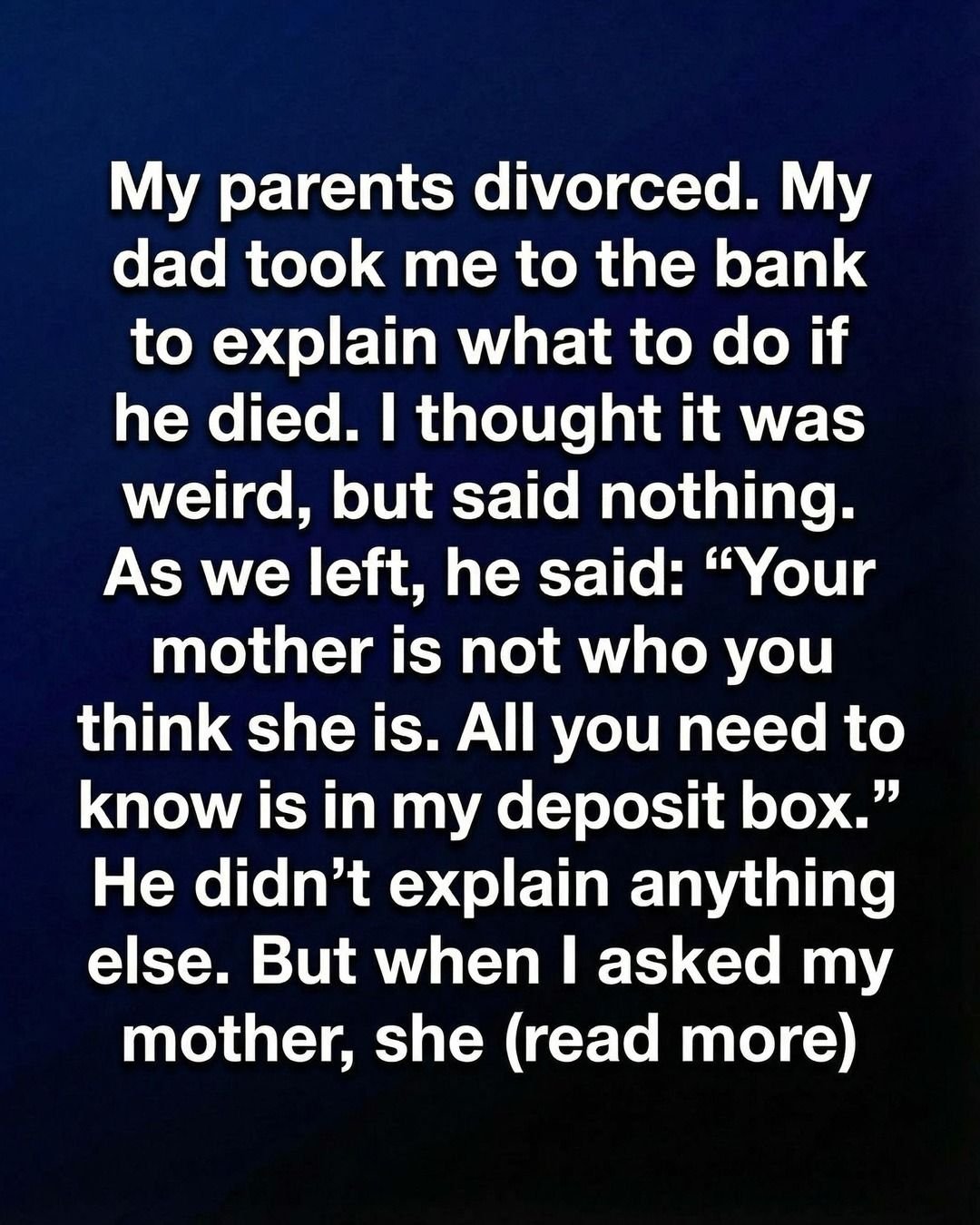
I was twelve when my parents divorced—old enough to feel the tension, too young to understand the careful choices adults make to protect what’s fragile. A few weeks later, my dad took me to the bank. He explained documents, contacts, procedures—things meant for a future version of me.
Before we left, he rested a hand on my shoulder and said quietly, “Your mother is not who you think she is. Everything you need to know is in my deposit box.” He didn’t explain. I didn’t ask. Some words stay because they’re unfinished.
Life moved on. I lived with my mother, finished school, and grew up. My dad and I stayed close in a quiet way—calls, visits, check-ins that never reached difficult ground. He never mentioned the deposit box again, and I told myself it had been an emotional moment, not a warning. When he passed away years later, grief came in waves. In the middle of responsibilities, his words returned—clear, precise, insistent.
I went to the bank. The box was there, exactly as he’d said. Inside were letters, documents, and a small notebook in his careful handwriting. There were no scandals or secrets—only context. Explanations of choices, sacrifices never discussed, misunderstandings that shaped our family. His notes held reflection, not blame. He wrote about shielding me from adult weight until I could carry it with compassion.
That was when I understood. His message wasn’t about distrust—it was about timing. My mother wasn’t hiding a dark truth; she was living her own version of it. The deposit box didn’t change my love for her—it deepened it. My father hadn’t asked me to judge. He asked me to understand. And that understanding became his final gift.
Continue Reading