As soon as I came back from my C-section, I told my parents to please look after the baby while I rested.
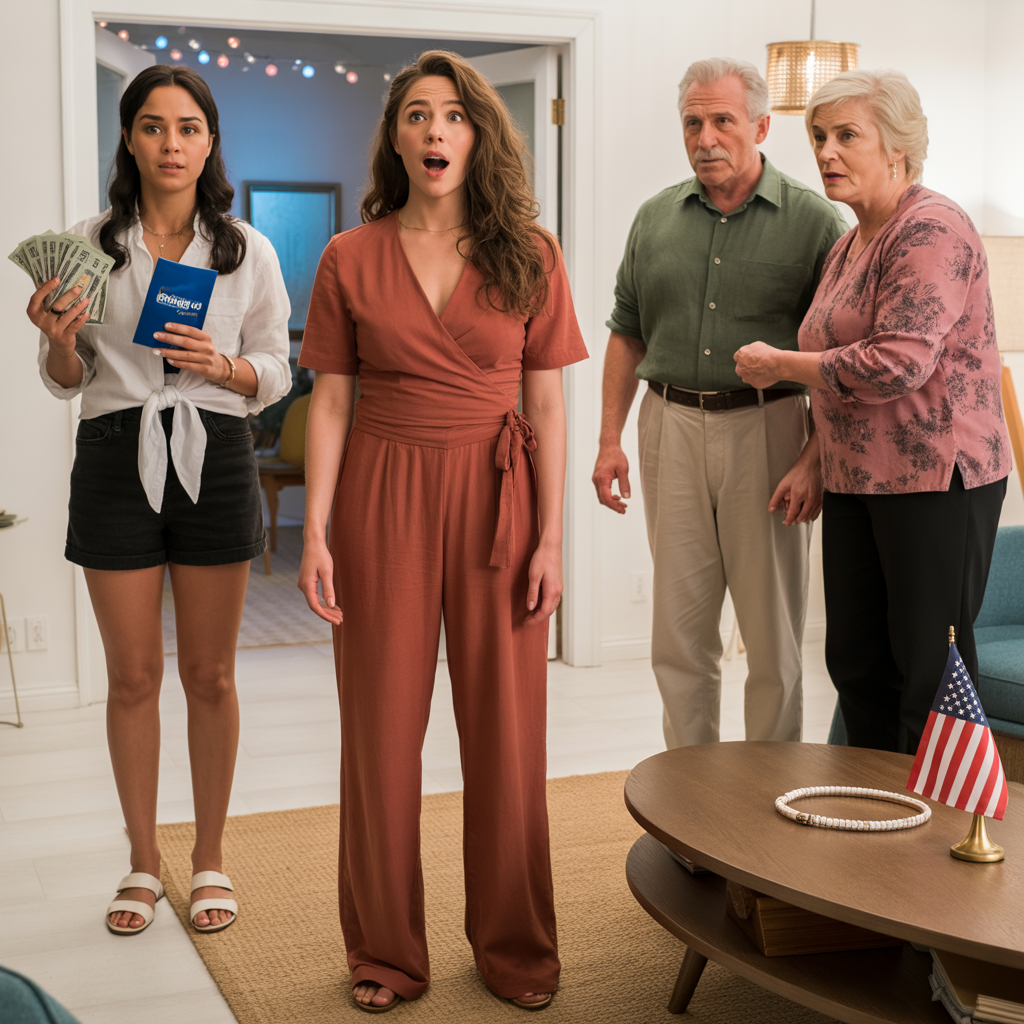
The next morning, I asked for my baby daughter, and my mother said casually, “Oh, honey, your sister needed some money for her luxury vacation, and our funds weren’t enough, so your sister had to do what was best for her.”
I shouted, “Where is my daughter?”
My sister rushed in and started slapping me hard across the face, saying, “Don’t want to hear your yapping. Just get another one. She’s long gone.”
I lost it. And when I tried to grab her, my father grabbed me by the hair, saying, “She’s leaving for her holiday.”
Then what he did with me next was unthinkable. They proceeded to lock me down in the basement. But then I did something which left them in complete shock.
The fluorescent hospital lights felt like needles in my eyes as the nurse wheeled me back to my room. Everything below my waist was numb and my arms trembled from the spinal block wearing off unevenly.
My daughter had arrived three hours earlier, screaming her way into the world at 7 lb and 4 o. The surgical team had held her up for me to see briefly, this tiny purple-faced creature wailing with indignation, before whisking her away to clean and assess her. I barely held her for 15 minutes before exhaustion crashed over me like a wave.
The surgery had taken longer than expected due to complications with scar tissue from an old appendectomy. My obstetrician, Dr. Martinez, had explained something about adhesions while I fought to keep my eyes open. All I remembered was feeling like I’d been hit by a truck, disassembled, and poorly reassembled.
My parents stood in the hospital room doorway when the nurse helped me transfer from the wheelchair to the bed. Helen wore her church outfit, the navy blue dress she saved for special occasions, though she’d paired it with running shoes that looked absurd. Marcus stood behind her, already checking his phone like he had somewhere better to be.
“She’s beautiful,” Helen said, moving to the plastic bassinet where my daughter slept, swaddled in the standard hospital blanket with pink and blue footprints. “Looks just like Charlotte did at this age.”
Something in my chest tightened at the comparison to my sister, but I pushed it away. This wasn’t about Charlotte. This was supposed to be my moment.
“We should let you rest,” Marcus said, barely glancing at his granddaughter. “You look terrible.”
“Thanks, Dad.” I tried to laugh, but it came out as more of a wheeze. The incision site throbbed despite the pain medication dripping into my IV. “Could you both watch her while I sleep? Just for a few hours. The nurses said they’d show you how to change her and bring her to me when she needs to feed.”
Helen waved a dismissive hand.
“I raised two children. I think I can manage a newborn for a few hours.”
The nurse, a woman named Patricia with kind eyes and graying hair, demonstrated how to check the diaper, how to support the baby’s head, how to call for help if anything seemed wrong. I watched through heavy eyelids, wanting to memorize every detail, but feeling consciousness slip away like water through my fingers.
“We’ve got this,” Marcus said, sounding annoyed. “Go to sleep already.”
I wanted to argue, to insist on keeping her beside me, but my body had other plans. The moment my head touched the pillow, darkness swallowed me whole.
Dreams came in fractured pieces. I was running through my childhood home, looking for something I’d lost. Every door I opened led to another hallway, another series of doors. Someone was crying, but I couldn’t locate the source. Charlotte appeared in one dream, wearing her wedding dress, laughing at something I couldn’t hear.
When I woke, morning light filtered through the blinds in pale strips. My mouth tasted like cotton and my bladder screamed for attention. The IV in my arm pulled when I tried to move and the pain from my incision had graduated from a throb to a sharp, burning sensation.
The bassinet beside my bed stood empty.
My heart lurched.
They’d probably taken her to the nursery or Helen had her in the waiting room. I pressed the call button and a different nurse appeared, younger than Patricia, with purple screws in her ears and a name tag reading ASHLEY.
“Where’s my baby?” The words came out hoarse.
Ashley checked the chart clipped to the end of my bed.
“Your parents took her around midnight. Said they’d bring her back when you woke up. Do you need pain medication?”
“Yes, but I need my daughter more. Can you find them?”
She promised to check the waiting area and nursery while administering another dose of medication through my IV.
Twenty minutes crawled by. My breasts ached and gorged with milk that needed to be expressed. The hormone crash that follows birth settled over me like a heavy blanket, making everything feel simultaneously urgent and hopeless.
Ashley returned with a puzzled expression.
“Your parents aren’t in the waiting area, and the baby isn’t in the nursery. Let me check with the front desk.”
Ice formed in my stomach. They wouldn’t have left. They wouldn’t have taken her somewhere without telling me. Helen might be thoughtless, but she wasn’t cruel.
Except I remembered all the times she’d chosen Charlotte over me. All the times she dismissed my feelings as overdramatic. All the times Marcus had simply absented himself from any conflict.
My phone sat on the bedside table and I grabbed it with shaking hands. Three missed calls from an unknown number. Two text messages from Helen sent six hours ago.
Took baby home so you could rest properly. Hospital too noisy. Don’t worry, we know what we’re doing.
White-hot rage surged through me, momentarily eclipsing the pain. They’d taken my newborn daughter, still less than 24 hours old, out of the hospital without permission. Without my consent.
Ashley’s face paled as I showed her the messages.
“They can’t do that,” she said. “Babies aren’t discharged without the mother unless there’s a court order or medical necessity. I need to notify security and my supervisor.”
The next hour passed in a blur of hospital personnel asking questions I could barely answer. Yes, my parents had seemed normal. No, I hadn’t given permission for them to remove the baby. Yes, I wanted to press charges if necessary.
A security guard reviewed camera footage and confirmed that Helen and Marcus had walked out at 11:47 p.m. with my daughter, using the emergency stairwell to avoid the main desk.
Dr. Martinez appeared, her expression grim.
“We need to get you discharged as soon as possible so you can file a police report. This is beyond hospital protocol. I’m so sorry this happened.”
She examined my incision, determined I was stable enough for discharge despite the early timing, and signed off on paperwork while nurses rushed around preparing instructions and prescriptions.
Every second felt like an eternity. My daughter needed me. She needed to eat. She needed to be held and kept safe.
By noon, I was in the back of a taxi heading to my parents’ house, still wearing the hospital gown under a hoodie Ashley had found in the lost and found. My phone rang constantly—the hospital social worker, a police officer asking for details, my attorney, Richard Chen, who I called in a panic from the discharge area.
“Don’t go in alone,” Richard warned. “Wait for the police.”
But I couldn’t wait. My breasts leaked milk through the hospital gown, soaking the hoodie. Hormones screamed through my system, every instinct demanding I find my child.
The taxi driver, a middle-aged woman named Rosa, kept looking at me in the rearview mirror with concern.
“You okay, honey?” she asked. “You need hospital?”
“I just left the hospital. I need my baby back.”
She drove faster.
My parents’ house looked exactly as it always did. Neat lawn, siding, Marcus’ truck in the driveway. The normalcy of it felt obscene.
I paid Rosa, ignored her protest that I should wait for help, and walked up the front path on legs that threatened to give out.
The door was unlocked.
Inside, I could hear voices from the kitchen. Normal, casual conversation, like this was any ordinary Sunday morning, like they hadn’t stolen my child and left me alone in a hospital bed.
I pushed the door open and stepped inside. Behind me, I heard Marcus’ truck start in the driveway. He must have seen me from a window. The front door slammed shut behind me and I heard the deadbolt engage.
They’d locked me inside with them.
Helen stood at the counter measuring coffee grounds. She looked up when I entered the kitchen and her expression registered mild surprise rather than guilt.
“Oh, honey, you’re out already. We thought you’d sleep until at least this afternoon.”
“Where is she?” My voice came out steadier than I felt. “Where is my daughter?”
“She’s fine. Marcus fed her a few hours ago. She’s sleeping in Charlotte’s old room.”
Helen turned back to the coffee maker, pressing buttons.
“You needed rest. The hospital was so loud and all those nurses coming in and out every five minutes. We did you a favor.”
The casualness of her tone made my vision blur at the edges.
“You took my newborn baby out of the hospital without permission, without telling me. She needs to breastfeed. She needs her mother.”
“Don’t be so dramatic.” Helen waved a hand dismissively.
“Babies drink formula all the time. Charlotte fed both of hers formula exclusively and they’re perfectly fine. You’re not special just because you want to breastfeed.”
I moved toward the stairs, but Helen stepped in front of me. Her face had shifted from casual dismissal to something harder, more determined.
“Actually, we need to talk before you go up there.”
“Get out of my way.”
“Your sister needed some money for her luxury vacation.” The words came out smooth, practiced, like she’d rehearsed this conversation. “Charlotte and Eric have been planning this Mediterranean cruise for months. It’s their anniversary trip, very expensive, and they were just a bit short on funds. Our savings weren’t quite enough to cover the gap, so your sister had to do what was best for her.”
The words made no sense. They arranged themselves in my mind, but refused to form coherent meaning.
“What does Charlotte’s vacation have to do with my daughter?”
Helen’s smile belonged on a stranger’s face.
“Oh, honey, don’t make this harder than it needs to be. You’re young, single, you have your whole life ahead of you. Charlotte has two children already. She knows what she’s doing. And the adoption agency was very generous. The couple is wealthy, established, ready to provide everything a child could need.”
The floor tilted.
Adoption agency.
“It all happened very quickly, which was fortunate. These private adoptions usually take weeks at minimum, but Charlotte knew someone who knew someone in the black market adoption network. They had a couple already vetted and desperate, willing to pay premium prices for a healthy newborn. The money was wired into an offshore account yesterday evening. Charlotte and Eric’s vacation is saved and the couple gets their baby. Everyone wins.”
My legs gave out. I hit the floor hard, barely feeling the impact through the shock insulating my system. This wasn’t happening. This couldn’t be happening. People didn’t sell babies to fund vacations. Mothers didn’t conspire to steal their daughter’s children.
“Where is my daughter?” I heard myself screaming the words, but they sounded distant, like someone else was using my voice. “What have you done? Where is she?”
Footsteps thundered from upstairs.
Charlotte appeared at the top of the staircase, and for a moment, I felt relief. My sister would fix this. She’d explain the misunderstanding. She’d tell me where my baby was sleeping so I could feed her and hold her, and everything would be okay.
Instead, Charlotte descended the stairs with her phone in hand, filming.
“Here we go,” she said to the camera, her voice cheerful. “The drama queen awakens.”
I tried to stand, using the wall for support. My incision screamed in protest.
“Charlotte, where is my daughter? Please, she needs to eat. She needs me.”
“Don’t want to hear your yapping.”
Charlotte stopped two stairs from the bottom, looking down at me with contempt I’d never seen directed at me before.
“Just get another one. She’s long gone.”
The slap came before I could process what was happening. Her palm connected with my cheek hard enough to snap my head to the side. Then another slap and another, each one landing with practiced precision.
“This is what happens when you get selfish,” Charlotte said between slaps. “You think you’re so special because you got pregnant. You’re not married. You don’t have a stable home. You work retail, for God’s sake. That baby deserves better than what you could provide.”
I grabbed for her arm, trying to stop the assault, but my body was weak from surgery and shock. Charlotte danced backward, laughing.
“Look at her,” she called toward the kitchen, presumably to Helen. “She can’t even defend herself. Imagine thinking she could raise a child.”
Marcus appeared then, moving faster than I’d seen him move in years. His hand closed in my hair, yanking my head back with enough force to make my vision white out. Pain exploded across my scalp.
“She’s leaving for her holiday,” he growled, his face inches from mine. “Your sister has worked hard. She deserves nice things. You should be grateful we found a solution that benefits everyone.”
He dragged me backward by my hair toward the basement door. I clawed at his hands, at his arms, feeling skin tear under my nails. The incision in my abdomen felt like it was tearing open. Blood soaked through the hospital gown, warm and sticky.
“Stop,” I screamed. “You’re killing me. The surgery. I just had surgery.”
“Should have thought about that before making trouble,” Marcus said.
The basement door opened, revealing the concrete steps descending into darkness. He shoved me toward them and I caught the railing just in time to keep from tumbling headfirst. Charlotte appeared at the top of the stairs, still filming with her phone.
“This is going to get so many views,” she said. “Crazy sister loses her mind after giving birth. Maybe I’ll start a mommy blog.”
They forced me down the stairs, Charlotte pushing from behind while Marcus pulled from the front. The basement smelled like mildew and old cardboard, exactly as it had throughout my childhood when this space served as punishment for any perceived misbehavior.
How many hours had I spent down here, locked in the dark for crimes like talking back or getting a B on a test?
At the bottom, Marcus released my hair and shoved me toward the far corner. I stumbled, barely catching myself against the washing machine. My hands came away bloody. The incision had definitely opened.
“You’ll stay here until you calm down and agree to stop making trouble,” Helen called from the top of the stairs. She’d appeared at some point during the descent, watching with her arms crossed. “Charlotte’s flight leaves in six hours. Once she’s safely on her way, we’ll discuss how you’re going to explain to everyone that you chose adoption. We’ve already started telling people. Everyone thinks you made a mature, responsible decision.”
“I didn’t decide anything.” My voice broke. “You stole my baby. You sold her. That’s kidnapping. That’s human trafficking.”
“Such ugly words.” Helen shook her head. “We’re family. Family helps each other. You’re just too selfish to see that Charlotte needed this more than you needed a baby you couldn’t properly care for. Anyway,”
The door slammed. Locks engaged one after another. Three separate deadbolts that Marcus had installed years ago, claiming he needed to secure his tools and equipment stored in the basement. I’d never questioned why anyone needed three deadbolts on a basement door.
Darkness swallowed me. The only light came from a small window well near the ceiling, covered with wire mesh and decades of grime.
I sank to the floor, feeling blood pool beneath me, and let myself scream.
The screaming helped nothing. It echoed off concrete walls and died without anyone to hear. I screamed until my throat went raw, until I tasted blood, until the futility of it penetrated my shock.
Then I stopped screaming and started thinking.
The basement had no bathroom, but it had a utility sink in the corner. I crawled to it, turned on the cold water, and drank until my stomach hurt. The water was rust-tinged and tasted metallic, but it cleared my head slightly. I used it to wash blood from my hands and examined the incision. The stitches had partially torn, but the wound wasn’t as bad as I’d feared. The bleeding had mostly stopped, leaving a seeping mess that needed proper medical attention but wouldn’t kill me in the next few hours.
I pressed clean laundry from a basket against it, applying pressure until the seeping stopped.
My phone was still in my hoodie pocket. I pulled it out with shaking hands and stared at the screen. No signal. The basement walls were too thick, the window too small. But the phone had battery, and it had recorded my last conversation with Richard before I entered the house.
I opened the recording app and hit record.
“My name is Catherine Morrison. It’s Sunday afternoon, October 13th, approximately 2:30 p.m. Twenty-eight hours ago, I gave birth to a daughter at St. Mary’s Hospital via Cesarian section. My parents, Helen and Marcus Morrison, removed her from the hospital without permission at approximately 11:47 p.m. last night. They have admitted to arranging an illegal private adoption to fund my sister Charlotte’s vacation. They have assaulted me, dragged me to the basement while I’m recovering from major surgery, and locked me inside.”
My voice steadied as I spoke, documenting everything, every slap, every threat, every word Helen had said about the adoption agency. I described the blood on my hands, the torn incision, the locks on the door. I recorded for 20 minutes until my voice gave out again.
Then I explored my prison.
The basement was exactly as I remembered from childhood. Concrete floor, exposed ceiling joists, walls lined with metal shelving units holding decades of accumulated junk. Marcus’ workbench occupied one corner, covered in tools and half-finished projects he’d never completed. The furnace hummed in another corner, providing minimal warmth.
I’d spent so many hours down here as a child that I knew every inch of it. The crack in the floor near the water heater. The shelf where Helen stored holiday decorations. The window well that led to the backyard, covered with wire mesh supposedly to keep animals out. The window well where I’d hidden things as a teenager. Important things, secret things.
I dragged myself to the shelving unit below the window and started pulling boxes aside. Most contained Christmas decorations, old photo albums, Marcus’ collection of ancient National Geographic magazines. Behind them, pushed against the concrete wall, I found what I was looking for.
A cardboard box marked CATHERINE. SCHOOL PAPERS.
Inside, buried under elementary school report cards and bad poetry from middle school, was the prepaid phone I bought at 19 when my parents had briefly cut me off financially. I’d hidden it during one of our many conflicts, keeping it charged at Jennifer’s house whenever I visited her. The last time I’d been there was three weeks ago, right before my due date. Jennifer had insisted on charging it fully, joking that I might need a backup when the baby came.
The battery showed 63%.
I said a silent thank you to Jennifer’s paranoid preparation. While it charged, I searched for tools, anything that might help me break through the door or the window well mesh.
Marcus kept his equipment organized, and I found a crowbar, a hammer, bolt cutters, and a battery-powered drill with a full charge.
The window mesh looked easier than the door. I dragged the washing machine below the window to use as a step, climbed up with the bolt cutters, and started working on the wire. Years of rust made it brittle. The cutter sliced through with satisfying snaps. The mesh fell away, leaving the window exposed.
It was narrow, maybe 24 inches wide and 14 inches tall when I pushed it open fully. I’d been smaller when I’d escaped through this window at 14 after one of Marcus’ rages, crawling out into the backyard and hiding at my friend Jennifer’s house for two days. I’d been a skinny teenager then, maybe 95 lb. I’m fuller now, post-pregnancy body still carrying extra weight. But desperation makes people capable of impossible things.
The prepaid phone was ready. I dialed 911 with shaking fingers.
“911. What’s your emergency?”
“My name is Catherine Morrison. I’m locked in a basement at 1847 Oakwood Drive. My parents kidnapped my newborn daughter from St. Mary’s Hospital yesterday and sold her through an illegal adoption. They’ve assaulted me and I’m bleeding from surgical complications. My sister Charlotte Thompson is about to board a flight. I don’t know where my daughter is.”
The operator’s voice sharpened.
“Ma’am, are you safe right now?”
“I’m locked in a basement. I have a recording of everything. Please, my baby daughter needs to eat. She’s barely a day old. They took her from the hospital. Please hurry.”
“Police and paramedics are on the way. Stay on the line with me.”
I stayed on the line while climbing onto the washing machine, while wedging myself into the window well. Getting my head and shoulders through took agonizing minutes of twisting and pushing. The opening scraped skin off my shoulders and upper arms. Every movement sent fire through my abdomen where the incision pulled and strained.
My hips were the real problem. I had to turn sideways, exhaling completely to make myself as narrow as possible. The window frame bit into my flesh. Something tore, maybe the incision, maybe just skin. Blood made everything slippery.
For a horrible moment, I was stuck, wedged halfway through, unable to move forward or back. Panic clawed at my throat. The operator kept talking, telling me paramedics were two minutes away, asking if I was okay.
I wasn’t okay, but I couldn’t stay trapped like this.
I pushed with my legs against the washing machine, pulled with my arms on the outside grass, and felt something give way. My hips scraped through with a pain that whited out my vision. Then I was tumbling forward onto the grass, landing hard on my shoulder to protect my stomach.
The operator asked if I was still there.
The backyard grass felt like the most beautiful thing I’d ever touched. I lay there for a moment, bleeding and crying and free, while sirens grew louder in the distance.
Police arrived first, four cars screaming up Oakwood Drive with lights blazing. Officers poured out, hands on weapons, surrounding the house. I waved from the backyard and two officers ran to me while others approached the front door.
“Catherine Morrison?” A female officer knelt beside me, already calling for the paramedics. “We got your call. We have units heading to the airport for your sister. Can you tell me where your parents are?”
“Inside. They locked me in the basement. I escaped through the window. They locked the front door. When they saw me outside, they knew I’d called for help. My daughter, please. You need to find my daughter. They said she’s gone. They sold her to some couple. Please.”
More sirens. Ambulances. More police cars. Officers broke down the front door with a battering ram. I heard the wood splinter from the backyard. Shouting erupted from inside. Helen’s voice raised in protest. Marcus demanding to know what was happening.
Paramedics loaded me onto a gurney while officers brought Helen and Marcus out in handcuffs. Helen’s face twisted with outrage when she saw me.
“You ungrateful bitch!” she screamed. “After everything we did for you, you’re ruining your sister’s life.”
Marcus said nothing, his face blank and emotionless as always.
Charlotte never made it to the airport. Officers stopped her at the gate just as she was about to board her Mediterranean cruise departure flight. The video she’d filmed of herself slapping me was still on her phone, along with text messages discussing the private adoption with several unknown numbers.
At the hospital, different doctors examined my incision and determined it needed surgical repair. I was back in an operating room within two hours of my dramatic escape, being put under while explaining again and again to anyone who would listen that I needed my daughter back.
When I woke the second time, Richard Chen sat beside my bed, his expression grim.
“Your daughter is safe,” he said immediately. “Police tracked the couple through the wire transfer and Charlotte’s text messages. The adoption network had them staying at a hotel downtown, waiting to leave the state tomorrow morning. Officers recovered your daughter about 40 minutes ago. She’s been examined by pediatricians and appears healthy, though she’s hungry and needs to feed soon. They’re bringing her here now.”
I started crying and couldn’t stop. Relief, rage, horror, exhaustion poured out in waves that left me shaking. Richard waited patiently, occasionally handing me tissues.
“Your parents and sister are in custody,” he continued once I calmed enough to hear him. “They’re being charged with kidnapping, human trafficking, assault, false imprisonment, and about a dozen other crimes. The FBI has been monitoring this particular adoption network for months. Your case gave them the break they needed to make arrests. Apparently, Charlotte’s contact has facilitated seven illegal adoptions in the past year. Your daughter is the eighth child they’ve recovered.”
“How did they think they’d get away with this?” My voice came out hoarse. “Did they really believe I’d just accept it?”
“According to the text messages we’ve recovered, Charlotte convinced your parents that you’d eventually accept the situation because you always back down from conflict with them. She cited numerous examples from your childhood. She believed you’d be too ashamed and overwhelmed to fight back.”
The accuracy of that assessment stung. How many times had I swallowed my anger, accepted mistreatment, convinced myself that keeping the peace was worth sacrificing my own needs? They counted on me being that person still.
“She was wrong,” I whispered.
“Very wrong,” Richard agreed. “The evidence is overwhelming—the hospital security footage, the text messages, the video Charlotte filmed of herself assaulting you, your recorded statement from the basement, the illegal adoption paperwork. The prosecutor says this is the most documented case of parental abduction and attempted trafficking she’s ever seen.”
A nurse appeared at the door, and behind her, another nurse wheeled a bassinet. My daughter lay inside, sleeping peacefully, completely unaware of the chaos surrounding her brief existence.
They placed the bassinet beside my bed, and I reached in with trembling hands to touch her face. She was real. She was safe. She was here.
“Do you have a name for her?” Richard asked quietly.
“Grace,” I said. “Her name is Grace.”
The next months passed in a blur of court appearances, therapy sessions, and learning how to be a mother while processing what my family had done.
The trial made national news. Charlotte, Helen, and Marcus all refused plea deals, insisting they’d done nothing wrong.
The jury disagreed.
Charlotte received 15 years for conspiracy to commit human trafficking, kidnapping, and assault. Helen got 12 years on similar charges. Marcus got 17, with additional charges for assault causing bodily harm due to the damage he’d caused to my surgical incision.
The couple who’d received Grace through the illegal adoption turned out to be victims themselves, having paid nearly $50,000 to a network they believed operated in legal gray areas for expedited private adoptions. They testified against the network operators and broke down crying when describing how they believed they were finally going to be parents after years of failed fertility treatments.
The adoption network was dismantled. Seven other children were recovered and reunited with their families over the following six months as the FBI traced the full scope of the operation. The FBI agent heading the case told me that without my escape and documentation, they might have taken another year to build their case.
Social media turned Charlotte’s assault video into evidence of her character. The footage she’d filmed while mocking me became a cautionary tale about hubris and cruelty. Her social media influencer dreams died before they began.
Richard helped me file civil suits against everyone involved. The settlement money ensured Grace and I would be financially stable. I moved to a different state, changed my phone number, and started over with people who had never met my family of origin.
Grace is three now, and I’m writing this account, finally, preserving the details while they’re still clear in my memory. She loves dinosaurs and refuses to eat anything green. She doesn’t know the story of her first two days of life yet. Someday, when she’s older, I’ll explain it in terms she can understand.
For now, she knows she’s loved. She knows her mother fought for her. She knows that when someone tries to take what matters most, you don’t give up. Even when they lock you in a basement, you find the window.
I still have nightmares sometimes. I dream about Helen’s casual voice explaining the adoption. Charlotte’s hand connecting with my face. Marcus’ grip in my hair. I wake up gasping, checking to make sure Grace is in her bed, safe and whole.
Therapy helps. Time helps. Distance helps. Building a life where I’m not the forgotten daughter, the convenient scapegoat, the one expected to sacrifice for everyone else’s happiness.
My parents and Charlotte send letters occasionally, forwarded through Richard’s office. They blame me for ruining the family. They insist they were trying to help. They claim I’ve blown everything out of proportion.
I don’t read the letters anymore. Richard keeps them, filing them as evidence of continuing lack of remorse—useful if they ever seek early parole.
Jennifer, my old work colleague, remained my friend throughout everything. She visits twice a year, flying across the country to spend weekends with Grace and me. She was the first person besides medical staff to hold Grace after her return.
“You’re the strongest person I know,” Jennifer told me once, watching Grace sleep in her crib. “Most people would have broken.”
I nearly did break. There were moments in that basement where I wanted to give up, to sink into the concrete floor and cease existing. The pain, the betrayal, the sheer impossibility of what they’d done could have destroyed me.
But Grace needed me. Somewhere out there in a hotel room with strangers who’d paid for her like she was merchandise, my daughter needed her mother.
So, I climbed through the window.
Paula, my aunt on Helen’s side, reached out after the trial. She apologized for not seeing the signs of how toxic my parents were, for not intervening when I was young. We have coffee sometimes when she visits the state. She’s the only family member I maintain contact with.
“Your mother was always jealous of you,” Paula told me during one visit. “You were smarter, more independent, more likely to escape her control. She resented that. Charlotte was easier to manipulate, so she became the favorite.”
Understanding the psychology behind the abuse doesn’t make it hurt less, but it provides context. It helps me recognize that their actions reflected their own dysfunction, not my worth as a person or mother.
Grace starts preschool in two months. She’ll be almost four by then, right on schedule. I’ve already vetted the program extensively, met with teachers multiple times, established protocols for who can pick her up. I’m probably overprotective, but given our history, that seems reasonable.
She’ll grow up knowing she’s wanted. She’ll never doubt that I chose her, fought for her, would move heaven and earth to keep her safe. She’ll never spend a single moment feeling like she’s less important than someone else’s vacation plans.
Sometimes I think about the alternate timeline where I didn’t hide that prepaid phone at 16, where I didn’t remember the window well, where I gave up in that basement. In that timeline, Grace grows up with strangers who bought her like property. In that timeline, Charlotte sips cocktails on a Mediterranean cruise while I’m buried alive in my parents’ basement, bleeding and broken.
But that’s not what happened.
I found the phone. I cut through the mesh. I crawled through the window and called for help. My family thought they knew who I was—the compliant daughter who absorbed mistreatment and asked for more, the pushover who’d sacrificed anything for family peace, the weak one who couldn’t fight back.
They were right about who I’d been. They were wrong about who I’d become when they threatened what mattered most.
I’m not that frightened child anymore, spending hours locked in a basement for minor infractions. I’m not the teenager who hid phones and climbed through windows to escape temporary abuse. I’m a mother, and they made the fatal mistake of trying to take my child.
Grace calls from her bedroom now, awake from her afternoon nap. I close the laptop where I’ve been typing this account, preserving the story in case she ever asks for details I might otherwise forget as years pass.
“Mommy, can we go to the park?”
“Absolutely, baby. Let me get your shoes.”
She chatters about the swings, about her friend Emma from the playground, about the dog she wants to pet. Normal toddler concerns, blissfully unaware of how close she came to losing this life.
At the park, I push her on the swings while she shrieks with joy. Other parents nod politely, making small talk about the weather and bedtime routines. They see a single mother with her daughter. Nothing remarkable, nothing unusual.
They don’t see the scars hidden under my shirt. They don’t know about the trial, the escape, the window that saved us both.
They don’t need to know.
This is enough. The autumn sunshine, Grace’s laughter, the ordinary magic of a life we almost lost.
My parents and Charlotte thought they could dispose of Grace like unwanted furniture, turn her into currency to fund luxury vacations. They thought I’d accept it because I’d always accepted everything else.
They forgot that mothers are different creatures than daughters. They forgot that some lines, once crossed, reveal the truth of who people really are.
Grace calls for me to catch her at the bottom of the slide. I run to her with open arms and she launches herself into them with complete trust.
This is what they tried to take—this trust, this love, this fierce bond that can’t be bought or sold or locked away in basements.
They failed. We survived. We’re building something better than anything I had growing up.
Sometimes, late at night when Grace is asleep and the house is quiet, I think about Helen’s face when the police dragged her out in handcuffs. The shock, the outrage, the complete inability to comprehend that actions have consequences. She really believed she’d done nothing wrong. They all did.
In their twisted logic, they’d solved multiple problems. Charlotte got her vacation money, some couple got a baby, and I was free from the burden of single motherhood.
“Everybody wins,” Helen had said.
Except I wasn’t a problem to be solved. Grace wasn’t currency to be exchanged. And that basement was the last time I’d ever let anyone treat me like I was disposable.
The civil settlement money sits in accounts for Grace’s future—college, emergency funds, opportunities I never had growing up. The justice system provided financial compensation, but the real victory was simpler.
We’re together.
Richard calls occasionally to update me on parole hearings. None of them have shown remorse. Charlotte still maintains she was helping me. Helen insists I’ve destroyed the family over a misunderstanding. Marcus says nothing, as usual.
They’ll be elderly when they’re released—if they’re released. Grace will be an adult. She might choose to meet them someday, might want to understand where she came from. That will be her choice. I won’t poison her against them, but I won’t minimize what they did either. She’ll have the facts and can decide for herself what relationship, if any, she wants with her biological grandmother and aunt.
For now, she has me. She has Jennifer, Paula, the community we’ve built. She has birthday parties and bedtime stories, and a mother who will always, always choose her first.
That’s what my family never understood. They saw love as finite, something to be rationed and distributed based on hierarchies they created. Charlotte was valuable, so she deserved everything. I was less valuable, so my needs were expendable.
But real love doesn’t work that way.
Real love doesn’t sell babies to fund vacations. Real love doesn’t slap and drag and lock away the people it claims to care about. Real love climbs through windows when necessary. Real love fights when fighting is required. Real love says no when family demands the unthinkable.
Grace will grow up knowing that kind of love, the fierce, protective, unconditional kind that I never received from my parents but learned to give to her.
We’re at the park for another hour before heading home. Grace feeds ducks at the pond with bread I’ve brought specifically for that purpose, narrating the ducks’ imagined conversations in different voices. She’s going to be dramatic when she’s older. I’m here for it.
Back home, I make her favorite dinner while she plays with blocks in the living room. Simple, ordinary moments that mean everything.
No one’s going to take this from us. No one’s going to lock me in a basement or steal my child ever again. I’m not that person anymore, the one who could be dismissed, controlled, manipulated into accepting this treatment as love.
I’m Grace’s mother, and that changes everything.
The sun sets through our kitchen window, painting everything golden. Grace abandons her blocks to show me the tower she’s built, and I admire it with appropriate enthusiasm. She beams with pride.
This is what winning looks like. Not the trial verdict or the settlement money or even my family’s incarceration. Those are just consequences. Justice served.
Winning is this—my daughter in my arms, our own home, our own life, built on the rubble of everything I walked away from.
They tried to break me in that basement. They tried to take everything that mattered. Instead, they showed me exactly how strong I could be. They revealed themselves completely, stripping away any illusion that they’d ever actually loved me. And they gave me the greatest gift accidentally: absolute clarity.
No more doubts. No more guilt about setting boundaries. No more wondering if I was the problem.
I wasn’t the problem. I never was.
I was the solution—the mother who fought back, who climbed through windows, who refused to let them write the ending to this story.
Grace and I write our own ending now.
And it’s beautiful.