The Background Role
My name is Ashley Cole. I’m 33, the oldest kid, and the one who fixes messes nobody wants to admit exist. I work as a private investigator—skip-traces, background checks, insurance scams, the occasional spouse who “isn’t working late.” I notice small things. I listen for the pauses people hope I miss.
In my family, that made me the mop. If something broke, I glued it. If someone cried, I paid. If there was an awkward silence, I smoothed it over like it was my job.
Seven years of that.
Seven years paying my sister’s tuition, rent, exam fees, scrubs, textbooks still sealed in plastic. Seven years telling myself that when Norah became a doctor, it would all have been worth it—because that’s what you say when you’re the person everyone leans on.
I learned to live lean. Instant noodles. Gas station coffee. Cheap boots that cracked at the seams in one winter. A car that sounded like a marching band every time it hit a pothole. I did side cases for cash. I took jobs nobody wanted, in neighborhoods where the streetlights flickered and the air smelled like hot asphalt even after dark.
My mother called me resourceful when she needed something and obsessive when I needed a boundary. My father called it being strong, which in our house always meant being a wallet with a pulse.
There are people who think sacrifice is a beautiful word. In my family, it was a direction.
The first time I really felt it wasn’t the kitchen scene, or the will reading, or the courthouse. It was two years into paying for Norah, sitting in my car on a stakeout behind a strip mall in Northeast Philly, watching a man in a puffer coat who was supposed to be “out of state” walk straight into a nail salon.
The heater in my car didn’t work right. It blew lukewarm air in short bursts, like it was embarrassed to try. I had two granola bars in the glove compartment and a coffee that had gone cold.
My phone buzzed.
Norah: need the exam prep course tonight. deadline is midnight.
Norah: get the good one. not the cheap version.
I remember staring at the message and feeling my jaw tighten, not because I couldn’t pay, but because she wrote it the way people speak to someone who exists for them.
I typed, What’s the price?
Three dots popped up, then disappeared, then popped up again.
Norah: idk. whatever it is. handle it pls.
Handle it. Please.
My banking app took a second to load. That’s what I remember most, the extra second, the little spinning circle, the way my stomach dropped like it already knew what my balance looked like.
I paid for the course. Then I texted back, Done.
Norah sent a single heart emoji.
A heart is not a thank you. It’s a receipt you can’t return.
I finished the stakeout, got my photos, went home to my small apartment where my upstairs neighbor’s kid practiced the trumpet at nine p.m. I ate noodles standing over the sink because I hadn’t washed my one clean bowl.
The next morning, my mother called, and the first thing she said wasn’t hello. It was, “Did you take care of your sister?”
That’s when I knew.
Not suspected. Not wondered.
Knew.
The night everything shifted for good started in my mother’s kitchen—same old suburban Bucks County house, same beige walls, same fridge magnets from vacations we all pretended were happy.
A football game murmured from the living room. The Eagles were on. My dad laughed at something the announcer said.
I’d come by with groceries because Mom texted, we could use help with dinner. She always worded it like we were a team.
I was chopping onions when Norah swept in.
She had that fresh-graduation glow already. Hair perfectly smoothed back. Skin bright. Not a trace of fatigue. She carried her white coat folded over her arm like it was a cape.
“Take tomorrow off,” Mom said, not looking at me. “Norah needs you to drive her downtown.”
“White coat ceremony,” Norah added.
“I already planned to go,” I said. “I cleared my afternoon.”
Norah started opening the mail on the counter. A store flyer. A medical bill. Junk mail.
“You’ll be on time, right?” she said. “Don’t pull your PI thing where you go ghost.”
“I’ve never missed,” I said.
She didn’t look up. “You miss a lot, Ashley. You just hide it by paying.”
It stung, but I kept chopping. Onion tears are useful. They give you cover when you refuse to cry for the real reason.
Then my mother said it, almost gently, the way you slide a knife under a knot you’ve been meaning to cut.
“Your only job is to sacrifice,” she said. “That’s your place in this family.”
I set the knife down so carefully I could hear the blade tap the cutting board.
“My job,” I repeated, because sometimes you need to hear the ugliness out loud to believe it’s real.
“You know what I mean,” Mom said—eyes soft, voice hard. “You’re good at support, not at being center stage. Let Norah shine.”
Norah finally looked up at me, a small, clinical smile.
“It’s not that complicated,” she said. “You were made for the background.”
Something tilted inside me. My hands stayed steady, but the floor felt wrong.
I wanted to say a hundred things. I wanted to say, I’m a person. I wanted to say, I paid for your life.
Instead, I wiped the board. I bagged the onion halves. I kept my voice flat because if I didn’t keep it flat, it would break.
The next day, I drove her into the city, past the river, past the exits that always back up, past billboards advertising lawyers and injury settlements.
Downtown was slick with summer heat. I found a spot in a garage that cost more per hour than my lunch budget, and Norah walked ahead of me like she couldn’t be seen with someone who looked tired.
Inside the auditorium, people clapped like they were at a graduation for saints. Parents cried. Cameras flashed. My mother held her phone up the entire time, whispering “Look at her, look at her.”
When Norah crossed the stage and slipped her arms into the coat, she turned and smiled for the crowd.
Not once did she look for me.
Afterward, at a restaurant that smelled like melted butter and money, my dad raised his glass and toasted Norah’s “sacrifice,” and my mother said, “We did it,” and everyone laughed like it was a shared victory.
When the check came, my mother didn’t even glance at it.
She slid it toward me like it was the most natural thing in the world.
I paid. Again.
On the drive home, Norah scrolled through photos of herself.
“You got a good shot of me on stage?” she asked, like I was an employee.
“I did,” I said.
“Send it. Make sure you don’t crop my coat.”
That night, I lay awake thinking about my mother’s sentence.
Your only job.
Like I’d signed up for it. Like I’d agreed.
And then, because life has a sense of timing that feels personal, Grandpa Henry died that same week.
Grandpa’s death came on a quiet morning. My mother called me in a voice that tried to sound steady and failed.
“Your grandfather’s gone,” she said.
For a second, all I could hear was the hum of my refrigerator.
I drove to the house where Grandpa had lived, the one with the creaky front steps and the lawn he mowed himself until he couldn’t anymore. The air inside smelled like old books and peppermint tea.
Norah arrived later in clean scrubs, eyes glossy in a way that looked practiced. She hugged my mother. She patted my father’s shoulder. She didn’t hug me.
At the funeral, people said things like, “He was a good man,” and “At least he’s at peace,” as if peace is a consolation prize.
Later, after the casseroles and the paper plates, the family group chat lit up.
Norah: we’ll do the inheritance hearing after my residency match.
Mom: Ashley can file the papers.
Me: okay.
That was the first mistake—saying “okay.”
The second mistake was believing I still understood the rules.
Grandpa Henry wasn’t rich. He had a paid-off house, a little lake cabin up in the Poconos, a modest investment account. He had that 1958 Omega watch he’d wind whenever he told a long story.
He had a soft spot for me and a harsh one for lies.
He once told me, “Nobody can fake the sound of an honest no.”
I didn’t get it then. I do now.
When I turned 26, I started paying Norah’s education costs because our parents couldn’t. Dad’s back had given out, but his golf swing hadn’t. Mom’s savings were “tight,” though the living room still got a new couch set.
Norah got into a good medical school. Everyone cried. I looked at numbers.
It started with a semester, then a year, then seven.
“The balance should be under your name for now,” Mom said. “We’ll move it over when Norah is licensed.”
I covered what aid didn’t. I caught overdraft charges, phone bills, rent gaps. I told myself I was investing in a person.
The family chat read like a corporate memo.
Mom: Norah is our priority.
Dad: we’re all making sacrifices.
Me: i’ve got this semester covered.
Norah: thanks ❤️
Sometimes “thanks” came with a heart emoji. Sometimes it came with a list.
Work scaled. I took surveillance gigs that froze my fingers. I sat through eight-hour stakeouts. I learned which pawn shops would give me decent cash when a client paid late. I learned how to stretch groceries, how to ignore the sound my car made, how to keep moving when you’re tired.
At family dinners, I ate quietly and listened to plans I wasn’t included in. Mom talked about Norah’s future practice like it already existed. Dad made jokes about me catching cheaters. Norah tapped her phone and said, “I don’t have time to sleep, much less budget.”
I would nod, then slide my debit card across the table when the check came.
Then came residency match day. Balloons, confetti, photos. I was behind the camera, the designated documentarian of other people’s happiness.
Mom took my elbow and whispered, “By the way, about Grandpa’s will. Be reasonable.”
“Reasonable how?”
“You know. Norah made real sacrifices. She deserves the house. She’ll need the equity. Please don’t be difficult.”
It wasn’t a request. It was a reminder of my role.
The will was read on a rainy Tuesday in a conference room that smelled like toner and wet umbrellas. The attorney’s voice was polite and practiced.
Grandpa left the lake cabin to Norah and me jointly.
He left the house to me.
He left the watch to me.
The investments were split 60/40 in my favor, in recognition of services rendered.
There was a letter with my name on it: To the one who paid the bills she didn’t owe.
Mom’s smile stayed glued on, but her eyes changed. Dad asked the attorney how flexible the wording was. Norah made a joke about buying a coffee machine for the cabin, then looked at the numbers and went silent.
The next day, there was a new group chat without me.
I didn’t find out right away. I found out later, accidentally, from a screen that isn’t supposed to be in your hands.
Mom: Ashley will give up the house.
Norah: she loves control. she’ll make it about the watch.
Dad: we’ll handle it. our girl is sentimental.
What I did get was a call.
“Hey,” Norah said, casual. “You should put through a quick title transfer on the house. It’s cleaner. I’ll pay you out when I’m settled.”
“How much?” I asked.
“We’ll figure it out. Do the right thing. You don’t even want a house.”
“I do,” I said, and I surprised myself with how firm my voice sounded. “I want the house.”
Her voice went flat. “Don’t be selfish. Grandpa wanted what was best for me.”
“He wrote it down,” I said.
There was a pause, just long enough to feel like a warning.
“You’re obsessed with rules because you don’t understand love,” she said.
That one cut deep, because it was the kind of insult that tries to turn your strength into a flaw.
Two weeks later, I got served.
It happened outside my office on a Tuesday under a sky so bright it felt rude.
My “office” was a narrow second-floor space above a tax prep place and a hair salon. I’d just come back from interviewing a witness in a custody case.
I was digging for my keys when a man in a polo shirt stepped into my path. He had a clipboard and the posture of someone who knows he’s about to ruin your afternoon.
“Ashley Cole?” he asked.
“Yes,” I said.
He held out a thick packet.
“You’ve been notified,” he said.
For a second, I didn’t understand. Then I saw Norah’s name in the top corner.
She’d filed paperwork to contest the will.
She’d also filed a separate claim demanding repayment of “family support funds,” insisting I had “unduly influenced” Grandpa during a period of “cognitive decline.”
The language sounded like a TV show. Crisp. Accusatory. Confident.
The attached “evidence” looked familiar.
Photos of me leaving Grandpa’s house with a folder. Screenshots of me texting him. Copies of checks I’d written with tuition in the note line, recast as proof of control.
I stood there in the hallway with hair clippings drifting out of the salon like strange snowfall, and I felt something inside me go very still.
I called Norah immediately. She picked up on the second ring.
“Court,” she said.
“This is insane,” I said.
She sighed. “Don’t be dramatic. It’s just the cleanest way. The judge will understand. This isn’t personal.”
“It’s entirely personal,” I said.
She raised her voice for the first time.
“You don’t get to make this harder. Your only job is to sacrifice. That’s your place in this family.”
Click.
I stood there with the packet in my hands like it was radioactive.
Then I went into my office, shut the door, and looked at the envelope on my desk—the one I’d been building without admitting it to myself.
Seven years of receipts. Transfers. Records. Rent payments. Exam fees.
And one thing she hadn’t thought I’d ever keep.
I slid the envelope into my safe. I sat down. And for the first time in a long time, I let myself be angry all the way through.
Not the quiet kind of anger that makes you swallow. The full kind.
The hearing was set for a Thursday morning.
The night before, I didn’t sleep. I did what I do when I can’t sleep—I built a timeline.
I spread documents across my floor like evidence photos. I made piles: tuition, rent, exam fees, “just until next paycheck,” “please, Ashley.”
At 2:00 a.m., I called Eva.
Eva wasn’t a fancy attorney. She was smart, blunt, and loyal. We’d known each other since high school.
“I need you,” I said.
Eva didn’t ask why. She just said, “Tell me where to be.”
In the morning, I put on the only suit I own—the one I reserve for funerals. I braided my hair back, not for beauty, but for control. I wanted nothing loose.
The county courthouse downtown smelled like floor wax and old paper. The hallway lights were harsh.
Outside the courtroom, my mother smoothed Norah’s hair. My father told me, “We can settle this like adults,” as if I were the one who started it.
Norah stayed on her phone. Then she glanced up and said, “Try not to be theatrical.”
“I’ll do my best,” I said.
Inside, there were benches, a sleepy clock, and a judge with half-moon glasses and the demeanor of someone who has watched every kind of family tear itself apart.
Norah’s attorney sounded expensive. Mine was Eva, holding a folder so thick it looked like it had its own gravity.
Norah went first. Her voice was calm, clinical.
“My sister isolated our grandfather and inserted herself into financial decisions,” her attorney said. “She conditioned support to gain leverage.”
He used phrases like undue influence and breach of duty.
He held up printouts—photos of me at Grandpa’s house, text logs. None of it was fake.
It just wasn’t the whole truth.
The judge listened without reacting.
Then it was my turn.
Eva asked me where my money went for seven years.
“To Norah,” I said.
“Why?”
“Because she wanted to be a doctor. And I believed in her.”
Norah made a soft sound that could have been a laugh.
Mom glared at me like I’d insulted God.
Eva asked, “Did anyone ever call it a gift?”
I swallowed. “No.”
“Did anyone ever ask how you were doing?”
My mouth went dry. “No.”
Eva nodded once.
Then she looked at me, and I knew it was time.
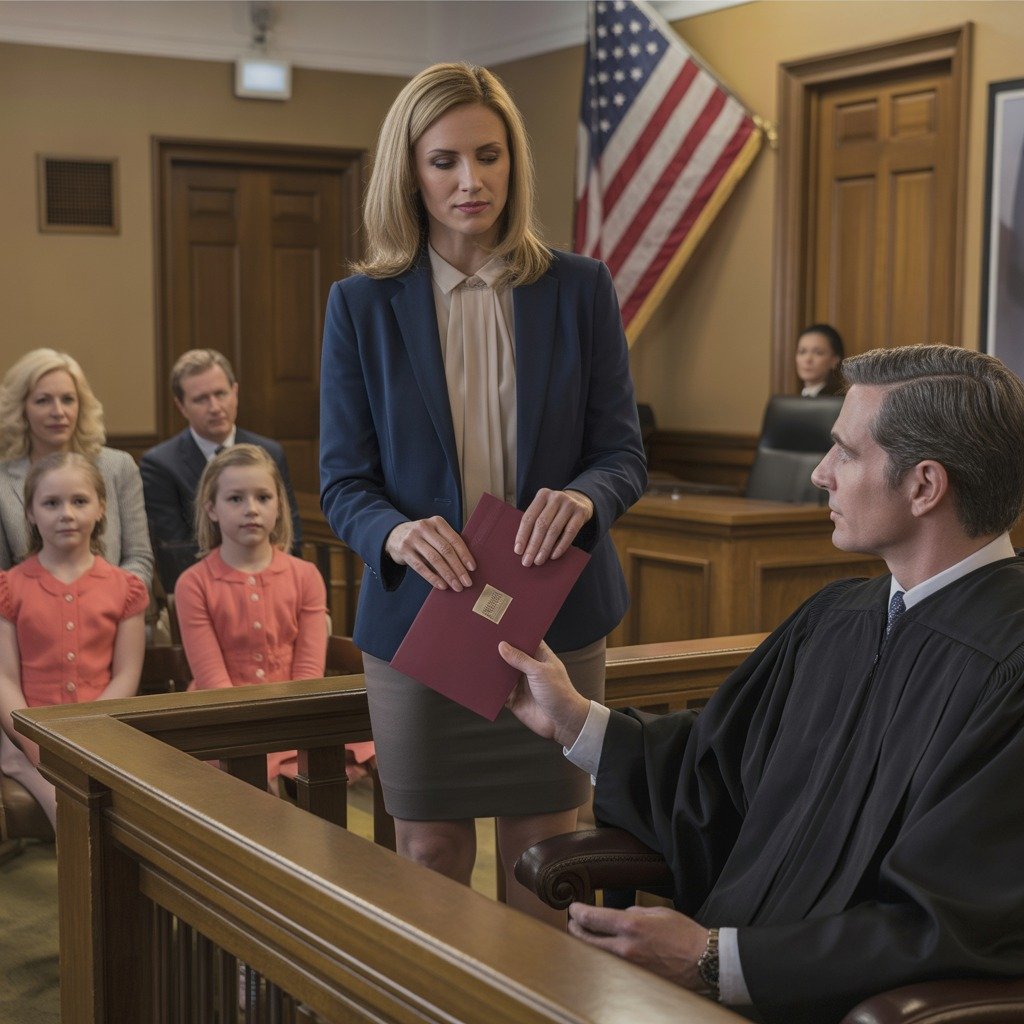
I reached into my briefcase and pulled out an envelope—thick, rubber-banded like a brick. I walked it to the clerk.
“Financial records,” I said. “Every transfer with notes, every rent payment, every exam fee.”
The judge accepted it.
“And one more thing,” I said.
I pulled out a second envelope—smaller, cream paper, yellowed at the edge. I’d found it in Grandpa’s desk the week after he died.
It was addressed to Norah.
I had never opened it. I had considered burning it.
Instead, I handed it to the bailiff.
“Your Honor, this is a letter Grandpa left for my sister. I didn’t read it. She should.”
For the first time all morning, Norah’s expression changed.
Confusion flashed across her face.
She took the letter with careful fingers, broke the seal, scanned the page, and froze.
Color rose to her cheeks, fast and bright.
Eva moved like she’d been waiting for that moment.
“We also submit Exhibit C,” Eva said, sliding screenshots forward. “These are messages where Ms. Cole wrote that keeping the education balance under Ashley’s name would be safer because she could always guilt Ashley if something happened.”
Norah’s attorney objected.
Eva laid the foundation, calm as a metronome.
The judge flipped through the screenshots, then turned to Norah.
“Counsel, do you contest authentication?”
The attorney whispered with Norah.
“We reserve,” he said.
“Noted,” the judge replied.
“Your Honor,” I said, “may I read the last line of my grandfather’s letter to me?”
I held up the page.
“It says, ‘Ashley, if anyone ever tells you your job is to sacrifice, tell them no.’”
Norah rolled her eyes. “He wrote things like that all the time. He liked his little sayings.”
The judge looked at her.
“Ms. Cole, would you like to summarize the letter you just opened?”
Norah folded it once, twice.
“It’s private,” she said.
“Understood,” the judge replied. “But you filed. This is discovery.”
Norah swallowed hard.
“He wrote that the house should be Ashley’s because Ashley doesn’t ask for things, and I have been given enough.”
The room went so quiet I could hear the fluorescent buzz overhead.
Mom whispered, “That’s not what he meant.”
The judge turned to me.
I pulled out my phone.
“One more piece of context. A video.”
It was a thirty-second clip from my grandfather’s kitchen. He was at the table, the Omega watch on his wrist. His voice was clear.
“Sweetheart, I’m proud of you. When you’re a doctor, you’ll pay Ashley back every dollar. We’ll put it on paper if it helps you remember.”
I paused it.
“Timestamped. Two years before he died.”
Norah lifted her chin. “That was a joke. He joked like that.”
The judge leaned back, eyes on the phone screen, then on the letter, then on the screenshots.
He exhaled through his nose very slowly.
Then he did something I have never seen a judge do.
He looked at my sister, smiled just slightly, and laughed.
Not cruelly. Not mockingly. More like someone who just heard the most brazen lie delivered with a straight face.
“Counsel,” he said, composing himself, “your client’s position is untenable. Unless she wishes to proceed to trial and pay everyone’s fees, I suggest you take the next five minutes to talk about ending this case.”
He paused. “Ms. Cole… your sister is in a bind.”
Norah stared at the table. Mom reached for her hand and missed. Dad looked suddenly older.
We settled in the hallway.
Eva drafted a one-page agreement on a bench while a bailiff ate a muffin three feet away.
Norah withdrew everything. She agreed not to contest the will. She agreed to stop contacting my clients.
In exchange, I agreed not to pursue formal penalties.
Mom tried to spin it.
“Family fight. This was a misunderstanding.”
I looked at her.
“You told me my place is to sacrifice.”
She flinched. “I was upset.”
“You were honest,” I said.
Norah wouldn’t meet my eyes. She folded Grandpa’s letter small.
“You humiliated me,” she said quietly.
“You sued me,” I said.
She stiffened. “You think I’m a villain. I’m tired. I work so hard.”
“So did I, but only one of us sent the other a bill for it.”
Dad suggested brunch. Eva made a face. I said I had to get back to work.
In the parking lot, my hands shook when I tried to unlock my car. I sat behind the wheel and stared at the courthouse doors until my breathing slowed.
I didn’t feel victorious.
I felt awake.
Like I’d been underwater for years and finally broke the surface.
I drove to the house Grandpa left me.
It wasn’t big. The front steps sag. The porch light switch crackles. The place smells faintly like old wood and the kind of soap Grandpa used.
I walked through rooms that still felt like his—faded curtains, a bookshelf, a coffee mug with a chip he refused to throw away.
I sat on the living room floor with the watch in my palm.
The silence felt different. Not empty. Unoccupied. Waiting.
That night, I put the seven-year spreadsheet into a folder called CLOSED.
Then I did something reckless. I ordered a pizza with extra everything. No coupon. I ate it slowly, like I was teaching my body that pleasure wasn’t a crime.
I turned my phone face down. I didn’t check messages.
The next weeks were quiet. I swapped the safe. I replaced my car’s serpentine belt. I cleaned out the trunk.
I took exactly one new client—a woman whose ex had taken their dog and vanished. We found him. We got the dog back. The woman cried into the dog’s fur.
Norah tried a different tactic.
She showed up on my porch one morning with coffee and eyes that said, I’m ready to be the good sister if we pretend none of this happened.
She wore scrubs. She looked tired for the first time in her life.
“I’m not doing amnesia,” I said through the screen door.
“I paid you back,” she said, voice small.
“No. You dropped your invoice. Same thing.”
She blinked.
“You can come in when you understand the difference,” I told her.
She left the coffee on the step like an offering.
An hour later, it was cold.
I poured it into the sink.
Mom texted holiday plans like a project manager. I didn’t respond. Dad called and left voicemails about starting fresh.
The house started feeling like mine. I found Grandpa’s screwdriver set. I fixed the sag in the front step. I replaced the porch light with a motion-sensor one.
On a Tuesday, I opened a savings account labeled CABIN FUND.
I texted Norah: Let me know when you want your half of the cabin expenses.
She replied with a heart and nothing else.
Fine.
I also cleared the education balance that had lived under my name. Watching the number hit zero felt like cutting off a weight I’d carried so long, I forgot it wasn’t part of me.
Work changed. I stopped saying yes to cases that paid cash but felt like poison. I took more custody runs and elder exploitation cases. Turns out I’m good at listening to people who were trained to think they don’t deserve to be believed.
A month after the hearing, I got an email from Norah.
Residency is brutal. Can we talk when it calms down?
I typed, No.
Then I erased it and wrote: I’m not available to be your reset button. We can talk after you send me a plan to repay what you promised Grandpa.
I attached a spreadsheet.
She didn’t reply.
Two weeks later, a transfer appeared. $500.
Then $300 the next paycheck. Then nothing for a while. Then $1,000.
No apology. Just money, with lowercase notes like: sorry, late.
It wasn’t enough to erase everything.
It was enough to prove one thing.
She knew.
Mom sent a group text on my birthday with balloons. I didn’t answer.
Instead, I drove to the lake cabin alone. At the cabin, I unlocked the door and breathed in pine and dust.
I opened windows. I let cold air sweep through.
I sat at the tiny kitchen table and read Grandpa’s letter again.
I wound the watch and let it tick in the quiet.
Then I said out loud to no one, “No.”
It felt like a clean word. Not cruel. Honest.
And here is the part I didn’t expect.
Life after no is louder. Food tastes better. A stupid joke can make you grin all the way to the parking lot. Friends become anchors, not distractions.
I stopped being the woman who lives on hold.
I started answering my own calls.
I thought closure would be a big speech.
Instead, it was an ordinary afternoon with a small sound: the mail slot clacking.
An envelope slid onto my rug.
No return address.
Inside was a bank-issued check for $8,000 and a note in Norah’s handwriting.
For the spring. I’ll keep going.
Nothing else. No hearts. Not an apology—just a ledger entry that admitted what she’d denied.
I stood there for a long time.
Then I put the check in the cabin fund and made myself a grilled cheese. I ate it on the porch while the motion light clicked on and off.
People still tell me I’m so strong. They mean, You kept paying even when it hurt.
But strength isn’t carrying other people’s furniture on your back until your knees lock.
Strength is putting the furniture down and locking your door.
Strength is saying no and not explaining it until your throat burns.
My mother still sends group texts. Sometimes I read them. Sometimes I don’t.
My father called last week to tell me the lawn at their place needs work.
I told him, “There’s a number you can call for that.”
He laughed like he thought I was joking.
I wasn’t.
We ended the call politely, like neighbors.
I see Norah sometimes on post-shift mornings when she stumbles out of the hospital with eyes like paper. Once she saw me across the street, lifted a hand.
I lifted mine back.
Not a truce. Not a war.
Something else.
A boundary that holds.
If you were hoping for revenge, I don’t have it. The judge’s laugh was enough. The rest of it—the quiet house, the watch ticking, the spreadsheet named CLOSED—does the work better than any speech ever could.
I’m not a wallet.
I’m not a background character.
I am not a job description written in someone else’s handwriting.
I am a person, and my answer is no when no is correct.
And here’s the promise I made to myself on the cabin dock at sunset, with the watch steady on my wrist and the water moving like breath:
I will never again let anyone tell me my only job is to sacrifice.
That isn’t love. That’s theft with manners.
I’m done paying to be allowed inside my own family.
I have my own keys now.
The door opens from my side.