A Year After Our Divorce, My Ex Texted “We Need to Talk” — The Next Morning, Cops Knocked on My Door
One year after my divorce, my ex-wife texted, “We need to talk.”
Urgently.
Like the world was on fire and only I had the extinguisher.
I stared at those words on my phone until my jaw tightened so hard my teeth ached. Then I did what a lot of men my age do when they feel cornered: I got stupid for five seconds.
I smirked and typed back, “Can’t. I’m on a date with your sister.”
I hit send before I could overthink it.
Was it petty? Yeah.
Did it feel good for about five seconds? Also yeah.
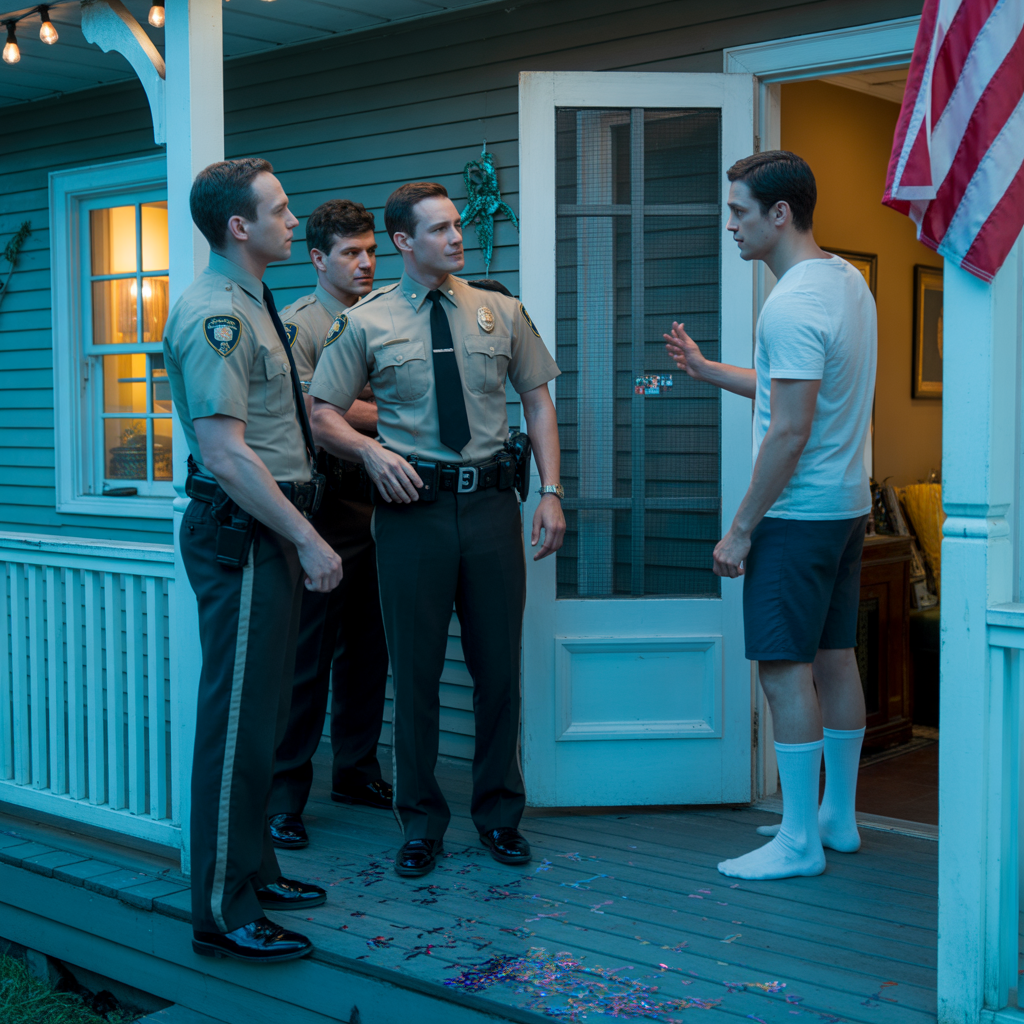
By sunrise, two sheriff’s deputies were knocking on my front door, calling my name.
I stood there in my socks, the screen door creaking on its tired hinges, staring at two uniforms on my porch like they were a bad dream that hadn’t finished forming yet.
“Ray Mercer?” the taller deputy asked, already holding a clipboard like he knew the answer.
“That’s me,” I said.
My voice came out steady, but my chest felt tight—the kind of tight you get when you’re up on a ladder and suddenly realize the power isn’t off after all.
“Sir, we need to ask you a few questions.”
Behind them, the gravel driveway crunched under another passing car. I caught the faint movement of Mrs. Keller’s curtains across the street.
In a town just outside Dayton, Ohio, nothing spreads faster than a story that starts with a police cruiser.
That moment—standing there in an old IBEW Union t-shirt, coffee still cooling on the counter behind me—was when I realized my life had just shifted again.
And not in a good way.
But to understand how I got there, you have to rewind about twelve hours.
Tuesday night, 7:43 p.m.
I was sitting at my kitchen table adding up receipts like I always did on Tuesdays.
Old habit from my electrician days. You work thirty years around live wires, you learn to double-check everything—numbers, dates, people. You learn that “probably fine” is how houses burn down.
My kitchen was small, the kind built when people didn’t think you needed an island or granite countertops to feel successful. The ceiling fan had one blade that clicked if you ran it too fast, so I kept it on low. The light above the sink buzzed faintly, and I’d meant to fix it for months, but once you retire, you start putting off the small repairs the way you put off hard conversations.
The radio was low, one of those classic rock stations that plays the same songs every night. Same guitars, same drums, same voices singing about freedom and heartbreak. Somehow that’s comforting when you’re fifty-six and divorced, sitting alone with receipts and a mug that reads World’s Best Grandpa even though you only see your grandkids twice a month.
I wasn’t supposed to be doing receipts at my age.
Not like this.
But after the divorce, I started a little side business doing home inspections. Not because I wanted to hustle in my fifties, but because half a pension disappears fast when you still have a mortgage, a truck payment, and a daughter who pretends she doesn’t need help.
Inspection work is steady if your reputation is steady.
People trust you with their biggest purchase. They want you honest, but they also want you calm. They want you to crawl through their attic and tell them the truth without sounding like you enjoy it.
I was good at that.
I’d spent my whole life being good at showing up, keeping my mouth shut, doing the job right.
And on that Tuesday night, I was just trying to keep my numbers straight.
That’s when my phone buzzed.
Eight words.
“Tina, we need to talk urgently.”
That was all it took for my jaw to tighten.
Tina Mercer.
My ex-wife of twenty-seven years.
A woman who could sell a half-flooded basement as “cozy with character” and convince you it was your idea. A woman who could smile while she took something and make you feel guilty for noticing.
We’d been divorced exactly one year, finalized on a gray Wednesday morning right there at the Montgomery County Courthouse. The kind of day where the sky looks like wet concrete and everything feels colder than it should.
I can still see her in that hallway—hair perfect, lipstick set, holding a manila folder like it was a purse.
She walked away with the newer SUV, half my pension, and a look on her face like she’d just won something important.
I walked away with my old F-150, my tools, and the quiet, unfamiliar feeling of my own house being too empty.
I stared at Tina’s message on my phone.
I knew better than to respond.
Darla—my divorce lawyer back then—had drilled that into me for months.
Don’t engage.
Don’t feed it.
But pride is a funny thing at this age. You think you’ve outgrown it.
You haven’t.
There’s something about being fifty-six that makes you believe you should be past childish impulses, and then you feel one anyway and you realize the only thing that changes with age is how quickly you regret it.
Still, I typed.
“Maybe another time. I’m on a date with your sister.”
I hit send.
The moment the message went through, I felt that little jolt of satisfaction—like I’d flicked a rubber band back at someone who’d been snapping me for years.
Then the satisfaction faded and the reality settled in.
Because the truth—what Tina would never accept—was that I was on my way out the door.
Marlene Haskins was waiting for me at the Cracker Barrel just off I-75, the one with the squeaky front door and the gift shop full of things nobody actually needs.
Marlene was Tina’s younger sister by three years. Forty-nine. Brown hair pulled back. No-nonsense eyes.
She was the kind of woman who listened more than she talked, and when she did talk, it wasn’t to fill space. It was because she meant it.
This wasn’t some revenge date.
That’s important to say.
I’d heard all the jokes. I knew what people would assume if they knew.
But Marlene had reached out months ago after the divorce—quietly, like she was slipping a note under a door.
“You didn’t deserve how that ended,” her first message said.
No drama.
No gossip.
Just one honest sentence.
We started with coffee.
Then another.
Then dinner.
Two people comparing notes on the same storm.
Marlene didn’t ask me to trash Tina. She didn’t want details. She’d lived in that family her whole life; she knew enough.
And I didn’t use Marlene to hurt Tina.
I was tired.
I wanted someone across the table who didn’t look at me like I’d failed.
When I walked into Cracker Barrel that night, the smell of burnt coffee and fried chicken hit me like always. The hostess stand had that same old pegboard game nobody plays right, and the gift shop had a shelf full of rocking horses and novelty mugs that made me want to laugh and sigh at the same time.
Marlene was already in the booth, hands wrapped around a mug like she’d been waiting long enough to go cold.
“You look tense,” she said as I slid in across from her.
“Long day,” I replied. “Same old.”
She smiled just a little.
“Tina?”
I nodded.
“She texted me too,” Marlene said, and her eyes held something like a warning. “Something about you losing it.”
I snorted.
“Funny how urgent things get when they’re not in control anymore.”
Marlene didn’t argue.
She just stirred her coffee slowly, watching the cream swirl like she was watching a thought form.
We ordered meatloaf and iced tea. The clink of silverware. The low hum of other conversations.
Families.
Truckers.
Retirees.
Normal life.
The kind of normal I’d been trying to rebuild.
Marlene laughed at something I said—an actual laugh, not the polite one people do when they’re trying to be nice.
For a moment, I forgot about Tina entirely.
That was the last peaceful moment I’d have for a while.
When I got home that night, my phone was lit up like a Christmas tree.
Missed calls.
Unknown numbers.
A voicemail I didn’t play.
Three more texts from Tina, stacked like bricks.
I didn’t open them.
I did what tired men do when they want to pretend a problem isn’t real.
I shut my phone off.
I went to bed anyway.
That was my second mistake.
Wednesday morning, 6:18 a.m.
The knock was firm—not aggressive, confident.
I knew right away it wasn’t a neighbor.
Neighbors knock differently. Neighbors knock with hesitation, like they don’t want to bother you. This knock sounded like someone who didn’t care if they woke you.
I pulled on jeans, slipped into my socks, and walked to the door.
My house was quiet in that early morning way, the kind of quiet that usually feels peaceful. That morning it felt like the whole place was holding its breath.
I opened the door.
Two deputies stood on my porch, brown uniforms, badges glinting under the porch light.
One older.
One younger.
The older one smelled faintly of aftershave and cold air.
“Ray Mercer?” he asked.
“Yes, sir,” I said.
“We’re here regarding a complaint filed last night.”
My stomach dropped.
They didn’t accuse me of anything outright.
They didn’t have to.
Words like harassment and unwanted contact floated in the air like dust motes.
“We just need your side of things,” the younger deputy said.
I nodded, trying to keep my voice even.
I answered their questions about texts, about my relationship with my ex-wife, about Marlene.
Every question felt like a door cracking open in a house I’d been trying to keep locked.
“Did you contact Ms. Mercer last night?”
“Yes,” I said, because lying to the police is a different kind of stupid.
“What did you say?”
I told them.
The older deputy’s mouth tightened, not in judgment, but in that way people do when they’ve seen this kind of mess before.
“You understand how that could be taken,” he said carefully.
“I understand how Tina would take it,” I replied.
The younger deputy asked if I’d threatened her.
I said no.
He asked if I’d shown up at her home.
No.
If I’d called her repeatedly.
No.
If I’d asked anyone else to contact her.
No.
They looked at each other.
The older deputy made a note on his clipboard.
Then he said, “All right. We’ve got your statement.”
They thanked me.
They turned to leave.
As they walked back to their cruiser, Mrs. Keller’s curtain twitched across the street.
That’s when it hit me.
This wasn’t about closure.
This wasn’t about talking.
This was about leverage.
And somewhere between my smart-mouth text and that knock on the door, Tina had decided to remind me she could still reach into my life and shake it hard.
I stood there in the doorway long after the cruiser pulled away, thinking one thing over and over.
What exactly did she tell them?
And why now?
I didn’t go back to sleep.
I stood at the kitchen sink, staring out at the frost clinging to the edges of my driveway, listening to the old refrigerator kick on and off like it was thinking too hard about its job.
My coffee had gone cold, but I drank it anyway.
At my age, you learn not to waste things.
By 8:00, my phone was back on.
Three new texts from Tina.
I didn’t open them.
Instead, I called Eddie Ror.
Eddie and I had worked side by side for nearly twenty years pulling wire in factories, schools, hospitals—anywhere they needed electricity and didn’t mind paying union rates. He retired a year before I did and somehow looked ten years younger for it.
He picked up on the second ring.
“Ray,” he said, “you sound like hell. Got a minute?”
“For you, always.”
I told him about the knock, about the complaint, about Tina.
There was a pause on the line, the kind where you could almost hear the gears turning.
“You got a lawyer?” Eddie asked.
“Had one for the divorce. Haven’t talked to her in months.”
“You need one now,” he said. “And not some billboard clown. You need someone who knows how small-town messes actually work.”
He gave me a name.
“Darla Lang,” Eddie said. “She’s sharp. Doesn’t scare easy and she doesn’t let people bluff.”
That was all I needed to hear.
Darla’s office sat between a closed nail salon and a dry cleaner that always smelled like starch and old perfume. The sign on the door was simple. No slogan. No smiling stock photo.
Inside, it was quiet—paper quiet. A faint hum from a copier in the back. The smell of paper and burnt coffee.
Darla herself was in her late forties, hair pulled back, reading glasses perched on her head.
She didn’t rush me.
She didn’t offer platitudes.
She listened.
I told her everything.
The text.
The date.
The deputies.
I slid my phone across the desk when she asked.
She read Tina’s message twice.
Then she leaned back and said, “This isn’t about your feelings.”
I blinked.
“Excuse me?”
“This,” she said, tapping the screen, “is about pressure. She’s creating a record. She wants you reacting. Angry texts. Defensive calls. Anything she can point to and say, ‘See.’”
My hands tightened in my lap.
I hated that she was right.
“She asked to talk,” I said. “Said it was urgent.”
Darla gave a short laugh, not unkind, not amused either.
“They always say that when they need something signed.”
That stopped me cold.
She leaned forward.
“Ray, has Tina asked you recently for a favor? Something paperwork-related?”
I thought back.
Really thought.
A week earlier, she’d left a voicemail. Soft voice. Almost friendly.
“Hey. I just need to clear something up from when we were married. Should be quick.”
I hadn’t called her back.
“I think so,” I said slowly.
Darla nodded like she’d expected it.
“There it is.”
She laid out the rules like a checklist.
“No more direct contact. Everything goes through me. You don’t explain yourself to anyone. Not neighbors. Not Facebook. Not family. You document. You stay boring. Boring wins.”
I nodded, though every instinct in me wanted to do the opposite.
Then my phone rang.
Kelsey.
My daughter.
I hesitated before answering, but Darla motioned for me to take it.
“Dad,” Kelsey said. Her voice was tight. “Are you okay?”
“I’m fine,” I said. “Why?”
“Aunt Tina posted something weird,” Kelsey said. “About being scared. About protecting herself. People are commenting.”
My chest ached.
This was exactly what I’d hoped to avoid.
“I’m handling it,” I said. “I promise.”
After I hung up, I sat there staring at the wall.
Darla watched me carefully.
“This is the part that hurts,” she said. “When it leaks into your kids’ lives.”
I nodded.
“She knows exactly where to hit,” I said.
Darla pulled a folder from her desk drawer.
“Here’s what I think is happening,” she said. “Your ex is in trouble. Real trouble. And she needs your name attached to something to get out of it.”
“What kind of trouble?” I asked.
“Financial,” Darla said. “Possibly legal. I’m going to start pulling records, but the timing lines up too well.”
I exhaled slowly.
“So this urgent talk was never about closure.”
“It was about consent,” Darla finished.
On my drive home, Marlene called.
“She’s been calling everyone,” Marlene said, her voice thin with fatigue. “Saying you’re unstable. That you’re trying to hurt her.”
I gripped the steering wheel.
The familiar crack in the dash caught the sunlight just wrong.
“I’m sorry,” I said. “I never wanted you dragged into this.”
There was a pause.
“Ray,” Marlene said quietly, “she’s scared. I’ve never heard her like this.”
That should have comforted me.
Instead, it made my skin crawl.
Because scared Tina wasn’t harmless Tina.
Scared Tina was dangerous.
That night, Darla emailed me one sentence.
She’s going to escalate.
I stared at the screen, the radio murmuring in the background, and realized something I hadn’t fully accepted yet.
Tina wasn’t done with me.
She was just getting started.
By Thursday morning, the rumor had legs.
I felt it before I saw it.
When you live long enough in a place like ours, you develop a sense for when the air changes.
It’s in the way people pause half a second too long before speaking.
It’s in the way smiles stop reaching eyes.
I pulled into the parking lot of my first inspection of the day—a small ranch house outside Fairborn—and sat in my truck for a moment, hands resting on the steering wheel.
The radio was on low, some talk show arguing about things that didn’t affect me. I shut it off.
My phone buzzed.
An email notification.
Inspection canceled.
No explanation.
Just canceled.
I frowned and checked my calendar.
That was five hundred dollars gone.
Not pocket change.
Grocery money.
Utility money.
Peace-of-mind money.
I scrolled.
There it was.
A brand-new one-star review.
Unprofessional. Made me uncomfortable. Would not recommend.
My name wasn’t slandered outright.
That was the clever part.
Just enough mud to make people wonder.
My chest tightened, hot and sharp.
I could practically hear Tina’s voice in my head.
I never said it was you, Ray.
I wanted to fire back.
Call the client.
Post my side.
Explain myself.
Instead, I called Darla.
“Don’t touch it,” she said immediately. “Screenshot it. Save the timestamp. That’s all.”
“It’s costing me work,” I snapped.
“I know,” she said, calm as ever. “And that’s exactly why you don’t react. This is bait.”
I hung up and sat there longer than I should have.
When I finally stepped out of the truck, I noticed something else.
The neighbor across the street—an older guy washing his car—looked up, saw me, and looked away.
That one hurt more than the review.
By lunchtime, I’d lost two more appointments.
I ended up at a diner I’d been going to since my apprenticeship days. Same cracked vinyl stools. Same burnt toast smell. Same waitress named Linda who always remembered I took my coffee black.
Linda poured my coffee without asking, then hesitated.
“You okay, Ray?” she asked.
I looked up.
“Why?”
She shifted her weight.
“Just… folks talking.”
There it was.
I forced a smile.
“I’m fine.”
She nodded, but it wasn’t convincing.
I stared into my coffee, watching the steam curl, and thought about how fast a reputation can unravel.
I’d spent decades building mine.
Showing up on time.
Fixing what I said I’d fix.
Shaking hands and meaning it.
And now it was slipping through my fingers because someone decided to whisper instead of talk.
That afternoon, Marlene called.
Her voice sounded tight.
“She’s telling people you’re harassing her.”
I laughed once, sharp and humorless.
“Funny,” I said, “considering she’s the one blowing up my life.”
There was a pause.
Then Marlene said something that caught me off guard.
“Ray… how does she seem to know where you are?”
I didn’t answer right away.
“She mentioned the diner,” Marlene continued. “The inspection in Fairborn. Like she’s tracking you.”
I felt a flicker of doubt spark in my chest.
It wasn’t fair.
I knew that.
But doubt doesn’t care about fairness.
“Marlene,” I said carefully, “are you talking to her?”
Silence.
Too long.
My stomach sank.
“I didn’t mean—” she started, then stopped herself. “I swear, Ray, I’m not feeding her anything. She still has access to old group chats. Family, friends. She asks questions like she’s worried.”
I closed my eyes and exhaled.
Shame burned my cheeks.
“I’m sorry,” I said. “I shouldn’t have asked like that.”
“I get it,” she said quietly. “She makes everyone doubt themselves.”
That night, Darla called me herself.
“I pulled your credit report,” she said. “Ray, there’s an account on here you didn’t open.”
My heart stuttered.
“What kind of account?”
“A line of credit,” she said. “Recent. Substantial.”
I gripped the edge of the kitchen counter.
The laminate felt cool under my fingers.
“I didn’t sign for anything,” I said.
“I know,” Darla replied. “That’s why we need to talk tomorrow.”
I hung up and stood there in the quiet house.
The hum of the refrigerator suddenly sounded like an engine idling.
I thought about all the times Tina had pushed papers at me late at night.
“Just sign, honey. I’ll handle it.”
I was tired then.
I trusted her.
Now I wondered how many wires I’d let her leave live behind the walls.
Darla didn’t waste time easing me into it.
She spread the papers across her desk the next morning like a mechanic laying out broken parts.
“Ray,” she said, tapping one page, “this line of credit was opened three months ago. It’s tied to an LLC your ex-wife was involved with, and it’s attached to your name.”
I stared at the numbers.
They didn’t feel real.
They felt like someone else’s problem until I saw my own signature at the bottom of a scanned document.
Or something that looked like it.
“That’s not my handwriting,” I said.
“I know,” Darla replied. “But it’s close enough to raise questions. Close enough to make lenders comfortable. Close enough to scare you.”
My hands started to shake.
These were the same hands that used to strip insulation without nicking the copper.
The same hands that never trembled on a ladder.
Now they felt like they belonged to someone else.
“She used an old authorization,” Darla continued. “Something from when you were married. A document that gave her limited power to act on your behalf. It should have expired, but she leaned on it anyway.”
I swallowed hard.
“So what does that mean?”
“It means she treated you like a backup generator,” Darla said. “Something she could switch on when her main power failed.”
The words landed heavy.
I drove home in silence.
Radio off.
Every mile gave me more time to think about how blind I’d been.
The garage smelled like dust and motor oil.
I pulled down boxes from the shelves—old tax folders, appliance manuals, binders Tina had labeled in her neat, slanted handwriting.
I sneezed as a cloud of dust rose.
My eyes burned.
In the bottom of one box, I found it.
A thin folder with Tina’s brokerage letterhead.
Inside were copies of old deeds, loan statements, and a faded authorization form I barely remembered signing years ago after a sixteen-hour shift.
“Just in case,” she’d said back then.
I sat on the cold concrete floor and laughed softly.
The sound was hollow in my own ears.
That night, Marlene came over.
She stood in the doorway unsure, like she didn’t want to cross some invisible line.
“She called me again,” Marlene said. “Asked me to sign something. Said it would clear things up.”
My stomach turned.
“Did you?” I asked.
“No,” she said firmly. “I told her no. And then she told me I was choosing sides.”
I nodded slowly.
“You didn’t choose sides,” I said.
“She did,” Marlene said.
Her shoulders sagged, relief washing over her face.
“I’m tired, Ray.”
“So am I,” I said.
The next day, Darla laid out the plan.
“No ambushes,” she said. “No threats. No raised voices. We’re going to let the paperwork talk.”
She explained it step by step.
Subpoenas.
Records requests.
Timelines.
Dates.
Signatures stacked like bricks.
“She has an event next week,” Darla said. “A Chamber of Commerce luncheon. She’s speaking about ethics and real estate.”
I snorted.
“You can’t make this stuff up.”
Darla smiled thinly.
“That’s where we end this,” she said.
I felt a knot tighten in my chest.
“Public,” I said.
“Clean,” she corrected. “Lawful and witnessed.”
I thought about my neighbors.
My daughter.
The looks I’d been getting all week.
“Let’s do it,” I said.
That night, I lay in bed staring at the ceiling, listening to the house settle.
Every creak sounded like a question.
I wasn’t looking for revenge anymore.
I was looking for my name back.
The parking lot was already half full when I pulled in.
Hotel ballroom off the interstate.
Beige walls.
Big glass doors.
A banner out front that read: Chamber of Commerce Luncheon — Building Trust in Our Community.
I sat in my truck longer than I needed to.
Hands on the wheel.
Engine idling.
The familiar crack in the dashboard caught the sunlight—the same crack I’d looked at every day for years.
I thought about turning around.
Thought about how peaceful it would feel to just drive home and let Darla handle it without me.
But that wasn’t how this ended.
I shut the engine off.
Inside, the place smelled like overcooked chicken and weak coffee.
Round tables covered in white cloths.
Name tags.
Polite laughter that stopped just a little too fast when people recognized me.
I kept my head up.
Darla was already there, standing near the back with a leather folder tucked under her arm.
She gave me a small nod.
Calm.
Steady.
“You ready?” she asked quietly.
“No,” I said. “But let’s do it anyway.”
Tina was across the room.
She looked good.
She always did when there was an audience.
Hair perfect.
Smile practiced.
Working the room like she owned it.
When she saw me, her smile flickered just for a second.
Then it came back sharper.
She turned away.
We took seats near the aisle.
I could hear whispers ripple around the room.
“That’s him.”
“She seems nervous today.”
The chamber president stepped up to the podium and cleared his throat.
A microphone popped softly.
He thanked sponsors.
Made jokes that landed politely.
Then he introduced Tina.
“An example of integrity in local real estate,” he said.
I felt something twist in my chest.
Tina walked up, confident, hands resting lightly on the podium.
She started talking about trust.
About transparency.
About doing things the right way.
Every word felt like sand in my teeth.
Darla leaned toward me.
“Wait,” she whispered.
Tina was mid-sentence when Darla stood.
She didn’t raise her voice.
She didn’t interrupt.
She waited for a pause.
Then she said, clear and professional:
“Excuse me. I’m attorney Darla Lang. I have documents that must be formally presented.”
The room went quiet.
Paper rustled.
Chairs shifted.
Tina froze.
“What is this?” she asked.
Her voice went tight.
Darla walked forward and placed the folder on the podium.
One page.
Then another.
Dates.
Signatures.
Timelines.
“These documents show that Mr. Ray Mercer’s name was used without his informed consent to secure financing tied to an LLC associated with Ms. Tina Mercer,” Darla said evenly.
Murmurs rippled through the room.
Tina’s face drained of color.
“This is harassment,” she snapped. “He’s obsessed.”
Marlene stood up.
Her voice shook, but she didn’t sit back down.
“She asked me to sign false paperwork too,” Marlene said. “I refused. Then she turned on both of us.”
The silence was heavy now.
One of the brokers near the front leaned forward, peering at the documents.
Then another.
A man I recognized—big investor, loud voice—stood abruptly.
“If this is accurate,” he said, “I’m pulling out. Immediately.”
That was it.
That was the sound of the floor dropping out from under her.
Tina opened her mouth and closed it.
Her hands trembled on the podium.
No tears this time.
Just panic.
I stood.
I didn’t say much.
I didn’t need to.
“I just want my name back,” I said.
That was enough.
Outside, the air was sharp and cold, the kind that bites the inside of your nose and makes everything feel too real.
People spilled out of the ballroom in small clusters, pretending they had somewhere else to be.
Nobody wanted to be caught close to a fire once they realized it was hot.
Darla walked beside me, her heels clicking on the pavement, her folder tucked under her arm like it weighed nothing.
Marlene trailed a few steps behind, arms folded tight across her chest.
I made it halfway to my truck before Tina’s voice cut through the air.
“Ray?”
I didn’t turn right away.
I didn’t want to.
I wanted to keep walking, keep breathing, keep my hands steady on the keys like nothing could touch me anymore.
But old habits die hard.
I turned.
Tina came out fast, heels slipping slightly on the concrete.
Her face was tight, flushed with humiliation and anger.
The polished realtor mask was gone.
This was the Tina I remembered from the worst nights of our marriage.
Eyes bright with fury.
Mouth already forming the next accusation.
“How dare you?” she hissed. “You came in there to destroy me.”
Darla stepped forward calmly.
“Ms. Mercer, any further communication with Mr. Mercer goes through my office.”
Tina ignored her.
“Do you have any idea what you just did?” Tina snapped at me. “You humiliated me in front of everyone. You always needed to be the victim.”
I let out a slow breath.
My heart was still racing, but it wasn’t panic anymore.
It was something steadier.
Like power coming back on after a storm.
“You did that yourself,” I said quietly.
Tina’s eyes flicked to Marlene.
“And you,” she spat, “after everything I’ve done for you.”
Marlene’s voice was low, almost sad.
“You didn’t do things for me, Tina. You did things so you could hold them over me.”
For a second, Tina looked like she might cry.
Then her face hardened again.
“This isn’t over,” she said, pointing at me. “You think your little paperwork trick fixes this? You’ll regret it.”
Darla didn’t flinch.
“Threats are noted,” she said, pulling out her phone. “Would you like to repeat that for the record?”
Tina’s mouth opened, then shut.
She backed up half a step.
Behind her, in the distance, someone laughed awkwardly—too loud, too forced.
Tina turned and stormed off toward the parking lot.
I stood there, watching her go, my breath coming out in white puffs.
My hands were cold.
But they weren’t shaking anymore.
Marlene walked up beside me.
“You okay?” she asked.
I stared at my truck for a moment.
“I don’t know what I am yet,” I said.
That was the truth.
I wasn’t celebrating.
Not really.
I wasn’t the type to pop champagne or throw a party.
I was a man who’d spent most of his life making sure the lights stayed on even when the building was falling apart.
But as I climbed into my F-150, I felt something I hadn’t felt in a long time.
Relief.
The next few weeks weren’t smooth.
People like to think stories end the moment the villain gets exposed, but real life isn’t a movie.
It’s paperwork.
Phone calls.
Waiting.
Darla filed disputes, sent certified letters, made calls that ended with long silences on the other end.
I had to explain things more times than I wanted.
Not online.
Not publicly.
Quietly on the phone with lenders, with clients, with a couple of old friends who deserved the truth.
Some people believed me right away.
Some didn’t.
And that hurt.
But slowly, it shifted.
A client who’d canceled called back.
Awkward apology.
“Guess I shouldn’t have listened to Facebook.”
A new review popped up.
Ray’s honest. Caught a foundation crack the seller tried to hide. Saved us thousands.
I read it twice.
Then I sat in my kitchen and let my shoulders drop.
One afternoon, Kelsey called again.
“Dad,” she said, “people are changing their tune. Aunt Tina’s quiet.”
I smiled softly.
“Good.”
There was a pause.
“I’m proud of you,” Kelsey said. “You didn’t lose your temper.”
I swallowed hard.
“I came close,” I admitted.
“Yeah,” she said. “But you didn’t.”
After that call, I sat for a long time in silence, listening to the house settle, realizing how much I needed to hear those words.
Marlene and I kept things simple.
No grand declarations.
No dramatic romance.
Just coffee, dinners, quiet support.
One rainy evening, we sat in the same diner where I’d eaten lunch during the worst of the rumors.
Rain tapped the window in a steady rhythm.
The smell of bacon and fresh coffee filled the air.
Marlene stirred her mug slowly.
“You ever regret texting her that thing?” she asked, half smiling.
I chuckled.
“Every time I think about it.”
“But,” she pressed.
“But,” I admitted, “it was the spark. It showed her she couldn’t control me anymore.”
Marlene nodded.
“And it showed me I didn’t have to keep being afraid of her.”
I looked at her—really looked at her—at the tired strength in her face, at the way she’d stood up in that ballroom even though she was shaking.
“You helped,” I said quietly.
She shrugged, but her eyes softened.
“I told the truth,” she said. “That’s all.”
That’s all.
Funny how simple things become when you stop letting someone twist them.
Here’s what I learned, and I’ll say it plain.
At our age, revenge isn’t about winning a screaming match.
It isn’t about humiliating someone for sport.
It’s about protecting what you have left.
Your name.
Your peace.
Your future.
I spent most of my life thinking if I worked hard and stayed quiet, things would work out.
But silence isn’t always strength.
Sometimes silence is just giving someone room to lie.
The truth—real truth, backed by dates and signatures and receipts—holds up better than any story someone tells on Facebook.
And if there’s one thing I hope you take from my mess, it’s this.
Don’t let someone else write your story.
Not at thirty.
Not at fifty-six.
Not ever.
If you’ve ever had someone drag your name through the mud, I’d love to hear how you handled it.
Share your story in the comments.
Sometimes the best advice comes from folks who’ve lived it.
And if you want more grounded real-life stories like this—stories about dignity, consequences, and finding your footing again—hit like and subscribe.
It helps keep these stories coming, and it lets other people find them, too.