My name is Eliza Hayes, and at thirty-five years old, I’m the founder and CEO of Quantum Reed, an AI analytics firm currently valued at $4.5 billion.
But to my family, I was just the failure—the daughter who “abandoned the legacy,” the one who walked away from Hayes & Sons Publishing to chase what my father called “a phase” and my brother dismissed as “tech nonsense that’ll never amount to anything real.”
It was 11:51 p.m. on the Tuesday before Thanksgiving when my phone lit up with a message from my father, Arthur Hayes. I was still at my office in San Francisco, reviewing acquisition documents for a European startup we were considering purchasing. The building was silent except for the hum of servers and the occasional footstep of security making their rounds.
The message notification cut through that silence like a knife:
After tonight’s emergency board meeting, the trustees have agreed unanimously that your lifestyle choices and public statements represent a liability to the Hayes family reputation and financial interests. Effective immediately, you are no longer a beneficiary of the Hayes Family Trust. The attorneys will send formal documentation by end of week. This decision is final.
I stared at the words, reading them twice to make sure I understood correctly.
Then, before I could even process what I was seeing, another notification appeared—a heart reaction to my father’s message.
Not from my mother, who at least might have had the decency to feel conflicted about disowning her only daughter.
From my brother.
Ryan.
The golden child. The heir apparent. The one who’d been groomed since birth to take over Hayes & Sons Publishing and carry forward the “legacy” that had been drilled into both of us since we could walk.
I stared at the screen for a long moment, the blue light reflecting off the half-finished glass of Cabernet beside my laptop. The wine had been a celebratory pour just thirty minutes earlier, a small toast to myself after finalizing a partnership deal worth $200 million.
No tears came. I didn’t type a reply. I just sat there in a silence that felt heavier than anger, denser than shock.
Because betrayal, when it’s this clean and this deliberate, doesn’t sting the way you’d expect. It doesn’t create the hot flash of rage or the immediate urge to fight back.
It burns cold.
Arthur Hayes—CEO of Hayes & Sons Publishing, third-generation custodian of a 127-year-old company, darling of the literary establishment, winner of countless industry awards for “preserving quality literature in an increasingly commercial marketplace.”
Ryan Hayes—Vice President of Strategic Development, heir apparent, Yale graduate, married to the daughter of a Connecticut senator, father of two photogenic children who appeared regularly in his carefully curated social media presence.
And me?
Eliza Hayes. The daughter who walked away at twenty-three to build something they would never understand, never value, never see as legitimate.
The trust they’d just stripped me from was worth approximately four million dollars—impressive on paper to most people, completely irrelevant compared to what I’d built from absolute scratch over the past twelve years.
They had absolutely no idea what they’d just done.
More importantly, they had no idea what I’d been doing for them for the past five years.
I closed my phone with deliberate calm, opened my laptop more fully, and let the glow of the screen wash over my office. Outside the floor-to-ceiling windows, San Francisco glittered like scattered diamonds, the city I’d chosen over the stifling traditions of Boston and the suffocating expectations of my family name.
For five years—sixty months of quiet generosity they knew nothing about—my company, Quantum Reed, had been their silent lifeline. Their secret benefactor. Their unknowing savior.
They didn’t know it, of course. How could they?
The transactions had been routed through shell corporations and investment vehicles with names that meant nothing to anyone outside the financial and legal teams who’d structured them. The money had appeared as “anonymous philanthropic investment in literary preservation” and “grants from private equity interested in cultural institutions.”
Quantum Reed had quietly, systematically funneled millions of dollars into Hayes & Sons’ money-losing passion projects. The literary ventures my father loved with genuine passion but zero business sense—the award-winning imprints that published important but commercially unviable poetry collections, the boutique divisions that made critics weep with joy but bled money every single quarter, the “culturally significant” translations of obscure foreign novels that sold maybe three hundred copies each.
Every time my father stood up at an industry gala to accept another award for “visionary leadership in preserving literary culture,” every time he gave an interview about “choosing artistic integrity over commercial pressure,” every time he toasted the “bright future of Hayes & Sons”—he was spending my money.
My compassion. My success. My generosity toward a family that had never shown me the same consideration.
He’d been unknowingly overdrafting from a bank account of goodwill I’d established out of some misguided hope that maybe, eventually, they’d see me as something other than a disappointment.
Now, sitting there in the darkness broken only by my laptop’s glow, I watched as another notification blinked to life on my screen.
An email from my publicist with the subject line: “FORBES JUST WENT LIVE — YOU’RE #7!!!”
I clicked it open.
Forbes: 40 Under 40 — Tech Visionaries Who Are Reshaping Global Business
And there it was.
My photo—professional headshot, confident smile, the image we’d carefully selected from three different photo sessions.
My company’s name: Quantum Reed.
My title: Founder and CEO.
The valuation: $4.5 billion.
And the profile text that began: “At just 35 years old, Eliza Hayes has built one of the most influential AI analytics platforms in the world, serving Fortune 500 companies across seventeen countries and processing over 40 billion data points daily…”
The article had been published at 9:47 p.m. Pacific time.
My father’s disownment text had arrived at 11:51 p.m.
Which meant the Forbes list had been public for over two hours before he’d sent that message. Before the “emergency board meeting” where they’d decided I was a “liability” to the family reputation.
They’d had access to that information. They could have seen it. Should have seen it, given how carefully they monitored anything related to the Hayes name in media.
But they hadn’t looked. Hadn’t bothered. Hadn’t considered that maybe, just maybe, the daughter they’d written off as a failure might have actually accomplished something extraordinary.
And now, in less than twelve hours, when the entire Hayes family gathered around the massive dining table at my parents’ estate in Connecticut for Thanksgiving dinner—the traditional family obligation I’d been dreading for weeks—someone was going to read that Forbes headline out loud.
Someone was going to see my face on that list.
Someone was going to realize what I’d become while they were busy dismissing me.
I sat back in my office chair, a plan forming in my mind with crystalline clarity.
I could not show up. I could send a polite text citing “unexpected business obligations” and spend Thanksgiving at my condo with takeout and a good book, avoiding the whole mess entirely.
Or.
I could show up exactly on time, exactly as expected, and watch this play out in real time.
Watch my father’s face when he realized what he’d done.
Watch Ryan’s carefully maintained composure crack.
Watch my mother—who’d never defended me but had at least maintained plausible deniability about her feelings—confront what her silence had enabled.
I picked up my phone and opened my messages.
My father’s text still sat there, cold and final: This decision is final.
Ryan’s heart reaction still mocked me from the screen.
I typed a response, keeping it simple:
I’ll see you tomorrow at 2 p.m. for Thanksgiving dinner as planned. Looking forward to it.
I hit send before I could second-guess myself.
Three dots appeared immediately. My father was typing.
Then they disappeared.
No response came.
I smiled, closed my laptop, finished my wine, and went home to pack for Connecticut.
Thanksgiving Day
The Hayes family estate sat on twelve acres in Fairfield County, Connecticut, looking exactly as it had looked for the past eighty years—imposing, traditional, designed to communicate old money and older values.
I pulled my Tesla into the circular driveway at exactly 1:58 p.m., two minutes before the expected arrival time that had been drilled into me since childhood. “Punctuality,” my father always said, “is respect made visible.”
The irony wasn’t lost on me.
Ryan’s Range Rover was already there, parked in the spot closest to the front entrance as if proximity to the door somehow confirmed his status as heir. My mother’s Mercedes sat in the garage, visible through the open bay door.
I checked my reflection in the rearview mirror. I’d dressed carefully—a cashmere sweater in deep burgundy, tailored black pants, understated jewelry that cost more than my first car but didn’t scream wealth. Professional but not corporate. Successful but not showy.
My publicist had sent me seventeen messages overnight, all variations of “The Forbes coverage is EXPLODING—Bloomberg wants an interview, WSJ is calling, TechCrunch wants an exclusive about your journey from publishing legacy to tech billionaire—”
I’d responded to exactly one: No interviews until Monday. Family obligation this weekend.
As I walked up the stone pathway to the front door, I felt strangely calm. No anxiety. No dread. Just curiosity about how this was going to unfold.
My mother opened the door before I could knock.
“Eliza,” she said, and her voice carried a note I couldn’t quite identify. Warning? Regret? “We didn’t think you’d come.”
“Why wouldn’t I?” I asked pleasantly, stepping past her into the familiar foyer with its dark wood paneling and the portrait of my great-grandfather—the first Hayes to enter the publishing business—glaring down at visitors with Victorian severity.
“After… well, after your father’s message last night…” She trailed off, clearly uncomfortable.
“Oh, that,” I said lightly. “I got it. Is everyone in the dining room?”
She nodded, looking uncertain, like she’d expected me to arrive ready for battle and didn’t know how to handle this calm version of her daughter.
I walked through the hallway toward the dining room, hearing familiar voices:
My father’s authoritative baritone: “—typical of this generation, no sense of responsibility—”
Ryan’s agreeable murmur: “Absolutely, Dad. The entitlement is—”
My sister-in-law Charlotte’s laugh, high and practiced.
The voice of my Uncle Richard, my father’s younger brother and the CFO of Hayes & Sons: “—the quarterly reports are concerning, Arthur. We really need to discuss—”
I stepped into the doorway.
The conversation stopped like someone had hit a pause button.
Six faces turned toward me: my father at the head of the massive mahogany table, my mother hovering near her chair, Ryan and Charlotte on one side, Uncle Richard and his wife Helen on the other.
“Happy Thanksgiving,” I said, my voice warm and genuine. “Sorry I’m a few minutes late. Traffic from the city was heavier than expected.”
My father’s face had gone an interesting shade of red. “Eliza. I didn’t expect—”
“Didn’t expect me to show up after you disowned me via text message?” I asked pleasantly, pulling out my chair—the one I’d sat in since childhood, at the far end opposite my father. “Why wouldn’t I come? It’s Thanksgiving. Family tradition.”
Ryan cleared his throat. “Eliza, maybe we should talk privately before—”
“Before what?” I asked, settling into my seat. “Before dinner? I’m actually starving. The turkey smells amazing, Mom. Did you use Grandma’s recipe?”
My mother looked like she might cry. “Yes, I… Eliza, sweetheart—”
The doorbell rang, cutting through the tension.
Everyone froze.
“Are we expecting someone else?” my father asked my mother, clearly irritated by the interruption.
She shook her head, looking confused.
“I’ll get it,” I said, standing back up. “I’m already up anyway.”
I walked back to the front door, knowing exactly who it would be because I’d arranged it myself.
The courier stood on the porch with a large manila envelope and a tablet for signature confirmation.
“Eliza Hayes?” he asked.
“That’s me.”
I signed, thanked him, and closed the door.
The envelope was from my attorney—sent at my request, timed to arrive during Thanksgiving dinner.
I walked back to the dining room where everyone sat in frozen, uncomfortable silence.
“Mail,” I announced cheerfully, setting the envelope on the table in front of my empty plate. “Nothing urgent. We can deal with it after dinner.”
“Eliza—” my father started, his voice strained.
“Actually, Dad, before we start eating, I should probably address the elephant in the room.” I looked around the table, making eye contact with each person. “I got your message last night. About removing me from the family trust.”
Charlotte looked down at her plate, uncomfortable. Uncle Richard shifted in his seat. Helen reached for her water glass.
“That decision,” my father said stiffly, “was made by the board—”
“The board being you, Uncle Richard, and Ryan,” I noted. “Mom doesn’t get a vote despite technically being a trustee, which has always struck me as interesting. But that’s fine. It’s your trust to manage however you see fit.”
“It’s not about the money,” Ryan started, and I almost laughed at the absurdity.
“Isn’t it though?” I asked. “What exactly was the ‘liability’ you cited? My ‘lifestyle choices’? My ‘public statements’?”
My father’s jaw tightened. “Your increasingly public profile in that technology sector. The interviews where you criticize traditional business models. The way you’ve positioned yourself as some kind of disruptor—”
“You mean the way I built a successful company?” I asked.
“You walked away from a legacy,” he said, and there it was—the same old argument we’d been having for twelve years. “You had a responsibility to this family, to Hayes & Sons, and you chose to chase some trendy tech startup instead.”
“Trendy tech startup,” I repeated. “Is that what you think Quantum Reed is?”
“I think,” my father said coldly, “that you’ve made your choices, and we’ve made ours. The trust was established for family members who honor the Hayes legacy. You’ve made it clear you don’t.”
I nodded slowly. “I see. And when exactly did this emergency board meeting happen?”
“Last night,” Uncle Richard said quietly. “Seven p.m.”
“Interesting timing,” I said. “And did any of you happen to check the news before that meeting? Read any business publications? Look at any major media outlets?”
Confused silence.
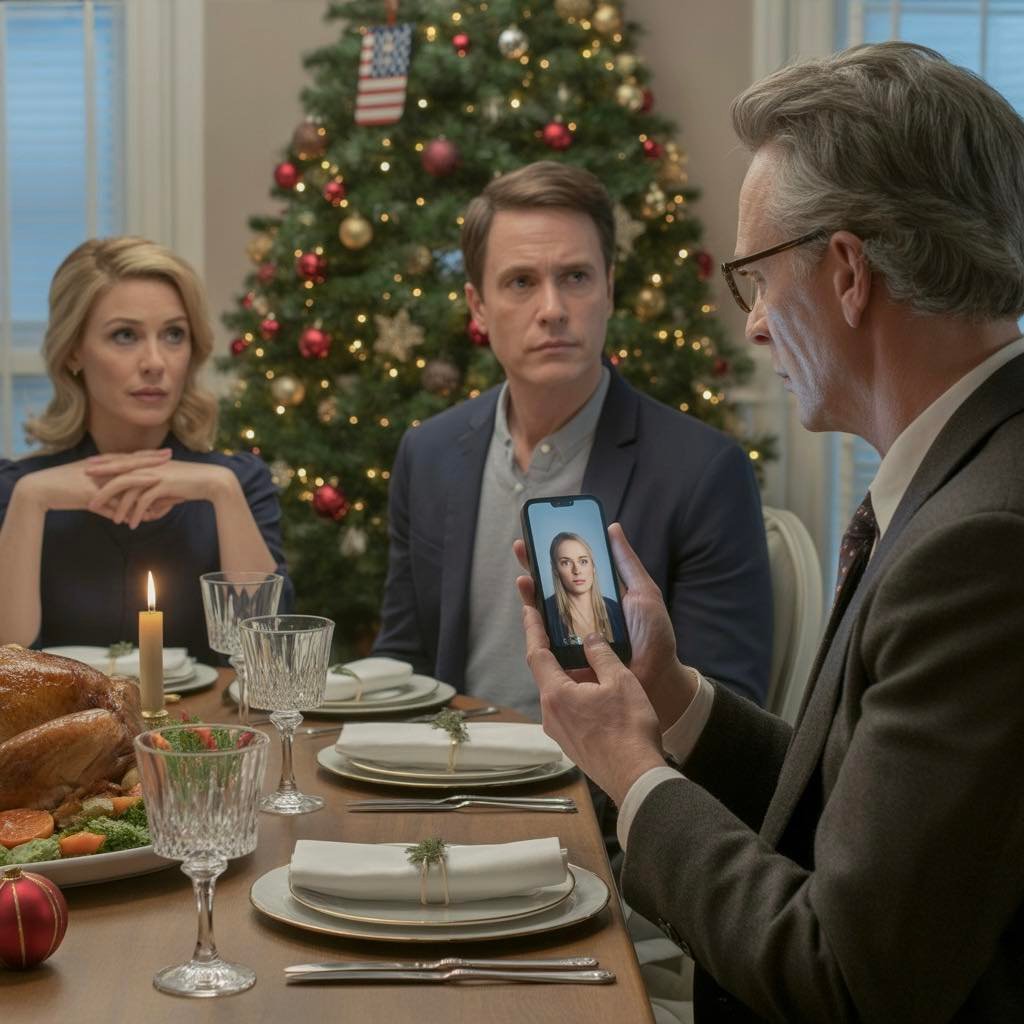
I pulled out my phone, opened it to the Forbes article, and slid it across the table to my father.
He looked down.
I watched his face change as he read the headline. Watched the color drain, then return in a deep flush. Watched his eyes scan the text once, twice, then look up at me with an expression I’d never seen before.
“That’s… this is…” he stammered.
Ryan leaned over to look at the screen. I watched him read it, watched the realization dawn, watched him sink back into his chair like someone had removed his spine.
“Four point five billion,” I said conversationally. “That’s the current valuation. Though honestly, it fluctuates. Last quarter it was closer to four billion. Next quarter, if the European expansion goes as planned, we’re projecting closer to five.”
Complete silence.
“The Forbes list came out at 9:47 p.m. Pacific time,” I continued. “Which was 12:47 a.m. here in Connecticut. So technically it was public before your emergency board meeting, though I suppose you might not have seen it yet.”
My mother’s hand was over her mouth. Charlotte looked like she wanted to disappear through the floor. Uncle Richard was staring at me like I’d grown a second head.
“Eliza,” my father finally managed, “I had no idea—”
“That I was successful?” I asked. “Yes, I gathered that. You’ve spent twelve years telling me I made a mistake, that I abandoned my responsibilities, that I chose wrong. So I suppose it makes sense you never bothered to actually check whether I’d built anything real.”
“Four point five billion,” Ryan whispered, like he was testing the words.
“Give or take,” I confirmed. “Though really, that’s just the paper valuation. The actual liquid assets are harder to calculate, but somewhere in the range of—” I paused for effect. “Well, let’s just say significantly more than the Hayes family trust.”
I opened the manila envelope the courier had delivered and pulled out the documents inside.
“These,” I said, sliding them across the table toward my father, “are financial records from the past five years. Specifically, they detail every anonymous donation, every ‘private equity investment,’ every mysteriously generous grant that’s kept Hayes & Sons afloat while you pursued your passion projects.”
My father’s hands shook as he picked up the first page.
“Quantum Reed,” I explained, “has invested approximately $23.7 million into Hayes & Sons over the past five years. The poetry imprint that won all those awards but loses $400,000 annually? My money. The translation series that got such glowing reviews? My money. The boutique literary magazine that’s never turned a profit? My money.”
Uncle Richard had grabbed the documents and was flipping through them, his face growing paler with each page.
“Every time you stood up at an industry event and talked about choosing art over commerce,” I said to my father, “you were spending my money. Every time you published a book that sold three hundred copies because it was ‘culturally important,’ I was subsidizing your vision.”
“Why?” my mother whispered. “Why would you do that if we… if we’d been so…”
“Dismissive? Critical? Ashamed of me?” I finished for her. “I don’t know, Mom. Maybe because some part of me kept hoping that eventually you’d see me as something other than a failure. Maybe because I actually believe in preserving literary culture, even if I chose to make my fortune differently. Maybe because I’m an idiot who wanted her family’s approval more than she wanted to admit.”
I stood up, pushing back my chair.
“But here’s the thing about that $23.7 million investment,” I said. “It was routed through a shell company with a very specific contract. One that includes a clause allowing the investor to call in the full amount, with interest, if certain conditions are met.”
Uncle Richard looked up sharply. “What conditions?”
“Oh, you know,” I said casually. “Things like breach of good faith, reputational damage to the investor, actions taken in bad faith toward parties associated with the investment vehicle.”
I let that sink in for a moment.
“Removing someone from a family trust the night before a major publication reveals her net worth,” I continued, “while that person has been anonymously funding your company for years? I think my attorneys would argue that qualifies.”
“You wouldn’t,” my father said, but his voice lacked conviction.
“Wouldn’t I?” I asked. “You just disowned me, Dad. Removed me from the family legacy because you thought I was an embarrassment. Why exactly would I continue funding your dreams?”
The silence that followed was broken only by the ticking of the antique clock in the hallway.
“If you call in that money,” Uncle Richard said quietly, “Hayes & Sons will have to liquidate assets to cover it. Possibly sell divisions. Maybe the entire company.”
“I know,” I said. “I’ve read your quarterly reports. The ones you file publicly. I know exactly how leveraged you are, how thin the margins have gotten, how close to the edge you’re operating.”
Ryan found his voice. “Eliza, we made a mistake. Obviously we didn’t know—”
“Didn’t know I was successful?” I interrupted. “Or didn’t know I was funding you? Because both of those feel like pretty significant oversights for a board of trustees.”
“We can reverse the decision,” my father said quickly. “Reinstate you to the trust immediately. I’ll call the attorneys tonight—”
“Oh, the trust,” I said, and I couldn’t keep the bitter laugh from escaping. “The trust with its four million dollar value? You think I care about four million dollars?”
I picked up my phone and pulled up my brokerage app, the one that showed my personal investment portfolio. I turned the screen toward them.
“That’s my personal account,” I said. “Not Quantum Reed’s assets. Just mine. See that number?”
My father’s eyes widened.
“That’s more than the entire Hayes family trust,” I said. “That’s what I personally control. So no, Dad, I don’t need to be reinstated to a trust that’s worth less than I made in stock appreciation last month.”
I gathered my coat from the back of my chair.
“Eliza, please,” my mother said, standing up. “Don’t leave like this. Stay for dinner. Let’s talk about this like a family.”
“A family,” I repeated. “When exactly did you start thinking of me as family, Mom? When you saw the Forbes list? When you realized I might actually be worth something?”
“That’s not fair,” she protested weakly.
“You’re right,” I agreed. “It’s not fair. It wasn’t fair when Dad told me I was wasting my potential by going into tech. It wasn’t fair when Ryan said I was abandoning my responsibilities. It wasn’t fair when you stayed silent through all of it. And it definitely wasn’t fair when you all decided I was a liability worth removing from the family legacy.”
I walked toward the door, then paused and turned back.
“Here’s what’s going to happen,” I said, my voice calm and clear. “I’m going to give you seventy-two hours to decide what kind of family you want to be. You can reinstate me to the trust, issue a public apology, and acknowledge what I’ve accomplished. Or you can stand by your decision and I’ll call in every penny of that $23.7 million, with interest and penalties as specified in the contract.”
“Eliza,” Uncle Richard started, “be reasonable—”
“I am being reasonable,” I said. “I’m giving you a choice. That’s more consideration than you gave me when you sent that text message.”
I pulled out my phone and showed them my father’s message from the night before.
“‘This decision is final,’” I read aloud. “Those were your exact words, Dad. No discussion. No conversation. Just a text message disowning your daughter.”
I looked at Ryan. “And you liked it. You put a heart reaction on the message that cut me out of the family. So forgive me if I’m not particularly concerned with being ‘reasonable’ right now.”
I opened my car door and paused one final time.
“Seventy-two hours,” I repeated. “And for what it’s worth? The turkey really does smell amazing. Grandma would be proud.”
I drove away from that house feeling lighter than I had in years.
My phone started ringing before I even reached the end of the driveway.
Ryan’s name flashing on the screen.
I declined the call.
Then my father.
Declined.
Uncle Richard.
Declined.
By the time I reached the highway back to the city, I had seventeen missed calls and forty-three text messages.
I turned off my phone and drove in silence, watching the Connecticut countryside give way to New York suburbs, then the familiar skyline of Manhattan rising in the distance.
Back at my condo, I poured myself a proper glass of wine—not the celebration pour from last night, but a contemplative vintage—and sat by the floor-to-ceiling windows overlooking Central Park.
My phone, when I finally turned it back on, showed eighty-seven new messages.
But mixed in with my family’s increasingly frantic attempts to reach me was a message from an unknown number:
Ms. Hayes, this is Patricia Chen from the New York Times. We’d love to speak with you about your journey from publishing legacy to tech billionaire, particularly the family dynamics involved. Would you be available for an interview?
I stared at the message for a long moment.
Then I forwarded it to my publicist with a simple note: Let’s talk Monday about telling my story. The real one. On my terms.
Because that’s the thing about being underestimated, dismissed, and ultimately disowned by people who should have believed in you.
Eventually, you stop trying to prove yourself to them.
And you start building something so undeniable that the whole world can see it.
Even the people who refused to look.
My father had seventy-two hours to decide what kind of family legacy he wanted to leave behind.
But I already knew what kind of legacy I was building.
And it had nothing to do with trust funds or family names or old money respectability.
It had everything to do with proving that the daughter they dismissed as a failure had built something they could never take away.
Because success, real success, isn’t inherited.
It’s earned.
And I’d earned every single billion.