My Sister Smashed The Cake Into My Face And Laughed— But The ER Doctor Called 911 After Seeing the X-Ray
I knew birthdays could be messy, but I never expected mine to end with my sister’s hands driving a cake into my face so hard the world snapped sideways.
Not a playful smear. Not a quick shove. A full, two-handed slam that swallowed my nose and mouth in frosting and sugar and the sharp metallic taste of surprise. For one stunned second I couldn’t breathe. The room flashed bright and blurry, like someone had switched the lights to strobe. Then the chair legs skidded, my balance disappeared, and I hit the floor with a sound I felt more than heard.
I remember the smear of buttercream across my cheekbone, the sting of something hot at my hairline, and the way laughter rang out before anyone asked if I was okay.
Rowan’s laughter.
Bright. Sharp. Deliberate.
It cut through the restaurant noise like she’d practiced it.
People rushed in only to shrug. Someone—an aunt, maybe a cousin—said, “Oh my God, Rowan,” in a tone that carried more amusement than alarm. A server hovered with a napkin, unsure whether to step in. My mom’s hand fluttered near her mouth like she was deciding which version of the story to pick: concerned mother or offended host.
“It was just a joke,” she said finally, and the words landed on me like a lid.
While my vision pulsed blue and white, I tried to believe them. I tried to stand. I tried to laugh along, because in my family, laughter was the quickest way to erase the moments that weren’t convenient.
But the next morning, at the ER, the doctor froze at my X-ray and asked me a question no sister should ever trigger.
I grew up learning to swallow things.
Small hurts. Sharp comments. The kind of moments that should have felt wrong but were brushed off as harmless—because in my house, peace was a performance, and I played my part well.
I was the quiet one, the steady one, the daughter who didn’t need attention because, as my mother liked to say, Avery is strong. She can handle herself.
What she meant was simpler.
Rowan needed the spotlight more.
Rowan was born eighteen months after me, but you’d think she was the first child, the favorite child, the sun we were all expected to orbit. She had that kind of presence—loud, dramatic, magnetic. When she walked into a room, Mom lit up like she’d been waiting for the show to start. When I walked in, Mom was soft and polite, like she’d just remembered I existed and didn’t want to make it obvious.
Even as kids, you could feel it. Not in one huge moment, but in a thousand small choices that told you who mattered more. Rowan got the bigger slice of cake because she’d “had a hard day.” Rowan got the new dress because she “needed confidence.” Rowan got the ride to the mall because she “couldn’t be bored.”
Mine were smaller. Mine were quieter.
So they were easy to miss. Or easy to pretend they didn’t exist.
Gerald—my stepdad—wasn’t loud or cruel, just practiced at looking away. His silence let Rowan’s version of everything win.
I learned early that Rowan’s moods dictated the temperature of the entire house, and Marlene—our mother—did anything to keep her smiling. When Rowan was happy, the house was warm. When she was restless, everyone tiptoed. When she was angry, the air turned thin and electric, and I became very, very careful.
And me?
I fit myself into the cracks.
I tried not to question the small things. The way Rowan “accidentally” bumped me into the coffee table when we were ten, hard enough to bruise my hip for a week. The way she whispered clumsy after I tripped down the stairs in high school, the word landing in my ear like a secret curse. The way she insisted on carrying my bags at family gatherings only for the contents to end up mysteriously spilled—makeup cracked, a notebook soaked, a framed photo shattered in the bottom like it had been waiting to break.
Mom always reacted the same way.
“Avery. Don’t be dramatic. Your sister loves you.”
The sentence was a spell. It turned my reality into a misunderstanding. It made my hurt feel embarrassing.
So I stopped asking for help.
I learned how to move through my own life without making noise. I focused on school, then work, and built a steady little world in my small Seattle apartment—plants on the windowsill, books stacked by the couch, a thrift‑shop record player humming on quiet nights.
Distance became my favorite form of peace.
At work, I was dependable. People called me calm, organized, unflappable. I wore those words like armor.
But Rowan had a talent for finding ways to stay in the center of my orbit. Little comments. Little digs. Little moments she turned into jokes everyone laughed at except me. The kind of humor that only worked if I agreed to be the punchline.
And every time I tried to defend myself, I heard the same line.
“You’re too sensitive. Rowan didn’t mean it.”
I told myself it was normal. Sisters bicker. Families have dynamics. People grow out of childhood cruelty, don’t they?
Except Rowan didn’t.
She grew into it.
By the time I was in my thirties, she’d learned to package her cruelty in a way that sounded like charm. She’d tilt her head, widen her eyes, and say something that made everyone laugh while my stomach tightened. She could embarrass me with a smile. She could make me feel small with a compliment that wasn’t quite a compliment.
And she could do it in front of anyone.
That’s why, on the night of my thirty-sixth birthday, even as blood slid warm down my neck and frosting blurred my vision, part of me still wondered if maybe I was overreacting.
Maybe the pain blooming at the base of my skull was just bad luck.
Maybe Rowan’s grin—so wide, so sharp—wasn’t satisfaction, but poor timing.
Maybe the laughter around me wasn’t cruelty, but confusion.
I kept replaying the moment as I drove home, the steering wheel cold beneath my palms, the city lights streaking into double lines. I tried to believe it was just a joke, just an accident, just Rowan being Rowan.
But lying awake that night, head pounding, something felt different. An instinct deep in my chest whispered that this time something was very, very wrong.
And by the next morning, when I staggered into the ER, I would learn that instinct wasn’t exaggeration.
It was memory trying to surface.
The birthday dinner had been Rowan’s idea, of course.
She’d texted me a week earlier, all exclamation points and fake sweetness.
We’re taking you out!!! Don’t make plans. Wear something cute. I reserved a table at Harbor & Vine.
Harbor & Vine sat on the waterfront—dim lights, polished wood, the kind of place that made everyone look important.
Rowan loved it because people could see us.
When I arrived, the table was already full. Mom sat at the center like a queen holding court. Gerald sat beside her, silent and mildly flushed from wine. Elise, Mom’s sister, smiled at me with a softness that always made my throat tighten. A handful of cousins and family friends filled the rest of the seats, their faces bright with the excitement of a dinner that wasn’t theirs.
Rowan stood when I approached, arms open wide like she was greeting a fan.
“There she is!” she announced, loud enough for the nearest tables to glance over.
She looked perfect. She always did. Hair glossy, lipstick precise, outfit curated like a magazine spread. She kissed my cheek and held on a beat too long, as if reminding me that affection was hers to give and withdraw.
“Happy birthday, Ave,” she said. “Thirty-six looks… responsible on you.”
People laughed.
I smiled because it was easier.
We ordered drinks, appetizers, another round. Rowan told stories that made her the star of every scene. She talked about her new “project,” something vague and impressive-sounding, and about the “stress” of being the one who always kept the family connected. Mom beamed at her the way she always did, eyes shining with pride like Rowan’s words were proof she’d done motherhood correctly.
When I spoke, it was quieter.
I talked about work—how my team was wrapping up a project downtown, how I’d been staying late, how Seattle was already slipping into that gray season where the sky looked like wet concrete. I mentioned a book I’d loved. Elise asked me questions like she actually cared about the answers.
Rowan interrupted me twice.
The second time, she didn’t even notice.
Or maybe she did. Maybe that was the point.
Halfway through dinner, the conversation drifted—because in my family, it always drifted—to the Victorian house Eleanor had left me.
Eleanor had been the only adult in my childhood who asked if I was okay and waited for the real answer. Her Victorian house smelled like cedar and peppermint tea, and it was the one place I could breathe. When she died the year before, she left that house to me—her last, unmistakable choice.
Rowan’s smile tightened when her name came up.
“It’s just so… quirky,” she said, swirling her wine. “I mean, Avery, are you even going to do anything with it? Or is it going to sit there like some haunted museum?”
Mom’s eyes flicked to me, warning.
Rowan continued anyway, voice light.
“I’m just saying, a house like that takes management. It takes money. It takes… competence.”
She let the last word hang, a delicate insult wrapped in concern.
Elise cleared her throat, but she didn’t challenge Rowan. Not then. Not in front of Mom. She just reached for my hand beneath the table and squeezed once, a quiet apology.
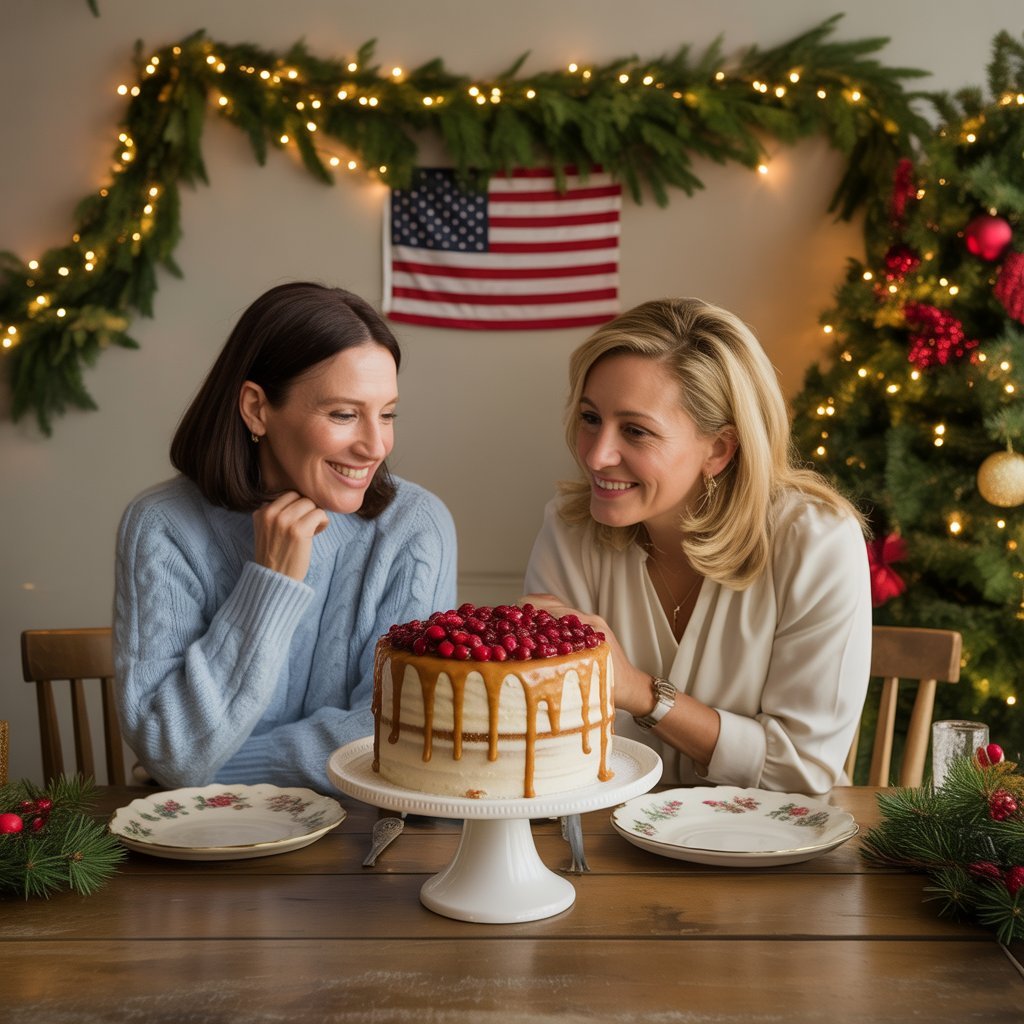
The cake arrived after dinner, tall and white with strawberries tucked like small red secrets into the frosting. Someone lit candles. Someone sang, off-key. The restaurant dimmed the lights slightly, because even strangers deserved the chance to feel special for a minute.
I leaned forward to blow them out.
That’s when Rowan moved.
At first I thought she was leaning in to whisper something sweet, the way sisters did in movies. Her hands were on the sides of the cake platter, her face close to mine, her eyes glittering.
“Make a wish,” she said.
Then she shoved.
Not forward—down and in, into my face, with a force that stunned me. Frosting exploded. The platter scraped. The table jolted. I felt my head snap back, then sideways, like my body couldn’t decide which way to fall.
For a second, all I could see was white.
Sugar. Butter. The faint pink smear of strawberry.
Then the edge of a plate flashed, and the hard tile floor rushed up.
I hit it and my ears rang.
There was laughter—big laughter, the kind people gave when they thought they’d been invited into a joke. Someone clapped. Someone said, “Rowan, you’re terrible,” in a tone that meant, You’re hilarious.
Rowan leaned over me, hair falling like a curtain.
“Oh my God,” she said, still laughing, “Avery, I barely touched you. Don’t be dramatic.”
I blinked, trying to clear my eyes. The world kept sliding. My cheek felt hot. My scalp felt wet.
When I lifted a hand to the back of my head, my fingers came away slick.
A hush flickered through the table—not concern, exactly, but the brief discomfort people feel when a joke threatens to become real.
Mom stood abruptly, napkin in hand.
“Avery, honey,” she said, voice tight. “Are you okay?”
It wasn’t a real question.
It was a plea for me to say yes so the evening could keep its shape.
“I’m fine,” I heard myself say, because that was the role.
I was the strong one.
I could handle myself.
A server offered an ice pack. Rowan waved her off like she was swatting a fly.
“She’s fine,” Rowan said. “She bruises easily.”
Gerald chuckled softly, the sound of a man who didn’t want to be the only one not laughing.
Elise’s eyes met mine, worried and apologetic, like she wanted to reach across the table and pull me out of the moment but didn’t know how.
I stood up slowly, legs shaking, the room tilting. Someone handed me a cloth napkin; I pressed it to my face and tasted blood.
Rowan pouted.
“Come on,” she said. “It was funny.”
I forced a smile, because if I didn’t, the night would turn into something else—something messy, something honest.
“I’m just… going to the restroom,” I said.
In the mirror, my face was smeared with frosting and humiliation. There was a red line at my hairline where my skin had split. My eyes looked glassy, unfocused.
I cleaned up as best I could, ran water over my hands, held my breath against the nausea. When I stepped back out, Rowan was already telling another story, laughing like nothing had happened.
No one stopped her.
No one insisted she apologize.
No one said, That was too far.
That’s the thing about families like mine: the person who causes the harm often gets protected by everyone’s hunger to keep the peace.
I left early.
Mom made a show of being offended.
“Avery, don’t ruin your own birthday,” she said, like my injury was a mood I’d chosen.
Elise followed me toward the door, eyes wide.
“Avery,” she whispered, “call me when you get home.”
Rowan waved from her seat, lips glossy, eyes bright.
“Drive safe,” she called. “Try not to fall on anything.”
People laughed again.
I drove home with the heat on full blast even though my skin felt cold. I gripped the steering wheel like it was the only solid thing in a world that kept slipping. At every stoplight, my vision doubled. The ache in my skull grew heavier, deeper, like a storm gathering.
By the time I reached my apartment, I was shaking.
I took ibuprofen. I drank water. I sat on the edge of my bed and told myself it would pass.
But sleep came in jagged pieces, broken by pain and nausea and the way my mind kept rewinding Rowan’s face—the split second before she shoved the cake, the flicker in her eyes like triumph.
Lying there in the dark, I thought of other moments. The coffee table. The stairs. The bags.
I thought of the way Rowan always hovered afterward, helpful and charming, narrating the story before I could. It was an accident. Avery’s clumsy. Avery’s dramatic.
And I wondered, for the first time in a long time, what would happen if I stopped letting her tell my story.
By morning, the headache had sharpened into something vicious—each heartbeat a hammer against the back of my skull. Bright light made my vision double, and a wave of nausea rolled through me the moment I tried to sit up.
I told myself it was fine, that all I needed was rest, but my body disagreed. When I touched the tender spot behind my ear, my fingers came away sticky with dried blood.
That was the moment fear crept in.
I dressed slowly, gripping the wall when the room swayed. Driving to the ER felt reckless, but calling someone felt worse. I could already hear Mom’s voice.
You don’t need a doctor. You bruise easily. Stop making a scene.
And Rowan would laugh, that light, dismissive sound that always made me feel smaller than I already did.
So I went alone.
Seattle’s ER was busy, a blur of fluorescent lights and muffled announcements, but when the triage nurse saw me flinch at the overhead glare, she guided me into an exam room without hesitation.
She asked questions while typing.
“When did the injury happen?”
“How did it happen?”
“Was there a loss of consciousness?”
Each answer felt strangely heavy. Saying out loud that my sister shoved a cake into my face shouldn’t have sounded like a medical emergency.
Yet here I was, trembling under the paper gown, the thin fabric crackling every time I shifted.
Dr. Hanley entered with a gentle knock, his expression calm but attentive. He introduced himself, washed his hands, and asked me to follow his finger, squeeze his hands, touch my nose, smile.
I did my best, though the room kept tilting as if it wanted to remind me gravity wasn’t on my side.
“Let’s get some scans,” he said softly. “Just to be safe.”
Safe.
I wondered when I had stopped feeling that word applied to my family.
The imaging room hummed with cold machinery. Lying there, staring at the ceiling tiles dotted with tiny holes, I replayed Rowan’s face—her grin, the way her eyes flickered with something sharp, something triumphant.
For years I had explained that expression away. Misread it. Excused it.
But now, with my skull throbbing and the world spinning, excuses felt suddenly fragile.
When Dr. Hanley returned, he wasn’t calm anymore.
He pulled a stool close and turned the monitor so I could see. The image looked like a map of a place I lived in but had never truly understood—my skull, my ribs, the hidden architecture of me.
“Avery,” he began, voice low, “you have a hairline fracture. It’s not severe, but it’s real.”
My stomach dropped.
“And,” he continued, “it wasn’t just from yesterday.”
“What do you mean?” My voice came out thin.
He clicked to another image. “This here—your rib on the left side—shows signs of an older fracture. Based on the healing, it happened roughly three years ago.”
Three years ago.
The staircase fall.
Rowan behind me.
Her arms around me afterward, whispering, You’re so dramatic. You just slipped.
I felt the edges of the exam table dig into my palms as my breath thinned.
Dr. Hanley didn’t look away.
“Avery,” he said carefully, “I need to ask you something. And I need you to answer honestly.”
His voice didn’t hold judgment. It held gravity.
“Has someone in your life been hurting you?”
The question landed so hard I felt it in my ribs.
No sister should ever trigger that question.
I opened my mouth and nothing came out. Not because I didn’t have an answer, but because my whole life had been built around not naming it.
Dr. Hanley exhaled, picked up the phone mounted to the wall, and said the words that shifted my entire world.
“I need to report this. It’s required.”
He paused, listened, then added, “Yes, I’m requesting an officer. Now.”
Required as in serious.
As in not a joke.
As in not my imagination.
When he hung up, his eyes met mine with quiet certainty.
“Avery… someone did this to you.”
For a long moment, I couldn’t speak. The words echoed in my head louder than the beeping in the hallway, louder than the pounding inside my skull.
Someone did this to you.
I had spent years absorbing blame, shrinking myself, convincing my mind that Rowan’s presence during every injury was coincidence.
Accidents happen.
Sisters roughhouse.
I’m just clumsy.
But Dr. Hanley’s steady eyes left no room for the stories I’d told myself.
A soft knock came before a woman stepped into the room.
Detective Carver.
She introduced herself with a measured calm, the kind that suggested she’d seen this pattern too many times. She pulled a chair close, sat at eye level, and opened a small notebook.
“Avery,” she said gently, “I’m here because your injuries raise concerns. I’d like to ask you a few questions.”
My throat tightened.
About Rowan.
Her gaze didn’t waver.
“About your safety.”
It was strange the way those two concepts overlapped.
She began with straightforward questions. Who was at the birthday dinner? Had there been alcohol? Where exactly was Rowan standing? Had there been previous injuries?
Each answer landed heavier than the last, because each answer was a stone pulled from a pile I’d been balancing for years.
A hospital social worker stopped by briefly, handing me a card and speaking in the same calm voice as Detective Carver—resources, safety planning, places to stay if I needed. I stared at the card like it was written in another language. I’d spent so long pretending I was fine that the idea of not being fine felt like something I wasn’t allowed to claim.
And when Carver asked if anyone had ever discouraged me from seeing a doctor after an accident, something inside me cracked open.
“Yes,” I whispered. “My sister. Every time.”
Detective Carver wrote quietly, then looked up.
“Did you believe her reasons?”
I didn’t know how to answer.
Did I?
Or did I just want to believe them because the alternative was unbearable?
I stared down at my trembling hands, remembering Rowan placing an ice pack on my ribs three years ago, insisting I didn’t need medical bills, calling me overly dramatic. Remembering her scoffing when I tripped in the parking lot, joking loudly that I should be bubble-wrapped. Remembering her moving quickly to clean up any mess caused by my injuries, always positioning herself as the helpful one.
“It’s like she wanted to be the first person I turned to,” I said quietly, “and the last person I doubted.”
Detective Carver nodded as though that made perfect, tragic sense.
Before she could ask the next question, the door flew open.
My mother’s voice cut through the room before I even registered her face.
“Avery Lynn Dalton, what on earth are you telling these people?”
She swept inside with Gerald in tow, her expression a storm of indignation and fear, like she’d been pulled into a drama she hadn’t approved.
Rowan wasn’t with them yet.
Somehow her presence clung to the room anyway.
“A fracture?” Mom demanded. “From a birthday joke? This is ridiculous. Tell them you’re confused. You bruise easily. You’ve always been sensitive.”
Sensitive.
Dramatic.
Overreacting.
Words that had shaped my entire childhood now pressed against the bruised edges of my adulthood.
Detective Carver stood, posture calm but unyielding.
“Mrs. Dalton, I need you to step back. Your daughter is speaking with me privately.”
Mom’s jaw tightened as she glared at me, betrayal twisting her features—not betrayal of what Rowan might have done, but betrayal that I dared to speak.
And in that moment, something inside me shifted again.
Not a crack this time, but a settling.
A decision.
For the first time in my life, I didn’t shrink.
“Mom,” I said, voice steady despite the tremor beneath it, “I’m not confused.”
Her eyes widened, furious and disbelieving.
I turned fully toward Detective Carver.
“I want to continue.”
Detective Carver didn’t waste time once I gave consent. She asked Mom and Gerald to step outside, and despite Mom’s protests, the detective’s tone made it clear this wasn’t optional.
When the door finally closed, the room felt strangely lighter, as if removing my mother’s presence untangled a knot I’d carried for decades.
Carver sat again.
“Avery, I’m going to be honest with you. The pattern you’ve described—the injuries, the minimization, the pressure not to seek medical help—it’s concerning. And combined with what Dr. Hanley found, we need to treat this seriously.”
I nodded, though the reality of what she implied hovered just out of reach, too large to take in all at once.
“We’ve requested the restaurant security footage,” she continued. “And we’ll be talking to every witness at your birthday. For now, I want you to focus on your safety. Do you feel safe going home?”
The question stunned me more than the diagnosis.
Safe.
The word felt foreign, like it belonged to other people’s families.
“I… I’m not sure,” I admitted.
Carver softened. “That’s an honest answer. It’s a start. We can work with that.”
Before she could explain next steps, the door cracked open again.
This time it was Elise—my aunt.
She hovered hesitantly in the doorway until Carver nodded permission for her to enter. Elise stepped inside, her eyes glossy with something that looked too heavy to carry alone.
“Avery,” she whispered. “I should have come sooner.”
Her voice trembled, and when she reached for my hand, hers was cold.
“I tried calling you last night,” she said. “But when I didn’t reach you, I had a feeling something wasn’t right.”
She looked at Carver.
“Detective… can I speak to you both? I have information.”
Carver motioned for her to sit. “Go ahead.”
Elise swallowed hard.
“I’ve seen Rowan hurt Avery before.”
My entire body stilled.
Elise continued, voice shaking. “When Avery was little, there were moments—small at first—that I didn’t know how to explain. I told myself it was sibling rivalry, or accidents, or kids not knowing their strength. But as they got older, Rowan changed. Or maybe I finally saw it clearly.”
She wrung her hands.
“I saw her push Avery on the stairs once. Avery was maybe twelve. Everyone thought she slipped, but I was standing at the top landing. Rowan shoved her hard.”
My breath caught.
I remembered that fall—how Mom scolded me for ruining the holiday photos with a bruised cheek. How Rowan hovered next to me offering cookies and fake sympathy. How I had apologized for bleeding on my own sweater.
Elise wasn’t finished.
“And three years ago, after Eleanor’s funeral…” She took a trembling breath. “I overheard something. Rowan found out about the Victorian house. She didn’t say it to your face, Avery, but she was furious. I heard her telling someone on the phone that accidents happen—and that if you were less competent, she’d be the one to manage everything.”
The room went very still.
Even Detective Carver stopped writing.
A cold shiver slid down my spine.
Elise’s voice cracked into a whisper. “I should have told you sooner. I was scared of Marlene. Scared she would cut me out entirely. But after what happened last night, I can’t stay quiet anymore.”
Carver nodded slowly.
“Thank you, Elise. This helps us build a clearer timeline.”
She stood.
“Avery, I’ll keep you updated. For now, Elise will take you home, and you’ll stay away from your sister until we’ve completed our interviews.”
I agreed because the truth was simple.
I didn’t want to see Rowan.
Not until I understood who she really was.
Two days passed in a blur of phone calls, follow-up appointments, and long silences inside my apartment. Elise stayed with me, insisting she wasn’t leaving me alone. She slept on my couch, made tea, and kept the lights low when my head hurt. Sometimes she talked, filling the quiet with gentle stories about Eleanor—how Eleanor used to sing while she cooked, how she used to keep a jar of peppermint candies by the front door like a welcome sign.
Other times, Elise didn’t talk at all. She just sat beside me while I stared at the rain sliding down the window, and it felt like the first time in my life someone was willing to be present without demanding I pretend.
On the second night, I finally asked, voice small, “Why didn’t you tell me before?”
Elise’s face crumpled.
“Because I was afraid,” she admitted. “Marlene can cut people out like they never existed, Avery. And I told myself it wasn’t my place. I told myself you were strong.”
She swallowed.
“And I told myself if I stayed close, I could watch. I could protect you.”
Her eyes met mine, raw with shame.
“But I didn’t. Not enough.”
The quiet company felt like a soft landing after years of walking on glass.
On the third day, Detective Carver called.
“We viewed the footage,” she said. “Avery… it was deliberate.”
The words pulsed in my ear.
“She angled the cake. She looked over her shoulder first—like she was checking who was watching. And after you fell, there’s a moment—barely a second—where she smiled before pretending to panic.”
A cold wave washed through me, so strong I had to grip the edge of the couch.
I didn’t respond, so Carver continued.
“We also obtained her phone. There are notes that detail past incidents, dates that match your injuries… and something labeled future.”
My chest tightened.
“Future?”
“Projected opportunities,” Carver said. “When you’d be alone. When you’d be most vulnerable. It includes your work schedule. The nights you usually go to that coffee shop. Dates linked to family gatherings. Avery… this wasn’t spontaneous. She planned patterns.”
I felt Elise’s hand on my back as I sank into the cushions. My mouth tasted like copper, like panic.
“Why?” I whispered.
Carver didn’t answer right away.
“Motives can be complicated,” she said finally. “But her notes reference the house. Reference you being ‘untouchable’ if you have it. Reference your mother’s attention shifting.”
My stomach turned. Because a part of me—deep down, the part that had always known—understood that Rowan’s hunger wasn’t for a house.
It was for being the only one who mattered.
“We’re moving forward with charges,” Carver said. “I need you to be present at a family meeting Sunday evening. We’ll arrest Rowan there.”
A tremor rippled through me.
“Why in front of everyone?”
“Because this time,” Carver said, “the entire family needs to see the truth. And because your mother has interfered before. We need witnesses. We need no room for rewriting.”
Sunday came too quickly.
Elise drove me to Mom’s house—the same house that had held decades of quiet dismissals and rearranged memories. The driveway smelled like wet cedar and old mulch. The porch light cast the familiar yellow glow that used to mean home and now felt like a warning.
Inside, the living room was set up like a performance space: family photos lined the mantel, all of them carefully chosen. Rowan laughing. Rowan graduating. Rowan at some charity event, smiling beside Mom. In the background of a few pictures, you could spot me—blurred, half-cut off, like an afterthought.
Relatives milled around with nervous smiles. Mom had put out snacks like this was a normal gathering. Gerald hovered near the kitchen, avoiding eye contact. The whole room felt like it was holding its breath.
When I stepped inside, Rowan was already there, laughing, chatting, glowing with the ease of a person who believed she’d won.
She saw me and smirked.
“Oh, look who’s finally healed.”
The words were sweet on the surface, bitter underneath.
Mom hummed disapprovingly.
“Avery, don’t start anything.”
Start anything.
As if I had ever been the one who did.
Rowan moved closer, voice lowered so only I could hear.
“Did you enjoy your little hospital vacation?” she murmured. “Must be nice. All that attention.”
My hands curled into fists at my sides, nails biting my palms.
For once, I didn’t respond.
I didn’t give her the satisfaction.
Before I could move away, a knock echoed across the dining room.
Detective Carver stepped inside with two officers, their presence instantly changing the air. Conversations died. Plates stopped clinking. Mom’s smile faltered like a mask slipping.
“Rowan Dalton,” Carver said, voice clear, “you’re under arrest.”
The room erupted.
Mom shouted, “This is absurd.”
Someone gasped. Gerald backed away, pale. Elise stayed rigid beside me, her shoulder pressed against mine like she was physically anchoring me to the moment.
Rowan’s transformation was instant.
The pleasant façade drained, replaced by something sharp and feral.
“You’re kidding,” Rowan said, laughing too loudly. “For what? A birthday joke?”
Carver didn’t flinch.
“For assault,” she said, “and for evidence found in your possession indicating intent to cause future harm.”
Rowan’s eyes flicked toward me, narrowing.
“You think you’re so perfect, Avery. You think you deserve that house. You think Eleanor loved you more. She only pitied you.”
Mom gasped.
“Rowan.”
Rowan kept going, unraveling in real time, words spilling like she couldn’t stop once the truth cracked open.
“I’ve cleaned up after her my whole life,” she snapped. “She was always pathetic, always fragile, and everyone acted like I should feel guilty for being stronger.”
Carver cut in. “That’s enough.”
But Rowan lunged forward, pointing at me with trembling rage.
“You ruined everything the day you were born.”
And there it was—the truth she’d hidden beneath twenty years of smiles.
The officer stepped in, cuffing her wrists as she thrashed.
“Mom, tell them,” Rowan shouted. “Tell them Avery is exaggerating. Tell them!”
But Marlene wasn’t moving.
Her face had gone ghostly—white, eyes wide with a dawning horror I’d never seen before.
Maybe for the first time, she finally understood the monster she had protected.
Rowan’s voice cracked into a scream as she was led out of the house, her heels scraping, her breath ragged with fury.
And I stood there, heart pounding, realizing the world had shifted again—this time in my favor.
The aftermath unfolded quietly, almost gently, as if the world was trying to hand me a softness I’d never been allowed before.
Within weeks, Rowan accepted a plea arrangement: supervised probation, mandatory therapy, and a long-term order preventing her from coming near me. It wasn’t dramatic, but it was justice—steady, undeniable, written down where no one could pretend it wasn’t real.
Mom barely spoke during the hearings. When the evidence was read aloud—the footage, the notes, the old injuries—something in her seemed to collapse inward. She looked smaller than I’d ever seen her, like the story she’d built her life around was finally crumbling and she didn’t know where to stand.
One afternoon, she called to tell me she’d started therapy.
Not for Rowan.
For herself.
For the years she spent denying what she didn’t want to see.
I didn’t know what to say, so I said the only honest thing.
“I hope it helps.”
A week later, I went to the Victorian house alone for the first time.
The key felt heavy in my hand. The door stuck the way old doors do, resisting before it finally gave with a sigh. Dust floated in the slant of light from the stained-glass window, turning the air into something almost holy. The house smelled like age and cedar and the faint ghost of peppermint tea.
I stood in the entryway and listened.
No shouting. No laughter that stung. No footsteps behind me.
Just silence.
The good kind.
Restoring the house felt like restoring myself, room by room, memory by memory. I painted walls, sanded trim, replaced broken knobs. With every repair, I felt myself breathe a little deeper.
And when I opened the doors as the first meeting space for the Eleanor Center—a resource hub for people trying to untangle family-made wounds—I felt something I’d never felt growing up.
Safe.
Seen.
Free.
On opening day, a handful of people showed up, hesitant and quiet, the way I used to be. We sat in that living room under a lamp I’d rewired myself, and I watched them look around like they couldn’t believe they were allowed to be there.
I understood that feeling.
Some people say family loyalty means enduring anything.
But I’ve learned that real loyalty—real love—doesn’t demand silence in the face of harm.
It protects.
It heals.
And sometimes it requires walking away from the people who taught you to doubt your own pain.
I’m still learning what a healthy life looks like. Still finding my footing inside the freedom I never expected to have.
Some mornings I still wake bracing for Rowan’s laugh, for Mom’s voice insisting I imagined it. Then I stand in a room I repaired myself, breathe in fresh paint, and remember: I’m allowed to trust my own instincts.
But if my story proves anything, it’s that truth doesn’t just break things apart.
It clears space for something better.
If you’ve ever carried a wound like mine, share your story below.
And if you want more real stories like this, make sure you’re subscribed.
You’re not alone.