


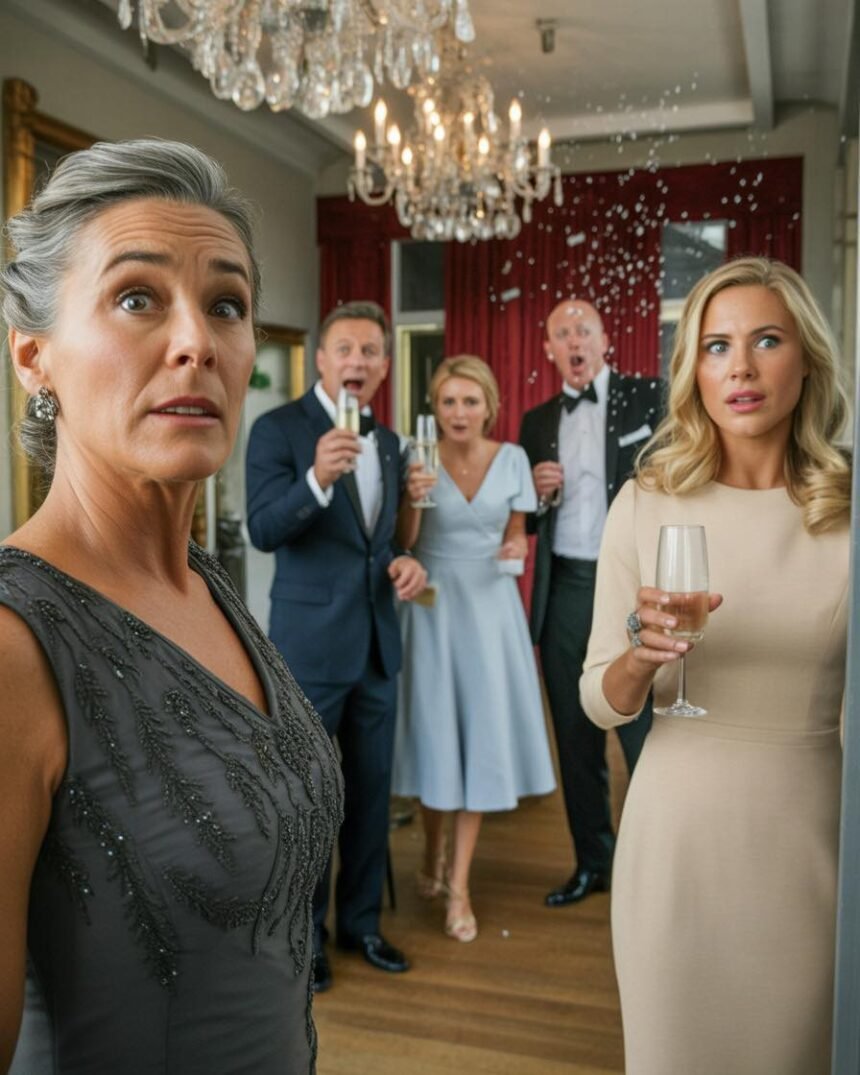
The House on Westwood Lane
A Story
The first thing I noticed was the light. It spilled through the high windows of the country club ballroom in long, honeyed stripes, catching on crystal and polished silver, making everything glow a shade too warm, a touch too perfect. White tablecloths shimmered under chandeliers that threw little rainbows across the dark wood paneling.
The mirrored wall behind the bar doubled the crowd, so seventy-five guests looked like a hundred and fifty people all pretending nothing bad had ever happened in their lives. A small orchestra played an inoffensive jazz standard in the far corner, the piano just loud enough to fill the pauses in conversation. Waiters glided between clusters of people in black vests, carrying trays of crab cakes and shrimp skewers so artfully arranged they looked almost too pretty to eat.
My father’s retirement banner hung over the head table in tasteful gold script on navy blue: CONGRATULATIONS, BILL – 35 YEARS OF EXCELLENCE. The word excellence had little gold stars around it, as though a graphic designer had tried to give a corporate law career a personality. My mother had spent three months orchestrating every detail of this party.
The venue, the menu, the seating chart, the cake, the playlist, the slideshow. She had shown me proofs of the invitations as though asking my opinion, then gone with whatever my brother Jason liked instead. Now it was all here—her masterpiece of performance family life, curated and polished, ready for an audience that would never look past the surface.
The cake sat on a round table near the dance floor, elevated like a monument. Three tiers of immaculate white fondant, trimmed with navy ribbons, dotted with tiny edible gavels and miniature scales of justice. A little fondant man in a suit stood at the top, briefcase in hand, gazing heroically into the distance.
My father looked younger than sixty-five in his tailored charcoal suit, silver hair neatly combed back, cheeks flushed with the particular shade of pink happiness that comes from champagne and admiration. People kept clapping him on the shoulder, shaking his hand, telling him he had earned it. He smiled the same smile each time—gracious, self-deprecating—the expression he wore when he was winning a case but wanted the jury to think he was just doing his job.
The story doesn’t end here — it continues on the next page.
Tap READ MORE to discover the rest 🔎👇

