PART ONE
(The Will, the Smirk, and the Garage Key)
I inherited a garage that my son said was worthless.
He got the Los Angeles penthouse.
He called me a useless old woman—then locked the door behind me like I was a stranger.
That was the day everything I believed about family shattered.
My name is Lillian Parker. I’m sixty-eight years old. I’m a widow. And I used to think that after burying my husband, at least my son would stand by me.
I was wrong.
The memory of that morning still burns like a fresh bruise you can’t stop pressing.
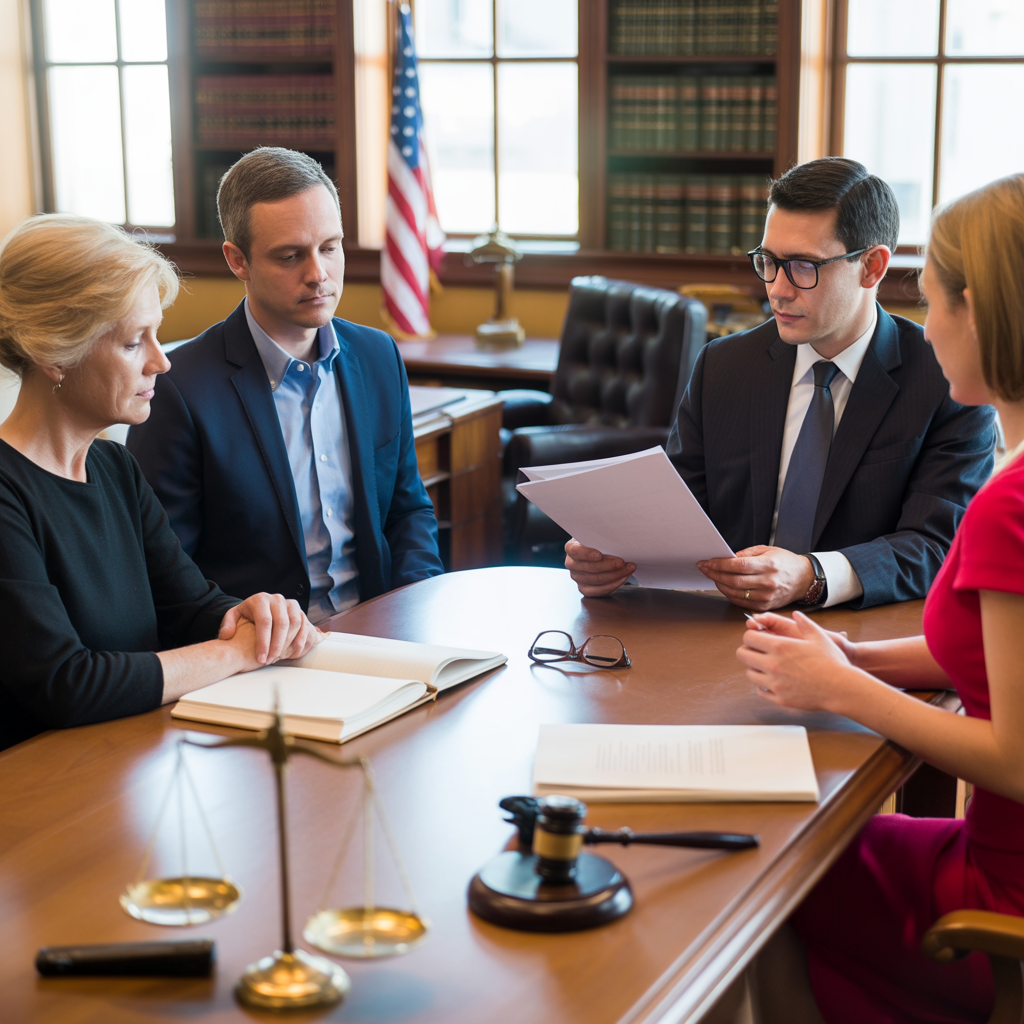
I walked into Mr. Jacobs’s office holding my breath the entire ride up the elevator. I told myself the reading of Charles’s will would be routine—somber, maybe bittersweet, but dignified. I pictured quiet voices and careful condolences. I pictured a room that understood the weight of a forty-two-year marriage ending.
Instead, I walked into a room that felt like a courtroom.
The air smelled faintly of polished wood and ink. Heavy curtains kept most of the sunlight out, so the long table sat in a dim, brownish glow. Everything looked expensive and serious, like grief had been turned into a business transaction.
At the far end sat my son, Adrien.
He wore a navy suit that seemed far too sharp for such a somber occasion. His hair was neat. His posture was perfect. The kind of perfect that looked like rehearsal. He didn’t glance at me when I came in. Didn’t stand. Didn’t offer his hand. He just kept tapping his fingers against the leather armrest of his chair, like he was waiting for the check to clear.
He looked like a man who already knew he’d won.
I sat down quietly and smoothed the wrinkles on my black dress the way women do when they need something to do with their hands. My heart was pounding harder than it should’ve been. Too loud. Too fast. Like it had sensed danger before I could name it.
Mr. Jacobs cleared his throat, adjusted his glasses, and opened a thick envelope. He handled it with the kind of care you use when you’re holding something that can change lives.
His voice carried through the room, each word dropping like a stone into still water.
“Charles Parker,” he began, “leaves to his son, Adrien Parker, the penthouse on Wilshire Boulevard in Los Angeles, along with multiple investment accounts.”
My eyes darted to Adrien.
His lips curled into the faintest smirk. Not even a full smile—just a little tilt at one corner, like he was trying not to look too pleased and failing. His chin lifted, as if someone had just set a crown on his head and he needed the right angle for it.
Mr. Jacobs continued, flipping a page.
“To Lillian Parker, my beloved wife, I leave the property located on Magnolia Street in Pasadena—a garage and storage unit that has been in my name for years.”
Silence.
For a moment, I honestly thought I’d misheard.
A garage?
After decades of standing beside Charles through every hard season and every good one—after raising our son, building a home, making a life—I was left a garage?
My mind ran in circles, trying to make it make sense. A garage in Pasadena. Dust. Broken tools. A rusted old bicycle. A storage unit filled with boxes of things you meant to sort and never did.
Adrien chuckled under his breath.
Loud enough for the sound to hang in the room.
Mr. Jacobs frowned slightly, but Adrien didn’t care.
“A garage?” Adrien repeated, leaning back like he was at a bar telling a story. “That’s perfect. A dusty old garage for a useless old woman.”
Then he gestured to himself with a casual sweep of his hand, like he was presenting the obvious.
“And me? I get the penthouse. Seems fair, doesn’t it?”
He looked at me for the first time.
His eyes were cold—glass-cold, the kind that reflects whatever you want to see and gives nothing back.
I couldn’t move.
My hands lay flat on the table, trembling slightly. I wanted to defend myself. I wanted to say all the things mothers don’t say out loud because it feels wrong to list what you’ve done for your child.
I wanted to say: I sacrificed everything.
I wanted to say: I held you through fevers.
I wanted to say: I stayed up through long nights nursing you.
I wanted to say: I helped your father build every brick of our life together.
But my throat tightened like a rope had been pulled around it. The words stuck behind my teeth.
Mr. Jacobs shifted in his chair, visibly uncomfortable.
“Mrs. Parker, there may be—” he began.
Adrien cut him off with a sharp wave.
“Don’t waste your breath,” Adrien said. “We all know what this means. I’m the head of the family now.”
He stood, buttoned his suit jacket, and placed a hand on Mr. Jacobs’s shoulder like he was sealing a deal.
I sat there frozen, humiliation pressing down heavier than grief.
My husband—the man who promised we would share everything—had left me with something everyone in that room believed was worthless.
My son—the boy I once rocked to sleep—looked at me like I was an intruder in his kingdom.
I forced my eyes downward, staring at the smooth grain of the table, trying to control my breathing. I could feel my face burning.
The garage. That was all I had now.
Mother,” Adrien said, his voice slicing through the room, “don’t worry about your little garage. I’ll take care of you if you behave. You can always live under my roof—provided you remember whose roof it is.”
He straightened his tie with theatrical precision.
In that moment, I felt the balance of power in our family tip.
Adrien wasn’t the boy I had disciplined. He wasn’t even the young man who had once held my hand at his father’s hospital bed.
He was something else now.
A man drunk on entitlement.
A man who saw his mother not as his mother—but as a problem to manage.
I gathered my bag slowly. My legs felt stiff, like my body didn’t know how to leave after hearing that. Mr. Jacobs looked at me with pity, lips pressed tight, as if he wanted to say something but couldn’t find the safe words.
Adrien had filled the room with arrogance. There was no air left for compassion.
As I walked out, the words chased me.
Useless old woman.
A garage.
I stepped into the Los Angeles sunlight, but it felt colder than the shadows inside. Everything I thought I could rely on had been stripped away with the stroke of a pen and the laugh of my only child.
And yet—something inside me flickered.
Maybe anger.
Maybe pain hardening into something sharper.
I held myself upright as I walked, but the truth was, I was shaking.
Still, in the center of the shaking, there was a small ember that refused to die.
If a garage was all I had left… then I would see what waited behind its doors.
The night my son truly cast me out of his life, it rained harder than I’d seen in years.
The penthouse windows trembled under the storm. Wind shoved at the glass like it wanted to break in. I sat quietly in a corner, clutching my handbag close, watching people toast and laugh in what used to feel like my living room.
Adrien had invited Bianca’s friends.
Young voices. Bright laughter. Perfume so heavy it made my eyes sting. Champagne everywhere.
No one looked at me unless it was to whisper behind a glass.
I felt like a ghost haunting my own life.
Bianca swept through the room in a crimson dress that glittered under the chandelier. She was beautiful in the way sharp things are beautiful—polished, dangerous, and sure of their power.
She leaned in to whisper something to Adrien and they both laughed.
Then she looked at me.
Her smile was sweet on the surface and sharp underneath.
I knew that look. I had seen it on women in business meetings with Charles when they wanted something and didn’t mind wounding people to get it.
At midnight, the last guests disappeared into the storm, umbrellas bobbing and laughter fading into the elevator.
I rose slowly, thinking—stupidly—that maybe Adrien would ask if I was okay. Maybe he would remember that I was still his mother.
Maybe he would ask me to stay.
Instead, he disappeared into the bedroom and came back holding a suitcase.
My suitcase.
The same one I’d used at Charles’s funeral three weeks earlier.
He held it like it was a grocery bag.
“Mother,” he said casually, “it’s time for you to go.”
The words hit the room harder than thunder.
“Go,” I repeated, my voice trembling. “Adrien… where would I—”
Bianca stepped forward, her heels clicking on marble like punctuation.
“Don’t pretend you don’t have somewhere to go,” she said sweetly, though her eyes glittered with cruelty. “You have that little garage your husband left you. Perfect for someone who doesn’t need much.”
She placed her manicured hand on Adrien’s arm and smiled like she’d said something clever.
My knees nearly gave out. I gripped the doorway to steady myself and stared at my son.
The man who had once clung to my skirt when thunder frightened him.
Now he stared at me with no softness at all—only annoyance.
“Adrien,” I whispered, “this is still my home. Your father and I—”
He cut me off.
“No, Mother. This is my home. The will was clear. And frankly, you don’t belong here anymore.”
His voice was flat. Final.
“I have my life,” he continued, “and you should settle into yours.”
Bianca’s smirk deepened.
“Besides,” she added, “it’s not as though you’ll be on the street. Charles left you that garage, didn’t he? A roof is a roof.”
Adrien pressed the suitcase into my arms.
Before I could beg or reason or even find breath, he pulled the door wide, gesturing toward the hallway like a doorman.
The corridor stretched long and empty. Fluorescent lights buzzed overhead like insects. The building felt suddenly unfamiliar.
Adrien’s hand rested on the doorframe.
“Good night, Mother.”
Then the door shut.
The lock clicked once.
Twice.
Final.
I stood there in the hallway with rain hammering the windows at the far end. My hands shook so violently the suitcase nearly slipped from my grip.
My own son had locked me out of the home where I had loved and cooked and laughed and mourned.
He had locked me out like I was nothing.
Tears blurred my vision as I stumbled toward the elevator. When the doors opened, a draft of cold air blew in, carrying the smell of rain. The ride down felt endless.
By the time I stepped onto the street, the storm swallowed me whole.
Rain plastered my hair to my face. It soaked through my black dress—the same dress I wore when I buried Charles. Water ran down my neck and into my shoes. I lifted my face to the sky and let it pour, because fighting felt pointless.
Cars hissed past, their drivers too busy to notice an old woman clutching a suitcase on the curb.
My heart felt like it had cracked down the middle.
And through that crack, humiliation and grief poured out.
Then my fingers brushed against something in my coat pocket.
A small rusted key.
Mr. Jacobs had pressed it into my palm at the will reading like it was an afterthought.
The garage key.
Magnolia Street.
I stared at it, the metal strangely warm despite the cold rain, as if it carried something more than a promise of another locked door.
For the first time, I wondered what waited for me there.
A taxi finally pulled up. The driver loaded my suitcase without asking questions. As we drove away, I looked back up at the glowing windows of the penthouse. Somewhere up there, my son’s laughter was faint even through the storm.
My chest ached with betrayal.
But my hand closed tightly around the key.
If that garage was all I had left…
Then I would face it.
And maybe—just maybe—it would be enough to start again.
The cab dropped me on Magnolia Street in Pasadena, a quiet stretch I barely remembered.
The rain had slowed to a drizzle, leaving the air heavy and damp. The neighborhood looked tired—warehouses and shuttered shops, places that had seen better decades and never recovered.
I hugged my coat tighter and clenched the key in my palm until its edges bit into my skin.
Across the street, beneath a flickering streetlamp, stood the building that was now mine.
A weathered garage with peeling paint. A rusted padlock. A sagging roofline that looked like it groaned under its own weight.
It didn’t look like an inheritance.
It looked like a sentence.
I dragged the suitcase across cracked concrete, the wheels bumping over weeds that had pushed their way through. The closer I got, the bigger the doors seemed—like they were daring me to open them.
Charles left me this.
This forgotten relic.
My heart pounded as I slid the key into the padlock. My hands shook so much I nearly dropped it.
For a moment, I thought it wouldn’t turn.
That even here, I would be locked out.
Then, with a reluctant click, the metal gave way.
The doors resisted when I pushed, groaning against years of disuse. Dust swirled into the air like ash, catching in the beam of my flashlight as I forced the heavy panels apart.
I coughed and stepped inside, my shoes crunching over gravel and broken glass.
The air smelled faintly of oil and something oddly herbal—like thyme—sharp enough to sting my eyes.
For one brief second, regret hit me.
This place looked like it held nothing but ghosts.
Then my flashlight caught a shape under a cloth cover—something metallic, something smooth.
I froze.
My pulse climbed.
Slowly, carefully, I stepped closer and reached out. The canvas felt stiff with dust. My fingers curled around an edge and pulled.
And my breath stopped.
Chrome.
Untouched. Polished to a mirror sheen.
A Cadillac Eldorado.
Nineteen fifty-nine, if my memory served. The kind with fins that stretched like wings, a relic from America’s golden age. Cherry red paint caught the trembling light like it had been waiting for this door to open all along.
My knees weakened. I grabbed the nearest wall for balance.
“Charles,” I whispered, the name breaking as it left me. “What did you do?”
I moved to the next shrouded figure.
Pulled back the cloth.
A Porsche 356. Ivory white. Curves sleek and perfect as if carved from porcelain.
My throat tightened with a sharp, aching realization. I remembered Charles mentioning a car once, years ago—calling it art on wheels, a thing of beauty.
He had bought it.
And never told me.
I kept moving. The third cover came off and revealed a Shelby Cobra—blue with white stripes, coiled and ready like the snake it was named for. I had seen pictures in magazines, always paired with words like power and legend and speed.
And then the last one.
My hand hovered over the fabric as if it might burn me.
I pulled it back.
An Aston Martin DB4.
Silver-gray and timeless.
The kind of car I had only ever seen in films, driven by men in tuxedos along coastlines under moonlight. I remembered nights on the couch with Charles watching old thrillers. I remembered him smiling at the screen like he recognized something.
And here it was.
Hidden in a garage everyone believed was worthless.
I staggered backward.
My flashlight slipped from my fingers and clattered to the floor, its beam skittering across polished hoods and chrome grills.
The garage wasn’t a graveyard.
It was a cathedral.
A museum.
A secret.
My throat tightened and I pressed both hands to my mouth to keep from crying out.
These weren’t just cars.
They were treasures.
Investments. Carefully chosen. Perfectly preserved.
And on a workbench—neat, impossibly neat—lay leather-bound portfolios, stacked like someone had planned for hands exactly like mine to find them.
I stumbled toward them and flipped pages with shaking fingers.
Appraisals.
Provenance records.
Maintenance histories.
Values documented down to the smallest detail.
The total value made my vision swim.
Twelve million dollars.
Hidden beneath covers in a garage I had been mocked for inheriting.
Adrien had laughed at me. Called me useless. Told me this place was dust and nothing.
And yet, standing there surrounded by gleaming steel and history, I realized my late husband hadn’t handed me scraps.
He’d handed me power.
I sank into a chair against the wall, trembling.
Outside, the rain had quieted.
Inside me, thunder roared.
Part of me wanted to march back to Los Angeles and shove those numbers into Adrien’s face.
But another part of me—older, sharper—knew this was dangerous knowledge.
If Adrien learned the truth, he would never stop until he had it all.
I reached out and touched the Cadillac’s flawless surface with my fingertips, barely breathing.
“A garage,” I whispered, the word tasting different now.
The humiliation began to harden into something else.
Adrien thought I was powerless.
But here, in the dim light of this “worthless” inheritance, I realized I had been underestimated.
And that might be the only advantage I had left.
PART TWO
(The Letter on the Wall and the Man Who Knew What Charles Was Doing)
I don’t know how long I sat there in that chair.
Time doesn’t behave normally when your entire understanding of your life has just split open.
The garage was quiet except for the soft drip of rainwater somewhere in the back and the faint tick of cooling metal from the cars, as if they had been holding their breath for years and were finally exhaling.
Twelve million dollars.
The number kept repeating in my mind, too large to belong to me, too unreal to be true. I had spent my whole adult life thinking in smaller numbers—grocery bills, utilities, insurance payments, the cost of a doctor visit, the price of flowers at a funeral.
And now I was sitting in a dust-coated garage with a 1959 Cadillac Eldorado reflecting my stunned face like a mirror.
I stood slowly, legs shaky, and walked the aisle between the cars. The beam from the flashlight—still lying on its side—washed across chrome and polished paint in restless lines. Everything looked impossibly perfect, like these machines had been stored by someone who believed time itself could be managed if you were careful enough.
That thought hit me so hard I had to grip the edge of the workbench.
Charles.
My Charles.
Had he really been doing this for years? Right under my nose?
I turned back to the portfolios. My hands were still trembling, but less from shock now and more from the weight of what it meant.
He hadn’t forgotten me.
He hadn’t thrown me away.
He had left me something far bigger than the world could see at the surface.
And then my eyes caught something I hadn’t noticed before.
On the far wall, half hidden behind a sun-bleached calendar that hadn’t been turned in years, was a plain white envelope taped up neatly. The tape was old, the corners curled slightly, but the paper was clean.
My name was written on it in a bold, deliberate hand.
Lillian.
The sight of his handwriting stopped my breathing.
I stepped closer slowly, as if moving too fast might make it vanish. My fingers shook as I peeled it off the wall. It felt heavier than it should have—like it held more than paper.
For a long moment, I just stared at it.
I was afraid of what it might say.
Afraid it would confirm some cruel truth I hadn’t considered yet. Afraid it would explain why he did this in a way that would hurt me even deeper than the will already had.
But I had been living in confusion and humiliation long enough.
I tore the seal.
Inside was a folded letter on cream-colored stationery—the kind Charles always used when something mattered. I knew that paper. I knew the way he wrote on it: careful but firm, like he wanted every word to stand upright.
I sat down again, the envelope crinkling softly in my grip.
Then I read.
My dearest Lillian, it began.
And just like that, my vision blurred.
I pressed my lips together hard, the way you do when you’re trying not to make a sound.
If you are reading this, then I am gone, and the time has come for you to know what I kept hidden. First, forgive me. I never wanted to keep secrets from you. But I had to.
My hands tightened on the paper.
For years, I watched our son change. I watched ambition replace kindness, entitlement replace gratitude. I knew that if I left our wealth in plain sight, Adrien would consume it until nothing remained. And I could not let you suffer for his choices.
The words hit like a hand on my chest.
Charles had seen it.
He had seen what I tried to excuse and soften and deny. All those years I told myself Adrien was just stressed, just ambitious, just going through a phase—Charles had been watching with clearer eyes.
The garage was my sanctuary. Six years ago, when the doctors gave me my first diagnosis, I realized I had limited time. I began acquiring what you now see. Cars chosen not just for beauty, but for their worth. They are an investment—one that would remain safe until you needed them.
I let out a small sound then, something between a breath and a sob.
Six years.
He had been planning for me for six years while I thought our life was what it had always been.
But they are only part of what I leave to you.
My heart stumbled.
Only part?
In Santa Barbara, you will find a cottage. You remember the little one near the coast with the garden you loved? I purchased it quietly three years ago and placed it in your name alone. It is furnished, stocked, ready for you. It is not a mansion, not like the penthouse, but it is a home. Yours, safe and untouchable.
A home.
The word punched through my grief and lit something up inside me—something tender but fierce.
He had built me a way out.
Not just money. Not just possessions.
A place.
A safe place.
My body shook, the letter trembling in my hands as the memories flooded in—Adrien shoving my suitcase at me, Bianca smirking, the door clicking shut like a lock on a cage.
Charles had known.
He had seen the future before I could, and he had put a key in my hand.
I forced myself to keep reading.
Adrien believes he has won. That is by design. I gave him what he would recognize as valuable—what would feed his pride. But what I have left you is far greater.
I swallowed hard.
You are now independent. You will never need his permission, his approval, his pity. What you choose to do with this fortune is yours alone. Perhaps in time Adrien may prove himself worthy of your generosity. But until then, you must not let him know.
My pulse quickened.
Protect this secret. It is your shield. And my love—it is your freedom.
The last lines were written heavier, the ink slightly smudged, as if his hand had trembled.
I trust you, Lillian, more than anyone. This was never about wealth. It was about giving you the power to stand tall, to live as you wish, to never bow your head again. Use it well, and remember: my love for you outlasts even death.
I pressed the letter to my chest and curled around it as if I could hold him again.
In that dusty garage, surrounded by hidden treasures and the smell of oil and rain, I cried like I hadn’t cried at the funeral. Not the composed kind of crying you do when people are watching. Not the polite, controlled grief.
This was raw.
This was a widow finally realizing her husband had been protecting her in ways she never even knew to ask for.
When the tears slowed, I wiped my face with my sleeve and sat very still.
The garage looked different now.
The cars didn’t feel like secret luxuries hidden in shame.
They felt like guardians.
Like Charles had lined them up here as silent sentries, waiting for the day I needed them.
I folded the letter carefully and slid it back into the envelope. Then I tucked it deep into my handbag like it was the most valuable thing in the room.
Because in a way, it was.
Money could be stolen. Cars could be taken. Property could be fought over.
But that letter—the truth of Charles’s love and his faith in me—was something Adrien could never touch.
I turned off the flashlight, stepped outside, and pulled the garage doors shut behind me. The night air felt cooler now, washed clean by the storm. Stars flickered faintly through broken clouds.
In my hand, I still held the key.
But inside me, something else had clicked into place.
Freedom.
And the first rule of freedom, I realized, was this:
You don’t announce it to the people who would take it away.
The next morning, I woke up early.
Not in a bed, not in comfort—on the backseat of the taxi for a few minutes while the driver waited outside a motel because I didn’t even know where to go.
It was still dark. My body ached from the night before. My mouth tasted like rain and grief.
But I was awake in a way I hadn’t been since Charles got sick.
I wasn’t just surviving anymore.
I had information.
I had options.
And I needed help.
Because here was the truth no one likes admitting when they’re scared: wealth doesn’t protect you if you don’t know how to hold it.
I didn’t know the first thing about auctions, provenance, collectors, or how to keep a twelve-million-dollar secret from a son who had just locked me out like trash.
Charles had trusted me.
But Charles had also known I’d need someone steady at my side.
That was when I thought of Victor Kaine.
Victor had been Charles’s confidant for decades. Not a drinking buddy, not a casual friend—someone Charles respected. Someone whose eyes lit up at the sound of an engine the way other people’s eyes lit up at music.
I hadn’t spoken to him since the funeral.
At the service, he stood near the back, quiet, hands folded, eyes red but steady. He looked like a man who had lost a brother.
Reaching out felt like tugging a thread from the life Charles lived that I had never fully understood.
I found Victor’s number in Charles’s old address book, written in bold strokes beside a grease smudge. Even that detail made my throat tighten.
My fingers trembled as I dialed.
“Victor,” I said when he answered, my voice catching.
There was a pause.
Then warmth, immediate and real.
“Lillian,” he said softly. “Charles’s Lillian.”
I swallowed hard.
“I need your help,” I said. “Charles left me… something. And I don’t know what to do.”
He didn’t ask questions. Not yet.
He just said, “Text me the address. I’ll be there.”
Two hours later, a green pickup pulled up on Magnolia Street.
Victor stepped out slower than I remembered, leaning slightly on a cane, but his presence filled the sidewalk. Gray hair brushed back. Eyes sharp beneath heavy brows. He looked at me and then at the garage doors like he already sensed what waited inside.
“Charles,” he murmured, as if the name explained everything.
I unlocked the padlock with shaking hands.
When the doors opened and sunlight spilled inside, revealing the cars one by one, Victor stopped dead in the doorway.
For a moment, he didn’t move at all.
His cane slipped slightly and he steadied himself against the frame, eyes wide with a kind of reverence that startled me.
“My God,” he whispered.
Then, softer, almost like a prayer:
“He really did it.”
He walked to the Cadillac first, brushing the fins like you might touch a painting.
“A ’59 Eldorado,” he said, voice hushed. “Do you know how rare this is in this condition? This alone could fetch a fortune.”
He circled it slowly, murmuring numbers and history.
Then the Porsche.
He crouched with effort, despite the cane, examining it like he was looking for proof it was real.
“Exquisite,” he breathed. “This isn’t just a car, Lillian. It’s art. There are collectors who would wait years just for a chance to bid on this.”
The Shelby Cobra made his whole face change.
“Do you see this?” he asked, voice quick with excitement. “This car changed American racing. This one is worth millions. It’s a legend.”
Then he stood before the Aston Martin, pressing his palm lightly to the hood.
“This is the crown jewel,” he said. “DB4. Charles must have searched the earth for it.”
I sank onto a stool, my legs suddenly weak again.
“He left them to me,” I said. “He never told me. I thought he left me nothing.”
Victor turned sharply, eyes blazing.
“Nothing?” he said. “Lillian, this is not nothing. This is twelve million dollars worth of rolling treasure.”
Hearing it out loud made the number hit harder.
Twelve million.
Victor’s excitement cooled as he looked at me more carefully, reading my face.
He lowered his voice.
“Charles knew,” he said simply.
I swallowed.
“He knew Adrien,” Victor continued. “He knew that boy would burn through anything shiny and simple. So he built you a safe. Something your son couldn’t understand.”
I pulled the envelope from my handbag and handed it to Victor.
He didn’t take it right away. He just looked at it like it was holy.
When he finally read Charles’s letter, his jaw tightened in places.
When he finished, he handed it back gently.
“He loved you,” Victor said, voice rough. “And he trusted you.”
I nodded, unable to speak.
Victor’s gaze swept the garage again, and the excitement in his eyes was replaced by caution.
“Listen to me,” he said. “These cars… they’re famous. Collectors, auction houses, private buyers—people with money and hunger. If word gets out, you’ll have lines of folks begging, offering, scheming.”
A chill crawled up my spine.
“And some,” Victor said, “won’t play fair.”
My mind flashed to Adrien’s cold eyes. Bianca’s smile. The way the lock clicked behind me.
Victor saw it in my face.
“Don’t tell Adrien,” he said firmly. “Not yet. If he learns about this, he’ll sell it piece by piece until there’s nothing left.”
I nodded slowly.
Victor placed a steady hand on my shoulder.
“You’re not alone,” he said. “I’ll help you. I’ll guide you. Charles would want that.”
For the first time since the funeral, I felt something loosen in my chest.
Not grief.
Not pain.
The panic.
I wasn’t a helpless old woman clutching a garage key in the rain anymore.
I was the keeper of a secret kingdom.
And I had someone beside me who understood exactly how dangerous that kingdom could be.
Victor helped me lock the doors again. He wrote down notes, made calls, talked about security and insurance, about discretion and documentation.
All the things Charles had thought of—and all the things Adrien had never even considered.
When Victor left, the street felt quieter than before.
But the quiet didn’t scare me.
It felt like cover.
It felt like time.
And time, I realized, was something Adrien didn’t know how to respect.
He only knew how to spend.
PART THREE
(The Noise of His Empire and the Silence of Mine)
While I was learning how to breathe again inside the quiet of that garage, Adrien was building a kingdom of noise.
Los Angeles never slept, and neither did the penthouse.
Word spread quickly in the circles Adrien liked to move in—private equity hopefuls, influencers with expensive smiles, people who talked about “vision” and “momentum” without ever mentioning responsibility. The penthouse on Wilshire became a revolving door of late nights and louder mornings. Neighbors complained about music pounding until dawn. Elevators filled with strangers carrying champagne bottles and perfume that lingered long after they left.
The place Charles once cherished for its view of the city lights—its calm, its order—had become a stage.
Adrien thrived on it.
He strode through parties in tailored suits, glass always in hand, laughing too loudly, boasting about investments that were always just about to pay off. He liked the way people looked at him when he said my father’s company or my portfolio. He liked being watched. He liked being envied.
Bianca was always at his side.
She wore shimmering gowns and diamond earrings that caught the light like promises. Her hand rested on Adrien’s arm as if guiding him, steering him. When she leaned in to whisper, he listened. When she smiled, he relaxed. When she frowned, he moved.
I didn’t see it myself, but Victor told me later, his voice careful.
“She’s not interested in legacy,” he said one afternoon as we sat at the small table in my motel room, documents spread between us. “She’s interested in acceleration.”
That word stayed with me.
Acceleration.
Bianca’s whispers weren’t about stability or long-term planning. They were about startups that promised the moon and delivered slick presentations instead. Cryptocurrency schemes with no real backing. Wellness apps run by college kids who’d never managed payroll. Ventures built on buzzwords instead of balance sheets.
Adrien poured money into them like fuel on a fire.
He never asked the questions Charles would have asked. Never slowed down long enough to read the fine print. He wanted the applause that came with boldness, not the patience that came with wisdom.
One night—Victor heard this from someone who’d been there—Adrien stood at the head of a long dining table, raising his glass.
“To the future!” he shouted, already unsteady. “To the empire we’re building!”
The room erupted in cheers.
Behind him, Bianca’s smile gleamed like polished steel.
But it wasn’t an empire.
It was a house of cards.
And houses of cards don’t collapse all at once. They sag. They wobble. They give warning signs that only the patient notice.
Adrien noticed none of them.
The only things he slowed down for were moments of mockery.
At one party, someone asked about me.
“How’s your mother doing?” a guest said casually. “Haven’t seen her around.”
Adrien leaned back in his chair, swirling his drink.
“She’s fine,” he said with a smirk. “Probably fussing around that garage my father left her. It suits her. Dust for dust.”
Laughter followed.
Bianca kissed his cheek like cruelty was something to celebrate.
I wasn’t there to hear it, but when Victor told me, I didn’t cry.
I felt something colder settle in my chest.
Certainty.
Meanwhile, my world was shrinking—and growing—at the same time.
I moved out of the motel and into a small, clean apartment not far from Magnolia Street. Nothing fancy. Just a place to sleep and think. Victor helped me arrange insurance on the garage. Quietly. Discreetly. He brought in a security consultant who didn’t ask unnecessary questions.
Every day, I spent time in the garage.
Not just staring at the cars, but learning.
Victor taught me how to read appraisal language. How provenance mattered more than shine. How history, when documented properly, turned objects into legends.
“These aren’t toys,” he told me, tapping the hood of the Aston Martin gently. “They’re stories. And stories are powerful.”
I ran my fingers along the polished surfaces and thought about Charles.
About how many evenings he must have spent planning this. About how carefully he must have kept this secret. About the strength it took to see his own son clearly—and still love him enough to protect me from him.
One afternoon, while Victor was explaining the difference between auction houses and private collectors, my phone buzzed.
Unknown number.
I stared at it until it stopped.
Then it buzzed again.
This time, I answered.
A man’s voice greeted me—smooth, practiced, polite in the way lawyers are polite when they think they’re in control.
“Mrs. Parker,” he said. “My name is Ethan Cole. I represent your son, Adrien Parker.”
My stomach tightened.
Of course he hadn’t given up.
We agreed to meet in Santa Barbara. Victor advised against it, but I needed distance from Los Angeles—from the penthouse, from the garage, from the constant hum of danger.
I wanted to see the cottage Charles mentioned.
I needed to know it was real.
The drive up the coast felt like leaving one life and entering another. With each mile, the air grew lighter. The Pacific stretched wide and blue beside me. Salt drifted through the open window. For the first time since the funeral, my chest didn’t feel crushed.
The cottage sat at the end of a narrow lane lined with eucalyptus trees.
White walls. Blue shutters. A small garden spilling over with wild roses and lavender.
Charles had chosen this.
For me.
I stepped inside and felt it immediately—the warmth, the care, the intention in every detail. Books he loved on the shelves. Copper pots in the kitchen. A quilt folded neatly on the couch.
This wasn’t a hiding place.
It was a refuge.
That was where Ethan Cole found me.
He arrived in a sleek black car that looked out of place against the quiet charm of the lane. He wore a sharp suit and carried a leather briefcase. His smile was polite, but it didn’t reach his eyes.
“Mrs. Parker,” he said, extending a hand. “Your son is in a difficult position.”
He spoke about Adrien’s losses. The failed investments. The banks circling. Bianca leaving. He framed it as concern, as family tragedy.
“You have the power to help him,” Ethan said gently. “Those assets in Pasadena—just one or two could pull him out of this hole. Isn’t that what family is for?”
I listened. Really listened.
Then I straightened.
“Family,” I said, “is about love and respect. It is not a blank check for greed.”
His smile tightened.
“If you refuse,” he said, “we may have to escalate this. The courts—”
“Go ahead,” I replied calmly. “Take me to court. But you will never change the fact that Charles trusted me. Not Adrien.”
For the first time, Ethan hesitated.
“You’re stronger than he said you’d be,” he muttered as he left.
I watched his car disappear down the lane.
I knew then that Adrien’s storm was close.
It hit faster than even I expected.
The banks moved first.
Then the sheriffs.
The penthouse—Adrien’s crown jewel—was seized. Movers carried out furniture under the watchful eyes of reporters. Cameras flashed. Headlines screamed about financial collapse and squandered inheritance.
Victor showed me the footage one evening.
Adrien stumbling down the steps with boxes in his arms. His face pale. His hair unkempt. The city that once applauded him now watched him fall.
“Do you blame your mother?” reporters shouted.
He raised his hands, shouting back, but no one listened.
His friends were gone. Bianca was gone. The noise had vanished.
All that was left was consequence.
That night, as the ocean wind moved through the cottage, I whispered to Charles, “He’s learning. Maybe too late—but he’s learning.”
I felt no triumph.
Only truth.
The knock came at dusk a week later.
I knew who it was before I opened the door.
Adrien stood there, not in a suit, but in wrinkled clothes. His eyes were hollow. His hands shook.
“Mom,” he croaked. “Please.”
I stepped aside.
He walked in and collapsed to his knees, clutching my skirt like a child.
“I was wrong,” he sobbed. “About everything.”
I listened.
Then I spoke.
“Help,” I said, “comes with conditions.”
His rage flared. Then broke.
“I’ll do anything,” he whispered.
And in that moment, the power shifted completely.
Not because I raised my voice.
But because I didn’t.
PART FOUR
(The Road That Opened)
The night Adrien fell apart in my living room, I didn’t sleep.
Not because I was afraid, and not because I was angry—but because something old and heavy had finally shifted. The house was quiet after he left, the ocean breathing steadily beyond the windows. I sat at the small kitchen table with Charles’s letter folded beside a cup of tea that had long gone cold.
Adrien’s words echoed in my head.
I can’t do it alone.
For most of his life, I had believed that was my job—to make sure he never had to. I thought love meant cushioning every fall, smoothing every consequence, carrying more than my share so he could walk lighter.
That night, I understood what Charles had known all along.
Love also means letting someone feel the ground when they hit it.
Adrien had promised to try. Whether he would keep that promise was no longer something I could control. And strangely, realizing that brought me peace.
The next morning, the air felt different.
Not lighter exactly—but clearer.
Victor arrived midmorning, his cane tapping softly on the porch boards as he stepped inside with a stack of folders under his arm. He took one look at my face and nodded.
“You’re ready,” he said.
“I am,” I answered. And this time, there was no hesitation in my voice.
We spread the documents across the table—appraisals, auction house proposals, private collector inquiries. The cars that had slept silently in that garage for decades were no longer just secrets. They were keys.
After days of careful thought, I made my decision.
I would sell most of them.
The Cadillac Eldorado.
The Aston Martin DB4.
The Porsche 356.
Each would go to someone who understood their history and would preserve what Charles had protected. But the Shelby Cobra—the one Victor said Charles loved most—I kept.
“That one stays,” I said firmly.
Victor smiled. “I thought you’d say that.”
The auctions moved quickly. Victor handled the logistics, but I insisted on attending the first one in person. I sat in the back of the room, hands folded in my lap, listening as numbers climbed into the millions. When the gavel fell, I didn’t feel loss.
I felt solid.
The garage that Adrien mocked as worthless became the foundation of my independence.
With the proceeds, I didn’t buy jewels or mansions. Instead, I met with advisors and community leaders. Slowly, carefully, an idea took shape—one that felt like the natural continuation of everything I had lived through.
A foundation.
In my name.
Dedicated to women my age who had been silenced, overlooked, discarded. Women told they were “past their time,” women who had sacrificed quietly and were left with nothing when the world moved on.
On opening day, I stood at a modest podium, Victor at my side. Cameras flashed, but for the first time in my life, I didn’t shrink.
“They called me useless,” I said, my voice steady. “They pushed me aside and locked the door behind me. But what they didn’t see is that even in dust, value waits. Strength waits. And sometimes, the life you think is over is only beginning.”
The applause wasn’t thunderous—but it was real.
Later, as the sun dipped low and painted the sky in gold and lavender, Victor handed me a glass of sparkling cider.
“So,” he asked quietly, “are you ready to move forward now?”
I looked out the window, my fingers brushing the keychain in my pocket—the one with the Shelby Cobra’s emblem, warm and familiar.
“I’m not just ready,” I said with a smile. “I’ve only just begun.”
Weeks turned into months.
I settled into the rhythm of Santa Barbara. Mornings with the ocean breeze. Afternoons in the garden. Evenings with a book and the quiet comfort of a life that finally felt like mine.
I heard little bits about Adrien through Victor.
At first, I didn’t believe them.
Working at a community center. Cleaning. Helping with food drives. Sitting with people who had no one else.
My son—humbled.
Then one afternoon, while I was planting roses, I heard footsteps on the gravel path.
I looked up.
Adrien stood there.
Not in a suit. Not polished. Jeans. A faded shirt. A tiredness on his face that looked less like defeat and more like acceptance.
“Mom,” he said softly.
I stood slowly, brushing dirt from my gloves.
He reached into his pocket and pulled out a small, worn box. When he opened it, my breath caught.
Charles’s old wristwatch.
Scratched. Worn. Still gleaming faintly in the sun.
“I held onto this because I thought it made me powerful,” Adrien said. “But really, it just reminded me of how far I’d fallen. It was his. It should be yours.”
I took the watch, the weight of it pressing memories into my palm.
“Why now?” I asked.
He swallowed. “Because I’m trying. I don’t expect a second chance. I just needed you to know.”
For a long moment, we stood there with the sea breeze moving through the roses.
“Forgiveness isn’t a door you walk through once,” I said quietly. “It’s a path you walk every day. I can’t erase what you did. But I can see what you’re trying to do now.”
His shoulders sagged, relief breaking through.
I pulled him into a brief embrace. Real. Careful. Honest.
The day was warm and bright when I eased the Shelby Cobra onto the coastal highway.
The engine purred beneath my hands, steady and strong. The wind rushed through my hair, carrying salt and freedom. The road unfolded endlessly ahead, and for the first time in years, I wasn’t surviving.
I was living.
As the sun lowered toward the horizon, I pressed the accelerator gently and let the moment wash over me.
“They called me a useless old woman,” I said softly to the wind. “But in a dusty garage, I found the value of my life waiting for me all along.”
The ocean answered with its endless song.
And I drove on.