


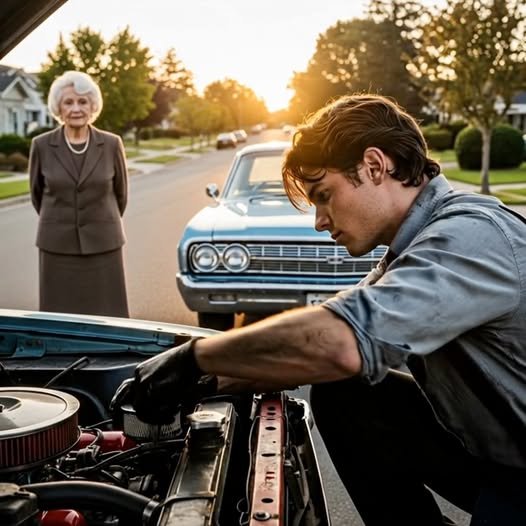
The forest-green Jaguar E-Type sat motionless on the shoulder of Route 9, hazard lights blinking like a quiet distress signal against the gathering dusk. I slowed my Honda, checking the dashboard clock—6:47 PM. Dinner at the Langfords’ was at seven sharp, and I was already cutting it close.
I told myself someone else would stop. The road wasn’t empty. Surely someone with more time, better skills, cleaner clothes would pull over.
But no one did. So I did. My name is Daniel Torres.
I’m thirty-one years old, and I run a small design firm that specializes in making public spaces more accessible—parks, libraries, community centers, playgrounds where children in wheelchairs can play alongside everyone else. It’s meaningful work, the kind that lets me sleep at night knowing I’ve contributed something worthwhile to the world. But it doesn’t pay the kind of money that impresses people like Richard and Catherine Langford, and that was becoming increasingly clear as I approached what might be the most important dinner of my life.
Emma’s parents. The gatekeepers to the future I desperately wanted. Emma and I had been dating for eighteen months—a year and a half of the kind of happiness I hadn’t known was possible.
We’d met at a coffee shop where I was sketching redesigns for a playground and she was reading a novel so thick it looked like it could double as a doorstop. She’d caught me staring at her instead of my work and asked what I was designing. Three hours later, we were still talking—about books, design, childhood dreams, the way cities either embrace or exclude people based on how spaces are built.
She was a fourth-grade teacher with this extraordinary gift for making everyone feel seen. When Emma listened to you, you felt like whatever you were saying was the most interesting, important thing in the world. She made nine-year-olds feel like scholars and made me feel like maybe I was worth keeping around.
Her parents, however, did not share that enthusiasm. I knew they disapproved of me long before tonight. It was there in the pauses after my name, the polite smiles that never reached their eyes, the way her father asked about my job as if it were a temporary condition he hoped would improve with treatment.
At Emma’s birthday dinner six months ago, Richard Langford had asked what I did for a living, and when I explained about accessible design and community spaces, he’d nodded slowly and said, “That’s… admirable.” The way you might describe someone volunteering at a soup kitchen—nice, certainly, but not exactly what you’d want for your daughter’s future. Catherine had been more direct. “And you went to school for this?”
“Yes, ma’am.
The story doesn’t end here — it continues on the next page.
Tap READ MORE to discover the rest 🔎👇

