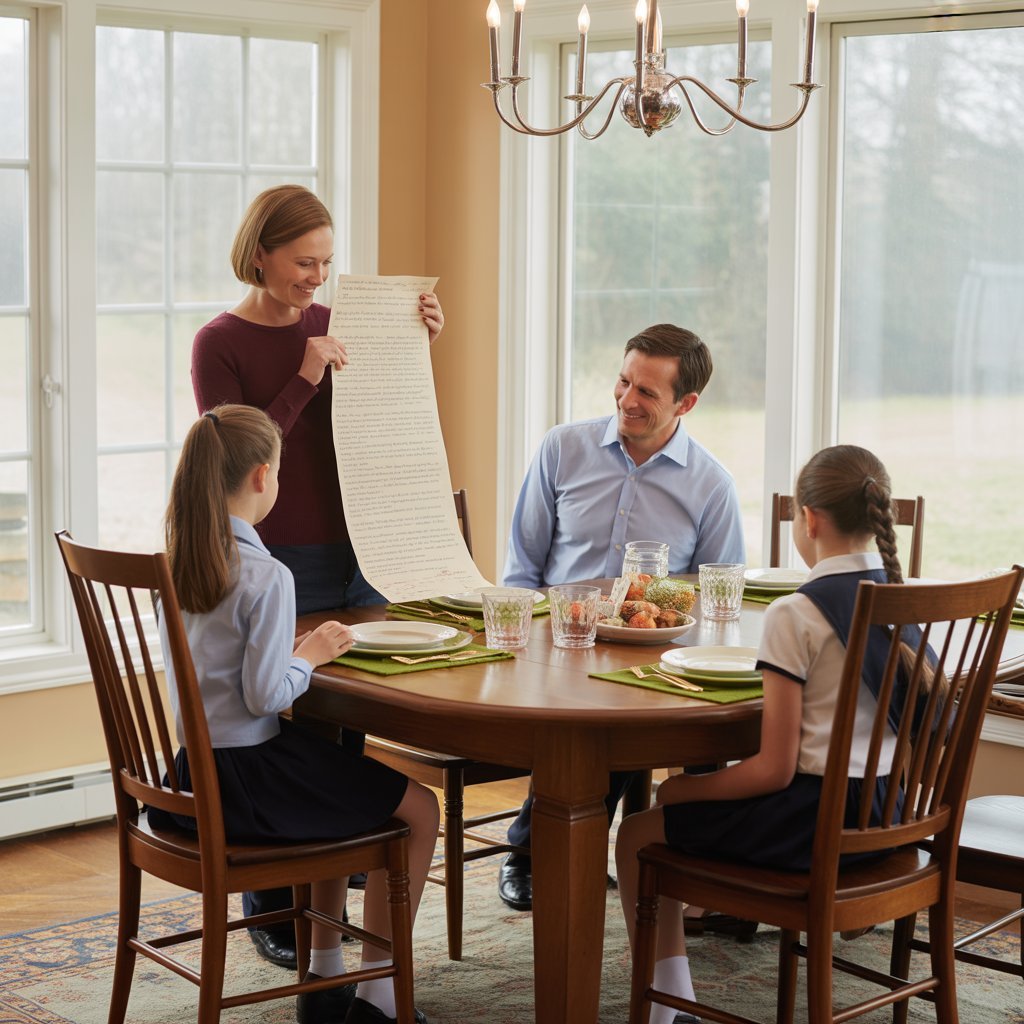
My sister’s birthday was approaching, so my parents called me saying, “We need to discuss something important.” Then my parents gave a list to the whole family saying, “Please make sure everything is ready for her big day.”
On her big 18th birthday, my sister got a huge surprise party with 200 guests, professional catering, and she even got a brand new car with a bow on it. Then, as soon as it was my birthday, I woke up just to see them leaving, saying, “We are taking your sister out.”
When I said, “What about my birthday?” they just slammed the door in my face and left me alone. Hours later, they returned and threw a half-eaten cupcake at me and a card that said, “It’s time to get out.” Everyone laughed while I stood there. I pretended it didn’t hurt. That night, I took the bus to the city with $40 and a backpack. A week later, my mom left a voicemail in tears.
Please come home. We didn’t know.
The phone call came three weeks before Kristen’s 18th birthday. Mom’s voice carried that particular brightness she reserved for anything involving my younger sister. She wanted to discuss something important, she said. “Family meeting, mandatory attendance.”
I showed up at the house after my shift at the diner where I’ve been working since turning sixteen. Dad sat at the head of the dining table, Mom to his right, and Kristen in her usual spot directly across from him. The empty chair at the far end waited for me, like always.
Dad slid a printed list across the polished wood surface. My eyes scanned the items while my stomach churned.
Venue booking confirmation.
Catering company contact.
DJ service verification.
Photographer scheduling.
Florist appointment.
Guest list finalization.
Party favor orders.
Decoration pickup.
The list contained forty-seven individual tasks. Each one checked off except for a handful marked with my name.
“We’re throwing Kristen the birthday celebration she deserves,” Mom announced, her hands folded neatly in front of her. “Turning 18 is a milestone. We want everything perfect.”
Perfect.
The word tasted bitter on my tongue.
I glanced at Kristen, who sat there examining her freshly manicured nails with a small smile playing at the corners of her mouth. She’d always been beautiful in that effortless way some people manage. Blonde hair that caught the light just right. Blue eyes that sparkled when she laughed. A smile that made adults melt and boys stumble over their words.
“We’re expecting about 200 guests,” Dad continued, pulling out his phone to show me the venue photos. “The Riverside Ballroom. Best place in town. We’ve hired Stevens Catering for a full dinner service. Prime rib, salmon, the works. Open bar for the adults, obviously.”
Two hundred guests.
My 21st birthday had been fourteen months ago. They had taken me to a chain restaurant where we split an appetizer, and I received a card with $50 inside. The card was generic, the kind you grab at a grocery store when you’ve forgotten until the last minute. Inside, Mom had written “Happy birthday,” without even adding my name.
But I didn’t say anything about that. I never did.
“Your tasks are highlighted in yellow,” Mom said, tapping the paper. “We need you to pick up the party favors from the print shop on Thursday. They’re custom champagne glasses with Kristen’s name and birthday etched on them.
“Also, you’re in charge of assembling the photo display boards. I put together all the pictures. You just need to arrange them on the poster boards nicely. And you’ll help us set up the day before.”
“I work Thursday,” I said quietly.
“Call in sick.” Dad’s tone left no room for discussion. “This is family. Family comes first.”
The irony nearly choked me, but I swallowed it down along with everything else. I nodded and folded the list into my pocket.
The next three weeks became a blur of errands and preparations. I called in sick twice, losing income I desperately needed for the community college classes I’d been taking. I spent my days off running around town, checking items off that list while Kristen went shopping with Mom for her birthday dress. They tried on dozens of options, I heard later. They had lunch at that new French bistro downtown. They got matching mother-daughter manicures.
Nobody asked if I wanted to come.
The party itself exceeded even my expectations of excess. The Riverside Ballroom had been transformed into something from a magazine spread. White and gold everywhere, with crystal centerpieces on each table that probably cost more than my monthly wages. A live band played near the dance floor. The cake stood four tiers tall, covered in edible gold leaf and delicate sugar flowers.
I stood in the back corner in my three-year-old dress from Target, watching guests arrive in their designer clothes and expensive jewelry. I recognized faces from around town. Kristen’s friends from her private school. Dad’s business associates. Mom’s country club companions. Distant relatives who’d driven in from neighboring states.
When Kristen made her grand entrance, the room erupted in applause. She looked stunning in a white dress that probably cost more than my car. Actually, more than my car would have cost if I’d had one. I’d been taking the bus to work for the past three years while saving every penny for tuition.
The speeches started around nine.
Dad stood at the microphone, his voice thick with emotion as he talked about his baby girl growing into a remarkable young woman. He spoke about her kindness, her intelligence, her bright future. Mom followed, dabbing at her tears while she reminisced about Kristen’s childhood, how proud they were, how blessed they felt to be her parents.
Then came the finale.
Dad gestured toward the ballroom entrance, and the doors opened to reveal a brand new silver Honda Accord with an enormous red bow tied across the hood.
Kristen screamed and ran to it, jumping up and down while guests cheered and cameras flashed. She hugged Dad, then Mom, then Dad again. She was crying real tears of joy.
I left early.
Nobody noticed.
My 22nd birthday fell on a Tuesday, exactly two months after Kristen’s extravaganza. I woke up in my tiny studio apartment with a sense of dread I’d been carrying for days. Despite everything, some small part of me hoped this year might be different. Maybe they’d remember without prompting. Maybe they’d plan something small. Maybe they’d at least call.
My phone showed nothing except a spam email about a flash sale at a store I’d never shopped at.
I got dressed and headed to my 8 a.m. class, pushing away the disappointment that sat heavy in my chest. The professor droned on about economic theory while I took notes mechanically. My phone buzzed once during the lecture. A text from my roommate from freshman year, now living across the country:
Happy birthday. Hope it’s amazing.
At least someone remembered.
I worked the lunch shift at the diner, serving burgers and fries to the regular crowd. My feet ached by the time my manager finally let me go at four. I caught the bus home, watching the city slide past through smudged windows. The apartment building came into view, its gray concrete facade exactly as uninviting as always.
The apartment was dark when I unlocked the door. I flipped the light switch and stopped.
Standing in my living room were Mom, Dad, and Kristen. They wore coats and held car keys. Going-out clothes, not staying-in clothes.
“Oh good, you’re finally here,” Mom said, checking her watch. “We were about to leave without saying anything.”
Hope flickered. Maybe they’d planned a surprise dinner. Maybe this was all a setup for something nice.
“We’re taking Kristen to that new steakhouse on Fifth Avenue,” Dad explained, jingling his keys impatiently. “She’s been wanting to try it.”
The hope died as quickly as it had sparked.
I stood there in my diner uniform, smelling like grease and exhaustion.
“It’s my birthday.”
“We know,” Mom said absently, already turning toward the door. “We’ll do something for you another time. This reservation was hard to get. Kristen’s been looking forward to it all week.”
“But it’s my birthday today. Right now.”
Dad’s face hardened into that expression I knew too well. The one that said I was being difficult, ungrateful, problematic.
“Don’t be selfish. We drove all the way here to see you.”
“You didn’t come to see me. You came to tell me you’re leaving to take Kristen to dinner. On my birthday.”
“God, you’re so dramatic,” Kristen muttered, scrolling through her phone. “It’s just dinner. It’s not like birthdays even matter at your age.”
Something inside me cracked.
“At my age? I’m 22. You just turned 18 eight months ago.”
“Girls,” Mom’s voice carried warning. “Let’s not do this now. We’re running late.”
They moved toward the door as a unit. I stood frozen, unable to process what was happening. This had to be a joke, a cruel test, something other than what it appeared to be.
“Wait,” I managed. “You’re really leaving right now?”
Dad paused with his hand on the doorknob. For a second, I thought he might reconsider. Instead, he pulled the door open.
“We’ll call you next week.”
“Please.” The word escaped before I could stop it. “It’s my birthday.”
Mom glanced back, irritation clear on her face.
“You’re being childish. We raised you better than this.”
The door slammed shut behind them. The sound echoed in my tiny apartment, final and absolute.
I stood there for a long time, listening to their footsteps fade down the hallway. Their voices carried back briefly, laughing about something Kristen said.
Then silence.
I sat on my secondhand couch and stared at the wall. The afternoon light slanted through the blinds, painting stripes across the worn carpet. Somewhere in the building, a dog barked. A door slammed. Life continued everywhere around me while I sat motionless.
Hours passed. The light shifted and dimmed. My phone remained silent except for a few texts from friends. I responded to each one with a “thanks” and a smiley-face emoji, pretending everything was fine.
The door burst open around eight p.m. I’d been sitting in the dark, not bothering to turn on lights. They filed back in. Mom carrying a takeout box and Dad holding a small paper bag.
“Here.” Mom tossed the box onto the coffee table in front of me. It landed with a soft bump. “We brought you leftovers.”
I opened the box slowly. Inside sat half a piece of chocolate cake, its frosting smeared against the cardboard. Fork marks scored through it where someone had already eaten their portion. A few crumbs scattered across the bottom of the container.
Dad pulled something from the paper bag and held it out. A cupcake from a grocery store bakery. The frosting slightly melted and drooping to one side. He’d already taken a bite from it. I could see the tooth marks clearly in the overhead light that Kristen had just flipped on.
“Couldn’t find a whole one,” he said with a shrug. “But it’s the thought that counts, right?”
Mom produced a card from her purse. A standard birthday card, the cheap kind sold in multipacks. She’d written “Happy birthday” inside in her neat handwriting.
Below that, in Dad’s messier scrawl:
It’s time to get out.
I stared at those words. Read them twice. Three times.
“What does this mean?”
Dad exchanged a look with Mom. Kristen examined her nails again, clearly bored with the whole situation.
“You’re 22 now,” Dad said slowly, like explaining something to a child. “We think it’s time you became fully independent. We’ve been helping with your rent, and it’s time that stopped.”
They’d been giving me $300 a month toward rent after I begged them for help last year when my hours got cut. Meanwhile, they’d bought Kristen a car worth $20,000.
“You’re cutting me off,” I said flatly.
“We’re encouraging you to stand on your own two feet,” Mom corrected. “Kristen’s going to college in the fall. We need to focus our resources on her education.”
“I’m also in college. I’ve been taking classes while working full-time.”
“Chunity college,” Kristen said dismissively, finally looking up from her phone. “That’s basically just high school, part two.”
“At least I’m paying for it myself.”
The temperature in the room dropped several degrees. Dad’s face flushed red.
“You have some nerve after everything we’ve done for you.”
“Done for me? You threw me half a cupcake and told me to move out.”
“See?” Mom gestured at me like I was evidence in a trial. “This is exactly what we’re talking about. So ungrateful. So entitled. We gave you life. Put a roof over your head for eighteen years. And this is the thanks we get.”
Kristen laughed.
Actually laughed out loud.
The sound cut through me like glass.
Dad chuckled too, a low rumble of amusement. Mom’s lips curved into a smile.
They were laughing at me. On my birthday. While kicking me out of the only housing I could afford.
“I can’t believe how ridiculous you’re being,” Kristen said, still giggling. “It’s like you think you’re special or something.”
I stood there holding that bitten cupcake and their cruel card while my family laughed. The sound filled my small apartment, bouncing off the walls and ceiling. They laughed together, united in their amusement at my distress.
Something shifted inside me. The crack from earlier widened into a chasm. Every ignored birthday, every forgotten achievement, every moment of being invisible while Kristen shone— all of it poured into that widening gap. The hurt transformed into something else, something harder, something cold and sharp as winter ice.
I smiled. The expression felt strange on my face, like a mask that didn’t quite fit. But I held it there while they laughed.
“You’re right,” I said quietly.
Too quietly for them to hear over their own amusement.
I said it louder.
“You’re absolutely right.”
The laughter died down. They looked at me with expressions ranging from confusion to lingering amusement.
“I should stand on my own two feet,” I continued, setting down the ruined cupcake. “I should be independent. I should stop expecting anything from you at all.”
“Finally,” Dad said, relief clear in his voice. “I’m glad you’re seeing reason.”
“We knew you’d understand once you calmed down,” Mom added.
I looked at each of them in turn. Really looked. Like seeing them clearly for the first time.
These people who’d given me half their attention at best. Who’d made me feel small and unimportant and in the way. Who’d laughed while telling me to leave.
“Get out,” I said.
Dad blinked.
“What?”
“Get out of my apartment. The apartment I pay for. The one you’re no longer helping with anyway. Get out. Now.”
“Honey,” Mom started, her voice taking on that patronizing tone.
“Get out.”
I walked to the door and pulled it open.
“You’ve delivered your message. You can leave now.”
“You’re being hysterical,” Kristen said, but she was already moving toward the exit. She didn’t like conflict unless she was winning it.
“We’re your parents,” Mom said, her voice rising. “You can’t talk to us like this.”
“I just did. And you’re in my home. So leave, or I’ll call the building manager.”
Dad’s face went through several shades of red and purple. He looked like he wanted to say something, probably something about respect and gratitude and disappointment.
Instead, he stormed past me into the hallway. Mom followed, her mouth pressed into a thin line of disapproval. Kristen smirked as she passed, like this was all very entertaining.
I closed the door behind them and turned the deadbolt.
My hands shook as I pulled out my phone and blocked all three of their numbers. Then I blocked them on social media. Every platform, every connection, gone with a few taps of my thumb.
The apartment fell silent again.
I looked around at my secondhand furniture and bare walls. At the half-eaten cupcake sitting on my coffee table like a monument to contempt. At the card with its cruel message.
I’d been surviving on minimum wage and financial aid while taking classes. I had $240 in my checking account and another $150 in savings. My rent was due in ten days. $850 for the shoebox studio in a building where the heat barely worked and the neighbors screamed at each other until three a.m.
Ten days to figure out how to make up a $300 shortfall. Ten days to either find more work or find a cheaper place. Or both.
I could pick up a second job, stack doubles at the diner, survive on even less, maybe make it work if I was lucky and desperate enough. I could panic. I could cry. I could call them back and apologize and beg for forgiveness and help.
Instead, I started packing.
I pulled out my old backpack from high school and began filling it with essentials: changes of clothes, toiletries, my laptop and charger, important documents, the small jewelry box my grandmother had left me before she passed—the one valuable thing I owned. Everything else could stay or be sold.
By midnight, I had a plan.
Sort of.
It was more of a direction than a plan, but it was something.
The city was two hours away by bus. The city meant opportunity. More jobs, better pay, cheaper living if you knew where to look.
I had a friend from my diner who’d moved there last year. Slept on couches until she found a spot at a hostel that rented beds by the week. She’d mentioned they were always hiring at the bar where she worked. Better tips than anything in town.
I counted my money again.
$240 in checking. $150 in savings. $390 total.
Bus ticket would cost $18. That left $372 to survive on until I found work and housing.
It wasn’t much, but it was more than the nothing I’d have if I stayed.
At five a.m., I walked out of my apartment for the last time. I left the keys on the kitchen counter along with a note for the landlord explaining I was breaking my lease. I’d lose my security deposit, but I was losing that anyway once I couldn’t make rent. The $400 deposit had been scraped together over two years of saving. Gone now, but it didn’t matter anymore.
The bus station looked exactly like every bus station in America. Harsh fluorescent lights, plastic seats bolted to the floor, and the kind of people who travel at dawn on a Wednesday.
I bought my ticket with cash and sat down to wait, my backpack clutched against my chest.
My phone buzzed. I’d forgotten to block one number.
Aunt Patricia, Mom’s sister. She’d sent a text:
Heard about last night. Your mother is very upset. You need to apologize.
I blocked her, too, then powered off the phone completely to save battery. I’d need it later for job hunting.
The bus arrived at six-thirty. I found a window seat near the back and pressed my forehead against the glass as we pulled away from everything I’d ever known. The town rolled past, gray and familiar. I watched it all disappear behind me and felt nothing. No sadness, no fear, just a strange hollow emptiness where those emotions should have been.
The city rose up around us two hours later, all concrete and glass and endless possibility. I’d been here a handful of times for concerts or museums, always as a visitor.
Now I was staying.
The hostel my friend had mentioned was in a neighborhood the guidebooks probably told tourists to avoid. The buildings leaned together like tired workers, their facades decorated with graffiti that ranged from crude to actually beautiful.
The hostel itself occupied the second floor of a former warehouse above a laundromat that had bars on its windows. A woman with purple hair and more piercings than I could count sat behind the front desk.
“Help you?”
“I need a bed. How much by the week?”
“One-twenty. Shared bathroom. No kitchen access. No overnight guests. Pay up front. No refunds.”
I counted out the cash, watching my safety net shrink to $252.
She handed me a key attached to a wooden paddle with the number seven burned into it.
The room held eight beds, four sets of bunks crammed into a space meant for maybe four people total. Three of them were currently occupied by sleeping bodies in various states of coverage. The air smelled like sweat and cheap deodorant and something vaguely chemical I couldn’t identify.
My bunk was a top one in the far corner. I climbed up and lay down on the thin mattress, my backpack clutched to my chest.
Through the single window, I could see the building across the street. Someone was singing off-key. A siren wailed in the distance. The city hummed with constant noise and movement.
I closed my eyes and slept.
The bar where my friend had worked was called The Copper Still. She’d quit three weeks ago to move across the country with a boyfriend, but her recommendation still carried weight with the owner.
He looked me over with tired eyes and asked about my experience.
“I’ve been serving for three years,” I said, which was true. I didn’t mention it was at a small-town diner where the most complicated order was eggs and hash browns.
“You work fast?”
“Yes.”
“You know how to make drinks?”
“I can learn.”
He hired me on the spot for five nights a week, Thursday through Monday, four p.m. to two a.m. Cash tips daily, paycheck biweekly.
I started the next day.
The work was brutal. The bar catered to an after-work crowd that demanded complicated cocktails and quick service. I memorized drink recipes during my breaks, practiced pouring techniques until my arms ached. I smiled through crude comments and dodged wandering hands and learned to read the mood of a room within seconds of walking into it.
I was terrible at first. I mixed up orders, poured too slowly, couldn’t keep up with the weekend rush. The other bartenders covered for me with varying degrees of annoyance, but I watched them constantly, studied their movements, copied their efficiency.
After two weeks, I started getting the hang of it.
After a month, I could hold my own on a busy night.
The money came in slowly at first. Some nights, I’d clear $50 in tips; others, only $20. But it added up.
I found a room for rent in a three-bedroom apartment with two other girls. $300 a month for a space barely bigger than a closet, but it was mine and it had a door that locked.
I kept my expenses minimal. Ramen and rice most nights. Secondhand everything. No entertainment, no luxuries, nothing that wasn’t absolutely necessary. Every extra dollar went into a separate account I’d opened.
My emergency fund. My never-again money.
The balance grew slowly. $200. $400. $800.
Baby steps toward security.
During the day, I enrolled in online classes at a state university that had a respected business program. Financial aid covered most of the tuition, and I paid the rest from my savings with gritted teeth.
Marketing principles and accounting fundamentals and business law. I devoured it all with a hunger I hadn’t known I possessed.
Three months after leaving, I turned on my phone for the first time. Seventeen missed calls from Mom. Eight from Dad. Thirty-four text messages, most of them angry. A few concerned. One that just said, “Call us.”
There was a voicemail from a week after I’d left. Mom’s voice, thick with tears:
Please come home. We didn’t know you’d actually leave. You can’t just disappear like this. We’re worried sick. Please just call us back so we know you’re alive.
I deleted it without listening to the rest.
There were more voicemails. Dad demanding I return immediately. Kristen calling me dramatic. Mom crying, Dad threatening.
On and on.
I deleted all of them and powered the phone off again.
I finished my first year of classes with a perfect GPA. The second year went even better. Professors started to know my name, to reference my papers as examples. I worked obsessively, attended every business mixer and networking event I could find. I collected business cards like trading cards and followed up with everyone.
During my third year, I met Harold Chen at a symposium on digital marketing. He owned a boutique marketing firm that specialized in luxury brands. We talked for two hours about consumer psychology and brand positioning.
He offered me an internship on the spot.
I took it, working the internship during the day and keeping my bartending shifts on weekends. I slept four hours a night and lived on coffee and determination. Harold’s firm gave me real projects, real responsibility. I proved myself again and again, staying late, volunteering for the difficult clients, always saying yes to more work.
When I graduated with my bachelor’s degree, Harold offered me a full-time position. Entry level, but with room for growth. I quit bartending and bought my first business suit with my last paycheck from The Copper Still.
Three years at the firm taught me more about business than any textbook ever could. I learned how to read clients, how to sell ideas, how to turn a failing campaign into a success story. I worked 100-hour weeks and absorbed everything I could from everyone around me.
When Harold retired, he sold the firm to a larger company. They kept most of the staff but downsized the accounts. I saw the writing on the wall and started looking for my next move before the layoffs began.
I found it at Wesmore & Associates, a mid-size firm that handled both corporate and private clients. They brought me on as a senior account manager. Better pay, better benefits, better opportunities.
I bought a car, moved into a nicer apartment, started building actual savings instead of just surviving.
At 27, I launched my own consulting business. Small at first—just me and a website and a phone number. I specialized in reputation management and brand recovery, the kind of work nobody else wanted to touch. Businesses in trouble, individuals with PR nightmares, anyone who needed their image rebuilt from the ground up.
I was good at it. Better than good.
I understood what it meant to start from nothing. To rebuild when everything had been taken from you. To craft a new narrative when the old one was beyond saving.
The business grew. One client became two, became ten, became fifty. I hired employees, rented office space, built a real company with structure and systems and steady revenue.
By thirty, I was running a firm with twenty employees and clients across three states. I bought a house—a real house with a mortgage and a yard and neighbors who nodded hello when we collected our mail at the same time. I furnished it carefully with pieces I actually liked instead of whatever was cheapest. I hung artwork on the walls. I adopted a dog from the shelter, a mutt named Cooper who liked to sleep on my feet while I worked.
Life was good. Better than good.
I’d built something real from that terrible night and $40 in my pocket.
Then my phone rang on a Tuesday afternoon in April.
I didn’t recognize the number, but answered anyway.
“Harper speaking.”
“Harper?” Mom’s voice—older and shakier than I remembered. “Harper, sweetheart, it’s Mom.”
I almost hung up. My thumb hovered over the end button.
“I know you probably don’t want to talk to us,” she continued quickly, words tumbling over each other. “But please just listen for a minute. It’s about Kristen.”
My hand tightened on the phone.
“What about Kristen?”
“She’s in trouble. Real trouble. She—” Mom’s voice broke. “She married this man, Warren. We tried to tell her he was bad news, but she wouldn’t listen. He got her involved in some business scheme that turned out to be fraud. They’re facing federal charges. The losses were over $30 million. She could go to prison for a very long time.”
I sat down slowly in my desk chair.
“That’s unfortunate.”
“Unfortunate?” Mom’s voice rose. “Harper, she’s your sister. She needs help. She needs a good lawyer and those cost money. Real money. We’ve already spent everything on her legal bills. The house is mortgaged. Your father’s retirement is gone. We don’t have anything left.”
“And you’re calling me because…?”
Silence on the other end.
Then quietly:
“We heard you do well for yourself. That you have a business.”
“You heard?”
“Patricia saw an article about you in some business magazine. We tried to find you online, but you don’t use your last name anywhere.”
I changed it legally three years ago. Dropped the family name and took my grandmother’s maiden name instead. Harper Vale instead of Harper Whitmore. A clean break from everything they represented.
“What do you want from me?” I asked, keeping my voice level.
“We need help,” Mom said simply. “Money for lawyers. Kristen could get twenty years if she’s convicted. Please, Harper. We know we weren’t perfect parents, but—”
“Weren’t perfect.” The laugh escaped before I could stop it. “That’s one way to describe it.”
“We did the best we could.”
“You threw a half-eaten cupcake at me on my birthday and told me to get out.”
More silence.
When Mom spoke again, her voice trembled.
“We were stressed that day. Your father had just lost a major client. Kristen was being difficult about college. We didn’t mean—”
“You laughed,” I said quietly. “All three of you stood in my apartment and laughed while I held that ruined cupcake. Do you remember that part?”
“Harper… how much do you need?”
I heard her sharp intake of breath.
“The lawyer said he needs fifty thousand for the retainer, and there will be more costs as the case goes on. But anything you could—”
“I’ll think about it,” I said. “Give me a few days.”
“Thank you,” Mom sobbed. “Thank you so much. We’ve been so worried. We didn’t know where else to turn. Your father wanted to—”
I hung up.
For a long time, I sat at my desk, staring at nothing. Cooper nudged my hand with his wet nose, sensing distress. I scratched behind his ears absently while my mind raced.
They needed money. They needed me. After nine years of silence, of not knowing if I was alive or dead, they tracked me down because they needed money.
I could help them. I had the money. $50,000 would hurt, but it wouldn’t break me. I could write that check and solve their problem.
Or I could do something else entirely.
I picked up my phone and made some calls. By the end of the day, I had what I needed.
Three days later, I called Mom back.
“I’ll help,” I said when she answered. “But there are conditions.”
“Anything,” she said immediately. “Name it.”
“First, I want Kristen to call me directly and ask for help herself. Not you, not Dad. Her.”
“Of course. Yes. I’ll tell her to—”
“Second, you and Dad need to come to my office. Both of you. There are papers to sign.”
“Papers?”
“Standard loan documents. This is a business transaction, not a gift. You’ll pay me back with interest. Market rate.”
Hesitation.
“That seems harsh.”
“Those are my terms. Take them or leave them.”
“We’ll be there,” Mom said quickly. “When?”
I scheduled it for the following Tuesday at two p.m.
Then I got to work.
When they arrived at my office, I barely recognized them. Dad had aged significantly, his hair gone fully gray and his face mapped with new lines. Mom looked smaller somehow. Diminished. She’d put on weight. Or maybe it was just the way she carried herself now. Defeated.
They stood in my reception area looking around at the modern furniture and expensive artwork with expressions I couldn’t quite read. Awe. Envy. Resentment.
“Harper,” Mom said, her voice uncertain. “This is… wow. This is really something.”
I shook their hands formally.
“Thank you for coming. Please follow me.”
I led them to the conference room where my lawyer, Paul Hendriss, waited with a stack of documents.
Mom and Dad sat across from us at the long table. They kept glancing at me, then at each other, then back at the papers.
“These are standard loan agreements,” Paul explained. “Ms. Vale has agreed to loan you $100,000.”
“One hundred?” Mom interrupted. “We only need fifty.”
“Legal fees rarely stop at the initial retainer,” I said calmly. “Consider the extra buffer. You’ll want it.”
Paul continued outlining the terms. Market-rate interest. Five-year repayment schedule. Standard default clauses. Personal guarantees backed by their house and liquid savings accounts, including their taxable investment portfolios. Everything completely legal and above board.
Dad’s hands shook slightly as he signed. Mom had tears in her eyes. They didn’t read the documents carefully, too desperate to question the gift they were being handed.
“There’s one more thing,” I said when they’d finished signing. “A personal request.”
“Anything,” Mom said.
“I want you to tell me why.”
They exchanged glances.
“Why what?” Dad asked.
“Why Kristen was worth everything and I was worth nothing. I need to hear you say it out loud.”
The room fell silent except for the hum of the air conditioning. Paul shifted uncomfortably beside me.
“It wasn’t like that,” Mom finally said. “We loved you both equally.”
“Try again.”
Dad cleared his throat.
“Kristen was easier. You were always so independent, so closed off. She needed us more.”
“So you gave her more because she demanded more. And I got less because I asked for less.”
“When you put it like that, it sounds bad,” Mom said defensively. “But parenting isn’t that simple. Every child is different.”
“You’re right,” I agreed. “Every child is different. Some children get two hundred people at their birthday party and a car with a bow. Some children get told to leave. Simple.”
Mom started crying. Dad stared at the table.
“I need to hear you acknowledge it,” I pressed. “Say the words. Admit what you did.”
“We made mistakes,” Dad said stiffly. “We could have been more balanced.”
“You made me invisible,” I corrected. “You made me feel worthless. You laughed at my pain and threw me away like trash. Say it.”
“Fine,” Dad’s voice rose. “Yes. We focused on Kristen more. Yes. We should have paid more attention to you. Yes. What we did on your birthday was cruel. Are you happy now? Is that what you wanted to hear?”
“Deliriously happy,” I said dryly. “Paul, the check.”
Paul slid an envelope across the table. Dad grabbed it like a drowning man reaching for a life preserver.
“One more thing,” I said as they stood to leave. “Where’s Kristen? I thought she’d be here.”
“She’s at home,” Mom said. “She’s not handling the stress well. She sends her thanks, though.”
“I’m sure she does. Tell her I said hi.”
They left looking relieved and vaguely ashamed. The door clicked shut behind them.
Paul gathered his papers and gave me a long look.
“You know, the loan documents included some unusual clauses,” he said carefully.
“I do.”
“If they default, the house and all secured investment accounts—”
“They’ll default,” I said with certainty. “Kristen’s legal fees will eat through that $100,000 in less than a year. They’ll miss their first payment, then their second. By the time the third one comes due, I’ll own the house they mortgaged and have a claim on their taxable savings and investment accounts per the agreement they just signed.”
Paul whistled low.
“That’s cold.”
“That’s business. They’re the ones who taught me family comes second to practicality.”
“What about Kristen?”
“What about her?”
“You’re really going to let her go to prison?”
“I’m really going to let the justice system do its job. I looked into her case. She knew exactly what she was doing. She wasn’t some innocent victim. She helped Warren run that Ponzi scheme because she liked the money and the lifestyle. She hurt people.”
Paul packed up his briefcase.
“For what it’s worth, I think you’re handling this remarkably well.”
“I’ve had nine years to practice.”
After he left, I sat alone in the conference room for a while. I pulled out my phone and listened to that old voicemail one more time. Mom’s voice crying about how worried they were, how they didn’t know I’d actually leave. They called one week after kicking me out.
One week.
Then they’d given up.
I deleted the voicemail for the final time and went home to Cooper.
The next eighteen months unfolded exactly as I predicted.
Kristen’s legal fees spiraled out of control. The $100,000 disappeared. My parents missed their first loan payment, then their second. I sent formal default notices through Paul’s office. By month nine, they were begging for extensions I politely refused to grant.
Kristen was convicted on eight counts of wire fraud and sentenced to fourteen years in federal prison. She’d serve at least twelve with good behavior. Mom and Dad attended the sentencing, looking twenty years older than they were. I didn’t go.
When the final default notice expired, I acquired the rights to their house per our agreement. I also gained claims on their taxable investment and savings accounts, which they’d used as collateral without fully understanding what they were signing.
I sold the house for a decent profit and donated the investment account money to a scholarship fund for first-generation college students. The scholarship was called the Vale Emergency Fund, and it specifically helped students who’d been cut off from family support.
Mom called me once after the house sale went through. I didn’t answer, but she left a voicemail.
“I hope you’re proud of yourself,” she said, her voice shaking with rage. “You destroyed this family. You took everything from us. We gave you life, and this is how you repay us.”
I saved that voicemail. Sometimes I listened to it when I needed a reminder of why I’d left and never looked back.
Dad sent an email six months later. Short and bitter.
You won. Congratulations. I hope it was worth it.
I never responded.
Kristen wrote me from prison once. A long letter about how sorry she was, how she’d made terrible choices, how she hoped we could reconcile someday. She mentioned that she’d heard what I’d done to Mom and Dad. She called it heartless. She said she understood now why I had left, but that didn’t make my revenge right. She asked if I felt better having destroyed what was left of our family.
I read the letter twice, then filed it away in a box I kept in my closet. The box held all the remnants of that old life. The card from my 22nd birthday with its cruel message. The business card from Harold Chen. My first paycheck from the consulting firm. A photo of me on the day I bought my house, grinning at the camera with Cooper in my arms.
Evidence of the journey from nothing to something. From invisible to visible. From worthless to worthy.
Did I feel better?
The question followed me sometimes late at night when sleep wouldn’t come.
I’d built a successful business. I created a life I was proud of. I’d proven that I didn’t need them. That I’d never needed them. But the hole they’d left was still there. It had just been filled with different things now. Ambition instead of longing. Pride instead of pain. Success instead of hope for their love.
I adopted another dog, remodeled my kitchen, took a vacation to Italy where I ate my weight in pasta and toured ancient ruins. I dated occasionally, but never seriously. I had friends and colleagues and a business that demanded my constant attention.
I had everything except the one thing I’d wanted when I was 22 years old, standing in my apartment holding that half-eaten cupcake: a family that valued me.
But I’d learned something important over the past decade. You can’t make people love you. You can’t force them to see your worth. You can only build a life where their opinions don’t matter anymore.
So that’s what I did.
And on my 31st birthday, I woke up in my comfortable house with my two dogs and my successful business and my chosen family of friends who actually showed up when they said they would. I made myself a proper birthday breakfast. I bought myself a cake from an expensive bakery, whole and perfect and completely mine.
I lit a single candle and made a wish. Not for revenge—I’d already had that. Not for reconciliation—I was done chasing that ghost.
I wished for continued success, for happiness, for the strength to keep building this life I created from nothing.
Then I blew out the candle, ate a slice of perfect cake, and got on with my day.
Because some families are born and some are built. And mine, the one I built from scratch with my own determination and effort, was pretty damn.