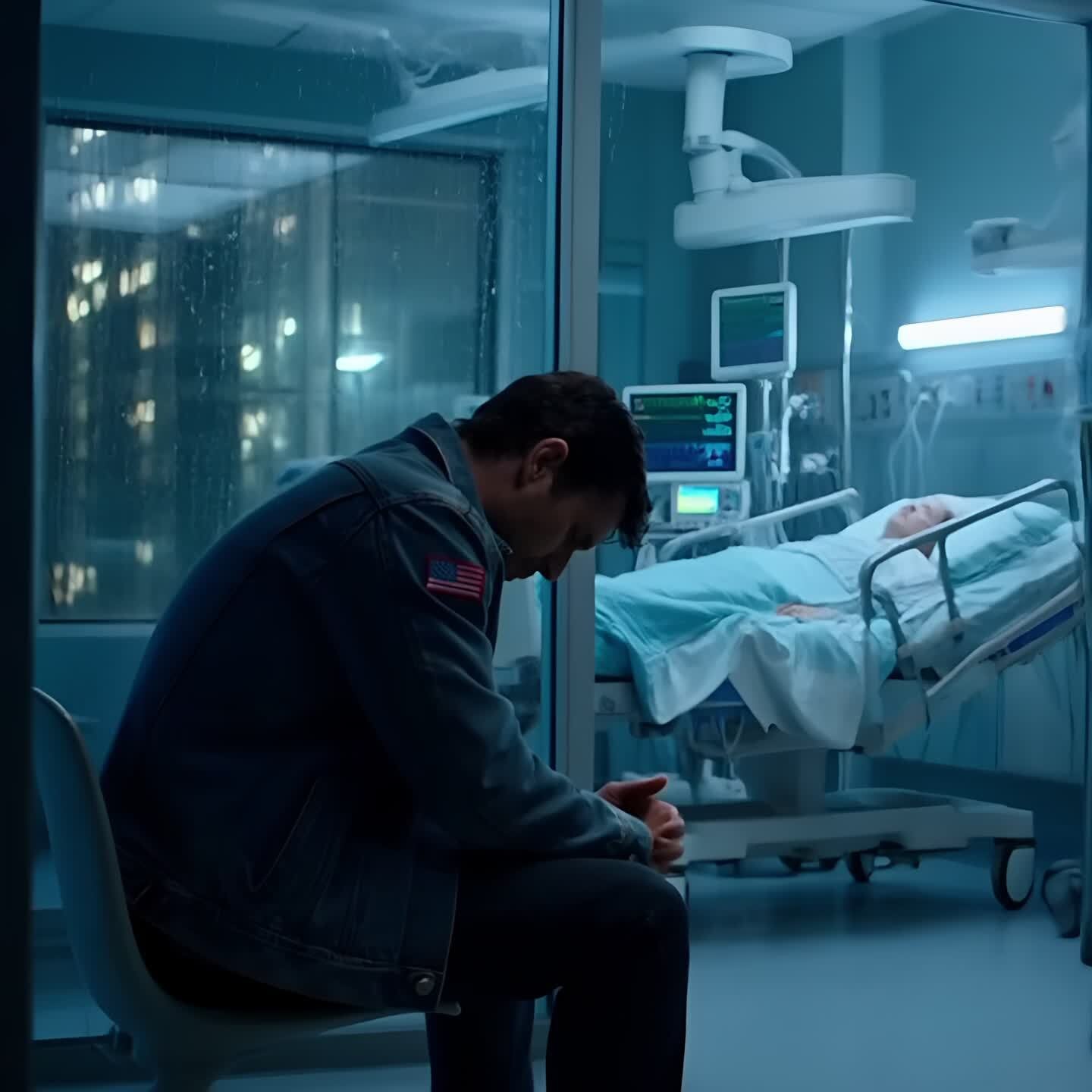
After my wife, my son, and I got in a serious accident, I texted the family chat. We were in the hospital. My wife was in the ICU. Nobody said anything. Then, my sister replied, “I hope she dies. She’s always been such a witch to me.” So, I made sure they regretted it.
This story is heavy, so settle in. I’m still not sure how I made it out the other side. My name is Paul, a thirty-six-year-old male. Before we get into the thick of it, let me give you a quick background. I grew up in Kansas City, worked my way through trade school, and landed a job as a logistics coordinator for a freight company. I met Darcy at a Chiefs tailgate about eleven years ago. She spilled her drink on my jacket, apologized way too many times, and then spent the next three hours making fun of my fantasy football picks. I married her a year later. Our son, Cole, came along two years after that. He’s seven years old now, obsessed with Marvel, and absolutely convinced he could beat me at arm wrestling if I wasn’t cheating—which I was, every time.
Life was good. We had a house in Gladstone with three bedrooms and a garage. Darcy worked as a dental hygienist, and Cole was in the second grade. We weren’t rich, but we weren’t struggling either. We’d found our rhythm. Then my family screwed it all up.
See, here’s the thing about being the responsible one in a dysfunctional family: You don’t get a trophy for it. You get a target on your back. My parents, Warren and Grace, had spent the last decade treating me like their personal emergency fund. My sister Haley, three years younger and somehow infinitely more entitled, had been riding that same wave since she figured out I’d bail her out every time. Three years ago, when my dad’s back surgery left him unable to work and my mom’s spending habits didn’t slow down, I started covering their mortgage. Temporarily, they said—just until things stabilized. But things never stabilize when you’re dealing with people who think the word “budget” is a personal attack.
So, I kept paying. When the bank started threatening foreclosure because they’d missed three payments before I got involved, I did something stupid. I refinanced the whole thing into my name and took over the mortgage entirely. My parents signed a quitclaim deed transferring ownership to me because their credit was destroyed, and it was the only way to save the house. They were supposed to pay me rent. They never did—not once. But I let them stay anyway because… family, right? That decision would come back to bite me. The best part was that while I was covering their mortgage, Haley always had money for spa weekends. My mom posted vacation photos three times that year, and my dad bought a new riding mower. Yet, rent money for me never happened. They just kept saying “next month” until next month stopped meaning anything.
But on that Sunday afternoon in October, I wasn’t thinking about mortgages, deeds, or my parasitic relatives. I was thinking about the pumpkin patch. Cole had been begging to go for weeks. One of his classmates had posted pictures, and suddenly it was all he could talk about. Darcy and I figured we’d make a day of it: drive out to the farm, let him pick a pumpkin, grab some cider, and maybe hit up a corn maze if we had the energy. It was supposed to be simple family stuff. Cole was in the backseat, already debating which pumpkin shape was superior, round or tall. Darcy was scrolling through her phone, looking up the farm’s hours. I was driving, half-listening to both of them, enjoying the lazy Sunday.
We never made it to the pumpkin patch.
The intersection was four blocks from our house. The light turned green, I pulled forward, and then everything went sideways. The SUV came from the left, ran the red light, doing at least fifty. I saw it for maybe a fraction of a second before impact. Metal screaming, glass shattering, the truck spinning sideways like we were nothing. I heard Darcy scream, heard Cole go silent, and then everything went dark.
When I opened my eyes, smoke was pouring through the cracked windshield. My door was crushed inward, pinning my left leg. The airbag had deployed and deflated, leaving a chemical smell that burned my throat. I turned my head and saw Darcy slumped against her door, blood running down the side of her face. She wasn’t moving. Cole was in the backseat, eyes open, staring at nothing. He wasn’t crying, wasn’t screaming—just frozen. I tried to reach for Darcy, but I couldn’t. My leg was pinned, and something in my chest felt wrong. Broken ribs, probably. I kept calling her name, but she didn’t answer.
The guy who hit us stumbled out of his SUV. I could see him through what was left of my window. He was swaying like he was on a boat in rough water. He looked at the wreck he’d caused—at the smoking metal and shattered glass—and mumbled something I couldn’t hear. Then, he actually started walking away. He just turned around and headed for the sidewalk like he could disappear into the crowd and pretend none of this happened. A guy from the house on the corner sprinted across the lawn and tackled him with a full linebacker hit, pinning him to the grass and holding him there while someone else called 911. The driver was yelling something about lawsuits and lawyers and how this wasn’t his fault. Even from inside my crumpled truck, I could hear the slur in his voice. I found out later the cops said he failed every field test they gave him.
Sirens started screaming in the distance. It felt like hours before they arrived. The EMTs had to cut me out of the truck with the Jaws of Life. I remember the sound—this high-pitched whining of metal being pried apart. The whole time, I was craning my neck to watch them work on Darcy. They moved fast. They put her on a backboard and started an IV. Someone said something about internal bleeding and possible head trauma. I tried to get to her, tried to push past the EMT working on my leg, but he pushed me back down.
“Sir, I need you to stay still,” he ordered.
“That’s my wife,” I choked out.
“I know they’ve got her, but I need you here with me, staying still. You’ve got a kid in that ambulance who needs his dad conscious. You hear me?”
They took Cole in a separate ambulance. He still hadn’t said a word. I don’t remember much about the ride to the hospital, just flashing lights, radio chatter, and this sick feeling that everything was falling apart and I couldn’t do a thing about it. At the ER, they separated us: me in one room, Cole in another. Darcy was rushed to surgery. The doctor told me she had a ruptured spleen and possible brain swelling. They needed to operate immediately; the next few hours would be critical.
I sat in that hospital bed with bruised ribs and a sprained knee, watching the clock on the wall tick forward, feeling completely useless. A nurse brought Cole in to see me around hour three. He still wasn’t talking. He just sat in the chair next to my bed, holding a stuffed dinosaur someone had given him, staring at the floor. The child psychologist said it was an acute stress response; his brain was protecting itself from trauma, and it might take hours or days for him to come back.
Somewhere around 4:00 p.m., while my wife was in surgery and my son sat next to me like a ghost, I picked up my phone and typed a message to the family group chat: We’re in the hospital. Bad accident. Darcy’s in surgery. Cole’s in shock. I’ll update when I know more.
Sent. Delivered. Read by four people within ten minutes.
Silence. Not a single reply.
I didn’t expect them to drop everything. I really didn’t. But I expected something. A text saying, “Hope she’s okay.” A call asking what hospital. Even a stupid heart emoji would have been better than nothing. But the chat stayed dead. At first, I figured maybe they were busy. Then I remembered what day it was. My niece Ruby was having her birthday party. Haley had been posting about it for weeks, making sure everyone knew how much effort she was putting in, how expensive the cake was, and how she’d hired a real Disney princess lookalike. I’d been invited, obviously, but we already had the pumpkin patch planned. And honestly, I wasn’t in the mood to spend three hours watching my sister bask in attention while her husband, Todd, stood around looking like he’d rather be anywhere else. I’d dropped off a gift earlier that week—some doll Ruby had been asking for. I figured that was enough.
The surgery took six hours. Six hours of sitting in that room, watching Cole slowly come back to himself, waiting for someone in scrubs to walk through the door with news. Every time footsteps approached, my heart rate spiked. During hour four, a nurse came in to check on Cole. She asked if there was anyone she could call for me. Family, friends, anyone. I showed her my phone, the family chat, my message sitting there.
She looked at me and said, “Some people aren’t worth waiting for.”
During hour four, I opened Instagram. There they were: my parents, my sister, my nieces, all smiling around a table covered in pink frosting and glitter. My dad was wearing a plastic tiara like some kind of joke king. My mom was holding up a slice of cake, posing for the camera with that fake smile she always used for photos. Haley was hugging the princess lookalike like they were old friends. Everyone was tagged, everyone was posting stories, and everyone was clearly, obviously, undeniably on their phones. I scrolled through the stories. I watched my dad do some stupid dance that got a bunch of laugh reactions. I watched my mom raise a glass for the camera. I watched Haley post a selfie with the caption “Best Mom Ever” and a hundred heart emojis.
They had seen my message. Every single one of them. In the comment section, people were congratulating Haley on the party. My mom was replying with heart emojis to every single one. My dad was tagging himself in photos. Active. All while my message sat there in the group chat—read, ignored. They picked a birthday party over their own flesh and blood. I put the phone down and didn’t pick it up again for hours.
The surgeon finally came in around 10:00 p.m. Darcy had made it through. The spleen was gone, but they’d stopped the bleeding. The brain swelling was minor and responding well to treatment. She was in the ICU, sedated and stable, but critical. The next forty-eight hours would tell us more. I asked if I could see her. They said not yet, maybe tomorrow. Cole fell asleep in the chair next to me, still holding that stuffed dinosaur. I watched him breathe and tried not to think about how close we’d come to losing everything.
The next morning, my buddy Vince showed up. Vince and I had worked together for almost a decade. He was a big guy, a former offensive lineman at Mizzou. He’d heard about the accident and driven straight to the hospital. He walked into my room carrying a bag of breakfast burritos.
“You look like garbage,” he said, setting the bag down.
“Thanks. Feel worse.”
“Your family show up yet?”
I just shook my head.
He stared at me for a second, then asked quietly, “Not one of them?”
“Read the message. All four of them. Nothing.”
Vince didn’t say anything else. He just pulled up a chair and started unpacking the burritos. He stayed for three hours, helped me walk Cole down to the cafeteria, and sat with him while I finally got to see Darcy in the ICU. She was hooked up to machines, tubes everywhere, face pale and bruised, but she was breathing. Her heart was beating. She was alive. I held her hand and told her I was there. I don’t know if she heard me.
On day three, my dad finally called. I was in Darcy’s room when my phone buzzed. Saw his name, felt my jaw tighten. I stepped into the hallway and answered.
“Finally,” he said. “Been trying to reach you.”
“I’ve been at the hospital with my wife who’s in the ICU.”
Silence, then, “Right. How’s that going?”
That was it. That was his version of concern. Like I was updating him on a home renovation.
“She almost died, Dad.”
“But she didn’t,” he countered. “Look, the mortgage payment is due Friday and we’re short. Your mother needs her prescriptions and Haley’s got—”
“Are you serious right now?”
“What? You always help. It’s what you do.”
I hung up without saying another word.
That night, after Cole had finally fallen asleep on the cot they’d set up for him, I sat in the dark and made a decision. I was done. They wanted to treat me like I didn’t matter? Fine. They were about to learn what life without me actually looked like.
Darcy woke up on day five. Groggy, confused, but awake. The doctors said her recovery would take months, but the worst was behind her. Cole started talking again that same afternoon. I was sitting next to his bed when he looked up at me, eyes finally focusing.
“Dad?”
“Yeah, buddy. I’m here.”
“Is Mom okay?”
I had to take a breath before I could answer. “She’s okay. She’s awake. She’s asking about you.”
He nodded slowly. “I don’t want to go to the pumpkin patch anymore.”
I almost laughed. “Yeah,” I said. “Me neither.”
The hospital kept Darcy for another week. I took leave from work. Vince covered some of my shifts and told the boss I’d be out for a while. Cole went back to school once he was stable enough, staying with our neighbor Julia during the days while I stayed at the hospital. Julia was a retired teacher in her sixties who’d lived next door since before we bought the house. When she heard about the accident, she showed up at the hospital with a casserole and coloring books for Cole.
During that week, my phone lit up constantly, but not with concern. My mom sent a photo of her empty medicine cabinet—no message, just the photo. My dad texted twice, both times about the mortgage. And Haley… Haley sent me a voice message that made me want to throw my phone against the wall. She said she heard about the accident. Said it was dramatic, as usual. Then she said, and I quote: “Honestly, if something happened to Darcy, would that really be the worst thing? She’s always been such a witch to me. Maybe this is karma.” I listened to that message three times, not because I couldn’t believe it, but because I wanted to make sure I had it saved. She also mentioned how I’d probably use the accident to get more attention. “Classic victim move,” she called it. Like my wife being airlifted was some kind of publicity stunt. I saved that part, too.
The day after Darcy came home, I drove to my parents’ house. They lived in a split-level in Independence, about twenty minutes from us. The house I’d been paying for. The house they’d apparently forgotten I had legal ownership of. My dad answered the door in his bathrobe. It was 2:00 p.m. He looked annoyed, asked if I was there to drop off a check. I told him no. I told him I was there to have a conversation about the house. He let me in. My mom was on the couch watching some reality show. Haley was in the kitchen, probably raiding their fridge since she did that constantly. Todd was nowhere to be seen, probably hiding.
I stood in the living room and laid it out. I told them I knew they’d seen my message. The one about the accident. The one about Darcy being in surgery and Cole being in shock.
My mom didn’t even look up from the TV. “We knew you’d handle it. You always do handle it.”
“My wife almost died.”
My dad crossed his arms. “But she didn’t. So, what’s the problem?”
That’s when Haley walked in. She had this smirk on her face, like she’d been waiting for this confrontation just so she could make it worse. “Honestly, it’s not like we were going to rush to the hospital for her. She’s never liked us anyway.”
“I heard the voice message, Haley. The one where you said maybe Darcy dying would be a good thing.”
She didn’t even flinch. “It was a joke. Learn to take a joke.”
I looked at my parents, waiting for one of them to say something, to tell her that was out of line, to show any sign of basic human decency. My dad just sighed. “We don’t have time for this. Just tell us about the mortgage.”
That’s when I told them. I told them I was done paying. That the mortgage, the utilities, the phone plan—all of it was finished. And since my name was on the deed and I’d been the one making payments for three years, I was giving them sixty days to find a new place to live.
The room went silent. My mom finally turned away from the TV, actually looking at me for what might have been the first time since I walked in. My dad’s face went from red to purple. Haley’s smirk disappeared. My dad sputtered, said I couldn’t do that, that it was their house, that they’d lived there for fifteen years, that I was just a name on a piece of paper. I pulled out the paperwork I’d brought: the quitclaim deed they’d signed three years ago transferring full ownership to me, the mortgage statements showing I was the sole borrower, and the letter from my attorney, Harlow, confirming that as the legal owner, I could terminate their tenancy with proper notice. Since they’d never signed a lease and paid no rent, they were month-to-month occupants at best. Sixty days was generous. Not a day more. Sixty days to find a new place, pack their things, and get out. After that, I’d file for formal eviction and let the sheriff handle it.
My mom started crying—the manipulative kind. It didn’t work anymore. My dad stood up, got in my face, close enough that I could smell the coffee on his breath. He said I was making a mistake, that I’d regret this, that blood was thicker than water and I’d come crawling back. I told him blood hadn’t done much for me lately, that I’d rather have people who actually showed up. He didn’t have a response to that. Haley, of course, couldn’t stay quiet. She said I was pathetic, that Darcy had turned me against my own family, that this was all her fault and I was too whipped to see it. I told her I had her voice message saved, the one where she said she hoped my wife would die. Her face went pale.
“Sixty days,” I told them all. Then I walked out. I didn’t slam the door, didn’t yell, didn’t give them the satisfaction of seeing me lose control. I just left and let the quiet do the talking.
I expected pushback. What I got was full-on warfare.
Within forty-eight hours, Haley had posted on Facebook about how I was abandoning our elderly parents. She made me sound like some kind of monster who was throwing frail old people out on the street. Conveniently, she left out the part where they’d been living rent-free in a house I paid for. She left out everything that didn’t fit her narrative. The post got shared dozens of times. Distant relatives I hadn’t spoken to in years started messaging me—aunts, uncles, cousins, all of them had opinions. None of them asked for my side. I screenshotted everything, saved it all, then muted notifications and went on with my life.
My dad left voicemails, multiple per day for the first week. They started pleading and gradually shifted to threatening. He said he’d sue me. Said he’d hired a lawyer. Said his lawyer told him I had no case and that I was going to lose everything. I had Harlow look into it. Turned out my dad hadn’t hired anyone. He was bluffing, hoping I’d back down if he sounded confident enough. I didn’t. My mom tried the guilt angle next, sending me a long email about everything she’d sacrificed for me growing up. She made it sound like I owed her a lifetime of servitude for the basic act of parenting. I didn’t reply.
Vince came over the following weekend to help me install security cameras. He’d seen the Facebook drama, followed the comment threads, and was worried things might escalate further. We put cameras at the front door, back door, garage, and driveway, and ran the feeds to an app on my phone so I could check them anywhere. Smart move. Essential, as it turned out. Vince also suggested I start documenting everything: dates, times, screenshots, recordings. Keep it in a folder. He’d been through a messy divorce and learned that memory isn’t evidence; courts want paper. I started building that paper trail the same night.
Three days later, Haley showed up unannounced. It was a Wednesday evening. Darcy was resting in the bedroom, and Cole was doing homework at the kitchen table. I was making dinner when the doorbell rang. I opened it to find Haley standing on my porch with her two daughters, Ruby and Sophie, ages eight and five. Both girls looked confused and tired. Haley looked furious—hair a mess, makeup smeared, with that wild look in her eyes that meant she was either completely unhinged or very desperate.
“Watch them. I’ve got somewhere to be.”
“No. Excuse me?”
“I said no. Take your kids and leave.”
She laughed—this bitter, ugly laugh. “You’ve done it before. You’ll do it again. You don’t have the guts to actually follow through on anything.”
“Try me.”
She stared at me for a second like she was waiting for me to crack. When I didn’t, she turned around, got in her car, and drove away. She didn’t look back. Didn’t hesitate. Just left her kids standing there on my porch like packages she was dropping off. Then I pulled out my phone and called the police. I explained the situation: My sister had abandoned her minor children on my property without consent. I needed an officer to document it. I let the girls inside because it was getting cold, made them mac and cheese, and put on a movie.
The officer showed up about forty minutes later. He took my statement, took photos, and asked if I wanted to press charges for abandoning minors. I said yes. He looked surprised. “Most people don’t follow through,” he said. “They let it slide.”
I told him I was done letting things slide. The officer shook his head when I explained the situation. He said he sees this more than people think—parents using kids as pawns, siblings who think rules don’t apply. He took extra notes, said this one had legs.
They tracked Haley down at a restaurant in Westport. She’d been there for two hours. When the cops showed up, she apparently threw a fit, accused them of harassment, accused me of overreacting, and made a whole scene. They cited her for child endangerment. The girls were taken by a social worker temporarily while Todd was contacted. He picked them up from the station looking shell-shocked. Haley called me that night screaming. She said I’d ruined her life, that her kids were traumatized because of me, that she’d never forgive me. I told her she was the one who left them on a porch and took off. She hung up.
The next day, my dad showed up at my house. I saw him pull into the driveway from the living room window. I told Darcy to stay in the bedroom with Cole and not to come out no matter what she heard. I met him on the porch before he could knock. He looked older than I remembered, angrier. He started yelling before I could say a word.
“You ruined her life! Your own sister! The cops took her kids!”
“She left them on my porch. She took off because she needed a break because you cut everyone off and she’s been dealing with—”
“She left her children unattended. That’s on her.”
He stepped closer, getting in my face. “You’re no son of mine. You hear me? You’re dead to this family.”
“Fifty-three days, Dad. Then you’re out of the house.”
He swung at me. I saw it coming and stepped back. He missed, stumbled, and nearly fell off the porch. Sixty-four years old with a bad back, trying to throw a punch like he was still in his twenties. Julia, my neighbor, was out watering her plants. She saw the whole thing.
“You need me to call the police?” she called out.
My dad looked at her, then back at me. His face was red, his hands shaking.
“Get off my property,” I said. “Next time you show up, I won’t just step back.”
He left, peeling out of the driveway like a teenager. I filed a police report that afternoon: attempted assault, trespassing. Julia gave a witness statement. The officer suggested a no-trespass order, which I signed on the spot. Now, if my dad showed up again, it wasn’t just a family dispute. It was a crime.
Vince called me that night, said the Facebook posts were getting worse. Haley was painting me as an abuser now, saying I’d called the cops on innocent children, claiming I was trying to make my elderly parents homeless. I told Vince I didn’t care what she posted. I had documentation. I had recordings. I had a paper trail a mile long.
He said, “Just be careful. Desperate people do desperate things.”
He wasn’t wrong.
The next two weeks were chaos. Haley’s custody situation got complicated fast. The child endangerment charge triggered a CPS investigation. Todd was furious with her. From what I heard through Julia, they were fighting constantly, screaming matches at 2:00 in the morning. Turns out this wasn’t the first time Haley had left the kids somewhere without supervision—just the first time someone had actually reported it. CPS found a pattern: neighbors who’d seen the girls alone in the yard, a babysitter who’d been stiffed on payment and had stories to tell. Todd started talking to a divorce attorney. Apparently, he had been keeping receipts, too. Every time Haley blew money they didn’t have, every lie she told—he’d been building his own exit strategy for months. My phone call about the kids on the porch was just the thing that pushed him over the edge.
My parents dug in. They refused to leave the house, claiming they’d fight the eviction in court, that I had no legal standing, that their lawyer—the one that didn’t exist—was going to destroy me. Harlow laughed when I told him that. Actually laughed. He said the deed was clear, the payment history was clear, and Missouri law was clear. They could fight all they wanted, but the outcome was inevitable. He filed the formal eviction notice on day fourteen, served by a process server who apparently got an earful from my dad about respecting his elders.
Julia became a regular presence during this time. She’d stop by with food, offer to watch Cole when Darcy needed rest. One afternoon, while Darcy was napping, Julia and I sat on my porch drinking coffee. It was November in Kansas City. She asked how I was holding up. Actually asked. I told her the truth: I was tired. Bone tired. But I was also relieved, like I’d been carrying something heavy for years and finally set it down. She nodded. She said she’d watched my family come and go over the years, seen the way they showed up in nice cars with empty hands, seen the way they treated me like a resource rather than a person. She said some families just take and take, and sometimes the best thing you can do is stop giving.
On day thirty-two, my mom tried a different approach. She showed up at my door with tears streaming down her face. Full performance—shaking hands, quivering lip, the works. She begged me to reconsider. Said she was sorry for the way things had gone. Said Haley was out of control, that my dad was just stressed. That they never meant to hurt me.
“We’re your parents,” she said. “Doesn’t that count for anything?”
“You left me alone in a hospital for three days.”
“We didn’t know how bad it was.”
“You didn’t ask. That’s the point.”
She wiped her eyes. “I’m sorry. I’m so sorry. Can’t we just start over?”
I looked at her for a long time, then asked the only question that mattered. “When Darcy was in surgery, when Cole wasn’t speaking, when I sat in that hospital room waiting to find out if my wife was going to live or die… why didn’t you call?”
She didn’t have an answer. She just stood there with her mouth open.
“Twenty-eight days,” I said. “Then you’re out.”
She left.
That night, someone threw a rock through our living room window. Darcy screamed. Cole came running from his room. Glass was everywhere. I found a note wrapped around the rock. Three words: You’ll regret this.
I called the police. They took the note, asked if I had any idea who might have done it. I had a pretty good idea. The security cameras Vince installed caught a car driving by slowly right before the window broke. A dark sedan. I couldn’t make out the plates, but I recognized the shape. It looked a lot like Todd’s car. I told the officer, and he said they’d look into it. Turned out another neighbor two doors down had a Ring camera that caught a better angle: partial plate, clear shot of the passenger side window rolling down. That was enough to bring Todd in for questioning.
He folded in about twenty minutes. Two days later, Haley was arrested for criminal mischief and intimidation. Todd had confessed that she’d made him drive while she threw the rock. He claimed he didn’t know what she was planning until she rolled down the window. The cops didn’t fully buy his innocent act, but Haley was clearly the one driving this train wreck. The charges were adding up now. Haley’s life was imploding, and she had no one to blame but herself. My dad went quiet after that. No more calls, no more voicemails. I think the reality was finally sinking in.
Day sixty arrived. The temperature was in the twenties, the kind of Missouri cold that cuts right through you. I drove to the house in Independence with Harlow, a locksmith named Earl who’d done work for me before, and a sheriff’s deputy who looked like he’d rather be anywhere else. The eviction had been processed through the courts, signed and stamped and official. The sixty-day notice period had expired. Legally, my parents had no right to be there anymore.
The drive felt weird. Twenty minutes through familiar streets, past landmarks from my childhood, toward a house that had been a source of both comfort and pain. I’d spent Christmases there, birthdays, but I’d also spent years pouring money into it while getting nothing back. Years of being treated like an obligation rather than a son.
My dad answered the door. He looked like the fight had drained out of him over the past two months. The bluster was gone. The threats had dried up. The deputy explained the situation: The house was being reclaimed by the legal owner. They had one hour to collect their essential belongings. Anything left behind would be considered abandoned property. My mom was sitting on the couch crying. I didn’t feel good watching it—I want to be clear about that. These were still my parents, people I’d loved once, or at least tried to love. But I also didn’t feel guilty. They’d had countless chances. They’d chosen to ignore every single one.
They were gone within forty-five minutes. They loaded what they could into their car and my mom’s sister’s truck. Haley was notably absent, probably dealing with her own legal mess. The locksmith changed all the locks. I signed some paperwork. I walked through the empty house afterward, just me and my attorney. Three years of mortgage payments. Countless holidays spent in that living room. I told the attorney I wanted to sell it. Wanted it gone. He said he’d get the listing started.
I drove home feeling something I hadn’t felt in months: Quiet. The kind that comes when you finally stop dealing with someone else’s mess. Darcy was waiting for me when I got back. She was standing in the kitchen, leaning on the counter for support because she still got tired easily, but she was smiling.
“How’d it go?”
“It’s done. They’re out.”
“How do you feel?”
I thought about it. “Lighter.”
She crossed the room slowly, wrapped her arms around me, and held on. “I’m proud of you,” she whispered.
Cole came running in from the living room and joined the hug, squeezing my leg like he was afraid I’d disappear. We stood there for a long time, the three of us, in our house, in our life, finally free.
The house in Independence sold in February. Quick sale, cash buyer, twenty thousand over asking. My attorney handled the paperwork. I didn’t even drive by to watch the closing. I gave my parents nothing from the sale. Legally, I didn’t have to. And honestly, I felt the same way they apparently did about me. They’d taken enough from me over the years. We were square now.
Haley’s legal situation got worse before it got better. The child endangerment charge stuck. She lost primary custody of her girls. Todd got them during the week, and she got supervised weekends. The criminal mischief and intimidation charges resulted in probation and mandatory anger management. I heard through Julia, who somehow knew everyone in a thirty-mile radius and had sources, that Haley blamed me for everything. Said I’d destroyed her family. Said I’d ruined her life. Said she’d never speak to me again. I was okay with that. More than okay. Relieved, actually.
The guy who hit us got prison time for vehicular assault, reckless endangerment, and fleeing the scene. His lawyer tried to argue a medical episode, but the judge didn’t buy it. The Chiefs fan who tackled him testified, and so did the EMTs.
My parents moved in with my mom’s sister in Blue Springs. A small house, one bathroom, nothing like the three-bedroom they’d been living in rent-free. From what Julia heard, my aunt wasn’t thrilled about the arrangement. My mom’s spending habits and my dad’s entitlement were apparently causing friction, the kind that strains even blood relationships. Funny how that works. My dad’s health declined after the move—stress, probably. I didn’t keep tabs. Didn’t send cards. Didn’t call on holidays. They’d made their choice when they ignored that message, when they decided I was nothing more than an ATM with a pulse. Once you close a door like that, it stays closed.
What I did keep tabs on was my own family. Darcy’s recovery took the better part of a year. Physical therapy three times a week at first, then twice, then once. By summer, she was back to work part-time. By fall, full-time. Cole bounced back faster than either of us; kids are like that. He went back to his dinosaurs, his arm wrestling challenges, his endless questions about everything. He didn’t ask about his grandparents much. When he did, we told him the truth in age-appropriate terms: Sometimes people make bad choices. Sometimes you have to protect yourself from people who hurt you, even if they’re family. He seemed to understand.
Vince became a regular at our weekend barbecues. He’d bring food and bad jokes and whatever girlfriend he was seeing that month. Cole loved him, called him Uncle Vince. Julia stayed our neighbor, our friend, our backup. She babysat Cole when we needed a night out. She brought soup when Darcy had her final surgery to remove some scar tissue. She became, in a lot of ways, more family than my actual family had ever been.
Spring came, then summer, then fall again. A full year since the accident. On the anniversary, Darcy and I dropped Cole off at Julia’s and went to dinner. Just the two of us. A nice place downtown, the kind we never went to because who has the time? We talked about everything except the accident. At one point, Darcy reached across the table and took my hand.
“You okay?”
“Yeah, I think I finally am.”
She smiled. “Thank you for standing up. For choosing us.”
We drove home through the quiet streets, windows down. Cole was asleep when we picked him up. I carried him inside, tucked him into bed, and stood in his doorway, watching him. No more guilt. No more demands. No more being the backup plan for people who only remembered I existed when they needed something. Just peace.
And honestly, I had to fight for it. I had to set boundaries and actually enforce them, even when it hurt. Some people spend their whole lives waiting for their family to show up. I stopped waiting. I built something real with the people who actually mattered and figured out that family isn’t really about blood. It’s about who stays, who shows up when things get rough, who chooses you because of who you are, not what you can do for them. My family never got that, and I’m done trying to explain it to them.