The $700 Fridays
I still remember the exact tone of her voice. Not angry, not apologetic, just careless, like she was telling me the weather forecast. As if 75 years of living, loving, sacrificing, and surviving meant absolutely nothing at all.
For a few seconds, I couldn’t speak. My throat felt tight, my hands cold. The phone was still pressed against my ear, but I couldn’t hear anything except the sound of my own heartbeat—slow and heavy, like it was struggling to keep going.
I just ended the call. Didn’t argue, didn’t cry. I just stared at the quiet screen in my hand like it belonged to someone else. The house felt like it was holding its breath. The refrigerator hummed. The clock on the wall ticked, but everything else was silent.
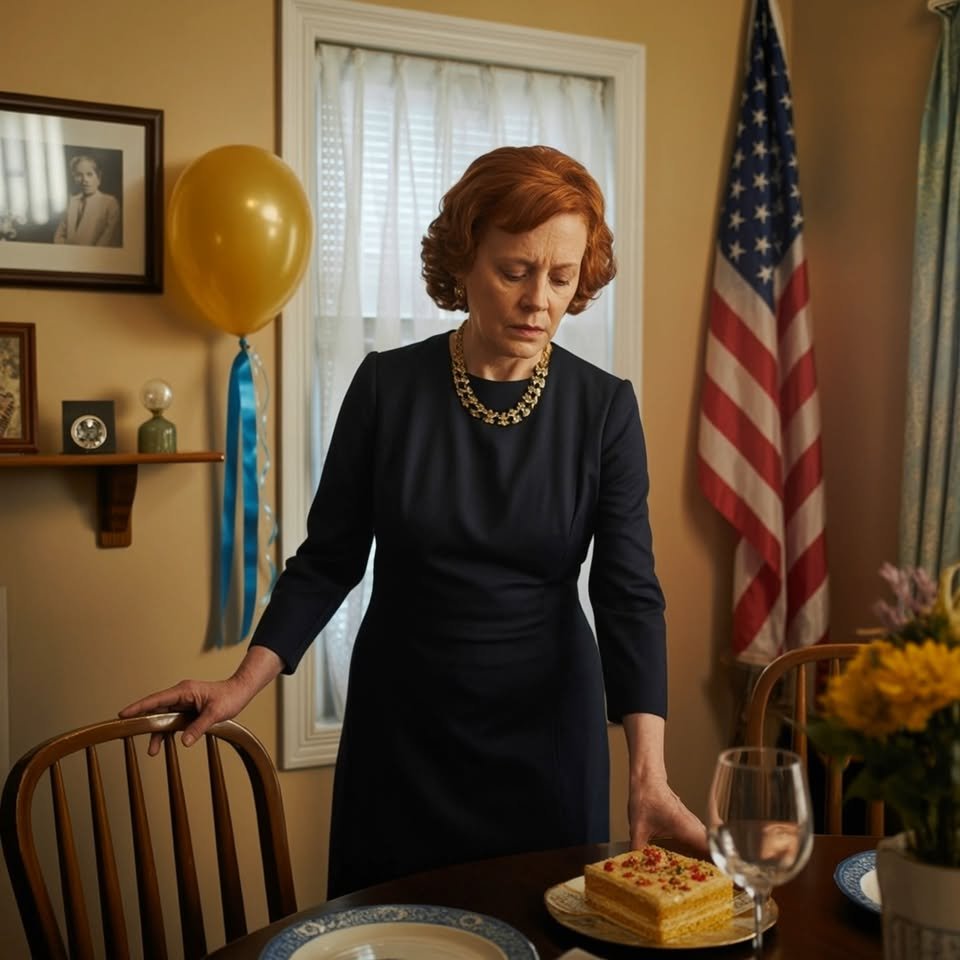
I walked to the living room and sat down on the couch, still wearing my good blue dress. The one my husband used to say made my eyes look brighter. I’d worn it for them, for the dinner that never happened. For the birthday no one remembered.
The truth is, I’d spent the entire evening at a restaurant alone, sitting at a table set for five, watching other families laugh and blow out candles and take pictures together. I’d told the waiter they were running late. Then I told him they were stuck in traffic. Then I stopped making excuses and just paid the bill. The waiter had smiled gently when he handed me the receipt. “Happy birthday, ma’am,” he’d said, and that was the only time anyone said it that night.
I thought about calling again. Maybe I’d misunderstood. Maybe something terrible had happened. But deep down, I already knew the truth. I knew because when I’d called, I’d heard music in the background, laughter, clinking glasses. They weren’t in trouble. They were at a party. “A friend’s thing,” Clare had said, as if that somehow made it acceptable.
That night, I realized something I’d spent years avoiding. I’d been funding people who didn’t see me as family anymore. They saw me as a bank account, a weekly deposit, a convenience. And the worst part—I’d let it happen.
But I didn’t argue that night. I didn’t chase them down or beg them to care. I just waited quietly, because I wanted to see what love really looked like when the money stopped.
That was the night I stopped being generous.
Three Years Earlier
It began about three years ago. Every Friday morning, I had a routine. I’d wake up around 7:30, make a pot of coffee, take my blood pressure pills, and sit at the kitchen table with my phone. By 9:00, I’d open my banking app and send $700 to my son Michael’s account. $700 every single week without fail.
At first, it didn’t feel like a burden. It felt like purpose.
Michael had called me one afternoon, and I could hear something in his voice I hadn’t heard since he was a little boy—fear. Real, raw fear. His company had downsized. He’d lost his job. With two kids in school, a mortgage, and his wife Clare working part-time at a dental office, they were drowning. Bills were piling up. The electricity had almost been shut off.
“Mom, I hate to ask, but could you help us for a little while? Just until I find something steady?” His voice cracked.
Of course, I said yes. What kind of mother wouldn’t?
My husband Robert had passed away two years before that. He left me his pension and some savings. It wasn’t a fortune, but we’d always lived simply. When Michael needed help, I had it to give.
That first transfer felt good. It felt like I was doing something that mattered. Like even though my husband was gone and my house felt too big and too quiet, I still had value. I could still protect my child.
Michael called me that first Friday afternoon. “Mom, it went through. Thank you. I don’t know what we’d do without you.”
His gratitude was genuine. I could hear the relief, the weight lifting off his shoulders.
For the first few months, I’d get a text every week—a heart emoji, a quick “thanks, Mom.” Sometimes Clare would send a photo of the kids with a caption like, “Because of Grandma, we’re okay this week.” It made me feel needed, connected.
But then something shifted.
The thank-you texts became shorter, then less frequent. Then they stopped altogether. Instead, I’d get a message on Thursday nights: “Hey, Mom, don’t forget tomorrow.” As if I’d ever forgotten.
Then the requests started changing. “Mom, could you send a little extra this week? The car needs new tires.” “Mom, we’re behind on the water bill. Can you cover it?” “Mom, the kids need winter coats. Could you add another hundred?”
And every time, I said yes, because that’s what mothers do.
I started skipping my own doctor’s appointments because the co-pays added up. I stopped buying the good coffee and started drinking the store brand. I wore the same three sweaters all winter because I didn’t want to spend money on myself when they needed it more.
My friends at church started noticing. One Sunday, Betty pulled me aside after service. “Honey, are you okay? You look tired.”
I smiled and told her I was fine. Just getting older.
But Betty knew me too well. She lowered her voice. “Is it Michael?”
I didn’t answer right away. “He’s going through a hard time,” I finally said.
Betty squeezed my hand. “Just make sure you’re not going through one, too.”
I thought about her words all week, but when Friday came, I sent the money anyway. Because the truth was, I was terrified. Terrified that if I stopped, he’d stop calling altogether.
So I kept giving, kept sending, kept pretending everything was normal. But deep down, I knew it wasn’t help anymore. It was habit. And habits don’t require gratitude. They just require repetition.
The Unraveling
There’s a photograph on my mantle. In it, Robert and I are standing in front of this very house, young and smiling. We’d just signed the mortgage papers.
Robert worked at the post office for 32 years. I worked part-time at the library and took care of Michael when he was small. We didn’t have much, but what we had, we built together.
When Michael was born, Robert cried. He held our son in his arms and whispered, “I’m going to teach you how to be a man.” And he did. Or at least he tried.
I remember Michael at eight years old standing in the driveway with Robert, learning how to change a tire. Robert didn’t just show him—he explained why it mattered. “One day, someone you love might need help, and you’ll know what to do.”
When Michael was sixteen, he got his first job bagging groceries. He came home that first Friday with a check for $83, so proud. The next morning, he handed me a small bouquet of daisies. They were wilted, probably from the discount bin, but they were the most beautiful flowers I’d ever seen. “For you, Mom,” he’d said, “because you always take care of me.”
I kept one of those daisies pressed in my Bible. It’s still there.
Back then, I thought I’d done everything right. I thought the values we’d instilled in him would last forever. But somewhere along the way, something changed.
Maybe it was when he went to college and met Clare, who came from a different kind of family—the kind that measured success by the size of your house and the brand of your car. Or maybe it was when he got his first corporate job and started wearing ties and talking about quarterly earnings.
After Robert died, I thought Michael would step up. I thought he’d remember everything his father taught him. And for a while, he tried. He called more often. He helped me sort through Robert’s things. He held my hand at the funeral.
But then life got hard for him. And suddenly, I wasn’t his mother anymore. I was his solution, his safety net, his Friday morning deposit.
The pension Robert left me was supposed to be my security. Instead, it became Michael’s backup plan, Clare’s shopping fund.
I used to think about what Robert would say if he were still here. Would he be disappointed? Angry? Heartbroken? Probably all three.
The boy who once gave me flowers on payday now gave me deadlines.
The Breaking Point
The thing about giving is that once you start, people expect you to keep going. And the thing about expectations is that they grow quietly, like weeds in a garden you forgot to tend.
Within a year, the $700 every Friday wasn’t enough anymore. There were always extras, always emergencies, always something that couldn’t wait.
I started keeping a list in my mind: January, heater repair. February, dental work for Clare. March, new tires and a battery. April, spring break trip for the kids.
Wait—spring break trip? I remember pausing when Michael mentioned that one. A trip? “Just a little getaway,” he’d said quickly. “The kids have been so stressed with school.”
I wanted to ask how they could afford a vacation when they could barely afford groceries. But I didn’t, because saying no felt like slamming a door. And I was terrified of what would happen if that door closed.
The worst part wasn’t the money itself. It was what I gave up to provide it.
My knees had been bothering me for months, aching every time I stood up. My doctor wanted me to see a specialist, but the co-pays were expensive. So I told myself I’d go next month. Then the month after. Then eventually, I stopped scheduling appointments altogether.
My blood pressure medication ran out, and instead of refilling it right away, I waited, stretched it, skipped days.
One Sunday after church, Betty invited me to lunch. I almost said yes. But then I thought about the $12 it would cost. And I thought about Michael’s text asking for help with the electric bill.
“Maybe next time,” I told Betty.
She looked at me for a long moment. “You’re allowed to live your own life, you know.”
I smiled. “I know.” But I didn’t.
A few weeks later, Betty and two other friends from church came to visit. They brought tea and cookies, and we sat in my living room talking. Then Betty said, “Sweetheart, we’re worried about you.”
I set my teacup down carefully. “I’m fine.”
“You’re not,” said Dorothy, the older of the three. “You look exhausted. You’ve lost weight. And you’re wearing the same coat you wore last winter.”
“It’s a perfectly good coat,” I said quietly.
“That’s not the point,” Betty said. “The point is that you’re giving everything away and leaving nothing for yourself.”
“They need me,” I said.
“They need your money,” Dorothy corrected. “That’s not the same thing.”
Betty asked softly, “What happens if you stop?”
I looked at my hands. “Then maybe they stop calling.”
There it was. The truth I’d been avoiding for months. I wasn’t afraid of being broke. I was afraid of being unloved.
Because at least when I sent the money, my phone rang. At least when I said yes, I got a text back. At least when I kept giving, I wasn’t completely alone.
But what I didn’t realize then was that I was already alone. I just hadn’t admitted it yet.
Holidays of Heartbreak
Holidays have a way of exposing the truth about relationships.
That year, Thanksgiving was the first crack in the wall I’d built around my heart. Michael had promised they’d come for dinner. I’d spent two days preparing—his favorite stuffing with cranberries and pecans, two pies because I couldn’t decide between pumpkin and apple. I set the table with my good china, the set my mother had given me when I got married.
By 2:00 in the afternoon, everything was ready. I changed into a nice blouse and put on a little lipstick. Then I waited.
3:00 came and went. I texted Michael. No response.
4:00. I called. Voicemail.
By 5:00, the food was getting cold. I covered everything with foil and put it in the oven on low heat.
At 6:30, my phone finally buzzed. “Hey, Mom. So sorry. Clare’s sister invited us last minute and the kids really wanted to see their cousins. We’ll come by this weekend, promise.”
I stared at that message, trying to find an apology that actually sounded sorry. All I could see was “last minute,” as if I were the backup plan.
I didn’t respond. I just turned off the oven and sat at the table alone. The good china looked ridiculous now—fancy plates for an audience of one.
Christmas was harder. I bought gifts weeks in advance, wrapped each one carefully. I suggested they come by on Christmas Eve for hot chocolate.
“Sounds great, Mom,” Michael said. “We’ll let you know.”
Christmas Eve came. No text, no call.
Christmas morning, I woke up to a message sent at 11:42 the night before: “Merry Christmas, Mom. Sorry we couldn’t make it. Super busy with Clare’s family. We’ll grab the gifts next week.”
Next week turned into two weeks. Two weeks turned into a month. Eventually, I just left the wrapped boxes in the corner of my guest room.
I started noticing things I hadn’t let myself see before. How they never called just to talk. How they never asked how I was feeling. How every conversation somehow circled back to money.
“How are you, Mom?”
“I’m okay. My knee’s been acting up, but I’m managing.”
“That’s good. Hey, speaking of managing, we’re a little short this month. Think you could help with groceries?”
Every time. Every single time.
My 75th Birthday
My 75th birthday fell on a Friday. I woke up that morning feeling something I hadn’t felt in a long time—hope.
Michael had called three days earlier. “Mom, we want to take you out for your birthday. Somewhere nice. The kids are excited.”
I’d felt my chest tighten with something warm. “You don’t have to do that.”
“We want to,” he insisted. “You’ve done so much for us. Let us do this for you.”
That morning, I stood in front of my closet trying to decide what to wear. I settled on my blue dress, the one Robert used to love. I put on the pearl earrings Robert gave me on our 30th anniversary. I even put on a little makeup.
When I looked in the mirror, I barely recognized myself. I looked alive again.
I got to the restaurant fifteen minutes early. It was a small Italian place downtown with white tablecloths and candles on every table. The hostess led me to a corner table near the window.
The waiter came over. “Can I get you started with something to drink?”
“Just water, please. I’m waiting for my family.”
“Of course. And happy birthday.”
I checked my phone. 6:15. They were supposed to be here at 6:00.
6:30. Still nothing. I texted Michael. No response.
The waiter came back. “Would you like to order an appetizer while you wait?”
“Not yet, thank you. They should be here any minute.”
By 7:00, I’d finished three glasses of water. I watched a family at the next table—grandmother, parents, three kids, all laughing together. The youngest child leaned over and kissed the grandmother’s cheek.
I looked away.
At 7:30, I couldn’t wait anymore. My fingers shook as I pressed Michael’s name. It rang four times.
“Hey, Mom.”
“Michael, I’m still at the restaurant.”
A pause. Then faintly I heard music, voices, clinking glasses.
“Oh, yeah. Sorry about that. We’re at a friend’s thing. Clare’s coworker is having a party. We thought we told you we couldn’t make it.”
“You didn’t.”
“Oh. Well, it’s not a big deal.”
Then I heard Clare laugh in the background. “Your age means nothing to us anyway.”
I couldn’t speak, couldn’t breathe, couldn’t do anything but sit there with the phone pressed to my ear.
“Mom, you still there?”
I ended the call.
The waiter appeared beside me, his expression gentle. “Ma’am, can I get you anything?”
I shook my head. “Just the check, please.”
When he brought the receipt, he said softly, “Happy birthday.”
I drove home in silence. Inside, I took off the blue dress and hung it back in the closet. Then I sat on the edge of my bed and thought about what had just happened.
And for the first time, I let myself think the thought I’d been avoiding: Maybe love shouldn’t cost $700 a week.
The Decision
Saturday morning. I woke up at my usual time, 7:30. I made coffee, took my pills, sat at the kitchen table. But this time, I didn’t reach for my phone.
My banking app was right there, one tap away, like it had been every Friday for three years. But it wasn’t Friday anymore. It was Saturday. And something inside me had shifted.
For three years, I’d sent that money like clockwork. Never late, never questioned. And what had it bought me? Empty chairs, ignored calls, a birthday spent alone.
I could send the money, pretend nothing happened, keep the peace. Or I could stop.
The thought terrified me. Stopping meant admitting that the only thing connecting me to my son was a weekly transaction.
But then I thought about something Robert used to say: “If you have to beg someone to love you, they don’t.”
I set the phone down. And I did nothing.
Monday afternoon, my phone rang. Clare’s name lit up the screen.
“Hello?”
“Hey.” Her voice was light, casual. “Your transfer didn’t go through. Did you forget?”
There it was. No greeting, no asking how I was. Just straight to the money.
“No,” I said simply.
A pause. “What do you mean, no?”
“I mean it’s not coming.”
The lightness vanished. “You can’t just stop. We depend on that.”
“I know,” I said quietly. “That’s the problem.”
Her tone sharpened. “What’s that supposed to mean?”
I could have explained. Could have listed all the missed holidays, ignored calls, broken promises. But she already knew. They both did. They just didn’t care.
“It means I’m done,” I said.
“Done?” She laughed, but it wasn’t a real laugh. “We have bills. The kids need things.”
“Then maybe Michael should look harder for work.”
Silence, cold and sharp.
“Are you really going to do this?” she asked. “After we’ve counted on you?”
“You counted on my money,” I replied. “Not on me.”
“Fine,” she said, her voice colder. “Do what you want. But don’t expect us to come running when you need something.”
“Goodbye, Clare.”
I hung up before she could respond. My hand was shaking, but underneath the fear was something else: relief.
For three years, I’d carried the weight of their lives. I’d stretched myself thin, gave until I had nothing left.
But love shows up. Love remembers. Love doesn’t put a price tag on your worth.
For the first time in years, silence felt like freedom.
The Fallout
The messages started the next morning. Three missed calls from Michael, two voicemails, four text messages.
“Mom, call me back. We need to talk about this.”
“Mom, this isn’t funny. You can’t just cut us off without warning.”
I deleted both voicemails and moved on to the texts.
“I don’t understand why you’re doing this. Clare’s upset. The kids are asking about you.”
I didn’t respond to any of them.
By Wednesday, the messages had changed. The desperation had hardened into anger.
“Fine. Be selfish. See if we care. You’re really going to abandon your grandkids like this.”
Each message was meant to cut, meant to make me feel guilty. But I just read them one by one and felt nothing. Or maybe not nothing—maybe I felt clarity.
Every angry word they sent proved exactly what I’d suspected. They didn’t miss me. They missed my money.
Thursday morning, my phone rang—a number I didn’t recognize.
“Hello?”
“Hi, Aunt Jean. It’s Daniel.” My nephew.
“Daniel, what a surprise.”
“Yeah, listen… Michael called me. He’s really upset. Says you two had some kind of falling out.”
I stayed quiet, waiting.
“He says you just stopped helping them. That you’re not answering his calls.”
“I’m fine, Daniel. Thank you for checking.”
“So it’s true. You stopped sending money.”
Even Daniel had been told the story in terms of money.
“It’s more complicated than that,” I said gently.
“Look, I’m not trying to take sides, but they’ve got kids. Maybe you could help them out a little longer?”
“The kids will be fine,” I said. “Goodbye, Daniel.”
Over the next few days, I got calls from two other cousins and a family friend I hadn’t heard from in five years. All of them had been contacted by Michael or Clare. All of them were trying to convince me to reconsider.
Not one of them asked me what had happened. Not one asked if I was okay.
I started keeping a folder—printed copies of every bank transfer, every text asking for money, every receipt for things I’d paid for.
Over three years, I’d sent them more than $100,000.
$100,000.
And in return, I’d gotten empty chairs, forgotten holidays, and a daughter-in-law who thought my 75th birthday meant nothing.
Seeing it all laid out in black and white made me feel less crazy, less guilty.
I wasn’t abandoning them. I was saving myself.
The Public Shaming
Friday afternoon, Betty called. “Honey, have you been online today?”
“No. Why?”
She hesitated. “You might want to check Facebook.”
My stomach tightened. “What kind of something?”
“Just look, then call me back if you need to talk.”
I opened the app. There at the top of my feed was Clare’s face, and she was crying. The video was titled “When Family Turns Their Back on You.”
Clare sat in her living room, tissues in hand, makeup smudged just enough to look authentic.
“I don’t usually do this,” she began, her voice shaking. “But I need to talk about something that’s been breaking my heart. My husband’s mother has decided to cut us off completely. No warning, no conversation. She just stopped helping us.”
She dabbed at her eyes. “We’ve always been there for her. But the moment we needed her support, she turned her back on us and our children.”
The comments started rolling in. “I’m so sorry you’re going through this.” “Some people are just selfish.”
I kept watching.
“We’ve tried talking to her. We’ve apologized for anything we might have done wrong, but she won’t even answer our calls.”
The video had been up for twenty minutes and already had over 200 views.
For a moment, I felt anger rising. The urge to comment, to defend myself, to list everything I’d done for them.
But then I remembered something Robert used to say: “The truth doesn’t need to be loud. It just needs to be true.”
So I did nothing.
By evening, Betty called again. “Have you seen the comments now?”
“No. Should I?”
“Yes. You really should.”
I opened the app again. The comment section had changed.
Someone named Jennifer had written: “Wait, didn’t you just post about your new diamond bracelet last week?”
Below that: “And wasn’t there a vacation photo from two weeks ago? Spa day and everything?”
Another comment: “I’m confused. If you can’t keep the lights on, how are you affording designer purses?”
I scrolled to Clare’s profile. There they were—photos from the past month. A new bracelet. A weekend getaway with champagne. A shopping haul.
The comments on the video kept coming: “This doesn’t add up.” “Maybe the grandmother had a good reason.” “You can’t cry poverty and post luxury items in the same week.”
Someone had screenshot Clare’s posts and shared them side by side with her tearful video. The contrast was damning.
One commenter wrote: “My mom helped me when I was struggling, and I called her every week to thank her. I didn’t wait until she stopped to suddenly care.”
Within an hour, the video was gone—deleted. But the screenshots remained.
I sat back in my chair, feeling something I hadn’t expected. Not satisfaction, not victory. Just release.
I hadn’t needed to defend myself. The truth had defended itself.
New Beginnings
Monday morning, I woke up with clarity. I got dressed, ate a real breakfast, and made a list.
First stop: the bank.
“I need to close an account,” I told the woman at the desk.
“Which account?”
“The joint savings account ending in 4793.”
Within ten minutes, the account was closed and the money was safely back in my name alone.
Next stop: my lawyer’s office. Edward greeted me warmly. “Jean, what brings you in?”
“I want to change my will,” I said.
His expression grew serious. “Alright. What changes are you thinking about?”
“I want to establish a scholarship fund,” I said. “For women over fifty who want to go back to school. Women who’ve spent their lives raising families or supporting husbands and now need a second chance.”
Edward smiled. “That’s a beautiful idea.”
“And I want Michael written out completely,” I added. “Everything I have goes to the scholarship fund.”
We spent two hours going over details. The fund would be called the Robert and Jean Carter Second Chances Scholarship.
As I walked out of Edward’s office, I felt something I hadn’t felt in months—peace.
My money wasn’t going to people who saw me as an obligation. It was going to women who would value it, who would write thank-you notes and mean them.
The Final Confrontation
About a month later, there was a knock on my door. It was a Saturday afternoon. I’d been in the garden pulling weeds.
When I looked through the peephole, my stomach tightened. Michael stood on my porch holding a small gift bag. Behind him was Clare.
I opened the door.
Michael’s face broke into a practiced smile. “Hey, Mom.”
“Michael.” I didn’t move from the doorway.
“Can we come in? We’d like to talk.”
I stepped aside and let them enter.
Michael sat on the couch, setting the gift bag on the coffee table. Clare remained standing near the window, her sunglasses still on.
I took the chair across from them and waited.
Michael cleared his throat. “So, it’s been a while.”
“Yes,” I said simply.
“We wanted to come by and clear the air. Things got out of hand, and we think maybe there were some misunderstandings.”
“Misunderstandings,” I repeated. “Go on.”
“Look, we know we made mistakes. Clare didn’t mean what she said about your birthday. She was stressed. Things have been really tough.”
I stayed quiet.
Clare finally spoke. “We’ve apologized multiple times, but you won’t even talk to us.”
“I’m talking to you now,” I said calmly.
“You know what I mean. You cut us off without any explanation. You closed the account. You won’t return our calls.”
“Look, Mom, we’re family,” Michael said, standing up. “Family doesn’t just give up on each other.”
I looked him in the eye. “Do you need me, Michael? Or do you need my money?”
His face tightened. “That’s not fair.”
“Neither was sitting alone at a restaurant on my 75th birthday,” I said, standing up too.
The room went silent.
“I gave you everything,” I said. “Money, love, my time. For years. And all I got in return was broken promises.”
Michael didn’t respond. Clare stepped forward. “This is ridiculous. You’re acting like we’re terrible people just because we needed financial support.”
“No,” I said. “I’m acting like someone who finally realized her worth, and it’s not measured in weekly deposits.”
Michael reached for the gift bag. “We brought you something. A peace offering. Can we just start over?”
I looked at the bag, looked at his desperate expression, and thought about the woman I used to be—the one who would have accepted that gift and pretended everything was fine.
But I wasn’t her anymore.
“Michael,” I said gently, “do you remember what Clare said to me that night?”
He hesitated. “She was upset.”
“She said, ‘Your age means nothing to us.’”
I met his eyes. “So I made sure my money means nothing to you either.”
His face went pale. “What does that mean?”
“It means I changed my will,” I said. “Every dollar I have is going somewhere it’ll actually be appreciated.”
“Mom…”
“You taught me something important,” I said. “You taught me that love without respect isn’t love at all. It’s just convenience.”
For the first time, Michael had no response.
Clare grabbed her purse. “Let’s go. This is pointless.”
Michael picked up the gift bag slowly. He looked at me one more time, and I saw regret flicker across his face.
“Goodbye, Mom.”
“Goodbye, Michael.”
They left. I watched through the window as they got into their car and drove away.
And then I sat back down, my heart beating steady and strong, and felt nothing but relief.
Epilogue
Life settled into new rhythms. The weeks after Michael and Clare’s visit were quiet, but not lonely. This quiet felt intentional.
I started noticing things I’d missed for years. The way morning light came through my kitchen window at 8:15. The sound of birds in the tree outside. The way my coffee tasted better when I actually sat down to drink it.
Every Friday morning, I still open my app at 9:00. But instead of sending money to Michael’s account, I transfer it to the scholarship fund. $700 every week, just like before. Except now it’s going somewhere it matters.
The fund is officially called the Robert and Jean Carter Second Chances Scholarship.
The first month, I didn’t hear anything. The second month, Edward called.
“We have our first applicant.”
Her name was Linda. She was 53, recently divorced, and wanted to go back to school to become a nurse.
By the sixth month, we’d awarded three scholarships.
Then one Tuesday, a letter arrived. Handwritten on simple stationery.
“Dear Mrs. Carter, you don’t know me, but you changed my life.”
Her name was Patricia. She was 56. She’d applied for the scholarship to finish her degree in social work after her husband passed away suddenly.
“When I got the letter saying I’d been chosen,” she wrote, “I cried for an hour. Relief tears. Because for the first time in two years, I felt like someone saw me, like someone believed I was worth investing in.”
The letter ended: “Your kindness gave me hope when I had none.”
I sat there with that letter in my hands, tears running down my face, feeling something I hadn’t felt in so long: purpose. Real, meaningful purpose.
I started keeping a box for letters from scholarship recipients. Reminders that there are still people in the world who say thank you and mean it.
I started volunteering at the library on Wednesdays. I planted a vegetable garden. I took a painting class.
My house is quiet these days, but it’s not lonely. It’s peaceful.
There are still moments when I think about Michael, wonder if he’s okay. But those moments pass quickly now.
You can’t make people love you the way you deserve to be loved. You can’t force gratitude or manufacture respect. All you can do is decide what you’re willing to accept.
And I decided I wasn’t willing to accept being invisible.
Now, every Friday morning, I sit at my kitchen table with my coffee and my phone, and I send that $700 to women who need it. Women who will use it to build better lives. Women who understand the value of a second chance.
Last week, I received another letter. This one from a woman named Grace, who used her scholarship to become a teacher. She’d included a photo of herself in her classroom, surrounded by students, smiling like she’d found exactly where she belonged.
I put that letter in the box with the others.
They taught me what my worth was by forgetting it.
And I reminded them by walking away.