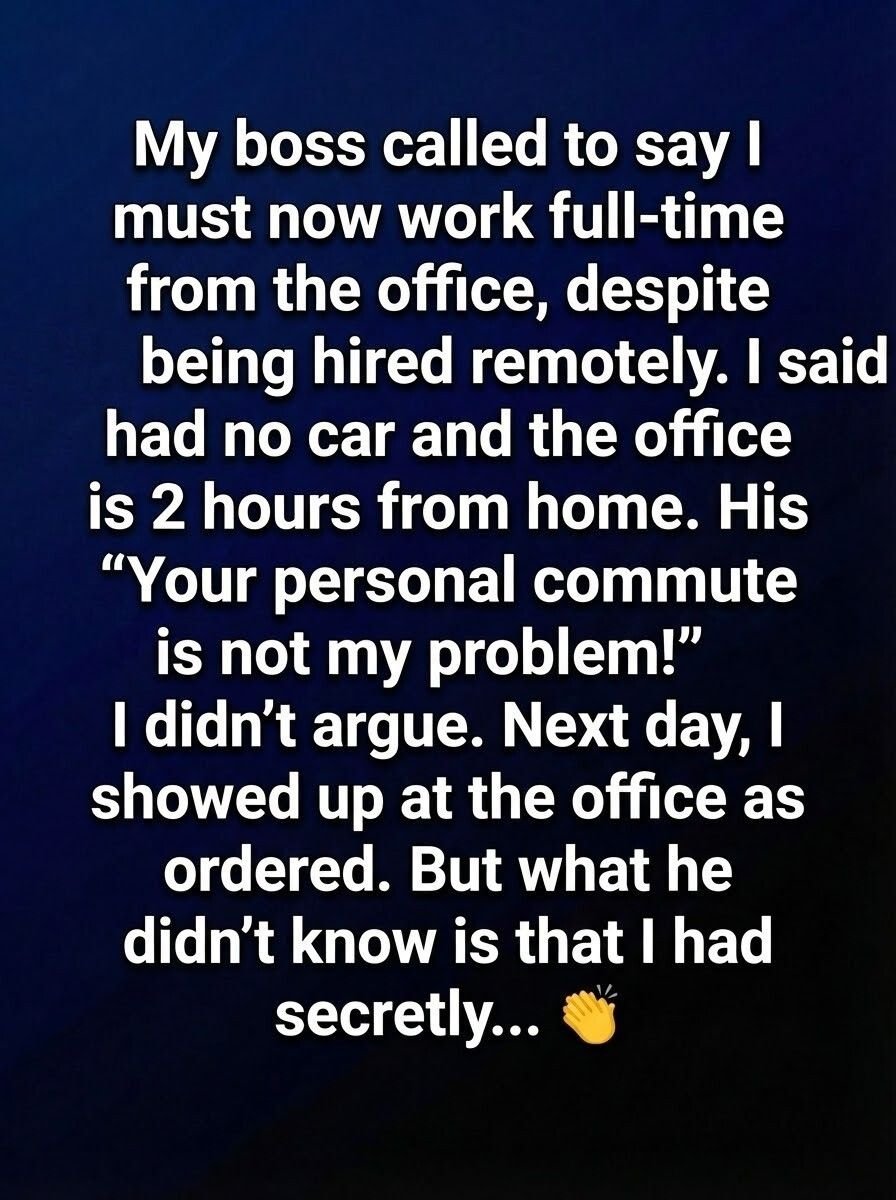
When my boss called late one afternoon, I expected nothing more than a quick check-in. Instead, he told me that effective immediately, I was required to work full-time from the office. I was stunned. I had been hired as a remote employee from day one. When I explained that I didn’t own a car and lived nearly two hours away, his response was cold and final: my commute was not his problem. I didn’t argue. I thanked him, hung up, and spent the evening thinking quietly.
The next morning, I did exactly what he asked. I woke before dawn, mapped out public transportation, and made the long trip into the office. Multiple transfers, crowded trains, and exhaustion followed—but I arrived on time.
I greeted my coworkers, took a seat, and worked as usual. I noticed the surprise on management’s faces. They hadn’t expected me to actually comply. I stayed professional, even though it was clear this situation couldn’t last.
What my boss didn’t know was that I’d been preparing for months. While working remotely, I had been sharpening my skills, updating my portfolio, and networking after hours. I understood that workplace rules can change suddenly—and that having options matters. That evening, after another draining commute home, I reread a job offer from a company that valued flexibility and communication.
The contrast was impossible to ignore. One workplace demanded obedience without consideration. The other offered trust and balance. The choice became clear. I resigned shortly after, respectfully and without drama. Walking away felt powerful, not risky. Showing up that day wasn’t about proving loyalty—it was about proving to myself that I deserved clarity, fairness, and respect. And I chose accordingly.