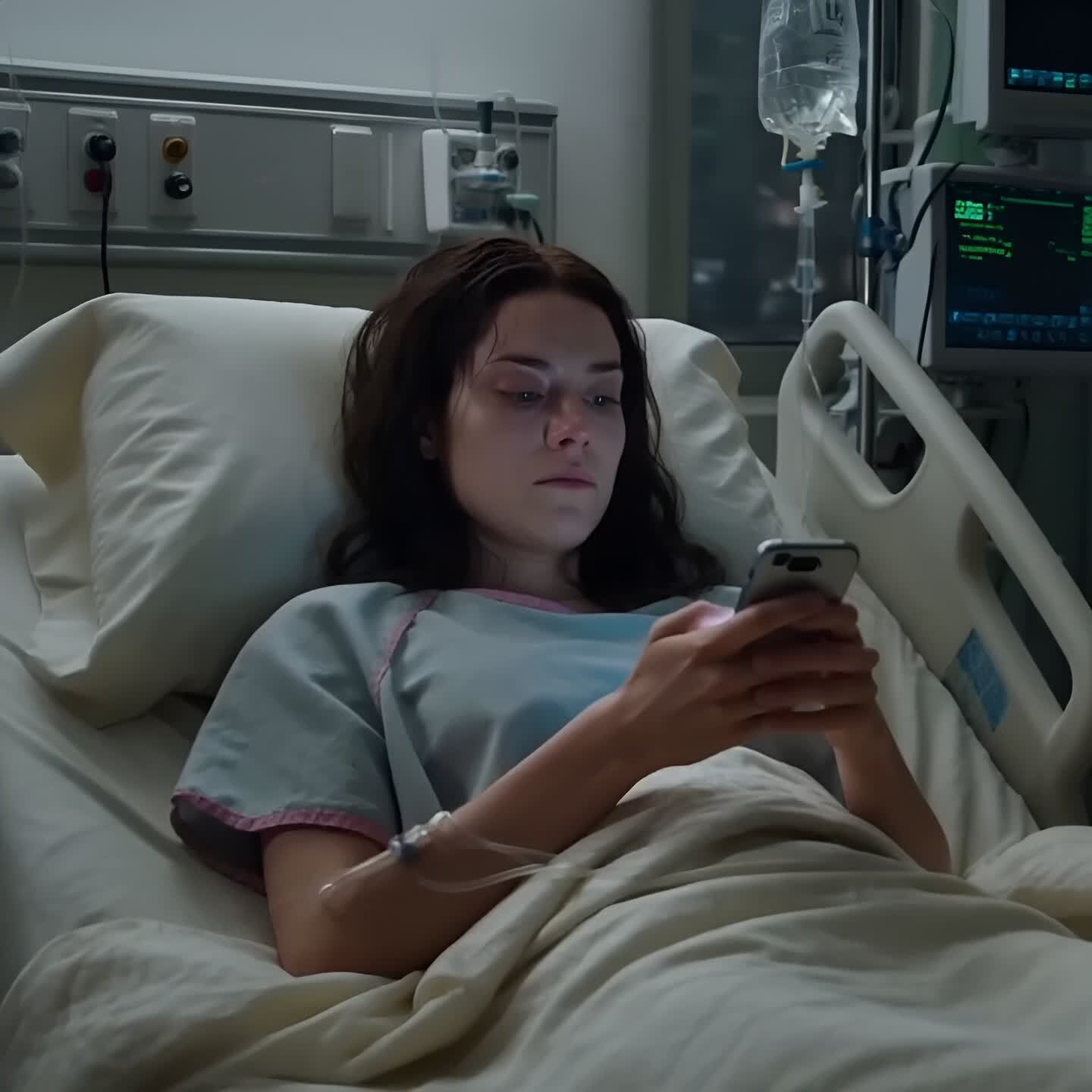
My name is Olivia Hart, and I collapsed at my own master’s graduation before I ever stepped on stage.
While doctors tried calling my parents, urging them to come, I lay on the cold ground, my cheek pressed to a strip of sun-warmed pavement, unable to feel my own hands.
They never answered.
They never showed up.
Instead, as I was being wheeled into the emergency room, my sister posted a smiling photo from a backyard barbecue with that caption—“Family day without the drama”—as if I’d planned to ruin their afternoon on purpose.
That was the moment something inside me finally snapped.
Not in pain.
In clarity.
I realized I had spent my entire life trying to be enough for people who didn’t even see me.
And for the first time, I decided to see myself.
I grew up in a small town in Pennsylvania, the kind of place where people waved from their porches, where the diner knew your order by heart, and where the neighbors judged your entire family through the glow of your Christmas lights.
Every December, my parents wrapped our little one-story house in strings of gold and red, draped garlands along the railings, and planted a plastic, lit-up reindeer on our patchy front lawn.
From the outside, we looked like the perfect American family—cozy, cheerful, stable.
But inside, the walls held a different story.
One built slowly and quietly.
Long before I was old enough to understand what favoritism even meant, I was the responsible one.
No one said it outright at first.
It was simply expected.
I made my bed before school.
I folded laundry without being asked.
I knew exactly how long to leave chicken in the oven because Mom often shouted instructions from the living room while helping my little sister, Sabrina, find her lost sparkly shoes.
By the time I was six, I could pack Sabrina’s backpack, slice apples for her snack, and braid her hair better than our mother ever did.
Looking back, I realized they treated me like a tiny adult long before I’d even stopped playing with crayons.
Sabrina, on the other hand, was the princess.
That word floated around our household as casually as the scent of Mom’s vanilla candles.
“Where’s my princess?” Dad would call out the moment he walked through the door, even if I’d been the one setting the table or hauling grocery bags in from the car.
Sabrina’s slightest frown was met with soothing voices and gentle hugs.
My tears were met with a tired sigh—or a reminder that life isn’t always fair.
Whenever Sabrina and I fought over toys, over space, over something as small as who got the bigger slice of cake, the blame fell on me.
“You’re older,” they’d say.
“You should know better.”
“Sabrina is sensitive.”
Sensitive became the shield she hid behind.
Strong became the box I was locked inside.
The earliest clear memory of unfairness I still carry happened the day we broke Mom’s favorite ceramic vase.
One of those tall cream-colored ones with hand-painted blue flowers.
We were playing tag in the living room, even though we weren’t supposed to.
Sabrina bumped into me.
I bumped into the vase.
Down it went.
Mom stormed in, eyes wide, and before I could explain, Sabrina burst into tears—big dramatic ones.
Mom immediately knelt beside her, cooing, brushing hair off her cheeks, asking if she was okay.
I stood there, silent, my heart pounding so hard I could feel it in my throat.
When Sabrina sobbed, “Olivia pushed me,” Mom didn’t question it.
She turned to me with a sharp, disappointed stare and ordered me to clean up the mess carefully so I wouldn’t cut myself.
Sabrina sniffled her way into Dad’s arms when he came home, telling him I was mean.
I don’t remember anyone asking if I was okay.
Birthdays were another reminder.
Mine were simple.
A small cake on the kitchen counter.
Two or three candles.
Sometimes a grocery store card signed by both of them at the last minute.
They’d usually come home late, tired, apologizing about work.
“We’ll make it up to you next year, sweetheart,” they’d say.
They never did.
But Sabrina’s birthdays?
Those were productions.
Banners.
Balloons.
Matching plates and cups with whatever princess character she was obsessed with that year.
The living room turned into a pink explosion.
She got piles of presents.
All her friends from school came over for backyard games and cotton candy.
I always stood at the edge of those parties, helping Mom refill lemonade pitchers or passing out slices of cake while Dad snapped photos of Sabrina blowing kisses at the camera.
I smiled because that was my role.
Smile.
Help.
Stand aside.
There was a phrase Dad repeated so often it became the soundtrack of my childhood.
“You’re strong, Olivia.”
“Don’t make a fuss.”
“Your sister needs more attention.”
“She’s fragile.”
I heard it when Sabrina took my toys.
I heard it when she ruined my school project with spilled paint and somehow cried her way out of blame.
I heard it when I tried to tell them I felt left out.
And each time Dad said it, something inside me folded smaller, tighter, until I believed needing comfort or help or love made me weak.
Strong meant silent.
Strong meant invisible.
I don’t think I truly understood what that belief did to me until years later.
But one memory stands out like a quiet bruise.
I was eight.
It was winter.
I had a fever that made my whole body feel heavy and floaty at the same time.
I curled up on the living room sofa with a blanket pressed under my chin, shivering.
I waited for Mom to sit with me, to stroke my hair the way she did with Sabrina whenever she sneezed once.
Instead, Mom and Dad rushed around getting Sabrina ready for her dance recital.
Her tiny red costume glittered under the living room lights.
Her hair was tied in a bun Dad called “picture perfect.”
She twirled once, giggling, while I tried to keep my eyes open.
When Mom finally noticed me on the sofa, she only said:
“We’ll be back in a couple hours.”
“There’s soup in the fridge if you’re hungry.”
They left in a hurry, Sabrina shouting:
“Wish me luck!”
As the door closed behind them, I watched the house get dark as the winter sun disappeared.
Wrapped in my blanket, alone with the sound of the heater kicking on and off.
I must have fallen asleep waiting for them to come home.
Even now, decades later, I can still picture that small living room, the dim lamp, the ticking wall clock, the ache behind my eyes.
Maybe that was the first night I learned what my place in the family was.
Maybe it was the first time my body understood that when I needed someone, no one was coming.
By the time I was old enough to put words to it, I’d already learned a quiet, painful truth.
Strength was just another word for enduring everything alone.
And maybe without realizing it, that was the day my body began practicing how to stay silent—how to keep going even when it was breaking—just like my heart would learn to do for years to come.
By the time I reached high school, the labels my parents had given us—me as the strong one, Sabrina as the sensitive one—had already settled into the foundation of our family like permanent ink.
I tried to believe things would change when I got older.
That responsibility and goodness would finally be seen instead of assumed.
So I threw myself into school.
I studied late into the night.
I volunteered at the library.
I worked part-time stacking books and organizing dusty shelves.
I dreamed quietly about a future where I could help people who felt as invisible as I often did.
I imagined myself becoming someone who listened.
Someone who cared.
Someone who didn’t walk past other people’s pain the way my parents had walked past mine.
That dream kept me steady.
It gave me something gentle to hold on to.
Sabrina, on the other hand, seemed to transform overnight into the kind of teenager every parent claimed to fear—but secretly excused.
She spent more time at the mall than at home.
Changed her hair color every two weeks.
Drifted in and out of trouble the way most girls drift between hobbies.
When she got caught vaping in the school bathroom, my parents said she was going through a phase.
When she cut class for an entire week to follow her older boyfriend around town, they grounded her for a day—but still let her go to a concert that weekend because she already had the tickets.
Every misstep she made was brushed off with a shrug and a sigh about how girls her age struggled.
Every small mistake I made felt like a mark against the perfect record I was expected to maintain.
But the moment that carved itself deepest into me happened on a rainy Wednesday evening during junior year.
Sabrina borrowed the family car without permission—a tan Toyota Camry Dad babied as if it were a second child—and scraped the side of a parked vehicle in the grocery store lot.
By the time she got home, shaking and babbling about how she could get expelled if the school found out she’d been off campus, Mom had gone white.
Dad paced in circles, trying to figure out how to contain the situation.
Then, almost in unison, they turned to me.
I remember the look on Dad’s face.
Desperate.
Stern.
Certain.
“Olivia,” he said, “you need to tell the officer you were the one driving.”
“Your sister can’t afford to have this on her record.”
“You’re responsible.”
“You can handle it.”
I wanted to say no.
I wanted to scream, Why is it always me?
But Sabrina was sobbing so loudly I couldn’t hear my own pulse anymore.
Mom kept rubbing her shoulders, saying:
“We can’t let this ruin her future.”
I don’t know what ruined me more—their expectation, or the ease with which I finally nodded.
So when the police officer came, notebook in hand, rain dripping from the brim of his hat, I lied.
I told him it was me.
Me who borrowed the car.
Me who misjudged the space.
Me who panicked.
That lie became an official note in a report.
A small but permanent bruise on my record.
Meanwhile, Sabrina stood behind the living room curtain, peeking out at the patrol car, untouched and clean.
Her future neatly protected behind the fragile curtain of being the sensitive one.
I remember standing in the hallway after the officer left, feeling the cold tile under my feet and the heavy silence between the four of us.
No one thanked me.
No one asked if I was scared.
Dad simply clapped a hand on my shoulder and said:
“That’s why we can count on you.”
In that moment, something inside me cracked.
Not loudly.
Not violently.
Just quietly enough for me to hear it.
I wasn’t a daughter.
I was a shield.
A solution.
A tool.
The loneliness that grew from moments like that seeped into parts of me I didn’t have names for yet.
I found myself lingering after school, staying in the library, where the quiet shelves and the soft hum of fluorescent lights felt safer than home.
One afternoon while I was reshelving a cart of novels, Ms. Parker, the school counselor, stopped beside me.
She had kind eyes—the kind that made you feel seen even when you weren’t looking for attention.
“Olivia,” she said, “you’ve been spacing out lately.”
“Everything okay?”
Those words—simple, ordinary—felt like someone had opened a window in a room I’d forgotten was stifling.
I hesitated, but something inside me finally spilled out.
I told her about the vase.
The birthdays.
The car incident.
The way I felt like a ghost in my own home.
She listened without interrupting.
Without minimizing.
Without telling me to be strong.
And when I finished, she said softly:
“You deserve a life where you’re not carrying everyone else’s weight.”
She was the first person to suggest I apply for colleges out of state.
“Boston,” she said.
Schools with excellent social work programs.
Real financial aid.
A chance to build a life that didn’t revolve around being useful.
The idea of leaving Pennsylvania felt impossible at first—terrifying, even.
But it also felt like breathing for the first time in years.
I filled out applications late at night when everyone else was asleep, typing silently in the dark, afraid my dreams would make too much noise.
Weeks passed.
Then months.
And one spring afternoon, an envelope arrived.
A partial scholarship to a university in Boston.
My heart raced.
My hands shook.
For the first time, the future felt like something I might be allowed to choose.
When I told my parents, the reaction was immediate and crushing.
“Boston?” Dad repeated, as if I’d announced I was moving to another planet.
“Why on earth would you go that far away?”
Mom crossed her arms.
“Who’s going to help out around here?”
“Your sister can’t handle things on her own.”
They spoke as if the decision rested not on my grades or my hard work, but on their needs.
Their convenience.
Their comfort.
For the first time, I pushed back.
My voice trembled, but it didn’t break.
“I can work part-time,” I said.
“I’ll cover whatever the scholarship doesn’t.”
“I need to do this for me.”
They didn’t applaud.
They didn’t hug me.
They didn’t even look proud.
Dad sighed—the heavy, dramatic kind meant to guilt me into backing down.
“Fine,” he muttered.
“But don’t forget, family comes first.”
That sentence felt like a chain being looped around my wrist.
But I tucked away the hurt.
Packed my bags.
Accepted the silence that followed.
The day I left our little Pennsylvania town, the sky was gray and the air smelled like rain.
I loaded my suitcases onto a bus that would take me to a life I could barely imagine.
I glanced once at the house with the maple tree out front.
At the windows my parents never looked out of for me.
And I told myself, If I work hard enough… if I become successful enough… they’ll finally see me.
As the bus pulled away, I whispered a quiet promise to myself:
If I become someone worth being proud of, maybe one day they’ll love me the way I’ve always loved them.
I didn’t know then how wrong I was.
Boston felt like another world when I first arrived—bigger, louder, faster than anything I’d ever known in Pennsylvania.
The air smelled like roasted coffee, damp brick, and ambition.
The sidewalks were always busy.
The subway screeched through tunnels like a restless animal.
The campus buildings rose tall and cold against the New England sky.
It should have been overwhelming.
Instead, I felt something I hadn’t felt in years.
Possibility.
For once, my future felt like it belonged to me.
I threw myself into college the way I’d thrown myself into everything else.
With quiet determination.
My days started before sunrise.
I worked the opening shift at a coffee shop two blocks from campus, tying my apron in the dim light while the manager unlocked the door.
I learned the rhythm of the espresso machine.
The steady hiss of steamed milk.
The smell of ground beans clinging to my clothes long after my shift ended.
At seven a.m., caffeine-fueled students rushed in, bleary-eyed and impatient, thrusting crumpled bills at me while tapping their shoes against the tile.
By eight-thirty, I was sprinting across campus to make my morning lecture.
Afternoons were spent in the library where I held a student job—reshelving books, sorting returns, wiping down tables still sticky from late-night study sessions.
It was quiet work.
Gentle work.
Exactly the kind of space I needed after years of living inside chaos I couldn’t name.
Sometimes, while pushing carts through the aisles, I’d imagine my younger self hiding between the shelves—tiny, tired, longing for quiet—finally finding it here.
Evenings were for studying.
Nights were for catching up.
Weekends were for picking up extra shifts whenever possible.
I lived on instant noodles, clearance-bin vegetables, and coffee I made by accident at the shop so I could drink it for free.
I didn’t go to parties.
I didn’t buy new clothes.
I didn’t explore the city.
Everything I earned went into survival.
Or at least it was supposed to.
It started small.
Fifty dollars here.
A hundred there.
Mom called one night during midterms, sounding stressed.
“Your dad’s hours got cut,” she said.
“We’re short on the electric bill.”
“Can you help out a little?”
I wired her a hundred dollars the next morning before buying groceries for myself.
A week later, Dad called about the water bill.
“It’s just temporary,” he said.
“You’re always so responsible.”
He said it like a compliment.
I heard the chains tightening.
Still, I sent another hundred.
Then came Sabrina.
Of course it did.
One afternoon while I was wiping down counters at the library, my phone buzzed with a message.
“Liv, can you please help?”
“My credit card is maxed and I need to pay rent or they’ll kick me out.”
A part of me wanted to ignore it.
Another part—the part shaped by years of You’re strong, Olivia—grabbed my wallet.
I sent money I couldn’t spare, telling myself it was just this once.
It wasn’t.
Every bad decision Sabrina made seemed to land at my feet.
When she overdrafted her checking account because she bought concert tickets instead of groceries, I covered it.
When she quit her job after two weeks because her manager “looked at her wrong,” I covered her rent again.
When she got into a minor fender bender and needed money for repairs, I skipped buying textbooks and borrowed them from classmates instead.
Each time I tried to push back, my parents reminded me:
“Your sister is under a lot of pressure.”
“You know she’s not as strong as you.”
And each time, the old guilt rose in my throat until I swallowed it down.
Some days I was proud of myself.
Helping felt good.
Meaningful.
I told myself family was worth sacrifice.
That love was measured in how much you were willing to give.
Other days, resentment sat heavy on my chest.
I’d walk past shop windows and see shoes or coats I desperately needed.
But the moment I reached for my wallet, I’d remember Sabrina’s messages—and close my hand again.
Want.
Reach.
Stop.
Send money home.
Eventually, my body began to protest.
One afternoon during sophomore year, I stood up too quickly in a lecture hall and the room spun violently.
The next thing I knew, I was on the floor surrounded by concerned classmates.
I brushed it off as dehydration.
Or lack of sleep.
A few weeks later, it happened again—this time on the bus ride to work.
The driver shook me gently awake, asking if I needed medical help.
I apologized, stepped off at the next stop, and convinced myself everything was fine.
I didn’t have time to be sick.
People needed me.
My family needed me.
And I had learned long ago my needs didn’t matter anyway.
Years passed in that rhythm.
Work.
School.
Send money.
Repeat.
Eventually, I graduated with my bachelor’s degree.
I remember holding the diploma in my hands, feeling the weight of it, thinking maybe—finally—someone would be proud.
I called my parents afterward, expecting excitement.
Maybe even a “We knew you could do it.”
Instead, Dad said:
“That’s great, Olivia.”
“Listen… Sabrina is in a tough spot again.”
And just like that, my accomplishment shrank into the background, swallowed by their never-ending emergencies.
Still, something inside me held on.
I found a job quickly after graduation—an entry-level social support position at a nonprofit in Boston.
It didn’t pay much, but it mattered to me.
I helped teenagers in crisis.
Families struggling with housing.
People who felt unseen by everyone around them.
Maybe I gravitated toward them because I understood that feeling too well.
My parents told everyone in Pennsylvania that their daughter worked in community services, as if it were their achievement.
They bragged to neighbors about how proud they were.
But when I called home, it was clear nothing had changed.
They still needed help.
Sabrina still needed rescuing.
And I was still the one expected to step up without hesitation.
I didn’t realize it then, but the path to my collapse began in those years—small sacrifices, quiet exhaustion, the weight of always being the strong one.
Looking back, those were the years my heart began whispering warnings I wasn’t ready to hear.
And my body—already strained—was only waiting for the moment it would finally give out.
By the time I settled into my job at the nonprofit, a quiet but persistent ache began forming at the back of my mind.
I loved the work I did, but the limitations of my role weighed on me.
I saw how much more licensed clinicians could do.
The doors that opened for them.
The salaries.
The impact.
I wanted that.
I wanted the training.
The deeper skills.
The chance to lift others in ways I had never been lifted myself.
And, quietly, I wanted the financial stability that had always slipped through my fingers like water.
So during one late-night shift at the office, I opened my laptop and began researching master’s programs.
Clinical social work.
MSWs.
Boston had some of the best in the country.
When I told my parents about my plan to apply, the reaction was instant and sharp.
“More school?” Dad scoffed.
“Why don’t you focus on working?”
“The family needs you.”
“Your sister is still trying to find her footing.”
Mom added:
“A master’s isn’t cheap, Olivia.”
“We can’t help you.”
“You know that.”
The implication was clear.
Anything I chose that didn’t directly benefit them was selfish.
I was expected to help.
Support.
Fill the gaps.
Not grow.
But something in me refused to shrink this time.
Maybe it was Boston’s air—colder and clearer than Pennsylvania’s.
Maybe it was the faces of the teenagers I helped every day.
The ones who said they wished they had someone like me in their corner.
Maybe it was simply that I was tired.
Tired of being used.
Tired of giving pieces of myself away like loose change.
So I applied to three programs.
I didn’t tell my parents until I received the acceptance email.
The financial aid package included a partial scholarship, permission to work while studying, and the option to take out student loans.
It wasn’t easy.
But it was possible.
For once, possibility felt like enough.
My father didn’t congratulate me.
He didn’t even pause to consider what it meant to me.
“So you’re taking out loans now?” he said.
“Great. Just great.”
“More debt.”
“What if something happens to us?”
“What if your sister needs help?”
Mom chimed in as if reading from a script:
“This is a lot, Olivia.”
“Are you sure you’re not doing too much?”
If only they knew how often I wondered the same thing.
But I simply said:
“Yes.”
“I’m sure.”
Once the semester began, my life became carefully balanced chaos.
I worked full-time at a community hospital where the halls always smelled faintly of disinfectant and something metallic that clung to the back of your throat.
I attended classes at night, rushing across the city with my backpack bouncing against my shoulder.
I studied during lunch breaks.
On the subway.
In the laundry room of my apartment building while waiting for my clothes to dry.
And every weekend, instead of resting, I covered shifts on a crisis hotline, listening to trembling voices on the other end of the phone, walking strangers back from the edge with soft, steady words.
But no matter how busy I was, my family always knew how to reach me.
The electricity bill was overdue.
Dad texted:
“Can you cover it?”
Sabrina lost her job again.
Mom said:
“She’s embarrassed.”
“Can you help with rent?”
They were behind on the car payment.
Another message.
“It’s only temporary.”
It was never temporary.
Every message felt like a hook sinking deeper into my skin, pulling me back into the role I thought I’d escaped when I left Pennsylvania.
But the guilt was stronger than the exhaustion.
So I sent money.
Sometimes a hundred.
Sometimes five hundred.
Sometimes more than I could reasonably spare.
I cut back on groceries.
Stopped buying new shoes, even when mine began to tear at the soles.
Cancelled every social plan.
Walked in the cold when I could have taken the train.
The irony of it all blurred into something almost painful one night during my hospital shift.
I had just finished counseling a patient who had survived a suicide attempt—a teenager whose parents dismissed her pain so completely she believed ending her life was the only way to be heard.
I sat with her for nearly an hour, telling her things I never told myself.
“Your feelings matter.”
“You deserve support.”
“You don’t have to carry everything alone.”
After she was settled safely with the psychiatric team, I stepped into the tiny staff break room, washed my hands, and checked my phone.
Two missed calls from Mom.
Three from Sabrina.
A text from Dad:
“We need help.”
“Bills are piling up.”
“Sabrina is overwhelmed.”
“Transfer something as soon as you can.”
I stared at the screen, numb.
A patient had just trusted me with her most fragile fears, and here I was—unable to hold my own boundaries.
I transferred the money under flickering fluorescent lights.
My ID badge still clipped crookedly to my shirt.
As I watched the confirmation appear on my banking app, a bitter laugh rose in my throat.
I spent my days teaching people how to build healthy boundaries.
Yet I didn’t have a single one of my own.
The first seed of awakening came during a late-night class on trauma-informed care.
My professor, a woman with silver hair and an impossibly gentle voice, said:
“If you give and give until you collapse, that isn’t love.”
“That’s self-abandonment.”
The room went silent.
Something inside me cracked.
Not the way it had when I protected Sabrina.
Not the way it had when my parents dismissed my dreams.
Deeper.
More dangerous.
Self-abandonment.
I had never heard a phrase that described my life so perfectly.
It haunted me.
It followed me.
But it didn’t stop me.
Not yet.
I wasn’t ready to let go.
Not of them.
Not of the guilt.
Not of the version of love I’d been trained to believe in since childhood.
It would take something bigger to break me open.
Something catastrophic.
Something that would come on the day I thought was supposed to be the proudest of my life.
The week before graduation felt like a blur of deadlines, shifts, and obligations piled so tightly together I could barely tell one day from the next.
The hospital hallways buzzed with overhead pages and the kind of exhaustion that clung to your skin long after you left work.
I was finishing my capstone paper, juggling night shifts in the psych unit, and covering emergency cases for a coworker who went home with the flu.
My laptop was always open.
Balanced on my knees during breaks.
Propped on the counter while I scarfed down reheated soup.
Glowing beside me during the short hours I slept.
Somewhere in the chaos, my body began to whisper warnings I refused to hear.
It started as a faint tightness in my chest.
Then shortness of breath.
I’d walk up a single flight of stairs and feel my pulse race as if I’d run a marathon.
My hands shook when I typed.
My vision blurred at night.
And the tiredness I felt wasn’t the usual I-need-a-nap kind.
It was bone-tired.
Soul-tired.
As if someone had drained the last bit of life out of me and I was still expected to keep going.
A fellow clinician, Mark, noticed before I admitted it.
One evening after I assisted with a crisis assessment for a teenager admitted for self-harm, he caught me leaning against the wall outside the unit, my breathing uneven.
“Liv, you okay?” he asked.
“You don’t look good.”
I tried to laugh it off, but even that felt heavy.
“Just finals week,” I said.
“Once graduation’s over, I’ll sleep for a year.”
He wasn’t convinced.
“Go get checked out.”
“Seriously, you’re pale.”
But I shook my head.
“I just need to make it through one more week.”
“I’ll rest after.”
He opened his mouth to argue.
Then another emergency page pulled him away.
And just like that, the moment passed.
I pushed the dizziness down.
Hid it somewhere between my ribs.
Pretended it was nothing.
I’d gotten good at pretending.
My whole life was pretending.
Pretending I wasn’t tired.
Pretending I didn’t need help.
Pretending I could handle everything alone.
Meanwhile, my family buzzed louder than my health.
My parents called every other night to remind me how proud they were and how they couldn’t wait to post the graduation photos online.
“I’ll take videos of you walking across the stage,” Mom said, excitement dripping from her voice.
“Everyone on Facebook will be so impressed.”
“My daughter, the master’s graduate.”
It sounded sweet on the surface.
I knew better.
It wasn’t about me.
It was about the image.
How they could use my accomplishment to polish their reputation back home.
Sabrina, of course, had her own commentary.
“Just don’t be dramatic, okay?” she said during a phone call, chewing gum so loudly I had to hold the phone away from my ear.
“This is supposed to be a happy weekend.”
“You always ruin the vibe when you cry or act stressed.”
I remember standing in the hospital stairwell, listening to her voice echo off concrete walls, wondering if she had ever once considered that my stress came from carrying the weight of our entire family.
And then—predictably—the true crisis arrived.
Three days before graduation, Sabrina’s name flashed across my screen.
Her message was long, frantic, filled with screenshots and threats.
She had defaulted on a credit card tied to some “business opportunity” she swore would make her rich.
The company claimed she owed thousands.
They were threatening to sue.
“Liv, please,” she typed.
“If this goes to court, I’ll die.”
“I need $4,000 today.”
Today.
I didn’t even have $4,000.
Not really.
But my parents called within minutes, voices shaking as if they were the ones being sued.
“You have to help her,” Mom cried.
“She’s weak.”
“You know it.”
Dad chimed in.
“If this goes on her record, it’ll ruin her future.”
“You’re the only one who can fix this.”
That line—You’re the only one who can fix this—was one I’d heard my whole life.
Every time it burrowed deeper under my skin.
I sat in the staff break room, the smell of microwaved noodles hanging in the air.
My scrubs were smeared with hours of work.
I stared at the numbers in my bank account.
It wasn’t much.
It was everything I had.
My graduation gown was still in its plastic bag.
My final deadlines buzzed as notifications.
And I transferred the money.
Almost all of it.
My hands trembled—not from regret, but from exhaustion so heavy it felt cemented inside my bones.
“Thank you, Liv.”
“You’re the best sister ever.”
Sabrina texted minutes later, followed by a pink heart emoji.
No apology.
No acknowledgement.
Just a transactional thank you.
As if I’d handed her a napkin instead of my future stability.
That night, the night before graduation, I barely slept.
I stayed up editing my final paper, double-checking citations, ironing my graduation gown until my arms felt like they were made of lead.
The dizziness came in waves.
My chest felt tight.
My legs shook when I stood.
At one point, brushing my teeth, I caught my reflection in the mirror and froze.
Dark circles bloomed under my eyes like bruises.
My face looked hollow.
Almost translucent.
As if the girl staring back at me was fading.
My heart thudded unevenly.
Each beat too heavy for my chest to hold.
But I still whispered:
“Just get through tomorrow.”
As if a ceremony could refill everything life had drained.
I set my alarm.
Laid out my gown.
Crawled into bed with the room tilting around me.
The last thing I remember thinking before I drifted into a shallow, uneasy sleep was:
I just need to cross that stage once.
Just once.
I didn’t know—couldn’t have known—that the price of just getting through tomorrow would be my own body collapsing under the weight of everything I refused to let go.
Graduation morning arrived wrapped in the kind of bright, cold sunlight Boston is famous for in late May.
The kind that sparkles on every surface but never fully warms your skin.
I felt it on my face as I walked across campus in my gown.
The fabric hung heavy against my weak shoulders.
The cap tugged slightly at my hair.
The university’s main lawn had transformed into a sea of white folding chairs arranged in perfect rows, stretching from the stage all the way to the back fence.
Banners hung from lampposts, trembling in the breeze.
A brass band played cheerful, triumphant notes that cut through the morning air.
Families filled the aisles, waving small flags with their children’s names printed on them, holding signs painted with glitter.
WE’RE PROUD OF YOU.
YOU DID IT.
MASTER’S GRADUATE.
Everywhere I looked there were hugs and laughter and camera flashes.
I found my seat among hundreds of graduates.
My heartbeat was loud.
My breath was shallow.
The dizziness from the night before lingered at the edges of my vision like fogged glass.
I scanned the bleachers, squinting past the sun glare, trying to spot my parents.
Or Sabrina.
Nothing.
I searched again.
Bouquets.
Toddlers on shoulders.
Friends waving wildly.
But not my family.
A vibration in my pocket made me flinch.
A text from Mom.
“Traffic jam.”
“Don’t worry, we’ll get there soon.”
“Go ahead, we’ll be there soon.”
I stared at the message, trying to ignore the sinking feeling in my chest.
I typed back a simple “Okay,” even though my fingers trembled.
Maybe they really were coming.
Maybe they cared enough to try.
I clung to that thought like a rope.
The ceremony began.
The university president spoke about resilience and perseverance and the meaning of service.
I heard every word.
Absorbed none of them.
My mind kept circling back to the empty stretch of seats where my family should have been.
When the dean began calling names, applause erupted for each graduate.
Some names were met with entire rows screaming and chanting.
When they reached the H’s, my pulse quickened.
My palms grew damp.
I swallowed hard, trying to steady my breath.
“Olivia Hart.”
For a split second, everything felt silent.
Even the band.
Even the wind.
I stood, gripping the edge of my gown to steady myself.
My legs felt heavy and numb, as though they belonged to someone else.
I forced a smile as I stepped into the aisle.
The world around me slowed.
My ears rang.
The applause blurred into one continuous, distant hum.
I tried to draw a full breath.
I couldn’t.
My chest tightened painfully.
The stage lights whirled in front of my eyes like melting stars.
I took one step.
Then another.
Then the ground tilted.
My knees buckled.
A sharp gasp rose from the audience, followed by scattered shouts.
Someone dropped a water bottle near my feet.
My vision tunneled into darkness.
The last thing I heard was the muffled echo of my name before everything went silent.
When I opened my eyes again, bright fluorescent lights pierced through the haze.
The antiseptic smell of the emergency department filled my lungs.
I was lying on a hospital bed.
A thin blanket draped over me.
Machines beeped steadily at my side.
A nurse adjusted the IV line in my arm.
A doctor stood at the foot of my bed, flipping through a chart.
His expression was concerned but calm.
“Olivia, can you hear me?” he asked.
I nodded weakly.
My tongue felt thick.
He explained in calm, measured sentences.
“Severe exhaustion.”
“Possible combination of sleep deprivation, stress-induced arrhythmia, and dehydration.”
“Your body essentially forced you to stop.”
His words floated around me like smoke.
I listened.
But a different question burned inside me.
“Did my parents come?” I whispered.
The doctor paused.
Just long enough for the truth to sharpen.
“We called the number listed as your emergency contact,” he said carefully.
“We left several voicemails.”
“They didn’t arrive.”
“It seems they were busy.”
His eyes softened, as if he wasn’t sure whether to say more.
I closed mine—not because I was tired, but because the alternative was letting him see the crack forming in me.
Later, when my hands stopped shaking enough to reach for my phone, I unlocked the screen with trembling fingers.
Notifications flooded in—messages, missed calls, and one tagged photo from Sabrina.
I tapped it, expecting an update.
Maybe a question about how I was feeling.
Instead, a bright, cheerful picture appeared.
My parents’ backyard.
The old wooden fence.
The grill smoking.
Sabrina in the center holding a glass of rosé, smiling wide.
Mom and Dad on either side of her.
Plates piled with food surrounded by friends.
Sunset painted the sky orange behind them.
The caption read:
“Family day without the drama. Best decision ever.”
The room tilted slightly.
Not my blood pressure.
Just reality.
I zoomed in.
Studied their faces.
Their laughter.
Their comfort.
Their ease.
Then I looked down at the IV tape on my arm.
The bruising beneath it.
The pale hospital gown.
I lay under harsh hospital lights while my family celebrated not having to deal with me.
Shock didn’t come.
Shock would have felt like something.
Instead, there was numbness so deep it almost felt gentle.
A final confirmation of a truth my heart had known for years but refused to accept.
I had never really belonged there.
Not as a daughter.
Not as a sister.
Not even as a thought worth showing up for.
I lowered the phone slowly, staring up at sterile ceiling tiles, listening to the soft beep of the monitor beside me.
My throat tightened.
No tears came.
Not this time.
Something in me broke silently.
A fracture so clean it felt like clarity.
“Okay,” I whispered to no one.
“I understand now.”
For the first time in my life, I wasn’t saying it out of obedience.
I was saying it out of awakening.
The first full day in the hospital felt like waking up inside someone else’s life—one where the body I’d always forced into obedience finally mutinied.
I lay there surrounded by machines that monitored every beat and breath.
And for the first time in years, I had nowhere to run.
Nothing to give.
Dr. Wittmann visited each morning with a clipboard and the kind of expression people reserved for tragic news.
He explained the arrhythmia, the cortisol levels, the dehydration, the signs of neurological strain from chronic sleep deprivation.
“If you continue at the pace you’ve been going,” he said one morning, pulling up a stool beside my bed, “you’re putting yourself at risk of long-term cardiac complications.”
“Severe anxiety disorder.”
“Major depressive episodes.”
“You are extremely lucky you collapsed here, not alone somewhere.”
His words didn’t frighten me the way they should have.
Instead, they felt embarrassingly predictable.
Of course I was here.
Of course my body finally broke.
I had pushed it for years.
Ignored it.
Denied it.
And now it was collecting a debt I couldn’t delay anymore.
Later that afternoon, I met with the hospital psychologist, Dr. Lang.
The team had flagged my case as one requiring mental health intervention.
The irony tasted bitter—the helper becoming the patient.
Sitting across from her in a small consultation room, I felt stripped bare.
She asked gentle but piercing questions about work, school, sleep, family.
Then, almost casually, she asked:
“If you were discharged tomorrow, who would you call to take you home?”
The silence that followed stretched unbearably wide.
I opened my mouth to answer.
Nothing came out.
Not Mom’s name.
Not Dad’s.
Not even Sabrina’s.
Because I knew—with a clarity that felt like a slap—that none of them would come.
Not reliably.
Not willingly.
Not lovingly.
My throat tightened.
I pressed my nails into my palm beneath the blanket.
Dr. Lang didn’t rush me.
She simply nodded as if she already understood the shape of my pain.
“It’s okay if the answer is ‘no one,’” she said softly.
“But it’s important to know the answer.”
That night, after she left, I cried for the first time since collapsing.
Silent, exhausted tears that soaked into the stiff hospital pillow.
Not because I wanted my family there.
Because I finally admitted they wouldn’t be.
The next day, Jenna arrived.
Jenna—my coworker, my classmate, the closest thing I’d ever had to a friend who actually showed up without needing anything from me.
She pushed open the door with a burst of energy the sterile room had never seen, carrying a paper bag that smelled like fresh soup and a small bouquet of wildflowers wrapped in brown paper.
“You look like crap,” she said cheerfully.
Then paused, her eyes softening.
“But you’re alive.”
“Thank God.”
She sat beside my bed, unpacking the food, chattering about unit drama at work, ridiculous papers due next week, the guy she was seeing who couldn’t tell the difference between a boundary and a suggestion.
Then, after a moment of quiet, she looked at me seriously.
“I heard the hospital couldn’t reach your parents,” she said.
“So if you want, I can be your emergency contact.”
“I mean it.”
The words hit me with more force than any diagnosis.
Someone wanted to be responsible for me.
Not out of obligation.
Not out of manipulation.
Out of care.
For the first time, I understood what people meant when they talked about chosen family.
The next morning, when the nurse brought in the emergency contact form, my hands trembled slightly.
As I signed Jenna’s name and crossed out the numbers that had belonged to my parents for years, it felt like cutting a thread I’d been tangled in since birth.
A quiet, painful liberation.
With that clarity came a strange burst of resolve.
I asked the nurse for my laptop.
When it arrived, I opened my banking app and stared at the numbers that had drained away over the years.
Deposits to my parents.
Transfers to Sabrina.
Automatic payments I’d set up out of habit or guilt.
I clicked through every line.
Every subscription.
Every shared account.
My stomach twisted as I realized how much of my life I had forfeited without even realizing it.
I began shutting things down one by one—canceling automatic payments, removing myself from shared bills, closing the joint account my parents insisted would make things “easier.”
When I discovered two utilities were still in my name at my parents’ house, I emailed the companies directly.
Then I booked an online appointment with a financial attorney.
A small decision with enormous implications.
It wasn’t revenge.
Not yet.
It was preparation.
Protection.
For once, I wasn’t moving for their benefit.
I was moving for mine.
That evening, lying in the dim glow of the monitor beside me, I stared at the IV taped to my arm.
The bruising around the insertion site had turned deep purple, spreading like ink beneath my skin.
The room hummed with a steady rhythm of machines measuring my survival.
And I thought—with an honesty that chilled me—if I had died that day, how long would they have cried?
A minute?
An hour?
A single Facebook post?
Or would Sabrina have simply uploaded another smiling picture with the caption:
“Less drama now?”
The thought didn’t devastate me the way it once would have.
It solidified something.
A realization so sharp it felt like stepping into cold, clean air.
For the first time in my life, I no longer wanted to live in a way that kept them happy.
I no longer wanted to survive so they could use me.
I didn’t belong to them anymore.
My life.
My energy.
My future.
They were mine.
And lying there under fluorescent lights, I made a quiet promise to myself.
I would not abandon myself again.
Not for them.
Not for anyone.
A few days passed in the hospital, each one slow and strangely quiet, as if time itself was afraid to move too quickly around someone so fragile.
My body was still tethered to an IV.
Cold sensors clung to my skin.
I was stable, Dr. Wittmann said, but not yet strong.
My limbs felt heavy.
My breath thin.
My head wrapped in cotton.
But inside, where guilt and duty used to grip me, I felt something loosening.
Something shifting.
I didn’t call my family.
I didn’t text them.
I didn’t even open their earlier messages.
I simply waited.
Not out of strategy.
Not yet.
Out of curiosity.
If I disappeared from their world for a few days, what would they do?
For most of my life, I believed the answer would be panic.
Concern.
Love.
But lying there, half-broken, recovering from collapse, I wasn’t so sure.
On the morning of the third day, my phone began vibrating violently against the metal bedside table.
At first, I ignored it.
Then the screen lit up again and again and again.
The sound buzzed like an alarm that wouldn’t stop.
Annoyed, I reached over and switched off silent mode.
The vibrations grew even more frantic.
When I finally unlocked the screen, everything froze.
Seventy-five missed calls.
From Mom.
From Dad.
From home.
From Sabrina.
Dozens of messages flooded the notification center.
Long, chaotic threads that came in waves.
Some accusatory.
“Why are you ignoring us?”
“What do you mean by silence?”
Others trying guilt.
“We’re worried.”
“You can’t just disappear like this.”
Then the tone shifted into desperation.
“Pick up.”
“It’s urgent.”
“Call now.”
“Liv, please.”
But the one that sliced through everything was a single text from Dad.
Short.
Commanding.
As if I were a tool left out in the yard instead of his daughter lying in a hospital bed.
“We need you. Answer immediately.”
The words triggered nothing warm in me.
No flicker of hope.
No sense of belonging.
Just a coldness spreading through my chest.
This wasn’t about love.
They didn’t know I was in the hospital.
They weren’t panicking because they thought I was hurt.
They needed something.
And after a lifetime with them, I knew exactly what it meant when they needed me.
Instead of calling back, I sat there breathing through the ache in my ribs and scrolled through the messages in reverse.
The earliest ones were almost mocking in contrast.
Dad had sent a picture of their backyard barbecue.
Another one.
Different angle.
Accompanied by:
“Another great family day. Shame you missed it.”
Mom replied with emojis.
Sabrina posted a selfie by the grill with:
“Better without the drama.”
I stared at the images.
Then watched as hours later the tone darkened.
“Liv, answer your phone.”
“Pick up.”
“We need you.”
“Sabrina’s in trouble.”
“Don’t you dare ignore us.”
My pulse steadied—not from calm, but from confirmation.
I kept scrolling.
And soon, bits and pieces of the truth formed a shape.
Messy at first.
Then clearer with every message.
Sabrina had been in a car accident.
A serious one.
She’d been driving recklessly.
Possibly intoxicated.
She hit another vehicle.
Insurance wouldn’t cover the full damages.
The other driver was threatening legal action.
There were police reports.
Court documents.
A bank.
My stomach tightened as I read further.
A sick familiarity washed over me.
At some point—God knows when—my parents had used an old digital copy of my signature.
They had put my name on a loan.
Not a small one.
A substantial sum.
In the messages, Mom tried to downplay it.
“It’s just a technical thing.”
“Don’t overreact.”
“We did it to help Sabrina.”
“She needed a co-signer.”
Then the truth sharpened.
The bank now needed my confirmation.
My physical signature.
My voice on the phone.
The documents had reached the stage where my direct involvement was legally required.
Without it, everything they owned—everything they feared losing—was at risk.
Of course they needed me.
Not because I collapsed.
Not because I was hurting.
Not because I was their daughter alone in a hospital room.
They needed me because their lies finally caught up to them.
My hands trembled—not out of fear.
Out of hollow, exhausted anger.
The IV tugged as I shifted.
The needle pressed deeper into my skin.
I thought about the nights I stayed up working.
The money I sent home.
The sacrifices I made so they could pretend our family was functional.
And still, even now, they saw me not as a human being.
But as a solution.
A safety net.
A wallet with a pulse.
I opened Dad’s last message again.
“We need you. Answer immediately.”
The entitlement was staggering.
The assumption that I would always pick up.
Always fix.
Always save.
Even from disasters they created themselves.
A slow breath left my chest as I stared at my bruised arm.
The cold room.
The steady beep.
And there it was—the truth, as undeniable as the antiseptic smell.
Even lying here, half-broken, they still didn’t see me.
They didn’t see a daughter.
They saw what I could provide.
What I could cover.
What I could sacrifice.
I leaned back into the stiff pillow, letting the numbness settle.
With a clarity that felt like steel cooling into shape, I whispered the words that closed the chapter of my old life:
“Even now, with needles in my arm, they don’t see a daughter.”
“They see a walking wallet.”
For the first time, I didn’t feel guilt for thinking it.
I felt truth.
The morning after the storm of missed calls, the hospital room felt colder than usual.
Or maybe it was just me—more awake, more aware, stripped of the fog I’d lived under for years.
The nurse had just changed my IV bag.
Clear liquid dripped like a metronome.
Steady.
Indifferent.
My phone sat on the rolling tray beside me, black screen reflecting fluorescent lights like a tiny, fragile mirror.
I stared at it for a long time.
If this conversation was going to happen—and it clearly needed to—I wasn’t going into it alone.
Not this time.
I messaged Jenna first.
Then I opened my laptop and logged into the video meeting with the financial attorney I’d contacted days earlier.
When both of them were present—faces glowing on the screen like calm anchors—I finally reached for the phone.
My fingers hovered for only a second before I pressed call.
Then I switched to speaker.
Mom answered on the first ring, sobbing so loudly it almost distorted the sound.
“Olivia!”
“Thank God!”
“How could you do this to us?”
“Do you know you made your parents worry to death?”
Dad’s voice cut in, equally dramatic.
“We thought something happened.”
“Why would you scare us like that?”
I leaned back against the stiff pillow, letting their theatrics bounce harmlessly off white walls.
“Worried… to what extent?” I asked softly.
“Because when the doctors called to tell you I collapsed at my graduation ceremony…”
“You didn’t show up.”
“You didn’t even call back.”
The silence that hit next was thick.
Heavy.
Guilty.
But not the kind of guilt that comes from love.
The kind that comes when masks slip and people scramble for new excuses.
Dad recovered first.
“Don’t bring up the past right now,” he snapped.
“This is not the time.”
“Your sister is in trouble.”
“The family needs to stand together.”
Mom added quickly:
“Family doesn’t abandon each other.”
“Your sister is in crisis.”
“You’re the most successful one.”
“If you don’t help, then who will?”
There it was.
The script.
My achievements only mattered when they could be used.
My stability only mattered when it could be drained.
My worth only existed in what I could provide.
But for once, their lines didn’t pull me in.
They pushed me out.
I kept my voice calm.
Almost steady.
“My doctors say I collapsed because I’ve been burning myself out,” I said.
“Work.”
“Stress.”
“No sleep.”
“No boundaries.”
“Do you know why?”
“Because every time something happened to Sabrina, you called me.”
“Every bill.”
“Every mistake.”
“Every crisis.”
“I’ve been carrying all of it alone.”
Dad scoffed.
A harsh, ugly sound.
“You always think you’re the victim.”
“We raised you.”
“We gave you everything.”
Everything.
The word nearly made me laugh.
“Everything,” I repeated, quietly enough to make him pause.
“You gave Sabrina protection.”
“You gave her support.”
“You gave her excuses.”
“You gave her second chances.”
“Third chances.”
“Tenth chances.”
“What exactly did you give me?”
“Besides responsibility and silence.”
Mom inhaled sharply, wounded.
“We did our best.”
“You’re twisting things.”
“Am I?” I asked.
Jenna watched silently from the laptop screen.
Her face steady.
The attorney took notes.
Dad’s frustration cracked into anger.
“Stop talking back.”
“This is about your sister’s accident.”
“She’s facing lawsuits.”
“The loan is in your name.”
“You need to fix it.”
I closed my eyes for a moment, breathing slowly, feeling my heartbeat steady against the monitor’s beep.
When I opened them again, something stronger than fear filled me.
Choice.
“Actually,” I said, “the loan is not my responsibility.”
“You used a scan of my signature illegally.”
“The bank needs my confirmation now, and I’m not giving it.”
Dad exploded.
“Are you crazy?”
“You have to sign!”
“If you don’t, we could lose the house!”
Mom started crying harder.
“You’re destroying this family!”
And then—like flipping a switch—everything inside me went still.
“This family left me alone in the hospital,” I said slowly.
“If that’s what you call family…”
“Then I choose not to belong anymore.”
The words hung in the air like the first crack of thunder before a storm.
But instead of fear, I felt a strange lightness.
Like setting down a burden I didn’t know how to name.
Dad’s voice turned sharp and venomous.
“You’re ungrateful.”
I didn’t flinch.
I didn’t defend myself.
I didn’t negotiate.
The version of me who once would have apologized, cried, begged, or reasoned was gone.
I breathed in, remembering Dr. Lang’s gentle voice.
My professor’s words about self-abandonment.
The years of exhaustion carved into my skin.
And then, without thinking twice, I finally chose myself.
“No,” I said.
“I will not sign.”
“I will not pay.”
“I will not save anyone anymore.”
Mom gasped as if the word itself had struck her.
Dad sputtered in disbelief.
I continued, steady and unshaken.
“I’ve already spoken with my attorney.”
“I’m removing my name from every account, every bill, every loan, every shared document.”
“You no longer have permission to use my signature or my information.”
“If you do—if you try anything else—I’ll pursue legal action.”
“You wouldn’t dare,” Dad shouted.
“I would,” I replied.
“And I will.”
The truth settled heavily between us.
They weren’t losing me that day.
They had lost me years ago.
This was just the moment they finally realized it.
I didn’t scream.
I didn’t cry.
I didn’t apologize.
I simply lifted my finger, pressed the red button, and ended the call.
Then—with the same quiet decisiveness—I blocked each number.
Mom.
Dad.
Sabrina.
One by one.
Clean.
Final.
The room felt strangely warm after that.
As if someone had opened a window I didn’t know existed.
I eased back against the pillows.
The IV line tugged gently at my arm.
For the first time, the weight I’d carried my entire life—the invisible backpack stuffed with guilt and expectation—slid off my shoulders.
Lying there, listening to the steady rhythm of the heart monitor, I felt lighter.
As if I had finally returned to myself.
As if I had taken my first real breath in years.
Six months passed.
Then nearly a year.
And the world rearranged itself around me—not violently, not dramatically, but gently.
Like a tide pulling back to reveal land I hadn’t noticed before.
Healing didn’t happen all at once.
It arrived in small, steady moments.
The first morning I woke up without dread tightening my chest.
The first meal I ate without calculating how much money I “should” be sending home.
The first time I said no without apologizing or panicking afterward.
I continued therapy every week.
At first, I sat stiffly in Dr. Lang’s office, unsure how to fill the silence.
But the more I spoke, the more I unraveled years of swallowed words.
The lighter my breath became.
We talked about boundaries.
Grief.
Trauma patterns.
The kind of childhood that forms a person who mistakes self-abandonment for love.
She taught me how to recognize the old guilt when it slithered back into my mind.
How to stop reflexively giving.
How to choose rest without shame.
For the first time in my life, healing wasn’t something I had to earn.
It was something I was allowed.
Physically, my recovery was slow but steady.
I reduced my work hours.
Took more breaks.
Slept more than I had in the last decade combined.
My heart stabilized.
My hands stopped shaking.
Color returned to my face.
Little by little, my body forgave me.
I moved out of the cramped apartment I’d once worked myself sick to afford and found a small studio in a quiet Boston neighborhood—sunlit, warm, with hardwood floors that creaked softly under my feet.
I decorated it in a way that felt like a conversation with myself.
Shelves full of books.
Thriving potted plants.
Photos from hikes with Jenna.
A candle that smelled like cedar and safety.
Every detail mattered.
Every detail said:
This home belongs to you.
Career-wise, things shifted too.
With my master’s finalized and my health improving, I applied for a clinical position at a youth support center across the river.
When they offered me the job—a role with a reasonable caseload, better pay, and supervisors who valued boundaries—I cried in my car for ten minutes before calling Jenna.
Not because I was overwhelmed.
Because someone finally wanted me without trying to take from me.
Working with teenagers who reminded me of my younger self felt like purpose.
Not duty.
And it felt like life giving something back, one gentle piece at a time.
With the money I no longer funneled into my parents’ emergencies, I created a small scholarship fund.
Nothing fancy.
Just enough to help one or two social work students a year—specifically those who came from chaotic or neglectful families.
It felt right.
Like alchemy.
Turning years of pain into support for someone who might never hear “I’m proud of you” at home.
My chosen family grew naturally.
Jenna, loud and loving and fiercely protective.
A few coworkers who understood exhaustion on a visceral level.
A small support group filled with people who also came from families where love was conditional and help was currency.
We celebrated each other’s wins.
Therapy milestones.
New jobs.
Tiny promotions.
Birthdays with homemade cupcakes.
One evening, they surprised me with a small celebration for receiving my clinical license.
Nothing extravagant.
Just takeout food, laughter, and a card they all signed with the words:
“We’re proud of you.”
No one had ever said that to me without expecting something in return.
I cried quietly in the kitchen while they joked in the living room, letting the warmth in my chest seep into places I thought were permanently numb.
As for my parents and Sabrina, information trickled in through distant acquaintances, old neighbors, and occasional Facebook posts I didn’t ask to see.
Their financial troubles worsened after I cut ties.
One of their properties was repossessed.
Sabrina faced legal consequences for the accident and had to attend mandated classes.
My parents scrambled without the safety net I once provided.
From what I heard, they began turning on each other, each blaming the other for the fallout.
They sent emails sometimes—long, meandering apologies filled with excuses.
We were stressed.
We didn’t know the whole situation.
Families fight.
You misunderstood.
Not once did they say:
We hurt you.
Not once:
We’re sorry.
Not once:
We should have been there when you collapsed.
I read their messages once.
Then archived them without replying.
Not out of hatred.
Not even out of anger.
Because healing had shown me something I’d never understood before.
I was not responsible for fixing people who broke me.
One evening in early spring, the air still crisp but the trees just beginning to bud, I returned to my university for the first time since my own collapse.
A new cohort of master’s students was walking the stage.
Gowns fluttered in the wind.
Tassels swung with each step.
I sat in the back row of the crowd, anonymous among cheering families and friends.
Instead of pain, I felt a soft nostalgia settle over me.
The keynote speaker stepped up to the podium and began talking about boundaries, self-worth, and the courage to walk away from people who use love as leverage.
Her voice rang through the courtyard, steady and bright.
Sometimes, she said, choosing yourself means losing a family you never truly had.
The words sank into me like warm sunlight.
I placed a hand on my chest.
Felt the calm, even rhythm of my heartbeat.
Strong.
Steady.
Mine.
I realized then I wasn’t sad anymore.
Not angry.
Not grieving.
Just free.
As the applause rose around me, I whispered the truth I had carried through the hardest months of my life.
Words that finally felt like closure instead of confession.
On the day I collapsed on that stage, the doctors called my parents.
They never came.
When I woke up in the hospital, my sister posted a photo.
Family day without the drama.
Days later, still weak and covered in wires, I saw seventy-five missed calls and a message.
We need you.
Answer immediately.
Without thinking twice, I did what I should have done long ago.
I didn’t answer as the obedient daughter they expected.
I answered as the woman I had finally become.
That year, I lost a family.
But that year, I found myself.
And as the wind rustled through the graduation banners overhead, I knew I would never go back to who I was before.
Not ever again.