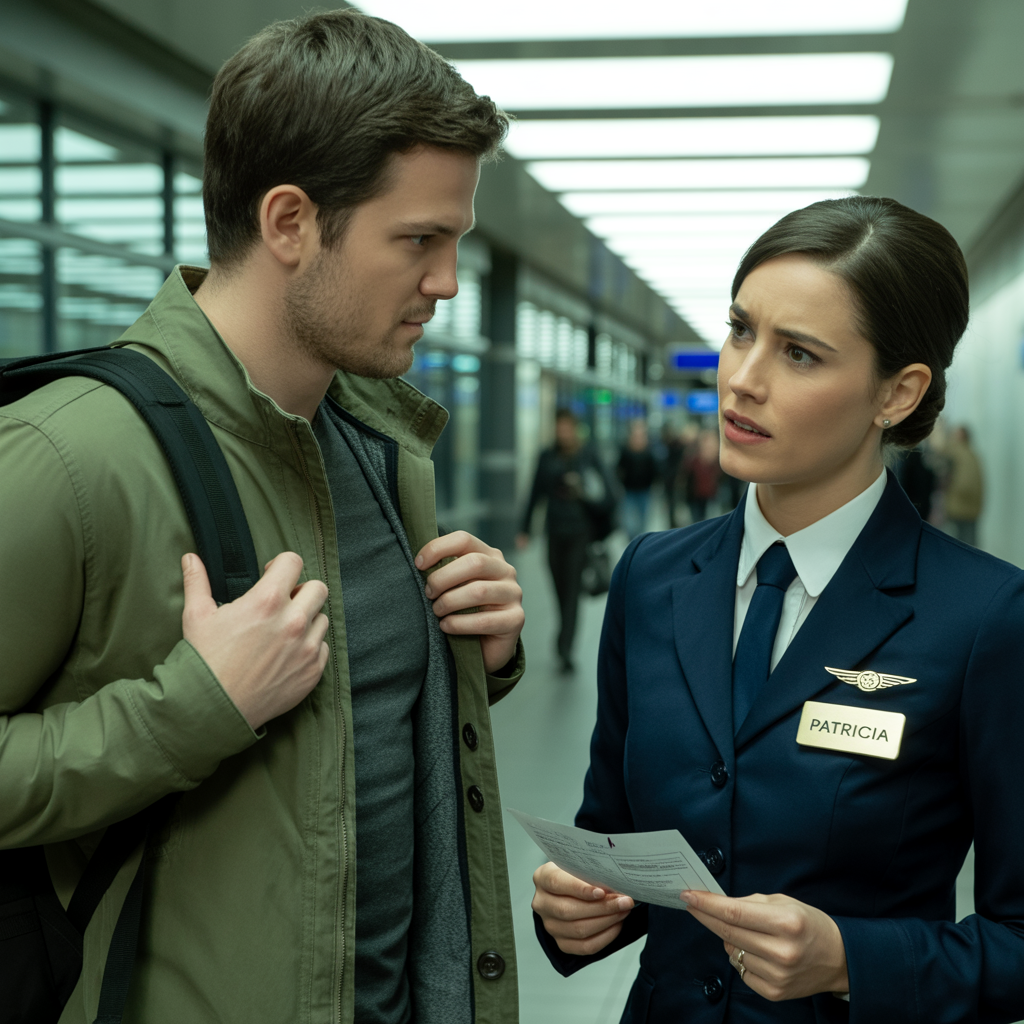
Two weeks after the flight, I tried to convince myself it was over.
I went back to work. Paid bills. Slept with the TV on. Told myself that turbulence plus stress plus imagination could explain almost anything. Except it couldn’t explain the voicemail Patricia left at 3:17 a.m.
“They’re watching patterns,” she said. “Not crimes. Choices. Who notices. Who stays quiet. Who asks the wrong questions.”
I didn’t call back. I didn’t want answers.
Then the email arrived—no sender, no subject. Just a boarding pass attachment. Seat 23F. Different city. Different airline. Same time. Same date. Tomorrow.
I went to the airport anyway.
Because here’s the truth they don’t tell you: once you’ve seen behind the curtain, you’re already part of the machinery. Running doesn’t reset the loop. It just delays your turn.
At the gate, I saw her. Patricia. Same haunted eyes. Same calm smile.
“You did say goodbye this time,” she said, not asking.
I swallowed. “What happens if I refuse?”
She leaned closer. “Then someone else pays. And the pocket keeps reopening until the balance is met.”
“What balance?”
She looked past me, at the windows, at the sky bending just a little where it shouldn’t.
“Seven lives,” she said softly. “Every time. Either taken… or redirected.”
The new flight boarded smoothly. No frost. No screaming. Just a quiet hum that sat too deep in my bones.
When the captain finally spoke, it wasn’t Protocol 7.
It was something new.
“Crew,” he said, steady as a gravestone, “prepare for Protocol 8.”
Patricia handed me a badge instead of an NDA.
WELCOME, it read.
That’s when I understood.
Protocol 7 wasn’t punishment.
It was recruitment.
And the question she asked on the jet bridge—the one I didn’t understand then—finally made sense:
“Did you say goodbye to everyone important?”
Because once you start watching the passengers…
You never go back to being one.