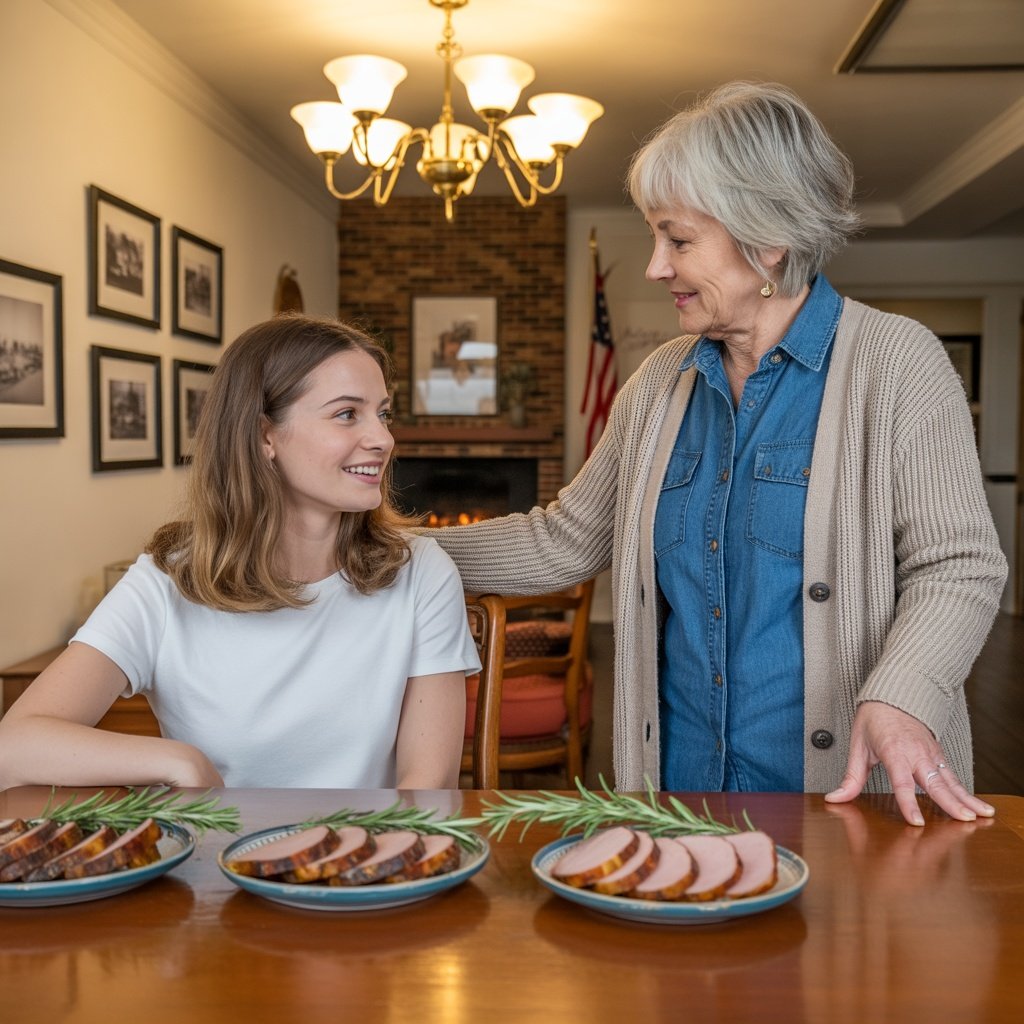
Jean slept little that night. Rain tapped the gutters, the old maple outside scraped lightly against the brick siding, and somewhere around 3:17 a.m., she accepted the truth she had avoided for years:
Madison didn’t just disrespect her. She believed the life her mother had built was beneath her.
By sunrise, Jean’s decision was made. She brewed coffee in silence, steam rising in thin ribbons. Then she went into her office — the small room off the hallway filled with ledgers, tax books, framed certificates, the tools of the “old world” Madison dismissed so easily.
Jean opened her safe. Inside were the papers that carried the weight of three decades:
account statements, property deeds, insurance policies, and one folder she had never shown anyone. With steady hands, she signed two forms, moved money with three clicks, and scheduled a final transfer.
Then she placed everything in a large envelope, sealed it, and left it on the kitchen counter. 9:04 A.M. Madison burst through the door, hair unbrushed, Trevor trailing behind her.
“Mom, our debit cards aren’t working,” she said, panic sharpening her voice. “The bank froze everything. Did you do something?!”
Jean turned from the sink, drying her hands on a towel.
“I did,” she said simply. Trevor scoffed. “This isn’t funny.
We need access to our funds. We have a flight to Tulum on Thursday.”
Jean nodded. “Yes, about those funds.
They were never yours.”
Madison blinked. “What are you talking about?”
“You’re twenty-six,” Jean said calmly. “You’ve never paid your own rent.
Your car, your health insurance, your credit cards — I covered all of it. Quietly. Patiently.
Because I wanted you to grow without fear.”
She held their eyes, not in anger but in clarity. “And last night, you told me I was too old to understand the world.”
Trevor lifted his hands. “Look, this generation—”
“Stop,” Jean said.
“You two speak about ‘digital freedom’ and ‘inspiring the world’… but you cannot inspire anyone if you cannot afford your own groceries.”
Madison’s face flushed. “So you froze our accounts to punish us?”
Jean shook her head. “No.
I simply stopped paying your bills. The bank froze the cards when the autopayments ended.”
Trevor paled. “You can’t just walk away from responsibility like that!”
“I’m not walking away,” Jean said gently.
“I’m stepping back. There’s a difference.”
She slid the sealed envelope across the counter. “This is everything you need to stand on your own: rental history, financial records, contacts for job placement agencies.
And a note with the exact amount of money I will no longer be covering.”
Madison stared. “You’re abandoning us.”
“On the contrary,” Jean replied. “I’m giving you the gift you claim to want — independence.”
Silence.
Then Madison whispered, voice cracking, “We don’t know how to do any of this.”
Jean exhaled a soft, tired breath. “I know,” she said. “That’s the problem.”
9:17 A.M.
Trevor spoke up again. “You can’t do this. We have plans.
We’re supposed to be digital nomads.”
Jean leaned back against the counter. “Then you’d better find digital jobs,” she said. “Real ones.”
Madison’s eyes filled.
“Mom… please… we didn’t mean what we said.”
Jean walked past them, picked up her purse, and headed for the door. “I know you didn’t,” she said softly. “But you believed it.”
She opened the door to the crisp Tennessee morning.
“And now,” she added, “you’ll learn the part of the world your generation forgets: freedom isn’t free — it must be earned.”
The door closed. Behind it, panic bloomed. Ahead of it, Jean felt something she hadn’t felt in years:
Peace.