




He crossed the road silently, stopped a few feet away, and pointed at the loose porch board.
“You’ll trip on that,” he said. His voice was low, rough.
“I can help,” he said simply, crouching down without another word.
He nailed it back in place, stood up, nodded once, and walked away.
“Wait! I—”
But he was already gone, the door across the street closing behind him.
Later, over tea, Mrs.
Harrison knocked softly. “You met him, didn’t you? The man across the road?”
“He’s been here forever.
Keeps to himself. But your mother—she used to talk to him a lot.”
“Really?”
“Every evening, they’d sit on the porch together. Then one day… she stopped.
No one saw him for months.”
Mrs. Harrison just shrugged. “You’ll have to ask him.”
When she left, I walked through the house again.
In the nursery, my old childhood room, I pressed my palm against the wall where I’d planned to hang the new pastel wallpaper.
The paint felt colder there, rougher somehow, as if the wall was hiding something beneath its surface. For a moment, I thought I heard a faint tapping, like something shifting inside.
“Just the wind,” I murmured, stepping back.
But as I turned off the light, I could’ve sworn I heard it again: soft, almost like someone whispering from within the wall.
The mornings in that Ohio cul-de-sac were quiet — too quiet sometimes. You could hear every creak of a porch, every slam of a screen door, and the gossip carried across the yards like pollen.
By the second week, the smell of paint and wood dust had settled into my hair.
My hands were blistered, my back ached, but I felt alive for the first time in months.
Fixing that house was like stitching myself back together, piece by piece. Still, the neighbors didn’t think so.
“Sweetheart, you shouldn’t be climbing ladders in your condition,” Mrs. Harrison called from across the fence.
“I’ll be fine,” I said, steadying the paint roller.
She clicked her tongue.
“You need a man’s help.”
Her eyes widened, and I knew she’d repeat that line by dinner.
Later, while carrying old wallpaper scraps outside, I saw him again, the man across the road. He was cutting wood in his driveway, shirt sleeves rolled up. I caught him glancing once, then quickly back to his work.
I hesitated, then crossed the road.
“Hey! Do you happen to know where I could borrow a toolbox?”
He looked up, squinting against the sunlight. “You already have one.”
“I do?”
He nodded toward my porch.
“Your mother’s. It’s in the cabinet under the stairs.”
But he was already back to sawing, as if the conversation was over.
That night, his words wouldn’t leave my head.
How did he know about that cabinet? I hadn’t even found it yet.
The next morning, I checked.
He was right — there it was. The wooden door under the stairs was stuck, but after a few tries, I opened it. Inside was an old red toolbox, just where he said.
My mother’s handwriting on a taped label:
“For repairs — only if you know what you’re doing.”
I smiled despite myself. “Guess that rules me out.”
By afternoon, I was patching a crack in the kitchen wall when the front door creaked open.
“You shouldn’t leave it unlocked,” came my neighbor’s low voice.
I jumped.
He stood there holding a hammer. “You needed this.”
“You just walked in?”
“You called me, didn’t you?”
I hadn’t.
But I didn’t correct him. He handed me the hammer, then silently began fixing the loose cabinet door like it was the most natural thing in the world.
After a while, I asked softly, “Did you know my mother well?”
He didn’t look up. “Yeah.”
“Were you… friends?”
“Something like that.”
And just like always, he left right after, closing the door behind him.
That evening, Mrs.
Harrison appeared again, arms crossed.
“You shouldn’t talk to Harry too much,” she warned.
“Oh, his name is Harry. Why not?”
She leaned in. “People say he hasn’t been right since your mother passed.
Hardly speaks. Stays alone in that house. Some think he’s still waiting for her.”
“You didn’t hear it from me.”
Her words sat heavy in my chest long after she left.
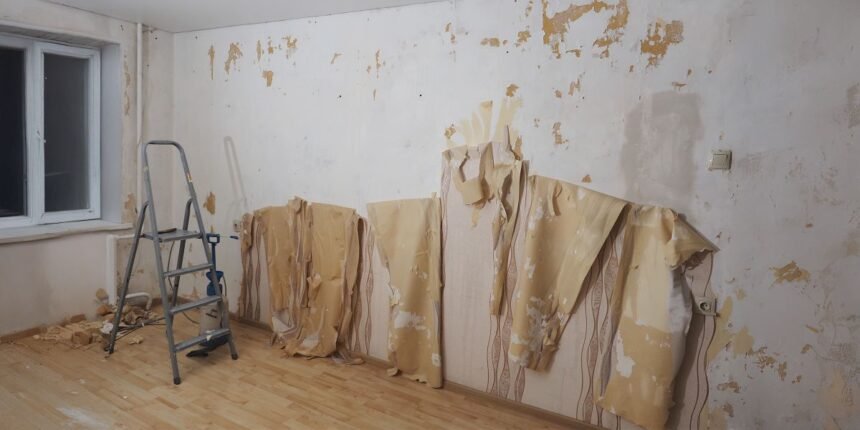
I stood in the nursery, gazing at the wall I’d yet to finish. The light from the streetlamp spilled across the uneven surface, catching on a faint shadow beneath the old paper.
I grabbed a scraper. The paper peeled off in long, dusty strips, falling like old skin to the floor.
Beneath it, words began to emerge — shaky, written by hand. My breath caught. It was my mother’s handwriting.
“Mom?” I whispered, pressing my palm to the wall.
“What did you hide from me all this time?”
The last fragment of paper came loose, and the unfinished sentence beneath it made my stomach twist.
I didn’t even finish reading — just turned, heart pounding, and whispered, “Harry… what do you have to do with this?”
By the time I crossed the road the following morning, Harry’s front door stood half-open.
“Harry?” I called, my voice trembling. “It’s me… from across the street.”
No answer. The house smelled faintly of tobacco and pine.
I pushed the door wider and stepped inside.
A clock ticked somewhere, steady and cold. On the mantel above the fireplace sat a collection of framed photos. My breath hitched when I saw the first one.
Me.
A little girl with a missing front tooth, holding a paper kite. My mother knelt beside me, smiling, but next to her stood a man I didn’t recognize. His arm rested on my shoulder.
I reached for another frame.
Me again, maybe six years old, blowing out birthday candles. And there he was in the background. Harry.
Younger, but unmistakable.
The third photo made my knees weak.
My mother and Harry — laughing, arms around each other, in front of this very house.
My mother always said my father died before I was born. But then…
Who was this man in all the pictures? And why did he have them?
I stumbled back, clutching the frame.
“No, no… this doesn’t make sense.”
The floor creaked behind me.
“Looking for something?”
I spun around. Harry stood in the doorway, damp from the rain.
“I—I didn’t mean to come in. The door was open and—”
I set the photo back on the mantel, my hands shaking.
“Why do you have these? My pictures, my mom—why?”
He sighed and ran a hand through his gray hair. “Because she left them here.
Said it was safer if I kept them.”
“She told me my father died. That she had no family left.”
“Your mother and I… we had our fights. Bad ones.
She didn’t want me around after what happened with her husband.”
“What did happen?”
“I warned her he wasn’t the man she thought. Told her he’d leave the moment things got hard. She said I was bitter, jealous, and always interfering.
She shut me out after that. I never saw you again.”
“No. I’m your uncle.
Your mom’s brother.”
Something in his voice cracked on the word brother.
“All these years… and you lived across the street?”
“I didn’t. I moved here years later, when I found out she was sick. I thought maybe she’d want help.
And for a while, she did — we had coffee on the porch most evenings. Then, as the illness got worse, she pushed me away again. She didn’t want me to see her like that.
But I stayed close, just in case.”
I let out a trembling laugh. “You could’ve just said hello.”
Silence hung between us, filled only by the clock’s steady tick.
Then Harry said, “You saw it, didn’t you? The wall.”
“Your mother wanted to leave you something honest.”
“Then help me read it.”
We crossed the road together, the wind whipping around us.
Inside my mother’s house, the nursery waited — half-bare, wallpaper torn and curling at the edges.
Harry pressed his palm to the wall. “Right here?”
“Yeah,” I said, handing him the scraper. “I stopped when I saw her handwriting.
And your name.”
Harry began peeling gently. Bit by bit, the letters came into view:
“If you ever read this, know that Harry can be the father you never had. Forgive me.
Mom.”
For a long moment, neither of us spoke. I traced the letters with my fingertips, the paint cool beneath my skin.
“She always carried so much guilt. All this time, I thought she shut people out because she didn’t care.
But maybe she just didn’t know how to ask for forgiveness.”
“She never stopped loving you. She just didn’t know how to make peace with the past.”
I turned to him, tears blurring the edges of everything. “Maybe it’s time someone did.”
Outside, thunder rumbled somewhere far beyond the hills.
But inside, the house finally felt warm again.
Tell us what you think about this story, and share it with your friends. It might inspire them and brighten their day.

